
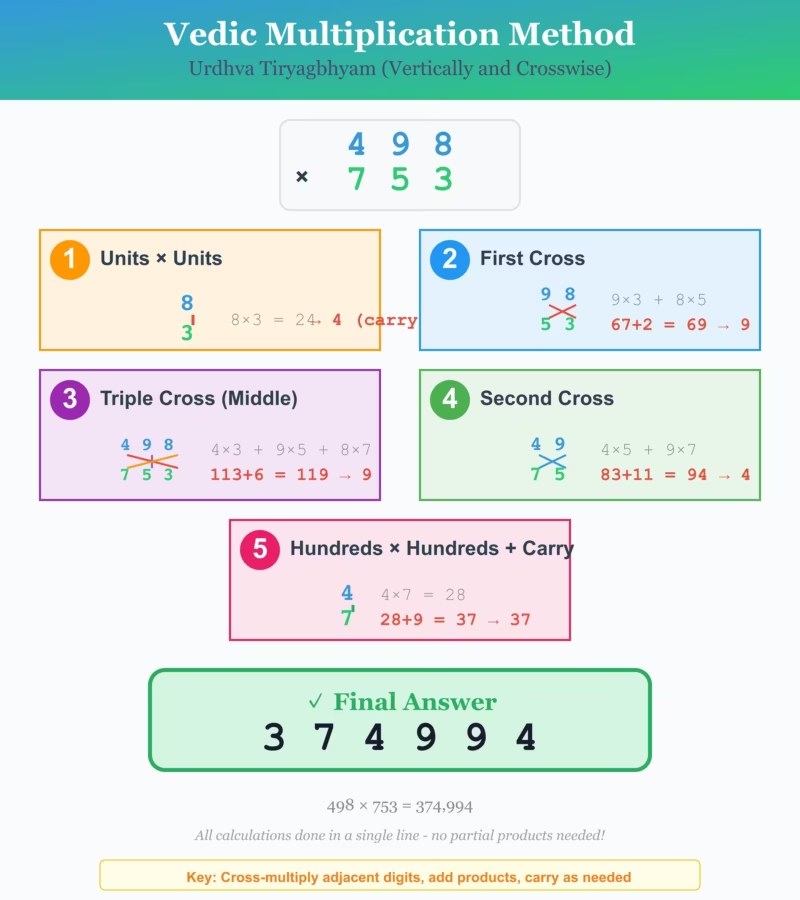
Vedic multiplication is a criss-cross multiplication trick that lets you multiply two 3-digit numbers in 4-6 seconds, versus 30-60 with pen-and-paper long multiplication. I learned it as a teen prepping for engineering exams. Here’s the Urdhva-Tiryagbhyam method, worked step by step on 498 x 753, plus where this fast multiplication trick helps and where standard long multiplication is fine.

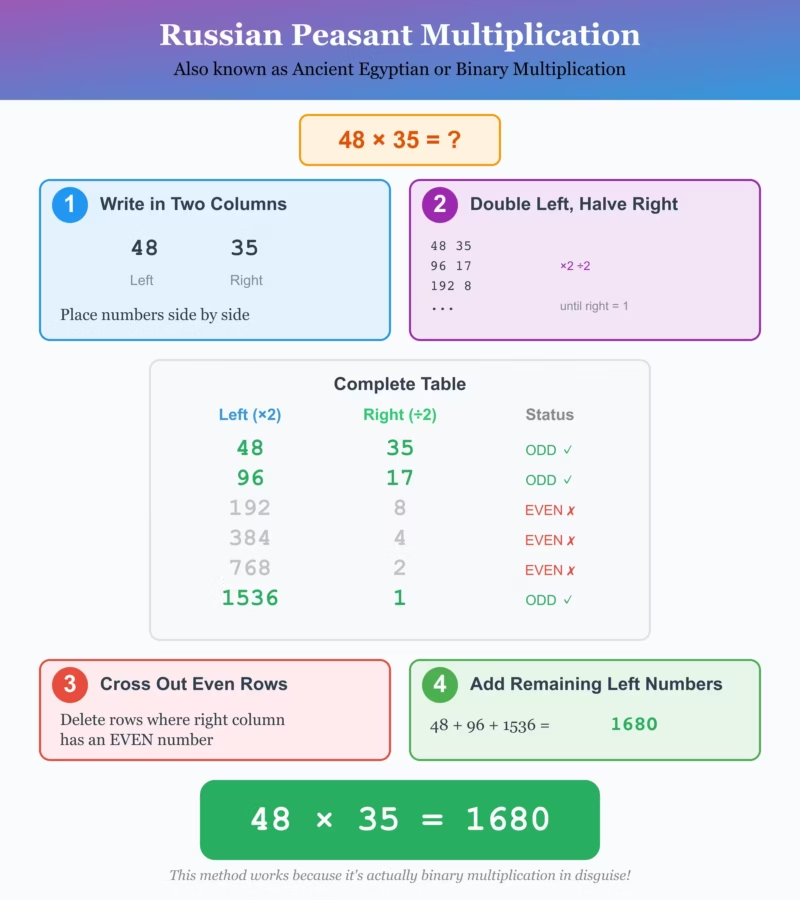
Russian Peasant Multiplication is an ancient technique that multiplies any two numbers using only doubling and halving. No multiplication tables needed. I explain the method step by step, prove why it works using binary representation, and show why this elegant algorithm is still relevant in computer science today.

Most people get this simple addition problem wrong: 1000 + 40 + 1000 + 30 + 1000 + 20 + 1000 + 10. The answer isn’t 5000. Here’s why your brain makes this specific error, what cognitive science says about mental arithmetic, and why mathematical intelligence is about much more than raw calculation speed.
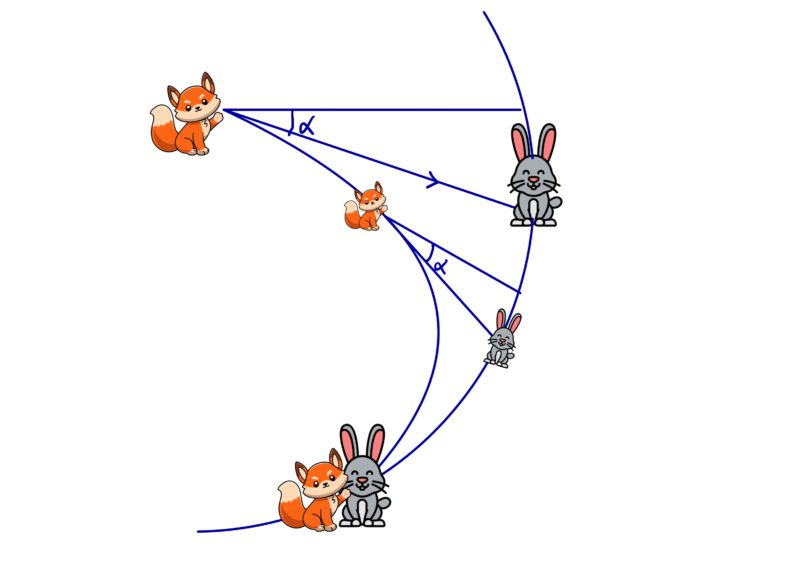
Pursuit problems are some of the most elegant challenges in classical mechanics. A fox chases a rabbit, both moving at constant speed. What path does the fox follow? I present the complete solution with mathematical proof, drawing from David Morin’s work. The calculus is surprisingly deep and the geometry is beautiful.

In 1872, Weierstrass presented a function that’s continuous everywhere but differentiable nowhere. It shattered the assumption that smooth curves are normal. Here’s the full construction, the proof, the historical shock, and why the Baire category theorem shows most continuous functions behave this way.

Memory isn’t fixed. You can train it. I’ve compiled ten practical methods to improve how you retain and recall information: from simple repetition and spaced practice to visualization techniques and the memory palace method. These aren’t theoretical tricks. They’re strategies that actually work during exam revision and daily learning.

I’ve spent years collecting free calculus textbooks. Not scanned copies with missing pages. Real textbooks that professors and universities have made freely available online. This curated list covers single-variable calculus, multivariable calculus, and real analysis. Every link is verified, accessible, and suitable for self-study or classroom use.
Most math students use real numbers without ever understanding how they’re constructed. Dedekind solved this with his theory of cuts. He showed how to build the real numbers rigorously from the rationals, filling in all the gaps. I walk through the construction step by step, making this foundational concept accessible.

I’ve compiled 20+ free algebra and topology ebooks. Not sketchy PDFs from torrent sites. Real textbooks that professors and universities have made freely available. Covers abstract algebra, linear algebra, algebraic topology, and more. Each link is verified and the books range from introductory to graduate level.
The D’Alembert Ratio Test is one of the most reliable tools for determining whether an infinite series converges or diverges. I cover the theorem statement, proof, worked examples, and the cases where it fails. If you’re studying real analysis or calculus, you’ll use this test constantly alongside the comparison and root tests.
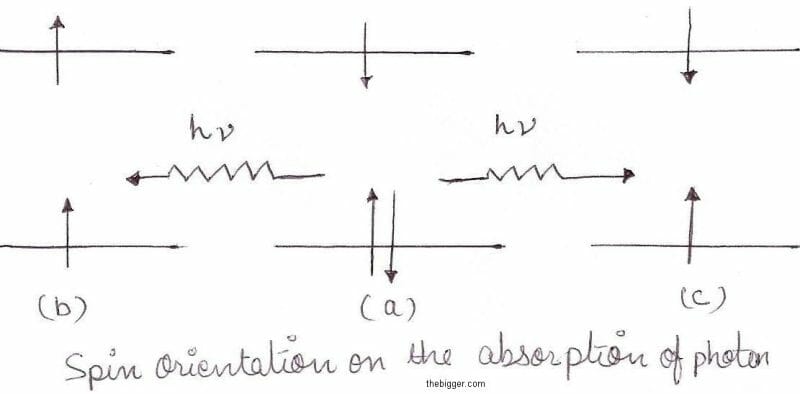
The Jablonski diagram maps what happens to a molecule after it absorbs light. Fluorescence, phosphorescence, internal conversion, intersystem crossing — every pathway explained with diagrams, timescales, and real-world applications.

George Polya’s four-step method has guided mathematicians since 1945. Understand the problem, devise a plan, carry it out, look back. Here’s how it works in practice, from basic algebra to research-level mathematics, with worked examples and the heuristics that textbooks skip.