
 by
byMost sociology reading lists are useless. They dump 50 titles on you with no context, no order, and no opinion about which ones actually matter. You end up buying three books, finishing none, and deciding sociology is dry.
It’s not. But the wrong book will convince you it is. I’ve read dozens of sociology books over the years, and most of them collect dust after chapter three. Dense academic writing, no real-world connection, theories that sound important but don’t change how you see anything. The gap between a great sociology book and a mediocre one is enormous.
Best picks at a glance
Start with the use case, not the brand. The shortlist below separates the strongest recommendations by the job they do best, then shows the one detail you should verify before buying.
| Use case | Recommendation | Why it stands out | What to check |
|---|---|---|---|
| The Sociological Imagination | The Sociological Imagination | Classic text on connecting personal troubles with public issues | Check the edition, prerequisite level, and whether you need an answer manual. |
| Distinction: A Social Critique of the Judgement of Taste | Distinction Routledge Classics | Groundbreaking analysis of taste, class, and cultural capital | Check the edition, prerequisite level, and whether you need an answer manual. |
| The Presentation of Self in Everyday Life | The Presentation of Self in Everyday Life | Pioneering work on impression management and social interaction | Check the edition, prerequisite level, and whether you need an answer manual. |
How I assessed the shortlist: I compared intended use, practical specifications, current availability, and value. I have not put every item through a standardized laboratory test, so I do not present synthetic benchmark scores. The detailed sections below explain fit, limitations, and alternatives.
Free options worth using
You do not need to buy every book on this list. Start with these legal, free resources, then pay for a book when you know which teaching style or depth you still need.
- OpenStax Introduction to Sociology 3e: a complete introductory sociology textbook available online and as a PDF.
- Sociology LibreTexts: an open collection covering theory, culture, institutions, and social research.
The 15 books below are different. These are the ones that actually changed how I think about society, power, class, and human behavior. I’ve organized them from foundational classics to accessible contemporary works so you can build understanding in layers. If you’re new to sociology, start with The Sociological Imagination or Outliers. If you’re past the basics, jump straight to Evicted or Economy and Society.
Foundational Sociology Texts: The Classics That Built the Discipline
These seven books are the bedrock of sociology. Mills, Durkheim, Bourdieu, Goffman, Weber, Berger, and Luckmann didn’t just observe society. They invented the tools we use to analyze it. If you read only one category on this list, make it this one. These are the texts assigned in every serious sociology program, cited in nearly every academic paper, and referenced by every sociologist working today.
The Sociological Imagination
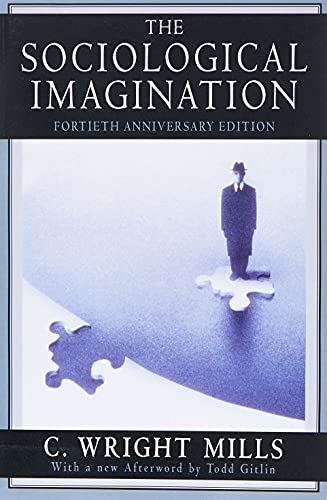
- Classic text on connecting personal troubles with public issues
- By C. Wright Mills, one of the most influential sociologists of the 20th century
- 240 pages, Oxford University Press edition with new afterword
- First published in 1959, remains the most cited introduction to sociological thinking
- Shows how to connect personal biography to historical social structures
- Afterword by Todd Gitlin contextualizing Mills' ideas for modern readers
If you’ve ever felt like your problems were just your problems, this book will change that forever. C. Wright Mills wrote The Sociological Imagination for anyone who wants to understand how personal biography intersects with historical forces, and why that connection matters. It’s not just for sociology students. Entrepreneurs, policy makers, journalists, and anyone trying to make sense of modern life will get something concrete from it. Mills is direct, opinionated, and refreshingly readable for a 1959 academic text. Start here. Everything else makes more sense once you’ve read this.
If you read only one sociology book in your life, make it this one. C. Wright Mills wrote The Sociological Imagination in 1959, and it remains the single best introduction to thinking sociologically. The core idea is simple but powerful: your personal problems aren’t just yours. They’re connected to larger social structures, historical forces, and institutional patterns that most people never see.
Mills coined the term “sociological imagination” to describe the ability to connect biography with history, to see how individual experiences are shaped by society. He also took direct aim at the dominant sociology of his era, criticizing both abstract grand theory and mindless data collection. The book reads more like a manifesto than a textbook, which is exactly why it still resonates 60+ years later. At under $17, it’s the most important investment you’ll make in understanding how the social world actually works.
I recommend this to anyone starting a sociology course, but also to entrepreneurs and marketers who want to understand why people think and act the way they do. The writing is sharp, the arguments are bold, and you’ll finish it in a weekend.
Distinction: A Social Critique of the Judgement of Taste
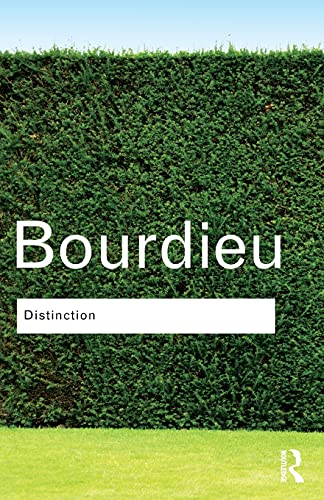
Distinction Routledge Classics
- Groundbreaking analysis of taste, class, and cultural capital
- By Pierre Bourdieu, based on extensive French sociological research
- Routledge Classics edition, 640 pages
- Based on massive empirical survey data from French society in the 1960s-70s
- Introduces the concept of cultural capital that transformed social science
- Charts, tables, and statistical analysis supporting every major argument
Read this if you’ve ever wondered why class differences persist even when money isn’t the obvious dividing line. Bourdieu’s Distinction is the definitive sociological account of how taste, culture, and “sophistication” are used to maintain social hierarchies. It’s demanding reading, at 600 pages with dense empirical data, but researchers, advanced students, and anyone serious about understanding inequality will find it indispensable. Bourdieu studied 1,200 French respondents in the 1960s and 70s. The findings translate uncomfortably well to contemporary society, in any country. Don’t rush it. Take notes. Return to chapters. It rewards rereading.
Pierre Bourdieu’s Distinction is one of those books that permanently rewires how you see the world. Published in 1979, it’s a massive ethnographic study of French society that proves an uncomfortable truth: your taste in music, food, art, and fashion isn’t really “yours.” It’s a product of your social class, education, and upbringing. What you find beautiful or vulgar says more about where you come from than about the objects themselves.
Bourdieu introduced the concept of “cultural capital,” the idea that knowledge, skills, and cultural competencies function like economic currency. The kid who grows up going to museums and discussing literature at dinner has a structural advantage over the kid who doesn’t, regardless of raw intelligence. This concept alone has influenced decades of research in education, marketing, and social policy.
At 640 pages, Distinction isn’t a casual read. The data tables and French cultural references can feel dense. But the core argument is accessible and devastating. If you’ve ever wondered why certain brands, neighborhoods, or hobbies carry social status, Bourdieu explains the machinery behind it. The Routledge Classics edition at $29.42 includes a new introduction that contextualizes the work for modern readers.
The Presentation of Self in Everyday Life
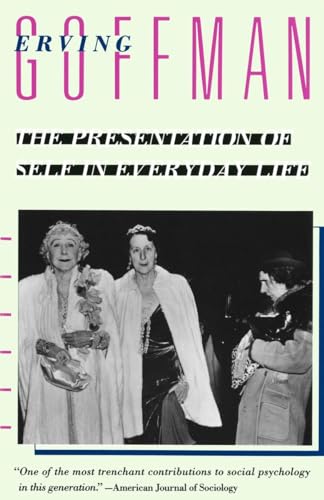
The Presentation of Self in Everyday Life
- Pioneering work on impression management and social interaction
- By Erving Goffman, using theatrical metaphors to explain everyday behavior
- Anchor Books edition, 259 pages
- Introduces dramaturgical analysis: social life as theatrical performance
- Draws on fieldwork from a remote Scottish island community
- Accessible writing style that reads more like literature than academic theory
This one is for anyone who has ever felt like they were performing a role rather than just living their life. Spoiler: you were, and so was everyone around you. Goffman’s dramaturgical framework is the most useful lens I’ve found for understanding social interaction, whether you’re a sociology student, a manager trying to understand team dynamics, or someone trying to decode why interviews feel so strange. It’s short at around 250 pages, clearly written, and full of examples you’ll recognize immediately. Read it once and you’ll never look at social situations the same way again.
Erving Goffman’s 1956 classic treats everyday life as a stage performance. We’re all actors, he argues, constantly managing the impressions we make on others. You act differently in a job interview than you do with your best friend, and both performances are genuine parts of who you are. Goffman breaks this down using theatrical concepts: front stage, backstage, props, scripts, and audience management.
What makes this book brilliant is how obvious it seems once you’ve read it. Of course we manage impressions. Of course we have “backstage” selves we only show to trusted people. But before Goffman, nobody had systematically analyzed this behavior. His framework for understanding social interaction is now so widely accepted that it’s embedded in how we think about everything from branding to social media to self-presentation.
The book is under 260 pages and reads quickly. Goffman writes with wit and precision, using real-world examples that feel surprisingly modern despite being 70 years old. If you’ve ever caught yourself “performing” for an audience (and you have), this book explains exactly what you’re doing and why.
The Social Construction of Reality
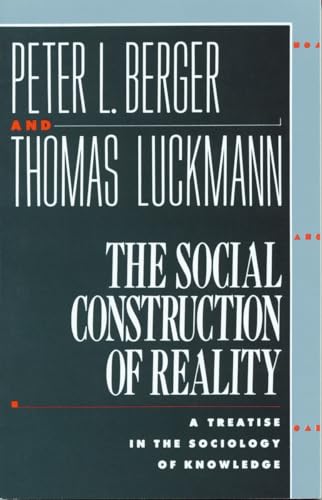
The Social Construction of Reality A Treatise in the Sociology of Knowledge
- Named the fifth most important sociological book of the 20th century
- By Peter L. Berger and Thomas Luckmann
- Explores how knowledge is created, shared, and institutionalized in society
- Foundational text in the sociology of knowledge, cited over 45,000 times
- Explains how society creates and maintains shared reality through language
- Bridges phenomenology and sociology in an accessible theoretical framework
This is the book for anyone who wants to understand where “common sense” comes from, and why what seems obviously true in one culture or era seems absurd in another. Berger and Luckmann’s argument, that social reality is built through shared human interaction rather than being naturally given, underpins everything from gender studies to the sociology of knowledge. The International Sociological Association ranked it the 5th most important sociological book of the 20th century. It’s philosophical but not inaccessible. Students in sociology, philosophy, or cultural studies will find it essential. Researchers building theoretical frameworks will return to it repeatedly.
Peter L. Berger and Thomas Luckmann’s 1966 book introduced one of the most important ideas in sociology: social construction. The International Sociological Association ranked it the fifth most important sociological book of the 20th century, and that ranking is deserved. The core argument is that what we consider “reality” isn’t objective or natural. It’s built, maintained, and transformed through human interaction.
The authors show how everyday knowledge, the things “everyone knows,” gets created through social processes and then becomes institutionalized until it feels permanent and natural. Think about concepts like marriage, money, national borders, or gender roles. None of these exist in nature. They’re social constructions that we collectively maintain, and they can change when enough people decide they should.
This book is dense philosophical sociology, not light reading. But the payoff is enormous. Once you understand social construction, you can’t unsee it. Every institution, norm, and “common sense” belief becomes something you can examine critically. At $15.02 with a 16% discount, it’s an affordable gateway to one of sociology’s most powerful frameworks.
Suicide: A Study in Sociology
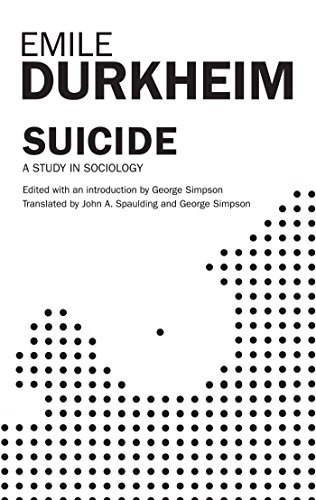
- Foundational sociological study on the social causes of suicide
- By Emile Durkheim, one of the founders of modern sociology
- Free Press edition, 405 pages
- Pioneering study proving that even the most personal act has social causes
- Uses comparative statistical analysis across European countries and religions
- Introduces the concepts of anomie, social integration, and moral regulation
This is the book to read if you want to understand how sociology works as an empirical science, not just social commentary. Durkheim took what seemed like the most individual act imaginable and showed that suicide rates vary predictably across social groups, driven by measurable social forces rather than individual psychology alone. It’s a methodological landmark, not just a historical curiosity. Sociology students need to read it before any research methods course. Researchers studying collective behavior, religion, or social integration will find the typology of egoistic, altruistic, anomic, and fatalistic suicide still useful 125 years later. The writing is denser than a modern academic paper but worth the effort.
Emile Durkheim published Suicide in 1897, and it remains one of the most influential empirical studies in all of social science. His goal wasn’t to explain why any individual person takes their own life. Instead, he wanted to show that suicide rates vary systematically across societies and social groups, which means social forces, not just individual psychology, drive the phenomenon.
Durkheim identified four types of suicide based on levels of social integration and regulation: egoistic (too little integration), altruistic (too much integration), anomic (too little regulation), and fatalistic (too much regulation). This typology is still taught in every introductory sociology course. More importantly, his methodology, using statistical data to reveal social patterns, established the template for how sociological research is done.
The writing style is 19th-century academic, so don’t expect a page-turner. But the intellectual framework is brilliant and still relevant. If you’re studying sociology seriously, you can’t skip Durkheim. This book shows you what rigorous sociological thinking looks like, applied to one of the most deeply personal acts a human can commit.
The Rules of Sociological Method
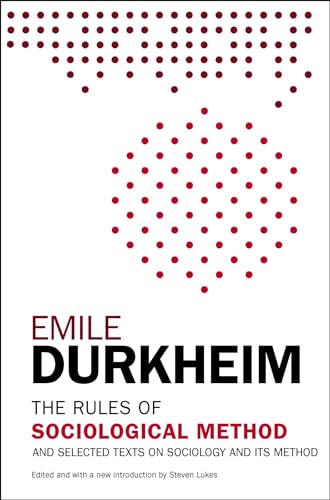
The Rules of Sociological Method And Selected Texts on Sociology and its Method
- Essential methodological framework for sociological research
- By Emile Durkheim, with introduction by Steven Lukes
- Free Press edition with selected texts and debates on method
- Establishes sociology as a distinct scientific discipline with its own methodology
- Introduces the concept of social facts as objects of sociological study
- Essential reading for understanding positivist approaches to social research
Before you read any sociology research, read Durkheim’s argument for why sociology deserves to exist as a distinct science. Published in 1895, this is the founding methodological document of the discipline. It lays out what social facts are, why they require their own methods of study, and how to identify causal relationships in social data. Any serious sociology student needs this. Researchers will find it more relevant than they expect. Even if you disagree with Durkheim’s positivism, you need to understand his argument to know what you’re pushing against. It’s short, systematic, and still taught in every methodology course worth taking.
If you’re serious about sociology as a discipline, not just as interesting reading, you need Durkheim’s Rules of Sociological Method. Published in 1895, this book is Durkheim’s argument for why sociology should be treated as a science with its own methods, distinct from philosophy and psychology. He lays out rules for observing social facts, classifying them, and establishing causal explanations.
The key concept here is “social facts,” things like laws, customs, moral rules, and institutions that exist outside any individual and exert pressure on behavior. Durkheim insists that social facts must be studied objectively, like natural phenomena. This might sound obvious now, but in the 1890s, it was revolutionary. Before Durkheim, most thinkers treated society as just the sum of individual actions.
The Free Press edition includes Steven Lukes’ introduction, which places the work in its historical context and addresses the debates it sparked. It also includes Durkheim’s subsequent articles and letters defending his method. For students building their academic toolkit, this is foundational material. Not the most exciting read, but absolutely necessary.
Economy and Society
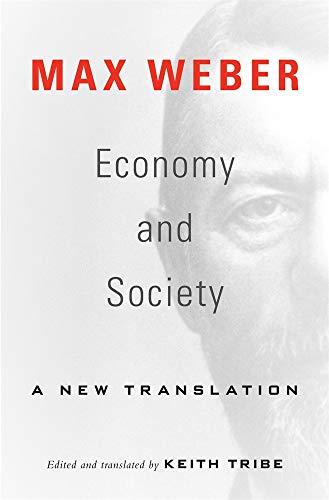
Economy and Society A New Translation
- Foundational text on economic action, institutions, and social stratification
- By Max Weber, new translation by Keith Tribe
- Harvard University Press edition, comprehensive social science framework
- Weber's magnum opus covering bureaucracy, authority, law, and religion
- New 2019 translation by Keith Tribe with improved accuracy and readability
- Essential reference for understanding rationalization and modern institutions
Weber’s Economy and Society is not a casual read. It’s a graduate-level foundational text that covers bureaucracy, authority, class, religion, law, and political sociology in exhaustive detail. Read it if you’re a researcher building theoretical frameworks, a graduate student in sociology or political science, or someone who has already read introductory texts and wants to go deeper. The Keith Tribe translation from Harvard University Press, published in 2019, is the best English edition available and makes Weber more accessible than older translations. Don’t start here. Read Mills and Goffman first. Come back to Weber when you’re ready for the full architecture of sociological theory.
Max Weber’s Economy and Society is one of the pillars of modern social science. It’s not one book so much as a comprehensive framework for understanding the relationship between economic behavior, social action, political authority, and institutional structures. Weber covers bureaucracy, legitimate domination, class, status groups, and the sociology of law and religion. It’s the kind of work that entire academic careers are built on.
Keith Tribe’s new translation for Harvard University Press is the definitive English edition. Previous translations were clunky and hard to follow. Tribe’s version is clearer and more faithful to Weber’s original German, which makes a genuine difference when you’re working through dense theoretical material. The translation presents Economy and Society in its original form with three complete chapters and a fragment of a fourth.
This isn’t a book you read cover to cover in a weekend. It’s a reference work you’ll return to for years. At $28, it’s worth owning in physical form so you can mark it up and flag key passages. If you’re studying political science, economics, or organizational theory alongside sociology, Weber’s framework ties all these fields together better than any other single work.
Modern Sociology and Social Research: Where Theory Meets the Real World
These four books apply sociological methods to contemporary problems: housing poverty, community decline, low-wage labor, and technological risk. They’re more recent, more journalistic in style, and far easier to read than the foundational classics, but don’t mistake accessibility for shallowness. Evicted won the Pulitzer Prize. Bowling Alone shifted how politicians and researchers talk about community. Nickel and Dimed is still assigned in economics and labor studies courses worldwide. Normal Accidents is required reading in risk management programs at MIT and Columbia.
Evicted: Poverty and Profit in the American City
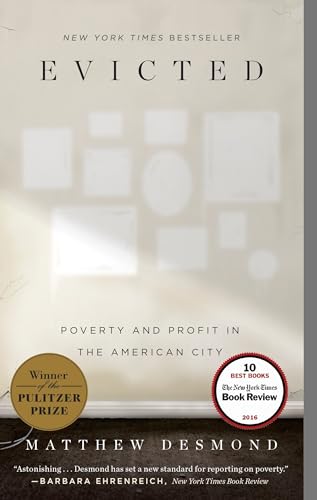
Evicted Poverty and Profit in the American City
- Pulitzer Prize-winning investigation into poverty and eviction in America
- By Matthew Desmond, Princeton sociologist and MacArthur Fellow
- Follows eight families in Milwaukee struggling to keep housing
- Winner of the 2017 Pulitzer Prize for General Nonfiction
- Based on years of embedded fieldwork in Milwaukee's poorest neighborhoods
- Named one of the 10 best books of 2016 by The New York Times
Read this if you want to understand poverty not as an abstract policy issue but as a lived daily reality. Matthew Desmond spent a year embedded in Milwaukee’s poorest neighborhoods, living in a trailer park and rooming house, following eight families facing eviction. The result is sociology that reads like a novel. It’s the right book for anyone curious about housing inequality, urban poverty, or how the legal system intersects with economic hardship. Students in social work, public policy, urban studies, or sociology will find it essential. It won the Pulitzer Prize for Good Nonfiction in 2017 and has been taught in hundreds of university courses since. The research is rigorous. The storytelling is exceptional.
Matthew Desmond’s Evicted won the Pulitzer Prize for General Nonfiction, and it deserved every bit of that recognition. Desmond, a Princeton sociologist, embedded himself in Milwaukee’s poorest neighborhoods and followed eight families as they fought to keep roofs over their heads. The result is sociology that reads like a novel, except everything in it is real.
What makes Evicted special is Desmond’s central argument: eviction isn’t just a consequence of poverty, it’s a cause of it. Getting evicted destroys credit, forces families into worse neighborhoods, disrupts children’s education, and creates a downward spiral that’s nearly impossible to escape. The landlords in his study aren’t villains. They’re rational actors in a system designed to profit from housing insecurity.
At $10.69 with a 44% discount, this is the best value on the entire list. The writing is compassionate without being sentimental, and the data is rigorous without being dry. If you read one contemporary sociology book in 2026, make it this one. It will fundamentally change how you think about poverty, housing, and what it means to be poor in America.
Bowling Alone: The Collapse and Revival of American Community
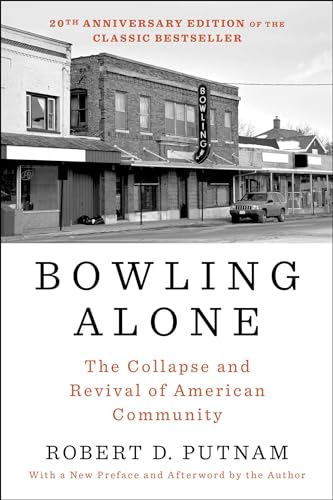
Bowling Alone Revised and Updated The Collapse and Revival of American Community
- Landmark study on the decline of American community and civic engagement
- By Robert D. Putnam, revised and updated edition
- Includes new analysis on social media, internet, and post-9/11 trends
- Comprehensive data analysis tracking civic participation decline from 1950-2000
- Updated edition includes new chapters on social media and post-2000 trends
- Coined the term social capital decline that shaped public policy debates
This one is for anyone trying to understand why modern life feels lonelier even as we’re more “connected” than ever. Robert Putnam’s central observation, that Americans have been withdrawing from civic life since the 1970s, has only become more relevant since the book was published in 2000. Sociology students studying community, civic engagement, or social capital will find this essential. Policy researchers and public health professionals who care about community resilience need it too. Putnam backs every claim with data from surveys, voting records, and participation rates, so it’s not just diagnosis, it’s documentation. At 400+ pages, it’s comprehensive. But it rewards the investment.
Robert D. Putnam noticed something in the 1990s that seemed trivial: Americans had stopped bowling in leagues. But this small observation led to one of the most important books about American society in the last 30 years. Bowling Alone documents the steady decline of “social capital,” the networks of trust, reciprocity, and civic engagement that hold communities together.
Putnam shows that Americans became increasingly disconnected from family, friends, neighbors, and social structures over the last several decades. Voter turnout dropped. Church attendance declined. People stopped joining clubs, volunteering, and even having dinner together. The consequences are real: higher crime, worse health, lower educational achievement, and weaker democracy.
The revised edition updates the analysis with data on social media, the internet, and post-9/11 trends. Putnam’s argument that civic disengagement threatens democratic society feels even more urgent in 2026 than it did when he first published it. If you care about community, politics, or why modern life feels so isolating, this is essential reading.
Nickel and Dimed: On (Not) Getting By in America
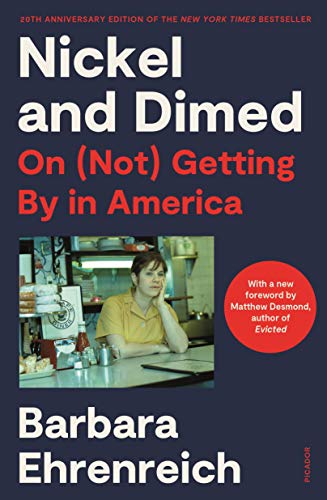
Nickel and Dimed On Not Getting By in America
- Investigative journalism on surviving on minimum wage in America
- By Barbara Ehrenreich, with foreword by Matthew Desmond
- New York Times bestseller, available as Kindle Edition
- Ehrenreich personally worked minimum-wage jobs to write this investigation
- Covers waitressing, housecleaning, and retail work across three US states
- Sparked national debate about living wage policy when first published
Read this if you’ve ever wondered what it actually costs to live on minimum wage, not theoretically but in terms of the specific daily trade-offs between rent, food, transportation, and healthcare. Barbara Ehrenreich went undercover in 1998, working as a waitress in Florida, a maid in Maine, and a Walmart associate in Minnesota, and documented exactly what she found. It’s the book for economics students, social work students, policy researchers, and anyone whose view of poverty is shaped by assumptions rather than direct evidence. It’s short, readable in a weekend, and more relevant now than when it was published. The math she describes has gotten worse, not better.
Barbara Ehrenreich did something most social scientists never do: she lived the research. In 1998, she left her comfortable life, took the cheapest housing she could find, and worked a series of minimum-wage jobs, as a waitress, hotel maid, house cleaner, nursing home aide, and Walmart associate. Nickel and Dimed is her report from the front lines of low-wage America.
What she discovered won’t surprise anyone who has worked these jobs, but it will shock anyone who hasn’t. Even working two jobs, she couldn’t reliably afford rent, food, and transportation. The math simply doesn’t work. And the working conditions, the surveillance, the physical toll, the humiliation, are far worse than most people imagine. Ehrenreich writes with anger and dark humor that makes the book hard to put down.
The new edition includes a foreword by Matthew Desmond (author of Evicted), who connects Ehrenreich’s findings to the ongoing housing and wage crises. At $11.99 for the Kindle edition, it’s a quick, powerful read that pairs perfectly with Evicted. Together, these two books give you a ground-level understanding of poverty that no amount of statistics can provide.
Normal Accidents: Living with High-Risk Technologies

Normal Accidents Living with High-Risk Technologies
- Analysis of inevitable failures in complex technological systems
- By Charles Perrow, Yale and Stanford sociology professor
- Covers Three Mile Island, aircraft accidents, and marine disasters
- Introduces Normal Accident Theory: some system failures are inevitable not preventable
- Analyzes Three Mile Island, airline crashes, marine accidents, and chemical plant disasters
- Required reading in risk management, engineering, and organizational behavior courses
This is the book for engineers, systems designers, risk professionals, and anyone who has ever wondered why catastrophic failures keep happening in systems that are supposed to be safe. Perrow’s argument, that disasters in complex, tightly coupled systems aren’t preventable aberrations but predictable outcomes, has been applied to nuclear power, aviation, financial markets, and software infrastructure. Yale and Stanford assigned it. NASA referenced it. If you work with complex systems or are studying organizational sociology, risk management, or STS (Science and Technology Studies), read it. The case studies from Three Mile Island, aircraft crashes, and marine disasters are specific, detailed, and genuinely unsettling.
Charles Perrow’s Normal Accidents is a sociology book that engineers, pilots, nuclear plant operators, and software developers all need to read. Perrow, who taught at Yale and Stanford, argues that catastrophic failures in complex technological systems aren’t aberrations. They’re inevitable. When systems are both complex (many interacting parts) and tightly coupled (one failure triggers cascading failures), disasters will happen no matter how many safety protocols you add.
Perrow examines case studies from Three Mile Island, aircraft accidents, marine disasters, and chemical plants. What he finds is consistent: the accidents weren’t caused by operator error or equipment failure alone. They were caused by unexpected interactions between components that no one predicted because the system was too complex for anyone to fully understand. He calls these “normal accidents” because they’re a normal consequence of how we build high-risk systems.
This book is essential for anyone working in technology, healthcare, aviation, or any field where system failure has serious consequences. At $33.99 (19% off), it’s the most expensive book on this list but also one of the most practically useful. After reading it, you’ll look at complex systems, from nuclear plants to software architectures, with a fundamentally different perspective.
Accessible Books That Bridge Sociology and Pop Culture
These four books aren’t academic sociology. They’re popular social science that draws on sociological research, behavioral economics, history, and psychology to make big arguments about how society works. Gladwell’s Outliers and Tipping Point are the most-read books that introduce sociological thinking to a general audience. Harari’s Sapiens applies a sociological lens to all of human history. Cain’s Quiet examines how one personality trait interacts with cultural and institutional structures. None of them will give you methodological training, but all four will make you more curious about the foundational texts above.
Outliers: The Story of Success
- Explores what makes high achievers different from everyone else
- By Malcolm Gladwell, #1 New York Times bestseller
- Covers the 10,000-hour rule, cultural legacy, and hidden advantages
- Examines the hidden factors behind extraordinary success stories
- Introduces the 10,000-hour rule for mastery based on Anders Ericsson's research
- New York Times bestseller with over 3 million copies sold worldwide
Start here if you’ve never read a sociology book but you want to understand why individual success isn’t as individual as you think. Gladwell asks why hockey players born in January dramatically outnumber those born in December (age cutoffs in youth leagues create a cumulative advantage), why Bill Gates happened to have access to a mainframe computer terminal in 1968 when almost no one else did, and why Korean Air had more crashes than almost any other carrier until they restructured their cockpit communication culture. These aren’t trivia questions. They’re illustrations of how structural advantage, timing, and cultural patterns shape outcomes that look like individual talent. Anyone curious about social mobility, success, or inequality will find this gripping.
Malcolm Gladwell’s Outliers is probably the most accessible sociology-adjacent book ever written. It asks a simple question: why do some people succeed far more than others? The answer, Gladwell argues, has less to do with individual talent and more to do with timing, culture, family, and accumulated advantage. The famous “10,000-hour rule” comes from this book, though it’s often misquoted and oversimplified.
What I appreciate about Outliers is how it takes complex sociological concepts, structural advantage, cultural capital, opportunity hoarding, and makes them concrete through storytelling. You’ll learn why most Canadian hockey stars are born in January, February, and March. You’ll understand why Asian students outperform in math (it’s not genetics, it’s rice paddies). You’ll see why Bill Gates’ success had as much to do with his birth year as his intelligence.
Sociologists sometimes dismiss Gladwell for oversimplifying research, and that criticism has merit. But as a gateway to sociological thinking, Outliers is unmatched. At $11.64 (47% off), it’s a steal. Read it before you read Bourdieu, and Distinction will make ten times more sense.
The Tipping Point: How Little Things Can Make a Big Difference
The Tipping Point How Little Things Can Make a Big Difference
- Explores how small actions can trigger massive social change
- By Malcolm Gladwell, #1 New York Times bestseller
- Covers social epidemics, the stickiness factor, and the power of context
- Identifies three rules of epidemics: the Law of the Few, Stickiness, and Power of Context
- Real-world case studies from crime reduction to fashion trends to TV shows
- Over 2 million copies sold, translated into 30+ languages
This is the book for marketers, public health workers, educators, and anyone trying to make an idea spread. Gladwell’s central question, why some ideas and behaviors reach epidemic proportions while others don’t, is a sociological question dressed in journalistic clothes. The answer involves specific social roles (Connectors who know everyone, Mavens who collect information, Salesmen who persuade), the inherent stickiness of the idea itself, and the power of context. It was published in 2000 and influenced how marketers, politicians, and public health officials think about behavior change. Not rigorous academic sociology, but a genuinely useful mental model for anyone working in communications, education, or social change.
The Tipping Point is Malcolm Gladwell’s first book, and it explores a fascinating sociological question: why do some ideas, products, and behaviors suddenly explode in popularity while others don’t? Gladwell identifies three key factors: the Law of the Few (certain people are social connectors, mavens, or salespeople who spread ideas), the Stickiness Factor (the idea itself needs to be memorable), and the Power of Context (environment shapes behavior more than personality).
Gladwell illustrates these principles with case studies that stick in your mind. The sudden drop in New York City crime in the 1990s. The explosive success of Hush Puppies shoes. The spread of syphilis in Baltimore. Each story demonstrates how small, seemingly insignificant changes can trigger massive social shifts. The “tipping point” concept itself has entered everyday language, which tells you how effectively Gladwell communicated the idea.
At $10.99 (50% off), this is the cheapest book on the list and one of the most engaging. It’s not deep sociology in the academic sense, but it does an excellent job of making you think about social dynamics, influence, and why trends happen. If you’re in marketing, entrepreneurship, or community building, the practical applications are immediate.
Sapiens: A Brief History of Humankind
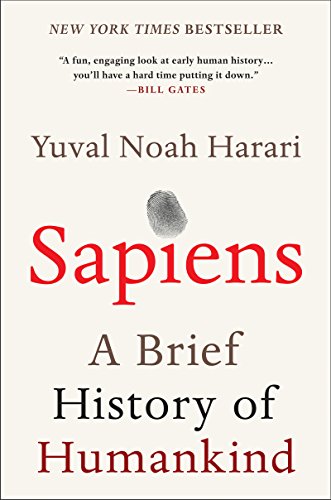
Sapiens A Brief History of Humankind
- Sweeping history of humankind from 70,000 years ago to the present
- By Yuval Noah Harari, international bestseller translated into 65+ languages
- Covers the Cognitive, Agricultural, and Scientific Revolutions
- Covers 70,000 years of human history from cognitive revolution to present
- Translated into 65 languages with over 25 million copies sold globally
- Recommended by Bill Gates, Mark Zuckerberg, and Barack Obama
Read this if you want a bird’s-eye view of how human social structures developed from small hunter-gatherer bands to 8 billion people organized into nations, corporations, and global supply chains. Harari’s scope is enormous, covering 70,000 years of human history in around 400 pages, but his central thesis is sociological: humans dominate the planet because we can cooperate flexibly in large numbers through shared fictions like money, religion, and nationality. It’s not a traditional sociology text, and some academic sociologists have criticized it for oversimplifying. But for a general reader, or a student looking for macro-level context before diving into discipline-specific texts, it’s one of the most illuminating books you’ll read. Pair it with something by Durkheim or Weber for proper methodological grounding.
Yuval Noah Harari’s Sapiens isn’t a traditional sociology book, but its analysis of human social structures is deeply sociological. Harari traces the history of our species from the Cognitive Revolution 70,000 years ago through the Agricultural Revolution, the unification of humankind through empires and religions, and into the Scientific Revolution that continues today. The scope is staggering, and the central thesis is provocative: humans dominate the planet because we can cooperate flexibly in large numbers through shared fictions.
Money, nations, corporations, religions, human rights, these are all “imagined orders” that exist only because enough people collectively believe in them. This argument directly connects to Berger and Luckmann’s social construction thesis, but Harari takes it across 70,000 years of history rather than examining a single society. The result is a book that makes you question assumptions you didn’t even know you had.
Sapiens has been translated into 65+ languages and sold millions of copies worldwide, which tells you something about its accessibility. It’s one of those must-read books that transcends genre boundaries. At $14.99 for the Kindle edition, it’s an excellent complement to the more focused sociology texts on this list. It gives you the big picture that traditional sociology books often assume you already have.
Quiet: The Power of Introverts in a World That Can’t Stop Talking
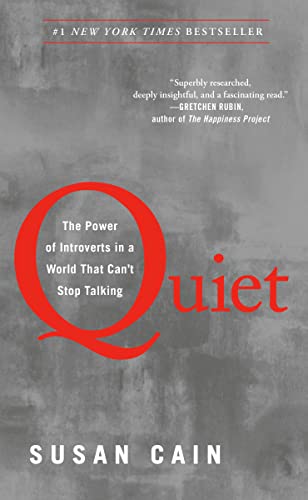
Quiet The Power of Introverts in a World That Can t Stop Talking
- Groundbreaking research on the power and value of introverts
- By Susan Cain, New York Times bestseller for 4+ years
- Challenges the Extrovert Ideal with neuroscience and real-world stories
- Challenges the extrovert ideal that dominates Western business and education culture
- Research-backed arguments drawing from psychology, neuroscience, and sociology
- Spent 7 years on the New York Times bestseller list
This is the book for introverts who have spent their careers being told to speak up more, and for managers who have been unconsciously selecting for extroversion in hiring and promotion. Cain’s argument is sociological at its core: American culture has developed an “Extrovert Ideal” that systematically undervalues the contributions of roughly one-third to one-half of the population. She draws on neuroscience, psychology, and cultural history to make the case. It spent 4+ years on the New York Times bestseller list because it named something millions of people felt but couldn’t articulate. Students in psychology, organizational behavior, or cultural studies will find it substantive. Anyone who has ever felt out of step with the expectation to be loud and charismatic will find it personally useful.
Susan Cain’s Quiet spent over four years on the New York Times bestseller list, and it struck a nerve because it challenged a cultural assumption most people never questioned: the “Extrovert Ideal.” American culture, and increasingly global culture, treats extroversion as the default personality type. Open offices, group brainstorming, leadership through charisma, these are all built on the assumption that the loudest voice is the best one.
Cain argues, with extensive research from neuroscience, psychology, and sociology, that introverts are dramatically undervalued. One-third to one-half of people are introverts, and many of history’s most transformative contributions came from people who preferred solitude and quiet focus. Rosa Parks, Chopin, Dr. Seuss, Steve Wozniak. The book doesn’t argue that introversion is “better” than extroversion. It argues that we’ve built social systems that systematically disadvantage introverts, and that’s a loss for everyone.
From a sociological perspective, Quiet is a compelling study of how cultural norms shape individual identity and opportunity. Cain traces the rise of the Extrovert Ideal through American history and shows how it became embedded in schools, workplaces, and even religious institutions. At $13.99 for the Kindle edition, it’s a book that will resonate whether you’re an introvert who finally feels seen or an extrovert who wants to understand the other half.
How to Choose the Best Sociology Books for Your Reading List
The right sociology book depends entirely on where you’re starting from and what you want to do with the knowledge. Here’s how I’d approach it based on three different reader profiles.
For Beginners: Build Curiosity Before Rigor
Start with one accessible book and one foundational text in parallel. My recommendation: read Outliers alongside The Sociological Imagination. Gladwell will keep you hooked. Mills will teach you how to think. Once you’ve finished both, add The Presentation of Self in Everyday Life as your third read. Goffman is dense enough to be intellectually satisfying but accessible enough to stay engaging.
Don’t try to read all 15 at once. Pick 3, finish them, then come back to this list. Reading 3 books well beats reading 10 superficially every time.
For Sociology Students: Cover the Canon Strategically
If you’re taking sociology courses or building toward a degree, you need the foundational texts. Prioritize in this order: The Sociological Imagination (Mills), The Rules of Sociological Method (Durkheim), Suicide (Durkheim), and Economy and Society (Weber). These four authors, Mills, Durkheim, and Weber, defined the discipline. You’ll encounter them in every course.
Then add Distinction (Bourdieu) and The Social Construction of Reality (Berger and Luckmann) for 20th-century theory. Finally, balance with modern empirical work: Evicted and Bowling Alone show you how sociological methods apply to contemporary problems. Take notes in the margins. Write down questions. Discuss what you’re reading. Sociology is fundamentally about social interaction, so learning it in isolation defeats the purpose.
For Researchers: Start with Method, Then Theory
If you’re doing original research, start with Durkheim’s Rules of Sociological Method to anchor your understanding of social facts and causation. Then read Weber’s Economy and Society for the theoretical frameworks that underpin most modern organizational and institutional sociology. Add Distinction for cultural sociology and Bourdieu’s concepts of cultural capital, habitus, and field.
For methodological inspiration, Evicted is the best contemporary example of ethnographic sociology done rigorously. Desmond’s methodological appendix alone is worth studying. Normal Accidents is essential if your research touches on organizational sociology, risk, or technology. These 15 titles, read seriously and discussed actively, will give you a stronger grounding than most undergraduate sociology programs deliver in four years. That’s not an exaggeration. It’s just what concentrated, deliberate reading does.
What I’d actually buy first
Berger’s Invitation to Sociology. Short, accessible, written for the curious general reader. Then Mills’s Sociological Imagination for the framework that distinguishes private troubles from public issues. Three books and roughly 500 pages get you 80% of the way to thinking like a sociologist. The rest of the canon you can read in any order based on what interests you most.
Sociology is not my home field — I’m a math, physics, and chemistry graduate, and I picked up sociology as a personal-reading hobby that has stuck around for 18 years. The 15 picks below are the books I’ve read, marked up, and returned to in that time, with cross-checks against the canon: Bourdieu, Foucault, Mills, Goffman on the classical side; Coates, Hochschild, Desmond on the contemporary. Treat this as a curated reader’s list, not a syllabus from a working sociologist. Three filters: every book on this list either appears on a sociology graduate-program reading list, has shaped public discourse on inequality, or both. Trade nonfiction with sociology-flavored marketing is not on this list.
Pick by reader type:
- Curious reader, no sociology background — Berger’s Invitation to Sociology. 200 pages, written in 1963, still the cleanest entry point to thinking sociologically.
- Undergraduate sociology major — Mills’s Sociological Imagination + Macionis or Henslin intro textbook + one classical theorist (Durkheim, Weber, or Marx).
- Graduate student / theory-focused — Bourdieu’s Distinction + Foucault’s Discipline and Punish + Goffman’s Asylums.
- Race and inequality focus — Du Bois’s The Souls of Black Folk, Coates’s Between the World and Me, Desmond’s Evicted, Wilkerson’s Caste.
- Methods and ethnography — Becker’s Tricks of the Trade, Burawoy’s Manufacturing Consent.
- Free / public domain — Project Gutenberg has Durkheim’s Division of Labor and Weber’s Protestant Ethic; OpenStax has a free intro textbook.
Frequently Asked Questions
What is the best sociology book for beginners?
The Sociological Imagination by C. Wright Mills is the best starting point. It’s under 250 pages, clearly written, and teaches you the single most important skill in sociology: connecting your personal experiences to larger social structures. Once you’ve read it, books like The Presentation of Self in Everyday Life and Outliers will make a lot more sense.
Can I study sociology on my own without taking a college course?
Absolutely. Most of the books on this list don’t require any academic background. Start with accessible titles like Outliers, The Tipping Point, and Sapiens to build your interest. Then move to foundational texts like Distinction and Economy and Society when you’re ready for denser reading. The key is reading actively, not passively. Take notes, question the arguments, and connect them to what you observe around you.
Which sociology books are required reading in most university programs?
The Sociological Imagination, The Rules of Sociological Method, Economy and Society, and Suicide: A Study in Sociology show up on nearly every undergraduate sociology syllabus. These are foundational works by Mills, Durkheim, and Weber, the three thinkers who essentially defined the discipline. If you’re preparing for a sociology degree, start with these four.
Are Malcolm Gladwell’s books actually sociology?
Gladwell writes popular social science, not academic sociology. His books like Outliers and The Tipping Point draw on sociological research but present it in a journalistic, narrative style. They won’t teach you sociological methods or theory, but they’re excellent at showing how social forces shape individual outcomes. Think of them as gateway books that make you curious enough to read the harder academic texts.
What’s the difference between classical and modern sociology books?
Classical sociology books (Durkheim, Weber, Bourdieu, Goffman) establish the core theories and methods of the discipline. They’re denser, more academic, and focused on building frameworks. Modern sociology books (Evicted, Nickel and Dimed, Bowling Alone) apply those frameworks to contemporary problems like poverty, inequality, and community decline. You need both. The classics give you the tools, and the modern works show you how to use them.
Is Sapiens a sociology book or a history book?
Sapiens blends history, anthropology, biology, and sociology. Harari uses sociological thinking to explain how humans built complex societies, created shared myths, and organized into hierarchies. It’s not a traditional sociology text, but its analysis of social structures and collective behavior is deeply sociological. I’ve included it because it gives you a macro perspective that pure sociology books often miss.
Which books on this list are best for understanding poverty and inequality?
Evicted by Matthew Desmond and Nickel and Dimed by Barbara Ehrenreich are the two strongest picks. Evicted won the Pulitzer Prize and follows families facing eviction in Milwaukee. Nickel and Dimed is investigative journalism where Ehrenreich worked minimum wage jobs to understand what survival actually looks like. Together, they give you both the academic and lived-experience perspectives on American poverty.
How many sociology books should I read per year to build strong knowledge?
Reading 6 to 8 sociology books per year will build solid knowledge within 2 to 3 years. Mix foundational texts with contemporary works so you’re not just learning theory without application. I’d suggest alternating: one classic (like Durkheim or Weber), then one modern work (like Evicted or Quiet). Quality of reading matters more than quantity. Take notes, discuss ideas, and revisit key chapters.
Related searches: Whether you are looking for the best sociology books, sociology books for college, sociology books for graduate students, introductory sociology books, classical sociology books, or contemporary sociology books, the 15 picks above balance classical theory with contemporary applied research from Mills, Bourdieu, Goffman, Putnam, Coates, Hochschild, and Du Bois.
Frequently Asked Questions
What are the best sociology books to read in 2026?
Mills’s Sociological Imagination, Bourdieu’s Distinction, Goffman’s Presentation of Self, Berger’s Invitation to Sociology, Putnam’s Bowling Alone, Coates’s Between the World and Me, and Hochschild’s Strangers in Their Own Land lead the curated reading list. The picks balance classical theory (Durkheim, Weber, Marx) with contemporary applied sociology.
What is the best sociology textbook for college?
Macionis’s Sociology and Henslin’s Sociology are the two most widely-assigned college intro textbooks in the US. For a more theoretical approach, Anthony Giddens’s Sociology delivers stronger conceptual depth. For sociology of race, gender, or class specifically, Course-specific Norton Critical Editions are usually better than general intros.
What sociology books should I read first?
Start with Berger’s Invitation to Sociology (1963) — short, accessible, and laid the foundation for how the field thinks. Follow with Mills’s Sociological Imagination for the framework of personal-vs-public problems. Add Goffman’s Presentation of Self in Everyday Life for the micro-sociology lens. Three books, roughly 500 pages total, get you 80% of the way to thinking like a sociologist.
Are there free sociology books available?
Yes. The OpenStax Introduction to Sociology textbook is free and covers most undergraduate intro material. Project Gutenberg hosts public-domain classics including Durkheim’s The Division of Labor in Society and Weber’s Protestant Ethic. The Internet Archive’s openlibrary.org offers many newer texts to borrow.
What are the best sociology books for graduate students?
Pierre Bourdieu’s Distinction, Michel Foucault’s Discipline and Punish, Michel Foucault’s Madness and Civilization, Michael Burawoy’s Manufacturing Consent, Erving Goffman’s Asylums, and Michel de Certeau’s Practice of Everyday Life are foundational graduate texts. For methods, Howard Becker’s Tricks of the Trade is unmatched.
What’s the difference between classical and contemporary sociology books?
Classical sociology (Durkheim, Weber, Marx, Simmel) focuses on macro-level structural analysis of industrial society. Contemporary sociology (Bourdieu, Foucault, Giddens, Hochschild, Coates) emphasizes power, identity, micro-interactions, and the lived experience of inequality. Both are essential — graduate programs typically require fluency in classical theory, applied research increasingly draws from contemporary thinkers.
What are the best sociology books on race and inequality?
W.E.B. Du Bois’s The Souls of Black Folk (foundational), Michelle Alexander’s The New Jim Crow, Ta-Nehisi Coates’s Between the World and Me, Matthew Desmond’s Evicted (Pulitzer-winning ethnography of housing inequality), Isabel Wilkerson’s Caste, and Patricia Hill Collins’s Black Feminist Thought lead the contemporary canon.
What is sociology and why should I read these books?
Sociology is the systematic study of society, social institutions, and human behavior in groups. The books above answer questions like: why do societies organize the way they do, how does social inequality persist, what produces collective behavior, and how do small interactions create large social patterns. They’re essential reading for anyone working in policy, education, journalism, social work, or any field where understanding human systems matters.
Tell Google you want more of this.
Add Gaurav Tiwari as a preferred sourceOne tap, and this site shows up more often in your own Top Stories, AI Overviews and AI Mode. Remove it any time.
Disclaimer: This site is reader-supported. If you buy through some links, I may earn a small commission at no extra cost to you. I only recommend tools I trust and would use myself. Your support helps keep gauravtiwari.org free and focused on real-world advice. Thanks. - Gaurav Tiwari