by
by
Google shut down goo.gl on August 25, 2025. Every short link that ever pointed through it now returns a 404, including the ones embedded in business cards printed five years ago, QR codes on conference badges, and the SMS coupon links a few hundred companies forgot to migrate. The shutdown wasn’t gradual. One day the redirect worked, the next day it didn’t, and every analytics dashboard tied to a goo.gl link went dark.
If you’re searching for goo.gl alternatives in 2026, the good news is that the URL shortener space got better while Google was busy killing its product. Custom domains used to be enterprise-only. Now they ship with $4 plans. QR codes used to be a separate purchase. Now they come bundled. Sub-50ms redirects used to require self-hosting. Now you can buy them on a Hobby tier. The comparison includes hosted services and self-hosted options, including GT Link Manager, the WordPress plugin I develop.
Affiliate disclosure: Some links in this article are affiliate links. If you sign up through them I may earn a commission at no extra cost to you. None of this changes the rankings below — every recommendation was tested before it got written about.
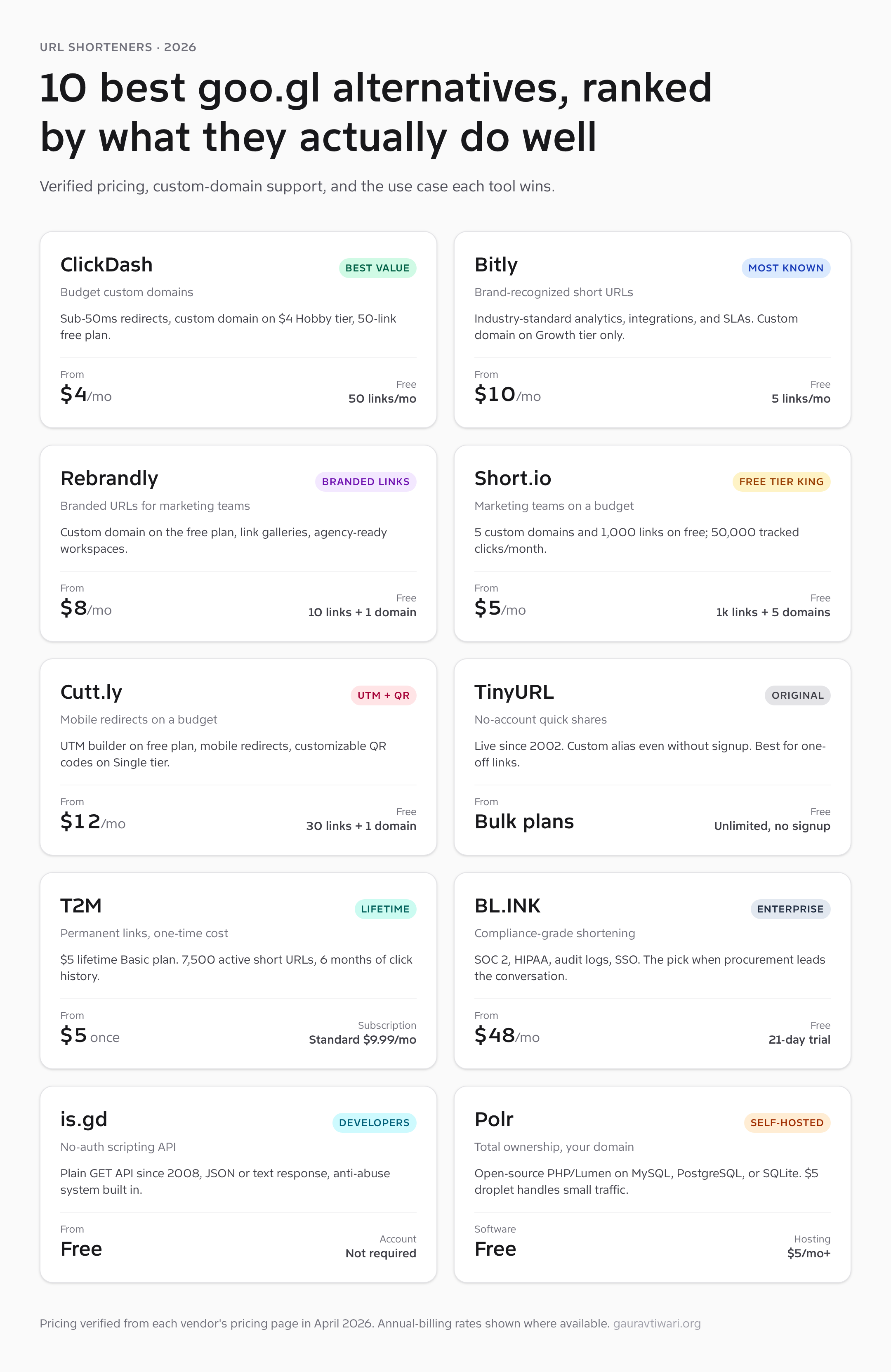
If you want the short answer before scrolling: ClickDash at $4/month is the best value play if you need custom domains, Bitly is still the safest mainstream pick if your stakeholders recognize the name, Rebrandly wins for brand-heavy marketing teams who care about polished URLs more than analytics, and Polr is the right call if you want full ownership of your link infrastructure on your own server.
Why goo.gl died and why your old links are broken
Google announced the shutdown in July 2024 and gave users 13 months to migrate. The deadline was August 25, 2025. After that, every goo.gl URL — including the ones inside Google Maps invitations, Photos shares, and the older Firebase Dynamic Links migrations — started returning This link is no longer working. Google’s official guidance was to use Firebase Dynamic Links, which Google then also announced it was shutting down (deadline: August 25, 2025, the same day). Firebase Dynamic Links is now also dead.
So if you’re still seeing dead goo.gl links in old documents, emails, or printed material, the original destinations aren’t recoverable through Google. They’re gone. Your only path is to find the source asset, rebuild a fresh short link with one of the tools below, and update wherever the link lives. For high-traffic legacy links that you can’t update (printed signage, broadcast inserts), the move is to set up a wildcard catch-all redirect on a domain you own and route everything through a fresh shortener with custom domains.
What to look for in a goo.gl alternative
The shortener market has settled into clear feature tiers. Goo.gl was a free service with basic analytics and zero customization, so the default upgrade path lands at the free tier of any modern tool. The interesting decisions happen when you start pricing branded domains, click-through limits, and team controls.
- Custom domain support on the cheapest paid tier — the difference between
bit.ly/x7Yz9andyour.brand/launchis the difference between getting clicked and getting ignored. - Analytics depth beyond raw click counts. Country, device, referrer, and time-of-day data is the minimum. UTM auto-builders save real time.
- Free tier that’s actually usable. If the free tier caps you at 5 links/month (looking at you, Bitly), it’s a 14-day trial in disguise.
- API access on a tier you can afford. Most marketing automation will need this within 90 days.
- QR code generation on the same plan as link creation. Buying QR codes separately in 2026 is a tax on people who didn’t read the pricing page carefully.
- Edit-after-publish for the destination URL. If you can’t change where a link points after it’s been shared, it’s not a real shortener — it’s a printer.
1. ClickDash — best goo.gl alternative for budget custom domains
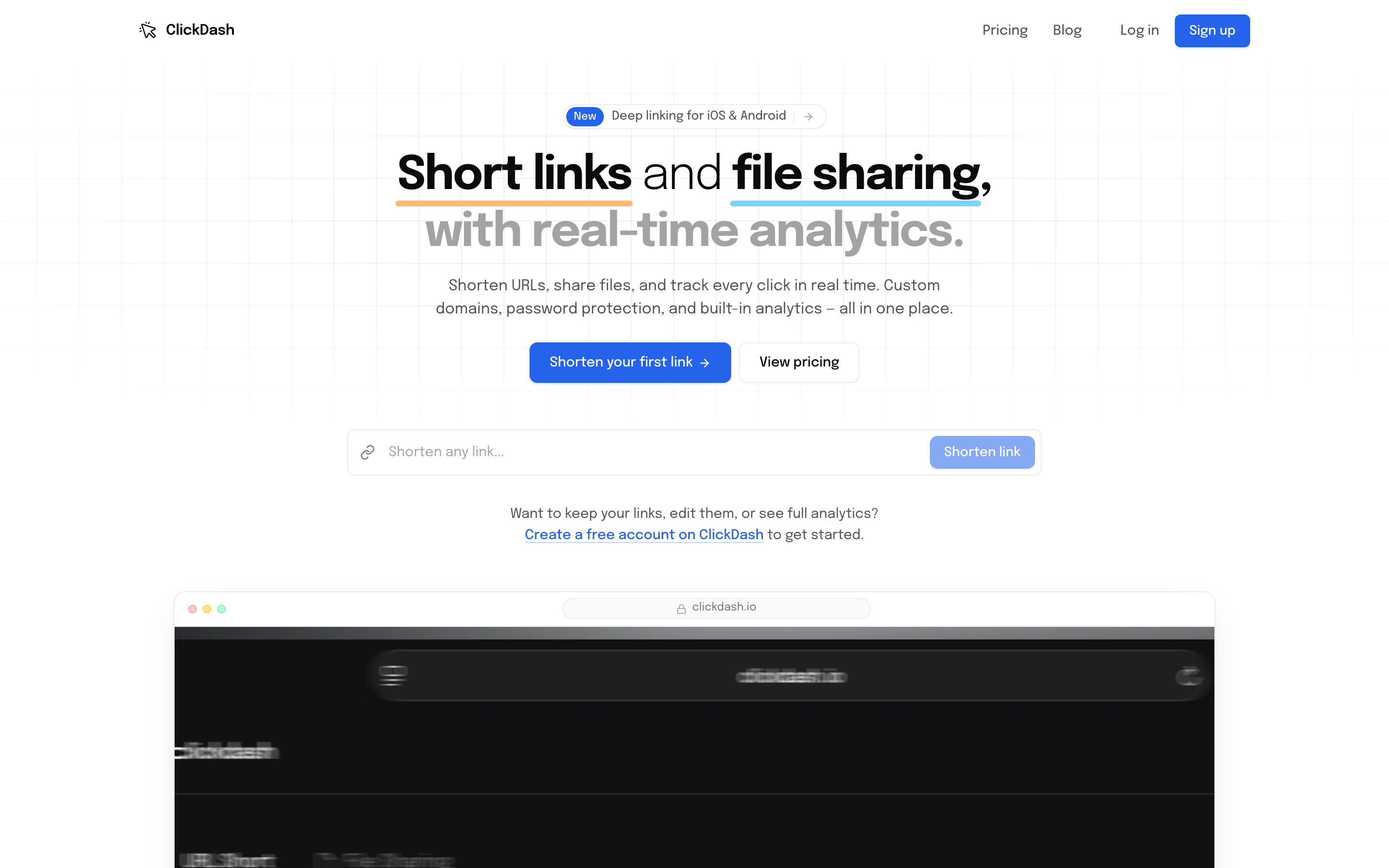
ClickDash sits at the intersection most shorteners avoid: cheap, technically modern, and visibly built by people who actually use the product. The Hobby plan is $4/month annual and includes one custom domain, 500 links, password protection, and link expiry. That same combination costs $29/month at Bitly.
What’s good: Sub-50ms redirect latency from Redis-backed caching. The free tier (50 links/month, no credit card) is generous enough to actually validate the product before paying. Real-time analytics show country, city, device, and referrer data without the dashboard lag that plagues older shorteners. iOS and Android deep linking is included, which most competitors charge extra for.
What’s broken: The brand recognition isn’t there yet. If you’re a marketing manager forwarding a short link to a legal team or executive, “clickda.sh” looks unfamiliar where “bit.ly” doesn’t. That matters more in some industries than others. Custom domains solve it on the paid tier, but the free tier still leans on the vendor domain.
Under the hood: Redis caching, automatic SSL on custom domains, Chrome extension for quick shortening, file sharing built into the same workspace. Pro at $6/month adds 2,000 links and three custom domains. Growth at $12/month bumps to 5,000 links and ten custom domains with team support. The 14-day refund policy is the kind of detail that signals a product team that’s seen real customers.
What should be better: Enterprise SSO and SOC 2 documentation aren’t called out publicly yet. If you’re at a company that requires those before procurement signs, factor that into the timeline.
2. Bitly — the safe mainstream goo.gl alternative
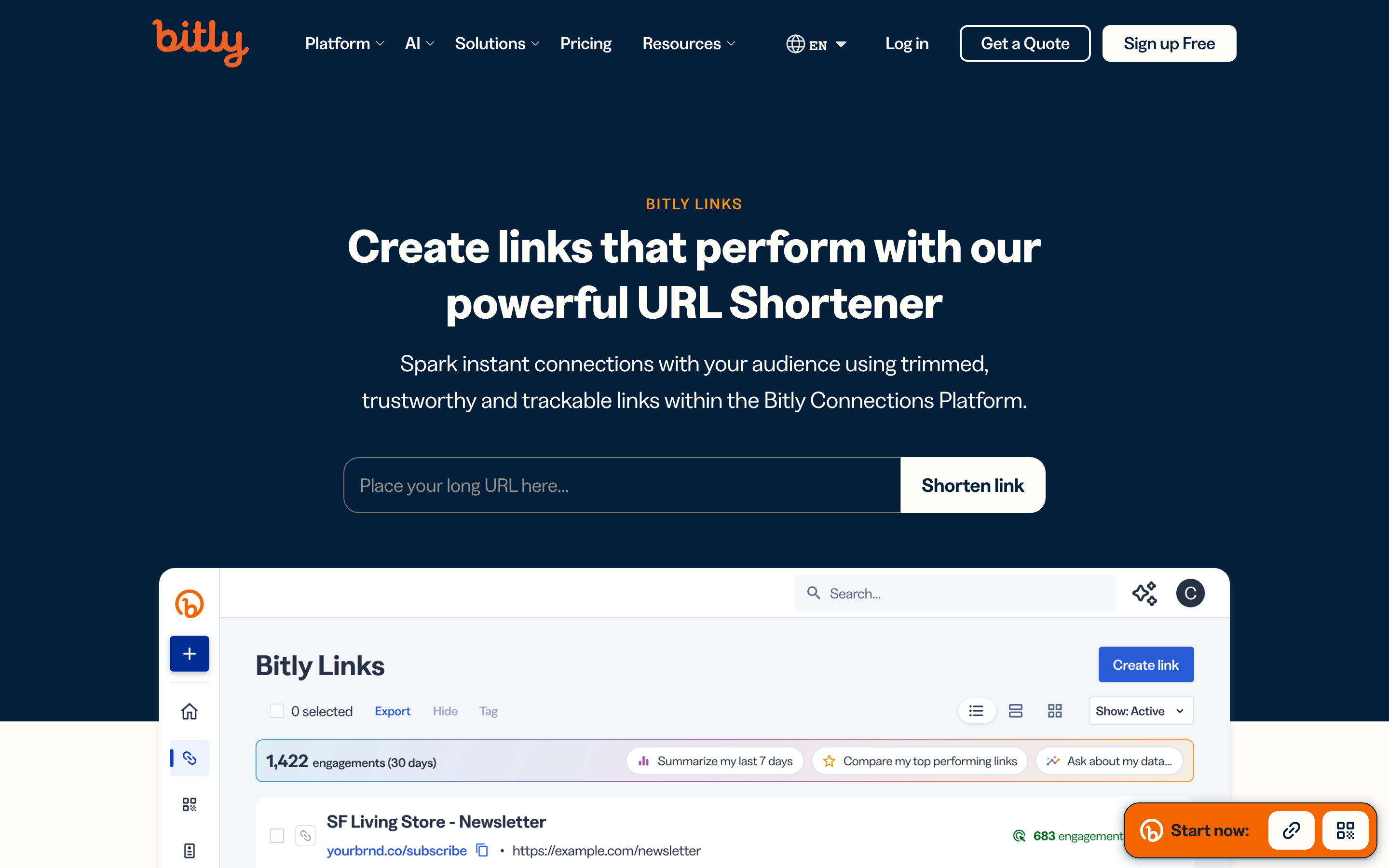
Bitly is the answer when “nobody got fired for picking IBM” applies to your link strategy. It’s the most recognized URL shortener on the planet, the analytics are genuinely thorough, and the integrations cover everything from HubSpot to Slack to whatever obscure CRM your sales team is on this quarter.
What’s good: Brand trust. Click-through rates on bit.ly links are measurably higher than on lesser-known short domains, especially for B2B audiences. The analytics UI got a serious overhaul in late 2025 and now shows real-time click maps, device breakdowns, and conversion-event hooks. UTM Builder is included from the Core tier up.
What’s broken: Pricing. The free tier is 5 links per month, which is borderline insulting for a product that historically defined the category. To get a custom domain you need the Growth plan at $29/month annual. The data retention story is also irritating: Free has zero history, Core gets 30 days, Growth gets four months. If you need to compare a campaign year-over-year you’re on Premium ($199/month) territory.
Under the hood: 99.9% SLA on Enterprise, mobile deep linking, branded link campaigns, and a properly mature API with SDKs in most major languages. Custom 404 redirects and link rotation (split testing destinations) are useful campaign tools that most competitors don’t ship at all.
What should be better: The free tier should be three times what it is. Five links per month makes Bitly feel like it doesn’t want hobbyists or solo operators in the funnel, which long-term is a brand problem when those same people become marketing managers and remember which tools treated them well.
3. Rebrandly — best goo.gl alternative for branded short links
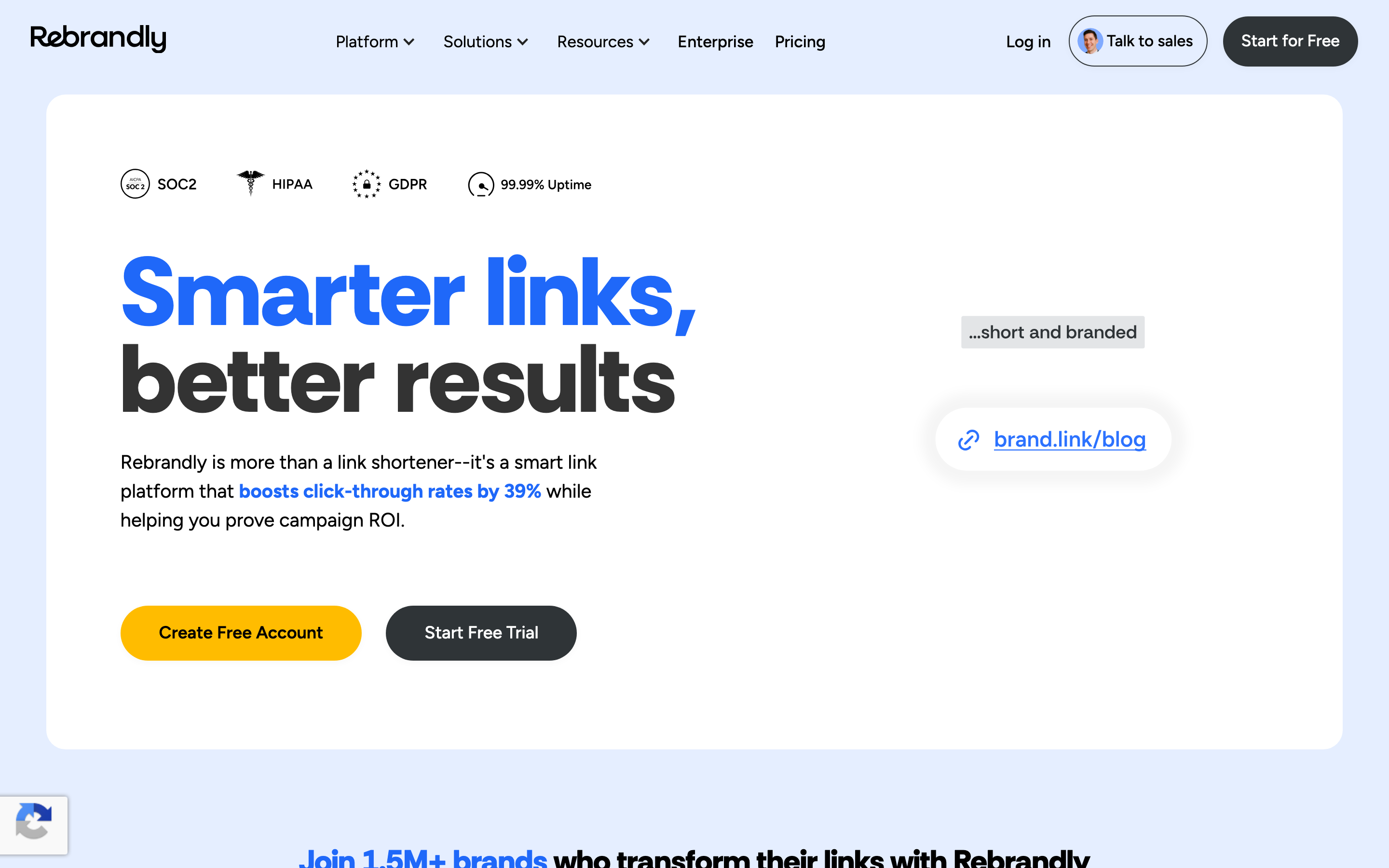
Rebrandly built its product around the assumption that the brand on the link matters more than the analytics on the back end. The free tier ships with one custom domain, which is the single most useful feature any free shortener tier has ever had.
What’s good: Custom domain on the free plan is unmatched in 2026. The URL editor is genuinely good — you can edit the destination of any link without breaking the short URL, and bulk operations on hundreds of links don’t choke. Link galleries (private link directories you share with a team or client) are a quietly excellent feature for agencies juggling 40 client campaigns.
What’s broken: The free tier is 10 links per month. If you’re a freelancer running three small campaigns simultaneously, you’ll hit the cap fast. Analytics depth lags behind Bitly and ClickDash on the Essentials plan; you need Professional ($22/month annual) before you get useful breakdowns by country and device.
Under the hood: SOC II Type 2 and HIPAA compliance on Enterprise. SSO via SAML on the same tier. Workspaces and teammate collaboration scale well — Growth at $69/month annual gets you 10 custom domains and 5 workspaces, which fits most agency operations. 301 redirects by default, which is what you want for SEO link equity.
What should be better: The Essentials plan should include at least basic country-level analytics. Right now you’re paying $8/month for 250 links and getting click counts, which is not enough information to actually run a campaign.
4. TinyURL — the no-account goo.gl alternative
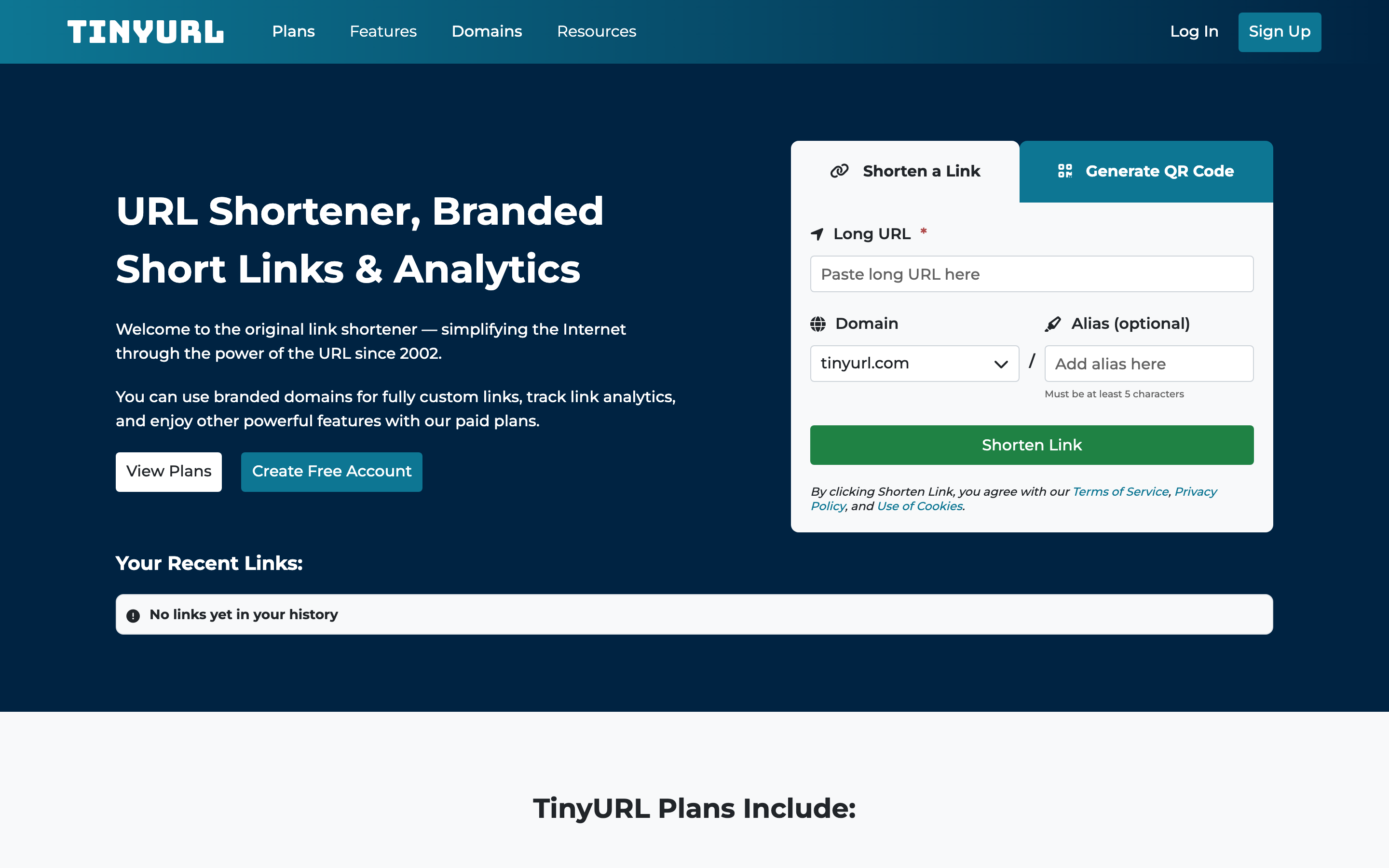
TinyURL is the original. It’s been live since 2002, predates Twitter by four years, and still works exactly the way it did when it launched: paste a URL, get a short link, no account required. For one-off links — emailing a doc to your accountant, sharing something quick in a Slack DM — nothing beats it on speed.
What’s good: Zero friction. No signup, no email, no captcha most of the time. Custom alias is supported even on the anonymous version, so tinyurl.com/yourcompany-launch works without paying. The links don’t expire, which is more than you can say for some “free forever” shorteners.
What’s broken: The free anonymous version has no analytics whatsoever. You’ll know someone clicked because they replied; that’s the entire reporting suite. The paid TinyURL plans (added in recent years) are awkwardly positioned — the pricing page is gated behind login flows that aren’t fun to navigate, and the feature set lags the dedicated marketing-focused shorteners by a wide margin.
Under the hood: Surprisingly resilient infrastructure for a 24-year-old service. Redirects are fast, and the link database has never had a public outage I can find documented. The trust signal is strong enough that some email providers whitelist tinyurl.com domains where they’d flag others.
What should be better: Paid pricing transparency. If TinyURL wants to compete in the SMB segment, the pricing page needs to show plans without forcing a signup. Right now it feels like the paid tier was bolted on as an afterthought.
5. Short.io — best goo.gl alternative for marketing teams
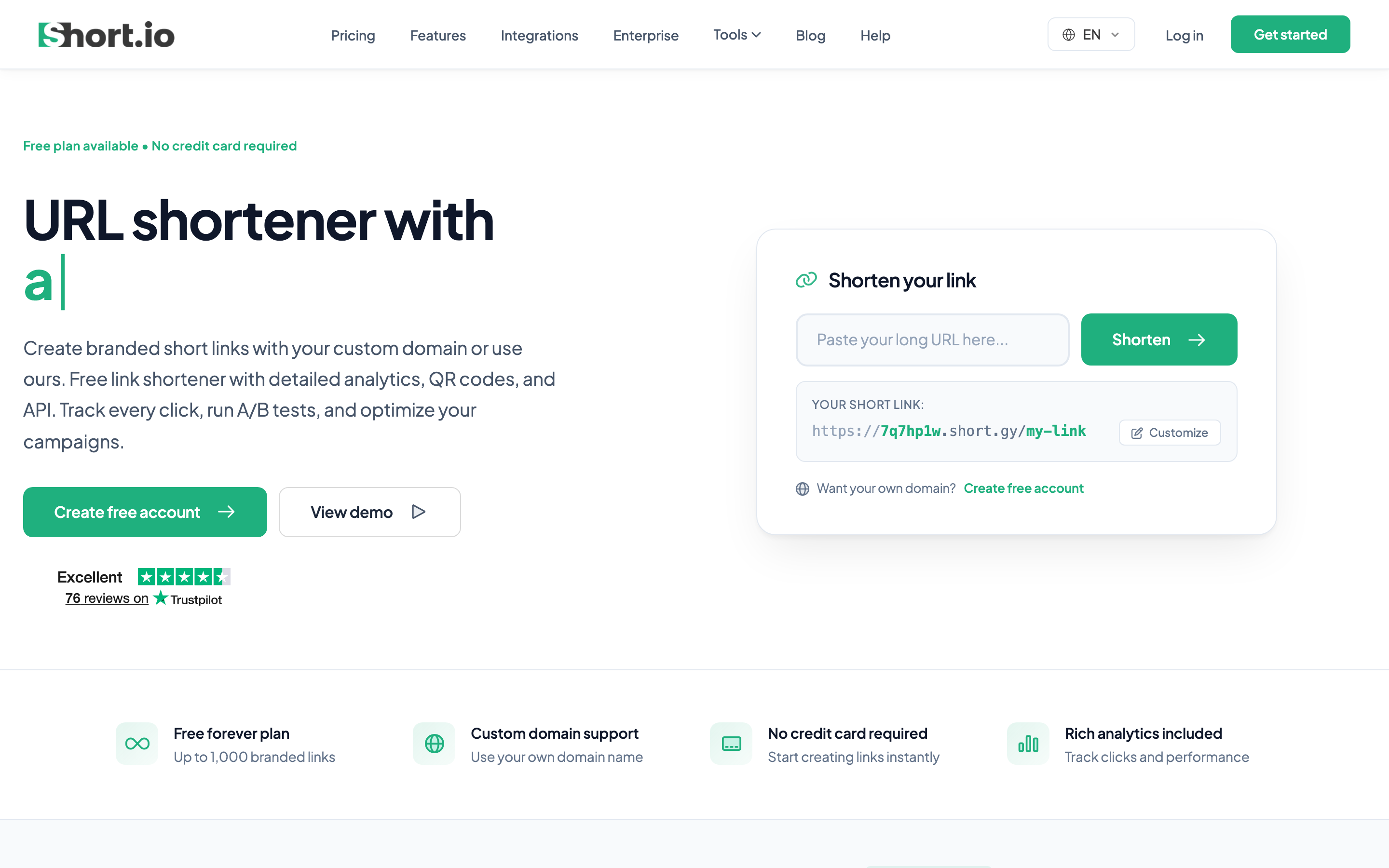
Short.io is what you pick when the marketing team needs custom domains, analytics, and team controls but doesn’t want to pay Bitly enterprise prices. Five custom domains on the free tier is the kind of allowance that shifts the calculation entirely.
What’s good: The free tier is one of the most generous in the category — 1,000 branded links, 5 custom domains, 50,000 tracked clicks per month. Hobby at $5/month bumps to 100,000 clicks, and Pro at $18/month removes click limits entirely. Custom domains on the free tier alone make this the right answer for most freelancers.
What’s broken: The dashboard UI feels older than the underlying product. Some workflows take more clicks than they should — bulk-importing 200 links from a CSV requires a specific column order that isn’t documented prominently. Click-stat retention beyond the standard window requires a Pro tier that isn’t always priced competitively if your needs are modest.
Under the hood: Solid REST API, webhook support, deep linking for iOS and Android, and link cloaking that actually works on stricter referrer policies. The 7-day free trial on paid tiers (with no credit card) is rare in this category and shows the team trusts the conversion experience.
What should be better: The dashboard could use the same polish budget that the analytics engine clearly already has. The product is genuinely good but the UI makes it feel less premium than it actually is.
6. Cutt.ly — budget goo.gl alternative with UTM and QR
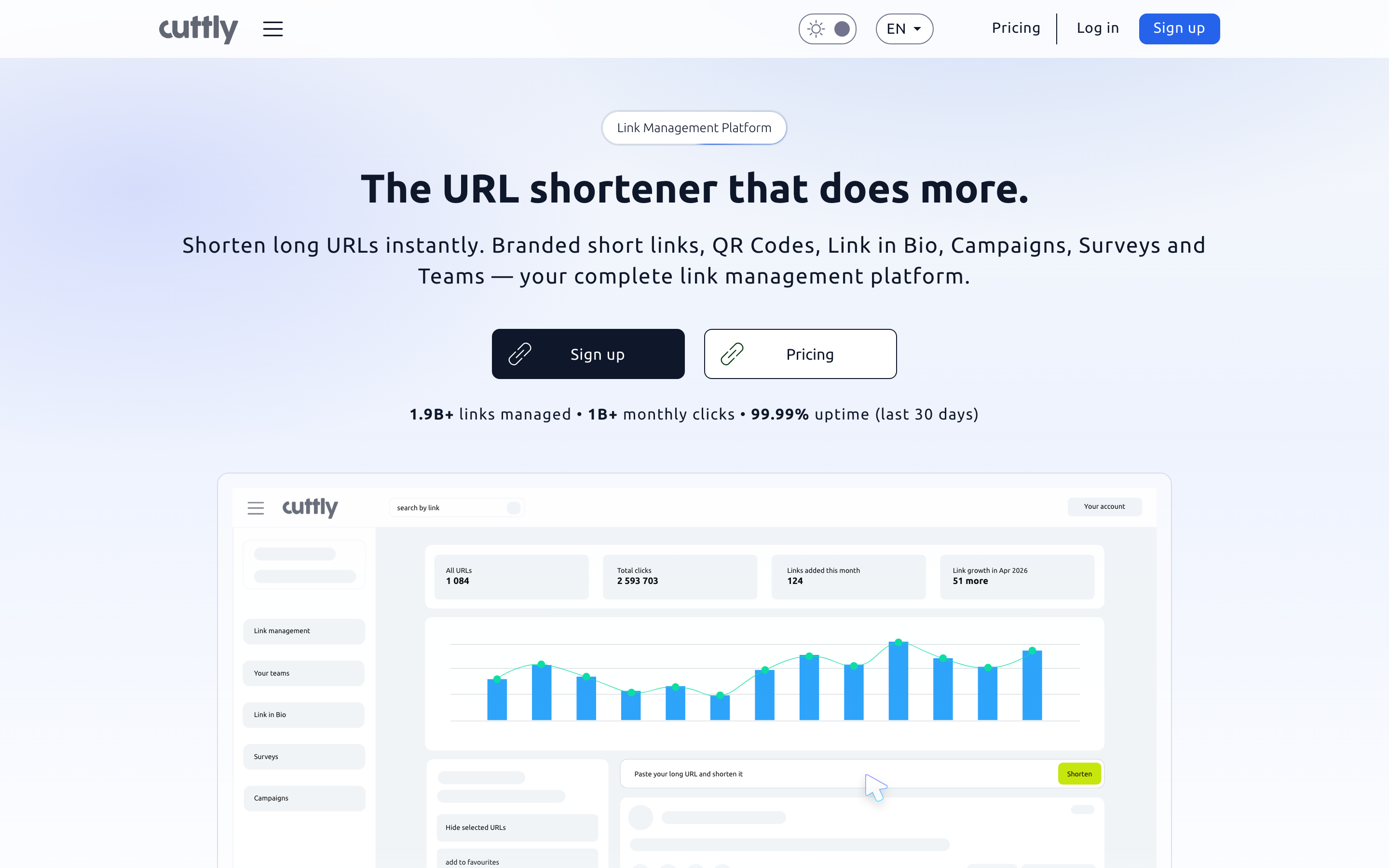
Cutt.ly targets the same budget-conscious marketer that ClickDash does, with a slightly different feature mix. The free tier gives 30 links per month and one branded domain, and the Single plan at $25/month includes 5 branded domains and unlimited custom back-halves.
What’s good: Customizable QR codes on Single tier and above. UTM parameter builder is included on the free plan, which puts it ahead of Bitly free. The mobile redirect feature lets you point a single short link to different destinations based on whether the click came from iOS, Android, or desktop, which is a marketing automation play that usually requires Branch or AppsFlyer.
What’s broken: The Starter tier at $12/month is where most users will land, and it’s a strange package — 300 links per month with one branded domain and only 30 days of analytics history. That gap between Starter and Single ($25) is too wide; there should be something at $18.
Under the hood: Mobile redirects, link expiration, password-protected links, custom 404 pages, and a 360 calls/60s API limit on Team Enterprise. SSO support on the highest tier. The infrastructure is solid; the product just doesn’t sell itself as well as it could.
What should be better: The marketing site buries the strongest features. Mobile redirects and custom 404s are genuine differentiators and they’re listed three scrolls below pricing. The product is better than the website makes it look.
7. T2M — lifetime goo.gl alternative for permanent links
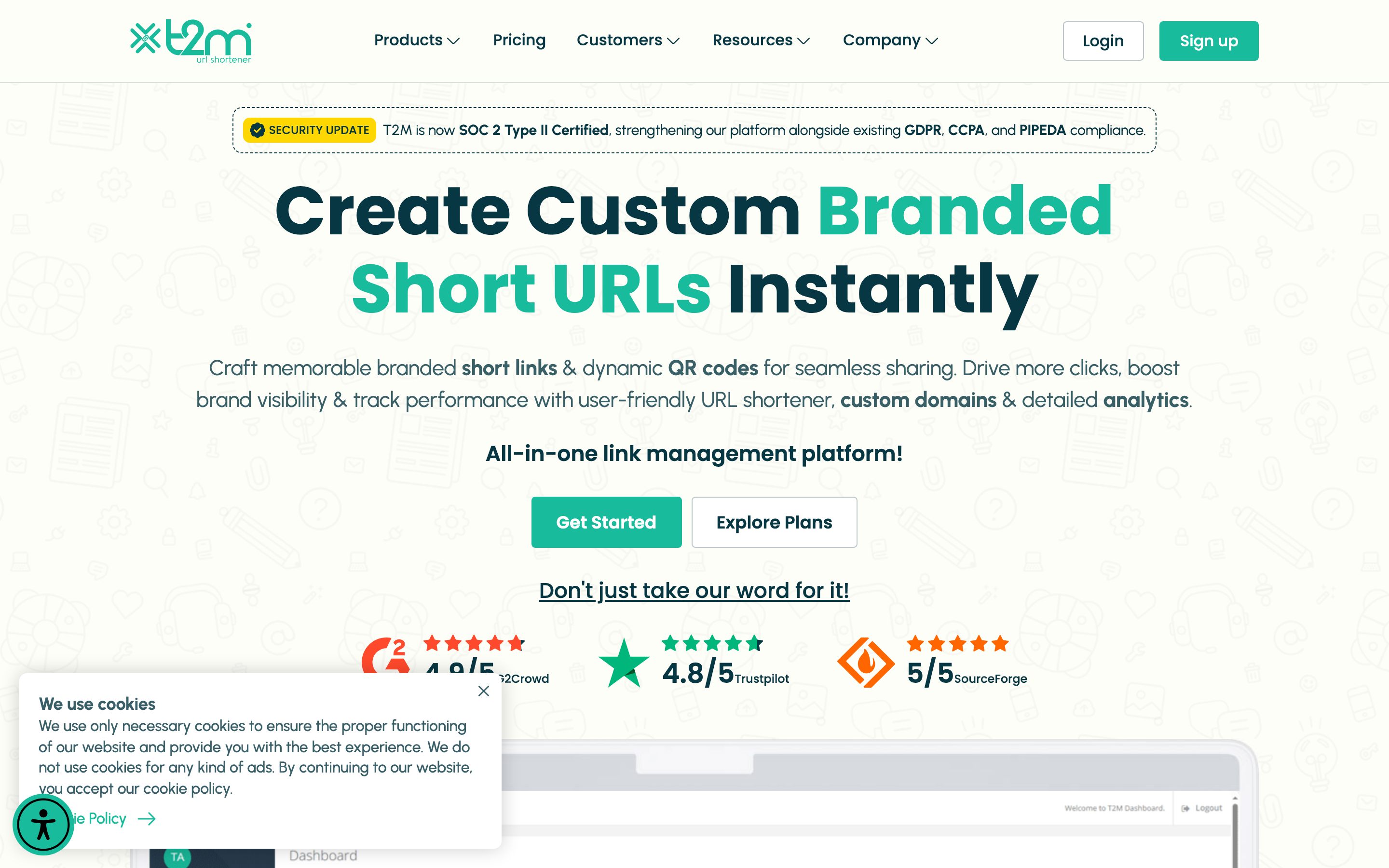
T2M is positioned for one specific use case: links that need to never go away. The Basic plan is $5 one-time (lifetime), which sounds too good to be true until you read the fine print on monthly link caps.
What’s good: $5 lifetime is real. You pay once, you get 7,500 maximum active short URLs, 500 new links per month, 5,000 clicks per month, and 6 months of click data history. For a personal blog or a small consultancy with predictable link volume, this beats every subscription model on a 5-year horizon.
What’s broken: The 5,000 clicks/month cap on the lifetime plan is the catch. If one link goes viral you’ll blow through it on a single Tuesday. The data retention story is also weaker than competitors — 6 months on Basic, scaling to 24 months on Premium. For SEO-attribution use cases that need year-over-year comparisons, this is a hard no.
Under the hood: Free SSL via Let’s Encrypt on all paid tiers. Custom branded domains scale from 1 (Standard) to 10 (Premium). Static QR codes only on Basic — dynamic QR codes are paid-tier features. The “7 years of stable service” line on the marketing site is meaningful — they’ve been around long enough to trust the lifetime promise.
What should be better: The click cap on the lifetime plan should scale with link count. 5,000 clicks across 7,500 links is roughly 0.66 clicks per link per month, which is below what one viral post would consume.
8. BL.INK — enterprise goo.gl alternative with compliance
BL.INK is the URL shortener you pick when procurement asks about HIPAA, SOC 2, and audit logs in the first conversation. It’s not cheap — Expert+ starts at $48/month — and it’s not trying to be.
What’s good: Compliance posture is the strongest in the category. SSL across all tiers, 21-day free trial with full feature access, dynamic links from SMB tier up, and audit logging built in. For regulated industries (healthcare, finance, legal), BL.INK clears the compliance review where Bitly stalls.
What’s broken: The pricing is a wall for individuals. Expert+ at $48/month gets one user, one domain, 10,000 active links — that’s not bad on raw allowance but the dollar figure prices out anyone whose budget is personal. The marketing site assumes you’ve already decided you need enterprise compliance and walks you straight to a sales conversation.
Under the hood: 250 dynamic links on SMB ($99/month), scaling to 1,000 on Business ($599/month). Team management, SSO, role-based access. The infrastructure is genuinely enterprise-grade, with SLAs documented in writing rather than mentioned in passing.
What should be better: A starter tier under $20 would help the company catch buyers earlier in the funnel. Right now the gap from “free trial ends” to “$48/month” is the gap a lot of evaluators don’t bridge.
9. is.gd — goo.gl alternative for developers
is.gd has been live since 2008 and has the simplest possible API for programmatic shortening. If you need to shorten 50 URLs in a script for a one-off task, you’ll have working code in under five minutes.
What’s good: The API is documented in a single page and accepts plain GET requests with no auth required. https://is.gd/create.php?format=json&url=... returns a JSON response. For scripting, automation, or one-off engineering tasks, this beats every shortener in this list on time-to-first-link.
What’s broken: No analytics, no custom domains, no edit-after-publish, no account management. is.gd is a programmatic shortener for engineers; it’s not a marketing tool. The link format (is.gd/abc123) is short but visually generic, and stricter spam filters do flag is.gd links more than they flag bit.ly links.
Under the hood: Stable infrastructure, anti-abuse system that flags spammy URLs at creation time, optional preview pages so users can see the destination before clicking. The ~17 years of uptime is the trust signal that matters most for permanent links.
What should be better: A modern HTTPS-only API endpoint with documented rate limits would push it from “useful for hobbyists” to “viable for production scripting.”
10. Polr — self-hosted goo.gl alternative
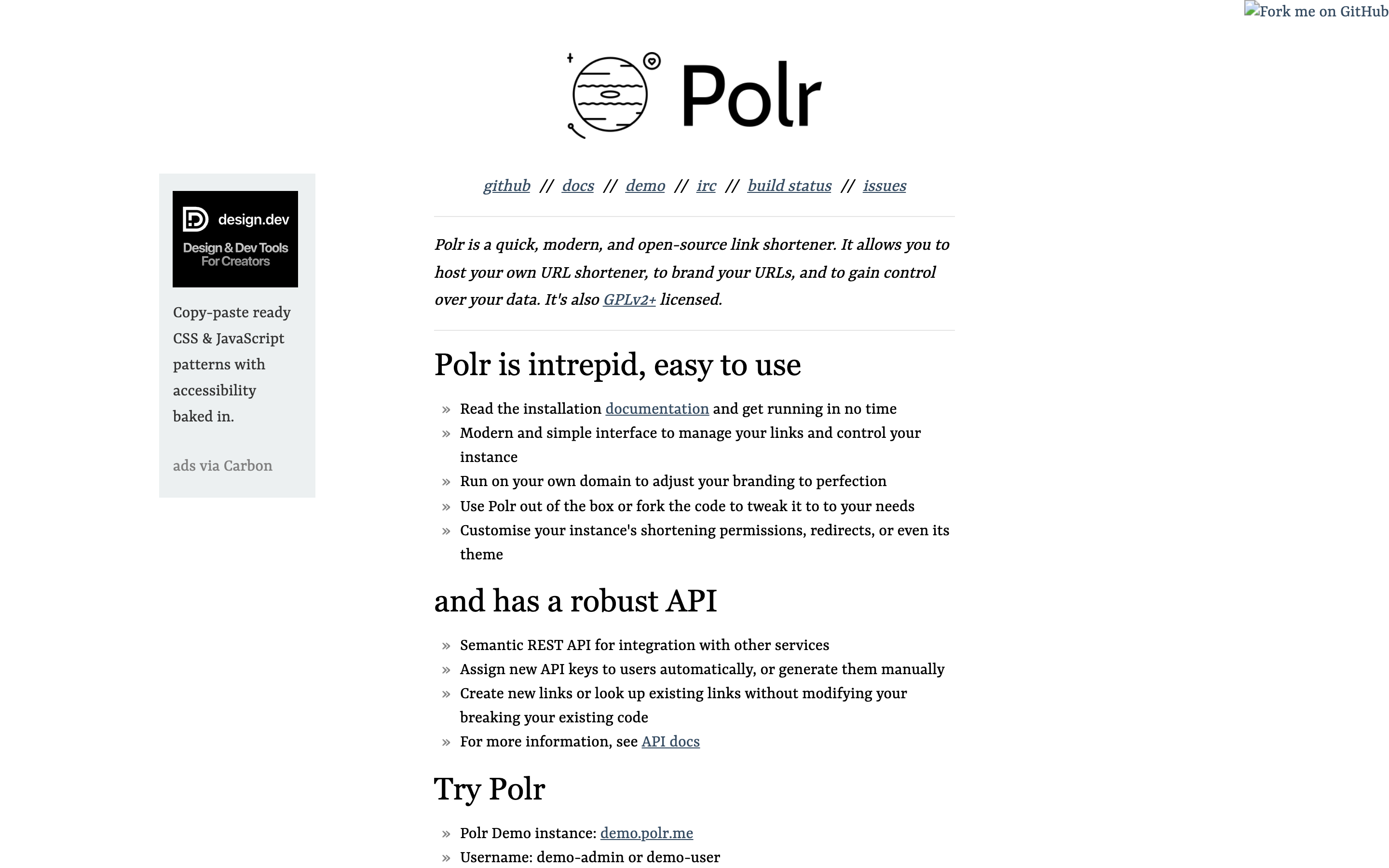
Polr is the self-hosted answer. Open-source under GPLv2, written in PHP on Laravel’s Lumen microframework, with database support for MySQL, PostgreSQL, or SQLite. You pay nothing for the software and whatever your hosting costs you for the redirects.
What’s good: Total ownership. The links live on a domain you control, the database is yours, the code is auditable, and there’s no vendor that can shut down on you the way Google did with goo.gl. The admin panel is clean, the REST API is documented, and the demo at demo.polr.me is a real working install you can poke without committing to a deploy.
What’s broken: Project velocity. The most recent stable releases on GitHub aren’t frequent, and some core features (advanced analytics, team management) lag commercial alternatives by years. If you don’t have someone comfortable with PHP deployment in your team, the operational burden adds up over time.
Under the hood: Lumen on Laravel, Blade templating, Eloquent ORM, MVC architecture. Standard PHP-stack hosting works (a $5/month DigitalOcean droplet handles modest traffic without breaking a sweat). API key generation is built in, theming is customizable, and shortening permissions can be locked down per user role.
What should be better: A hosted “Polr Cloud” tier from the maintainers would give the project a sustainable revenue stream and let teams adopt it without DevOps overhead. As of 2026, you’re either self-hosting fully or you’re not.
11. GT Link Manager
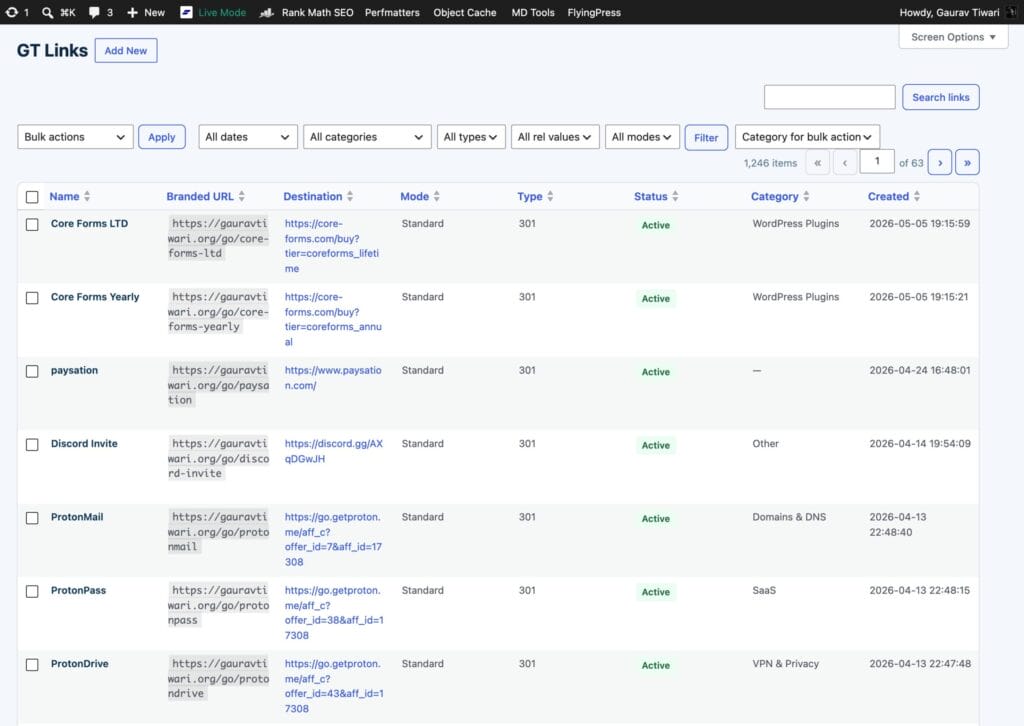
GT Link Manager is the free WordPress plugin I develop for branded links. It keeps a public path on your domain separate from its destination, so an offer can move without forcing an edit in every article.
What’s good: a central link library, CSV migration and country-specific destinations where trusted location data is available. Optional click reports add context around redirect activity.
What’s the limitation: it is WordPress-only. The redirects need an active handler, and click counts are not unique-visitor or sales totals. It does not provide a hosted link service or link-rotation experiments.
Under the hood: links use a dedicated database table and an early WordPress redirect path. Authenticated REST endpoints support link-management automation. Basic click counts and Advanced Analytics are separate opt-in controls.
goo.gl alternatives at a glance
| Tool | Best for | Free tier | Cheapest paid | Custom domain |
|---|---|---|---|---|
| ClickDash | Budget custom domains | 50 links/mo | $4/mo (Hobby) | Yes (Hobby) |
| Bitly | Brand-recognized URLs | 5 links/mo | $10/mo (Core) | Growth $29/mo |
| Rebrandly | Branded short links | 10 links + 1 domain | $8/mo (Essentials) | Yes (free tier) |
| TinyURL | One-off shares | Unlimited, no signup | Bulk plans (login required) | Paid only |
| Short.io | Marketing teams | 1k links + 5 domains | $5/mo (Hobby) | Yes (free tier) |
| Cutt.ly | UTM + QR on a budget | 30 links/mo + 1 domain | $12/mo (Starter) | Yes (free tier) |
| T2M | Lifetime/permanent links | None | $5 lifetime (Basic) | Standard $9.99/mo |
| BL.INK | Enterprise compliance | 21-day trial | $48/mo (Expert+) | Yes (all tiers) |
| is.gd | Developer scripts | Free + open API | n/a | No |
| Polr | Self-hosted ownership | Open-source | Hosting only | Yes (your domain) |
| GT Link Manager | Existing WordPress sites | Free plugin | Hosting only | Your WordPress domain |
Migrating from goo.gl: what to do with broken links
If you’re auditing existing material for dead goo.gl links, the workflow is roughly the same regardless of which alternative you pick. The hard part isn’t generating new short links — that takes seconds. The hard part is finding every place the old goo.gl link was published.
- Search your content management system, email archives, and Google Drive for the string
goo.gl/. Most CMSes have full-text search; for emails, Gmail’shas:link goo.gloperator works. - For each goo.gl link, find the original destination URL. If it’s not in your records, check the Wayback Machine — sometimes archived pages still resolve the goo.gl redirect to the destination.
- Generate a fresh short link in your chosen tool. If you have the budget, use a custom domain you’ll control for 5+ years (a
.linkor.codomain is fine). - Update every reference. For high-volume cases (10,000+ links across emails and pages), automate it with a script that hits your CMS API.
- For printed material you can’t update (signage, business cards, conference badges), set up a wildcard catch-all on your domain that redirects any
/legacy-prefix-*path to a “this campaign has ended” landing page with the new destination clearly labeled.
What I’d actually use in 2026
If I’m starting from scratch with no existing tooling and a budget under $10/month, I’d pick ClickDash. The custom domain support on the Hobby tier alone justifies the price, and the redirect performance is faster than what most paid Bitly tiers actually deliver. For a marketing team with stakeholders who recognize bit.ly, I’d pay for Bitly Growth at $29/month and not feel bad about it. For an agency juggling 30+ clients, Rebrandly’s link galleries are genuinely the deciding feature.
For permanent personal links — the kind that go on a printed business card or get embedded in an evergreen ebook — I’d pay T2M’s $5 lifetime fee and accept the click cap as the price of not worrying about subscription churn. For one-off engineering tasks where I need to shorten 200 URLs in a Python script at 2am, is.gd is still the fastest option. And if I were running a privacy-focused operation where the link infrastructure being mine matters more than feature parity, I’d self-host Polr on a $5 droplet and not look back.
The one tool I would not pick in 2026 is the goo.gl spiritual successor — there isn’t one, and Google has demonstrated it doesn’t intend to stay in the URL shortening business. Whatever you choose, choose something with a business model you can see, a custom domain you control, and a backup plan for the day the vendor decides shorteners aren’t core to their roadmap anymore.
For more tools that pair well with link shorteners, see my roundups of the best link-in-bio tools, content marketing tools, and the in-house QR Code Generator for the QR side of the same workflow. If you’re optimizing for rankings on the destination pages those short links point to, my SEO tools shortlist covers the rest of the stack.
When did goo.gl shut down?
Google shut down goo.gl on August 25, 2025. After that date every existing goo.gl short link returns a 404 error. Google announced the shutdown in July 2024 and gave 13 months of notice. Firebase Dynamic Links, the recommended migration path, was shut down on the same day.
Are old goo.gl links recoverable?
No. Once a goo.gl link returns a 404, the destination is not retrievable through Google. You need to find the original destination URL from your own records or web archives, then create a fresh short link with one of the alternatives in this article.
What is the best free goo.gl alternative?
For a free tier with custom domains, Rebrandly (10 links + 1 domain) and Short.io (1,000 links + 5 domains) are the strongest. For unlimited free shortening with no signup, TinyURL is still the easiest. For developers needing an open API, is.gd works with no account.
Which goo.gl alternative is cheapest with a custom domain?
ClickDash at $4/month annual (Hobby tier) is the cheapest option that includes a custom domain with SSL, password protection, link expiry, and 30-day analytics. Short.io and Rebrandly both include a custom domain on their free plans, so $0 is the floor if your link volume is low.
Does goo.gl have an API replacement?
Google does not offer a replacement API. The goo.gl URL Shortener API was shut down years before the redirect service. For programmatic shortening, the simplest replacements are is.gd (no auth, GET-based JSON API) and Bitly (mature OAuth-based REST API). Most of the tools in this article expose an API on their paid tiers.
Are URL shorteners safe to use?
Reputable shorteners are safe — Bitly, Rebrandly, ClickDash, and Short.io all run anti-abuse systems that flag malicious destinations at creation time. The risk profile depends on the recipient’s email or messaging filter; some stricter filters flag less-known shortener domains, which is one reason to use a custom domain on a paid tier.
Can I self-host a goo.gl alternative?
Yes. Polr is the most actively used open-source self-hosted shortener. It runs on PHP/Laravel Lumen with MySQL, PostgreSQL, or SQLite. A $5/month DigitalOcean droplet handles modest traffic. You get full ownership of the link database and the redirect domain.
How do I migrate thousands of old goo.gl links?
For high-volume migrations, script it. Search your CMS, email archives, and content stores for the string goo.gl/. For each match, look up the original destination from your own records (the goo.gl redirect itself is dead, so the destination must come from your data). Generate a fresh short link via your chosen tool’s API, then update every reference programmatically. For unreachable printed material, set up a wildcard catch-all redirect on a domain you control.
Tell Google you want more of this.
Add Gaurav Tiwari as a preferred sourceOne tap, and this site shows up more often in your own Top Stories, AI Overviews and AI Mode. Remove it any time.