
 by
by
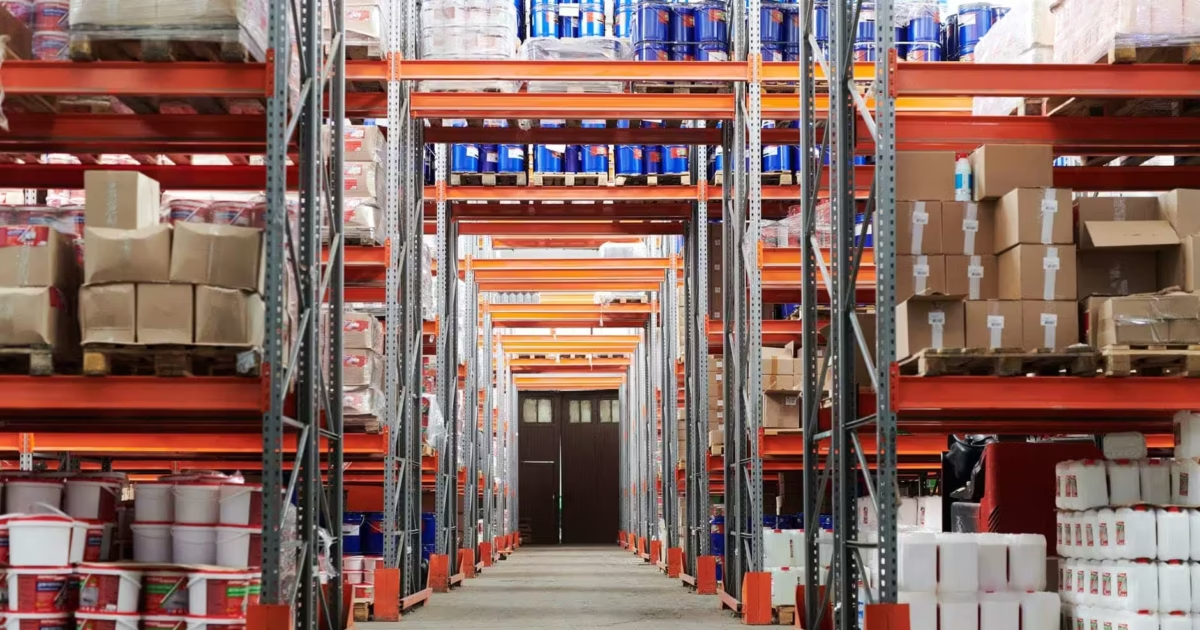
Warehouses play a critical role in moving products from manufacturers to customers, but they’re not easy to operate. The most common warehouse hazards, including forklift collisions, unstable loads, clutter, and falls, can put people and property in danger when training and traffic controls are weak.
Many warehouse accidents are preventable through clear safety protocols, suitable equipment, and job-specific training. Six risks deserve attention in almost every facility.
Six common warehouse hazards and how to prevent them
Each hazard needs a specific control. A safety policy that says “be careful” won’t fix poor traffic separation, overloaded shelving, or an operator who hasn’t been evaluated on the equipment used at the site.
1. Inadequate or missing forklift training
Warehouses can’t function without forklifts, but these machines can cause collisions, tip-overs, and struck-by incidents when operators aren’t trained for the truck and work environment.
OSHA’s powered industrial truck standard requires employers to provide formal instruction, practical training, and a workplace evaluation before an employee operates a forklift independently. The employer must also certify that the operator completed the required training and evaluation. A forklift certification can cover the formal instruction, but an online certificate alone doesn’t replace hands-on training and evaluation at the job site.
Training should cover load capacities, controls, inspection, stability, pedestrian traffic, and hazards specific to the facility. Refresher training is also required after unsafe operation, an accident or near miss, an evaluation that finds a deficiency, a change in equipment, or a workplace change that affects safe operation.
2. Clutter and poor housekeeping
A cluttered warehouse creates slip and trip hazards. Packing materials, random pallets, spilled liquid, and misplaced equipment can block walkways or force workers into vehicle lanes. The problem usually grows during busy shifts, when people leave debris near a workstation and plan to clean it up later.
Set clear housekeeping standards, but make compliance practical. If workers need to cross the building to discard packaging, give them the time to do it or place more bins, receptacles, and balers near the work area. Spills and blocked aisles should be handled immediately.
3. Improper material storage
Storage systems are designed around specific load limits. Overloaded shelves, damaged racks, and unstable pallet stacks can drop materials into aisles or onto workers below.
Train employees to check rack capacity, distribute weight, stack items securely, and retrieve products without climbing storage structures. Any rack struck by a forklift should be reported and inspected before workers continue using it.
4. Conflicts between pedestrians and equipment
Warehouse floors should have marked vehicle lanes, pedestrian walkways, crossings, mirrors, signs, and barriers where the traffic pattern calls for them. Blind corners and loading areas need extra attention because operators and pedestrians may not see each other in time.
Workers shouldn’t be told to rush across forklift zones. They should use designated crossings, follow the site’s traffic rules, communicate with operators, and avoid entering a vehicle lane until it’s safe. Facilities should also control speed and keep pedestrians out of areas where they don’t need to be.
5. Inadequate fall protection
Falls happen in warehouses when employees retrieve items from elevated storage, work on mezzanines, misuse ladders, or climb shelving instead of using the right access equipment. A fall from a short stepladder can still cause a serious injury.
NIOSH lists unsafe ladder positioning, misused fall protection, slippery floors, clutter, and unprotected edges among common workplace fall risks. Provide the correct ladder or lift for the task, inspect it before use, keep the setup area clean, and train workers never to climb storage racks.
6. Unreported hazards
A damaged rack, faulty machine guard, leaking container, or unsafe shortcut becomes more dangerous the longer it goes unreported. Workers need a reporting path they can use without worrying that management will ignore the issue or blame them for raising it.
Build a safety-first culture that treats reports as early warnings. Managers should record the issue, assign responsibility, control the immediate risk, and tell workers what was fixed.
How to build a safer warehouse
Warehouse safety depends on repeated habits, not a one-time training session. Set traffic rules, inspect equipment and storage systems, clean hazards as they appear, and retrain workers when equipment or conditions change.
That discipline matters even more in a modern e-commerce warehouse, where people, forklifts, conveyors, storage racks, and automation share the same floor. Fix the physical hazard first, then document what changed so the same failure doesn’t return on the next shift.
Common warehouse hazards FAQ
What are the most common warehouse hazards?
Common warehouse hazards include inadequate forklift training, clutter, unstable storage, pedestrian and vehicle conflicts, falls, and hazards that workers notice but don’t report.
Does OSHA require forklift certification?
OSHA requires employers to train and evaluate each powered industrial truck operator and certify that the required training and evaluation were completed. An online course alone doesn’t replace hands-on training and a workplace evaluation.
How can a warehouse prevent forklift and pedestrian collisions?
Separate people and equipment with marked lanes, barriers, crossings, signs, mirrors, and site-specific traffic rules. Control forklift speed and keep pedestrians out of operating zones unless their work requires entry.
What should a warehouse housekeeping policy cover?
It should cover spills, packaging waste, blocked aisles, misplaced pallets, damaged containers, and who is responsible for correcting each problem. Disposal points also need to be close enough that cleanup happens during the shift.
How should workers report warehouse hazards?
Give workers a clear reporting channel, protect them from retaliation, control the immediate risk, assign the repair, and close the loop by explaining what management fixed.
Tell Google you want more of this.
Add Gaurav Tiwari as a preferred sourceOne tap, and this site shows up more often in your own Top Stories, AI Overviews and AI Mode. Remove it any time.
Disclaimer: This site is reader-supported. If you buy through some links, I may earn a small commission at no extra cost to you. I only recommend tools I trust and would use myself. Your support helps keep gauravtiwari.org free and focused on real-world advice. Thanks. - Gaurav Tiwari