
The Role of Micro-Influencers in Building a Brand on Instagram
 by
by
Micro-influencers can help a brand on Instagram, but follower count alone is a weak buying signal. The useful question is whether a creator can reach the right people, make credible content, and generate incremental contribution profit at a cost you can afford.
I would not approve a campaign because a report promises a universal engagement rate or a fixed return per dollar. Those figures mix countries, categories, formats, organic posts, sponsored posts, and different attribution rules. Build a small test around your own margin, then let the results decide who gets a second contract.
- Use 10,000 to 100,000 followers as a working definition, not a quality certificate.
- Vet sponsored performance separately. Organic engagement can make a creator look stronger than their ads are.
- Buy a deliverable and rights package. Do not price a creator with a follower-based shortcut.
- Measure contribution margin. Revenue ROAS can turn an unprofitable campaign into an attractive spreadsheet.
- Start with useful content. A demonstration, comparison, or problem solved gives the audience a reason to care.
Table of Contents
What a Micro-Influencer Actually Is
A micro-influencer is best treated as a planning tier, not a platform-defined status. Instagram does not award an official micro-influencer label, and research papers do not all use the same boundaries. For this guide, micro means 10,000 to 100,000 followers.
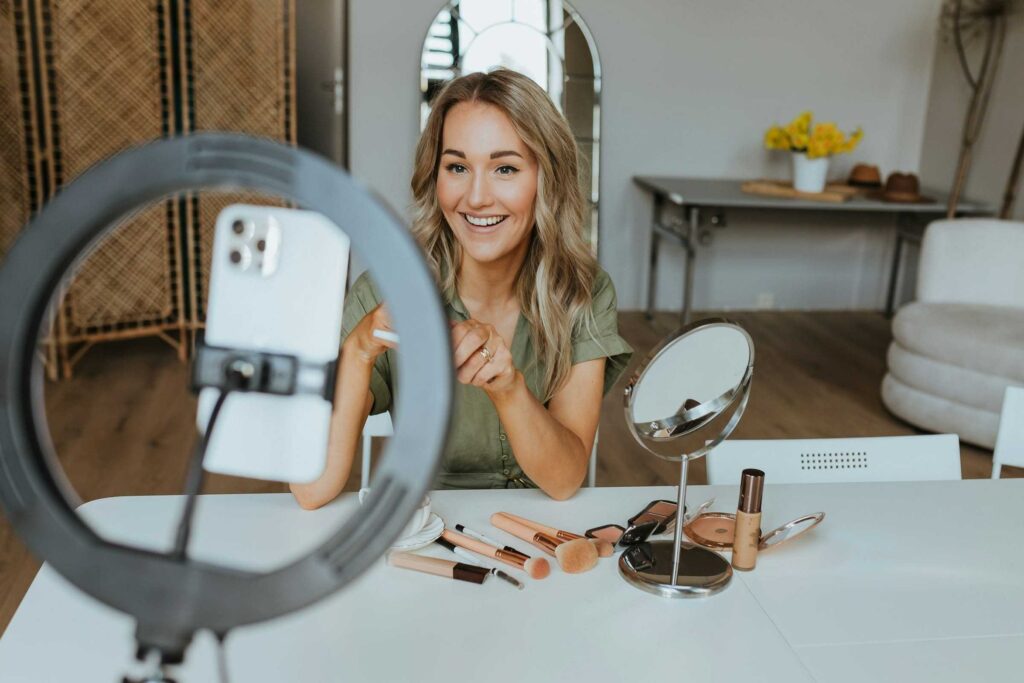
- Nano, roughly 1,000 to 10,000: useful for local or narrow community tests, but results can be noisy.
- Micro, roughly 10,000 to 100,000: enough reach to test repeatable offers while keeping the audience relatively focused.
- Mid-tier, roughly 100,000 to 500,000: more reach per contract, usually with higher fees and greater concentration risk.
- Macro and mega, 500,000 and above: broad reach and cultural visibility, with fit and usage rights still deciding value.
The distinction between micro creators and regular influencers is less useful than four operating facts: topic fit, audience fit, sponsored-content performance, and price. The same warning applies to Instagram growth services: a large number is not evidence that the people behind it will buy.
My default is to shortlist by audience and content first, then use follower count to estimate operational scale. Reversing that order fills a spreadsheet quickly and a sales report slowly.
Why Engagement Beats Reach: The Trust Premium
Engagement is a useful diagnostic, but it is not revenue and it is not automatically a trust score. A like can be cheap, a comment can be coordinated, and an organic post can outperform a sponsored one for reasons that disappear when your product enters the frame.
- Sponsored content behaves differently: a 2025 Journal of Advertising Research study found that micro-influencers had higher engagement overall, but not on sponsored content. The analysis was on YouTube, so apply the lesson, not the platform benchmark.
- Information has measurable value: Lou and Yuan’s influencer-value study linked informative content, trustworthiness, attractiveness, and similarity with trust in branded posts, then with awareness and purchase intention.
- Fit changes the result: an Instagram endorsement experiment found that product-influencer fit improved endorsement outcomes and creator evaluations. Large reach did not rescue poor fit.
That evidence changes the brief. Ask the creator to teach, compare, demonstrate, or test something. Do not pay for a generic compliment wrapped around a product shot.
What my Instagram-content search data shows
I compared 20 published Instagram and social-media guides on this site in Google Search Console. The sample had six task or tool pages and fourteen broad strategy pages. It covered two equal 45-day windows: April 28 to June 11 and June 12 to July 26, 2026, using web-search data in Pacific Time.
- Baseline window: utility pages recorded 6,937 impressions and 11 clicks; strategy pages recorded 1,193 impressions and 1 click.
- Recent window: utility pages recorded 6,023 impressions and 27 clicks; strategy pages recorded 992 impressions and 2 clicks.
- Median impressions per page: utility moved from 918 to 789; strategy moved from 7 to 8.5.
- Target-page baseline: this micro-influencer page recorded 1 impression in the first window and none in the second.
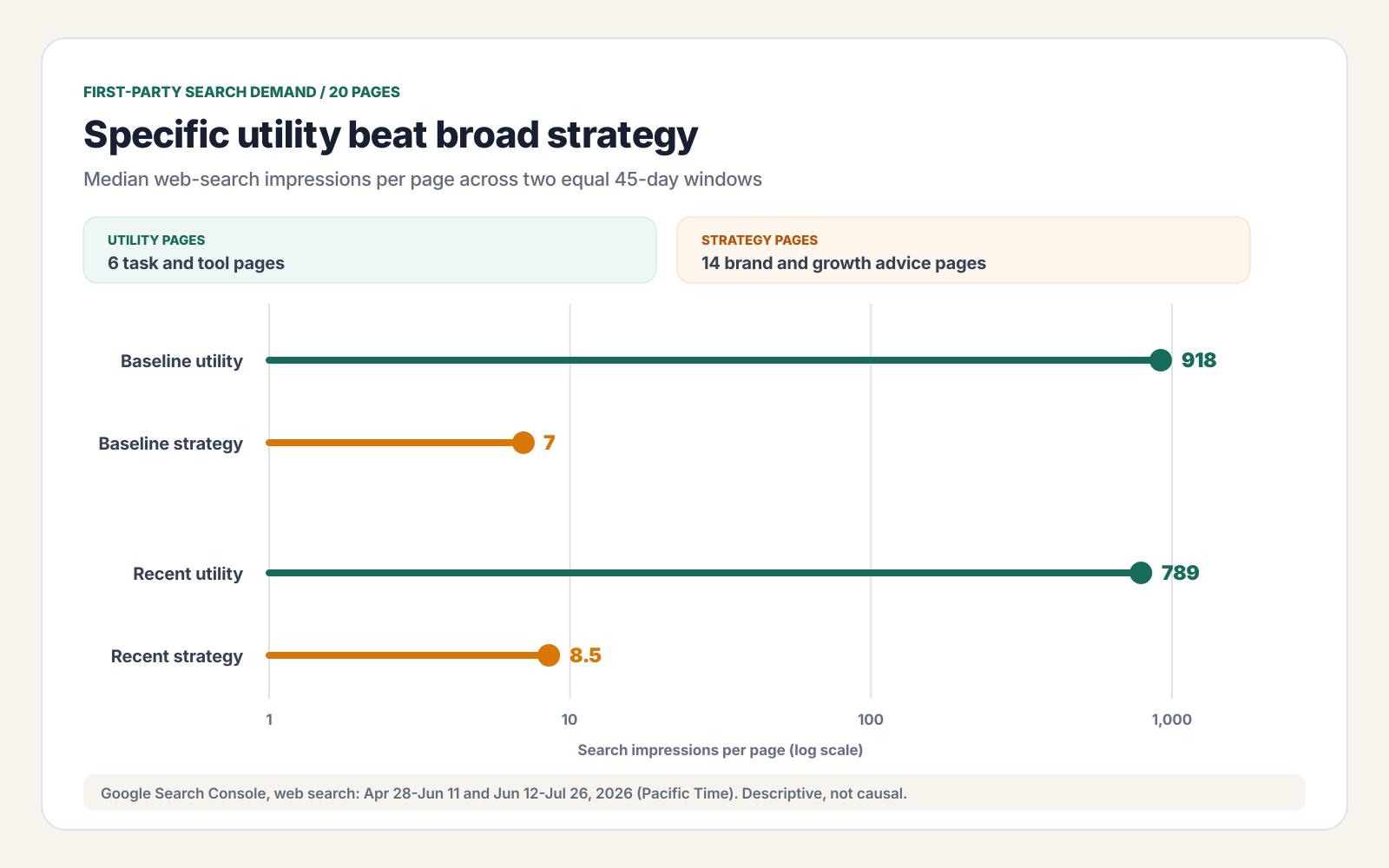
This is a search-demand study, not an influencer-campaign experiment. It cannot prove Instagram users respond the same way. It does show how weak broad advice can be when it does not solve a named job. I would carry that warning straight into a creator brief: make the sponsored post useful enough to earn attention.
Macro vs Micro: The Honest Comparison
Neither tier wins by default. Micro creators make it easier to diversify a test; larger creators concentrate reach and management into fewer contracts. Your product, deadline, rights needs, and economics decide which trade is better.
| Decision | Micro-influencer portfolio | One larger creator |
|---|---|---|
| Audience fit | Several narrow communities can be tested | One broader audience must fit well |
| Reach per contract | Lower | Higher |
| Operational work | More briefs, approvals, links, payments, and reports | Fewer relationships to manage |
| Learning | More creative and audience cells | More data concentrated in one execution |
| Concentration risk | Lower when budget is spread deliberately | Higher when one post consumes most of the budget |
| Best case | Niche product, testable offer, repeat program | Time-sensitive awareness or proven large-audience fit |
If I had a modest budget and no creator-performance history, I would test several smaller partners under one comparable brief. If I had a national launch in three days and awareness was the real KPI, I would not pretend a slow portfolio test could do the same job.
When Micro-Influencers Are the Wrong Fit
Micro-influencers are the wrong fit when their coordination cost, limited reach, or weak unit economics exceed the benefit of niche access. Run the numbers before sourcing names.
- You need immediate mass awareness: a large launch window can value reach and speed more than portfolio learning.
- Your product has no defensible audience match: a broad commodity gives a niche creator little credible expertise to use.
- Your contribution margin is too small: product, shipping, management, and creator fees can consume the entire first order.
- You cannot manage the program: late approvals and missing tracking destroy the advantage of testing several creators.
- Your claim is risky or hard to substantiate: health, finance, and other regulated claims need more review than an informal creator brief can provide.
- You only want borrowed credibility: if the product does not stand up to an honest demonstration, the creator is not the fix.
A simple gate helps: estimate the maximum affordable acquisition cost from contribution margin, retention, and payback tolerance. If a realistic test cannot produce enough incremental customers to clear that cost, use another channel or change the offer first.
How to Find the Right Micro-Influencers on Instagram
Find creators where product use, audience need, and useful content already overlap. Start with evidence close to your business before paying for a discovery database.
- Mine customer language: turn support tickets, reviews, and sales calls into the problems and phrases a creator should already discuss.
- Review organic mentions and tags: an existing customer has real product context, although the commercial relationship still needs disclosure once value changes hands.
- Search niche posts, not only profiles: find creators who can explain or demonstrate the job your product does.
- Use the native marketplace when available: Instagram Creator Marketplace lets professional accounts search, shortlist, and review creator insights.
- Shortlist against one scorecard: audience fit, content quality, sponsored history, geography, brand safety, availability, rights, and price.
- Check conflicts: recent competitor promotions can weaken credibility or trigger an exclusivity problem.
Do not confuse sourcing with the wider work required to get noticed on Instagram. A creator can introduce your product to the right audience, but the landing page, offer, proof, and follow-up still have to convert.
How to Vet for Fake Followers Before You Pay
Fraud vetting should combine first-party Insights, manual inspection, and a paid test. A single authenticity score cannot tell you whether the right people saw a sponsored post or whether those people bought.
- Request a 90-day screen recording: the official Instagram Insights documentation lists views, accounts reached, interactions, accounts engaged, audience demographics, and content-level metrics.
- Use medians, not one viral post: compare the last 10 to 20 relevant posts and separate sponsored from organic work.
- Prefer reach-based engagement: when available, divide meaningful interactions by accounts reached. Follower-based rates hide how many followers never saw the post.
- Inspect audience geography: compare top countries and cities with the places where you can sell and deliver.
- Read comments in context: repeated generic replies are a warning, but short comments alone are not proof of fraud.
- Sample follower accounts: look for plausible posting histories and relevance, not only profile photos and follower counts.
- Run a small contract: require the agreed content, tracking, disclosure, and Insights report before scaling.
I would reject a creator for inconsistent evidence, not because a tool crossed a magic 25 percent line. False positives are expensive, and fake precision is still fake.
How to Structure the Deal: Rates, Deliverables, FTC Disclosure
A useful creator contract prices the work, states the rights, and makes compliance testable. A direct-message agreement that says “one Reel for $300” leaves most of the expensive questions open.
- Deliverables: format, length, posting date, live period, caption elements, links, codes, and required reporting.
- Review process: one owner, deadlines, number of revision rounds, and a boundary between factual corrections and creator voice.
- Rights: organic reposting, website use, email use, paid media, duration, territory, editing, raw files, and credit.
- Exclusivity: named competitors, product category, channels, geography, and time period. Broad exclusivity deserves a price.
- Partnership ads: state whether the brand may boost the content, for how long, and who can revoke permission.
- Payment and cancellation: fee, product value, tax documents, deposit, kill fee, late delivery, takedown, and refund terms.
- Claims and safety: approved factual claims, prohibited claims, music and asset rights, comment moderation, and escalation.
- Disclosure: who checks it before publishing and who fixes or removes a noncompliant post.
FTC’s Disclosures 101 says a material connection can include payment, employment, family relationships, and free or discounted products. It also says the disclosure should be hard to miss and placed with the endorsement, not hidden after a “more” click or inside a hashtag pile.
Meta requires the Instagram paid partnership label for branded content. Use the platform label and plain language such as “Ad” or “Sponsored” where the audience will see it. The label is a feature; legal responsibility still belongs to the people and businesses making the endorsement.
How to Measure ROI
Measure micro-influencer ROI with incremental contribution margin, not likes and not gross revenue. Fix the attribution rule before launch so the winning creator is not chosen by a moving target.
- Total campaign cost = creator fees + product cost + shipping + management + tools + paid amplification.
- Attributed CPA = total campaign cost / attributed first-time customers.
- Contribution per order = revenue – discounts – cost of goods – payment fees – variable fulfillment – expected returns.
- Incremental contribution = contribution from campaign-caused orders, not every order carrying a coupon.
- Campaign ROI = (incremental contribution – total campaign cost) / total campaign cost x 100.
A worked example: revenue ROAS versus contribution ROI
Assume four creators each receive $350, and the brand spends $360 on product and shipping plus $140 on tracking and management.
- Total campaign cost: (4 x $350) + $360 + $140 = $1,900.
- Tracked result: 52 first orders with $45 contribution per order = $2,340 attributed contribution.
- Naive ROI: ($2,340 – $1,900) / $1,900 = 23.2%.
- Attributed CPA: $1,900 / 52 = $36.54.
- Incrementality check: if a control or baseline shows 12 of those orders would have happened anyway, incremental orders are 40.
- Incremental ROI: (40 x $45 – $1,900) / $1,900 = -5.3%.
The same campaign moves from apparently profitable to slightly unprofitable when baseline demand is removed. That is why a matched holdout, geographic split, unique landing page, clean UTM scheme, and creator-specific code are worth more than another engagement benchmark.
Use platform metrics to diagnose the creative and business metrics to judge the investment. The Instagram stats you need to know can provide context, but your own margin and incrementality decide whether the campaign deserves more money.
Mistakes Brands Make
Most micro-influencer mistakes are measurement and operating mistakes disguised as creator-selection mistakes. Fix the system before blaming the person on camera.
- Using universal engagement benchmarks: niche, country, format, reach, and sponsorship status change the denominator.
- Comparing organic with sponsored posts: the creator’s best entertainment post is not your campaign baseline.
- Buying followers instead of rights and outcomes: a rate per 10,000 followers ignores the work and the license.
- Crediting every coupon order: leaked codes, existing customers, and organic demand inflate attribution.
- Calling revenue profit: discounts, product cost, returns, shipping, and fees can erase attractive ROAS.
- Over-scripting: factual guardrails help; forcing brand copy removes the creator’s actual communication advantage.
- Skipping disclosure: an undisclosed relationship creates legal risk and weakens the trust the campaign is buying.
- Treating one post as a strategy: integrate what works into a broader content marketing strategy, but do not keep paying for a creator who misses the unit-economics gate.
Conclusion
The role of micro-influencers in building a brand on Instagram is to turn focused audience trust into useful, measurable branded content. Their smaller follower count can make tests easier to diversify, but it does not guarantee authentic followers, higher sponsored engagement, or profitable sales.
Start with three to five qualified creators, one product, one clear offer, one primary KPI, and the same reporting requirement. Price all costs and rights, disclose the relationship clearly, calculate incremental contribution, and renew only the partners who clear the economic gate. That is slower than believing a benchmark. It is also how you build a creator program you can defend.
How many followers does a micro-influencer have?
There is no official Instagram threshold. This guide uses 10,000 to 100,000 followers as an operating definition because it is a common research and industry convention. Audience fit, recent sponsored-content performance, geography, and economics matter more than the label.
What is a good engagement rate for a micro-influencer?
There is no universal rate that is safe across niches, formats, countries, and time periods. Calculate interactions divided by accounts reached when the creator can supply Insights, use the median across comparable recent posts, and separate sponsored content from organic content.
How much should I pay an Instagram micro-influencer?
Ask several qualified creators for quotes against the same brief. Price the complete package: creation, revisions, posting, usage rights, exclusivity, raw files, reporting, and partnership-ad permission. A follower-based rate card alone cannot price those rights or predict your return.
How can I check whether an influencer has fake followers?
Do not rely on one fake-follower score. Review recent Insights, audience geography, follower changes, median reach, sponsored-post performance, comment quality, and a sample of follower accounts. Then run a small paid test before committing a large budget.
Does gifted product need an Instagram disclosure?
Yes when it creates a material connection. Meta treats free or loaned products as an exchange of value for branded content, and the FTC says free or discounted products can require a disclosure. Use the paid partnership label and a clear disclosure that is hard to miss.
How do I calculate micro-influencer campaign ROI?
Add creator fees, product cost, shipping, management, tools, and paid amplification. Estimate incremental contribution margin, not gross revenue. ROI equals incremental contribution minus campaign cost, divided by campaign cost. Use a control or credible baseline when possible so organic orders are not credited to the campaign.
Tell Google you want more of this.
Add Gaurav Tiwari as a preferred sourceOne tap, and this site shows up more often in your own Top Stories, AI Overviews and AI Mode. Remove it any time.