
 by
by
Crypto taxes are the part nobody warns you about. Every trade, swap, sale, staking reward, and airdrop can be a taxable event, and once you’ve used a few exchanges and wallets, reconstructing it all by hand becomes impossible. Crypto tax software fixes that: it connects to your exchanges and wallets, imports your full transaction history automatically, calculates your gains and losses, and spits out a report you can hand to your accountant or drop straight into your tax filing.
I’ve filed crypto taxes across a messy spread of exchanges, and the right tool turns a weekend of spreadsheet misery into a 20-minute job. The catch is that these tools vary a lot in which exchanges and chains they support, how they handle DeFi and NFTs, and what they charge. Pick the wrong one and you’re back to manual cleanup.
Below are the best crypto tax software tools in 2026, with who each one is for. If you’re still building your portfolio, see my guides to the best cryptocurrencies to invest in and the best crypto exchanges.
Best crypto tax software at a glance
| Tool | Best for | Free tier | Paid from |
|---|---|---|---|
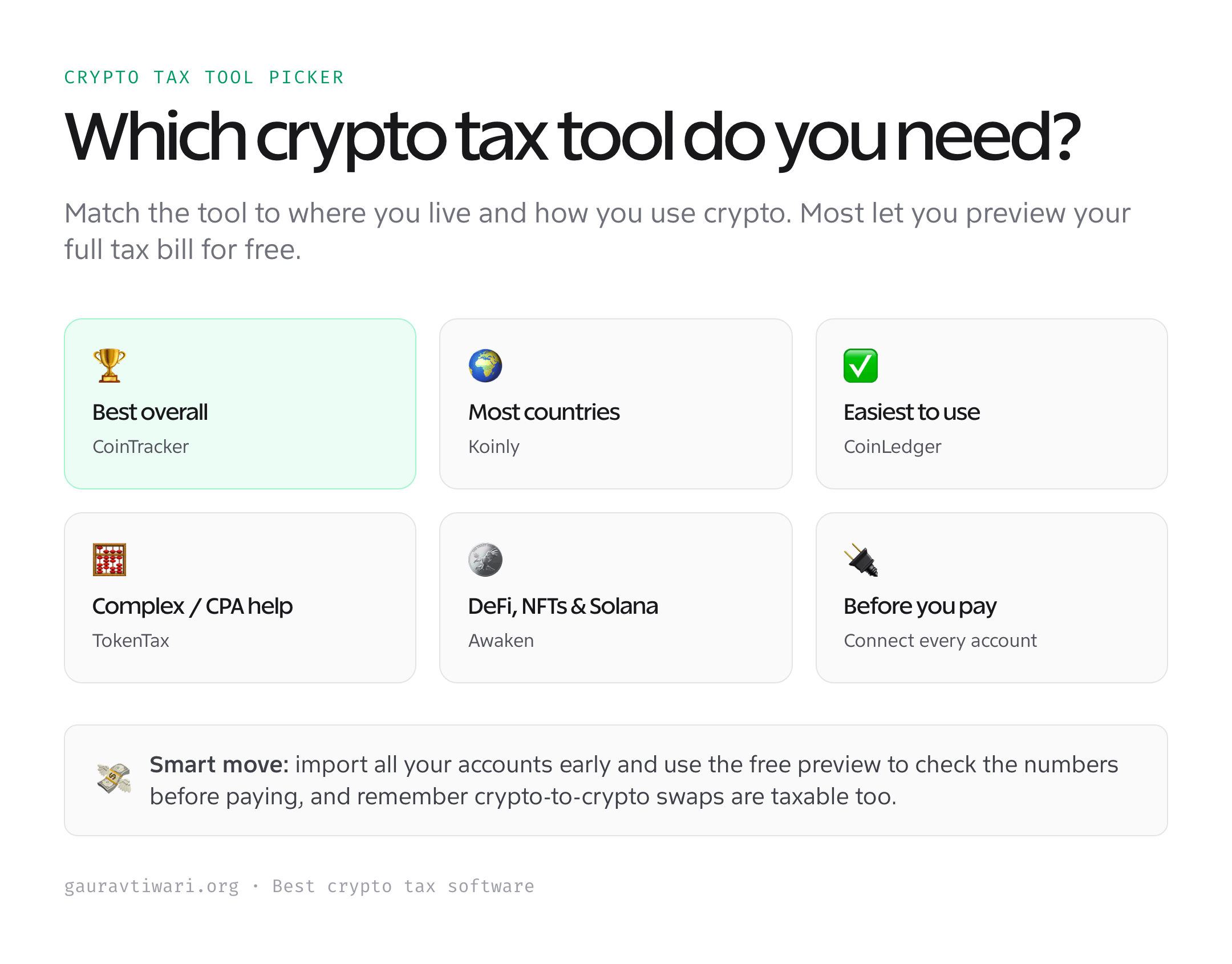
| CoinTracker | Best overall | Yes (portfolio) | ~$59/yr |
| Koinly | Most countries | Yes (preview) | ~$49/yr |
| CoinLedger | Easiest to use | Yes (preview) | ~$49/yr |
| TokenTax | Complex / full-service | No | ~$65/yr |
| Awaken | DeFi, NFTs & Solana | Yes (preview) | ~$59/yr |
1. CoinTracker: best overall

CoinTracker is the tool I’d point most people to first. It connects to 500+ exchanges and wallets plus thousands of DeFi protocols and NFTs, syncs your portfolio in real time, and generates tax reports that plug directly into TurboTax and other filing software. The Coinbase integration is the deepest in the business, and the same dashboard that does your taxes also tracks your portfolio year-round, so it earns its place even between tax seasons. For accurate, low-effort crypto taxes with the widest integrations, it’s the best all-rounder.
💸 Best for: most crypto holders who want accurate taxes plus year-round portfolio tracking. Watch for: high-volume DeFi traders may pay for a higher tier.
2. Koinly: best for most countries
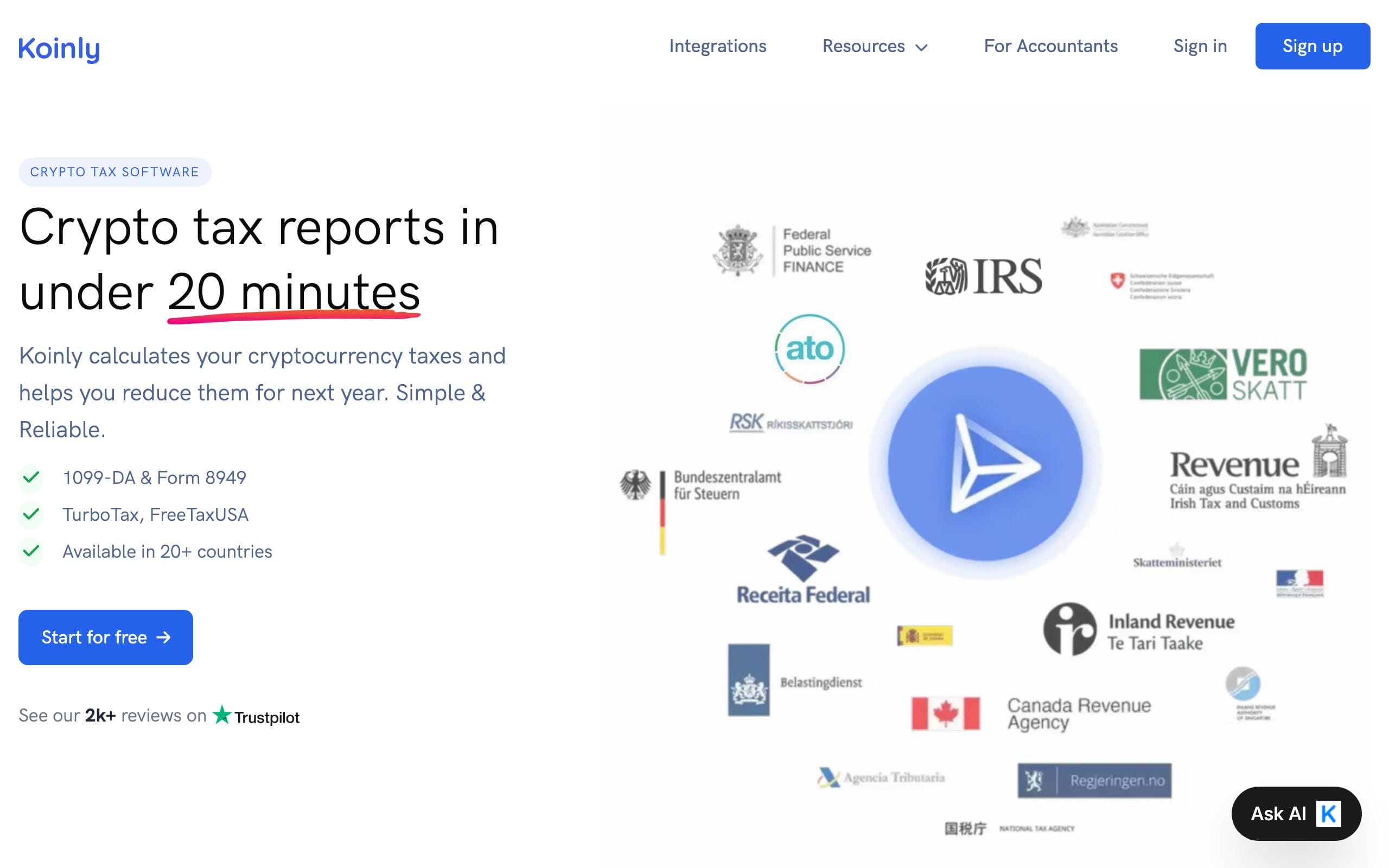
If you’re outside the US, Koinly is often the best fit. It supports tax rules for 20+ countries, handles 800+ exchanges and wallets, and produces localized reports (including forms like the UK’s HMRC and India’s schedules) that actually match your jurisdiction. The interface is clean, the free tier lets you preview your full tax position before paying, and it’s a favorite among international crypto users for exactly that reason.
💸 Best for: international users who need country-specific tax forms. Watch for: US-specific integrations are deeper in CoinTracker.
3. CoinLedger: easiest to use
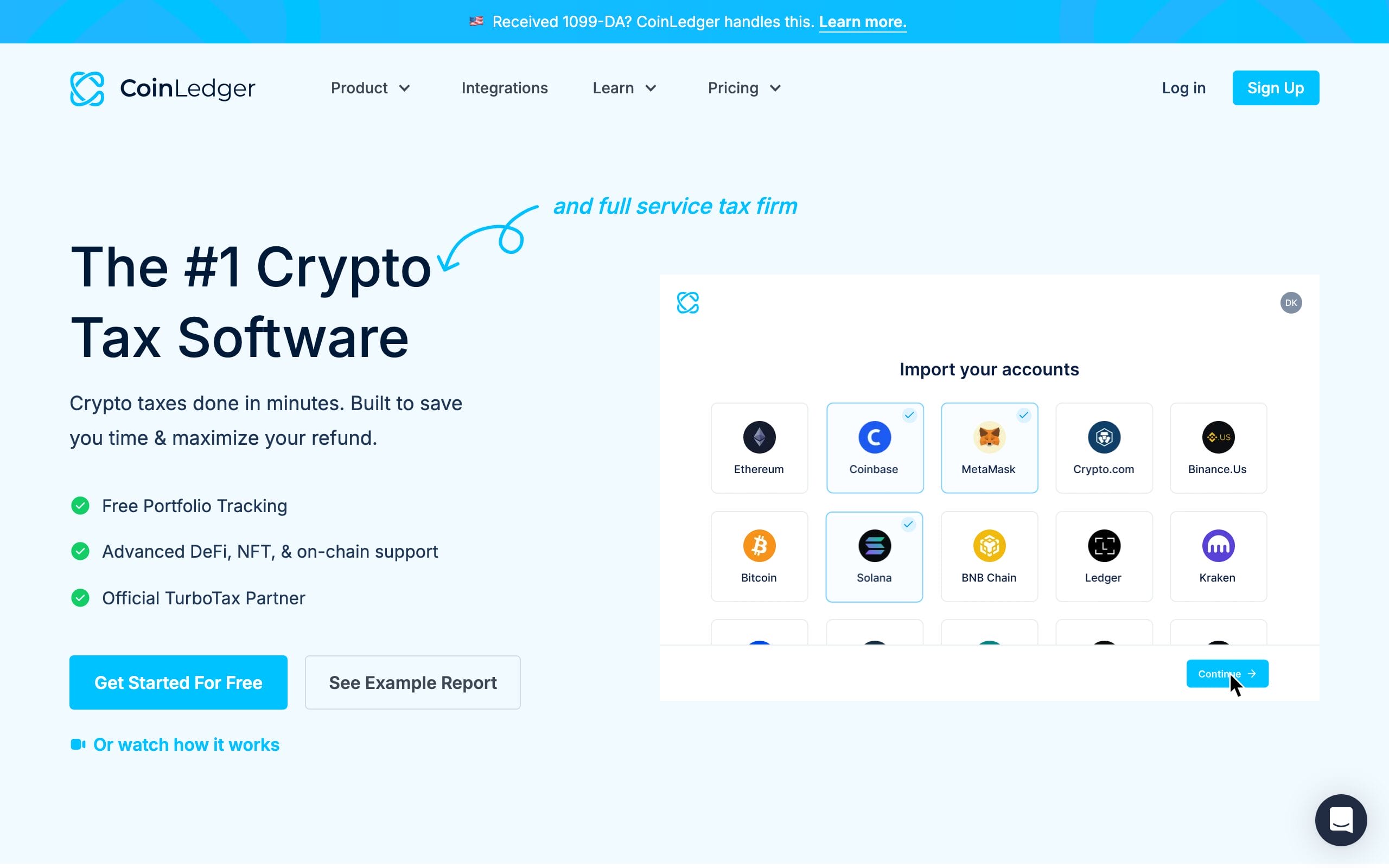
CoinLedger (formerly CryptoTrader.Tax) wins on simplicity. The step-by-step flow walks you through importing data and reviewing transactions, and most people finish in well under an hour. It integrates with TurboTax and TaxAct, supports the major exchanges and wallets, and its support is consistently well-reviewed. If the idea of crypto taxes intimidates you, this is the gentlest on-ramp.
💸 Best for: beginners who want the simplest guided experience. Watch for: fewer DeFi/NFT edge cases than Awaken.
4. TokenTax: best for complex situations

TokenTax is more than software, it’s software plus a crypto-specialized accounting team. Higher tiers include real CPAs who handle complicated situations: margin and futures trading, mining and staking businesses, cross-border filings, and reconciling messy histories. It’s the priciest option here, but for high-net-worth holders or anyone facing a genuinely complex return, paying for expert help is cheaper than getting it wrong.
💸 Best for: complex returns and anyone who wants CPA help. Watch for: the highest price of the group.
5. Awaken: best for DeFi, NFTs and Solana

If your activity lives in DeFi, NFTs, and chains like Solana, Awaken is built for you. It’s a newer tool designed from the ground up to correctly classify the gnarly transactions that trip up older software, complex swaps, liquidity positions, NFT mints and sales, and on-chain rewards. Power users in the on-chain world consistently report cleaner, more accurate results from Awaken than from general-purpose tools.
💸 Best for: heavy DeFi/NFT and Solana users. Watch for: overkill if you only buy and hold on a couple of exchanges.
How to choose crypto tax software
The right tool depends on where you live and how you use crypto. Check these before you pay.
- Exchange and wallet support. Make sure it connects to every exchange and wallet you’ve ever used. Missing one means manual CSV imports and a higher chance of errors.
- Your country’s tax rules. US filers want deep TurboTax integration (CoinTracker); international users need localized forms (Koinly). Tax treatment of crypto varies hugely by country.
- DeFi, NFT and staking handling. If you go beyond simple buy-and-hold, confirm the tool correctly classifies DeFi swaps, liquidity, NFTs, and staking rewards. This is where Awaken shines and older tools struggle.
- Free preview. Most tools let you import everything and see your full tax position for free, only charging when you download the report. Use that to test accuracy before paying.
- Pricing by transaction count. Plans are usually tiered by how many transactions you have per year. Count yours, high-volume traders can jump price tiers fast.
- Year-round tracking. Some tools (CoinTracker) double as portfolio trackers, which is handy between tax seasons and helps you tax-loss harvest before year-end.
Whatever you choose, connect your accounts early, well before the deadline, so you have time to fix any unmatched transactions. And once taxes are sorted, make sure your coins are secured in a crypto hardware wallet rather than left on an exchange.
Common crypto tax mistakes to avoid
Even with good software, a few avoidable errors trip people up every year. Watch for these.
- Forgetting crypto-to-crypto trades are taxable. Swapping Bitcoin for Ethereum is a taxable event in most countries, even though you never touched cash. Skipping these is the single most common mistake, and tax software catches them automatically.
- Ignoring DeFi, staking, and airdrops. Staking rewards, yield, and airdrops are usually income at the time you receive them, and DeFi swaps are disposals. Leaving them out understates your taxes and invites trouble later.
- Missing a wallet or exchange. One forgotten account breaks your cost-basis chain and produces wrong numbers everywhere. Connect every platform you’ve ever used, including dead ones.
- Leaving it until the deadline. Unmatched transactions and missing data always need fixing, and that takes time. Import early so you can resolve issues calmly.
- Not harvesting losses. If you’re sitting on losers, selling before year-end can offset gains. A tool with year-round tracking helps you spot these opportunities before it’s too late.
Which crypto tax tool should you use?
For most people, CoinTracker is the best overall choice, widest integrations, deep Coinbase and TurboTax support, and year-round portfolio tracking. International users should look at Koinly for country-specific forms, beginners will love CoinLedger’s simple flow, anyone with a complex return should consider TokenTax’s CPA help, and heavy DeFi, NFT, and Solana users will get the cleanest results from Awaken. Most offer a free preview, so import your data and check the numbers before you pay.
Frequently asked questions
Do I have to pay taxes on crypto?
In most countries, yes. Selling crypto for cash, swapping one coin for another, spending crypto, and earning it through staking, mining, or airdrops are typically taxable events, while simply buying and holding usually is not. Rules vary by country, so check your local tax authority, but the key point is that crypto-to-crypto trades count too, not just cashing out to fiat. Tax software exists precisely because tracking all of this manually across multiple platforms is nearly impossible.
How does crypto tax software work?
You connect your exchanges and wallets via read-only API keys or public addresses, and the software imports your entire transaction history automatically. It then matches buys to sells, calculates cost basis and capital gains or losses using your country’s accounting method, and generates a tax report. Most tools let you review and correct any unmatched transactions before producing the final report, which you can then file yourself or hand to an accountant.
Is crypto tax software safe to connect to my accounts?
Reputable tools use read-only API connections, meaning they can see your transaction history but cannot move or withdraw funds. For wallets, they only need your public address, never your private keys or recovery phrase. As always, create API keys with the minimum permissions, never share your seed phrase with any tax tool, and revoke API access once you’ve finished importing if you prefer. Stick to well-known providers and your accounts stay safe.
Can I do crypto taxes for free?
Partly. Most tools, including CoinTracker, Koinly, CoinLedger, and Awaken, let you import all your data and see your full calculated tax position for free, and only charge when you download the official tax report. If you have very few transactions, some free tiers cover you completely. For most people with activity across several platforms, the paid report is inexpensive relative to the time saved and the risk of filing wrong.
The bottom line
Crypto tax software pays for itself in saved hours and avoided mistakes. CoinTracker is the best all-rounder for most people, Koinly is the international champion, CoinLedger is the easiest for beginners, TokenTax brings in the CPAs for complex returns, and Awaken handles DeFi and NFTs best. Connect your accounts early, use the free preview to check the numbers, then file with confidence. And once you’re done, move your holdings into a hardware wallet for safekeeping.
Tell Google you want more of this.
Add Gaurav Tiwari as a preferred sourceOne tap, and this site shows up more often in your own Top Stories, AI Overviews and AI Mode. Remove it any time.
Disclaimer: This site is reader-supported. If you buy through some links, I may earn a small commission at no extra cost to you. I only recommend tools I trust and would use myself. Your support helps keep gauravtiwari.org free and focused on real-world advice. Thanks. - Gaurav Tiwari