by
by
Proxies are the quiet infrastructure behind a huge amount of modern internet work, from price monitoring and ad verification to web scraping, market research, and managing multiple accounts safely. A proxy routes your traffic through a different IP address, so you appear to be browsing from somewhere (or someone) else. Get the right provider and tasks that would otherwise get you blocked or rate-limited just work; get the wrong one and you’ll fight bans, slow speeds, and dead IPs all day.
I’ve tested proxy services for scraping and multi-account work, and the differences are bigger than the marketing suggests. Pool size, IP quality, location coverage, speed, and pricing model all vary wildly, and the cheapest option is often the most expensive once you factor in failed requests. So this list is sorted by what you’re actually trying to do.
Here are the best proxy services in 2026, with who each suits. If you’re weighing proxies against a VPN, see my guide to VPNs vs proxies and the best VPN services.
Best proxy services at a glance
| Provider | Best for | Pool size |
|---|---|---|
| Decodo (Smartproxy) | Best overall | 115M+ IPs |
| Proxy-Cheap | Best budget | Millions of IPs |
| Bright Data | Best enterprise | 150M+ IPs |
| IPRoyal | Best pay-as-you-go | 34M+ IPs |
| Oxylabs | Best for large-scale scraping | 175M+ IPs |
1. Decodo (formerly Smartproxy): best overall
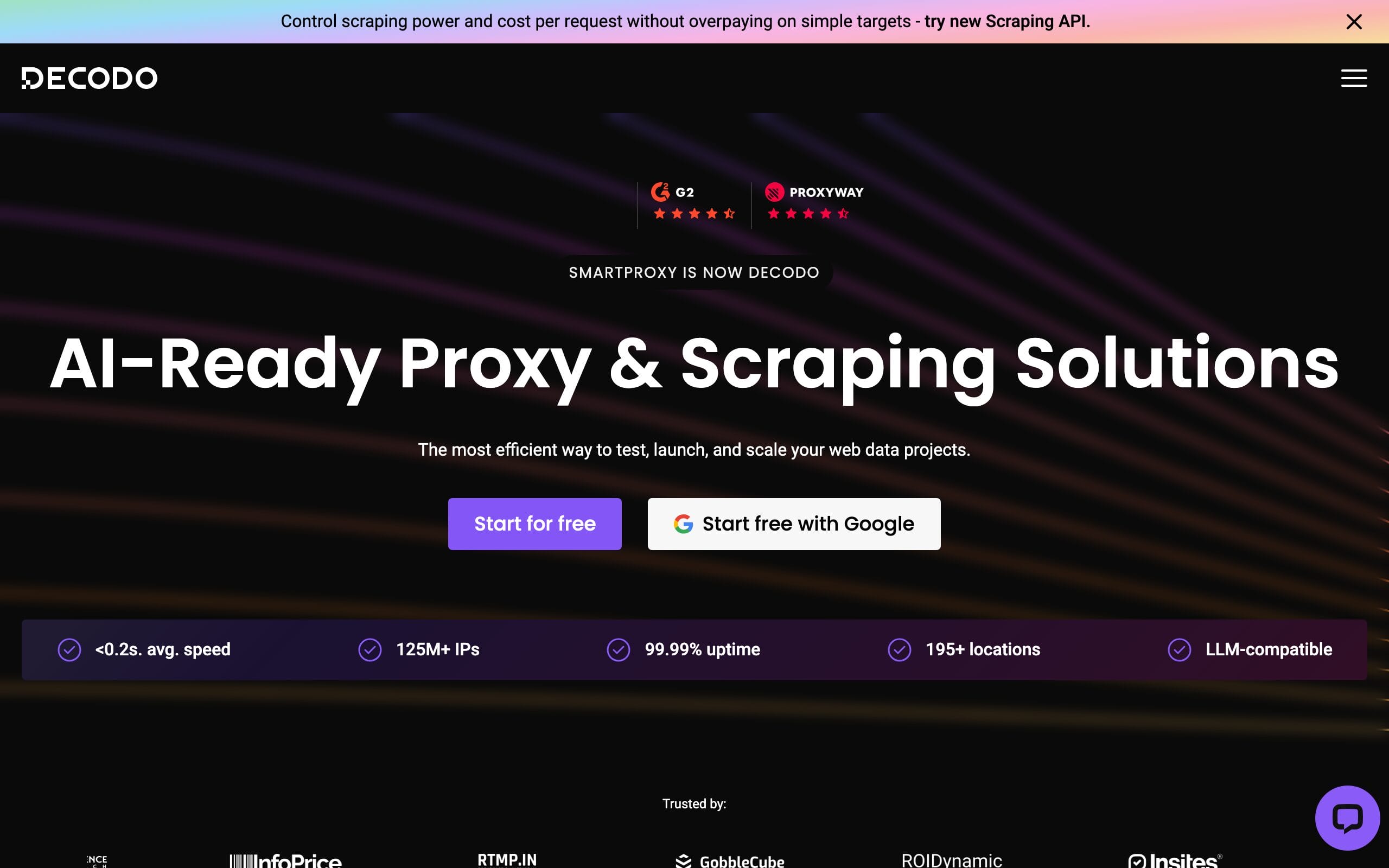
Decodo, the rebrand of the long-trusted Smartproxy, is the best all-round proxy service for most people. It pairs a huge 115M+ residential pool with mobile, datacenter, and ISP proxies, excellent location coverage, and genuinely beginner-friendly dashboards and docs. Speeds and success rates are consistently high, the pricing is reasonable for the quality, and the support is responsive. If you want premium-grade proxies without enterprise complexity, this is the pick.
🌐 Best for: most users wanting premium quality with an easy learning curve. Watch for: pricier than budget providers.
2. Proxy-Cheap: best budget
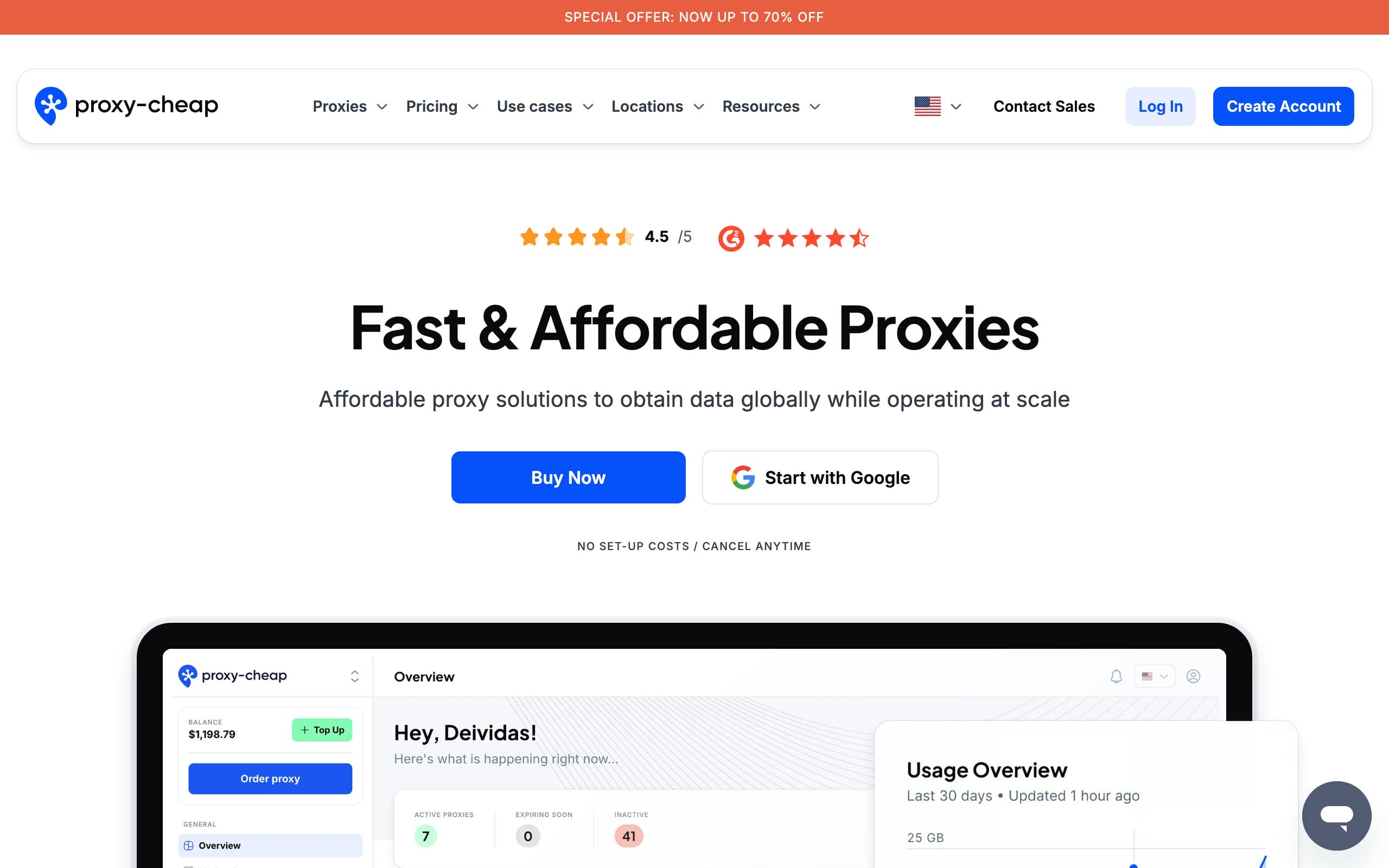
Proxy-Cheap does exactly what the name promises: reliable residential, mobile, and datacenter proxies at some of the lowest prices in the market, with worldwide coverage and high speeds. It’s the value pick for individuals, small teams, and anyone running lighter scraping or multi-account tasks who doesn’t need an enterprise pool. The dashboard is straightforward and you can start small, which makes it a great first proxy provider without a big commitment.
🌐 Best for: individuals and small teams who want quality proxies cheaply. Watch for: smaller pool than the enterprise giants.
3. Bright Data: best for enterprise
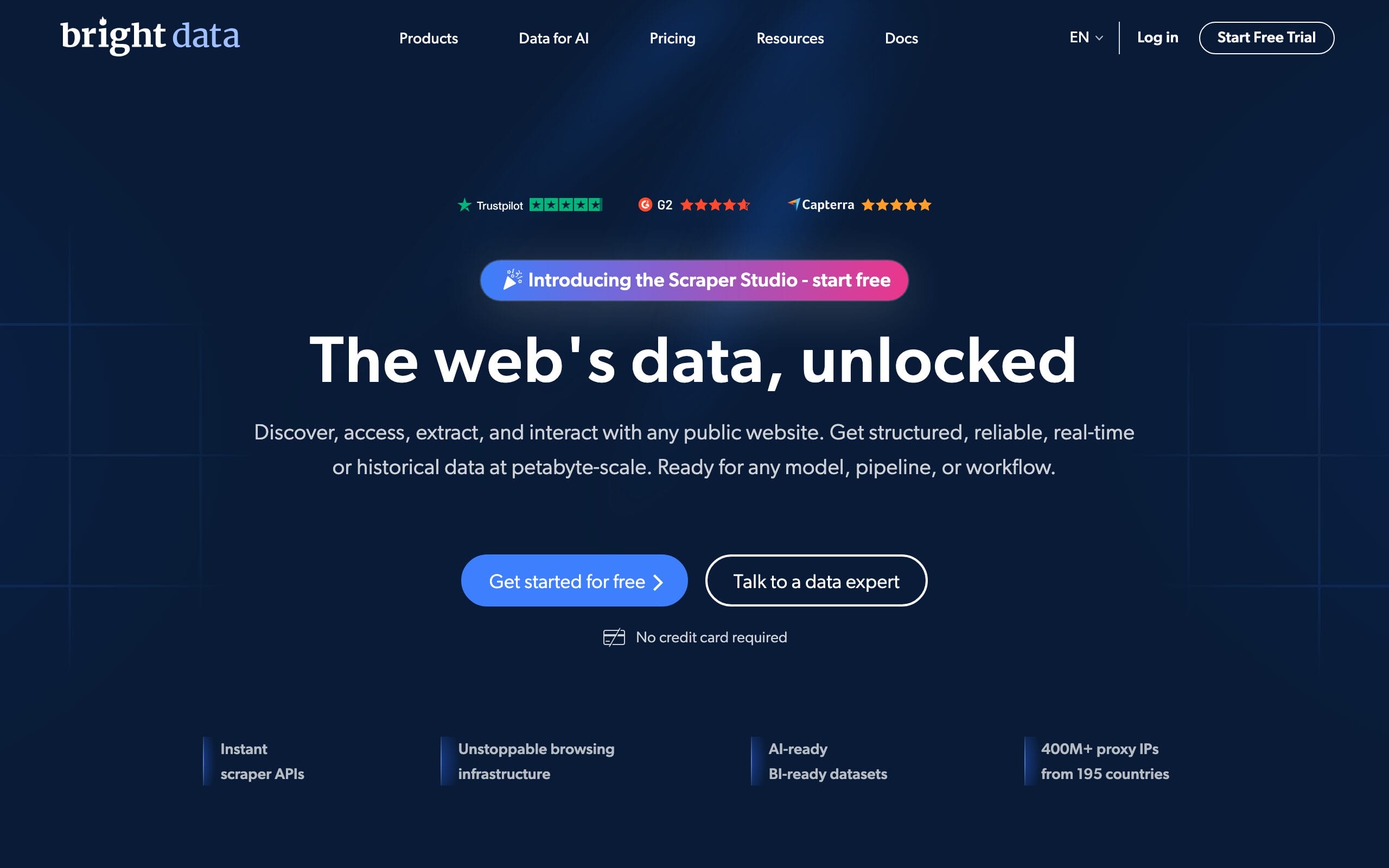
Bright Data is the heavyweight, the proxy and web-data platform large companies rely on. Its 150M+ IP network, granular targeting, and compliance tooling are unmatched, and it layers on ready-made scraping APIs and datasets on top of raw proxies. It’s powerful and well-supported, but the pricing and feature depth are aimed at serious commercial operations. For enterprise-scale data collection with strict compliance needs, nothing else here competes.
🌐 Best for: enterprises needing scale, targeting, and compliance. Watch for: overkill and pricey for individuals.
4. IPRoyal: best pay-as-you-go
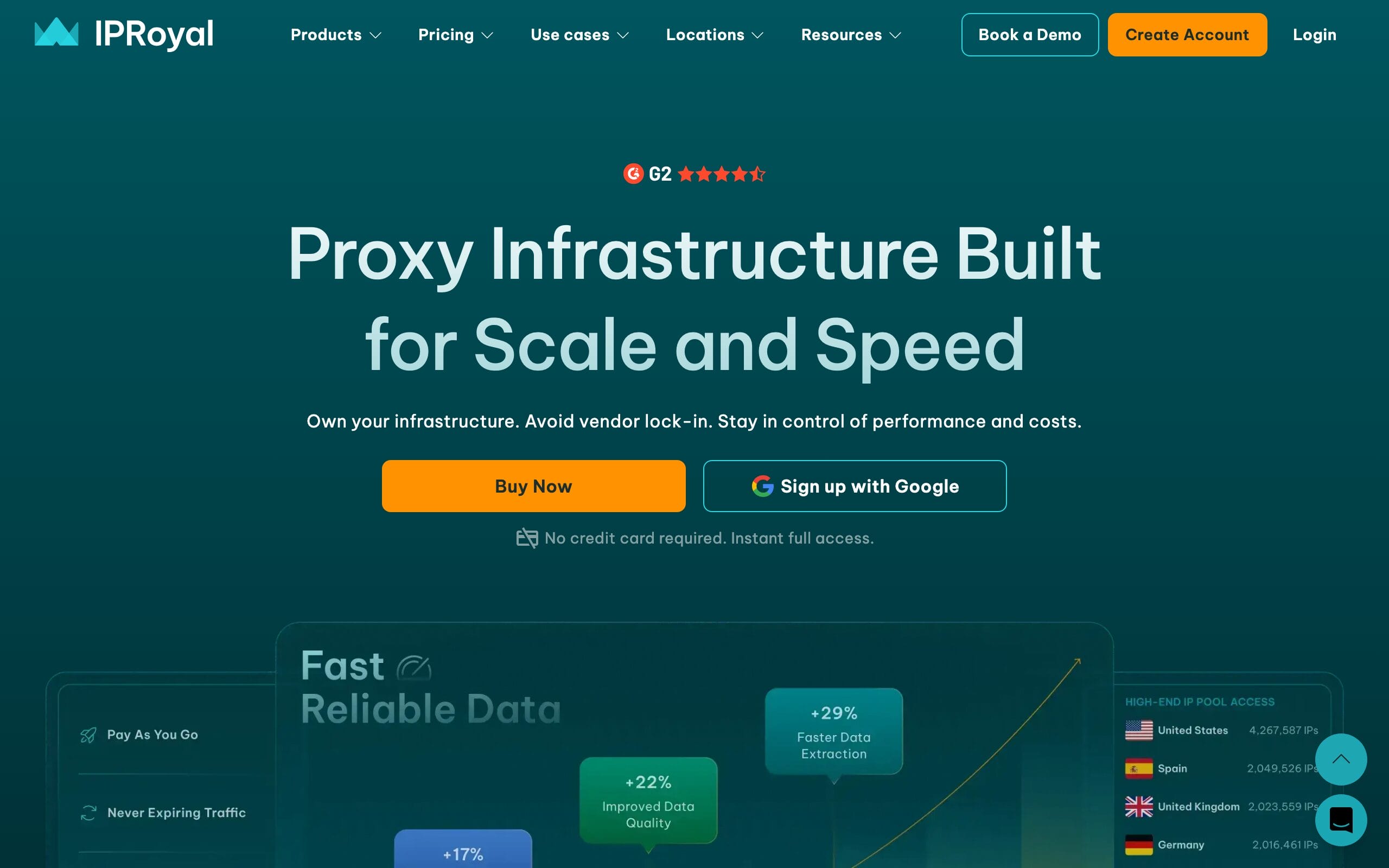
IPRoyal stands out for flexible, no-expiry pricing. Its residential traffic doesn’t expire monthly, so you buy what you need and use it when you need it, ideal for irregular or seasonal projects. The pool is solid, coverage is global, and the prices are competitive, with sticky sessions available for tasks that need a stable IP. For anyone whose usage is bursty rather than constant, the pay-as-you-go model is genuinely refreshing.
🌐 Best for: irregular usage where non-expiring traffic saves money. Watch for: smaller pool than the giants.
5. Oxylabs: best for large-scale scraping
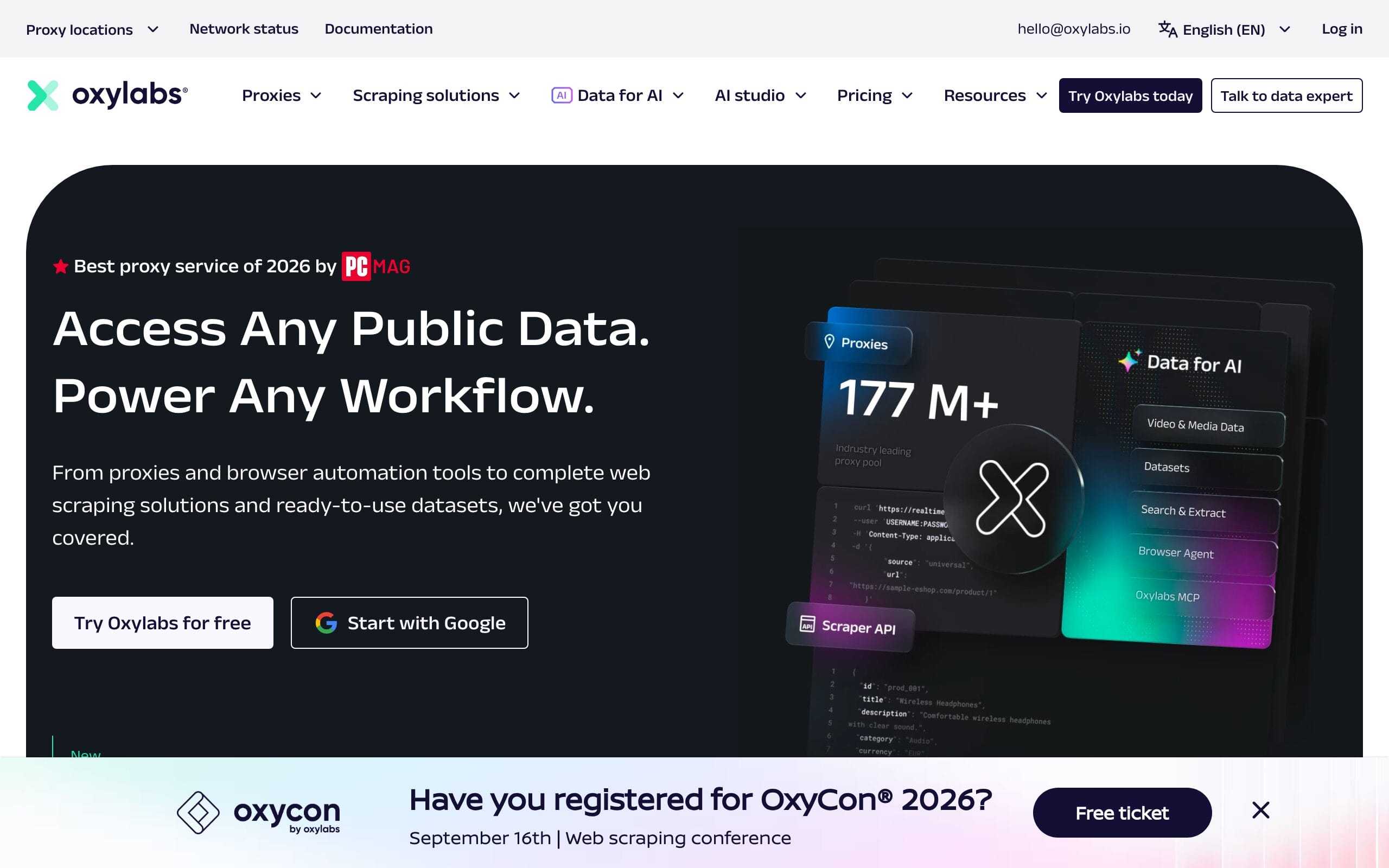
Oxylabs is the scraping specialist’s choice. With a 175M+ IP network and a suite of dedicated scraping APIs (for search engines, e-commerce, and the web at large), it’s engineered for high-volume, high-success data extraction. Reliability and success rates are excellent, and the tooling around proxies, ready-made scrapers, parsers, and a strong dashboard, makes big jobs manageable. It sits at the premium end, but for serious scraping operations it’s worth it.
🌐 Best for: high-volume scraping with dedicated APIs. Watch for: premium pricing.
Residential, datacenter, mobile and ISP proxies
Before you pick a provider, know which proxy type your task needs, it matters more than the brand.
- Residential proxies use real IPs from real home devices, so they’re hardest to detect and best for scraping protected sites, ad verification, and sneaker or ticket tasks. They cost more per GB.
- Datacenter proxies are fast and cheap but come from data centers, so they’re easier to detect. Great for less-protected targets and high-speed bulk work where stealth matters less.
- Mobile proxies use 4G/5G carrier IPs and are the hardest to block, ideal for managing social media accounts and the most aggressively-protected targets, but they’re the priciest.
- ISP proxies blend the two: datacenter-hosted but registered to real ISPs, giving residential-like trust at near-datacenter speed. A strong middle ground for sustained tasks.
How to choose a proxy provider
Beyond proxy type, weigh these before you buy.
- Pool size and locations. A bigger, more geographically spread pool means fewer reused IPs and better targeting. Check the provider covers the exact countries or cities you need.
- Pricing model. Most charge per GB of traffic; some (IPRoyal) don’t expire. Estimate your data volume, residential GBs add up fast on heavy scraping.
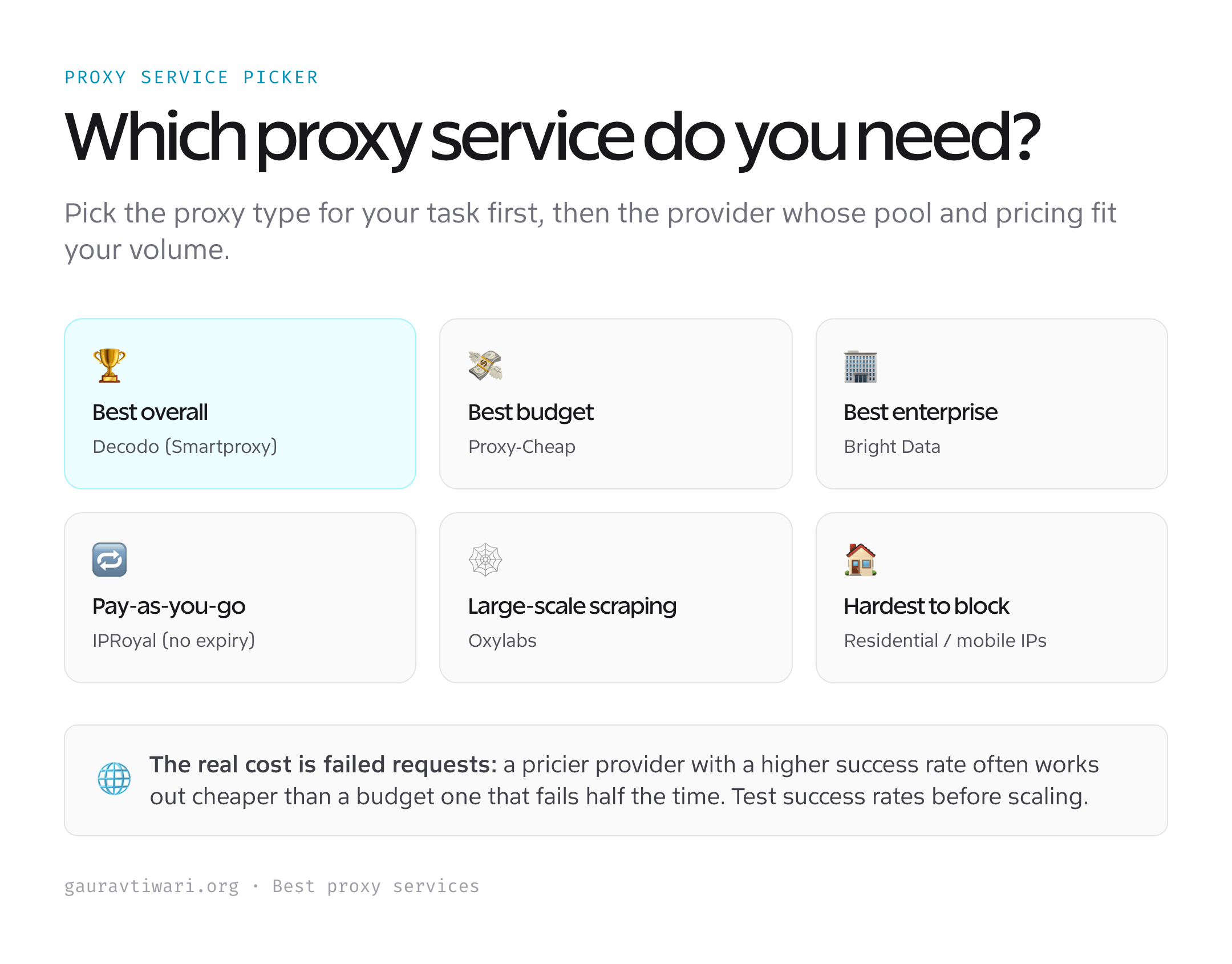
- Success rate and speed. The real cost is failed requests. Premium providers (Decodo, Oxylabs) win here, which often makes them cheaper than a “budget” option that fails half the time.
- Session control. Need a stable IP for a login session, or rotating IPs for scraping? Make sure the provider supports sticky and rotating sessions as your task requires.
- Ethics and compliance. Use proxies legally and responsibly, respect site terms and rate limits, and choose providers that source IPs ethically. Reputable providers are transparent about this.
Which proxy service should you use?
For most people, Decodo is the best overall, premium quality, huge pool, and beginner-friendly. On a budget, Proxy-Cheap delivers reliable proxies for far less. Enterprises with serious scale and compliance needs should look at Bright Data, irregular users will love IPRoyal’s non-expiring traffic, and dedicated scrapers get the most from Oxylabs’ APIs. Match the proxy type to your task first, then pick the provider whose pricing and pool fit your volume.
Frequently asked questions
Are proxies legal?
Using proxies is legal in most countries, and they’re a standard tool for legitimate business tasks like price monitoring, ad verification, market research, and brand protection. What matters is how you use them: respect websites’ terms of service and rate limits, don’t access data you’re not allowed to, and follow data-protection laws. Choose providers that source their IP networks ethically and with user consent. Used responsibly, proxies are a normal, lawful part of online business.
What is the difference between a proxy and a VPN?
A VPN routes all your device’s traffic through one encrypted server, mainly for privacy and security, and is built for individuals. A proxy routes specific requests through a large pool of rotating IPs, and is built for tasks like scraping and multi-account management at scale. VPNs prioritize encryption and ease; proxies prioritize many IPs, locations, and high request volumes. For personal privacy use a VPN; for data collection and automation use proxies.
Which proxy type should I use for web scraping?
It depends on the target. For well-protected sites (major retailers, social platforms, search engines), use residential or mobile proxies, which look like real users and are hardest to block. For less-protected sites or high-speed bulk work, datacenter proxies are faster and far cheaper. ISP proxies are a strong middle ground. Many scrapers start with residential for reliability, then switch some traffic to datacenter where it works, to control costs.
How much do proxies cost?
Residential proxies are usually priced per gigabyte of traffic, ranging from roughly a couple of dollars per GB at budget providers like Proxy-Cheap up to more at premium ones, with volume discounts. Datacenter proxies are often sold per IP per month and are much cheaper. The real cost driver is your data volume and success rate, a slightly pricier provider with a higher success rate often works out cheaper overall because you waste fewer requests.
The bottom line
The right proxy turns blocked, throttled tasks into smooth ones. Decodo is the best all-rounder, Proxy-Cheap is the budget champion, Bright Data rules the enterprise tier, IPRoyal wins for flexible non-expiring traffic, and Oxylabs is the scraping specialist. Pick your proxy type based on the task, start small to test success rates, then scale with the provider that delivers the best results per dollar for your volume.
Tell Google you want more of this.
Add Gaurav Tiwari as a preferred sourceOne tap, and this site shows up more often in your own Top Stories, AI Overviews and AI Mode. Remove it any time.
Disclaimer: This site is reader-supported. If you buy through some links, I may earn a small commission at no extra cost to you. I only recommend tools I trust and would use myself. Your support helps keep gauravtiwari.org free and focused on real-world advice. Thanks. - Gaurav Tiwari