
 by
by
Privacy challenges in modern advertising technology now affect targeting, measurement, consent, product design, and the basic trust between an advertiser and the person seeing an ad. You notice the problem when an ad feels a little too accurate, but the harder work happens behind the screen: deciding which data a platform should collect, how long it should keep it, and whether the user ever made a meaningful choice.
For anyone running campaigns or building ad products, privacy isn’t a legal checkbox added after launch. It’s part of the job.
The End of Easy Tracking
The privacy challenges in modern advertising technology begin with identifiers. For years, third-party cookies were the quiet workhorse of digital advertising. They let platforms follow a user across unrelated sites, build a detailed interest profile, and serve ads with uncanny precision.
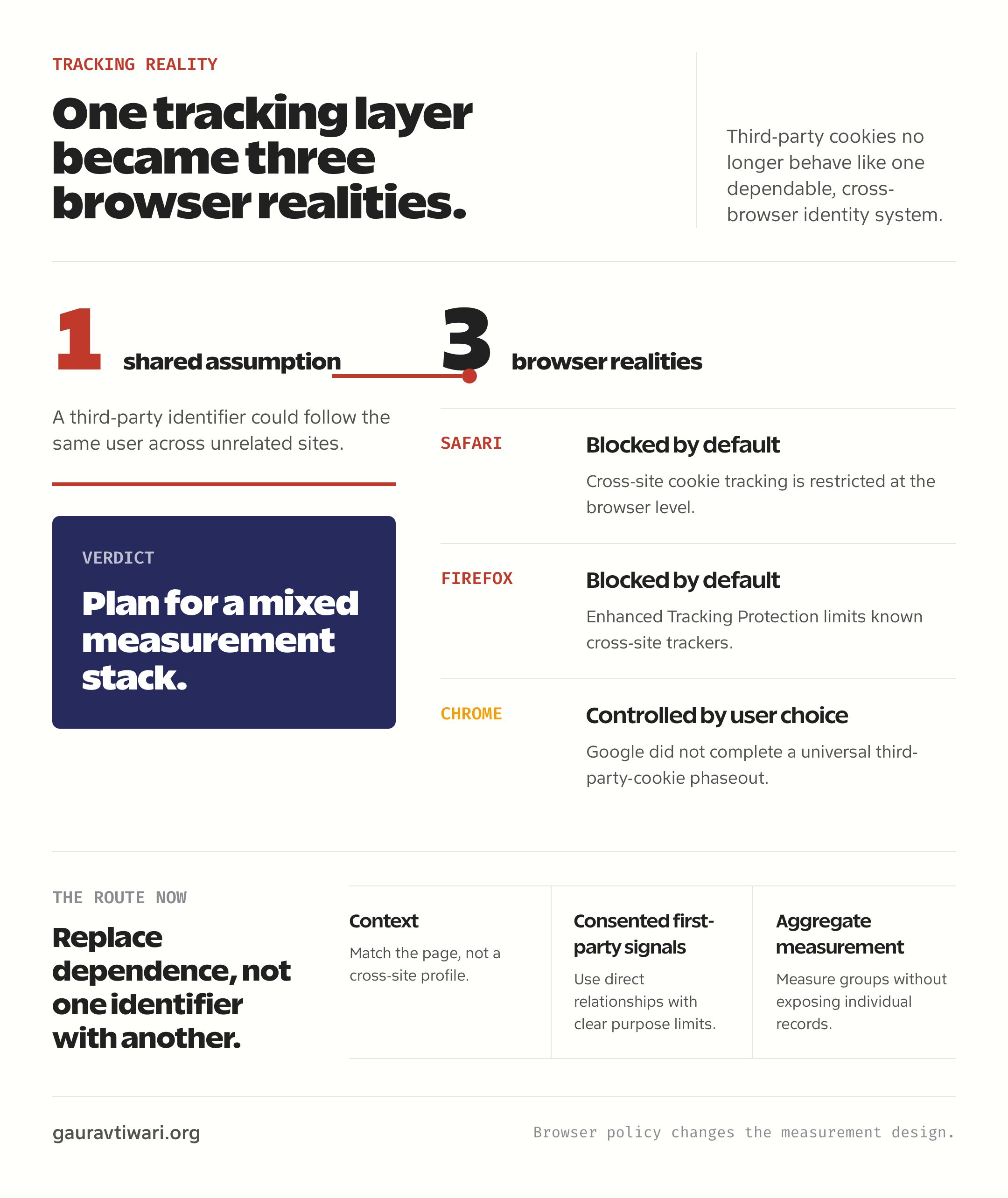
Safari and Firefox block third-party cookies by default. Chrome took a different route. Google abandoned a universal phaseout, kept third-party-cookie controls under user choice, and later began retiring several Privacy Sandbox advertising APIs, including Topics and Protected Audience.
The result isn’t the end of tracking. It’s a fragmented system in which browser settings, consent choices, platform rules, and regional laws all change what an advertiser can see.
Advertisers now rely on a mix of contextual targeting based on page content, first-party data collected through direct customer relationships, and aggregate measurement that avoids exposing individual-level records. None of these replaces a persistent cross-site identifier one-for-one. That’s where much of the current tension in ad tech lives.
Regulation Isn’t Slowing Down
The legal side of privacy challenges in modern advertising technology keeps expanding. GDPR in Europe and the California Consumer Privacy Act, as amended by the California Privacy Rights Act, were early signs of a much broader shift. More jurisdictions now have their own rules for consent, retention, sensitive data, targeted advertising, and opt-outs. A platform operating across regions has to map each data flow to the law that applies.
The recurring problems are practical:
- Consent fatigue: People click through cookie banners without reading them. A banner may record a click, but that doesn’t automatically make the choice informed or the underlying processing lawful.
- Data minimization: GDPR requires organizations to collect only what is necessary for a stated purpose. That runs against ad tech’s old habit of collecting every available signal in case it becomes useful later.
- Cross-border transfers: Moving personal data outside the European Economic Area requires an approved transfer mechanism and safeguards. A vendor contract alone may not be enough.
- Right to erasure: A person can request deletion in many situations, but the right isn’t absolute. The operational problem is finding and removing eligible records across interconnected systems and vendors.
My guide to privacy laws and cybersecurity explains why compliance and security have to be designed together. Adding a consent banner while leaving uncontrolled data copies across vendors doesn’t solve the underlying problem.
The Trust Gap Between Users and Platforms
One of the less visible privacy challenges in modern advertising technology is trust. My earlier survey on how users feel about digital privacy captures the concern: people often know they’re being tracked without knowing which companies receive the data, how long it survives, or how to stop the flow.

That unease can contribute to ad-blocker adoption, privacy-focused browser use, and lower willingness to engage with advertising. The difficult part is that perception and practice feed each other. A platform may improve its targeting system, but users won’t trust the change if the explanation is buried in a privacy policy written for lawyers.
Plain language helps. Tell people what you collect, why you need it, who receives it, and how they can change their choice. A shorter data-retention period and a working opt-out do more for trust than another paragraph of legal reassurance.
Where the Industry Is Actually Headed
Ad tech isn’t moving toward one cookie replacement. It is splitting into several approaches that work under different technical and legal limits.
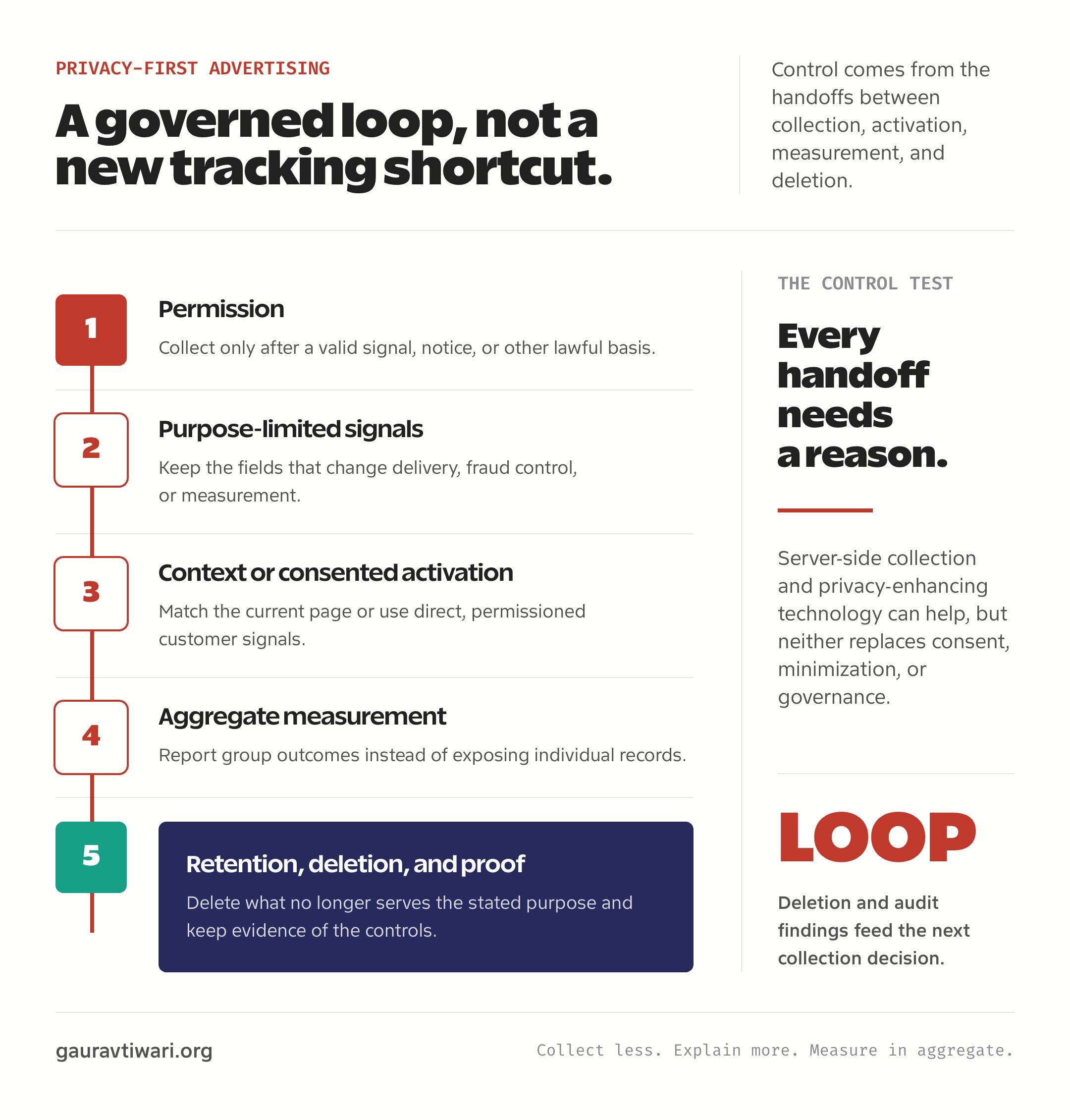
The strongest directions are:
- Contextual advertising: Matching an ad to the content on the current page reduces dependence on a person’s browsing history. It can still involve measurement and profiling, so it isn’t automatically exempt from privacy rules.
- Consented first-party data: Loyalty programs, newsletters, purchases, and logged-in experiences give brands direct signals. Those signals still need a lawful basis, purpose limits, access controls, and retention rules.
- Privacy-enhancing techniques: Differential privacy can add statistical noise, while federated learning can keep raw data on a device. Both can reduce exposure when implemented well, but neither makes a system private by default.
- Server-side collection: Moving tracking from the browser to a server can improve control and data quality. It can also hide collection from browser tools and concentrate more responsibility with the operator. Consent and minimization requirements still apply.
Advertising networks face the same tradeoff. Platforms like the Kadam advertising network still need to provide targeting and real-time performance reporting while meeting consent, transparency, minimization, and vendor-governance obligations.

What This Means for Advertisers Going Forward
For advertisers, privacy challenges in modern advertising technology point to one practical change: use a smaller, clearer data model that can survive browser changes and regulatory review. The old playbook of broad tracking, aggressive retargeting, and minimal transparency is less reliable every year.
Start with five decisions:
- List every signal a campaign collects and the purpose attached to it.
- Separate data you own directly from data supplied by platforms or vendors.
- Remove fields and identifiers that don’t change a campaign decision.
- Test contextual targeting instead of assuming behavioral targeting will always win.
- Measure campaign outcomes in aggregate wherever person-level reporting isn’t necessary.
Privacy won’t end digital advertising. But it will punish systems built around invisible collection and permanent identifiers. The platforms that last will be the ones that can explain their data flow in plain English and still run an effective campaign.
Frequently Asked Questions
Are third-party cookies gone from Chrome?
No. Chrome kept third-party-cookie controls under user choice rather than completing a universal phaseout. Safari and Firefox block them by default, so advertisers still face different rules across browsers.
Is first-party data automatically privacy compliant?
No. First-party data still needs a lawful basis, a stated purpose, retention limits, access controls, and a way to honor relevant user rights and choices.
Does contextual advertising avoid all privacy concerns?
No. Contextual advertising reduces dependence on cross-site browsing histories, but campaign delivery and measurement can still process personal data.
Is server-side tracking more private?
Not by itself. Server-side tracking can give an operator more control over collection, but it can also make collection less visible. The same consent, minimization, security, and vendor rules still apply.
What should advertisers change first?
Audit every data signal and remove anything that doesn’t change targeting, delivery, fraud prevention, or measurement. A smaller data model is easier to explain, secure, and govern.
Tell Google you want more of this.
Add Gaurav Tiwari as a preferred sourceOne tap, and this site shows up more often in your own Top Stories, AI Overviews and AI Mode. Remove it any time.