
 by
by
Indian mathematicians helped build the decimal place-value system, arithmetic with zero and negative numbers, trigonometric tables, algebraic algorithms, infinite series, modern statistics, and optimization methods. Aryabhata, Brahmagupta, Bhaskara II, Madhava, Srinivasa Ramanujan, P.C. Mahalanobis, C.R. Rao, and Harish-Chandra belong in any serious account of mathematical history.
The honest version is more interesting than a patriotic list of “firsts.” Mathematical ideas often appeared in more than one civilization, dates are sometimes uncertain, and later scholars refined earlier discoveries. What is clear is that India sustained major mathematical traditions for more than two millennia, and those traditions changed how the world calculates.
16 Famous Indian Mathematicians and Their Contributions
The most important Indian mathematicians span very different fields and periods. Ancient scholars worked on prosody, arithmetic, algebra, geometry, astronomy, and trigonometry. The Kerala School developed infinite-series methods. Modern Indian mathematicians transformed number theory, statistics, mathematical physics, representation theory, and computer optimization.
| Mathematician | Period | Best-known contribution |
|---|---|---|
| Pingala | Probably 3rd-1st century BCE | Combinatorial analysis of poetic meters and binary-like enumeration |
| Aryabhata | 476-550 | Sine table, pi approximation, kuttaka algorithm, Earth’s rotation |
| Brahmagupta | 598-c. 670 | Systematic arithmetic rules for zero and negative numbers |
| Bhaskara I | c. 600-c. 680 | Accurate rational approximation of the sine function |
| Mahavira | c. 800-c. 870 | Systematic arithmetic, fractions, combinatorics, and indeterminate equations |
| Bhaskara II | 1114-1185 | Lilavati, Bijaganita, and the chakravala method |
| Madhava of Sangamagrama | c. 1350-c. 1425 | Infinite series for pi, sine, cosine, and arctangent |
| Nilakantha Somayaji | 1444-after 1501 | Extensions of Kerala School series and a refined planetary model |
| Jyesthadeva | c. 1500-c. 1575 | Yuktibhasa, with derivations of Kerala School results |
| Srinivasa Ramanujan | 1887-1920 | Partitions, continued fractions, infinite series, and mock theta functions |
| P.C. Mahalanobis | 1893-1972 | Mahalanobis distance and large-scale sample survey methods |
| Satyendra Nath Bose | 1894-1974 | Bose-Einstein statistics and the mathematics of indistinguishable particles |
| D.R. Kaprekar | 1905-1986 | Kaprekar constant 6174 and recreational number theory |
| Harish-Chandra | 1923-1983 | Representation theory and harmonic analysis on Lie groups |
| C.R. Rao | 1920-2023 | Cramer-Rao bound, Rao-Blackwell theorem, and score test |
| Narendra Karmarkar | Born 1956 | Polynomial-time interior-point algorithm for linear programming |
Bottom line: Indian mathematics is not one discovery or one golden age. It is a chain of schools, texts, teachers, and problem-solving methods stretching from the Sulbasutras to modern statistics and algorithms.
Foundations Before the Famous Names
Indian mathematics did not begin with a single identifiable mathematician. The Sulbasutras preserved practical geometry for altar construction, Jain traditions explored large numbers and combinatorics, and Sanskrit prosody created counting problems that encouraged algorithmic thinking. These foundations matter because later mathematicians inherited methods, vocabulary, and questions rather than starting from zero.
The Sulbasutras and Practical Geometry
The Sulbasutras, composed roughly during the first millennium BCE, explain how to construct ritual altars with cords. Their religious purpose produced serious geometry.
- The Baudhayana Sulbasutra states the diagonal rule now written as a2 + b2 = c2.
- A famous approximation gives √2 as about 1.4142156, accurate to five decimal places.
- The texts describe area-preserving transformations between squares, rectangles, and approximate circles.
- The diagonal theorem was also known in Babylonian mathematics, so the accurate claim is independent or shared ancient knowledge, not an exclusive invention story.
Jain Mathematics and Large Numbers
Jain scholars treated huge numbers, repeated halving, infinity, permutations, and combinations as natural mathematical subjects. Their categories of infinity were philosophical rather than Cantor’s modern set theory, but they show a sustained willingness to reason about quantities beyond ordinary counting.
- Jain texts distinguished several kinds of unbounded quantity and direction.
- The concept of ardhacheda, repeated division by two, resembles a base-2 logarithmic count.
- Combinatorial problems later appeared in the work of Mahavira, Hemachandra, and other Indian scholars.
Ancient and Classical Indian Mathematicians
From Pingala to Bhaskara II, ancient and classical Indian mathematicians developed methods that were compact, computational, and closely connected to astronomy, poetry, commerce, and education. The surviving texts do not always use Greek-style axiomatic proofs, but they contain algorithms, worked examples, error corrections, and explanations that reveal genuine mathematical reasoning.
1. Pingala: Patterns, Prosody, and Combinatorics
Pingala’s dates are uncertain, but his Chandahshastra analyzed Sanskrit poetic meters by arranging short and long syllables. That literary problem becomes a mathematical problem: how many patterns are possible, and how can they be generated systematically?
- Used short and long syllables in a binary-like enumeration of metrical patterns.
- Described recursive procedures for listing combinations.
- Inspired later commentaries containing the meru-prastara, a triangular arrangement related to binomial coefficients.
- Should be described as an early combinatorial tradition, not simply as the inventor of modern binary notation.
2. Aryabhata: Trigonometry, Pi, and Earth’s Rotation
Aryabhata completed the Aryabhatiya in 499 CE when he was 23. Its 118 verses compressed arithmetic, algebra, trigonometry, timekeeping, planetary models, and eclipse calculations into a text that shaped Indian mathematical astronomy for centuries.
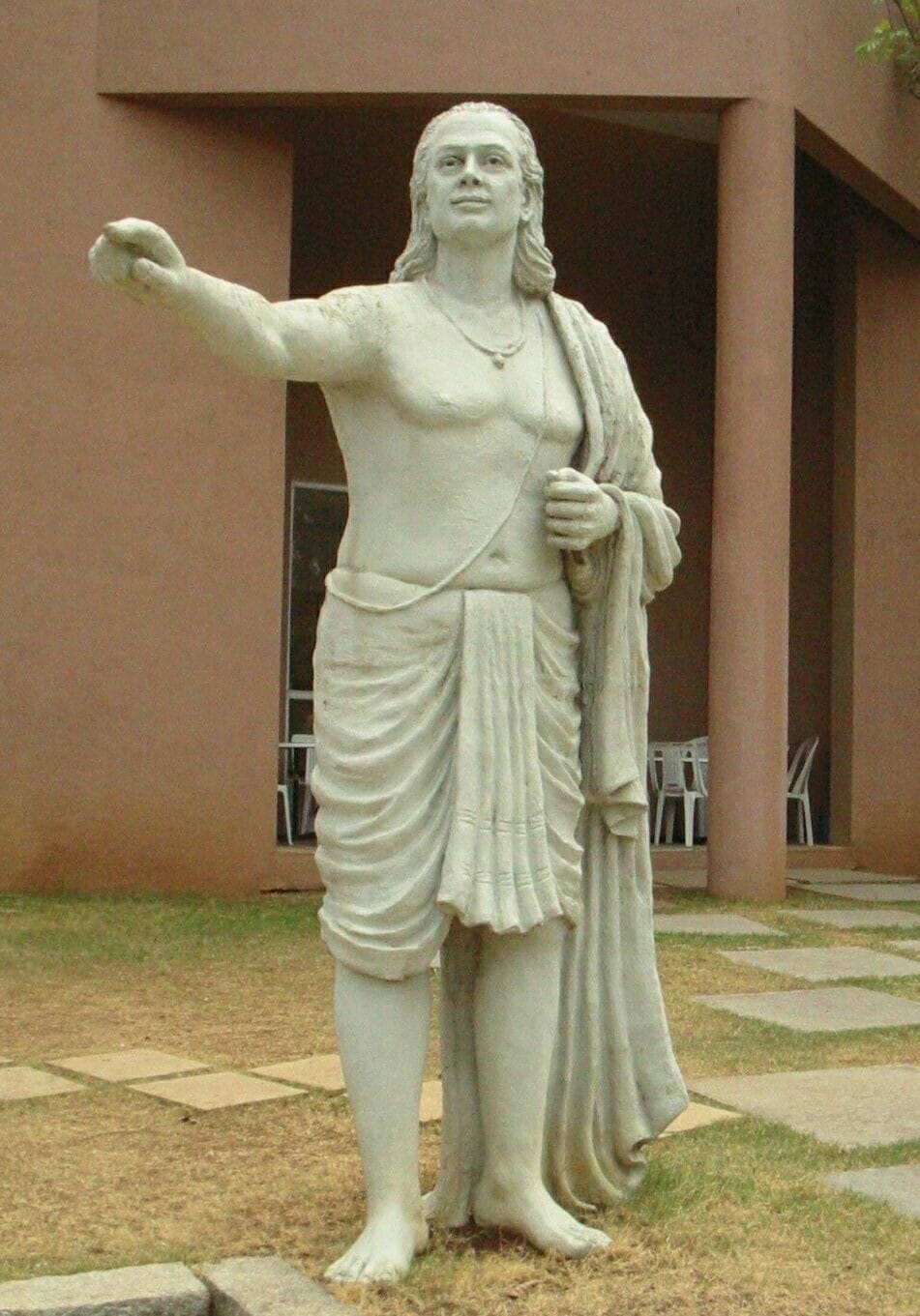
- Gave π ≈ 62832/20000 = 3.1416, correct to four decimal places.
- Constructed a 24-value sine table at intervals of 3 degrees 45 minutes.
- Used the kuttaka, or pulverizer, to solve linear indeterminate equations.
- Explained the apparent daily motion of the heavens through Earth’s axial rotation.
- Worked with positional number ideas without using the modern zero symbol.
I cover the text, sine table, kuttaka algorithm, and astronomy in more detail in my guide to Aryabhata’s contributions to mathematics and astronomy.
3. Brahmagupta: Zero, Negative Numbers, and Algebra
Brahmagupta wrote the Brahmasphutasiddhanta in 628 CE and later led the astronomical center at Ujjain. His work contains the first surviving systematic arithmetic rules for zero and negative numbers, described through the intuitive language of fortunes and debts.
- Defined zero as the result of subtracting a number from itself.
- Gave correct rules for adding, subtracting, and multiplying positive and negative numbers.
- Attempted division by zero, but those particular rules were not correct.
- Presented methods for quadratic and indeterminate equations.
- Derived the cyclic-quadrilateral area formula √[(s-a)(s-b)(s-c)(s-d)].
- Developed composition methods for equations of the form x2 – Dy2 = N.
The MacTutor biography of Brahmagupta gives a useful scholarly overview of his surviving texts and number-system work.
4. Bhaskara I: A Remarkably Accurate Sine Formula
Bhaskara I was a major commentator on Aryabhata and an important mathematician in his own right. His rational approximation for the sine function is simple enough to compute by hand and stays within about one percent of the true value across its intended range.
- Used the approximation sin(x) ≈ 16x(π-x) / [5π2 – 4x(π-x)] for 0 ≤ x ≤ π.
- Wrote the Mahabhaskariya, Laghubhaskariya, and a detailed commentary on the Aryabhatiya.
- Extended discussions of equations, trigonometry, quadrilaterals, and mathematical astronomy.
- Helped preserve and explain Aryabhata’s compressed rules for later generations.
5. Mahavira: A Text Devoted Entirely to Mathematics
Mahavira, a Jain mathematician working around the ninth century, wrote the Ganita Sara Samgraha. It is the earliest surviving Indian treatise devoted entirely to mathematics rather than embedding mathematics inside an astronomy text.
- Organized arithmetic operations, fractions, rules of three, areas, excavations, and shadows.
- Discussed unit-fraction decompositions and efficient methods for squaring and extracting roots.
- Used the kuttaka method for linear indeterminate equations.
- Gave rules for permutations and combinations.
- Included practical word problems involving merchants, money, and measurement.
6. Bhaskara II: Lilavati, Algebra, and Chakravala
Bhaskara II, also called Bhaskaracharya, led the Ujjain astronomical tradition in the 12th century. His Siddhanta Shiromani includes the celebrated Lilavati and Bijaganita, texts that combine concise rules with memorable problems and sophisticated algorithms.
- Lilavati covers arithmetic, fractions, progressions, geometry, permutations, and practical word problems.
- Bijaganita develops algebra with positive and negative quantities, surds, equations, and indeterminate problems.
- The chakravala method solves equations such as x2 – Dy2 = 1 through a cyclic algorithm.
- Bhaskara II discussed instantaneous motion and changing quantities, ideas relevant to the later history of differential reasoning.
- The popular story that Lilavati was his daughter is a later legend, not a settled biographical fact.
For worked problems and modern notation, see my complete reference guide to Bhaskara II’s Lilavati.
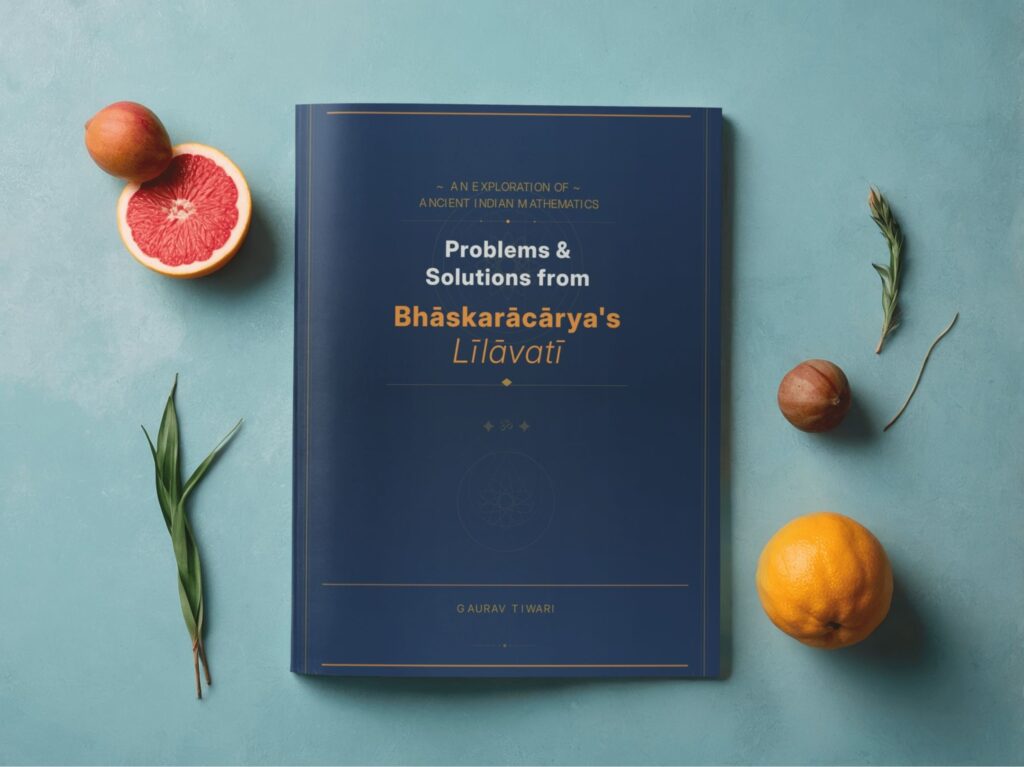
Bhaskaracharya's Lilavati: Ancient Indian Mathematics
- All 13 chapters of the Lilavati with detailed commentary
- 11 famous word problems solved step by step
- Kuttaka and Chakravala algorithms in modern notation
- Comparisons with Greek and Chinese mathematical traditions
The Kerala School and Infinite Series
The Kerala School of Astronomy and Mathematics produced the strongest medieval Indian work on infinite series and mathematical analysis. Madhava, Nilakantha Somayaji, Jyesthadeva, and their successors derived series for trigonometric functions, correction terms, and convergence methods between the 14th and 16th centuries.
7. Madhava of Sangamagrama: Infinite Series Pioneer
Madhava’s own mathematical writings are mostly lost, but later Kerala texts preserve results attributed to him. Those results move beyond finite numerical procedures and use infinite processes that belong to the history of mathematical analysis.
- Derived series equivalent to the modern expansions of arctangent, sine, and cosine.
- Used the arctangent series to calculate pi to high precision.
- Developed correction terms that made the slowly converging pi series practical.
- Produced highly accurate sine values for astronomical calculation.
- Worked more than two centuries before comparable series became established in Europe.
The University of St Andrews account of Madhava summarizes the surviving evidence and the later Kerala works that preserve his series.
8. Nilakantha Somayaji: Series and Planetary Models
Nilakantha Somayaji wrote the Tantrasamgraha in 1501. He used Madhava’s results, extended them, and developed a planetary model that improved the calculation of Mercury and Venus while remaining within an Indian astronomical framework.
- Extended Kerala School work on infinite series and pi.
- Wrote mathematical astronomy covering planetary positions, eclipses, shadows, and visibility.
- Produced a refined model in which planets moved around the Sun while the Sun moved around Earth.
- Connected Aryabhata’s older tradition with Kerala’s later analytical methods.
9. Jyesthadeva: Derivations in the Yuktibhasa
Jyesthadeva’s Yuktibhasa, written in Malayalam around the 16th century, is crucial because it explains why many Kerala School results work. It counters the lazy claim that Indian mathematicians merely stated rules without proof or derivation.
- Explained Madhava’s series for pi, sine, and cosine.
- Used geometrical and computational reasoning rather than only compressed Sanskrit verse.
- Preserved derivations associated with Madhava and Nilakantha.
- Shows that proof in Indian mathematics could take a different form from Euclid’s axiomatic style.
Accuracy note: The Kerala School discovered infinite-series results and techniques that are now part of calculus and analysis. It did not create the complete symbolic, general-purpose calculus later developed independently by Newton and Leibniz. Direct transmission from Kerala to Europe is possible but remains unproven.
Modern Indian Mathematicians
Modern Indian mathematicians did far more than continue an ancient legacy. Ramanujan transformed number theory, Mahalanobis and Rao reshaped statistics, Bose changed mathematical physics, Harish-Chandra built deep representation theory, and Karmarkar altered optimization. Their work is used in physics, economics, machine learning, data science, and computer algorithms.
10. Srinivasa Ramanujan: Number Theory and Infinite Series
Srinivasa Ramanujan produced thousands of identities and theorems during a life of only 32 years. His notebooks continue to generate research in number theory, modular forms, q-series, partitions, continued fractions, and mathematical physics.
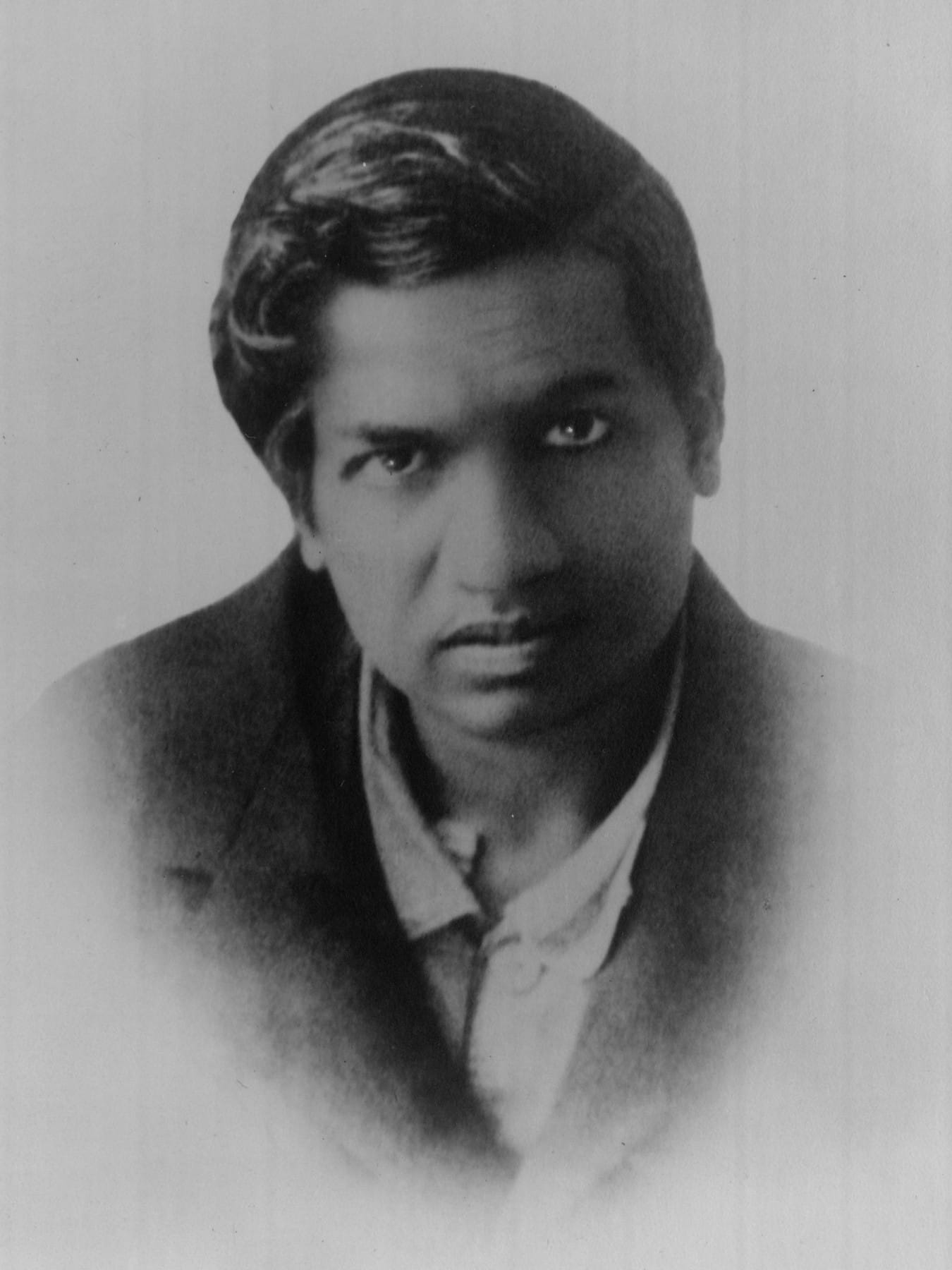
- Developed deep formulas for integer partitions with G.H. Hardy.
- Created identities for continued fractions and rapidly converging series for 1/π.
- Introduced mock theta functions near the end of his life.
- Worked on highly composite numbers, modular equations, and asymptotic formulas.
- Was elected a Fellow of the Royal Society on 2 May 1918.
The Royal Society’s Ramanujan archive feature documents his 1918 election and continuing influence. For the mathematics itself, see my solution to Ramanujan’s nested radical problem.
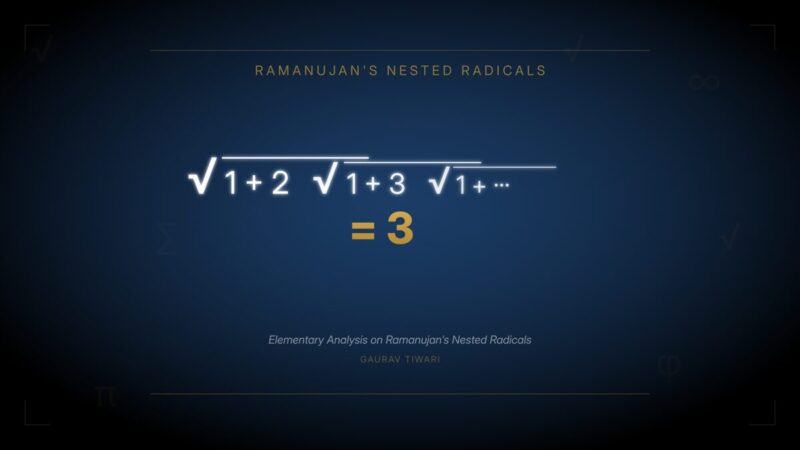
Elementary Analysis on Ramanujan's Nested Radicals
- Denesting techniques with worked proofs
- Ramanujan's general formula from the binomial theorem
- Herschfeld's convergence theorem
- Connections to continued fractions and calculus
11. P.C. Mahalanobis: Statistics at National Scale
Prasanta Chandra Mahalanobis connected abstract statistics with large practical systems. He founded the Indian Statistical Institute in 1931 and helped build India’s modern sample-survey and statistical-planning infrastructure.
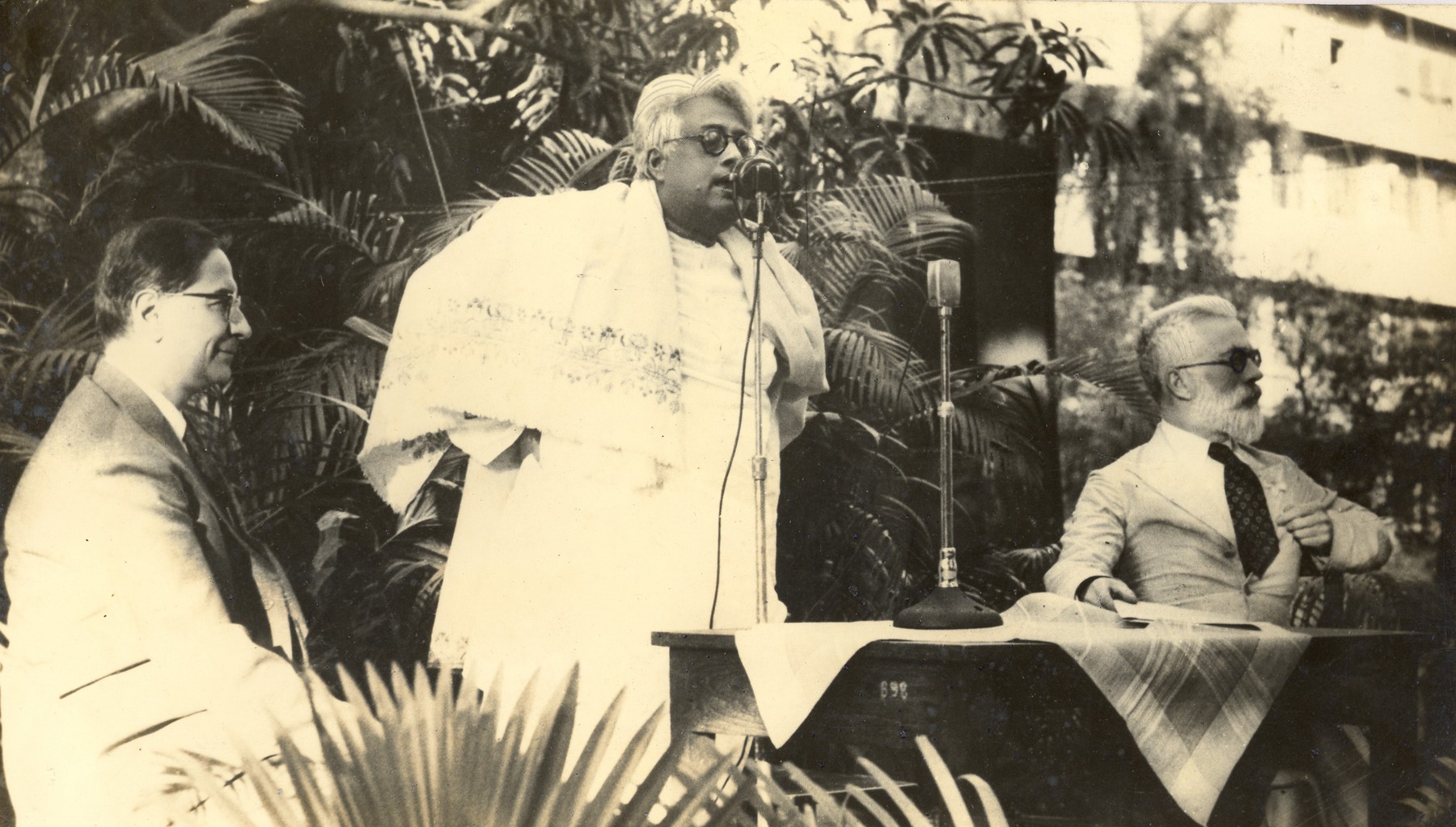
- Introduced the Mahalanobis distance for measuring multivariate separation while accounting for correlation.
- Advanced large-scale sample survey design and statistical quality control.
- Helped establish the National Sample Survey.
- Built institutions that trained later statisticians, including C.R. Rao.
- Left methods now used in classification, anomaly detection, pattern recognition, and machine learning.
The Indian Statistical Institute’s founder profile explains the Mahalanobis distance and the institution he built around statistical research.
12. Satyendra Nath Bose: The Mathematics Behind Bosons
Satyendra Nath Bose was a mathematical physicist whose 1924 work treated photons as indistinguishable particles. Albert Einstein extended the method to atoms, creating Bose-Einstein statistics and predicting Bose-Einstein condensation.
- Derived Planck’s radiation law through a new statistical counting method.
- Changed how quantum particles with integer spin are described.
- Gave his name to bosons, the particle class that includes photons and the Higgs boson.
- Linked combinatorics, probability, and quantum physics in a new framework.
13. D.R. Kaprekar: Recreational Number Theory
Dattatreya Ramchandra Kaprekar worked as a schoolteacher and explored number patterns outside a conventional research career. His problems are accessible enough for classrooms but rich enough to reveal how iteration and digit structure create surprising mathematical behavior.
- Discovered the Kaprekar constant 6174 for four-digit numbers under a repeated digit-rearrangement process.
- Studied Kaprekar numbers, self numbers, and digit-based sequences.
- Showed that recreational mathematics can produce durable research questions.
- Created material that remains popular in mathematical clubs and puzzle books.
14. Harish-Chandra: Representation Theory and Lie Groups
Harish-Chandra began in physics and moved into pure mathematics, where he became one of the central figures in representation theory. His work explains how continuous symmetry groups can be represented through linear transformations and analyzed using harmonic methods.
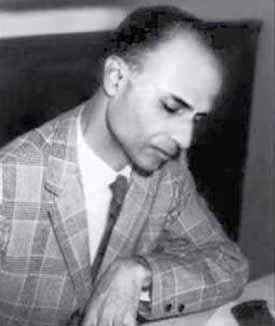
- Classified and analyzed representations of semisimple Lie groups.
- Developed the Harish-Chandra character and regularity theorem.
- Built a bridge between algebra, geometry, harmonic analysis, and mathematical physics.
- Created tools that later became essential to the Langlands program.
15. C.R. Rao: Foundations of Modern Statistics
Calyampudi Radhakrishna Rao’s 1945 paper, written when he was 25, established ideas that now appear in almost every serious statistics curriculum. His work shaped estimation theory, experimental design, multivariate analysis, and information geometry.
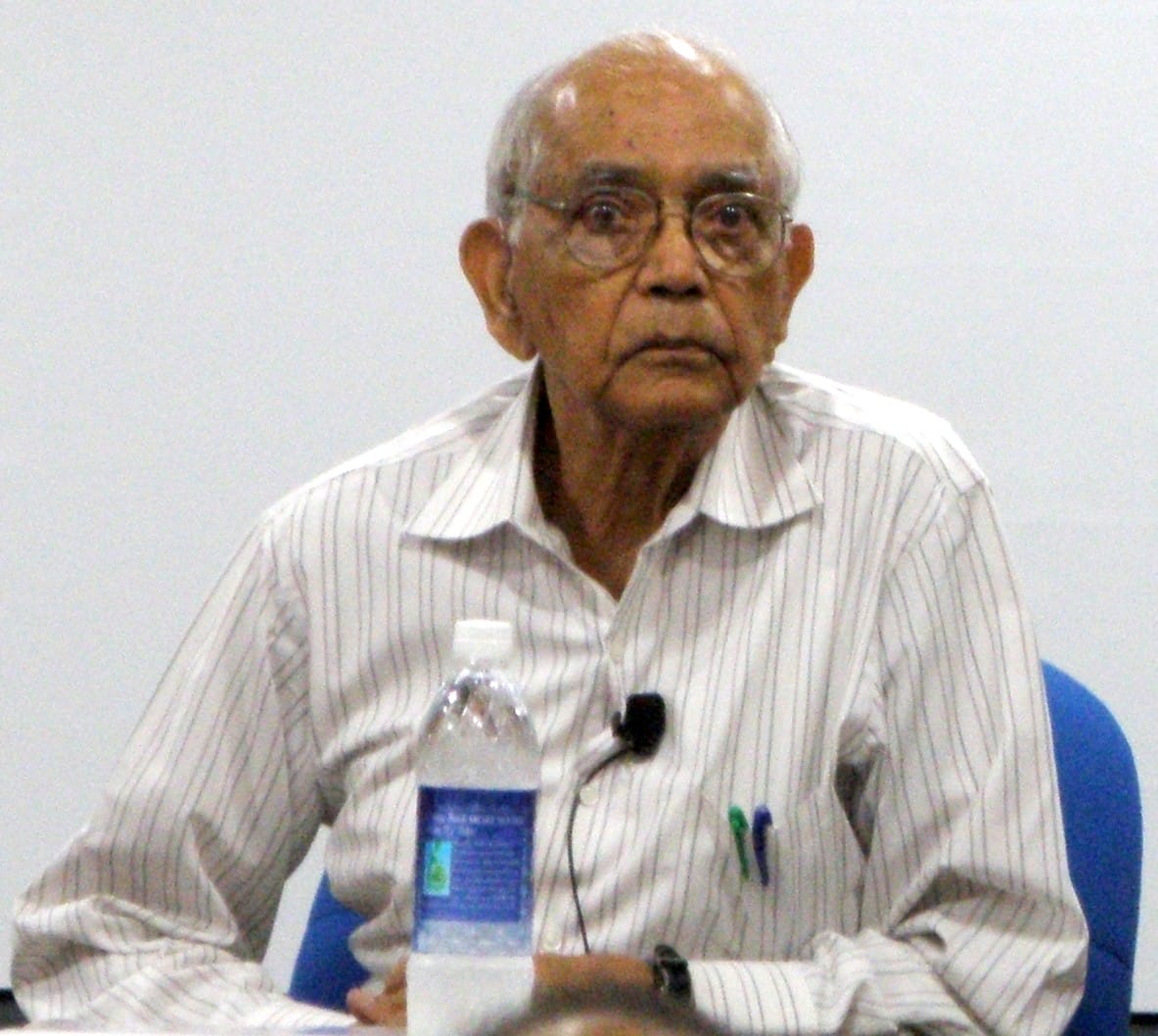
- The Cramer-Rao lower bound sets a minimum variance for unbiased estimators.
- The Rao-Blackwell theorem shows how conditioning can improve an estimator.
- Rao’s score test provides a major method for statistical hypothesis testing.
- Rao distance helped open the field now called information geometry.
- He received the International Prize in Statistics in 2023.
The Institute of Mathematical Statistics obituary for C.R. Rao explains how the 1945 paper generated several foundational theories.
16. Narendra Karmarkar: A Faster Route Through Linear Programming
Narendra Karmarkar introduced a polynomial-time interior-point algorithm for linear programming in 1984. The result challenged the practical dominance of the simplex method and opened a major new era in optimization.
- Solved linear-programming problems through an interior path rather than moving along the boundary of the feasible region.
- Provided a polynomial-time complexity result with strong practical implications.
- Stimulated modern interior-point methods used in logistics, finance, engineering, and network optimization.
- Received the INFORMS Lanchester Prize for the original paper.
INFORMS records Karmarkar’s award for the 1984 paper, “A New Polynomial-Time Algorithm for Linear Programming.”
What Did Indian Mathematicians Contribute?
Indian contributions to mathematics are strongest when described as precise developments rather than slogans. The decimal system emerged over time, zero moved from placeholder to arithmetic object, algebra became algorithmic, trigonometry served astronomy, and the Kerala School pushed finite computation into infinite series. Modern Indian work added statistics, representation theory, and optimization.
Decimal Place Value and Zero
- Indian inscriptions and manuscripts show the gradual development of nine digits within a decimal place-value system.
- A place-value system makes the same digit represent different quantities depending on position.
- Zero completed the system by marking an empty position and later functioning as a number.
- Brahmagupta’s rules in 628 CE are a decisive point in the history of arithmetic zero.
Algebra and Indeterminate Equations
- Aryabhata’s kuttaka method solved linear equations in integers.
- Brahmagupta systematized operations with positive, negative, and zero quantities.
- Bhaskara II’s chakravala method solved difficult quadratic indeterminate equations.
- Indian algebra favored repeatable algorithms and worked examples.
Trigonometry and Astronomy
- Indian astronomers replaced the Greek full chord with half-chord functions related to the modern sine.
- Aryabhata created a systematic sine table.
- Bhaskara I produced a compact sine approximation with small error.
- Kerala mathematicians derived infinite series for sine and cosine.
Combinatorics and Recursive Patterns
- Prosody turned arrangements of short and long syllables into counting problems.
- Jain mathematicians explored permutations and combinations.
- Mahavira gave systematic combinatorial rules.
- Later work by Hemachandra described the sequence now also associated with Fibonacci.
Infinite Series and Analysis
- Madhava developed series equivalent to expansions for arctangent, sine, and cosine.
- Kerala mathematicians used correction terms and convergence reasoning.
- Jyesthadeva recorded derivations in the Yuktibhasa.
- These results are genuine precursors and components of calculus, though not a complete symbolic calculus system.
Statistics, Symmetry, and Algorithms
- Mahalanobis and Rao built foundational tools for multivariate statistics and estimation.
- Bose created a new statistical description of quantum particles.
- Harish-Chandra transformed representation theory and harmonic analysis.
- Karmarkar changed the theory and practice of linear optimization.
How Indian Mathematics Reached the Wider World
Indian mathematics spread most clearly through translation and scholarship in the Islamic world. Works associated with Aryabhata and Brahmagupta were translated into Arabic, and scholars such as al-Khwarizmi explained Indian calculation. Europe later received the numeral system and many computational ideas through Arabic and Latin texts.
- The numerals are properly called Hindu-Arabic because India developed the decimal system and Arabic-language scholars transmitted and extended it.
- The English word “algorithm” comes from the Latinized name of al-Khwarizmi, whose work included calculation with Indian numerals.
- The route from Kerala School mathematics to early modern Europe is less certain. Jesuit contact existed, but historians have not found decisive documentary proof that the series traveled to Newton or Leibniz.
- Independent discovery is common in mathematics. Recognizing Indian priority for specific results does not require inventing a transmission story.
Books and Resources to Continue Learning
If the history interests you but the formulas feel distant, start with a structured path through logic, numbers, measurement, equations, and proof habits.
A Trip to Mathematics: From Logic to Equations
- Mathematical logic, connectives, quantifiers, and proof techniques
- Significant figures, scientific notation, and measurement
- Linear and quadratic equations in their common forms
- Systems solved by substitution, elimination, and graphs
Once you are comfortable with the foundations, choose analysis for calculus and convergence or number theory for primes and classic unsolved problems.
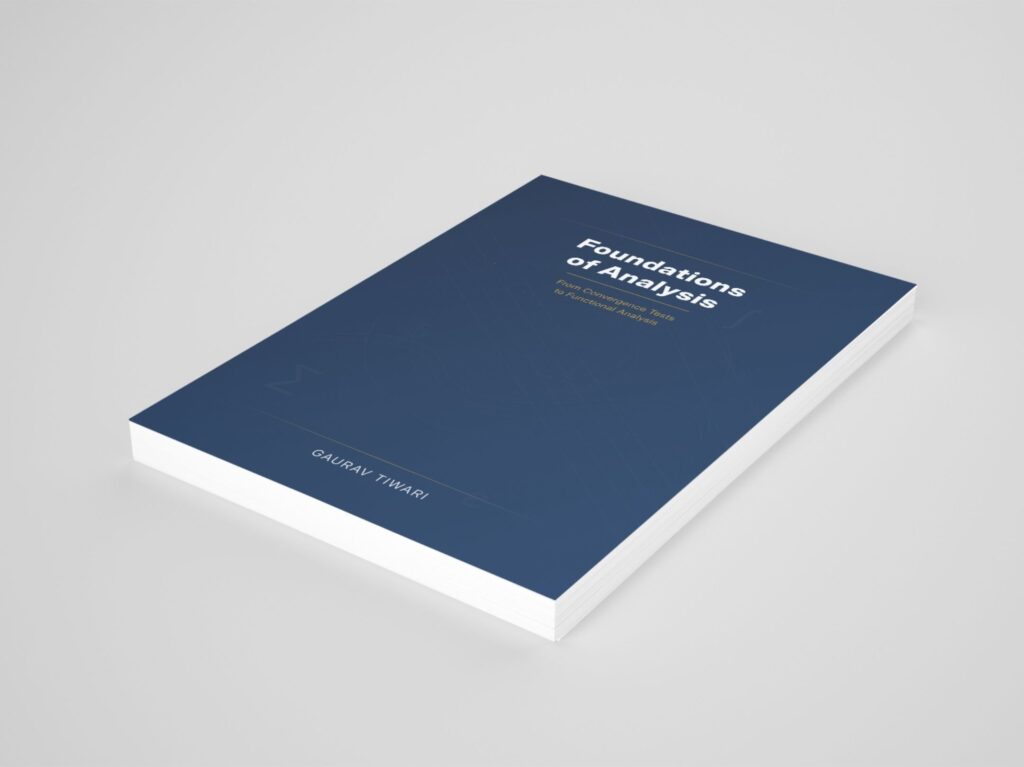
- Triangle inequality and Cauchy-Schwarz applications
- Ratio, root, Raabe, integral, and comparison tests
- Multiple integrals and functional analysis foundations
- Proof-based explanations with worked examples
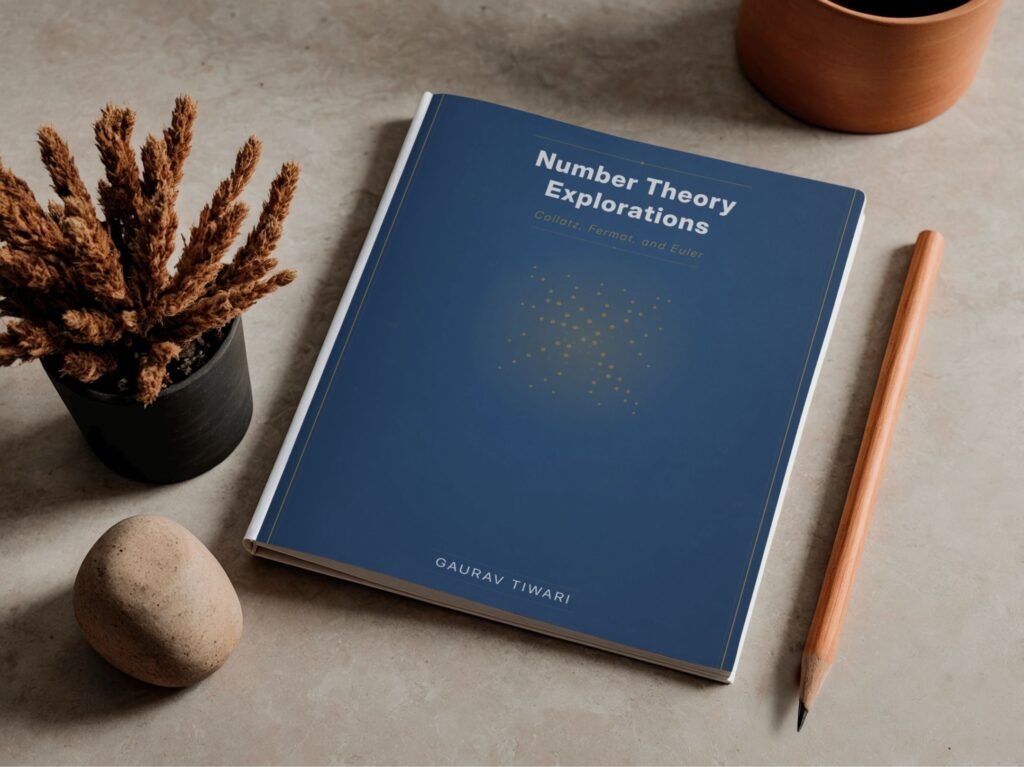
- Fermat numbers, Pepin's test, and constructible polygons
- Euler's prime-generating polynomial and Heegner numbers
- The Collatz conjecture and related explorations
- Historical context, clear proofs, and worked examples
For scholarly history, the MacTutor overview of Indian mathematics, Kim Plofker’s Mathematics in India, and George Gheverghese Joseph’s The Crest of the Peacock are strong starting points. For Ramanujan’s life, Robert Kanigel’s The Man Who Knew Infinity is the accessible biography I’d read first. Treat popular lists as discovery tools, not as final authorities, because they often repeat shaky dates and exaggerated “first” claims.
Frequently Asked Questions
Who is the most famous Indian mathematician?
Srinivasa Ramanujan is the most famous modern Indian mathematician. His work on number theory, partitions, continued fractions, infinite series, and mock theta functions still drives active research. For ancient mathematics, Aryabhata, Brahmagupta, Bhaskara II, and Madhava are the central names.
Who was the first Indian mathematician?
There is no single agreed first Indian mathematician. The Sulbasutras preserve work associated with Baudhayana, Apastamba, Manava, and Katyayana during the first millennium BCE. Pingala is another early named scholar. Aryabhata, born in 476 CE, is the earliest major Indian mathematician whose life and surviving work are comparatively well documented.
Who invented zero?
Zero developed in stages and more than one civilization used placeholder symbols. India’s decisive contribution was combining a decimal place-value system with zero and treating zero arithmetically. Brahmagupta’s 628 CE text gives the first surviving systematic rules for calculations with zero and negative numbers, although his division-by-zero rules were incorrect.
Which five Indian mathematicians should every student know?
Start with Aryabhata for trigonometry and astronomy, Brahmagupta for zero and algebra, Bhaskara II for Lilavati and chakravala, Madhava for infinite series, and Srinivasa Ramanujan for modern number theory. Add C.R. Rao if the student’s interests include statistics or data science.
Did Indian mathematicians discover calculus before Newton and Leibniz?
The Kerala School developed infinite series for pi, sine, cosine, and arctangent, along with correction terms and derivations, more than two centuries before comparable European work. These are important parts of calculus and analysis. Newton and Leibniz later created independent, general symbolic systems for differential and integral calculus.
Why are Indian numerals called Arabic numerals?
Europe learned the decimal numeral system through Arabic-language scholarship, so Europeans called the symbols Arabic numerals. Arabic mathematicians often described them as Indian numerals. Hindu-Arabic numerals is the more accurate name because it recognizes Indian development and transmission through the Islamic world.
Was Shakuntala Devi a mathematician?
Shakuntala Devi was an extraordinary mental calculator, writer, and public mathematical performer. She deserves recognition for popularizing calculation and demonstrating exceptional numerical ability. However, she is not usually classified as a research mathematician because she did not produce a comparable body of original mathematical theorems or published research.
Is modern Vedic Mathematics the same as ancient Indian mathematics?
No. The popular system called Vedic Mathematics comes from Bharati Krishna Tirtha’s 20th-century book and teaches calculation shortcuts. Historians have not found those 16 sutras as mathematical rules in the ancient Vedas. Historical Vedic-period mathematics is mainly associated with the geometry of the Sulbasutras.
What is India’s biggest contribution to mathematics?
The Hindu-Arabic decimal place-value system, completed by a usable zero, is India’s most consequential contribution because it made written calculation efficient and scalable. Algebraic algorithms, sine tables, infinite series, and modern statistical methods are also major contributions, but decimal place value changed everyday mathematics everywhere.
Indian mathematicians did not contribute a few isolated curiosities. They built methods that became part of ordinary calculation, theoretical mathematics, statistics, physics, and computing. The best way to honor that history is to teach it accurately, including the mistakes, uncertainties, independent discoveries, and lines of transmission.
Tell Google you want more of this.
Add Gaurav Tiwari as a preferred sourceOne tap, and this site shows up more often in your own Top Stories, AI Overviews and AI Mode. Remove it any time.
Disclaimer: This site is reader-supported. If you buy through some links, I may earn a small commission at no extra cost to you. I only recommend tools I trust and would use myself. Your support helps keep gauravtiwari.org free and focused on real-world advice. Thanks. - Gaurav Tiwari