Uranium Industrial WordPress Theme

Uranium is a free industrial WordPress theme for manufacturers, equipment makers, parts distributors and field-service teams. It gives your product catalog, quote button and spare parts store the look of a good spec sheet: plain type, square corners, hairline rules and one strong accent color.

Free to download. No account or email required.

Version 0.1.2 · WordPress 6.8+ · PHP 8.1+ · GPLv2 or later

This download includes free updates in WordPress. Already using Uranium? Install it once to add the updater. No account or license key is required.

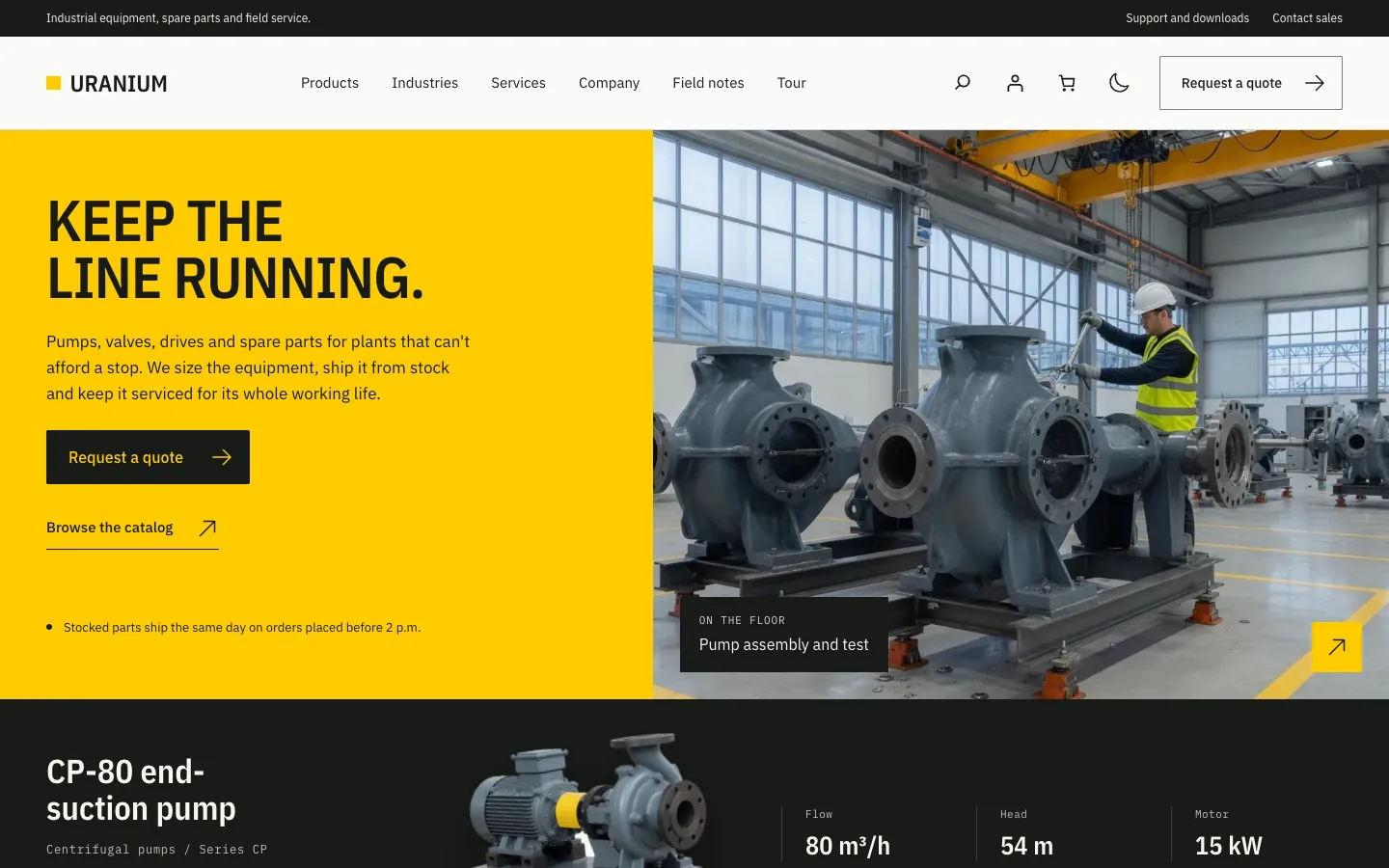
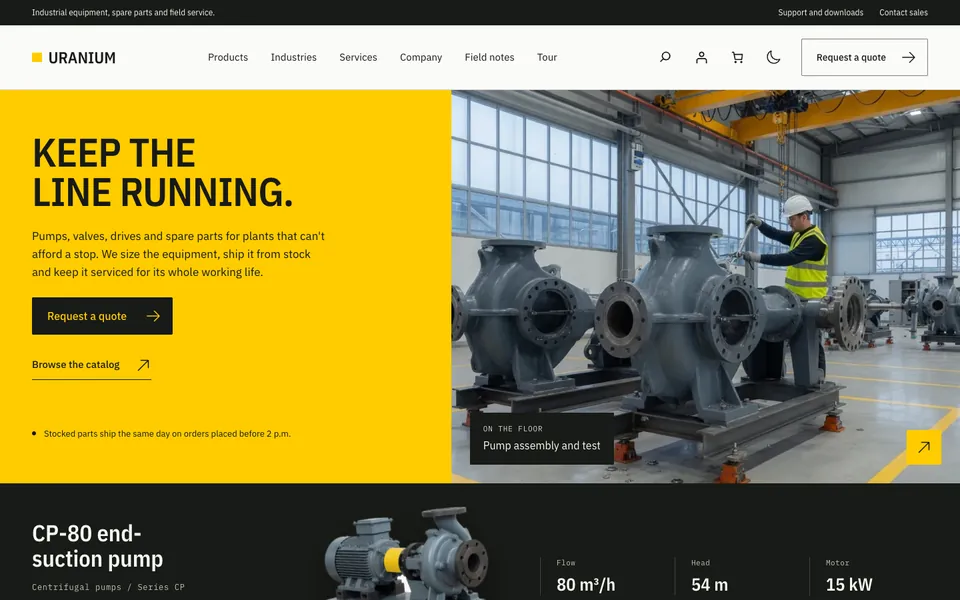
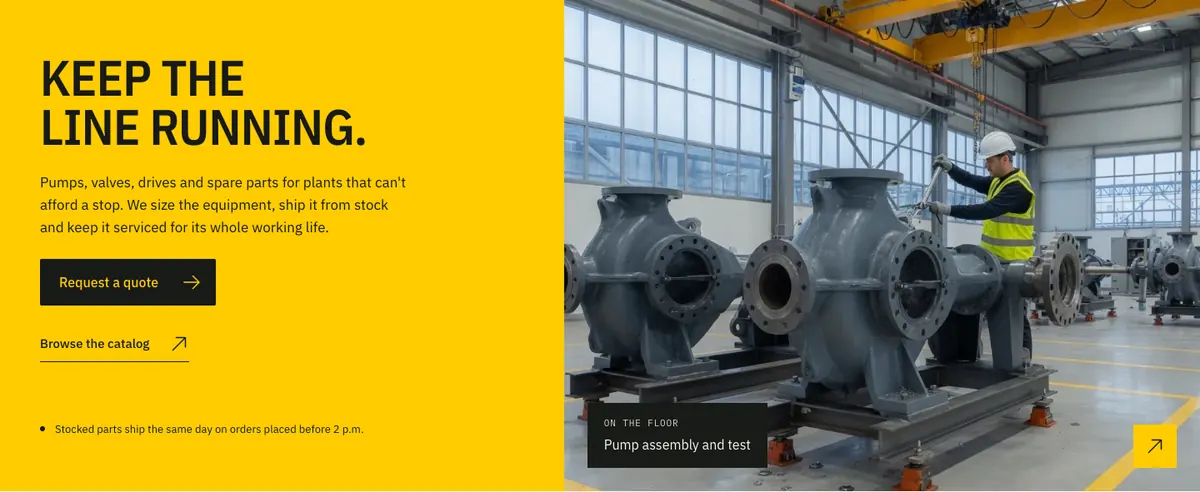
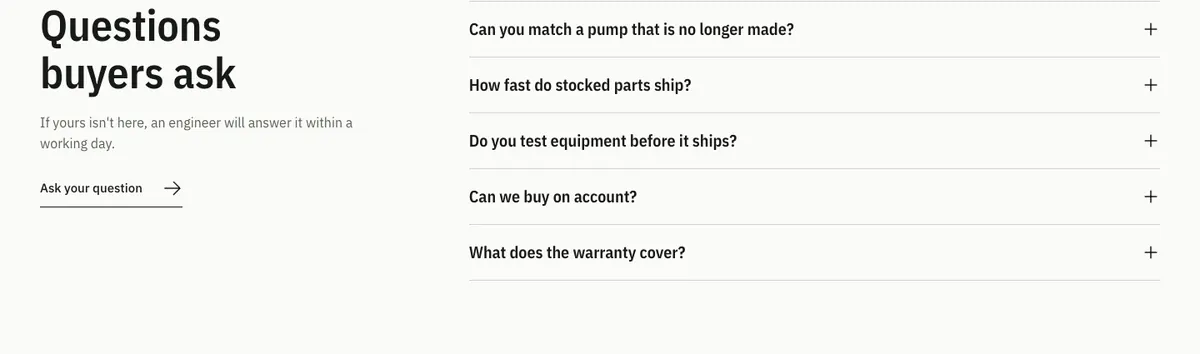
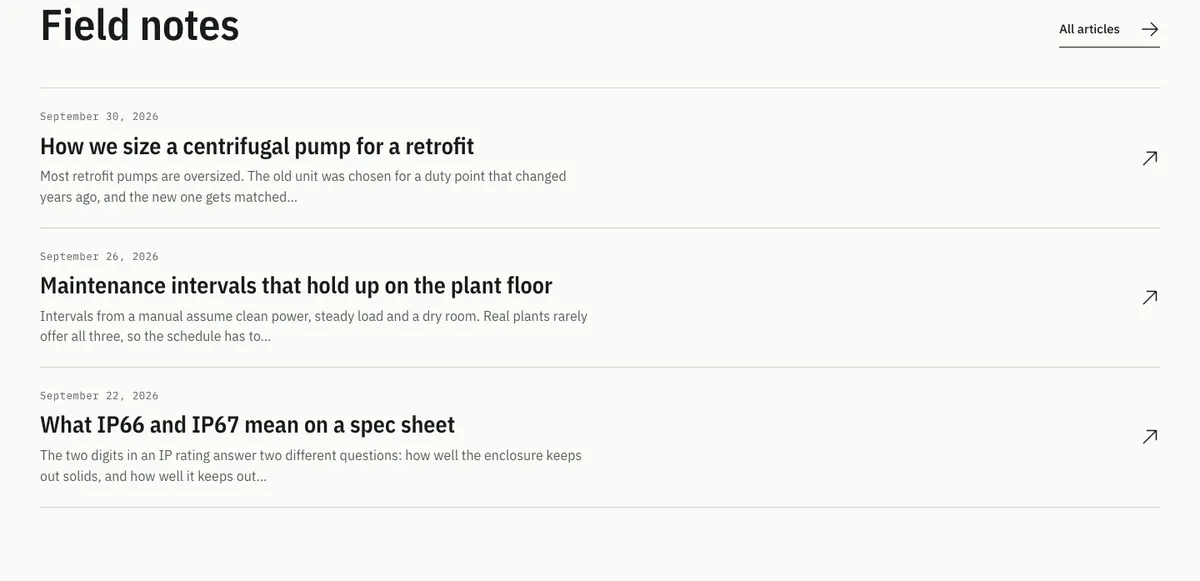
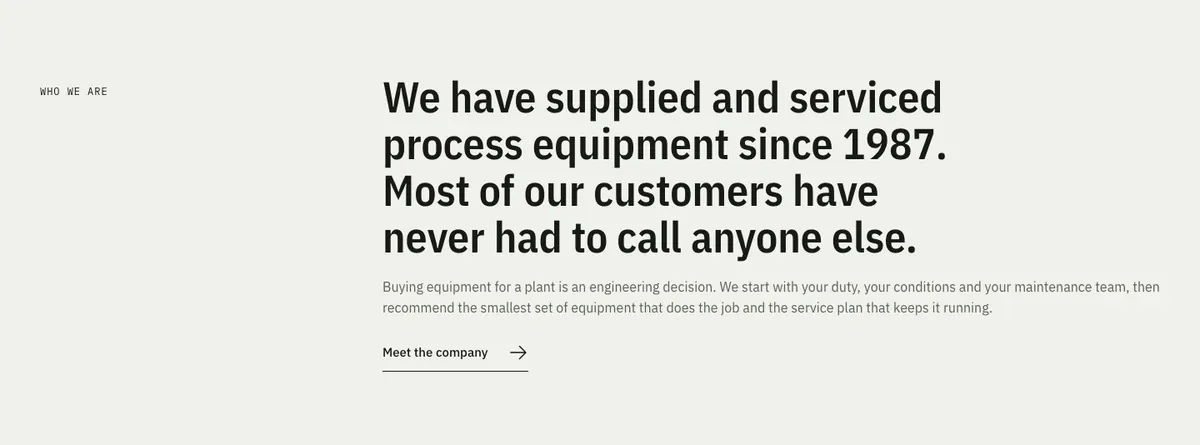
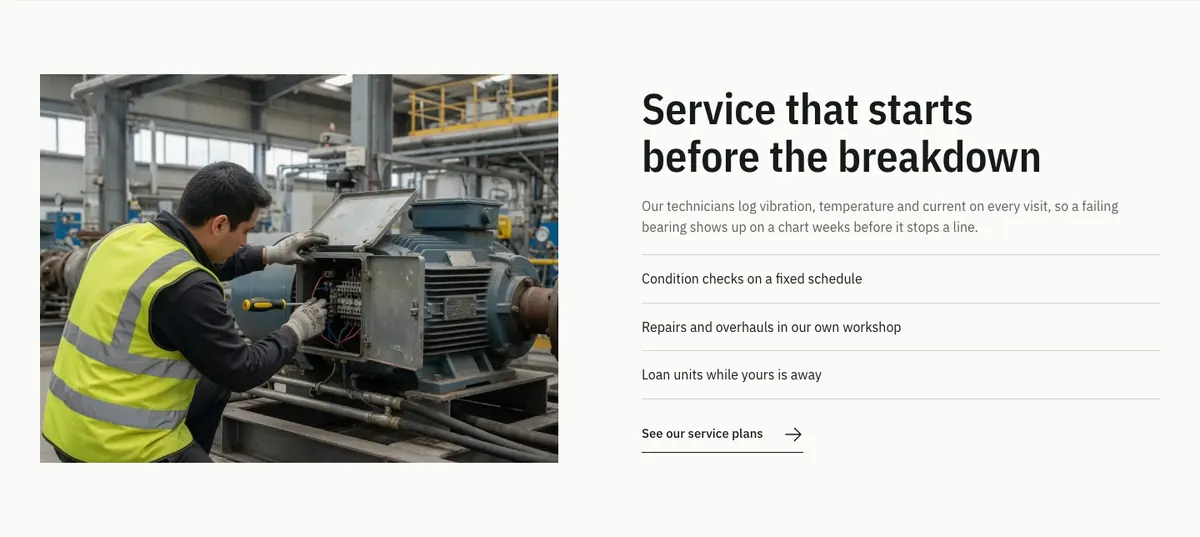
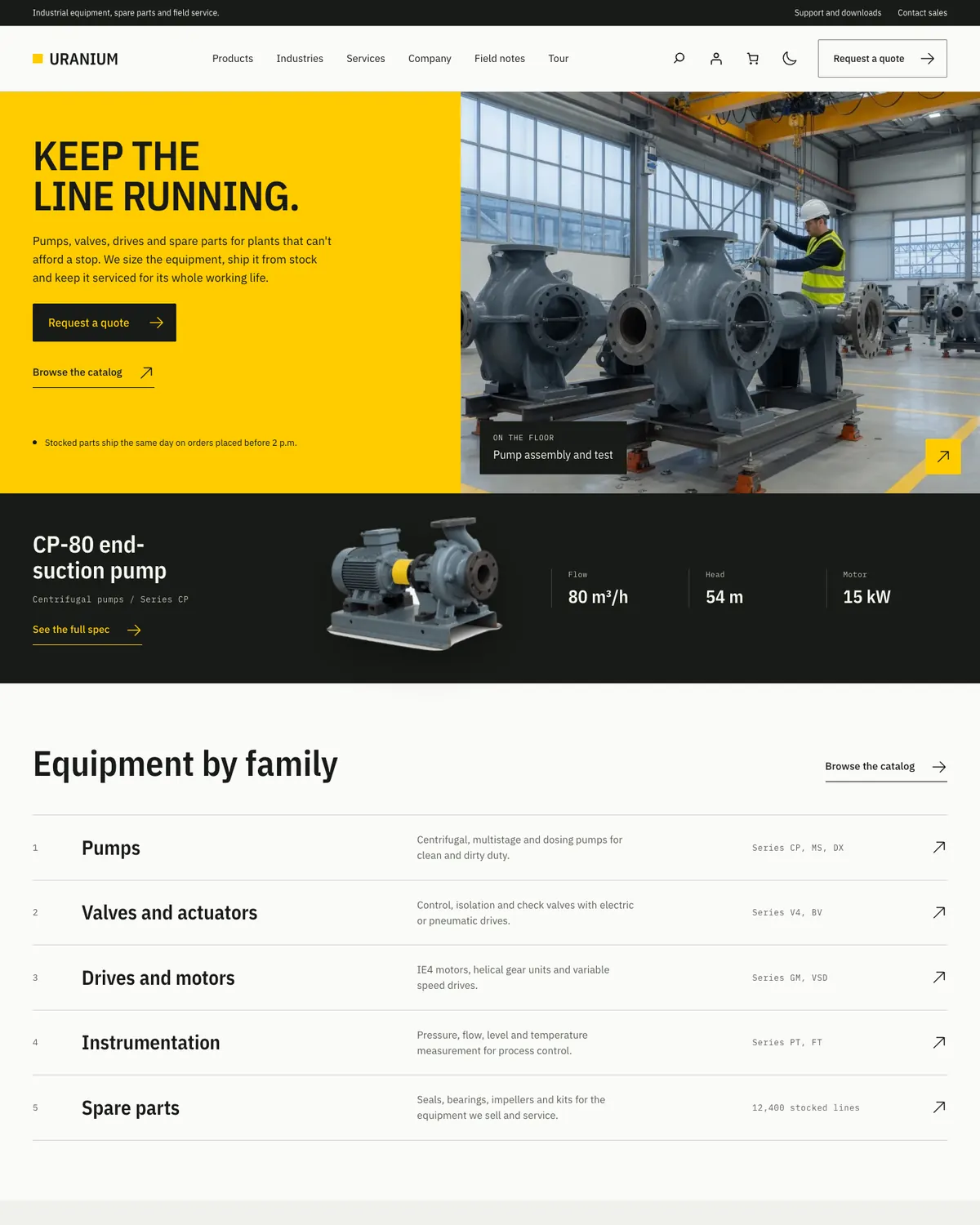
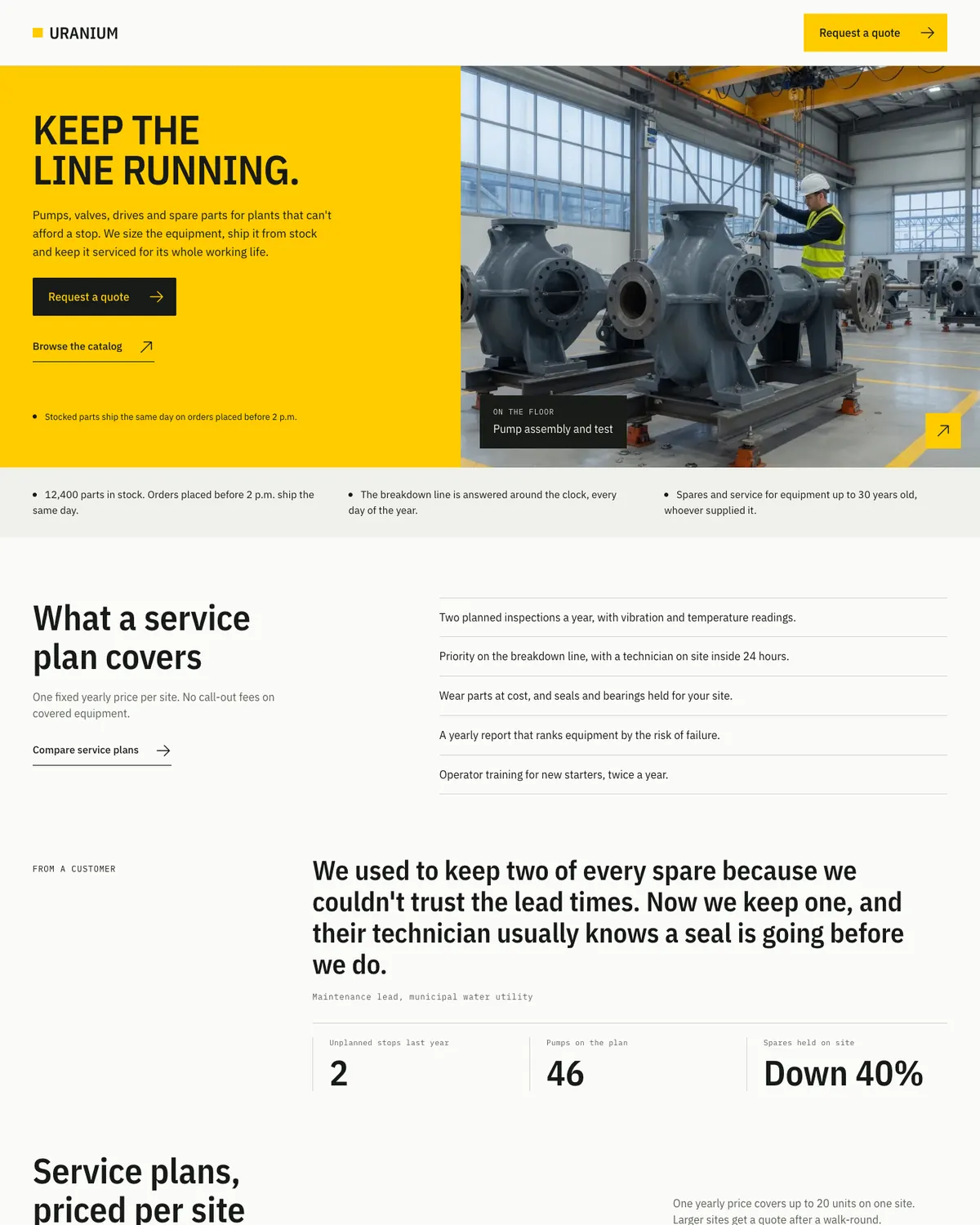
Uranium's homepage: a menu with a quote button, a safety yellow panel with the headline Keep the line running beside a photo of a pump on a factory floor, and a dark spec strip for a pump below
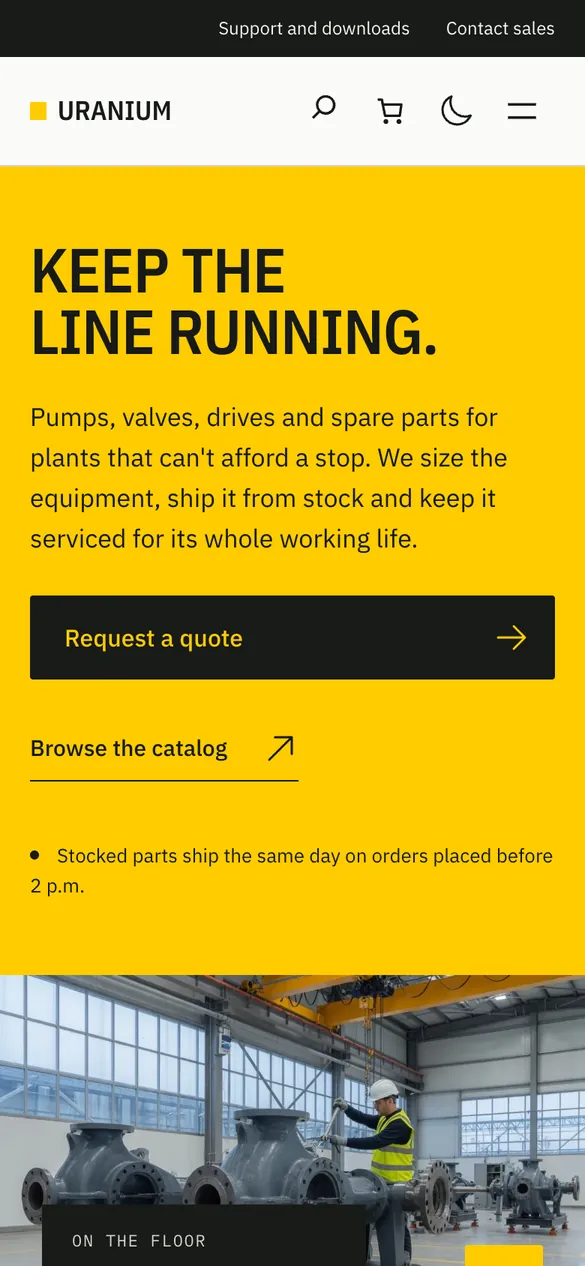
Uranium's homepage on a phone, with search, cart, mode and menu buttons above the yellow hero and its quote button
41 Patterns
Sections and full pages in the inserter
4 Palettes
Safety yellow, orange, lime and cobalt
2 Store Plugins
WooCommerce and FluentCart, or neither
100% Free
GPL licensed, for any number of sites

Made for Industrial Companies

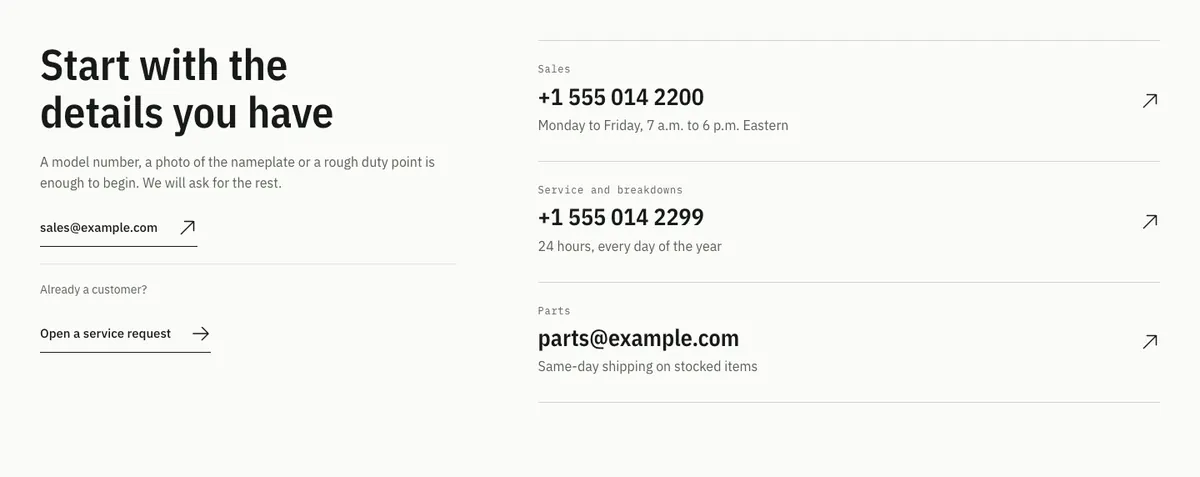
An industrial website has a different job from a brochure site. Buyers arrive with a part number, a spec to match or a machine that has stopped, and they want the flow rate, the price or a phone number without hunting for it.

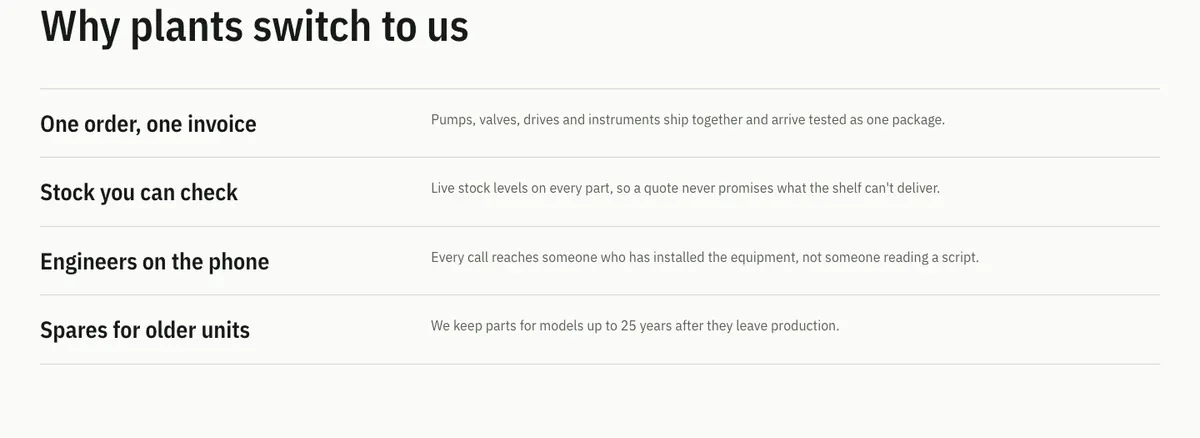
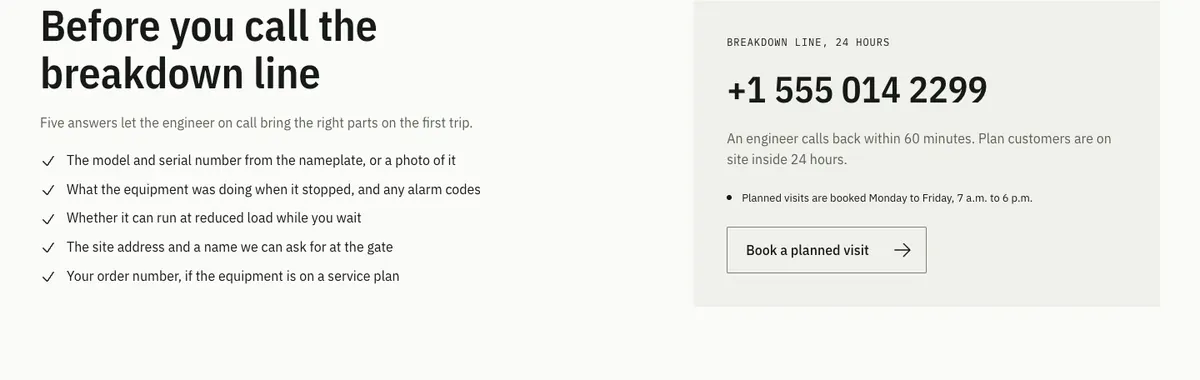
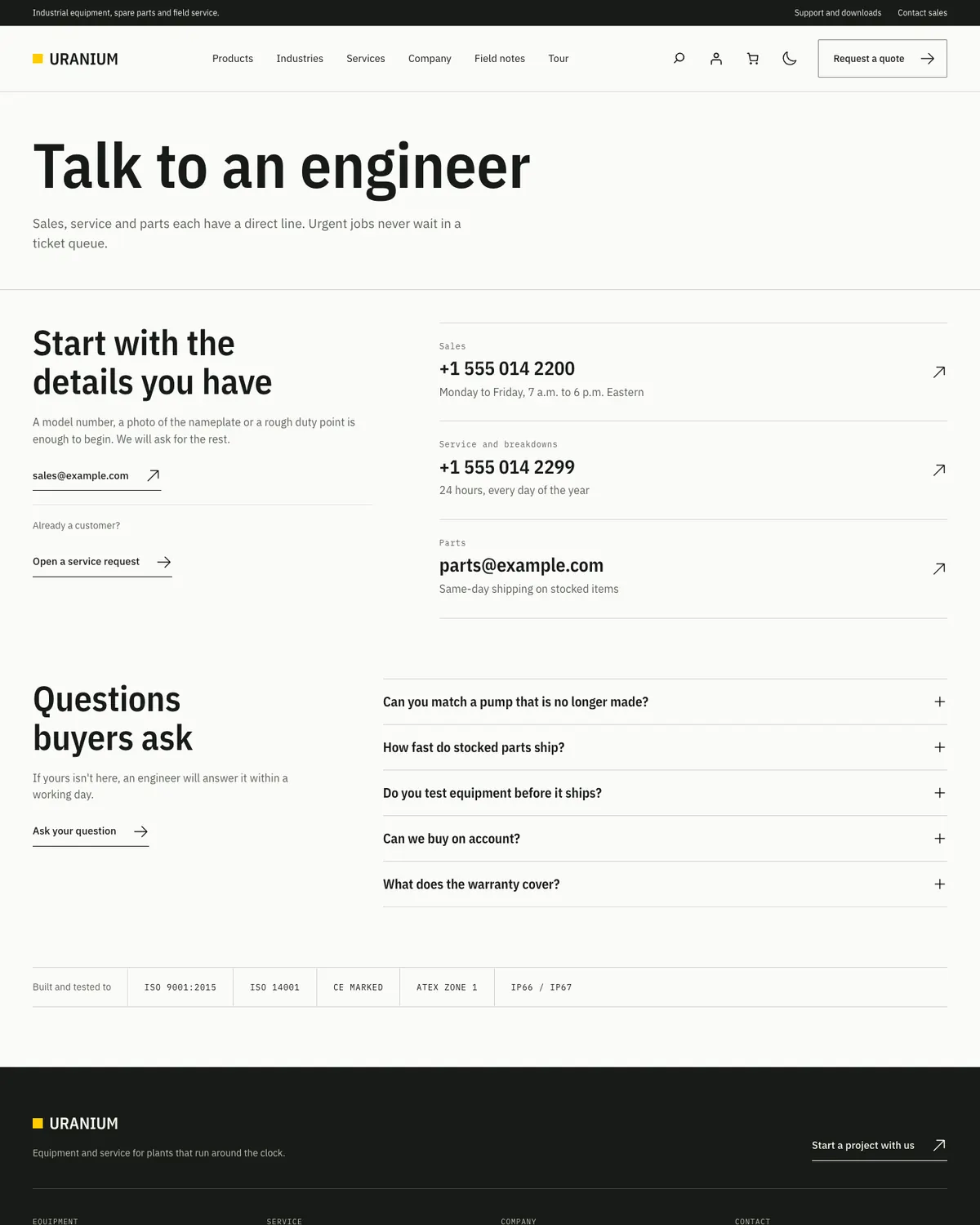
I built Uranium around that visit. Its patterns lead with product families, spec rails and direct lines for sales, service and parts, and they leave out the sliders, counters and parallax effects that many business themes carry.
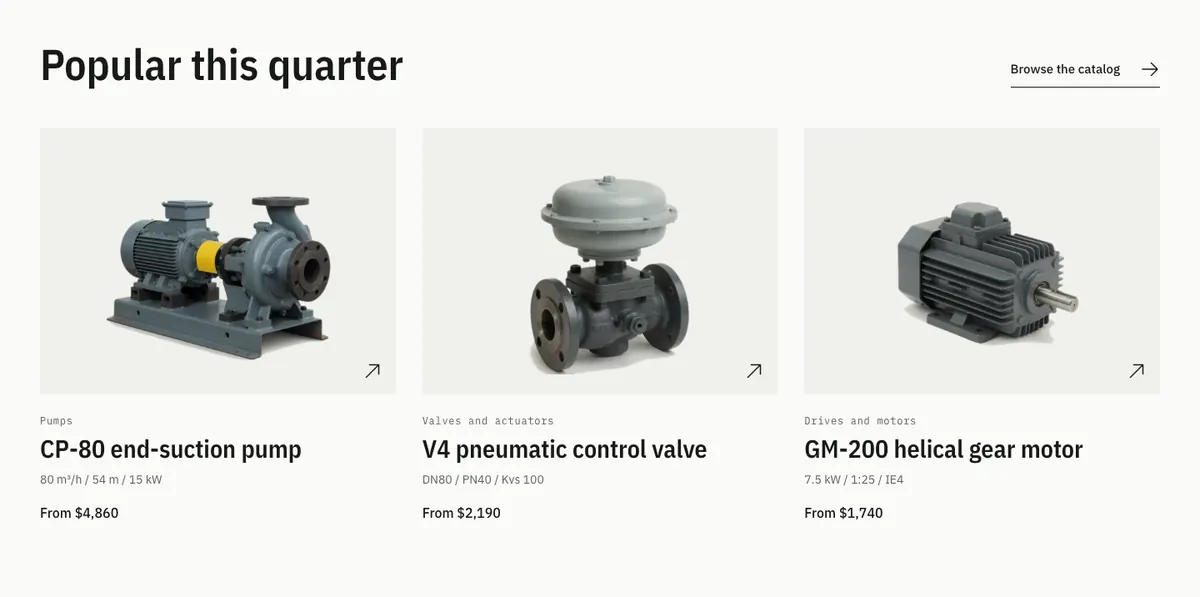
It fits these kinds of sites well:

  • Manufacturers and equipment makers with a product range to explain
  • Distributors selling spare parts online with WooCommerce or FluentCart
  • Engineering firms and contractors that win work through quote requests
  • Field-service teams with manuals, data sheets and a breakdown line to publish
  • Agencies and freelancers building sites for any of the above

It is not the right tool for a multi-vendor marketplace or a visual product configurator. Those need plugins built for the job, whatever the theme.
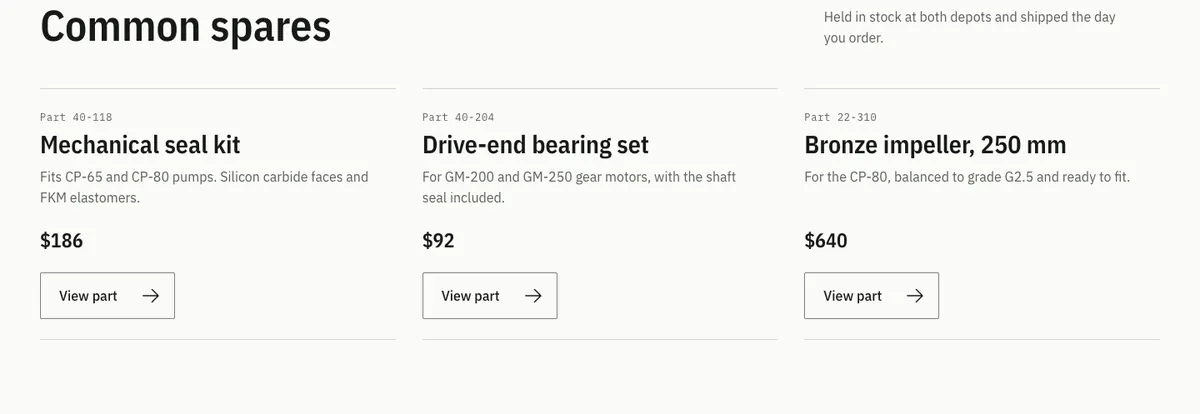
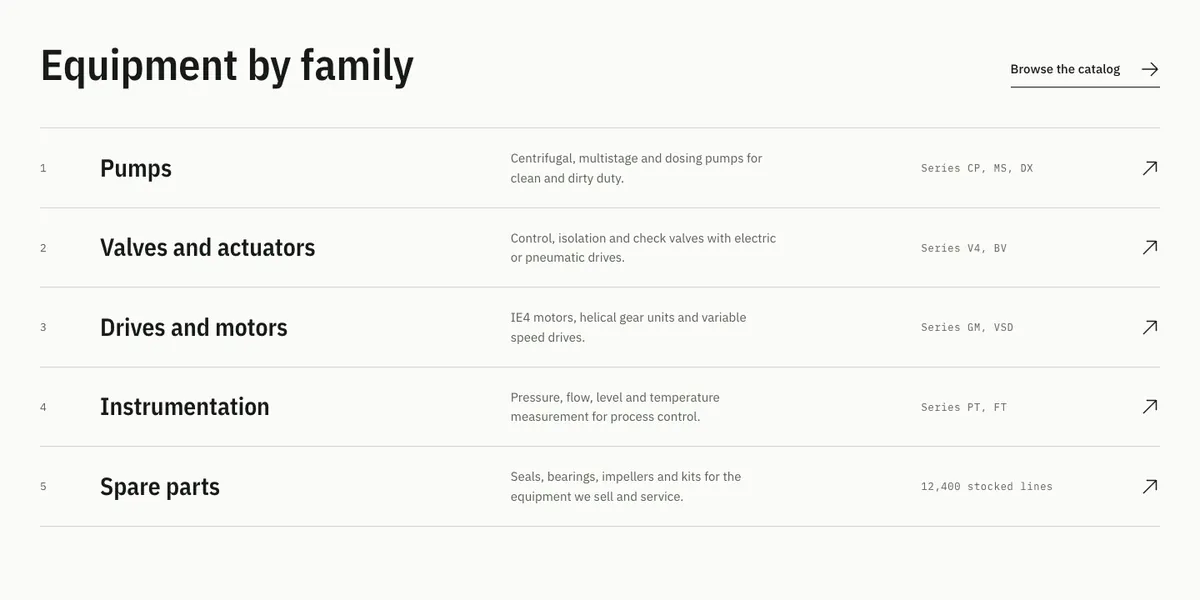
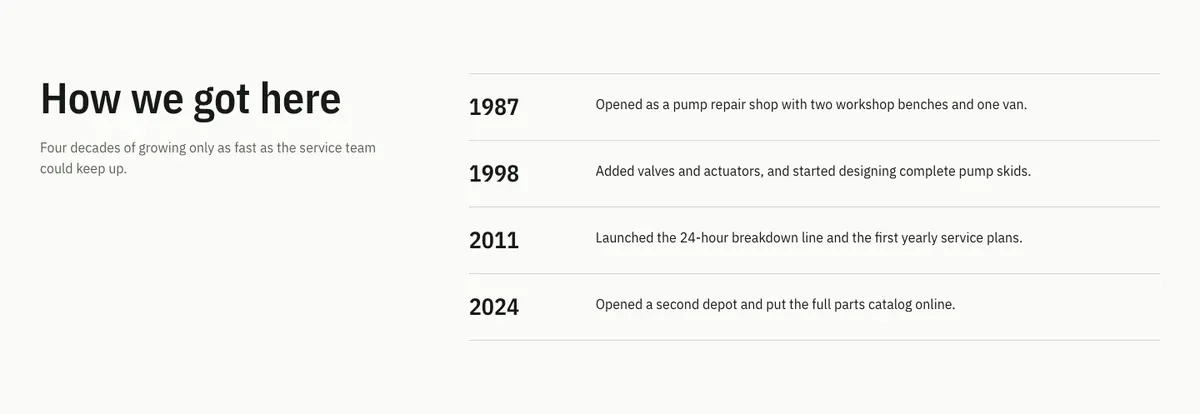
Numbered product families pattern in Uranium's Signal palette
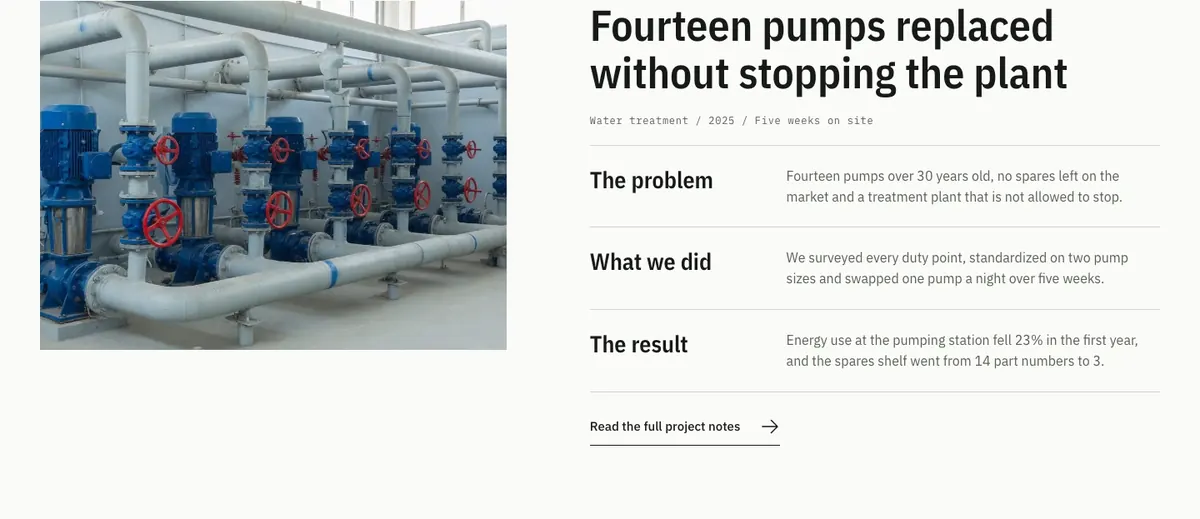
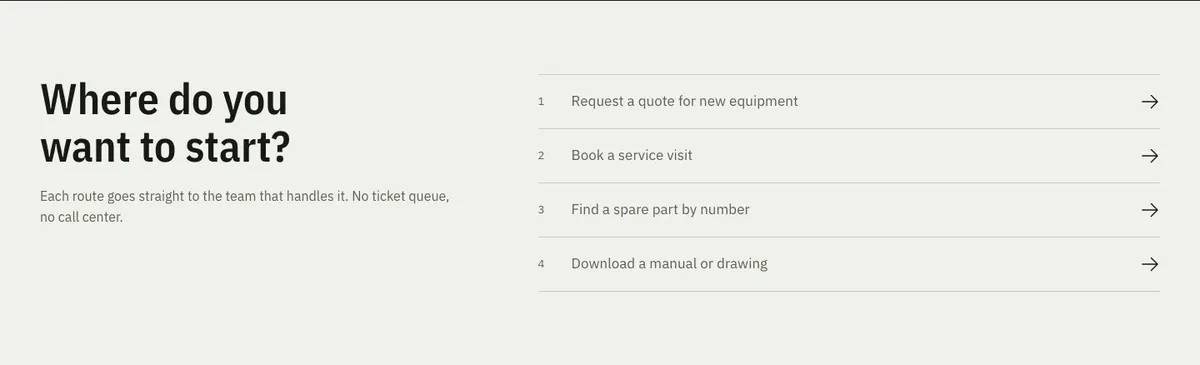
Product families as numbered rows, each with a short description, a series label and a link into the catalog.

Four Palettes, Light and Dark

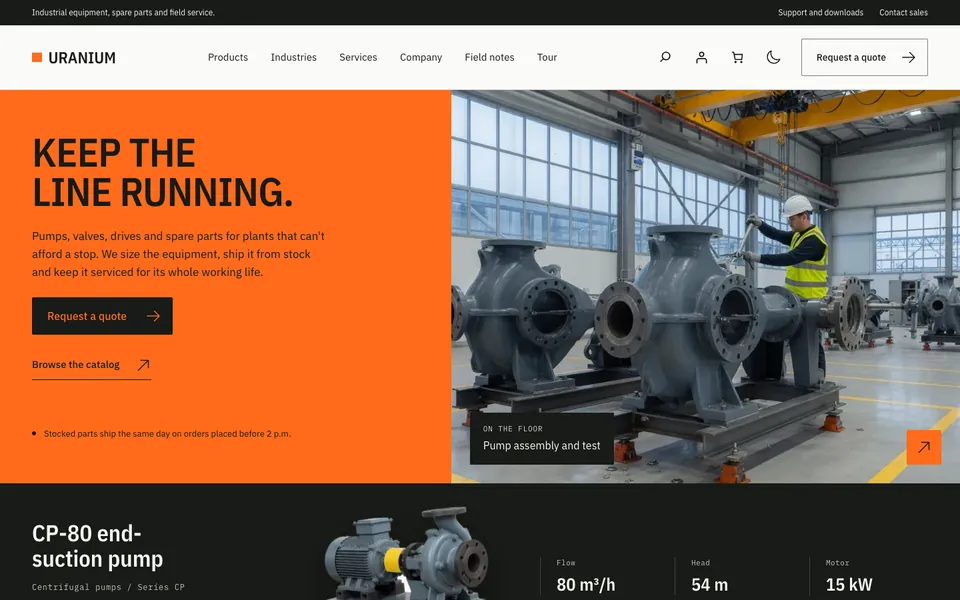
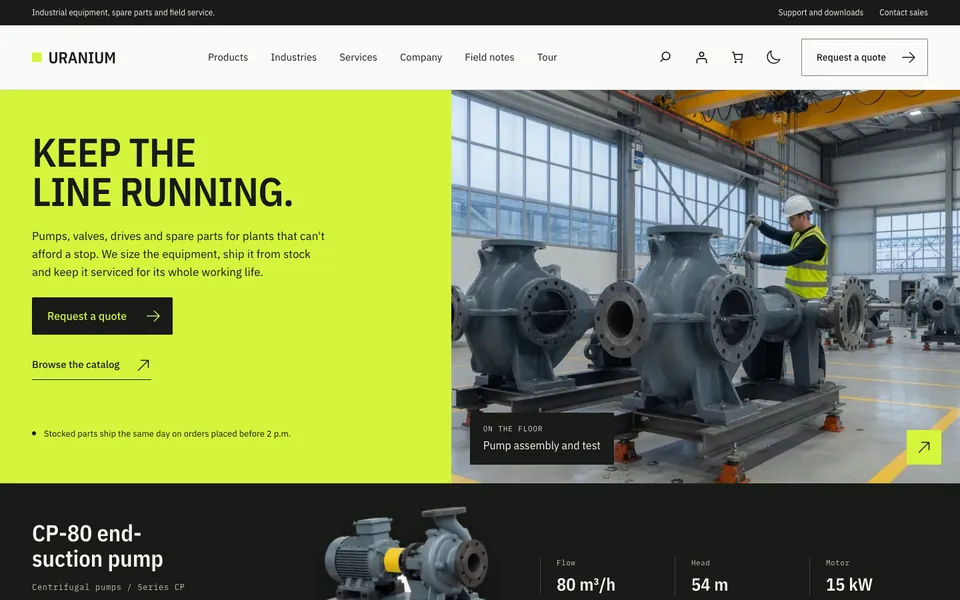
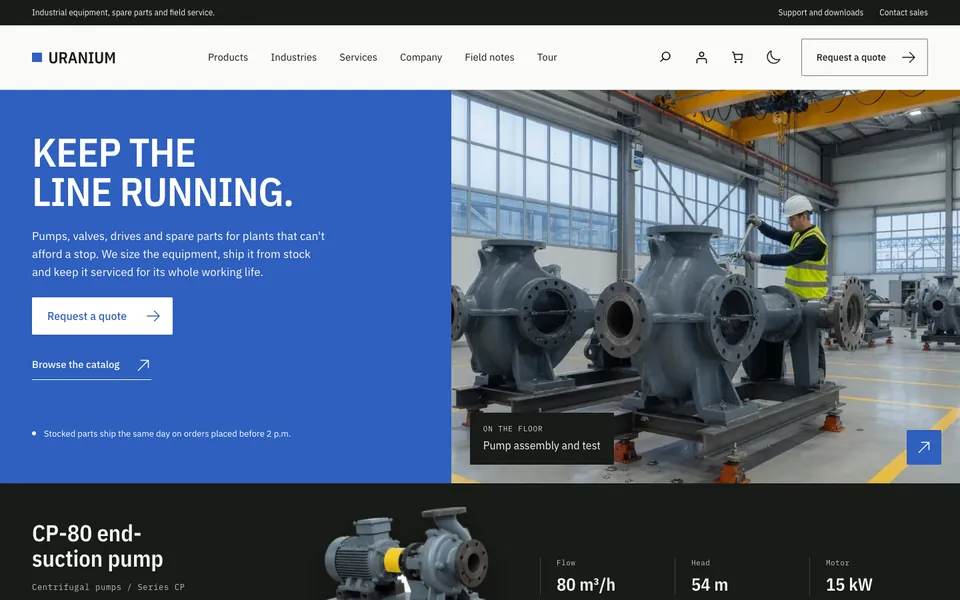
Industrial brands tend to own one strong color, like the yellow on a forklift or the orange on a safety sign. Uranium ships four of them. Pick one under Appearance > Customize > Uranium design, and it changes the buttons, the hero panel and the accent bands together.

Uranium's homepage hero in the Signal palette, with a safety yellow panel
SignalSafety yellow, the default
Uranium's homepage hero in the Hazard palette, with an orange panel
HazardOrange with dark text
Uranium's homepage hero in the Hi-vis palette, with a lime panel
Hi-visLime with dark text
Uranium's homepage hero in the Cobalt palette, with a blue panel and white text
CobaltBlue with white text

Light and Dark Mode

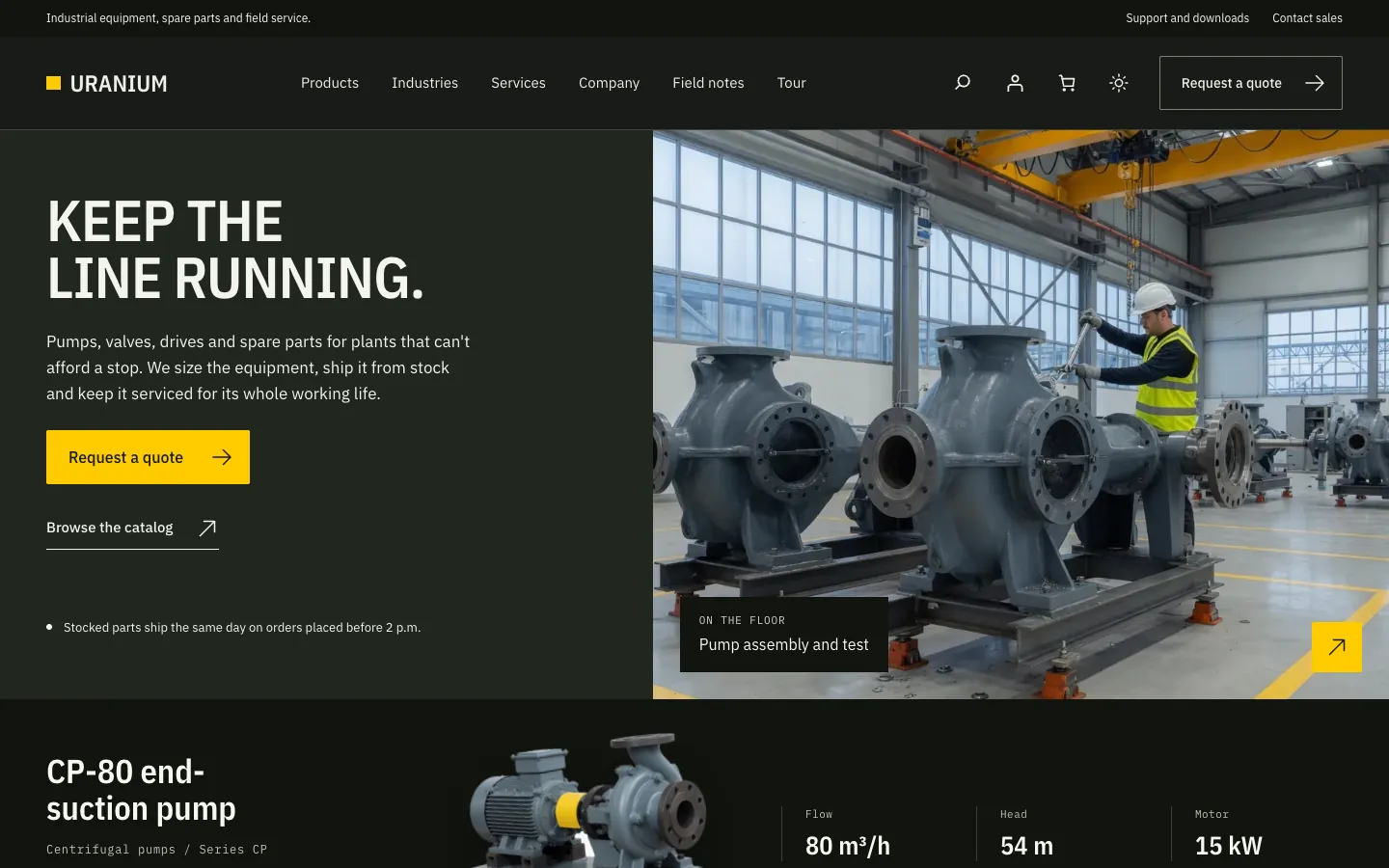
Every palette has a dark mode too. By default, Uranium follows the visitor’s device setting, and the moon button in the header lets them switch and remembers the choice on their next visit.

If your brand only works one way, the same Customizer panel keeps the site light or dark for everyone and takes the toggle out of the header.

The same Uranium homepage in dark mode, with a near-black hero panel and yellow buttons
The homepage in dark mode. The accent stays and the paper turns near-black.

Why a Hybrid Theme

Uranium sits between the two kinds of WordPress theme you usually hear about. A classic theme builds pages from PHP templates, and a block theme builds everything from blocks in the Site Editor. Uranium is a hybrid: PHP templates run the page frame and the store screens, while the header, the footer and every section inside a page are blocks you edit on screen.

I built it this way because of the stores. WooCommerce and FluentCart render their product and shop screens through PHP templates and hooks in a theme like this, so Uranium styles those screens through hooks and copies none of their template files. Copied template files are what usually goes out of date when a store plugin updates, and Uranium has none.

The parts sit in four places:

  • PHP templates: the page frame, blog archives, search, the 404 page and 3 page templates, “With sidebar”, “Full width, no title” and “Blank canvas”
  • theme.json: colors, fonts, font sizes and spacing, shared by the block editor and the front end
  • Block template parts: the header and the footer, with 3 layouts each
  • Patterns: 41 sections and full pages in the block inserter

theme.json isn’t only for block themes, and my guide to improving classic themes with theme.json explains what it controls. If you are weighing a full block theme instead, read my guide to switching to block themes.

Headers and Footers

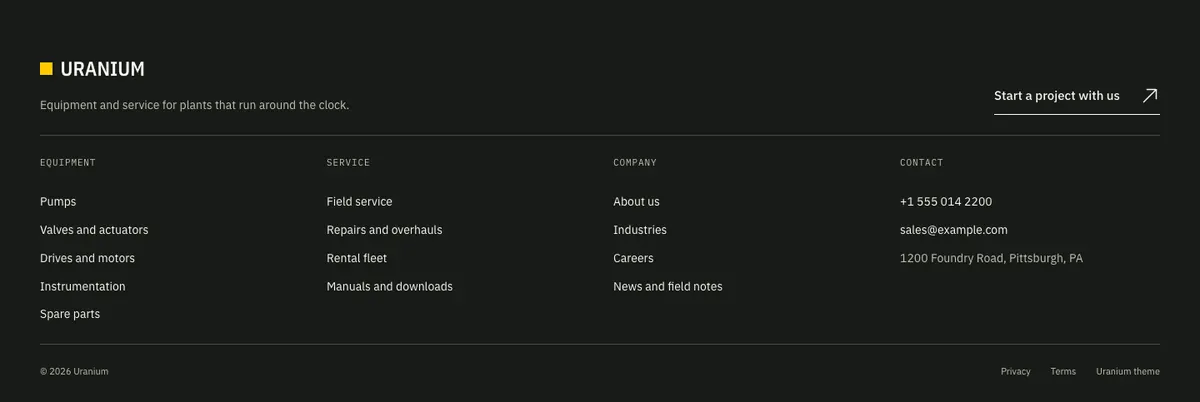
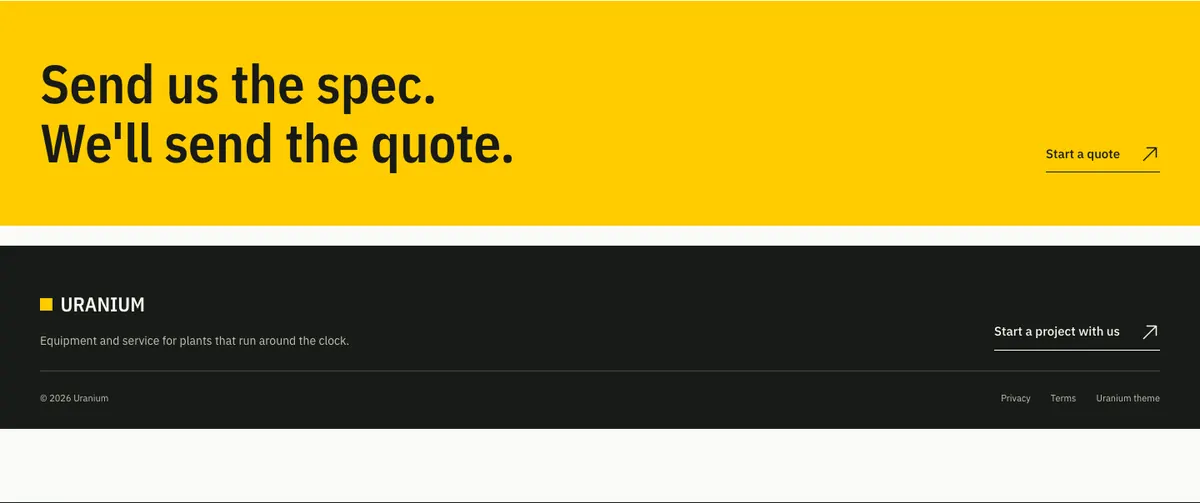
Uranium ships 3 headers and 3 footers. The default header has a dark utility bar above the logo, the menu, search, the store links, the light and dark toggle and a quote button. You swap layouts in Appearance > Editor > Patterns > Template Parts.

Fonts on Your Own Domain

IBM Plex Sans, Plex Sans Condensed and Plex Mono ship with the theme as WOFF2 files, so no request goes to Google Fonts. A typical page loads 3 font files, about 79 KB in total.

One Small Script

The theme’s only script runs the light and dark toggle. It weighs 2 KB, or 0.9 KB compressed, and Uranium adds no jQuery. Store plugins load their own scripts on top, and WooCommerce brings jQuery with it.

Sell Parts With WooCommerce or FluentCart

Uranium supports WooCommerce and FluentCart. Install either one, or both side by side, and the theme styles whichever is active. Without a store plugin, the product patterns still work as a catalog that links to your quote page.

WooCommerce

Uranium styles WooCommerce’s screens through hooks, with no copied templates:

  • Shop and category pages, with an optional sidebar for categories or filters
  • Product pages with a spec rail built from the product’s attributes
  • The Cart and Checkout blocks, My Account and the Mini-Cart
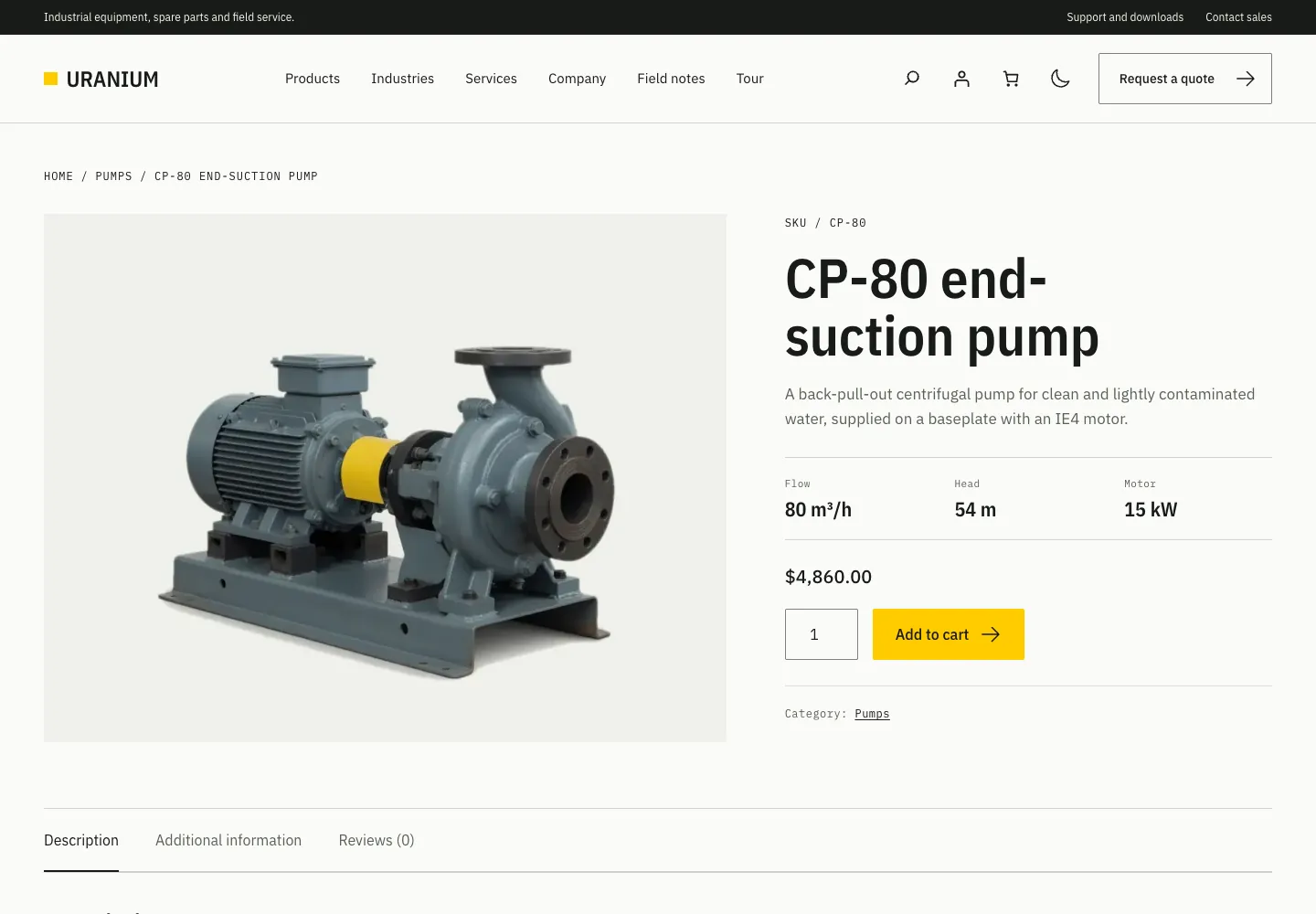
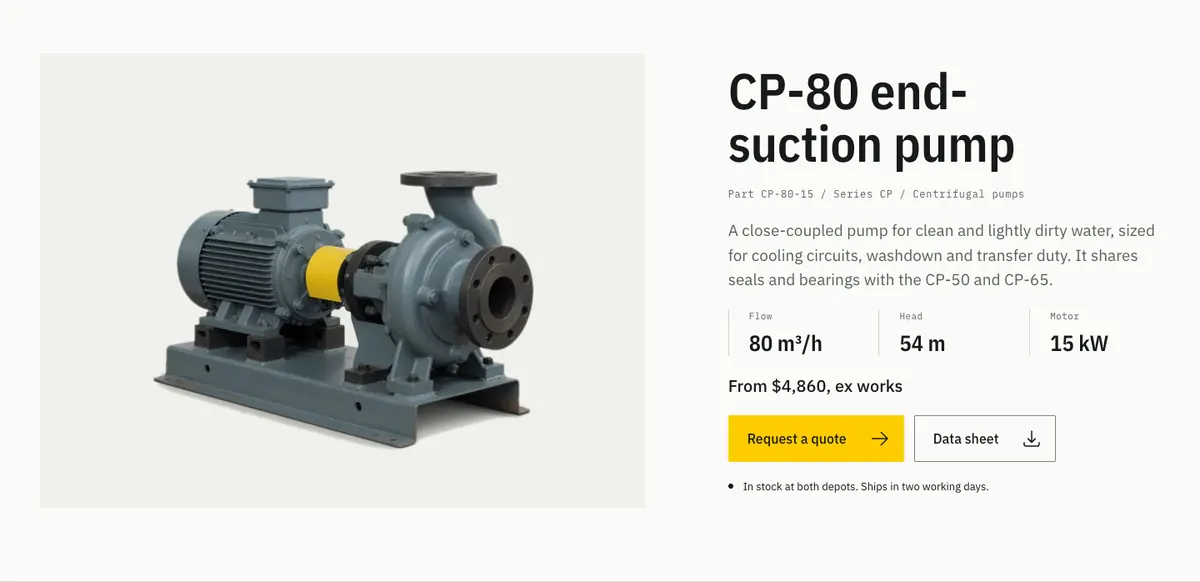
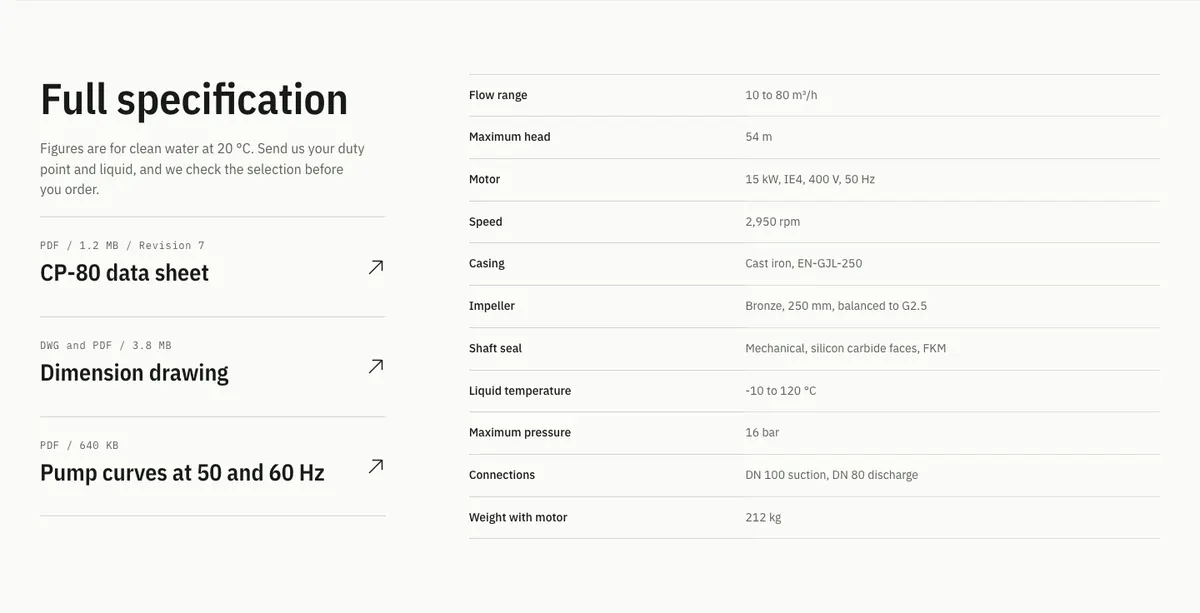
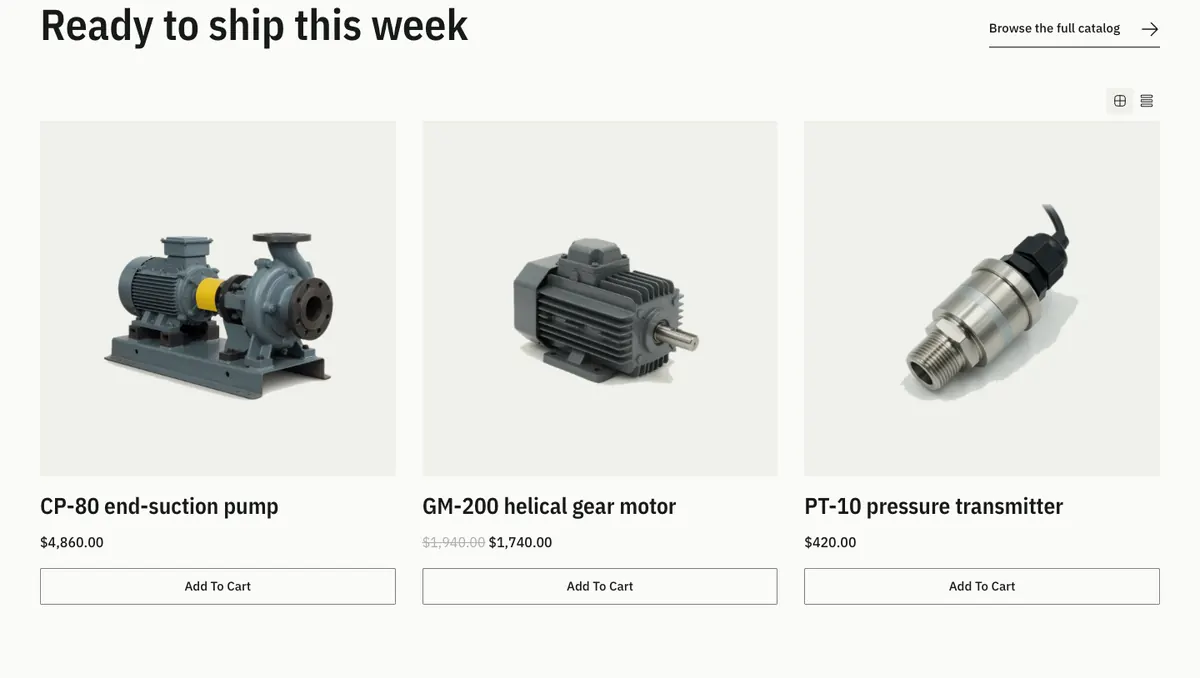
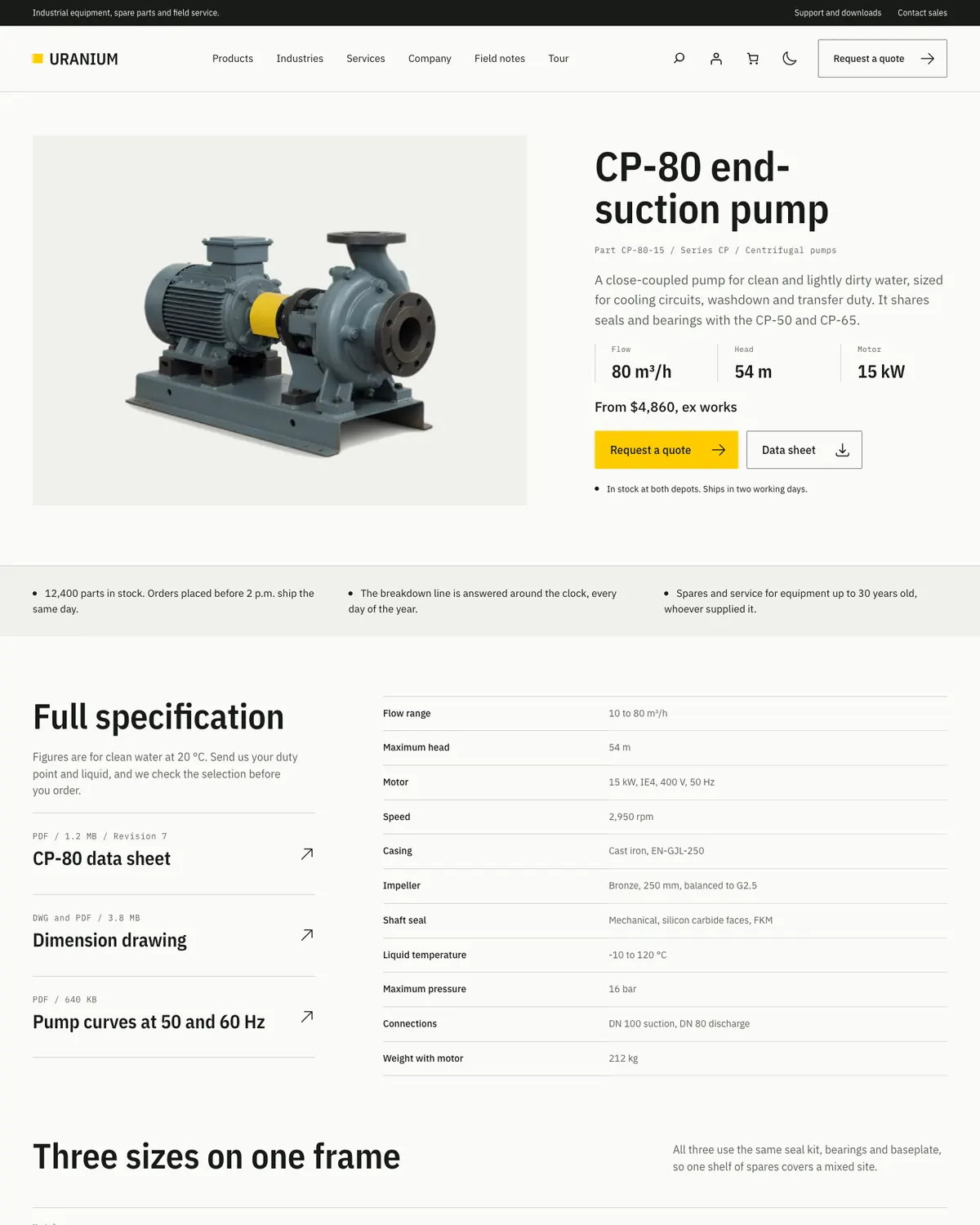
A WooCommerce product page in Uranium: a pump photo on a light plate beside its name, a spec rail with flow, head and motor power, the price and an add to cart button
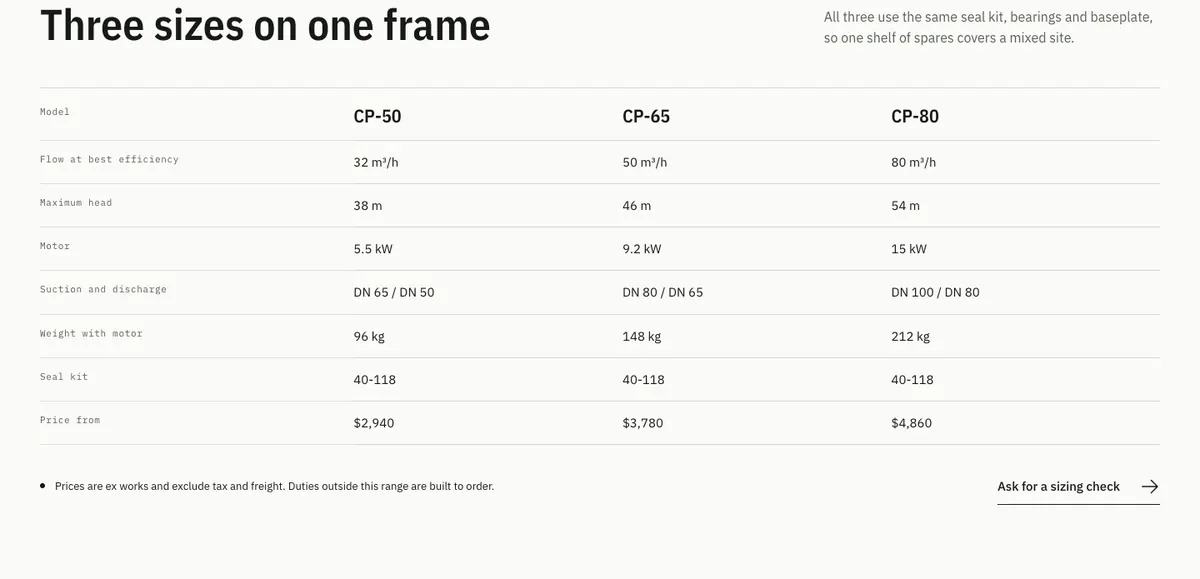
The spec rail comes from the product’s attributes, so nobody retypes specs into the description.

FluentCart

FluentCart gets its own theme templates and a color map to the active palette:

  • Templates for single products, the shop, categories and brands
  • FluentCart’s buttons, cards and forms in the theme’s colors, in light and dark mode
  • The FluentCart account button and cart drawer in the header
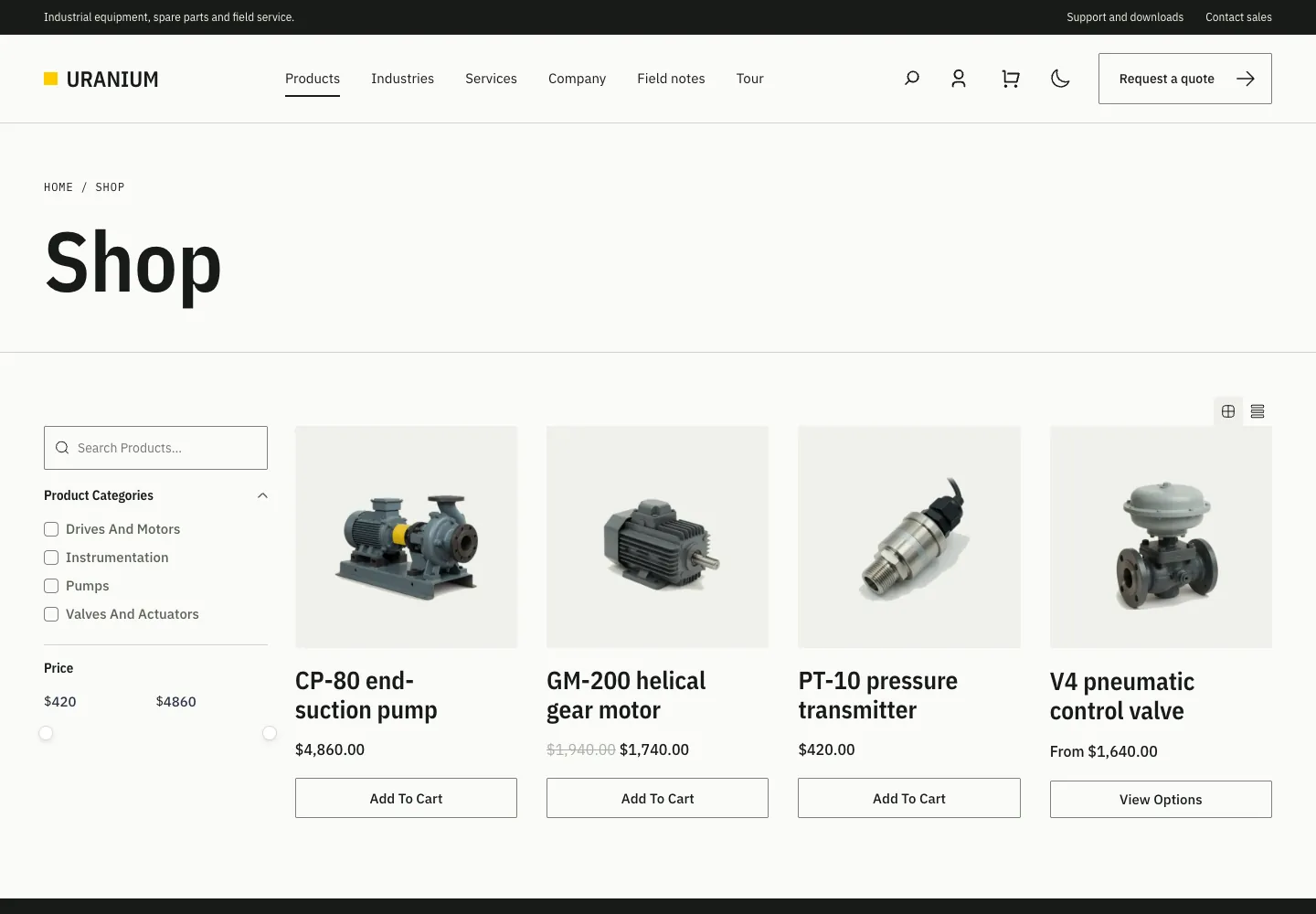
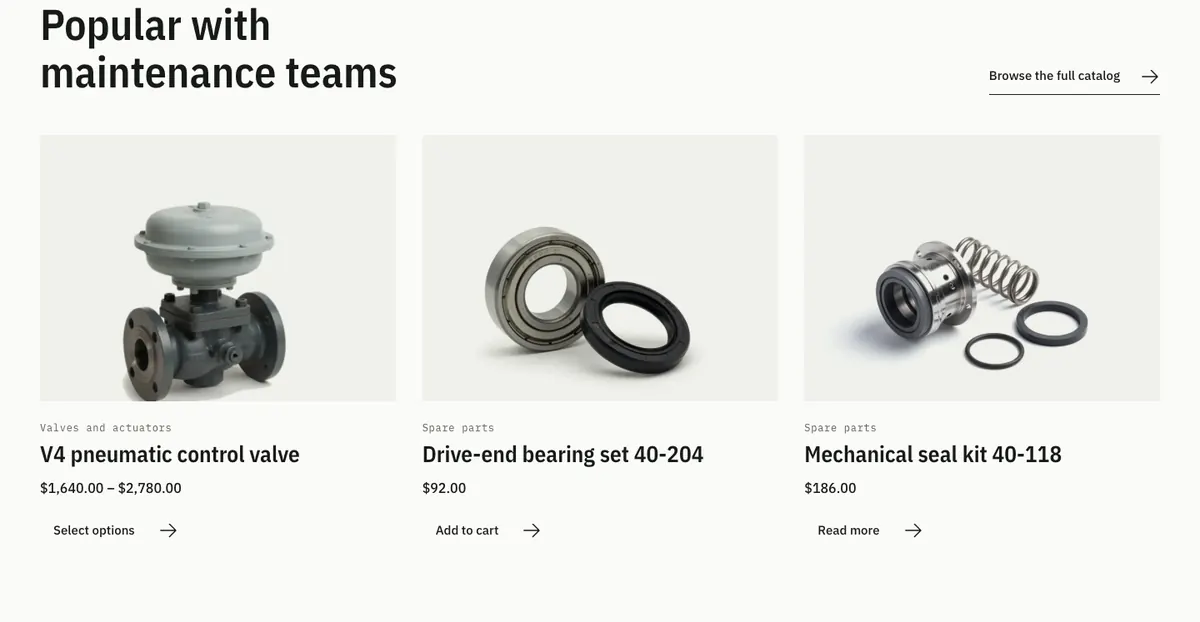
The FluentCart shop in Uranium, with category and price filters beside four product cards
The FluentCart shop with its filters. Change the palette and the store follows it.

Industrial shops often hide prices from anonymous visitors or set minimum order quantities. Uranium doesn’t do either on its own, because those are store rules. On FluentCart, GT Extensions has modules for hiding prices until login and for minimum and maximum quantities.

If you are still choosing between the two store plugins, read my FluentCart review first.

Speed and Page Weight

Many equipment buyers look things up on a phone in a plant or a warehouse, so page weight matters on these sites. These are first-visit numbers from the two demos, with the browser cache turned off:

  • WooCommerce demo home page: 40 requests and about 538 KB, of which 306 KB are photos
  • FluentCart demo home page: 28 requests and about 468 KB, with the same 306 KB of photos
  • A blog archive with no photos: 33 requests and about 227 KB
  • Uranium’s stylesheet: 52 KB, or 10 KB compressed, plus 5 KB for WooCommerce or 3 KB for FluentCart when that plugin is active
  • Fonts: 3 files and about 79 KB, from your own domain

Most of that weight is photographs, which is where it belongs on an equipment site. Compress product photos before you upload them, and put page caching in front of the site. GT Performance does that job here on gauravtiwari.org.

Store scripts are the other half. On the WooCommerce demo, WooCommerce loads jQuery and its cart scripts on every page, and the FluentCart demo loads no jQuery at all. My guide to fixing Total Blocking Time in WordPress covers how to keep scripts off the pages that don’t need them.

Uranium vs Page-Builder Industrial Themes

Most industrial WordPress themes you will find are premium themes on ThemeForest, sold one site at a time and built around a page builder. That model works, but you pay for every site and your layouts live inside the builder’s own markup.

Prices as listed for the industrial themes that rank on ThemeForest, September 2026.
FeatureUraniumA typical premium industrial theme
PriceFreeUsually $40 to $59 for one site
SitesAs many as you like, including client sitesOne license per site
Page buildingCore blocks and 41 patternsA bundled page builder, such as WPBakery
Switching themes laterContent stays as ordinary blocksBuilder shortcodes can stay behind in your content
Header and footerSite Editor, 3 layouts eachTheme options or builder templates
Store pluginsWooCommerce and FluentCartUsually WooCommerce only
Dark modeBuilt in, with a visitor toggleUsually not included
Demo importNone; pages start from patternsOne-click demo import

If you want a finished demo site in one click and you are happy inside a page builder, a premium theme gets you there faster. If you run more than one site, or you want pages you can still edit cleanly in 3 years, Uranium costs nothing to try.

For more options on the store side, see my list of the best WooCommerce themes, and for the wider checklist, how to choose a WordPress theme.

What Uranium Doesn’t Do Yet

Uranium is an early release of a free theme, so it is wise to know where it stops before you move a live site onto it.

  • No quote request form. The quote buttons link to your contact page, and any form plugin’s block drops into the contact patterns.
  • No catalog filters or product compare beyond what your store plugin offers.
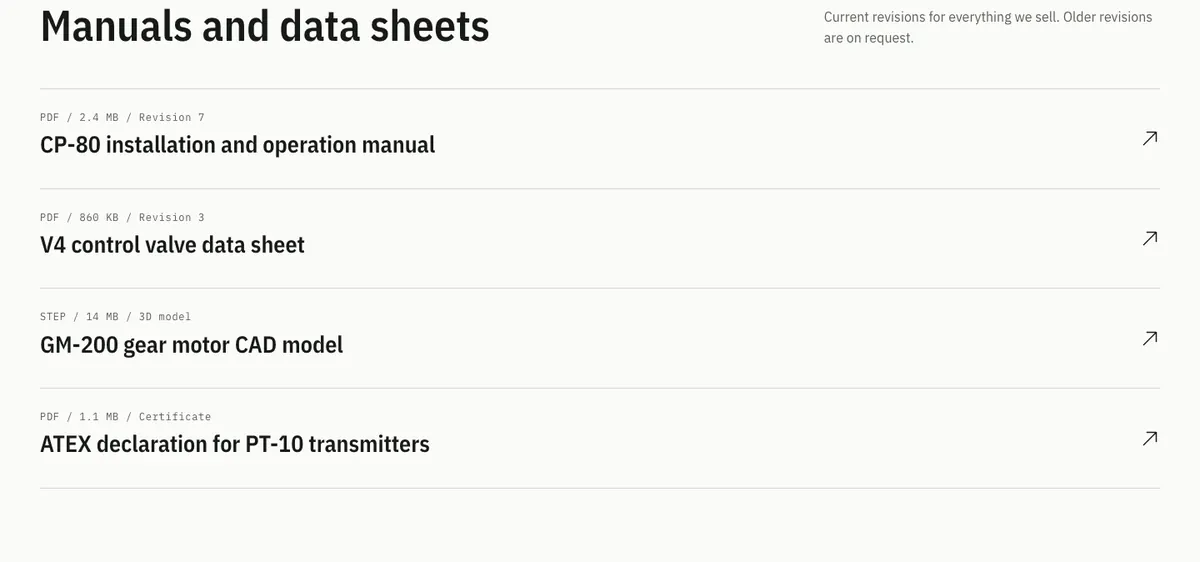
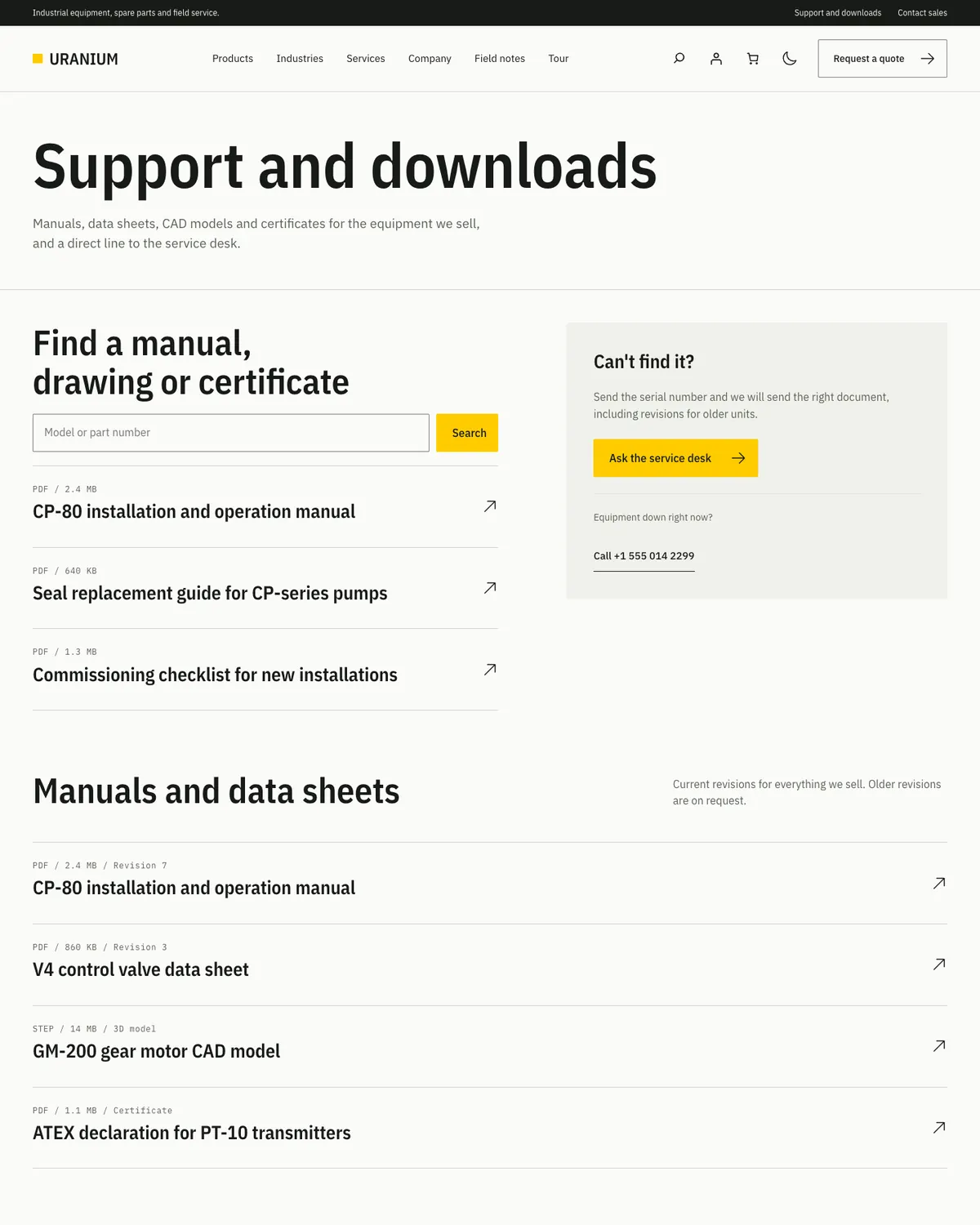
  • No document library. The resource rows list manuals and data sheets, but you upload and link each file yourself.
  • No one-click demo import. You build pages from the patterns, which also leaves no demo content to clean out later.
  • Room for about 6 short menu items in the desktop header. Longer menus need dropdowns.
  • WordPress 6.8 or later and PHP 8.1 or later only.

Uranium Pro

Uranium Pro is a separate plugin, still in development, for industrial sites that need more than a catalog and a store. It will add:

  • Quote requests from product pages
  • Catalog filters and product compare
  • Product documents such as manuals, data sheets and certificates
  • Interactive blocks, starting with working tabs for the industry list
  • More patterns

There is no release date yet, and the free theme is complete without it.

How to Install Uranium

  1. Download the theme

    Use the download button on this page. The zip comes with free updates built in, and there’s no signup and no checkout.

  2. Install it

    In your dashboard, go to Appearance > Themes > Add New Theme > Upload Theme. Choose the zip, install it and activate it.

  3. Build your home page

    Create a page, insert the Home page pattern from the Uranium categories and set the page as your front page under Settings > Reading.

  4. Pick a palette

    Open Appearance > Customize > Uranium design to choose the accent color and how light and dark mode should work.

  5. Add a store

    Install WooCommerce or FluentCart if you sell online. Uranium styles it as soon as it is active.

Before You Install

Uranium is an early release, so try it on a staging site with your own content and plugins before you switch a live one.

  • Requires WordPress 6.8 or later and PHP 8.1 or later, tested up to WordPress 7.1.
  • Built against WooCommerce 11.1 and FluentCart 1.6.4.
  • Pages built in a page builder should use the “Full width, no title” or “Blank canvas” template.
  • Questions and bug reports go to the GitHub issue tracker.

FAQs on Uranium

Is Uranium free for client sites?

Yes. Uranium is released under GPLv2 or later, so you can use it on as many sites as you like, including client sites, and change it however you want. The bundled IBM Plex fonts are under the SIL Open Font License and the images are released under CC0.

Do I need a page builder?

No. Uranium’s pages are built from core WordPress blocks and its own patterns, so the block editor is all you need. If you already work in a page builder, the “Full width, no title” and “Blank canvas” templates give it an empty page to fill.

Does Uranium work with WooCommerce and FluentCart?

Yes, with either one or with both at once. Uranium styles WooCommerce’s shop, product, cart, checkout and account screens through hooks, and it ships its own templates for FluentCart products, categories and brands.

Can I hide prices and take quote requests?

Not with the free theme alone. The quote buttons link to your contact page, where any form plugin can collect the request. Hiding prices is a store rule, and on FluentCart the GT Extensions module for hiding prices until login handles it. Quote requests are planned for Uranium Pro.

What is a hybrid WordPress theme?

A hybrid theme mixes the two ways WordPress themes are built. It uses PHP templates for the page frame, like a classic theme, and blocks for the parts you edit, like a block theme. In Uranium, the header, the footer and all page content are blocks, while the templates around them and the store screens are PHP.

How fast is Uranium?

On a first visit with the browser cache off, the WooCommerce demo’s home page loads 40 requests and about 538 KB, and the FluentCart demo’s home page loads 28 requests and about 468 KB. Photos make up 306 KB of both. The theme itself adds one 2 KB script and no jQuery.

Is Uranium good for SEO?

Uranium gives search engines clean pages to work with: one H1 from the page’s opening pattern, headings in order, breadcrumbs on inner pages and light page weight. Titles, meta descriptions and schema still come from your SEO plugin.

Can I show spec sheets and product documents?

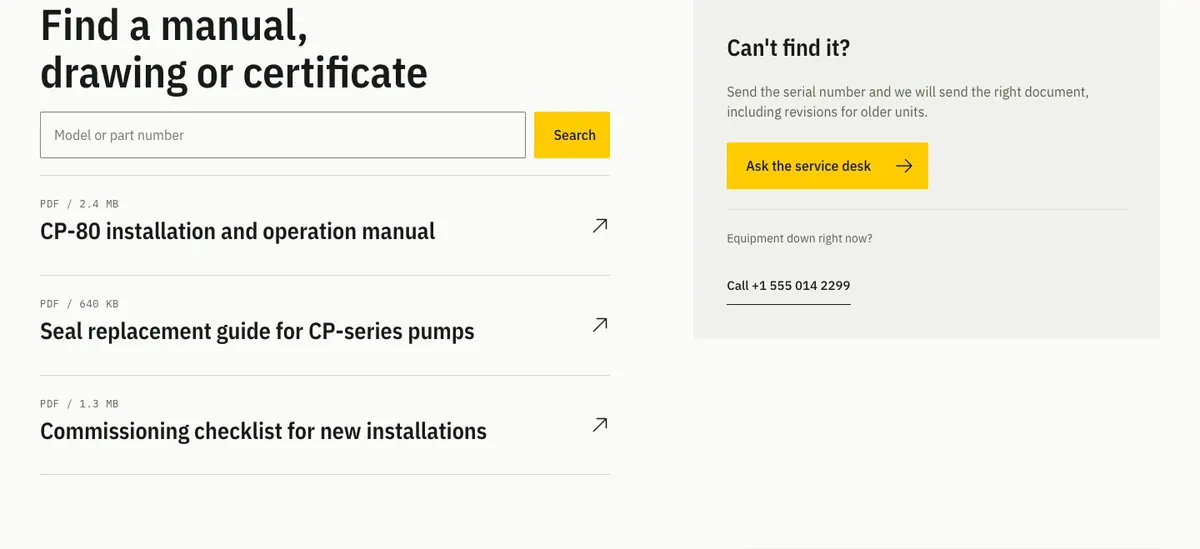
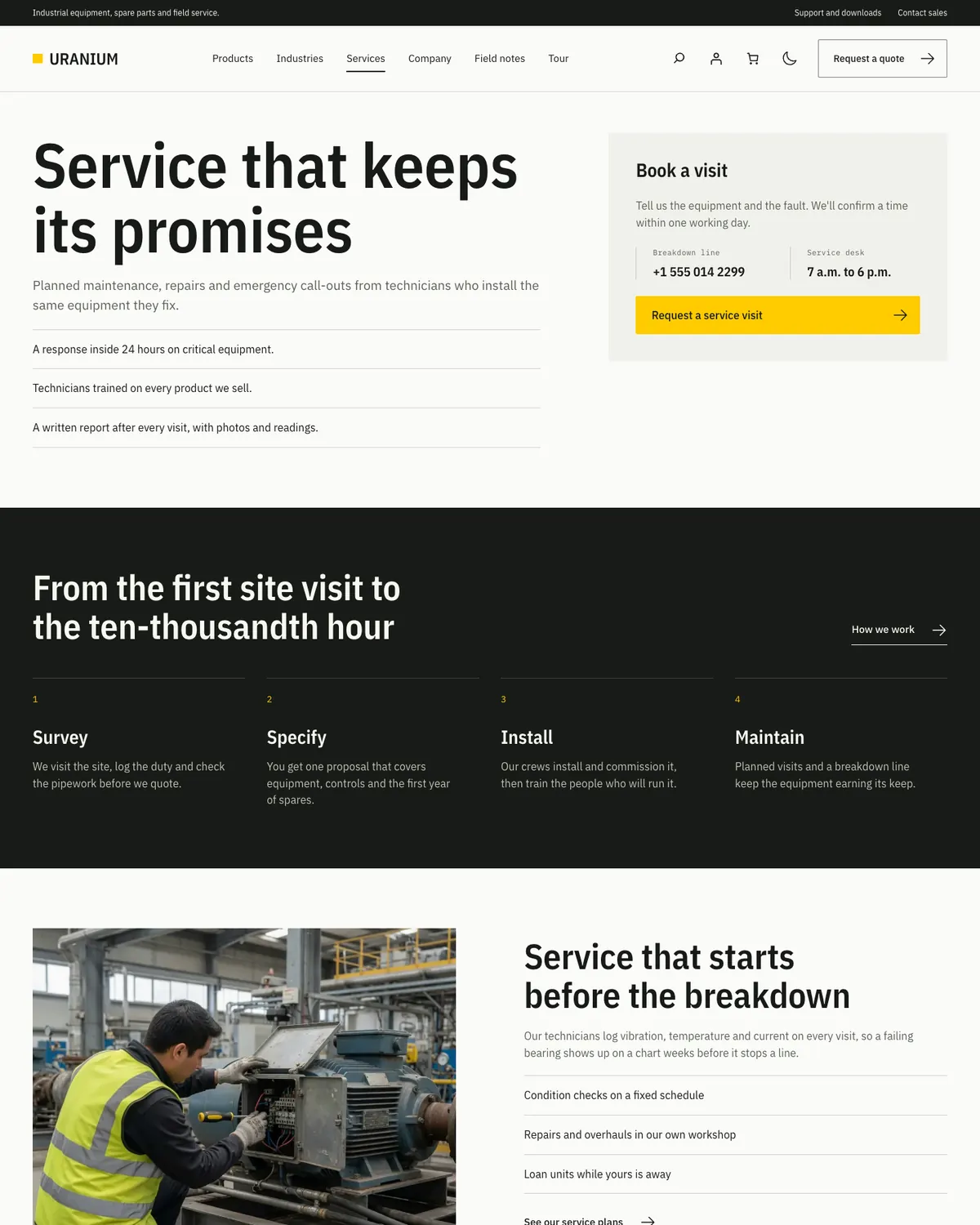
Yes, in two ways. On WooCommerce product pages, the product’s attributes appear as a spec rail beside the price. For manuals, drawings and certificates, the Resource rows and Support split patterns list documents with a file type and size line, and you link each one to its file.

Is there demo content I can import?

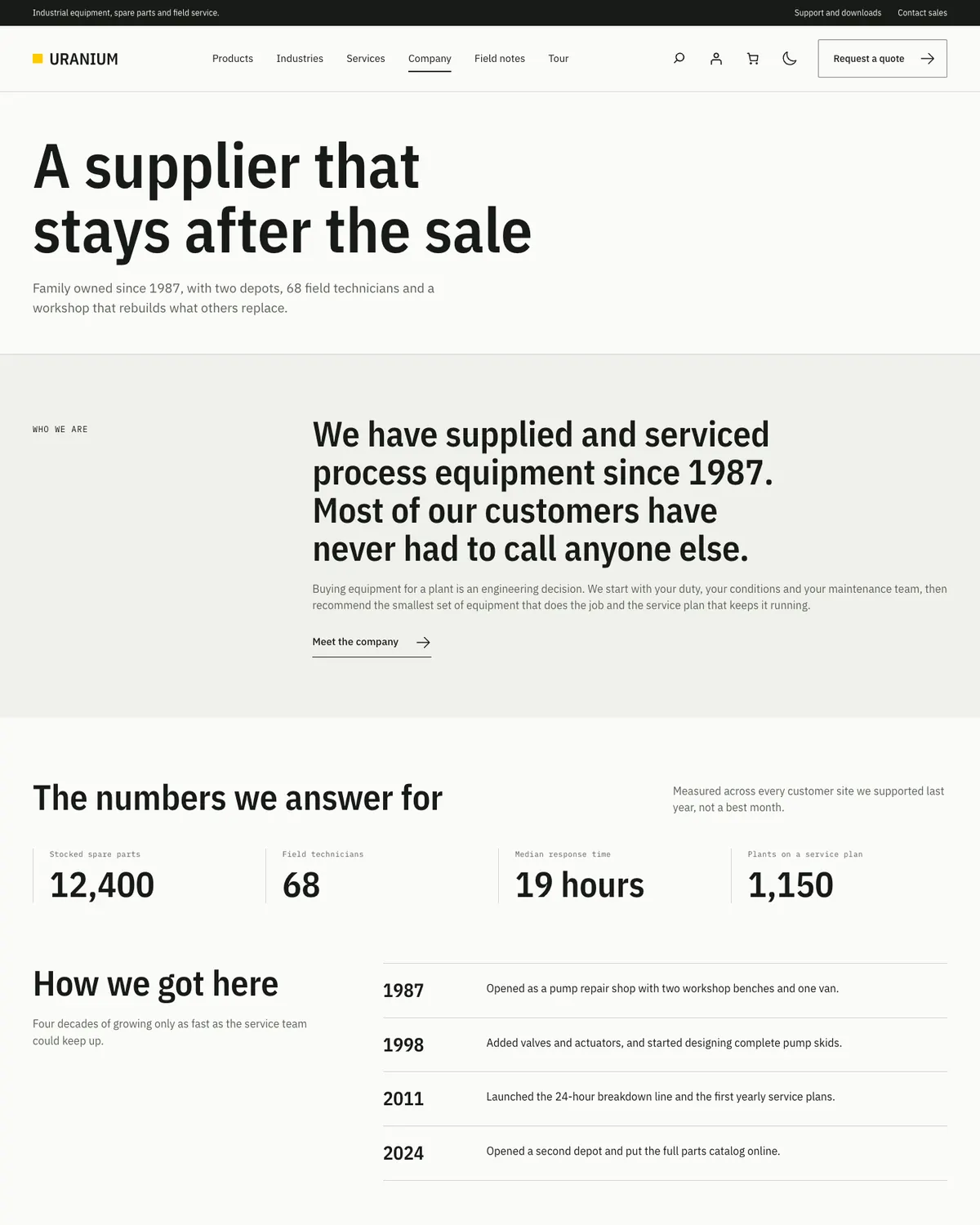
There is no importer. Every page on the demos is built from Uranium’s own patterns, so you get the same result by creating a page and inserting the Home page, Services page or any other full-page pattern.

Where do I download Uranium?

From this page. The download button gives you a zip with free updates built in, and it needs no account or email. The source code and the issue tracker are on GitHub.

How do Uranium's updates work?

The download from this page includes a small updater. It checks gauravtiwari.org for new Uranium releases and hands them to WordPress, so they appear with your other updates and follow your auto-update setting. Each check sends only the theme name and your WordPress version, and every download is checked against its published checksum before it installs. No account or license key is involved.

Get Uranium Free

Uranium is free under GPLv2 or later. Download it, build your first page from the Home page pattern and use it on as many sites as you need.

Version 0.1.2 · Free updates in WordPress · No account required

Source code and issue tracker on GitHub

Building a different kind of site? See all my WordPress themes. Or, if you would rather have the store built for you, I take on WooCommerce and FluentCart store projects.

Disclaimer: This site is reader-supported. If you buy through some links, I may earn a small commission at no extra cost to you. I only recommend tools I trust and would use myself. Your support helps keep gauravtiwari.org free and focused on real-world advice. Thanks. - Gaurav Tiwari