by
by
FluentCart runs the store on this site. Every plugin, ebook, and guide sold here checks out through it, and so does the free-resource library I run for students on a second site. That live use is why my FluentCart review lands where it does: for a new digital-product, education, membership, or small hybrid store in 2026, it’s the WordPress ecommerce plugin I’d choose, with a cleaner product and checkout workflow than the average WooCommerce stack and the store data staying inside WordPress.
It has also annoyed me enough to write code. FluentCart core runs one store currency, so a store that wants to charge exact INR prices instead of a converted dollar figure is on its own. I ended up building GT Extensions for FluentCart to close that gap, which tells you two things at once: the gaps are real, and the hooks are good enough that one developer can close them without touching core.
I wouldn’t move a complex WooCommerce store just because FluentCart looks tidier. Its admin doesn’t feel native to WordPress, its migration tools and add-on catalog are still growing, subscription carts have limits, and FluentCart core doesn’t include native multi-currency. Those gaps matter more than a long feature list.
Bottom line: Choose FluentCart for a new digital-first WordPress store. Keep WooCommerce for a mature physical store with complicated shipping, product extensions, or years of operational history. Consider SureCart if you prefer a hosted commerce engine over keeping the transaction system in your own WordPress database.
Testing context: I use FluentCart on live commercial and education stores. I tested the product, cart, checkout, payment, and download paths customers use, and I maintain GT Extensions for FluentCart.
| What I like | What needs work |
|---|---|
| Digital products, subscriptions, coupons, customers, orders, and reports in one self-hosted WordPress system | No native multi-currency in FluentCart core |
| A useful free version with Stripe, PayPal, Razorpay, and Paystack | The WooCommerce migrator is still in beta |
| Clean product and checkout experience without assembling a large extension stack | Subscription carts are less flexible than WooCommerce |
| Regular updates continue to improve the product | The Vue admin doesn’t feel like a native WordPress screen |
| Quick choice | Best when | Think twice when |
|---|---|---|
| FluentCart | You are starting a digital-first or small hybrid WordPress store | You need mature extensions or migration tools |
| WooCommerce | You run complex physical commerce, shipping, or specialized product workflows | You want a lean store with fewer moving parts |
| SureCart | You want a hosted commerce engine with WordPress as the storefront | You want the order system and data fully self-hosted |
If that sounds like your use case, you can try FluentCart. The free edition is capable enough to validate a real product and checkout before you pay for Pro.
Is FluentCart worth using?
Yes, FluentCart is worth using when you’re building a new digital-first WordPress store. It has already crossed the line from promising launch to usable production software. The distinction matters. I can sell a paid plugin, offer one-time and recurring prices, collect INR through Razorpay, publish free resources, and deliver protected files without routing the business through a hosted commerce platform.
The case for FluentCart is strongest when these points match your store:
- Your products are downloads, software licenses, courses, memberships, services, or a small mix of digital and physical goods.
- You want orders, customers, products, coupons, and reports inside WordPress.
- You would rather start with a useful free plugin than buy several extensions before the first sale.
- You value a focused interface more than access to the largest ecommerce extension catalog.
The case becomes weaker when your business already depends on specialized WooCommerce shipping rules, marketplaces, bookings, rental inventory, composite products, or custom ERP integrations. A new admin screen is not a migration strategy. Revenue workflows deserve more respect than that.
How I use FluentCart on live WordPress stores
My stores solve very different problems, which makes them a useful real-world test. Gauravtiwari.org sells software and digital products. Anantamias.com helps students find and download educational resources. FluentCart provides the product, order, customer, and checkout foundation for both.
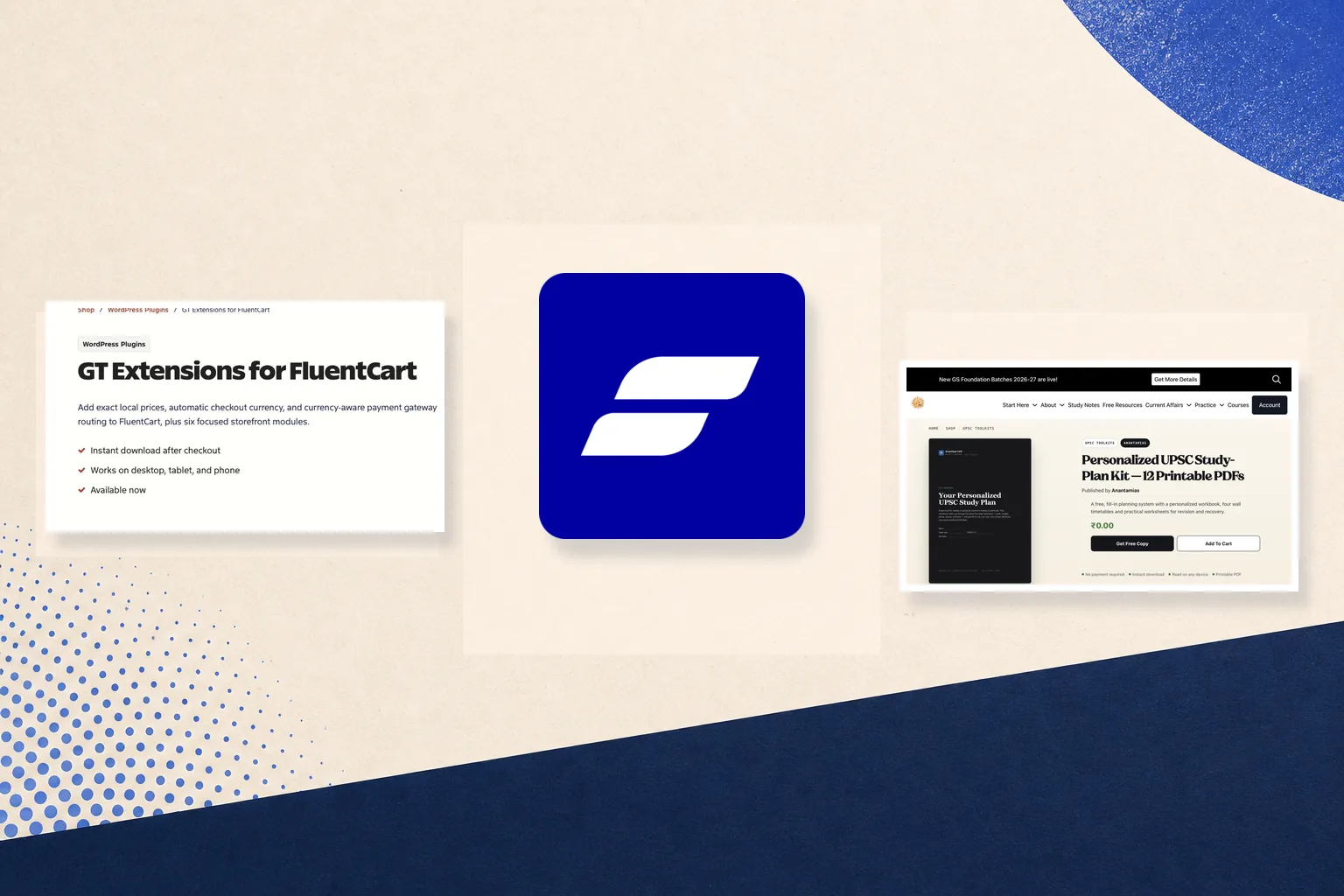
On gauravtiwari.org, the store sells various eBooks, guides, and WordPress plugins such as GT Extensions for FluentCart.
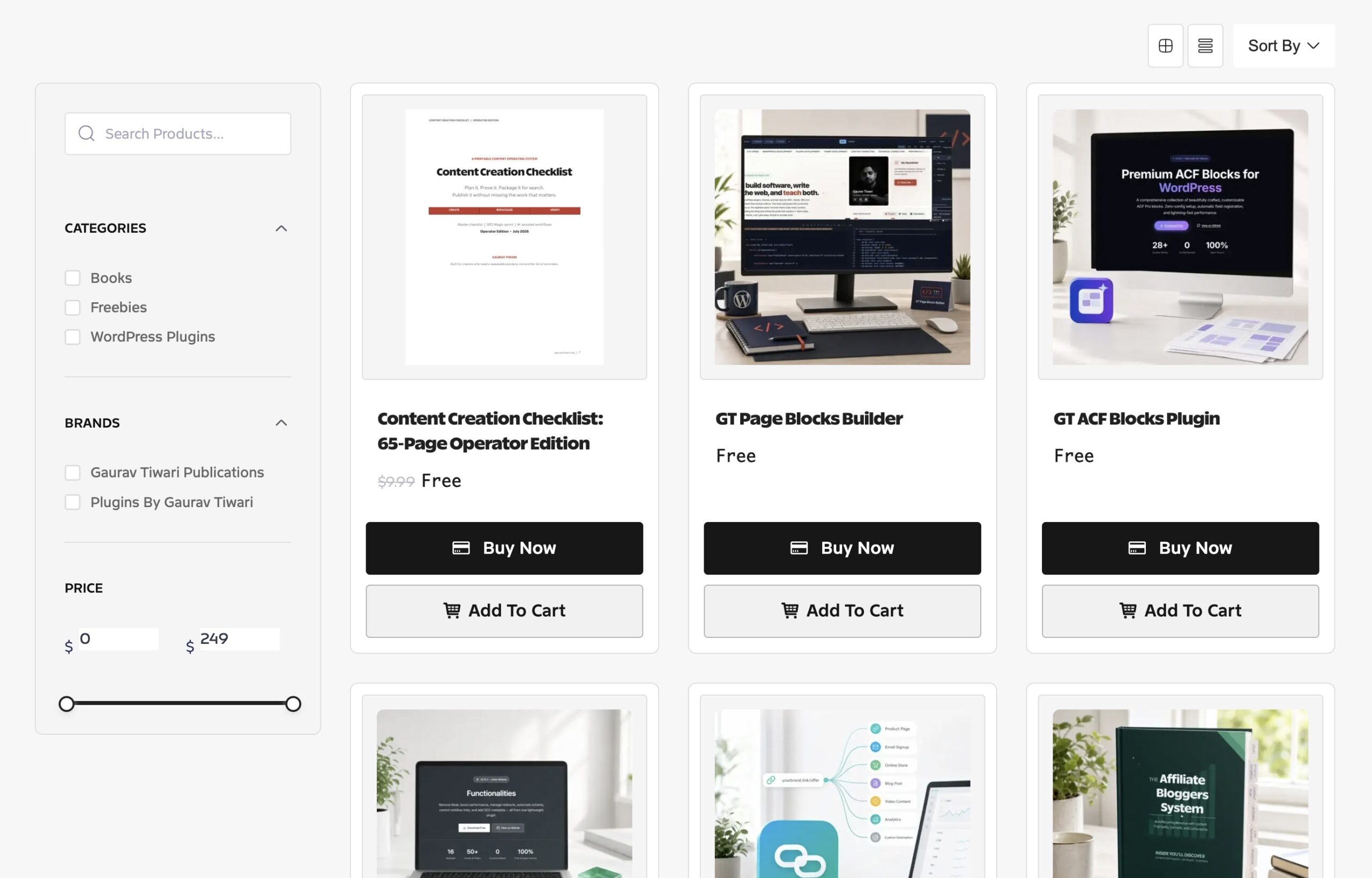
This is where FluentCart feels better than an overextended WooCommerce setup. The product model is focused, the purchasing choices are visible, and I don’t need a separate plugin just to sell a downloadable ZIP with a license.
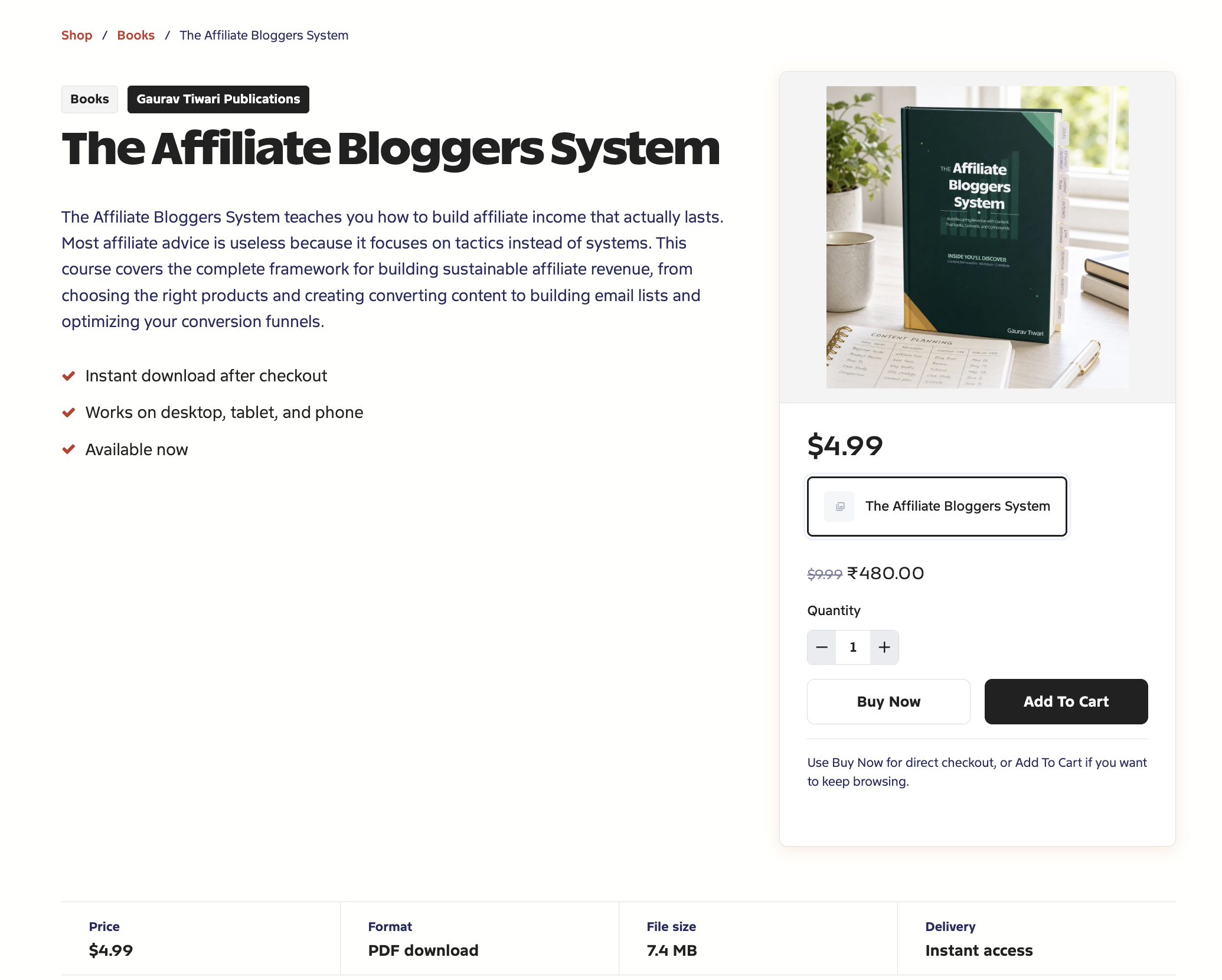
The store is not limited to one pricing pattern. GT Performance shipped as a one-time purchase before it went free, while The Affiliate Bloggers System is a $4.99 digital product that also displays a regional INR amount. Both use the same FluentCart product and purchase controls.
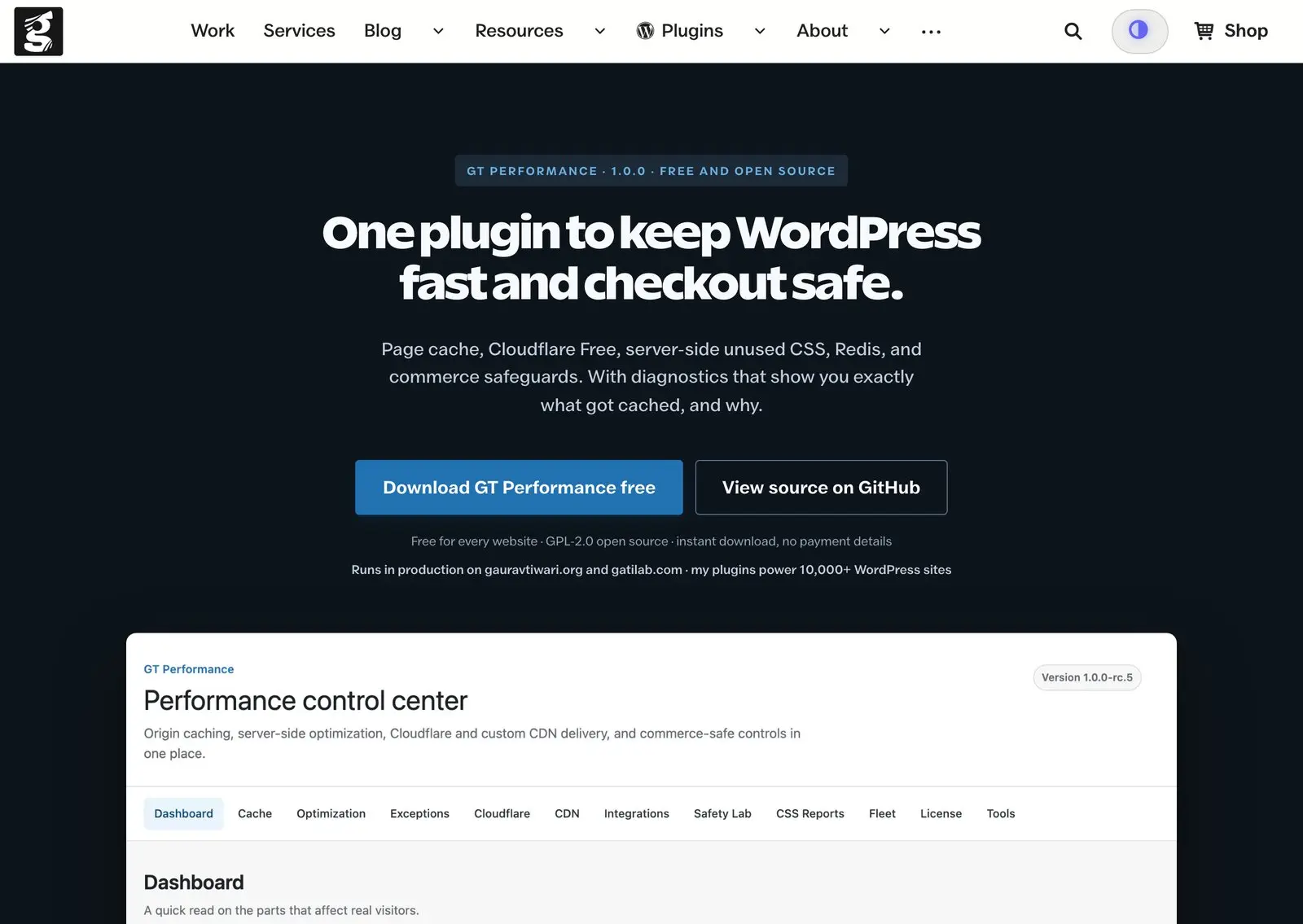
At checkout, gauravtiwari.org collects payment in INR through Razorpay. Customers can use cards, UPI, net banking, wallets, or EMI, depending on the methods enabled in the gateway account.
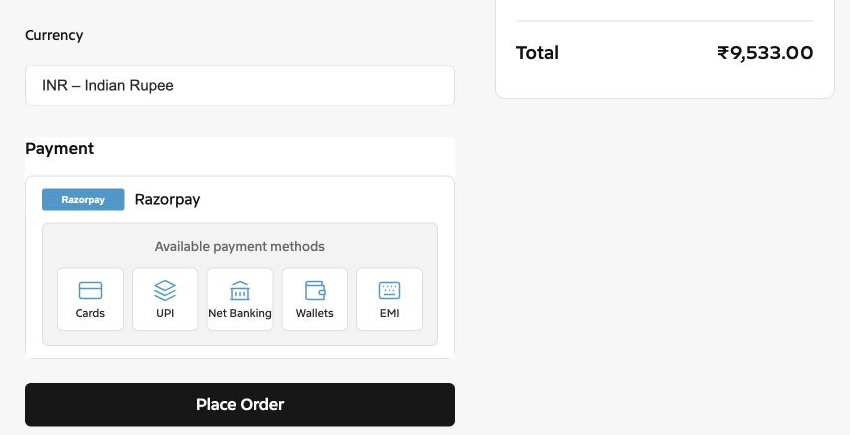
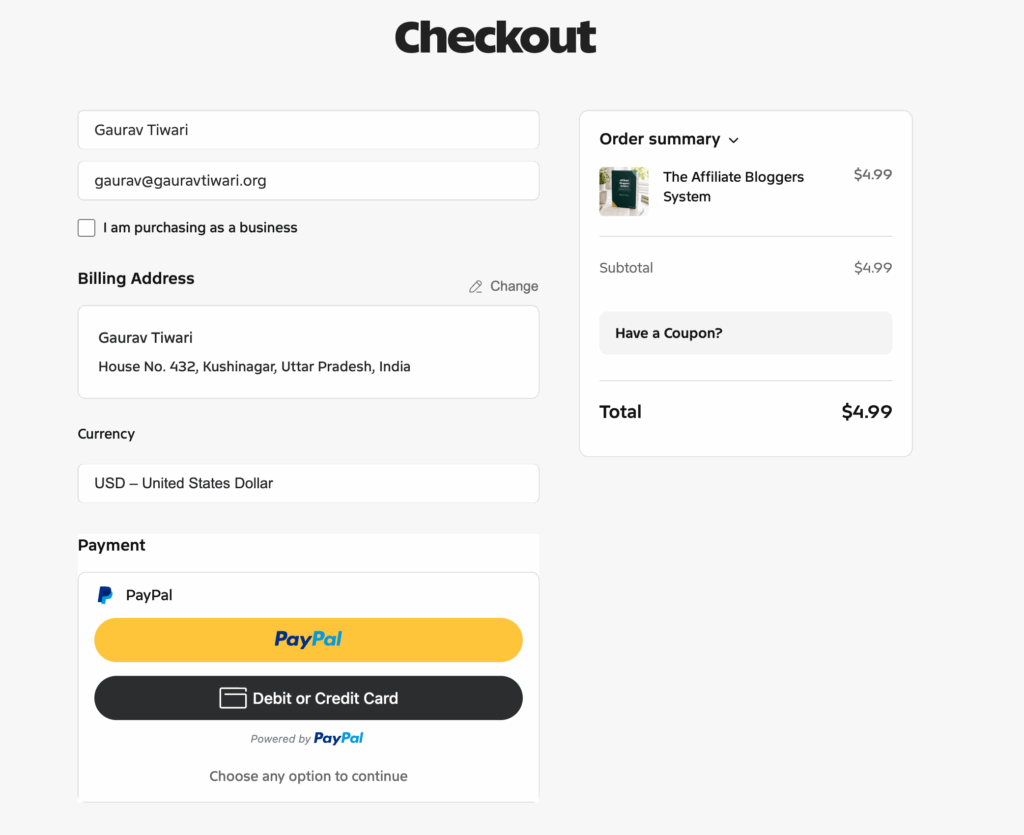
Razorpay is available in FluentCart’s free edition. I explain the setup and test-order process in my FluentCart Razorpay guide for India. If you want the configuration handled for you, I also offer a payment gateway setup service.
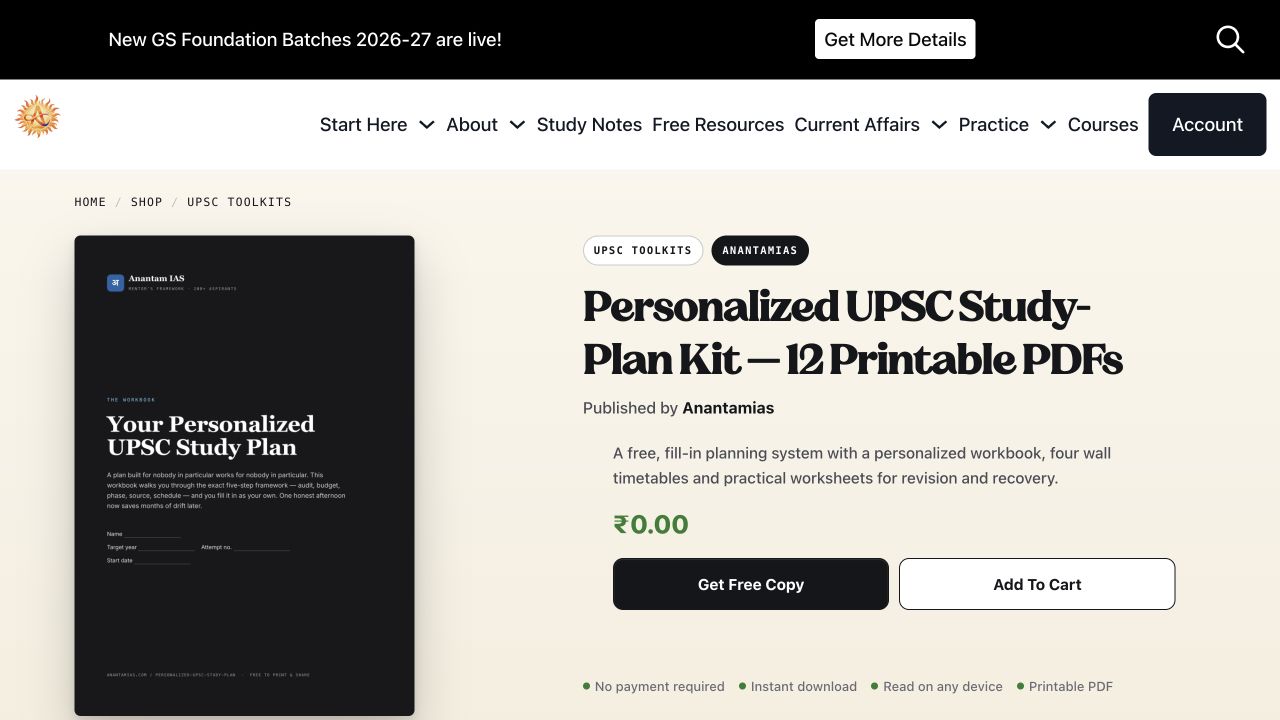
On anantamias.com, FluentCart works less like a conventional shop and more like a controlled resource library. Students can browse and filter educational resources, complete a free checkout, and receive a protected download link by email.
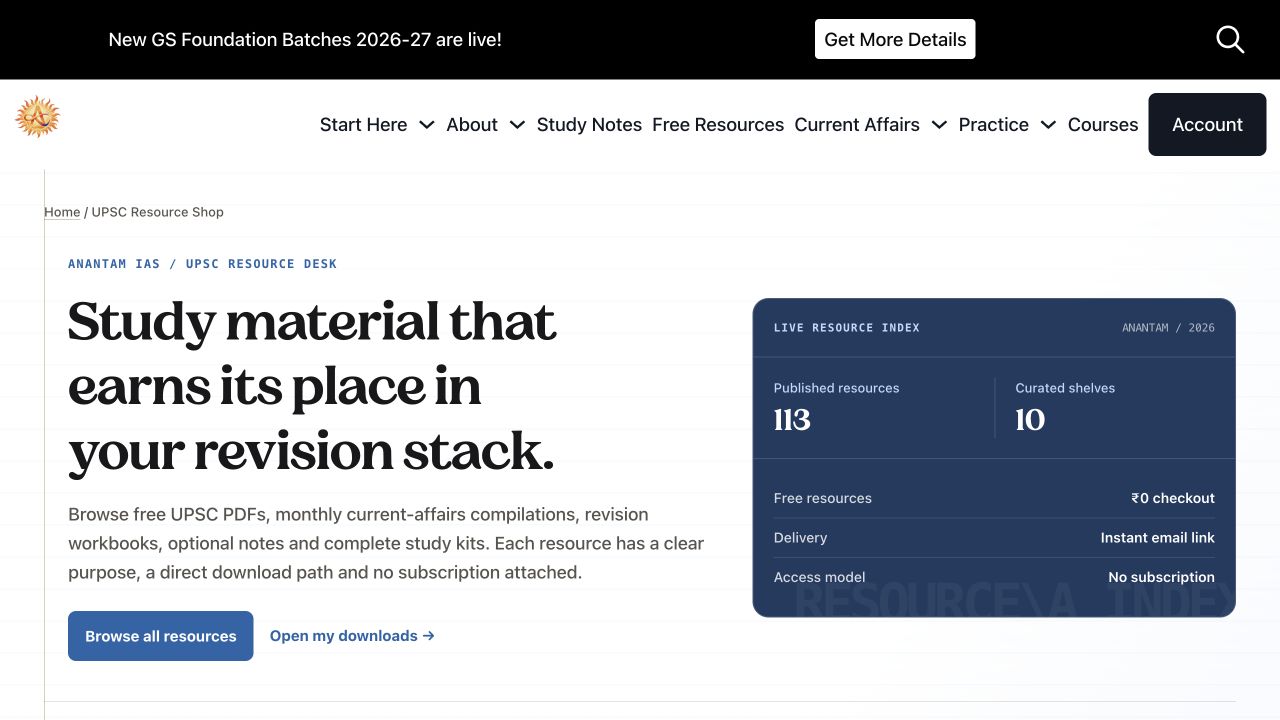
The custom product finder helps students discover the right resource before they ever reach checkout. FluentCart provides the products and transactions; the surrounding WordPress experience is designed for the audience.

Free products still use a real order. The student gets a consistent checkout and email flow, while the site keeps a customer and order history instead of exposing a public file URL.
What FluentCart does well
FluentCart does the core work of a modern WordPress store without making every basic requirement feel like an extension hunt. The free version is not a decorative demo. It is enough to create products, accept standard payments, manage customers and orders, apply coupons, and review basic sales data.
Digital products are a first-class use case
Digital delivery is part of the product rather than an afterthought. That changes the setup in useful ways:
- Downloadable files can be tied to products and orders.
- Free and paid digital products use the same customer and delivery model.
- Subscriptions and hybrid products are available without building a separate membership stack.
- FluentCart Pro adds software licensing when the product needs activations and license management.
That makes FluentCart a direct alternative to Easy Digital Downloads for many stores. EDD is more mature and still has a broader extension catalog, but FluentCart’s free starting point covers more of the selling workflow than I expected.
The customer-facing flow is easy to shape
FluentCart doesn’t force every storefront into one visual template. WordPress still controls the surrounding page, so one store can prioritize pricing while another prioritizes resource discovery. My screenshots are heavily customized examples; they are not the design a new FluentCart install gives you automatically.
There is room for improvement in the default product layouts, especially when variations need clearer button copy, local price books, or stronger catalog labels. Those are exactly the gaps I address with GT Extensions for FluentCart. The important distinction is that the extension improves the storefront. It doesn’t rescue a broken core checkout.
It keeps commerce inside WordPress
FluentCart is self-hosted. Your product, customer, and order system lives with your WordPress site rather than in an external commerce service. For me, that is a benefit because I can inspect the data, automate against WordPress, and keep the store under the same operational roof as the content.
That is a data-ownership advantage, not proof that every interaction is WordPress-native. FluentCart’s store manager is a custom application inside wp-admin. The distinction matters most when you need to extend the admin rather than use it as shipped.
Ownership also means responsibility. You need reliable hosting, backups, security, email delivery, and a sensible update process. If you want the commerce service to absorb more of that work, SureCart is the more natural alternative.
The release pace is encouraging
FluentCart is being improved regularly. Recent updates have expanded product options, tax handling, page-builder support, onboarding, and store management.
Fast development is not the same as long-term maturity, but it is the right signal from a young product. You can read the official FluentCart changelog rather than relying on launch promises.
What FluentCart still misses
FluentCart’s biggest weaknesses are its non-native admin, young add-on catalog, limited migration choices, simpler subscription carts, and lack of native multi-currency. None of those makes the plugin unusable. Each one can make it the wrong choice for a specific store.
The admin experience isn’t WordPress-native
FluentCart’s main admin is built with Vue, so it behaves like a custom application inside wp-admin rather than a native WordPress settings screen. The interface is responsive and consistent, but it doesn’t feel like the rest of WordPress.
I felt that difference while building GT Extensions for FluentCart. FluentCart provides hooks and filters, and the team has added more extension points over time. That lets me extend the product without editing core files, but the work still depends on FluentCart’s own interface and conventions.
My preference is still a more WordPress-native admin design with clearly documented extension points. That would make FluentCart easier for WordPress developers to customize and reduce the chance that an add-on needs adjustment after an interface change. Vue itself is not the problem. The unfamiliar extension experience is.
There is no native multi-currency checkout
FluentCart core uses one store currency. It does not let you maintain exact local price books and switch the order currency by market. Replacing a dollar symbol with a rupee symbol is not multi-currency, and a live exchange-rate conversion is not always the price you want to charge.
I use GT Extensions to add exact local prices, automatic checkout currency selection, and gateway routing where a store needs that behavior. This solves a real missing capability in FluentCart; it is not a prettier currency switcher.
The migration story is incomplete
FluentCart has a free migrator for Easy Digital Downloads and for WooCommerce, and the WooCommerce part is still in beta. It copies products, customers, orders and coupons, and it leaves shipping, pages, emails, license keys and redirects to you. My FluentCart vs WooCommerce comparison covers what I found when I tested it.
- Confirm that customers, orders, subscriptions, downloads, taxes, and coupons can be moved correctly.
- Run test purchases, renewals, refunds, downloads, and customer logins before switching.
- Keep the old store recoverable until real orders work in FluentCart.
If you need help planning that work, my FluentCart store development service covers store architecture, product setup, migrations, payment gateways, and checkout customization.
Subscriptions have strict cart rules
FluentCart keeps subscription carts simpler than WooCommerce. Recurring and one-time products cannot be mixed freely, which is workable for a straightforward membership or software plan but restrictive for bundles and more complicated recurring offers.
WooCommerce still wins on edge cases
WooCommerce has years of integrations for shipping carriers, marketplaces, bookings, deposits, rentals, bundles, wholesale, point of sale, and regional tax systems. FluentCart does not need to copy that entire catalog to be good. It does need the specific integrations your business depends on.
Make a dependency list before choosing the platform. If three business-critical items do not have a FluentCart path, the cleaner admin interface is irrelevant.
FluentCart Free vs Pro
Start with FluentCart Free unless your launch requires a named Pro feature. The free edition can support a real digital store, including subscriptions and major payment gateways. Pro becomes valuable when licensing, inventory, advanced reports, order bumps, additional gateways, store roles, or automation are part of the business model.
| Capability | FluentCart Free | FluentCart Pro |
|---|---|---|
| Digital products and downloads | Yes | Yes |
| Subscriptions and hybrid products | Yes | Yes |
| Stripe, PayPal, Razorpay, Paystack | Yes | Yes |
| Customers, orders, coupons, basic reports | Yes | Yes |
| Inventory management | No | Yes |
| Software licensing | No | Yes |
| Order bumps and advanced reports | No | Yes |
| Advanced store roles and automation | No | Yes |
| Additional payment integrations | Limited | More options |
Do not buy Pro because a comparison table has more checkmarks. Buy it when one of those features has a job in your launch plan.
FluentCart pricing and value
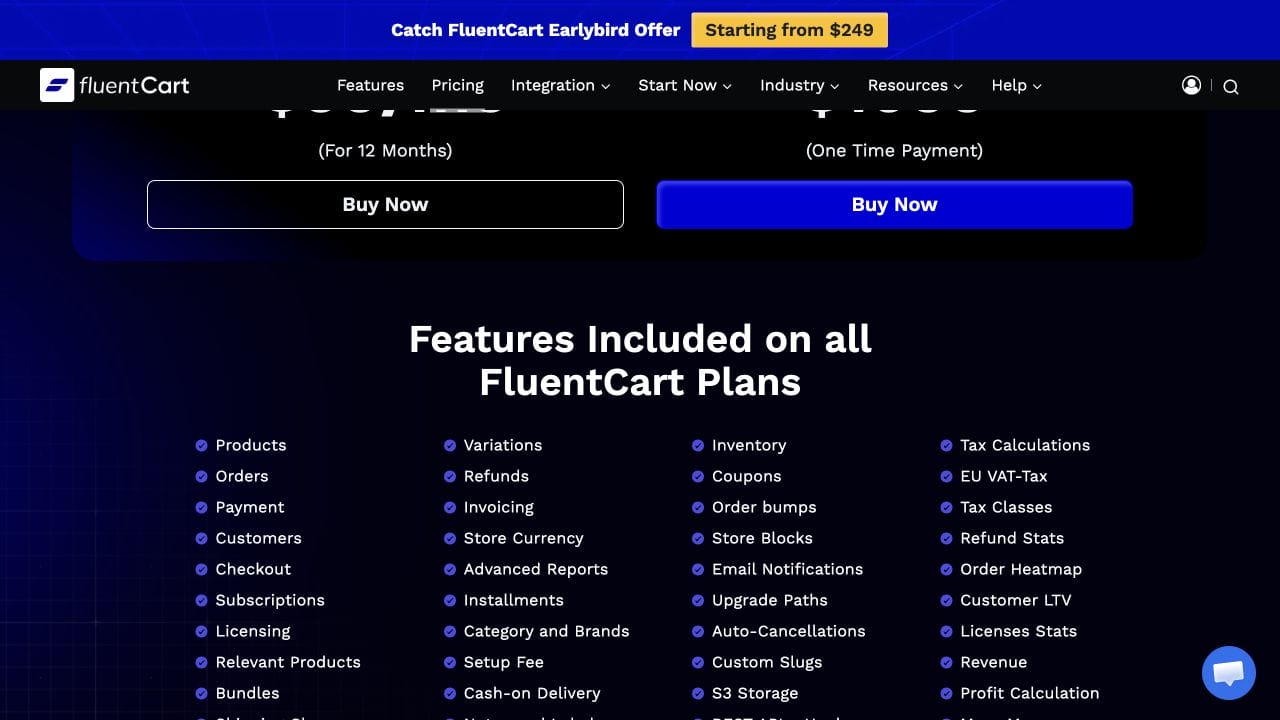
The current FluentCart lifetime offer starts at $249 for one site, and that is the plan I would consider first. The annual plan starts at $199, only $50 less in the first year. If you expect to keep the store beyond the first renewal, lifetime is the much stronger value.
| License | Lifetime offer | Annual alternative |
|---|---|---|
| 1 site | $249 once | $199/year |
| 5 sites | $499 once | $499/year |
| 15 sites | $799 once | $699/year |
| 50 sites | $1,099 once | $899/year |
The larger lifetime plan also offers installments, and FluentCart lists a 60-day refund period. These offers can change, so check the current FluentCart pricing page before buying.
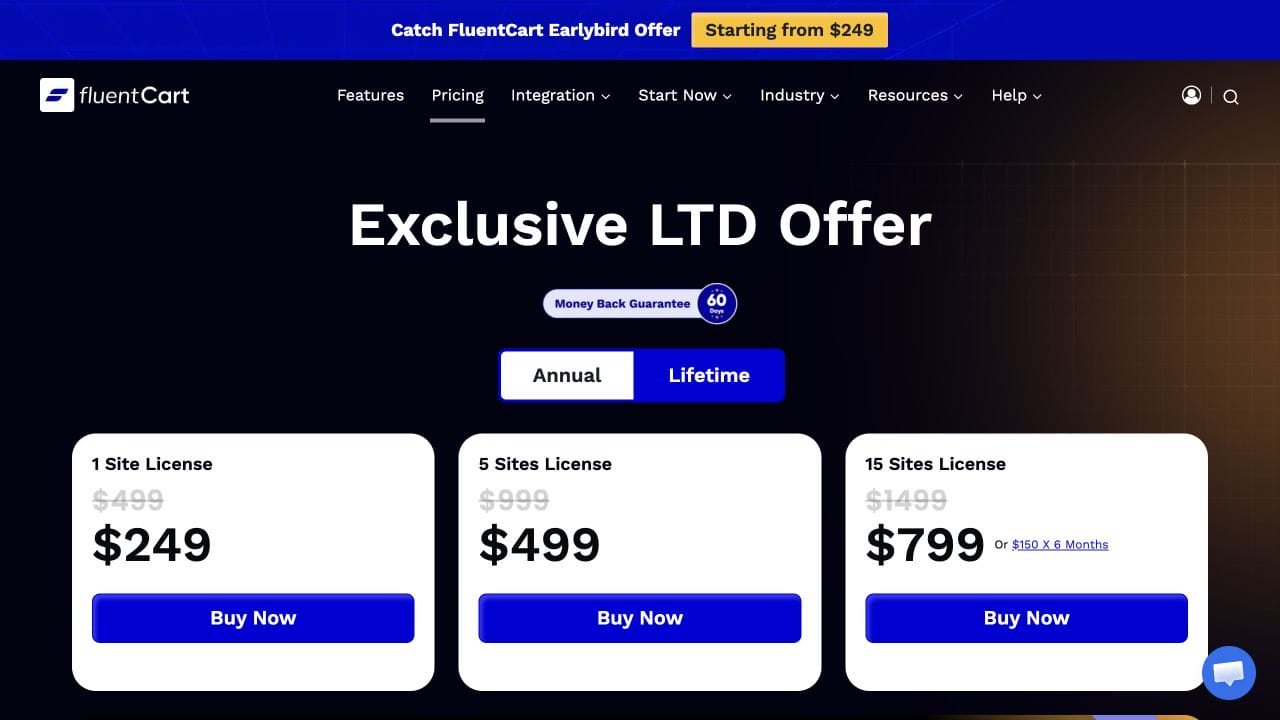
Value depends on what FluentCart replaces. For a digital store, Pro can replace separate licensing, recurring payment, checkout, reporting, and order-bump tools. For a simple store that needs none of those, Free is the better value because the correct price for unused features is zero.
WooCommerce costs accumulate through extension renewals
FluentCart’s $249 lifetime offer becomes more attractive when you compare it with the renewals behind a WooCommerce software store. WooCommerce core is free, but a comparable stack can cost $537 every year before hosting and payment processing.
- WooCommerce Subscriptions: $279 per year for recurring billing.
- Software Add-on for WooCommerce: $179 per year for license keys and activations.
- Order Bump for WooCommerce: $79 per year for checkout offers.
| One-site setup | Current cost | Five years at the same price |
|---|---|---|
| Current FluentCart Pro lifetime offer | $249 once | $249 |
| FluentCart Pro annual plan | $199/year | $995 |
| WooCommerce plus the three extensions above | $537/year | $2,685 |
The five-year column assumes every price stays unchanged. WooCommerce.com says marketplace subscriptions renew at 100% of the current listed price, not necessarily the amount you first paid. Add WooCommerce Memberships at $199 per year and the stack reaches $736 per year, or $3,680 across five years. Not every store needs Memberships, so I would not include it merely to inflate the comparison.
FluentCart’s advantage is consolidation. Products, orders, customers, checkout, subscriptions, software licensing, inventory, order bumps, and reports stay under FluentCart and FluentCart Pro. That gives a digital seller one license, one vendor, and one update path instead of several extension renewals and compatibility checks.
This does not mean FluentCart replaces every WooCommerce extension. WooCommerce supports more complicated stores, and FluentCart still needs add-ons for gaps such as multi-currency or specialized integrations. The useful point is simpler: you do not need three separate plugins just to sell a licensed product with renewals and a checkout bump.
FluentCart vs WooCommerce vs SureCart
FluentCart is the balanced option for a new self-hosted, digital-first store. WooCommerce has the deepest extension catalog. SureCart removes more commerce infrastructure from your server. Your product type and operational preference should decide the winner.
| Area | FluentCart | WooCommerce | SureCart |
|---|---|---|---|
| Commerce model | Self-hosted in WordPress | Self-hosted in WordPress | Hosted commerce platform with WordPress plugin |
| Best fit | Digital products, education, memberships, small hybrid stores | Physical commerce and specialized workflows | Creators and SaaS sellers wanting hosted operations |
| Free starting point | Strong digital and subscription coverage | Strong core, extensions vary by need | Available, hosted-plan limits apply |
| Extension catalog | Young and growing | Largest | Growing platform catalog |
| Native multi-currency | No | Usually added through extensions | Depends on platform capability and plan |
| Migration maturity | Free migrator for EDD and WooCommerce, with WooCommerce in beta | Most established import options | Import options vary |
| Operational control | High | High | Lower server burden, more platform reliance |
My recommendation is simple:
- Choose FluentCart for a new digital-first store when self-hosting and a focused workflow matter.
- Choose WooCommerce when your requirements depend on its mature extension catalog or complex physical fulfillment.
- Choose SureCart when you want a hosted engine and are comfortable with that platform dependency.
For a deeper comparison of the latter two, see my SureCart vs WooCommerce guide. If you stay with WooCommerce, my list of useful WooCommerce plugins can help you avoid installing extensions without a business reason.
Who should use FluentCart?
FluentCart is a strong fit for WordPress owners launching a focused store rather than recreating Amazon inside wp-admin.
- Plugin and software developers selling downloads, licenses, and renewals
- Educators selling or distributing courses, notes, books, and protected resources
- Creators selling memberships, subscriptions, templates, or digital bundles
- Agencies building small client stores with predictable product and checkout needs
- Store owners who want WordPress data ownership and can maintain a self-hosted site responsibly
Who should skip FluentCart?
Skip FluentCart for now if a missing integration would put existing revenue at risk. That usually includes these cases:
- A large WooCommerce store with years of orders, subscriptions, custom extensions, and accounting dependencies
- A complex physical catalog that relies on specialized shipping, warehouse, point-of-sale, marketplace, booking, or rental tools
- A subscription model that requires flexible mixed carts or complicated recurring bundles
- A merchant who wants the vendor to operate the commerce infrastructure and reduce server responsibility
- A multi-country store that needs native local price books but does not want an extension
Waiting is a valid decision. FluentCart is improving quickly, and the right time to adopt it may be after one specific migration tool or integration ships.
My recommended FluentCart setup
Start with the smallest setup that can complete a real order. Buy the lifetime plan when you know FluentCart fits, then add another extension only when your store genuinely needs it.
- Install FluentCart Free on staging and create one representative product.
- Connect the payment gateway you will actually use.
- Complete a paid test order, a refund, and a free order where applicable.
- Check account access, download permissions, invoices, and every customer email.
- Add FluentCart Pro when you need licensing, inventory, order bumps, advanced reports, store roles, automation, or a Pro gateway.
- Add GT Extensions only if you need multi-currency price books, automatic checkout currency and gateway routing, or its storefront customization modules.
My FluentCart review rating: 4.4/5. FluentCart is already good enough for production digital commerce, and its lifetime pricing is unusually attractive. The rating stops short of five because the non-native admin experience, broader add-on catalog, migration coverage, subscription flexibility, and native multi-currency still need work.
You can start with FluentCart Free or get the current lifetime offer. Build the smallest complete checkout first. A working order is better evidence than a long feature list.
Review summary
Pros
- Digital products, subscriptions, free orders, customers, coupons, and reports in one self-hosted WordPress system.
- Useful free edition includes Stripe, PayPal, Razorpay, and Paystack.
- Subscriptions, licensing, reports, and order bumps stay inside FluentCart instead of separate annual extension renewals.
- Self-hosted product, customer, and order data.
- Regular updates continue to expand the product.
Cons
- No native multi-currency in FluentCart core.
- The Vue admin does not feel like a native WordPress screen and uses its own extension hooks.
- Young third-party add-on catalog and limited migration options.
- Subscription carts are less flexible than WooCommerce.
- Not yet the safe default for complex WooCommerce migrations or extension-heavy physical stores.
Summary
FluentCart is the WordPress ecommerce plugin I would choose for a new digital-product, education, membership, or small hybrid store. I use it for live software and education storefronts. Its free edition, current lifetime offer, clean checkout, digital delivery, subscriptions, and WordPress data ownership make it a strong foundation.
Price: USD 249 one-time
Get FluentCart LifetimeFrequently asked questions
Is FluentCart free?
Yes. FluentCart Free can sell digital products and subscriptions, manage customers and orders, apply coupons, show basic reports, and accept payments through Stripe, PayPal, Razorpay, and Paystack. Start with Free unless your launch requires a specific Pro feature.
What does FluentCart Pro add?
FluentCart Pro adds capabilities such as inventory management, software licensing, order bumps, advanced reports, store roles, automation, and more payment integrations. The exact feature list can change, so match Pro to a real requirement instead of upgrading for unused checkmarks.
Does FluentCart charge transaction fees?
FluentCart’s pricing is for the plugin license. Your payment gateway can still charge its normal processing fee. Check the current FluentCart plan terms and your gateway’s country-specific pricing before calculating the cost of each order.
Can FluentCart sell physical products?
Yes. FluentCart can sell physical products, and Pro adds inventory features. I would still choose WooCommerce for a complex physical store that depends on specialized shipping, warehouse, marketplace, booking, rental, wholesale, or point-of-sale extensions.
Can FluentCart handle subscriptions?
Yes, but its subscription carts are less flexible than WooCommerce. Mixing recurring and one-time products is restricted, so test your exact offer structure before committing.
Does FluentCart support multi-currency?
FluentCart core does not provide native multi-currency checkout. It uses one store currency. GT Extensions for FluentCart can add exact local price books, automatic checkout currency selection, and gateway routing for stores that need country-specific pricing.
Can I migrate from WooCommerce to FluentCart?
Yes. FluentCart has a free migrator, and its WooCommerce support is in beta. It copies products, customers, orders and coupons. Shipping, pages, emails, redirects and license keys are set up again in FluentCart, and subscriptions need a tested plan before the switch.
Is FluentCart self-hosted?
Yes. FluentCart runs inside WordPress and keeps its product, customer, and order system with your site. Its admin is a custom Vue application rather than a native WordPress settings screen. You control the data and remain responsible for running a healthy WordPress site.
Is FluentCart better than WooCommerce?
FluentCart is the cheaper, more focused option for many new digital stores. Its current one-site lifetime offer starts at $249, while a WooCommerce software stack using Subscriptions, Software Add-on, and Order Bump currently costs $537 per year. WooCommerce remains better for advanced subscription carts, physical commerce, and specialized workflows.
How much does FluentCart Pro cost?
At the time of this review, the displayed FluentCart Pro lifetime offer starts at $249 for one site. An annual plan starts at $199, but lifetime is the more attractive value if you expect to use FluentCart beyond the first renewal. Pricing can change, so check the live pricing page before buying.
Tell Google you want more of this.
Add Gaurav Tiwari as a preferred sourceOne tap, and this site shows up more often in your own Top Stories, AI Overviews and AI Mode. Remove it any time.
Disclaimer: This site is reader-supported. If you buy through some links, I may earn a small commission at no extra cost to you. I only recommend tools I trust and would use myself. Your support helps keep gauravtiwari.org free and focused on real-world advice. Thanks. - Gaurav Tiwari