

The area of a disk is pi times radius squared. You memorized this in middle school. But do you know why it’s true? Most people don’t. I show you the derivation using calculus and the elegant geometric argument that predates it. Understanding the proof reveals how mathematics builds complex results from simple principles.


The triangle inequality sounds obvious. No side of a triangle can be longer than the other two sides combined. But proving it rigorously is where things get interesting. I cover the geometric intuition, the formal proof, and the generalizations that make this inequality one of the most useful tools in analysis and metric spaces.

In December 2011, India declared 2012 as National Mathematical Year to honor Ramanujan’s 125th birthday. I wrote at the time that unless the system changed, it would be performative. Fourteen years later, I was right. Here’s what was promised, what was delivered, and the structural problems that no anniversary celebration can fix.
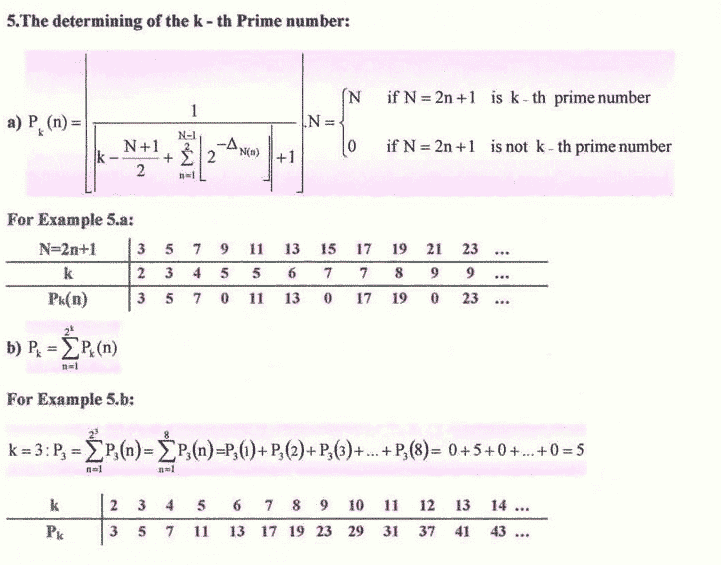
Mathematicians have spent centuries trying to find a formula that generates all prime numbers. Euler’s n²+n+41 works for 40 values then fails. Mills proved a constant exists but can’t compute it. The Riemann Hypothesis promises the tightest distribution bounds but remains unproven. Here’s the full story of humanity’s longest mathematical quest.

You can figure out what day of the week any date falls on. No calendar needed. Just arithmetic. I’ll teach you a genuine mathematical formula that works for any date after 1582. It takes about 30 seconds once you’ve practiced. Impress your friends or just satisfy your curiosity about historical dates.
Equations are the reason we can solve problems in seconds that would take hours of guesswork. I cover the basics: what equations are, how they work, types of equations, and solving techniques. If you’re just starting your math journey, understanding equations is the single most important skill you’ll develop.

Long URLs are a pain when sharing links on social media, emails, or podcasts. WordPress has a built-in shortlink system most people don’t know about, plus several third-party solutions that offer tracking and custom domains. I compare native WordPress URL shortening with plugins and external services to help you pick the right approach.

Numbers are the alphabet of mathematics. But here’s what most people never learn: all the complex numbers you encounter, from imaginary numbers to quaternions, are built from a few simple ideas. I start from natural numbers and work up through integers, rationals, reals, and complex numbers, showing how each extends the last.
Logic is the grammar of mathematics. Without logical precision, you can’t communicate ideas or verify they’re correct. Propositions, truth tables, logical connectives, quantifiers, and proof methods explained.

Fermat was convinced he’d found an infinite source of primes. He was wrong. His formula n^2 + n + 41 produces primes for the first 40 values, then fails spectacularly. I cover the important theorems about Fermat numbers, their properties, and why one of history’s greatest mathematicians got fooled by a pattern.
This logic puzzle about three children and two friends is one of my favorites. It looks simple. Then you realize you’re missing something. I’ve used it to teach logical reasoning for years. The solution teaches you about uniqueness conditions and why ‘almost enough’ information creates the most interesting problems.

Math majors need communities, not just textbooks. From Math Stack Exchange and MathOverflow to Mathstodon, ArXiv and the math blogosphere, these are the six online communities I’d actually recommend to a serious math student, with honest notes on which platform fits which need and which to skip.