
How Mental Coaching Quietly Became the Edge That Wins Esports Tournaments
 by
by
What actually decides a match between two teams who can both aim, rotate and combo at almost the same level? For years, the assumed answer was sharper reflexes or more hours logged in practice. At the very top, though, those things have largely evened out. The gap that remains is harder to spot, and it sits between the players’ ears. Mental coaching has slipped into elite esports almost without announcement, and it now quietly shapes who lifts the trophy.
Why Raw Skill Stopped Being Enough
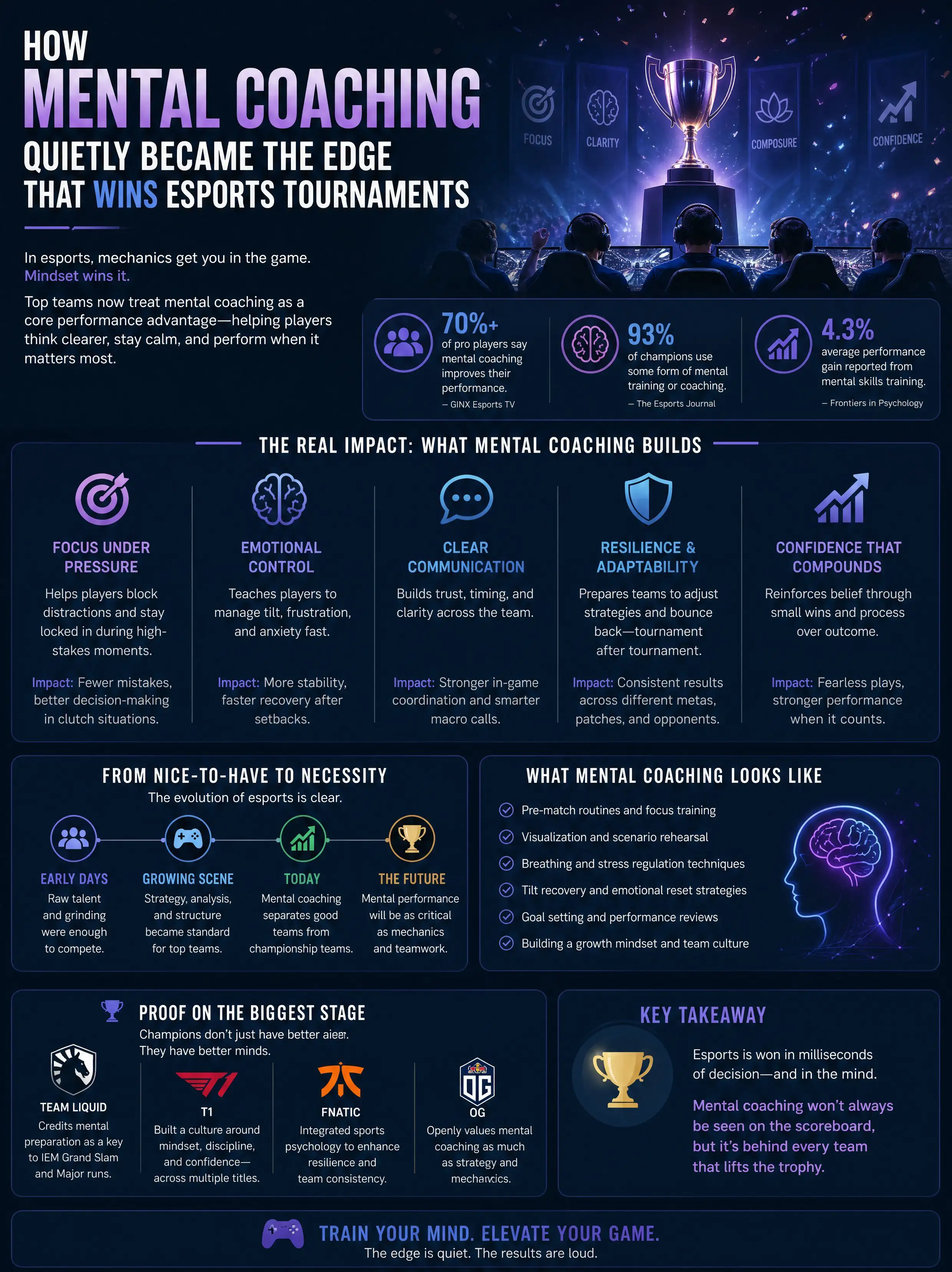
At the highest level of competition, mechanical ability tends to cluster. The finalists at a major event can all hit the same shots and read the same situations, since that is how they reached the final in the first place. When skill is that close, one shaky decision under pressure can swing an entire series. This is the space mental coaching moves into, working on the part of performance that aims trainers and scrims rarely fix.
Pressure does strange things to even the most practiced players, often in ways they barely notice while it is happening:
- Muscles tense, so aim and inputs lose their usual smoothness;
- Attention tunnels onto the wrong detail, leaving easy reads missed;
- Decisions either rush or freeze, and timing falls apart;
- The last mistake keeps replaying, pulling focus away from the next play.
Coaches who specialise in performance psychology treat that reaction as a skill gap with a solution, rather than a personal weakness to hide.
What a Mental Coach Actually Does
The job is far more practical than the title might suggest. Most of the work happens in ordinary sessions, long before anyone reaches a stage, and it tends to fall into a few clear areas.
Resetting After a Bad Round
One lost round can poison the next five if a player carries the frustration with them. This reaction, often called tilt, is among the most common ways matches quietly slip away. A coach teaches quick reset routines — a breath, a set phrase, a small physical cue — that let a player drop the last mistake and meet the next round with a clear head.
Holding Focus When It Counts
A long tournament tests attention as much as ability. As fatigue builds, concentration drifts, and easy errors creep in. Coaches train players to notice the moment their focus starts to slip and to pull it back on purpose, so the standard of play in hour five still matches the standard in hour one.
Keeping the Team Talking
Solo brilliance rarely wins a series; steady communication usually does. Stress tends to make players go quiet or turn calls into blame, which breaks a team down from the inside. Much of a coach’s work is keeping that channel open, so callouts stay calm and useful even when a match is slipping.
Why These Skills Travel Beyond the Arena
The habits a mental coach builds rarely stay locked to one game. Composure under pressure, the discipline to stick to a plan, and the sense to step away at the right moment all carry over to any setting where the stakes feel real. Plenty of players notice the same pull at Yep (https://yep.casino/en-gb), where keeping a cool head and holding to a set limit counts every bit as much as it does on a tournament stage.
Why the Edge Stayed Out of Sight
Back inside competitive play, this advantage took years to surface in the open. For a long time, admitting you worked on the mental side carried a stigma. Players worried it made them look fragile, and organizations rarely advertised that they had brought in a psychologist. The coaching happened behind closed doors, treated as something private rather than an advantage worth discussing.
That silence is part of why the shift went unnoticed for so long. While fans argued about aim and strategy, the quiet hiring of performance coaches was steadily separating the teams that stayed composed from the ones that cracked when it mattered. The edge worked partly because so few people thought to look for it.
Reading the Extras With the Same Discipline
Promotions test the very self-control a coach spends months drilling into a roster. Looking through what is available at Yep (https://yep.casino/en-gb/bonuses) with a clear head, rather than chasing a deal on impulse, is its own quiet form of tilt control — the same skill applied away from the server.
What This Means for the Next Generation
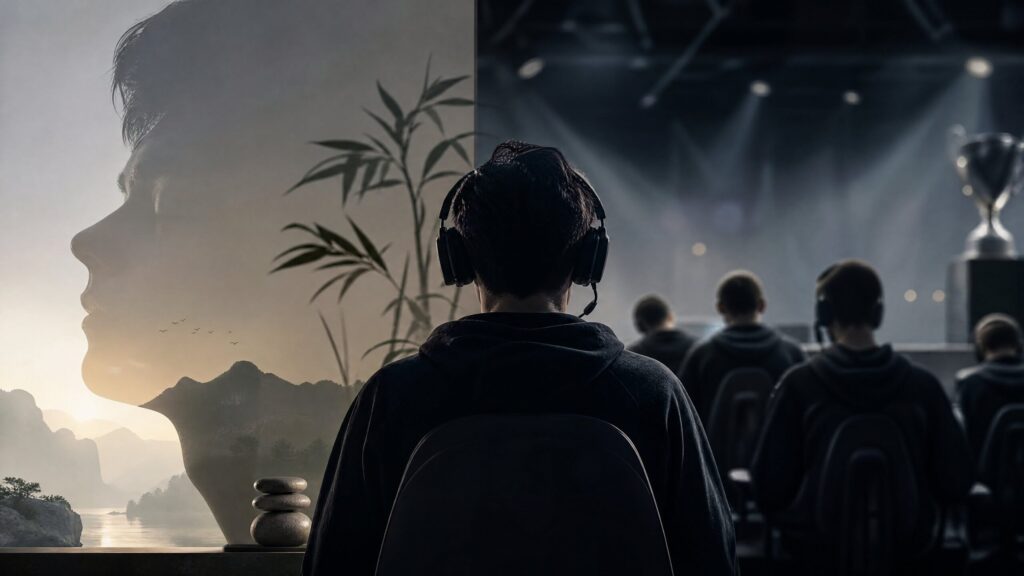
Mental coaching is no longer a hidden trick kept by a handful of elite squads. As more teams accept that the mind can be trained like any other skill, it is fast becoming the baseline rather than the bonus. Players who once might have burned out under pressure now have tools to stay steady, and those who ignore that side of the game are starting to fall behind.
For anyone climbing the ranks, the takeaway is simple enough to act on today. Reflexes will carry you only so far, and the composure to use them when everything is on the line can be learned with practice. The next era of esports may well belong to the players who keep their heads clearest when the pressure is at its highest.
Tell Google you want more of this.
Add Gaurav Tiwari as a preferred sourceOne tap, and this site shows up more often in your own Top Stories, AI Overviews and AI Mode. Remove it any time.
Disclaimer: This article is for information only, not legal or financial advice. Online betting and iGaming are regulated, and rules vary by location. Make sure you are allowed to play where you live. Gambling involves real financial risk and can be addictive. Only play with money you can afford to lose, and get help if it stops being fun.