
 by
by
Financial scams are everywhere, and they’re getting smarter every year. From slick emails promising quick wealth to phone calls pretending to be your bank, fraudsters are constantly looking for ways to trick people into handing over their money or personal information. Understanding how to recognize these schemes is the first step toward safeguarding your finances.
Here’s a clear breakdown of the most common money scams, the warning signs to watch for, and the practical steps that keep your money safe.
Common Types of Money Scams
Financial scams can take many forms, but some are more widespread than others. Familiarity with these common types can make it easier to spot a scam before it’s too late.
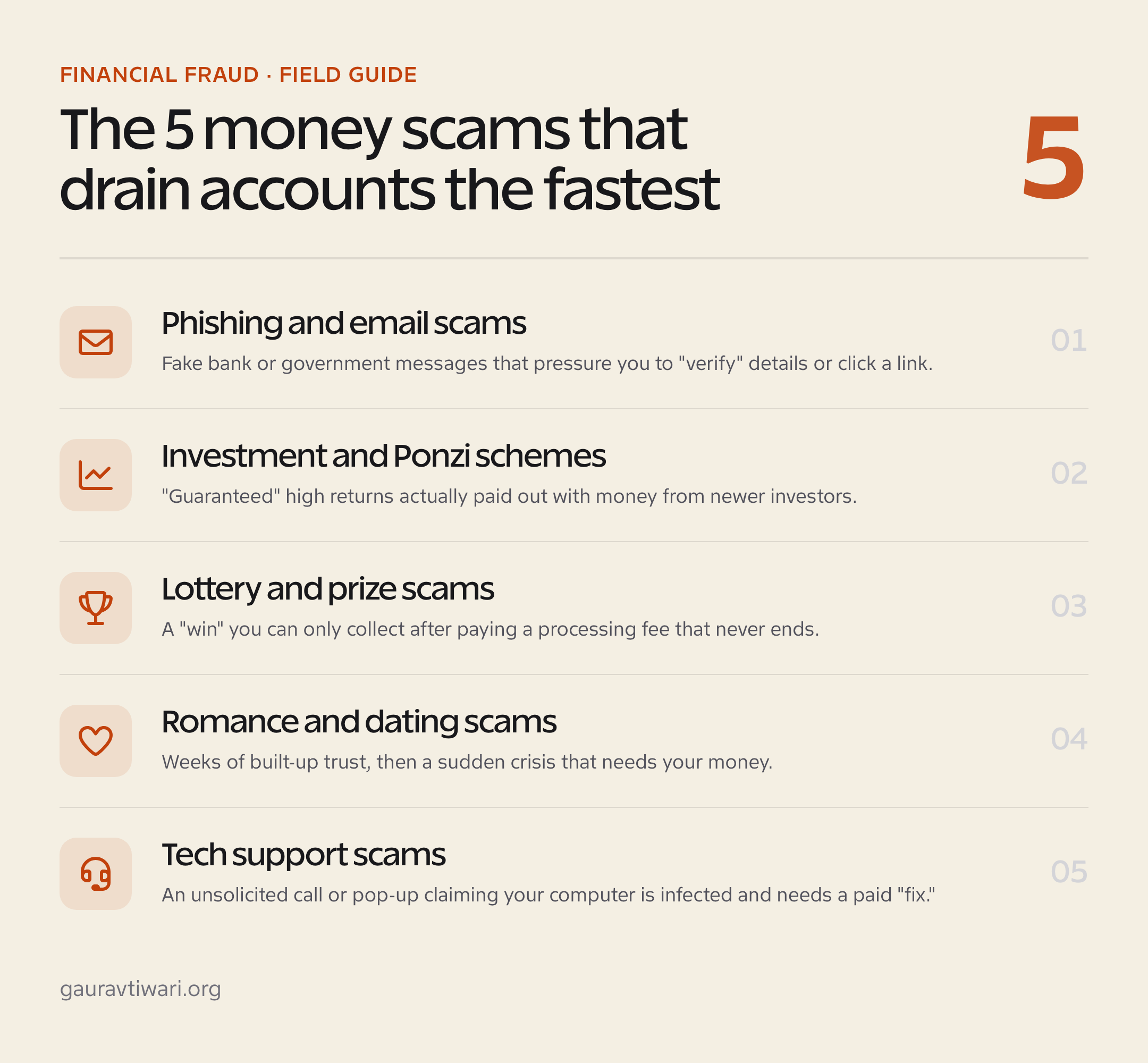
1. Phishing and Email Scams
Phishing is one of the oldest tricks in the scammer’s playbook. It usually comes as an email, text, or social media message that looks legitimate. The message often claims to be from your bank, a government agency, or a well-known company. It asks you to “verify” your information or click a link that leads to a fake website.
A key red flag is urgency. Messages that threaten immediate account closure or promise a reward if you act quickly are designed to make you panic and act without thinking. Always double-check the sender’s email address and never click links in unsolicited messages.
2. Investment and Ponzi Schemes
High-return investment offers that seem too good to be true almost always are. Ponzi schemes rely on money from new investors to pay off earlier investors, creating the illusion of profit. Eventually, the scheme collapses, leaving most people with significant losses.
Websites like the SEC (U.S. Securities and Exchange Commission) provide guidance on identifying legitimate investment opportunities versus fraudulent ones. Checking for registration and official disclosures is a crucial step before parting with any money.
3. Lottery and Prize Scams
Scammers love to exploit our desire for a windfall. Lottery and prize scams notify victims that they’ve won a big prize, but they must first pay a “processing fee” or provide sensitive information. The truth? There is no prize. The scammer vanishes once they get your money or personal details.
4. Romance and Online Dating Scams
Romance scams prey on emotions. Scammers build trust and affection over weeks or months, then fabricate a crisis that requires you to send money. They may pose as someone working abroad, in the military, or in urgent financial trouble.
Be cautious if someone you’ve never met in person asks for money. Protect your personal information and consider doing a reverse image search on their profile pictures to see if they appear elsewhere online.
5. Tech Support Scams
This scam typically begins with a call or pop-up claiming your computer has a virus or security issue. The “technician” offers to fix it, often charging hundreds of dollars or installing malware that gives them access to your accounts.
Legitimate tech companies like Microsoft or Apple will never make unsolicited calls to fix your computer. Hang up and report the number if you suspect a scam.
Red Flags to Watch For
Even the most convincing scams share common warning signs. Learning these red flags can save you from financial loss.
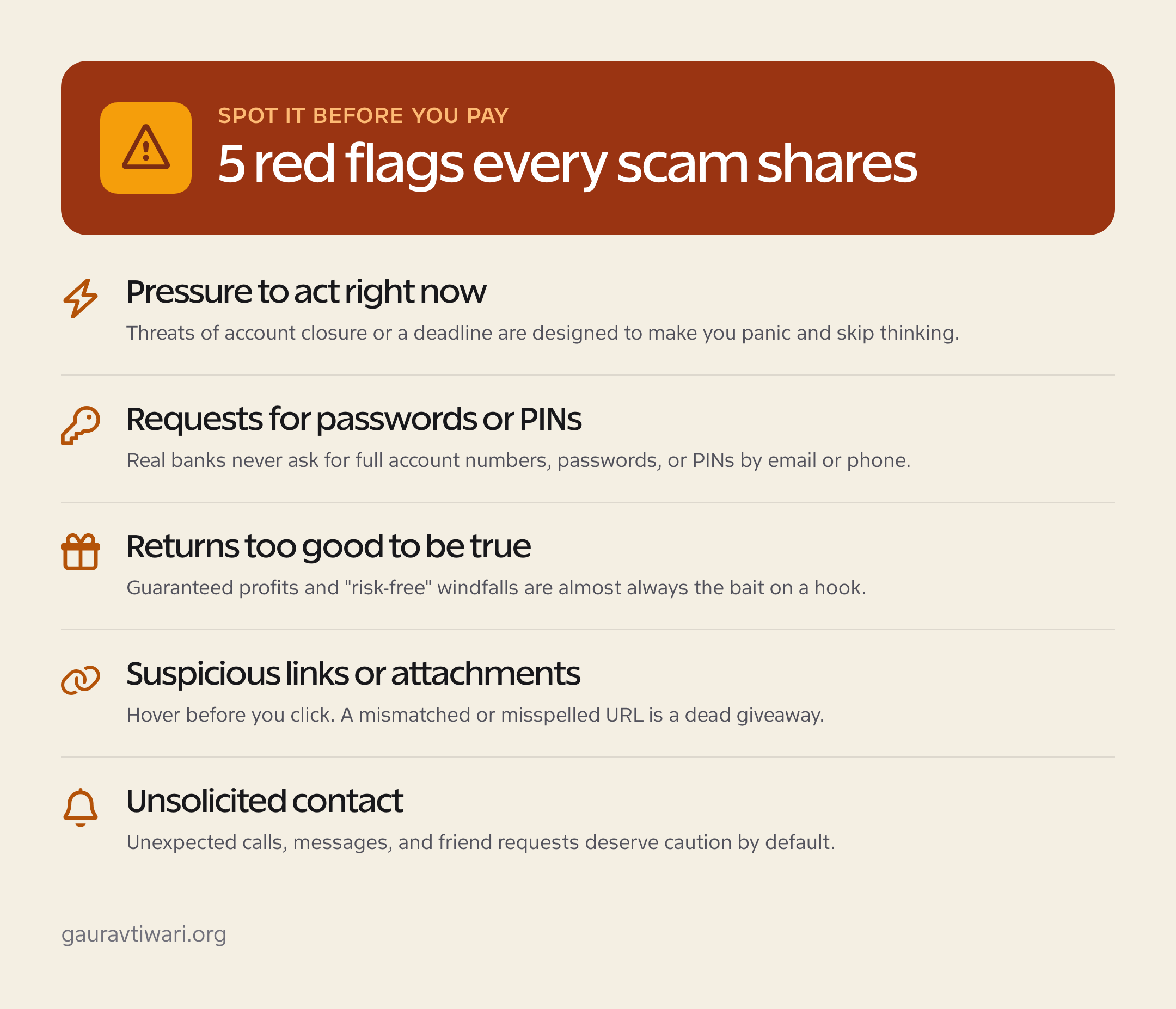
- Pressure to act quickly – Scammers often create a sense of urgency.
- Requests for personal information – Your bank, Social Security office, or credit card company will not ask for passwords, PINs, or full account numbers via email or phone.
- Too-good-to-be-true offers – Promises of large profits or guaranteed returns are nearly always fraudulent.
- Suspicious links or attachments – Hover over links before clicking to check if the URL is legitimate.
- Unsolicited communication – Unexpected messages, calls, or friend requests should always be treated with caution.
How to Protect Yourself
Knowing how scams operate is important, but taking concrete steps to protect yourself is equally crucial.
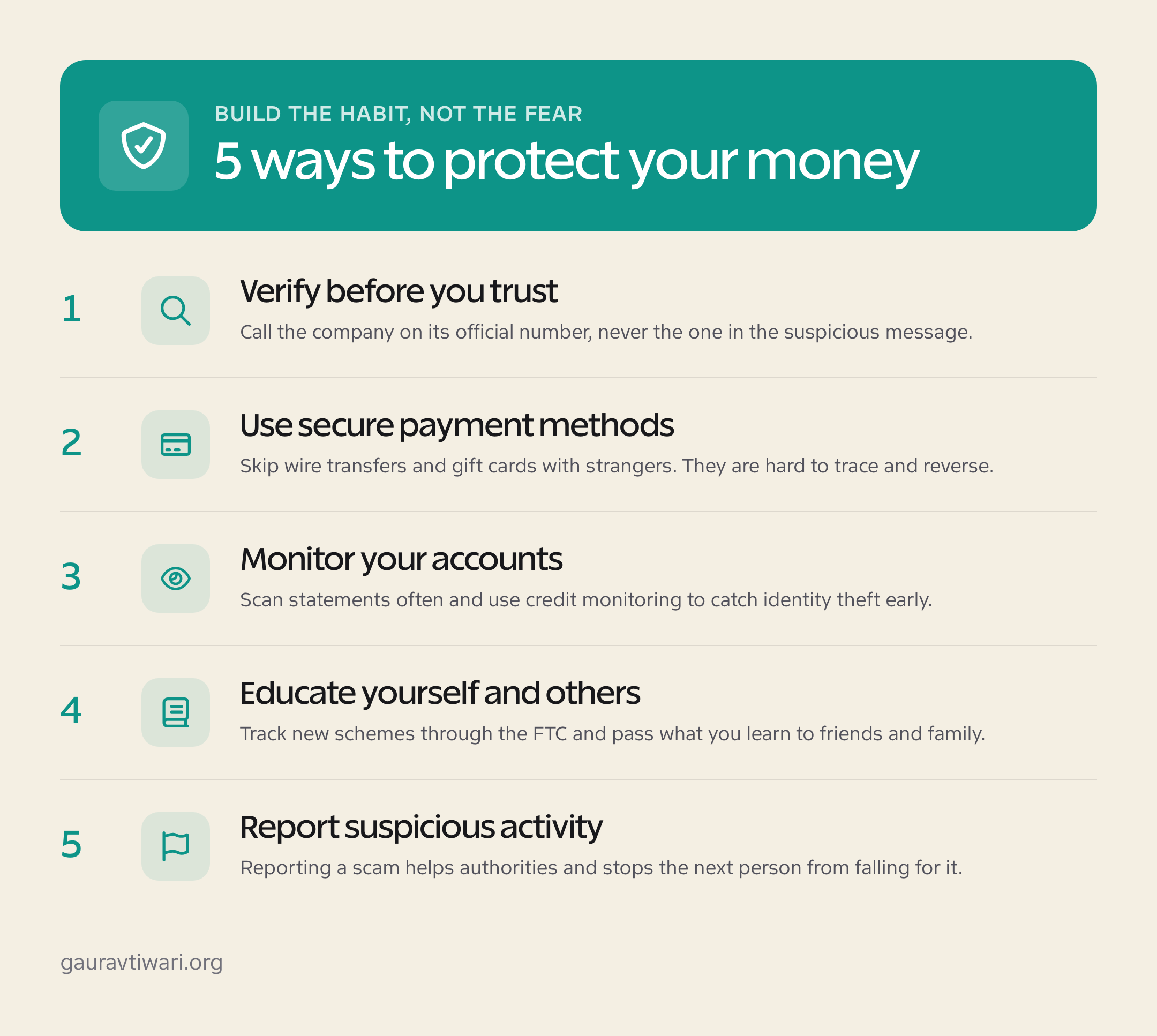
1. Verify Before You Trust
Always verify the identity of anyone who contacts you regarding money or personal information. Call the company directly using official contact details, not the ones provided in the suspicious message.
2. Use Secure Payment Methods
Avoid wire transfers or prepaid gift cards for transactions with unknown individuals. Scammers often prefer these methods because they’re difficult to trace and nearly impossible to reverse.
3. Monitor Your Accounts
Regularly check your bank and credit card statements for unauthorized activity. Consider enrolling in free credit monitoring services, which alert you to changes in your credit report and help detect identity theft early.
4. Educate Yourself and Others
Stay informed about new scams. Websites like the Federal Trade Commission (FTC) frequently update lists of trending fraud schemes. Sharing this knowledge with friends and family can prevent them from becoming victims.
5. Report Suspicious Activity
If you encounter a scam, report it immediately. Reporting doesn’t just help authorities track down scammers; it also prevents others from falling victim. Agencies like the FTC, your bank, or local law enforcement can guide you on the next steps.
Final Thoughts
Financial scams are increasingly sophisticated, but staying vigilant can make a big difference. Recognizing the common types of scams, understanding warning signs, and implementing protective measures are essential steps in keeping your money and personal information safe.
Remember, a scammer’s goal is to exploit fear, trust, or greed. If something feels off, trust your instincts. Take the time to verify, educate yourself, and use secure financial tools. By staying alert and proactive, you can protect your finances and avoid the costly consequences of falling for a scam.
Frequently Asked Questions
What are the most common money scams to watch for?
The most common money scams include phishing emails, investment and Ponzi schemes, lottery and prize scams, romance scams, and tech support scams. Each one relies on urgency, secrecy, or a too-good-to-be-true offer to get you to act fast.
How can I tell if a message is a scam?
Look for pressure to act immediately, requests for passwords or account numbers, offers that sound too good to be true, suspicious links, and contact you never asked for. Any one of these is a strong warning sign.
What should I do if I think I’ve been scammed?
Contact your bank right away, change any exposed passwords, and report the scam to the FTC and local law enforcement. Fast reporting improves your chances of recovering money and helps protect others.
Are romance scams really that common?
Yes. Romance scammers build trust over weeks or months before inventing a crisis that needs money. If someone you have never met in person asks for funds, treat it as a red flag.
How do I protect my money from scams online?
Verify every request through official channels, avoid wire transfers and gift cards with strangers, monitor your accounts and credit, and keep learning about new scams. These habits stop most fraud before it starts.
Will my bank ever ask for my PIN or password?
No. Banks, government agencies, and legitimate companies never ask for your full PIN, password, or account number by email, text, or unsolicited call. Anyone who does is a scammer.
Tell Google you want more of this.
Add Gaurav Tiwari as a preferred sourceOne tap, and this site shows up more often in your own Top Stories, AI Overviews and AI Mode. Remove it any time.