
 by
by
Try this. No calculator, no paper. Just your brain.
Start with 1000. Add 40. Add another 1000. Add 30. Add 1000 again. Add 20. Add 1000 one more time. Add 10.
What’s your answer?
If you got 5000, you’re in good company. Most people do. And most people are wrong. The correct answer is 4100.
Go back and check. 1000 + 40 = 1040. Plus 1000 = 2040. Plus 30 = 2070. Plus 1000 = 3070. Plus 20 = 3090. Plus 1000 = 4090. Plus 10 = 4100.
So why does your brain jump to 5000? And what does this tell us about how mathematical thinking actually works?
Why your brain gets this wrong
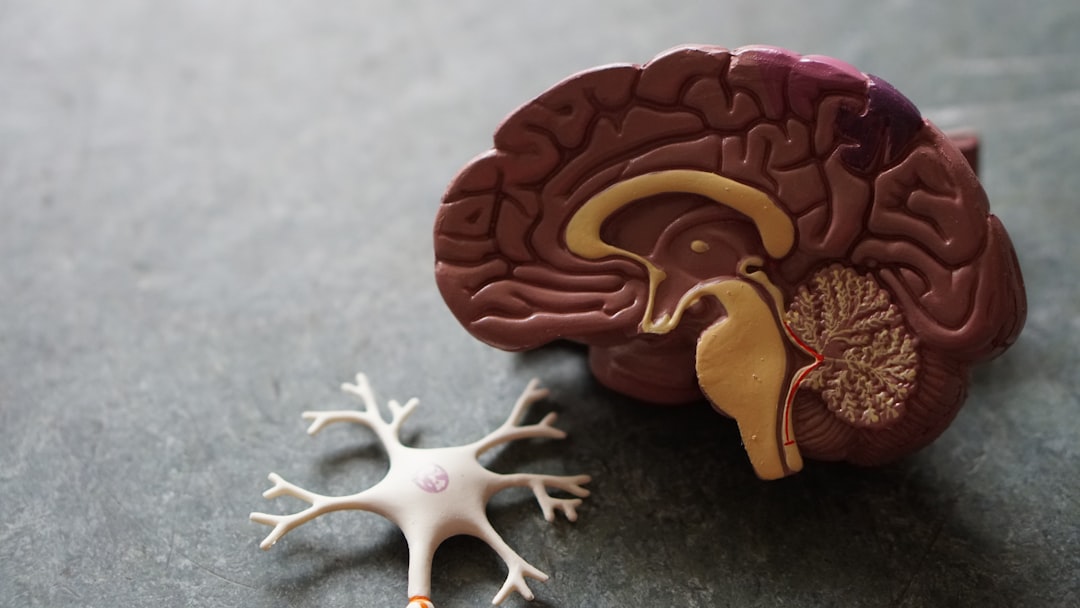
The error happens because of a well-documented cognitive phenomenon: your working memory rounds as it goes. When you’re adding numbers in sequence without writing them down, your brain doesn’t maintain exact precision. It approximates.
Here’s what happens step by step. After “1000 + 40 + 1000 + 30,” most people’s mental register reads something like “2100” instead of the correct 2070. The brain rounds the intermediate sum upward because it’s easier to track round numbers. Each subsequent addition compounds the error. By the time you’ve added four 1000s and four smaller numbers (40 + 30 + 20 + 10 = 100), your brain takes the shortcut: “four thousands plus a hundred = 5000.”
The actual sum of the small additions is 100. Four thousands is 4000. Total: 4100. The mistake isn’t in the arithmetic. It’s in how your working memory handles sequential accumulation.
Working memory and the limits of mental arithmetic
George Miller’s famous 1956 paper “The Magical Number Seven, Plus or Minus Two” established that human working memory can hold about 7 chunks of information simultaneously. When you’re doing sequential mental addition, each intermediate result occupies a chunk. Each new number added competes for that limited space.
This is why the problem specifically uses four additions of 1000 interspersed with smaller numbers. The repetitive 1000s overload your pattern-detection system. Your brain starts tracking “how many thousands have I added?” as a separate thread from “what’s the running total?” These two threads interfere with each other, and the result is an approximation error.
People who get this right tend to do one of two things: either they ignore the individual steps and just add 4000 + 40 + 30 + 20 + 10 as a single operation, or they rigorously maintain the exact running total at each step. Both strategies bypass the sequential accumulation trap.
Does getting it right mean you’re a genius?
No. And this is the important part.
Mental arithmetic speed is one tiny component of mathematical ability. Getting this puzzle right tells you something about your working memory capacity and your resistance to pattern-based shortcuts. It tells you almost nothing about your ability to do mathematics.
Srinivasa Ramanujan could see deep number-theoretic relationships that no one else could perceive, but his strength wasn’t in avoiding addition errors. It was in recognizing patterns across infinite series, partitions, and continued fractions that connected seemingly unrelated areas of mathematics. Carl Friedrich Gauss reportedly summed the integers 1 through 100 as a child by noticing the pairing trick (1+100 = 2+99 = … = 50+51 = 101, so 50 pairs × 101 = 5050). That’s not speed. That’s structural insight.
Terence Tao scored 760 on the math SAT at age 8, won an IMO gold medal at 13 (still the youngest ever), and received the Fields Medal in 2006. John von Neumann could divide eight-digit numbers in his head and made foundational contributions to quantum mechanics, game theory, and computer science. But neither would define their mathematical genius by how quickly they can add numbers in sequence.
What actually makes someone good at math
Mathematical ability decomposes into several distinct cognitive skills, and raw computation is the least important one.
Pattern recognition. Seeing structure where others see randomness. This is what separates a mathematician who notices that \(1 + 3 + 5 + 7 + … + (2n-1) = n^2\) from someone who just adds the numbers.
Abstraction. Moving from specific cases to general principles. Not just solving one equation, but understanding the class of equations it belongs to and why the solution method works.
Logical reasoning. Constructing and following chains of deduction without losing track of assumptions. This is what proof-writing develops.
Creative problem-solving. Trying unexpected approaches. The best mathematical problem-solving involves lateral thinking that no amount of drilling can produce.
Tolerance for confusion. Real mathematics involves being stuck for hours, days, or months. The ability to sit with a problem you don’t understand, without giving up or pretending you do, is maybe the most underrated mathematical skill.
The talent vs. practice debate
Anders Ericsson’s 1993 research on deliberate practice suggested that ~10,000 hours of focused training could produce expertise in most domains. Malcolm Gladwell popularized this as the “10,000-hour rule.” Carol Dweck’s growth mindset research (2006) showed that students who believe mathematical ability is developable outperform those with a fixed mindset.
Both findings matter. But in mathematics, the evidence suggests that innate spatial reasoning and working memory capacity set upper bounds. Practice without aptitude plateaus. Talent without practice stalls. You need both.
Howard Gardner’s theory of multiple intelligences (1983) identifies logical-mathematical intelligence as one of eight distinct types, arguing against the idea that a single IQ number captures human cognitive ability. Standard IQ tests measure logical reasoning, working memory, and processing speed. Mathematical research requires sustained creative thought, tolerance for ambiguity, and deep domain knowledge, dimensions that no standardized test can measure.
The International Mathematical Olympiad (IMO, since 1959) and the Putnam Competition (since 1938, where the median score is often 0 or 1 out of 120) test creative problem-solving under time pressure. They correlate with mathematical talent but don’t fully predict research ability. Many Fields Medal winners were strong but not dominant olympiad performers.
What the puzzle actually reveals
Getting the 1000+40+1000+30 puzzle wrong doesn’t mean you’re bad at math. It means your brain is doing what brains do: optimizing for speed over precision, using heuristics instead of exact computation, rounding to reduce cognitive load.
These are useful mental shortcuts in everyday life. Estimating whether you have enough cash, gauging whether you’re on time, approximating a tip. Your brain’s rounding system works perfectly for 99% of daily calculations.
The 1% where it fails? That’s where mathematics begins. The moment you notice the shortcut gave the wrong answer, and you care enough to figure out why, you’re thinking like a mathematician. Not because you computed 4100 instantly, but because you questioned the result that felt obvious.
That instinct, the refusal to accept an answer just because it feels right, is worth more than any mental math trick. And it’s something anyone can develop.
Frequently Asked Questions
Why do most people answer 5000 instead of 4100?
Working memory rounds intermediate results during sequential mental addition. The four additions of 1000 overload your pattern-detection system, causing your brain to track “number of thousands” separately from the running total. The smaller additions (40+30+20+10=100) get misprocessed, and your brain shortcuts to 4×1000+1000=5000 instead of the correct 4×1000+100=4100.
Does getting mental math puzzles wrong mean you’re bad at math?
No. Mental arithmetic speed is one small component of mathematical ability. Real mathematical skill involves pattern recognition, abstraction, logical reasoning, creative problem-solving, and tolerance for confusion. Many great mathematicians weren’t particularly fast calculators. What matters more is structural insight and the ability to question results that “feel” right.
What is working memory and how does it affect mental math?
Working memory is your brain’s short-term processing capacity. George Miller’s 1956 research showed humans can hold about 7 chunks of information simultaneously. During sequential mental addition, each intermediate result occupies a chunk. When new numbers compete for limited space, your brain approximates instead of maintaining exact precision.
Is mathematical genius innate or developed?
Both matter. Anders Ericsson’s research suggests deliberate practice builds expertise, and Carol Dweck’s growth mindset work shows that belief in developability improves performance. But innate spatial reasoning and working memory capacity appear to set upper bounds. Practice without aptitude plateaus; talent without practice stalls. The strongest mathematicians have both.
What do math competitions like the IMO actually measure?
The International Mathematical Olympiad (since 1959) tests creative problem-solving across combinatorics, geometry, number theory, and algebra under time pressure. The Putnam Competition has median scores of 0-1 out of 120, showing its extreme difficulty. These competitions correlate with mathematical talent but don’t fully predict research ability — many Fields Medal winners weren’t dominant olympiad performers.
What is Gardner’s theory of multiple intelligences?
Howard Gardner’s 1983 theory identifies eight (later nine) distinct types of intelligence, including logical-mathematical intelligence. It argues against reducing human cognitive ability to a single IQ number. Standard IQ tests measure logical reasoning and processing speed but miss sustained creative thought, tolerance for ambiguity, and deep domain knowledge — all critical for mathematical research.
Tell Google you want more of this.
Add Gaurav Tiwari as a preferred sourceOne tap, and this site shows up more often in your own Top Stories, AI Overviews and AI Mode. Remove it any time.