
 by
by
A free blogging platform is where most people write their first posts, and it’s often where the first mistake happens too, because the plan that was easy to start on isn’t always easy to leave. The best free blogging platform depends on what you want from the blog. Pick WordPress.com for flexibility, Substack for newsletter-first writing, Bear Blog for speed and minimalism and Medium when borrowed discovery matters more than ownership.
Free always has a tradeoff. What you don’t pay in money, you pay in one of these:
- ads on your pages
- platform branding you can’t remove
- monetization that is limited or gated behind a paid plan
- no custom domain on the free tier
- weak or messy exports
- fees on paid subscriptions once you start earning
Any one of these can matter more than the monthly price.
The rule I want you to carry through this page: avoid any free plan that blocks the migration, ownership or monetization you’ll need later. Everything below is that rule applied to 8 platforms.
I’ve used every platform on this list at some point, most of them across multiple active blogs, and I’ve migrated content off several of them. Moving a blog out teaches you more about a platform than any feature list does. So this ranking rests on three questions: what are you trying to do, how much control matters to you and how easy is it to leave.
The 8 Best Free Blogging Platforms
- WordPress.com for the most flexible free tier with a real migration path to self-hosted
- Medium for built-in audience reach and zero setup friction
- Substack for email newsletters with monetization baked in
- Ghost trial for 14 days to test the best publication software before deciding
- Bear Blog for minimalist markdown blogs with zero tracking
- Mataroa for 100% free, open source, no dark patterns
- Blogger for the lowest-friction Google account blog
- Tumblr for microblogging with a social layer
What Free Means on Each Platform
Free isn’t one thing. The 8 platforms here run on four different models, and the model tells you the tradeoff before you sign up.
- Freemium: WordPress.com, Medium and Substack let you publish free, then charge for domains, memberships or a cut of paid-subscriber revenue.
- Ad-supported: Blogger and Tumblr keep the entry cost at zero, but the platform controls the experience around your writing.
- Time-limited trial: Ghost(Pro) is useful for testing Ghost, but the hosted product is not a permanent free blog.
- Indie and donation-funded: Bear Blog and Mataroa keep the product intentionally small, fast and portable.
How I Judged These Platforms
I want to be clear about what this ranking is and isn’t. It isn’t a lab benchmark. It’s what I noticed writing on these platforms and, more than anything, what happened when I tried to leave each one. Every platform was checked on the same four things:
- time from signup to the first published post
- how the editor holds up after the tenth post, not the first
- what the export contains and what it quietly drops
- what you lose – domain, readers, URLs – when you move out
The export check is the one most reviews skip. A platform that traps your content isn’t free. It’s rented.
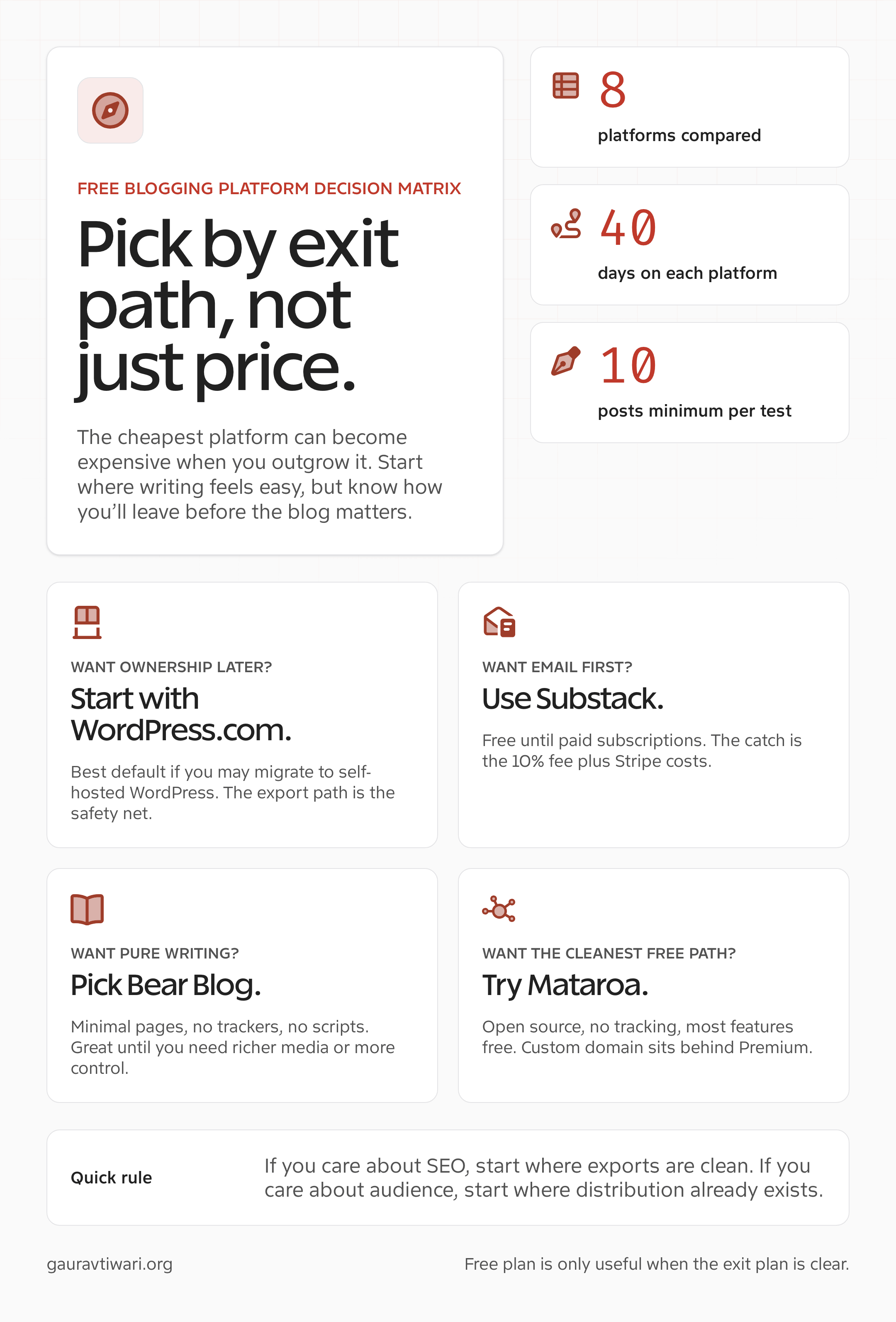
Free Blogging Platforms Compared
Find the column that matters most to you, then jump to that platform below.
| Platform | Free Tier | Custom Domain Free | Ads Shown | Export Format | Best For |
|---|---|---|---|---|---|
| WordPress.com | Yes, 1GB | No, paid plan | Yes | WXR XML | Flexible blogs |
| Medium | Yes, publishing free | No, membership required | No display ads | HTML archive | Reaching readers |
| Substack | Yes, unlimited | No, $50 setup | No | Subscriber CSV + post archive | Newsletters |
| Ghost | 14-day trial | Yes during trial or paid plan | No | JSON + CSV exports | Testing Ghost |
| Bear Blog | Yes, unlimited | No, paid plan | No | Markdown | Minimalists |
| Mataroa | Yes, unlimited | No, $9/year Premium | No | Markdown + epub/static exports | Indie writers |
| Blogger | Yes, unlimited | Yes, bring your domain | Optional AdSense | XML/Atom | Casual blogs |
| Tumblr | Yes, unlimited | No free custom domain | Yes | Dashboard export | Microblogging |
1. WordPress.com
Best for: writers who want real ownership potential and might self-host later.
WordPress.com’s free tier gives you 1GB of storage, a wordpress.com subdomain, unlimited pages and posts and the block editor. It doesn’t give you a custom domain, plugin installation, an ad-free site or Google Analytics. That’s the shape of it: it feels like the best free blogging platform right up to the day you need business-level control.
What matters more than the feature list is that your content stays portable. WordPress.com exports a full WXR file that imports into self-hosted WordPress with posts, pages, comments, tags and media intact. I’ve moved several blogs off WordPress.com this way and the exports just work. Only Ghost handles export as well.
The free tier is capped hard, though:
- no plugins
- no custom themes outside the built-in selection
- no e-commerce
When the blog grows past basic publishing, you either upgrade to a paid WordPress.com plan, from $2.75/month on three-year billing or $4/month annually, or migrate to self-hosted WordPress.
What it doesn’t do well: the free tier is slow next to Bear Blog or Mataroa, and the dashboard is cluttered with upgrade prompts. If you want a clean writing screen on day one, this isn’t it.
2. Medium
Best for: writers who care more about readers than ownership.
Medium gives you instant distribution. A strong essay can still find readers through recommendations, tags, publications and Medium’s member network. No other platform on this list has an audience waiting on day one.
The tradeoff is that you’re borrowing that audience, not owning it. Medium monetization depends on Partner Program eligibility, member reading time, Stripe and tax setup. It can work. It is not an asset you control the way an email list or a self-hosted blog is.
Medium’s editor is the cleanest writing experience on this list: distraction-free, aggressive auto-save and smart handling of quotes, images and embeds. I still draft in it even when the piece is going somewhere else.
What it doesn’t do well: export is terrible. Medium hands you individual HTML files with broken image references and missing metadata, so moving a 200-post archive to WordPress means cleaning up post after post. That’s the trap. The audience feels free until you try to leave.
3. Substack
Best for: writers building an email audience with eventual paid subscriptions.
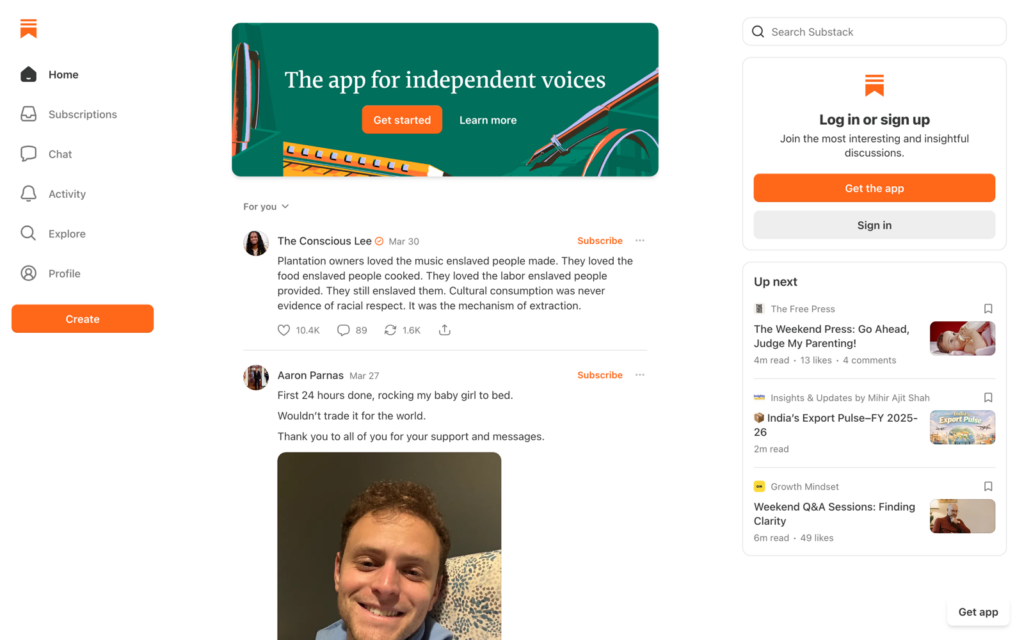
Substack handles the three hardest parts of newsletter publishing: email delivery with strong deliverability, paid subscription management and audience growth through recommendations. The free tier has no caps on subscribers, posts or emails sent.
The bill arrives when you turn on paid tiers. Substack takes 10% of subscription revenue, and Stripe processing sits on top of that, 2.9% + $0.30 on card payments plus a recurring billing fee. That’s expensive next to self-hosted publishing, but you’re paying for infrastructure you’d otherwise have to build.
The editor is minimal and the reader interface is clean. The recommendations network can grow a newsletter faster than a fresh blog with no distribution. A custom domain isn’t free, though – Substack charges a one-time $50 platform fee once you bring your own.
What it doesn’t do well: Substack is a blogging platform that pretends not to be one. Individual posts don’t rank well in Google and SEO control is almost absent. If search traffic matters as much as email, pair Substack with Ghost or WordPress. For pure email-first publishing at zero dollars, it’s hard to beat.
4. Ghost
Best for: writers testing whether Ghost fits before committing to a paid hosted plan.
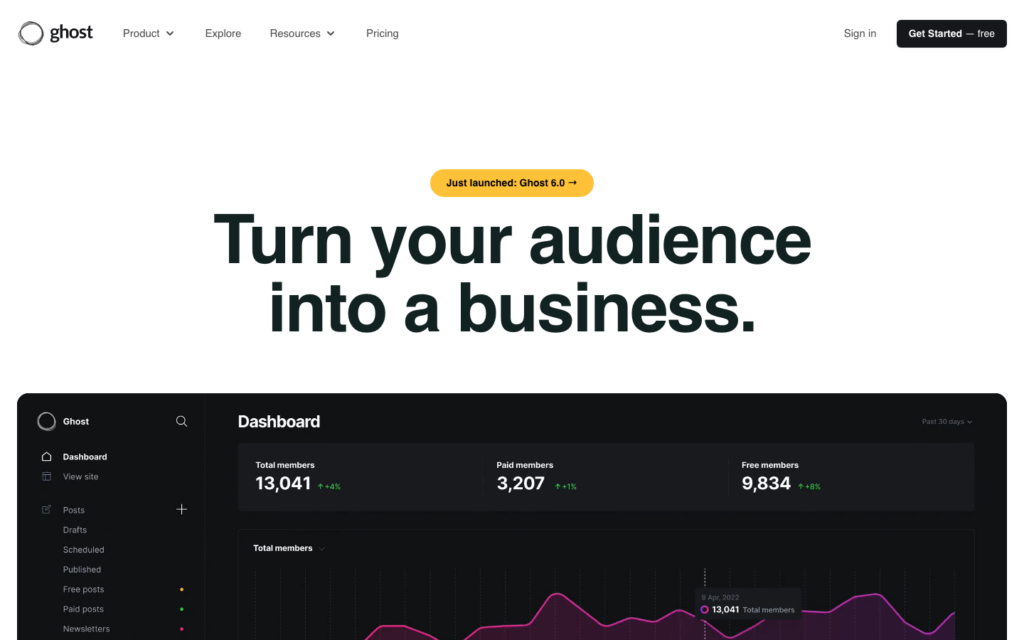
Ghost isn’t free. But the 14-day trial on Ghost(Pro) gives you every paid feature, a custom domain and full export access, which is enough time to migrate a small blog, test the editor and decide.
Ghost’s editor is the best markdown-first writing environment I’ve used, and the publication setup (themes, navigation, members, subscriptions) is cleaner than WordPress for pure publishing. If you publish essays and newsletters, Ghost is the software most likely to get out of your way.
The trial matters because Ghost(Pro) pricing starts at $18/month billed yearly for Starter, with Publisher at $29/month and Business at $199/month. You want to know the editor, export, members and newsletter tools fit before that invoice starts.
What it doesn’t do well: Ghost isn’t built for complex content types. No e-commerce, limited forms and no plugin ecosystem. If the blog will eventually need custom features, WordPress is the better long-term home even though Ghost is nicer to write in.
5. Bear Blog
Best for: writers who want zero tracking, zero ads and minimalist design.
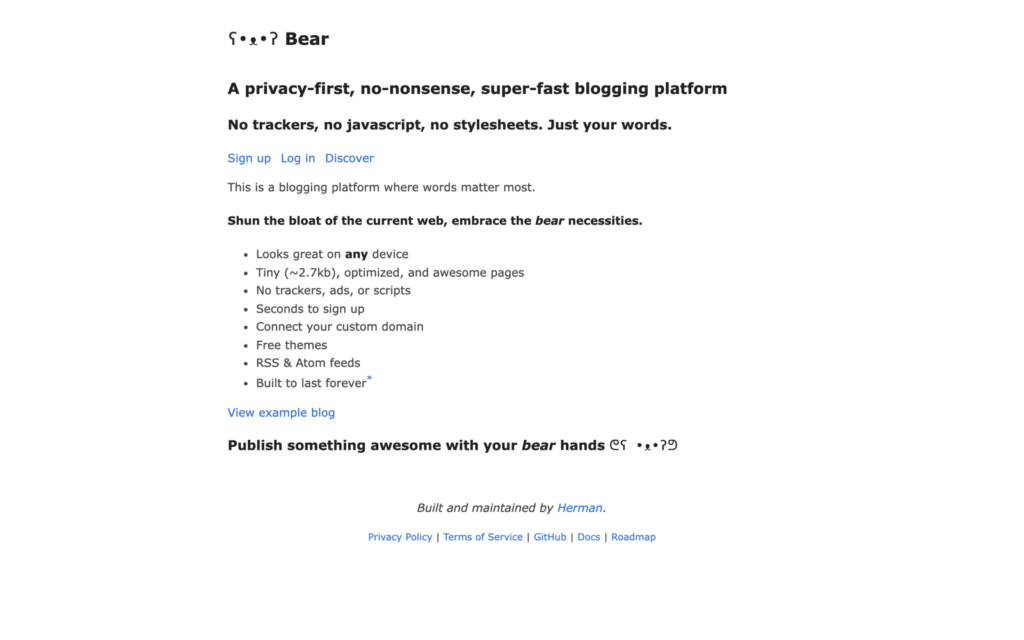
Bear Blog is what blogging looked like before the internet discovered engagement metrics. A one-column layout, a markdown editor and no JavaScript on the rendered page. Pages load almost instantly because there’s nothing on them to load.
The free tier is generous:
- unlimited posts
- unlimited visitors
- an analytics dashboard
- RSS and Atom feeds
- a bearblog.dev subdomain
Custom domains exist in Bear’s dashboard, but they’re a paid-plan feature, not a free-tier reason to choose it.
Bear has a discover feed that surfaces new posts to other Bear readers. It’s a small community but an engaged one, and the culture is thoughtful essays and technical writing rather than listicles and affiliate spam.
What it doesn’t do well: no images on the free tier without external hosting, no rich media, no plugins and no obvious escape if you outgrow it. Bear Blog is limited on purpose. That’s the point, and it’s worth knowing before you start.
6. Mataroa
Best for: writers who want a philosophically clean free blog with no upgrade pressure.
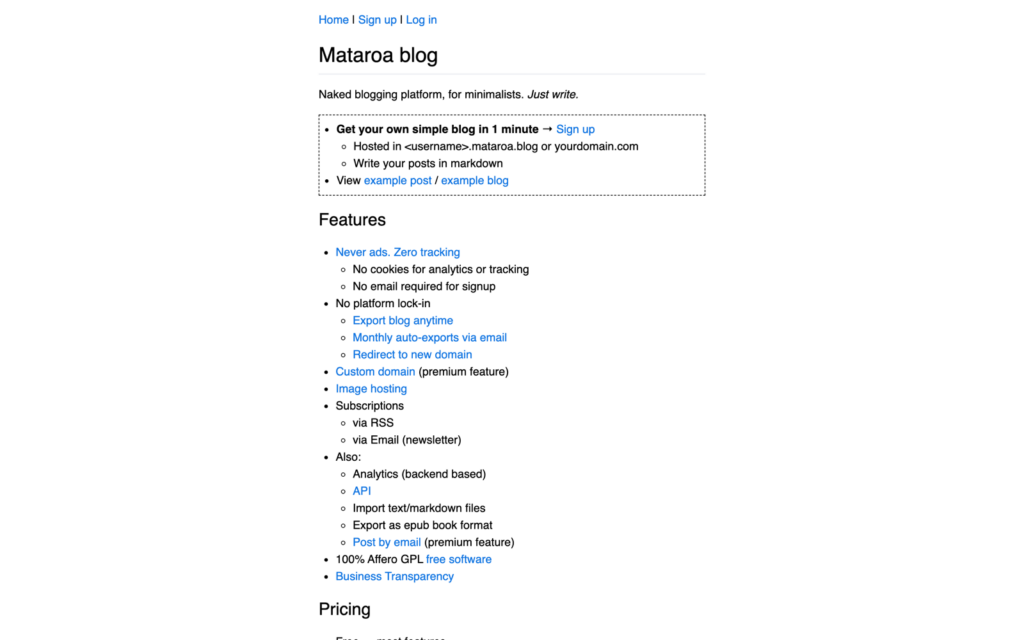
Mataroa is an open-source, donation-funded blogging platform built by one developer. Free accounts get a mataroa.blog subdomain, a markdown editor, analytics, RSS, email subscriptions and clean exports. Custom domains are reserved for Premium.
Premium is unusually cheap at $9/year. It adds every feature, including custom domains and post-by-email, and 5% of revenue goes toward carbon removal. No dark patterns, no loud upgrade pressure.
Mataroa’s export is the best on this list. The whole blog comes out as a zip with Markdown files, images, epub and print formats and Zola or Hugo static-site versions. And because the software is open source, you can self-host the same thing if you outgrow the hosted service.
What it doesn’t do well: no themes beyond basic typography, no membership features and no newsletter integration beyond RSS-to-email tools. A small user base also means a smaller community and fewer templates to learn from.
7. Blogger
Best for: casual writers who already have a Google account and don’t care about modern features.

Blogger has been free since Google bought Pyra Labs in 2003. It’s still free, it still doesn’t charge for a custom domain you bring yourself and it still runs AdSense on your content if you opt in.
The platform hasn’t been meaningfully updated in roughly a decade. The editor looks like 2015 and the themes look like 2010. But the posts sit on Google’s infrastructure, so they don’t go down, they get indexed fast and old Blogger URLs carry SEO value that is very much alive.
What it doesn’t do well: Google could shut Blogger down whenever it decides to, and you’d have no say in it. The platform feels abandoned. I wouldn’t start a new blog here, but if you have an old Blogger with 18 years of posts, don’t migrate yet. The SEO equity is real.
8. Tumblr
Best for: short-form writers mixing text, images and reblogs.
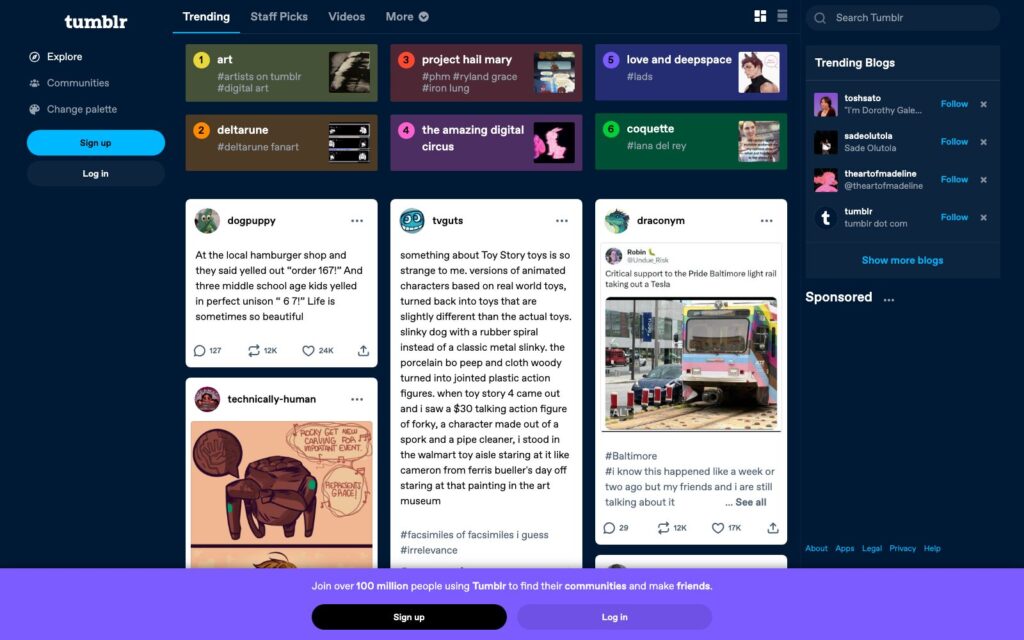
Tumblr survived the 2018 adult content ban, was bought by Automattic (the WordPress.com company) in 2019 and still has a niche but active community. Free accounts get unlimited posts, custom themes and a tumblr.com subdomain. Custom domains now live in Tumblr’s paid or hosted-domain world, not on the free plan.
What Tumblr does well is the social layer. Posts get reblogged, liked and replied to, and they travel through the community on their own. No other platform here has that kind of built-in social reach for microblogs.
What it doesn’t do well: long-form writing feels out of place here. Tumblr is built for short posts, image dumps and quick reactions, and essays past 1,000 words rarely go anywhere. If you want to write long-form, go elsewhere.
Platforms That Missed the List
A few platforms came close, and I want to say why they’re not above. Listing every place that lets you type would make this page longer and less useful. The goal is to pick the free blogging platform that won’t punish you later.
- Hashnode is strong for developer blogs, but too narrow for a general best free blogging platform recommendation.
- Wix and Weebly have free plans, but the branding and upgrade pressure make them weaker for writers than WordPress.com, Bear Blog or Blogger. If your real goal is a small site instead of a blog, compare my best free website builders guide.
- Ghost is excellent publishing software, but Ghost(Pro) is a trial-led paid product, not a true free hosted blogging platform.
- Substack is free to publish on, but paid subscriptions carry Substack and Stripe fees, so it stops being free the day monetization starts.
- Medium offers discovery, but the platform relationship matters more than design control or long-term ownership.
Which Platform to Pick for Your Goal
Building a personal brand with essays and long-form: WordPress.com, with a plan to move to self-hosted within 6 months. The free tier gets you started, the paid tiers get expensive and self-hosted is the only long-term home if you want to start a blog that can become a business.
Building an email list with paid subscriptions: Substack for the first 1,000 subscribers, then look at Ghost or self-hosted WordPress when you’re ready to make money blogging without giving up 10% forever.
Writing thoughtful essays without platform noise: Bear Blog or Mataroa. Both are deliberately minimal. Bear Blog has more community traction and Mataroa has the better export.
Publishing for reach and discoverability: Medium. Accept the tradeoffs and keep your drafts in another system, so you can leave when the monetization rules change again.
Migrating a legacy blog: stay where you are unless the platform is dead. Broken URLs, lost SEO equity and reformatting effort usually cost more than the switch is worth.
The Ownership Question
Every free platform eventually asks you to pay for something:
- a custom domain
- ad removal
- analytics
- paid subscriptions
- storage
You will pay at some point. What varies is how much of your content, audience and SEO equity you keep when you do.
WordPress.com, Ghost and Mataroa score highest on portability. Medium and Substack score lowest. If you want a fuller setup path, use my blogging checklist before you commit.
FAQs on Free Blogging Platforms
Which free blogging platform is best for beginners in 2026?
WordPress.com for flexibility and a clear migration path to self-hosted, or Bear Blog for simplicity. Skip Medium if you ever want to own your audience. Skip Blogger if you want modern features. Substack only makes sense if you’re specifically building a newsletter.
Can I make money on a free blogging platform?
Yes, but the paths are narrow. Medium requires Partner Program eligibility. Substack takes 10% of paid subscriptions plus Stripe processing. Blogger allows AdSense if you qualify. WordPress.com’s free tier includes WordPress.com ads and limits monetization tools, so serious affiliate or product monetization belongs on a paid plan or self-hosted WordPress.
Do free blogging platforms work with Google for SEO?
Yes, but control varies. WordPress.com, Blogger, Bear Blog, Mataroa, and Ghost publish crawlable pages. Medium has discovery, but limited SEO control. Substack works better for email than search. Self-hosted WordPress still wins when you need full SEO control, schema, redirects, analytics, and internal linking.
Can I use a custom domain on a free blogging platform?
Blogger is the cleanest free host for a domain you already bought. Substack charges a one-time $50 platform fee. WordPress.com, Bear Blog, and Mataroa require paid plans for custom domains. Ghost(Pro) supports custom domains during the trial and paid plans, but it is not a permanent free host.
How hard is it to migrate from a free platform later?
Varies wildly. WordPress.com and Ghost export cleanly to full archives. Mataroa exports Markdown plus epub, print, Zola, and Hugo versions. Medium’s export needs cleanup. Substack exports subscriber data and post archives, but the formatting is not as clean as a real CMS export.
Should I start on a free platform or pay for self-hosted from day one?
Start free if you’re unsure whether you’ll keep blogging. Hosting a self-hosted WordPress site costs $3-$10/month plus a domain. That’s cheap but not free. Free platforms remove the commitment friction. Just pick one with good export (WordPress.com, Ghost, Mataroa) so switching later isn’t painful.
Is Medium still worth it in 2026?
Yes for reach, no for ownership. Medium still gives a good essay its best chance of finding readers on day one through recommendations, tags and publications, and the editor is the nicest on this list. But the audience stays Medium’s, Partner Program earnings depend on member reading time and the export is the weakest here. Publish on Medium for discovery and keep your drafts in a system you control.
What’s the best free platform for a newsletter?
Substack for built-in subscription management, strong deliverability, and the recommendations network. Beehiiv has a free tier too (up to 2,500 subscribers) with better analytics. For maximum ownership, use a free MailerLite account and publish blog posts on WordPress.com, then push posts to email through RSS.
Final Remarks
The best free blogging platform is the one you’ll actually use, with an exit strategy you know in advance.
WordPress.com is the safest default for most new bloggers. Substack wins for newsletters. Bear Blog wins for minimalists. Everything else serves a specific use case and carries a specific tradeoff.
Being extreme about free isn’t a good idea either way – neither squeezing a growing blog onto a plan that fights you, nor paying for hosting before you know you’ll keep writing. Start free, pick the one with a clean export and decide again around post 50.
Don’t pick on features. Pick on how easy it is to leave when you outgrow it. That’s the only free metric that matters.
Tell Google you want more of this.
Add Gaurav Tiwari as a preferred sourceOne tap, and this site shows up more often in your own Top Stories, AI Overviews and AI Mode. Remove it any time.
Disclaimer: This site is reader-supported. If you buy through some links, I may earn a small commission at no extra cost to you. I only recommend tools I trust and would use myself. Your support helps keep gauravtiwari.org free and focused on real-world advice. Thanks. - Gaurav Tiwari