by
by
Most “best blogging courses” lists have the incentives backwards. They reward the biggest video library, the loudest income promise, or the highest commission. None of that tells you whether a course will fix the part of blogging that is actually holding you back.
My rule is simpler: don’t buy a course until you can name the bottleneck. If you need WordPress basics, search-led content, or a repeatable publishing habit, the best material is free. Pay only when sequence, feedback, or a specialist community will change what you do next.
Quick verdict: Start with Ahrefs Blogging for Business for search-led content and Beginner WordPress User for site skills. Pay for Project 24 only if you need an ordered program and community. Choose Food Blogger Pro only for a food blog. If writing is the bottleneck, buy Everybody Writes before another course.
The best blogging course depends on the bottleneck
There is no universal best blogging course because “blogging” hides several different jobs. Building the site, finding demand, writing clearly, creating a business model, and staying accountable are separate problems. Buy the wrong solution and you get a polished library that gathers digital dust.
| Resource | Cost | Best for | Skip it when |
|---|---|---|---|
| Ahrefs Blogging for Business | Free | Search-led content strategy | You mainly need WordPress setup help |
| Beginner WordPress User | Free | WordPress setup and publishing skills | You need audience or monetization strategy |
| Blogging for Devs | Free | Developers and technical founders | Your audience is outside technology |
| Project 24 | $499 first year; $299 renewals | An ordered program and peer community | You still aren’t applying free material |
| Food Blogger Pro | $350/year, $99/quarter, or $35/month | Food blogging, photography, video, and community | You are not building a food blog |

Free blogging courses are enough for the foundations
A beginner does not need a $500 answer to a $0 question. Use free material until the remaining problem is feedback, sequence, or access to people working through the same decisions.
Ahrefs Blogging for Business
This is the strongest free blogging course when your problem is choosing topics and turning them into search-led content. It treats blogging as a system for earning attention, not a diary with an SEO plugin attached.
- 40 lessons across 11 modules, with a listed runtime of 4 hours and 56 minutes
- Free access without signup
- Covers search demand, intent, topic selection, content quality, promotion, and backlinks
- Does not teach WordPress setup, a full monetization model, or provide a learning community
Pair it with my keyword research guide when you need a working method for turning the theory into a topic list.
Beginner WordPress User
Use this when WordPress itself, not the business model, is the bottleneck. It is the official route and a better foundation than a creator’s screen recording from an obsolete dashboard.
- 24 lessons with an estimated duration of 4 hours
- Covers posts, pages, the Block Editor, the Site Editor, media, navigation, security, backups, and basic SEO
- Includes a private demo site for practice
- Does not choose a niche, validate demand, or design a revenue plan for you
Blogging for Devs
This is the most relevant free option for developers, makers, technical managers, and founders who want a blog to create reach or career opportunities. The audience fit is the product.
- A free 7-day email course by Monica Lent
- Covers discoverability, useful topic selection, repurposing, email-list growth, and a writing-led personal brand
- Designed around publishing one strong technical article and distributing it
- Too narrow for a lifestyle, food, local-business, or general consumer blog
Free is not the same as incomplete. These resources cover site operation, search-led content, and technical publishing. What they do not provide is one coach or community responsible for keeping you moving.
Paid programs must buy you structure or feedback
Information alone is a weak reason to pay. The useful part of a paid blogging course is the order of operations, access to current answers, and a community that exposes mistakes before you repeat them for months.
Project 24
Project 24 is the stronger general paid option for a beginner who wants a sequence and community, but $499 is too much if you still have unused free courses in another tab.
- $499 for the first year and $299 for each renewal year
- Includes a step-by-step website and content program, community, member podcast, and broader creator-business material
- The “24” is a goal, not a promise that a blog will replace a job in 24 months
- Community answers are not the same as individual mentoring from the instructors
Do not buy Project 24 for a secret traffic trick. Buy it only if an ordered system and peer support will make you execute more consistently.
Food Blogger Pro
Food Blogger Pro is the best specialist pick here, and a poor general pick. Its value comes from treating recipe publishing, photography, video, food SEO, and monetization as one connected practice.
- $350 per year, $99 per quarter, or $35 per month
- 92 listed courses and more than 350 step-by-step lesson videos
- Includes a private forum, monthly member calls, coaching calls, and specialist guidance
- Its food-specific depth becomes wasted subscription cost for most other niches
Blogging books and ebooks age better than tactics
Courses are good at showing a current interface. Books are better at giving you a durable way to think. These 5 survive because they solve different problems: clean nonfiction, web writing, attention, audience questions, and the content-first business model.
Everybody Writes
Buy Everybody Writes first when the problem is the sentence on the page. Ann Handley is stronger on clear, useful web writing than on traffic, WordPress, or monetization.
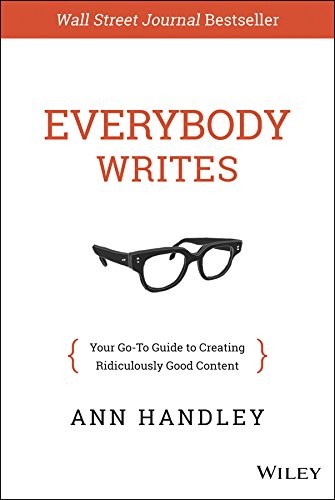
Everybody Writes by Ann Handley
- Practical rules for clearer web writing and editing
- Useful across blog posts, email, landing pages, and social copy
- Strong on voice and reader usefulness, not traffic acquisition
On Writing Well
Buy On Writing Well when your drafts are bloated, stiff, or written to impress other writers. William Zinsser’s case for clarity, simplicity, and revision is less trendy than most creator advice, which is exactly why it lasts.
On Writing Well by William Zinsser
- Teaches clarity, economy, structure, and disciplined revision
- Useful for tutorials, essays, explainers, and opinion-led posts
- Not a traffic, SEO, platform, or monetization manual
The Art and Business of Online Writing
Buy The Art and Business of Online Writing when decent ideas keep dying at the headline. Nicolas Cole is strongest on packaging ideas for digital attention, writing with sharper specificity, and understanding why technically correct posts still get ignored.
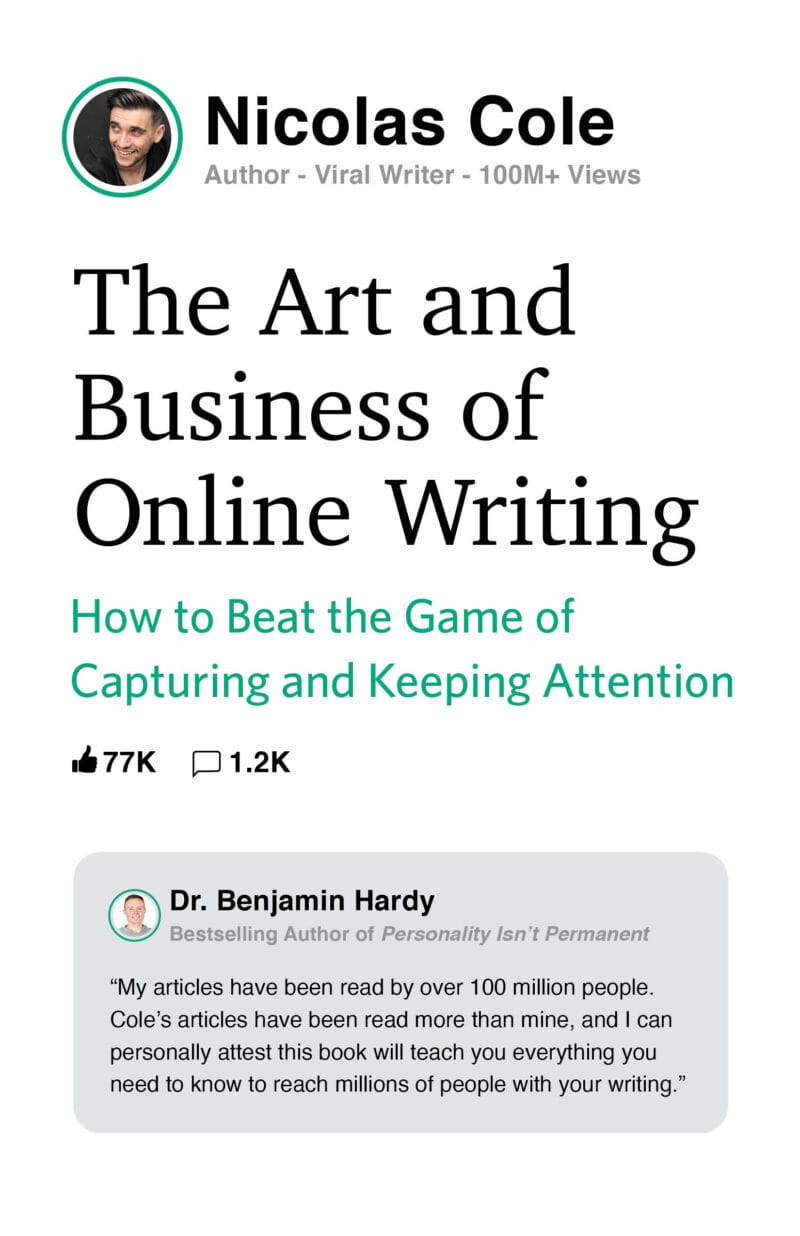
The Art and Business of Online Writing by Nicolas Cole
- Explains headlines, hooks, specificity, structure, and digital readability
- Connects writing craft to attention and consistent online publishing
- Stronger on packaging and distribution than SEO or WordPress
They Ask, You Answer
Buy They Ask, You Answer when topic selection is the problem. Marcus Sheridan’s core position is demanding and useful: answer the questions buyers actually ask, including the awkward ones that weak content avoids.
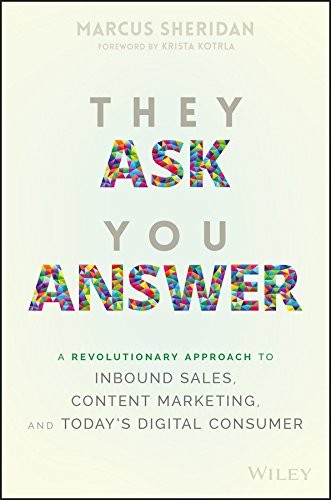
They Ask, You Answer by Marcus Sheridan
- Builds content around real audience questions and objections
- Especially useful for commercial and lead-generating blogs
- Stronger on content strategy than prose, setup, or design
Content Inc.
Buy Content Inc. when you can publish but have no business logic behind the publication. Joe Pulizzi’s audience-first model is useful for choosing a distinct position, building attention before adding revenue, and avoiding a pile of unrelated topics.
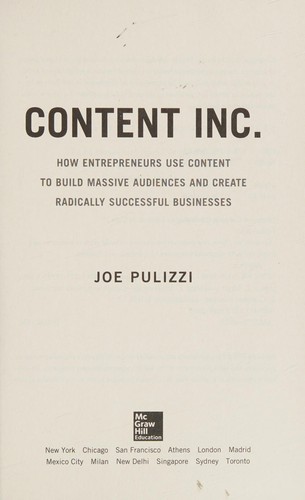
Content Inc., Second Edition by Joe Pulizzi
- Starts with a focused content position and a defined audience
- Builds audience before adding several revenue streams
- Less useful when basic writing or WordPress operation is the problem
If you want to connect the audience-first model to a working editorial plan, use the content marketing strategy guide after you choose the book.
Popular options I would not make core picks
A familiar brand name is not enough. A recommendation has to match the product a beginner can buy now, not the course remembered from an old review.
Skillshare
Skillshare is a class marketplace, not one coherent blogging curriculum. It can be useful when you know the exact narrow skill you need, but it is a bad default for someone already drowning in disconnected advice.
Authority Hacker
Authority Hacker’s main public paid product is now AI Accelerator, a program for AI systems and business operations. That may suit an established operator, but it is not current beginner-blogging course guidance. Old reviews should not be treated as a current buying page.
A course does not count until it changes the next post
The fastest way to waste a course is to treat completion as the outcome. The useful output is a changed decision on a real site.
- Name one bottleneck. Site setup, topic selection, writing, distribution, monetization, or accountability. Pick one.
- Choose one resource. Do not stack a course, 3 newsletters, 5 books, and a podcast around the same problem.
- Produce one artifact. Build a 10-topic map, rewrite the opening, publish the post, or create the monetization offer.
- Review the result. Decide what changed and what remains stuck before buying the next resource.
If the remaining bottleneck is revenue rather than learning, use the guide to making money from a blog to compare the actual business models before buying more education.
Frequently asked questions
These are the decisions that still matter after the shortlist.
What is the best blogging course for beginners?
Start with Beginner WordPress User for site skills and Ahrefs Blogging for Business for search-led content. Project 24 becomes worth considering only when you need an ordered paid program and community.
Are paid blogging courses worth it?
A paid blogging course is worth it when sequence, feedback, accountability, or specialist access changes your execution. It is poor value when you are paying only for information you have not applied from free sources.
Which blogging book should a beginner read first?
Choose On Writing Well for lean nonfiction, Everybody Writes for web copy, The Art and Business of Online Writing for attention, They Ask, You Answer for audience questions, or Content Inc. for the business model. Start with the bottleneck, not the bestseller list.
How much should a beginner spend on blogging education?
Start at $0. Spend only after publishing enough to identify a specific problem that free courses, official documentation, and deliberate practice are not solving.
Buy less. Publish more.
A course can shorten the route. It cannot walk it for you. Choose one resource, attach it to one publishing decision, and stop shopping until the work exposes the next real problem.
If the site itself does not exist yet, skip the course checkout and use my WordPress start-a-blog guide to get the first post live.
Tell Google you want more of this.
Add Gaurav Tiwari as a preferred sourceOne tap, and this site shows up more often in your own Top Stories, AI Overviews and AI Mode. Remove it any time.
Disclaimer: This site is reader-supported. If you buy through some links, I may earn a small commission at no extra cost to you. I only recommend tools I trust and would use myself. Your support helps keep gauravtiwari.org free and focused on real-world advice. Thanks. - Gaurav Tiwari