10 Best Animes on Hulu to Watch Right Now
 by
by
Most people who bounce off anime didn’t pick a bad show. They picked a good show in the wrong place: episode 1 of a 500-episode run, a sequel that assumes two hundred episodes of backstory, or the 2003 adaptation when everyone recommending it meant the 2009 one.
The vocabulary is the first wall, and it’s a wall built out of a misunderstanding. Shonen, seinen, josei, and shojo get thrown around like genres. They aren’t genres. Sort that out and most of the confusion around what to watch, and in what order, goes with it.
Quick Navigation
- Shonen, seinen, shojo, and josei are audiences, not genres
- Subbed or dubbed
- Watch order is where beginners actually get lost
- The studios worth knowing by name
- 10 Best Animes on Hulu
- Tokyo Ghoul
- Naruto Shippuden
- Ranma ½
- Death Note
- Inuyasha
- Bleach
- Demon Slayer: Kimetsu no Yaiba
- Yu Yu Hakusho
- Fullmetal Alchemist: Brotherhood
- My Hero Academia
- Three of these are still in motion
- Frequently asked questions
Shonen, seinen, shojo, and josei are audiences, not genres
Those four words describe who a manga was originally serialized for, not what happens inside it. They’re the Japanese publishing industry’s demographic brackets, roughly the way a magazine rack is organized, and they got carried over to anime because almost every series here started as a manga.
That’s why the labels feel useless when you treat them as genres. Death Note is shonen. So is Naruto Shippuden. One is a psychological thriller about a teenager who commits mass murder with a notebook, the other is a war epic about ninja. The bracket tells you which magazine paid for it, not what you’re about to watch.
- Shonen targets teenage boys. Weekly Shonen Jump, published by Shueisha, is the famous one, and it ran Naruto, Bleach, Death Note, and Demon Slayer.
- Shojo targets teenage girls. Expect more weight on relationships and interior life, though the action shows in this bracket hit as hard as any.
- Seinen targets adult men. Tokyo Ghoul sits here, and the difference is real: more violence, slower moral questions, less certainty that the hero is right.
- Josei targets adult women. Smaller category in anime than in manga, and generally the most grounded writing of the four.
- Kodomomuke targets young children. Doraemon and Pokemon live here.
Use them as a rating and a tone signal, not a content filter. A seinen title is telling you it will not soften things for a fourteen-year-old. It’s not telling you the plot.
Subbed or dubbed
Start with whichever one you’ll actually finish. This argument has been running for thirty years and it stopped being interesting once English dubs got good, which they did somewhere around the mid-2000s.
There are two places the choice genuinely matters. Currently airing shows get subtitled simulcasts within hours of the Japanese broadcast, while a dub lands weeks or months later, so watching something as it airs usually means reading. And a handful of dubs are strong enough that longtime fans prefer them: Yu Yu Hakusho and Fullmetal Alchemist: Brotherhood both belong on that list.
If you want dubbed specifically, the catalog matters more than the platform, since dub availability is patchy across services. There’s a fuller breakdown in the guide to websites for watching English dubbed anime.
Watch order is where beginners actually get lost
Anime watch order breaks in a way western television mostly doesn’t, because weekly anime often catches up to the manga it is adapting and has to do something to fill the gap. What it does instead is invent episodes. Those are called filler, they rarely touch the main plot, and long series are full of them.
Four traps account for most of the confusion, and all four show up in the list below.
- A sequel with a different name. Naruto Shippuden is part two of Naruto, not a spin-off. Watch the 220-episode original first.
- A final arc adapted a decade later. Bleach: Thousand-Year Blood War continues the 2012 series rather than restarting it, which is why the animation looks like a different show.
- Two adaptations of one manga. The 2003 Fullmetal Alchemist overtook its source and invented an ending. Brotherhood, from 2009, adapts the finished manga. Watch Brotherhood.
- A remake that restarts from episode one. MAPPA’s Ranma ½ is not a continuation of the 1989 series. It covers the same opening chapters again.
For the long ones, community episode guides list exactly which numbers are filler. Skipping them is normal and costs you nothing.
The studios worth knowing by name
The studio is the single most reliable predictor of what a series will look like, and six of them account for every show on this list. Once you start noticing the name in the opening credits, you can guess a lot about pacing and fight choreography before the first episode ends.
- Studio Pierrot built the long-running shonen model: Naruto, Bleach, Yu Yu Hakusho, and Tokyo Ghoul. Enormous episode counts, and quality that rises and falls with the arc.
- Bones is the reliability pick. Fullmetal Alchemist: Brotherhood and My Hero Academia both hold their animation quality across long runs.
- Madhouse made Death Note, and specializes in tightly adapted series that end when the story ends.
- ufotable made Demon Slayer, and its compositing work is the reason that series became a phenomenon rather than another solid shonen.
- Sunrise made Inuyasha, alongside decades of mecha work including Gundam.
- MAPPA is the current heavyweight, and it’s the studio behind the ongoing Ranma ½ remake.
10 Best Animes on Hulu
These ten cover the range worth knowing: two complete masterpieces you can finish this month, three long-running institutions, and a few that are still being made. Each entry lists who made it, how long it runs, whether it’s finished, and what it assumes you have already seen.
Streaming rights move constantly between services and between countries, so check what’s currently available where you are rather than trusting any list, including this one.
Tokyo Ghoul
Kaneki Ken survives a date that nearly kills him, wakes up with his attacker’s organs inside him, and spends the rest of the series as a half-ghoul who has to eat people to live. The horror isn’t the gore. It’s watching a quiet college kid negotiate with what he’s becoming.
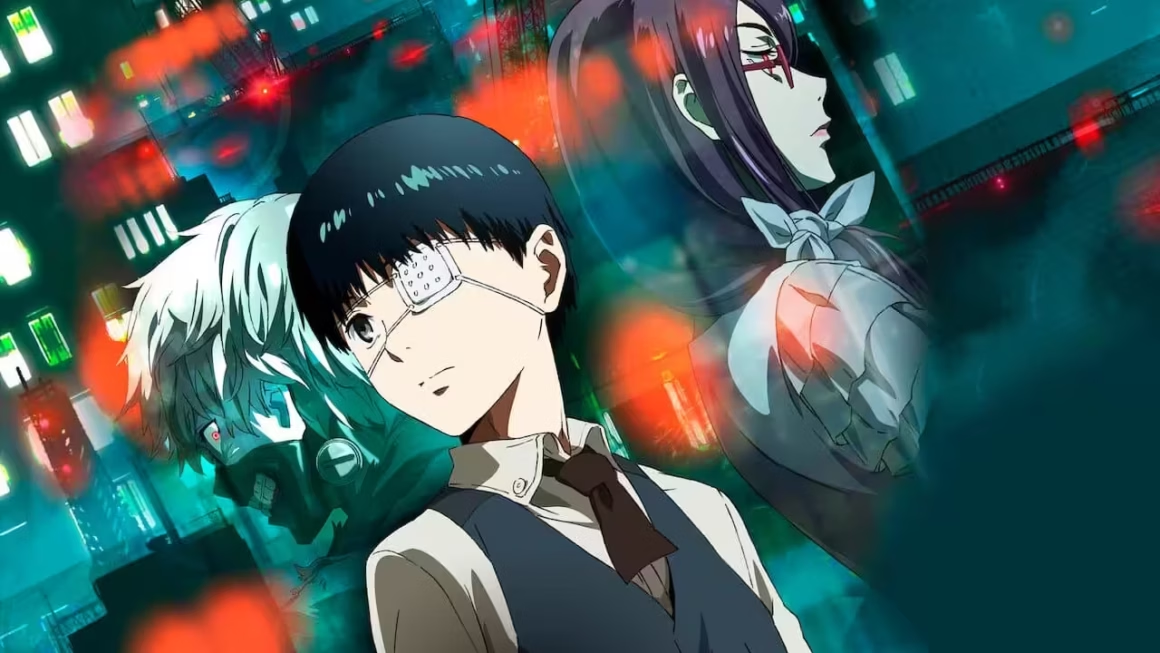
- Studio: Studio Pierrot
- Source: manga by Sui Ishida, 2011 to 2018
- Run: 2014 to 2018, four seasons, 48 episodes
- Audience label: seinen, and it earns the rating
- Status: the anime is finished, though it doesn’t finish the story
Season 2, Tokyo Ghoul √A, leaves the manga and writes its own ending. :re then picks up from where the manga actually went, so it can feel like you missed an episode. You didn’t. If you want the whole story, the manga is the only complete version.
Naruto Shippuden
Naruto comes back to his village after two years of training and walks into a war. This is the half of the story where the stakes stop being about passing an exam and start being about who gets to survive.
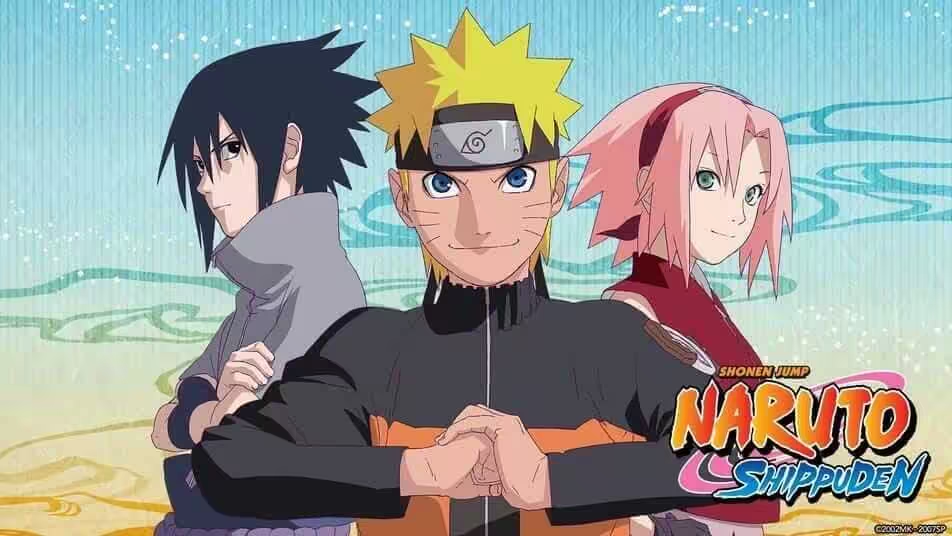
- Studio: Studio Pierrot
- Source: manga by Masashi Kishimoto, 1999 to 2014
- Run: 2007 to 2017, 500 episodes
- Audience label: shonen
- Status: complete
This is part two. The original Naruto is 220 episodes and comes first. Between the two you’re looking at 720 episodes, a large share of it filler. Nobody watches all of it, and you shouldn’t feel obligated to.
Ranma ½
Ranma Saotome falls into a cursed spring in China and comes out with a condition: cold water turns him into a girl, hot water turns him back. He’s also been engaged, without being asked, to a girl who can’t stand him. Rumiko Takahashi builds an entire comedy engine out of that and runs it for years.
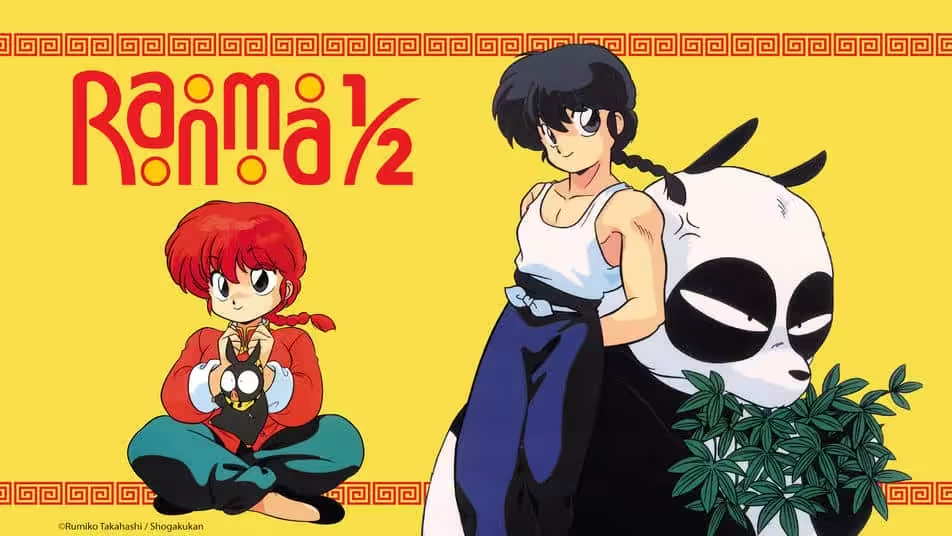
- Studio: Studio Deen for the 1989 run, MAPPA for the current one
- Source: manga by Rumiko Takahashi, 1987 to 1996
- Run: 1989 to 1992 originally; the MAPPA version started October 2024
- Audience label: shonen romantic comedy
- Status: the remake is ongoing, with season three set for October 3, 2026
Two different shows share this name. The MAPPA version is a remake, not a sequel, so it restarts from the beginning with modern animation and a tighter adaptation of the manga. Start there unless you specifically want the 1989 original.
Death Note
A high school student finds a notebook that kills anyone whose name he writes in it, decides he should be the one who decides who lives, and gets hunted by a detective who is exactly as clever as he is. It’s a two-person chess match stretched over 37 episodes, and it never once needs a fight scene.
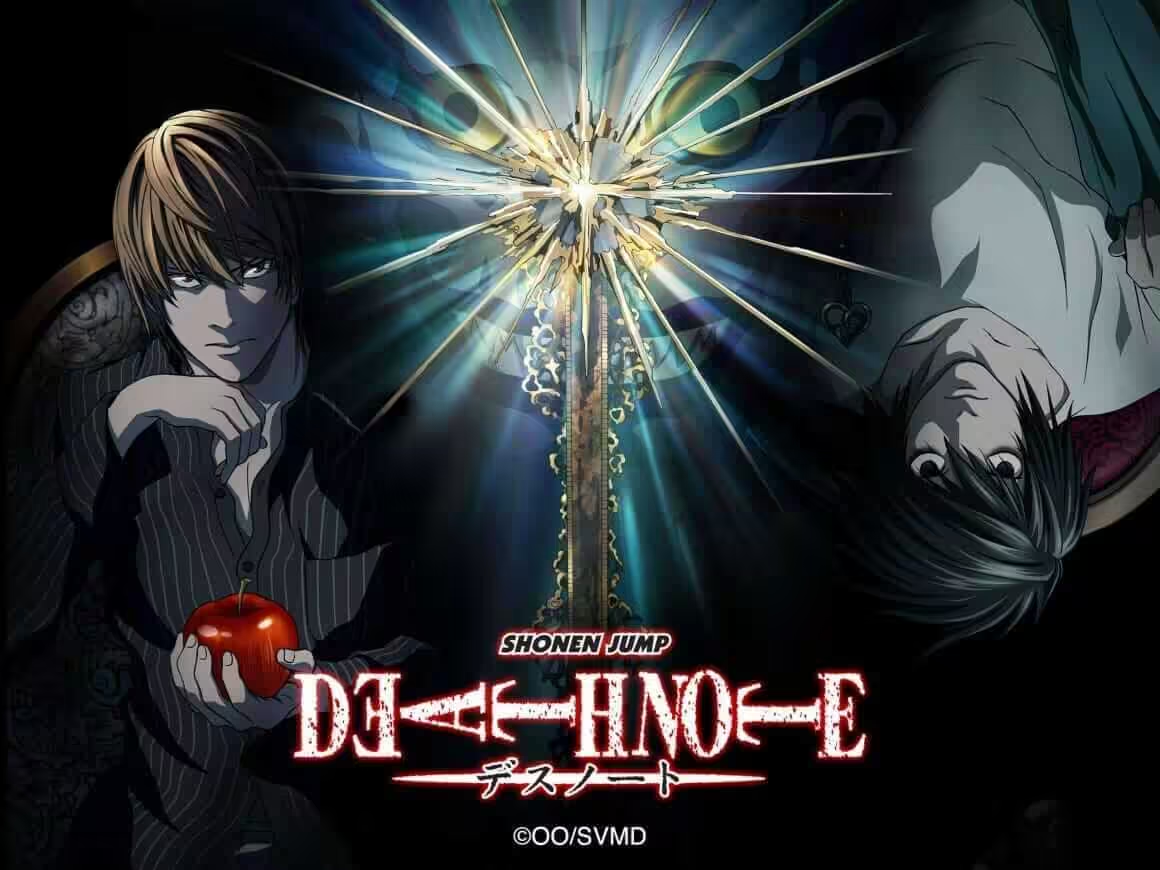
- Studio: Madhouse
- Source: manga written by Tsugumi Ohba, drawn by Takeshi Obata, 2003 to 2006
- Run: 2006 to 2007, 37 episodes
- Audience label: shonen, which surprises people given the subject matter
- Status: complete, and it ends properly
If you’ve never watched anime and want to know whether you’ll like it, watch this one. It’s short, it’s self-contained, there’s no filler, and it doesn’t ask you to accept any genre conventions before it starts working.
Inuyasha
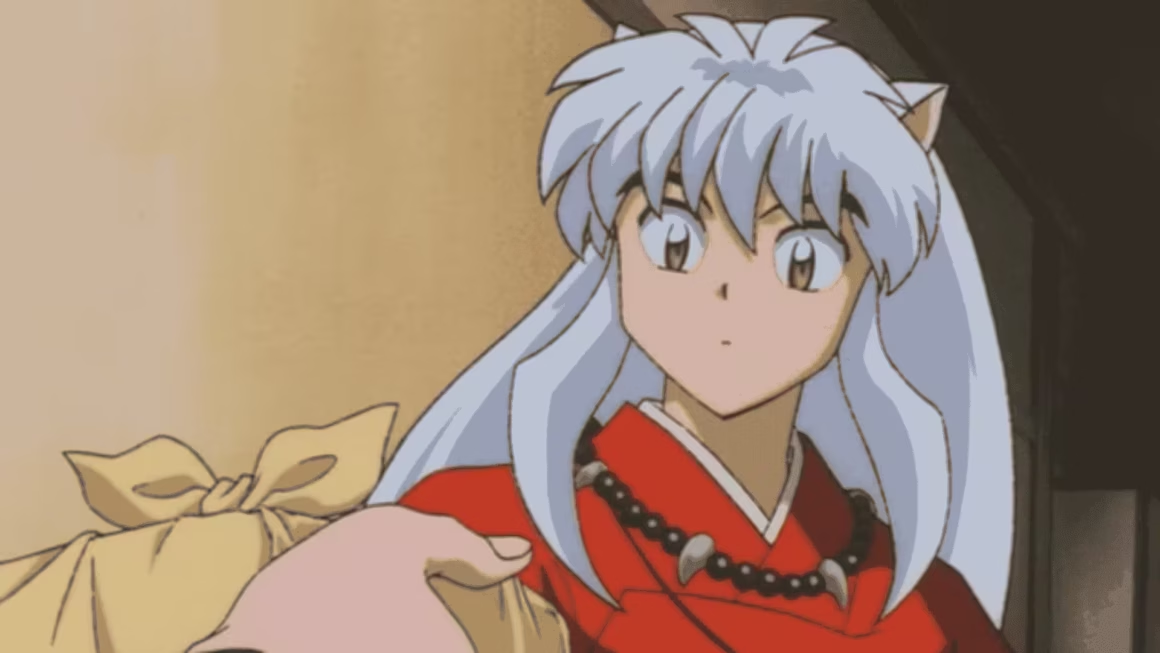
A modern schoolgirl falls down a well into feudal Japan and ends up bound to a half-demon with a bad attitude. They spend the series hunting fragments of a shattered jewel, which is the excuse the story uses to keep them traveling together long enough to matter.
- Studio: Sunrise
- Source: manga by Rumiko Takahashi, 1996 to 2008
- Run: 2000 to 2004, 167 episodes, plus The Final Act in 2009 with 26 more
- Audience label: shonen
- Status: complete across both runs
The original series ran out of manga and stopped without an ending. The Final Act came back five years later specifically to finish it, and it moves fast because it’s compressing a lot of source material. You need both.
Bleach
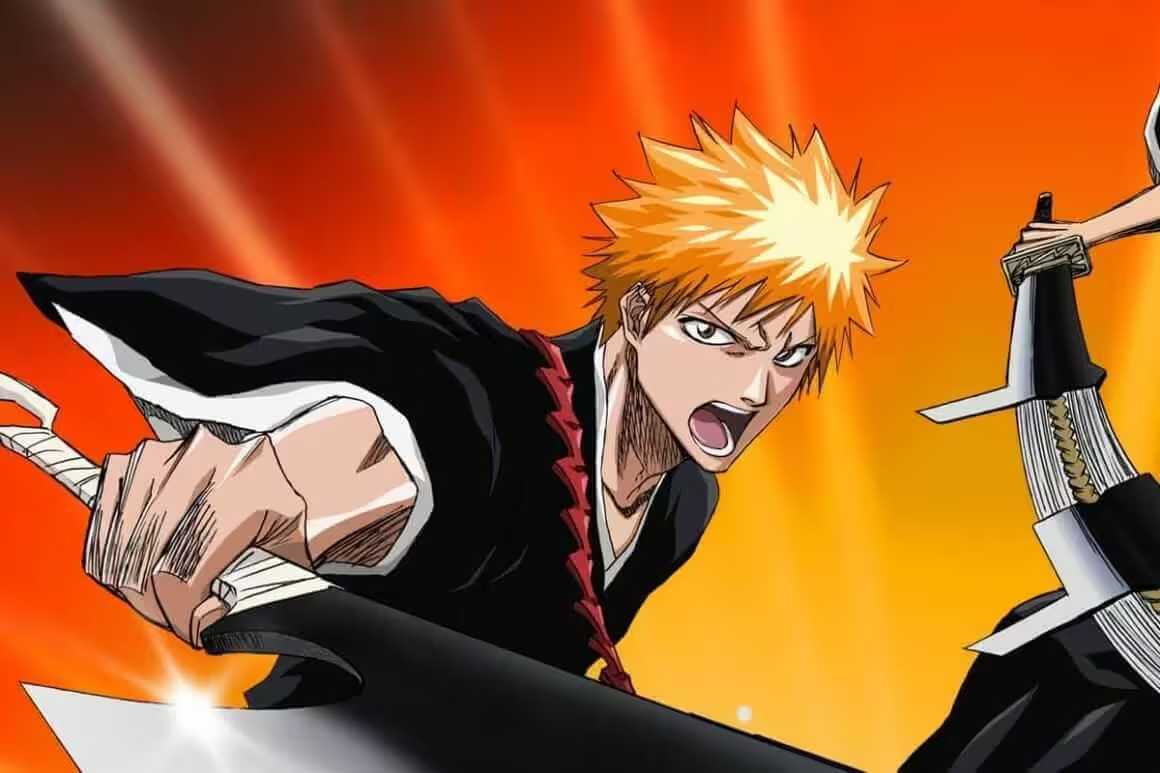
Ichigo Kurosaki inherits the job of a Soul Reaper and finds out the afterlife has a bureaucracy, a military, and a long list of people who want him dead. Tite Kubo’s real talent is designing fights that look like nothing else on television.
- Studio: Studio Pierrot
- Source: manga by Tite Kubo, 2001 to 2016
- Run: 2004 to 2012, 366 episodes, then Thousand-Year Blood War from 2022
- Audience label: shonen
- Status: the final arc is airing now
Thousand-Year Blood War isn’t a reboot. It picks up the final arc the 2012 series never adapted, and it looks like a different show because a decade of production technique sits between them.
Demon Slayer: Kimetsu no Yaiba
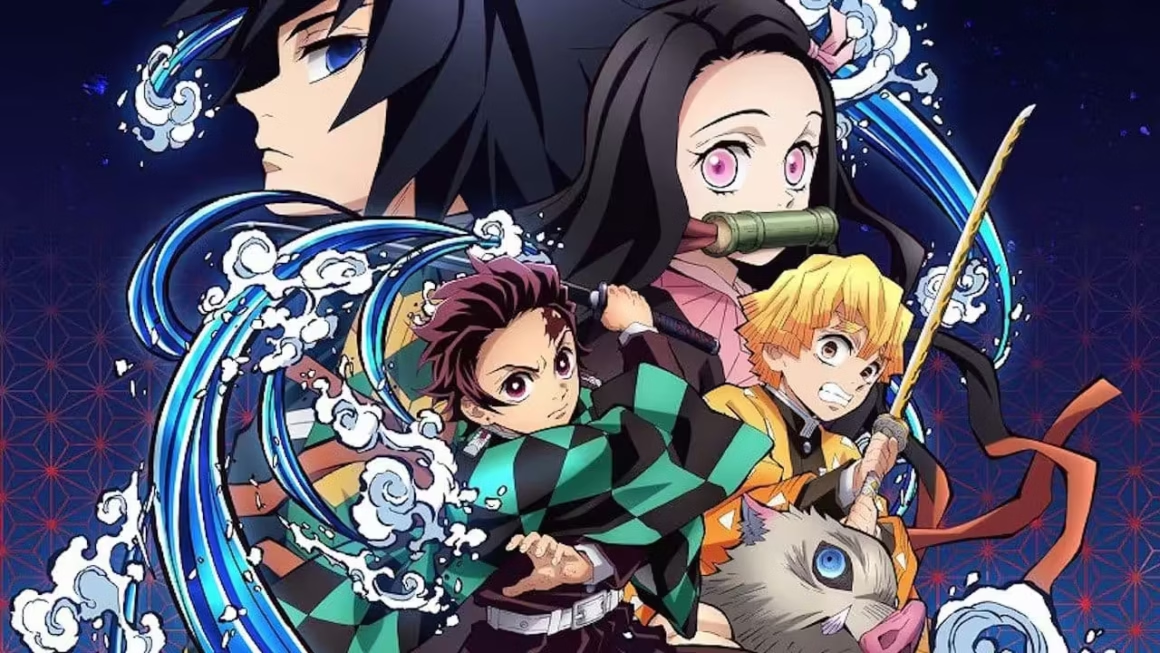
Tanjiro comes home to find his family killed and his sister turned into a demon, then spends the series trying to turn her back. The plot is simple on purpose. What people actually show up for is ufotable’s animation, which is doing things the rest of the industry hasn’t matched.
- Studio: ufotable
- Source: manga by Koyoharu Gotouge, 2016 to 2020
- Run: 2019 onward, across television seasons and theatrical films
- Audience label: shonen
- Status: ongoing, finishing as a film trilogy
The ending is being released in cinemas rather than on television. Infinity Castle part one arrived in 2025. Part two is aimed at 2027 and the finale at 2029, and neither has a confirmed date, so this is the one series here where finishing it means waiting years.
Yu Yu Hakusho
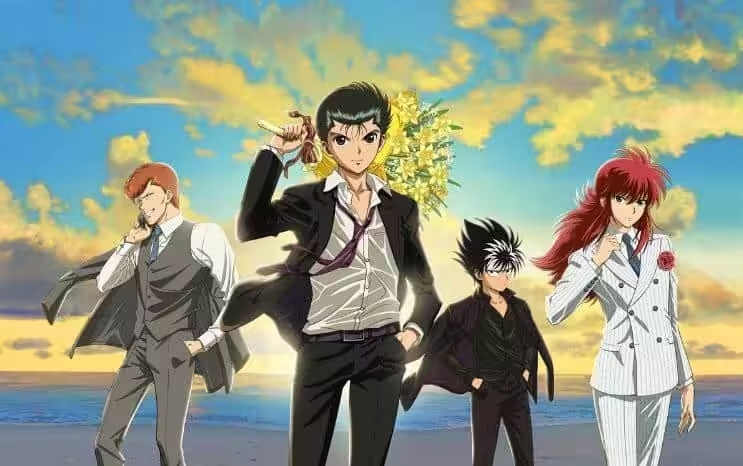
Yusuke Urameshi dies in the first episode saving a child, which nobody in the spirit world expected of him, and gets offered his life back as a detective policing demons. It’s a 1990s tournament show that keeps undercutting its own genre.
- Studio: Studio Pierrot
- Source: manga by Yoshihiro Togashi, 1990 to 1994
- Run: 1992 to 1995, 112 episodes
- Audience label: shonen
- Status: complete
Togashi went on to write Hunter x Hunter, and you can see him working out the ideas here first. The English dub is one of the few from that era that people still prefer to the original.
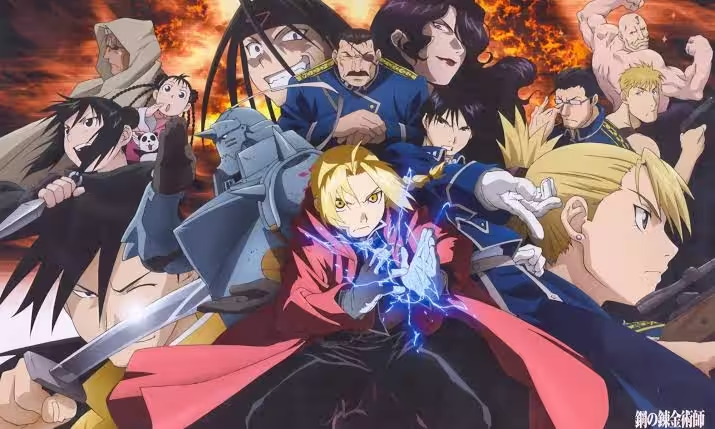
Fullmetal Alchemist: Brotherhood
Two brothers try to bring their mother back with alchemy, fail catastrophically, and spend the series paying for it. One loses an arm and a leg. The other loses his whole body and ends up a soul bound to a suit of armor. Everything that follows earns its ending.
- Studio: Bones
- Source: manga by Hiromu Arakawa, 2001 to 2010
- Run: 2009 to 2010, 64 episodes
- Audience label: shonen
- Status: complete, with no filler
There are two Fullmetal Alchemist anime. The 2003 one caught up to the manga and invented its own ending. Brotherhood adapts the finished manga start to finish. When someone recommends Fullmetal Alchemist without qualifying it, they mean this one.
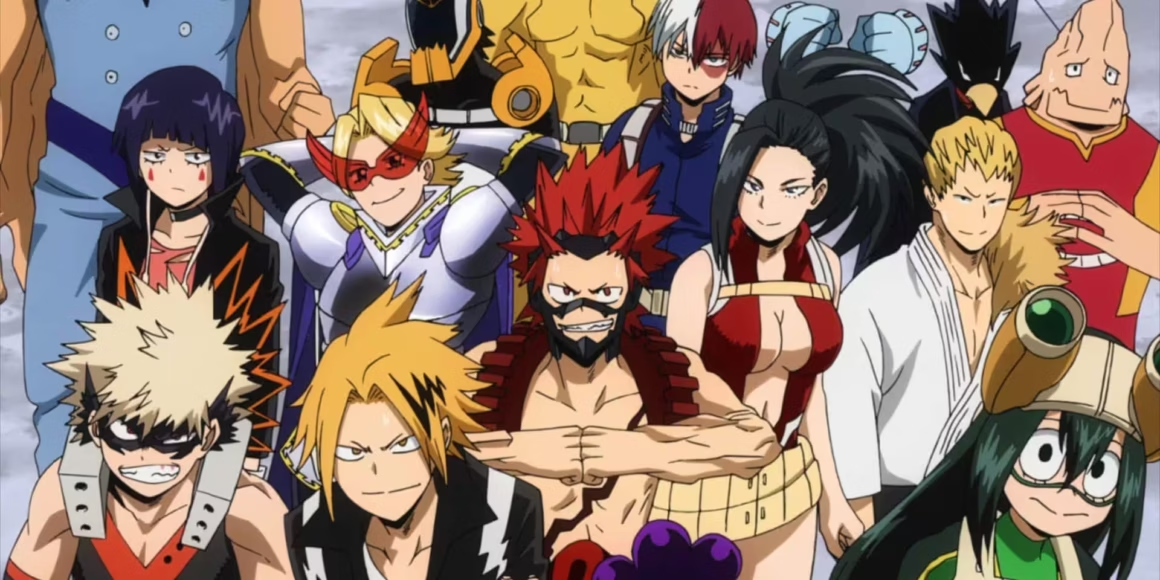
My Hero Academia
In a world where most people are born with a superpower, Izuku Midoriya is born without one and still wants to be a hero. The premise sounds like a Saturday cartoon. The last two seasons are considerably darker than that.
- Studio: Bones
- Source: manga by Kohei Horikoshi, 2014 to 2024
- Run: 2016 to 2025, eight seasons
- Audience label: shonen
- Status: complete
The final season ran 11 episodes from October to December 2025, with a bonus episode following in May 2026. That makes this the rare long-running shonen you can start today knowing it has an ending.
Three of these are still in motion
Seven of the ten are finished and can be watched start to end whenever you want. Three can’t, and the difference changes whether you should begin them now.
- Bleach: Thousand-Year Blood War is airing its final part, The Calamity, which began on July 25, 2026 and runs ten weekly episodes through late September. It adapts the last stretch of Tite Kubo’s manga and closes the main story.
- Ranma ½ returns for a third season on October 3, 2026.
- Demon Slayer is finishing as a cinema trilogy. Part one arrived in 2025, with the second aimed at 2027 and the last at 2029. Neither has a confirmed date.
If you want to watch something while it airs, Bleach is the one that is live right now. If you’d rather not wait years for an ending, start with Death Note or Fullmetal Alchemist: Brotherhood instead.
Frequently asked questions
What is the difference between shonen, seinen, shojo, and josei?
They describe the audience a manga was originally published for, not its genre. Shonen targets teenage boys, shojo teenage girls, seinen adult men, and josei adult women. That’s why a shonen title like Death Note can be a psychological thriller while another shonen title is a sports comedy. The label tells you which magazine ran it, not what happens in it.
Should I watch anime subbed or dubbed?
Whichever one you’ll actually finish. Dubs produced in the last decade are generally strong, and a few older ones such as Yu Yu Hakusho and Fullmetal Alchemist: Brotherhood are considered better than the originals by a lot of viewers. Subtitles get you simulcasts within hours of the Japanese broadcast, so currently airing shows are usually subtitled first.
Do I need to watch Naruto before Naruto Shippuden?
Yes. Shippuden is the second half of one continuous story and opens two years after the original ends. Starting at Shippuden means missing how every relationship in it was built. The combined run is roughly 720 episodes, a large portion of which is filler, so most viewers use an episode guide to skip the anime-original arcs.
Is Fullmetal Alchemist: Brotherhood the same as the 2003 Fullmetal Alchemist?
No. The 2003 series caught up to an unfinished manga and wrote its own ending. Brotherhood, released in 2009 by Bones, adapts the completed manga from beginning to end across 64 episodes. They share a premise and diverge sharply. When people recommend Fullmetal Alchemist without specifying, they mean Brotherhood.
Which of these series are actually finished?
Death Note, Fullmetal Alchemist: Brotherhood, Yu Yu Hakusho, Naruto Shippuden, Inuyasha, and My Hero Academia are all complete. Tokyo Ghoul finished as an anime without finishing its story. Bleach is airing its final arc now, the Ranma remake is ongoing, and Demon Slayer is completing as a film trilogy.
What is filler and how do I avoid it?
Filler is anime-original content written to stop a weekly show from overtaking the manga it adapts. It rarely affects the main plot and is often noticeably weaker. Long-running series such as Naruto Shippuden and Bleach carry hundreds of filler episodes, and community-maintained episode guides list exactly which numbers to skip.
Which of these should I start with if I have never watched anime?
Death Note or Fullmetal Alchemist: Brotherhood. Both are complete, both are free of filler, and neither asks you to accept genre conventions before it works. Death Note runs 37 episodes and Brotherhood runs 64, so either one tells you whether the medium suits you without a hundred-hour commitment.
Is the new Ranma one half a remake or a sequel?
A remake. The MAPPA version that began in October 2024 restarts the story from the beginning rather than continuing the 1989 Studio Deen series. Season three is scheduled to begin on October 3, 2026. Newcomers should start with the remake.
Pick one finished series and watch it to the end before you start a second. The most common way people quit anime is by sampling six shows at once, getting lost in three different continuities, and deciding the medium is confusing. It isn’t. It just has more sequels with different names than you are used to.
If a title on this list is not streaming in your country, there are other routes: a comparison of anime streaming sites worth using, a roundup of anime apps for iOS and Android, and a guide to reading the source manga when the anime stops short of the ending.
Tell Google you want more of this.
Add Gaurav Tiwari as a preferred sourceOne tap, and this site shows up more often in your own Top Stories, AI Overviews and AI Mode. Remove it any time.