
 by
by
The best anime apps in 2026 are not 15 subscriptions you should install. Crunchyroll is the best primary app for most viewers. Add 1 legal free fallback and 1 tracker, then stop. More icons do not create more time to watch.
This ranking rewards usable mobile apps, legal catalogs, clear regional value, and honest limitations. It punishes broad services that happen to carry a few anime titles, even when their brand is enormous.
The shortlist in 30 seconds
Choose by job, not logo. A good 3-app setup covers paid viewing, free viewing, and tracking without turning the phone into a subscription graveyard.
- Best paid default: Crunchyroll for an anime-first catalog and app.
- Best if already subscribed: Netflix for app polish and a selective anime shelf.
- Best free route in India and much of Asia: YouTube through licensed publisher channels.
- Best India bundle: JioHotstar, but only after the title search.
- Best specialist rotation: HIDIVE when its exclusives justify tolerating the app.
- Best tracker: MyAnimeList; it organizes the watchlist but does not stream anime.
Compare the 15 apps
The best anime apps earn a slot by solving a specific job. This comparison of anime apps for iOS and Android separates that job from the marketing around it. Region and watchlist decide the final order.
| Rank | App | Best use | Cost model | Region | Main catch |
|---|---|---|---|---|---|
| 1 | Crunchyroll | One anime-first subscription | Subscription-led | Broad, catalog varies | Dubs and titles vary by country |
| 2 | Netflix | Existing subscribers and app polish | Subscription | Broad, catalog varies | Anime is one shelf, not the product |
| 3 | YouTube | Licensed free channels in Asia | Free with ads | Channel and title dependent | Official uploads mix with piracy |
| 4 | JioHotstar | Indian household bundles | Free and paid tiers | India-focused | Anime is not foregrounded |
| 5 | Prime Video | Existing Prime households | Included, rental and purchase | Broad, marketplace dependent | A confusing mixed storefront |
| 6 | HIDIVE | Niche titles and exclusives | Subscription | Limited footprint | Weak mobile app ratings |
| 7 | Tubi | Free anime where available | Free with ads | Selected countries | Not available in India |
| 8 | Hoopla | Library-card access | Free through a library | Participating libraries | Borrow limits and catalogs vary |
| 9 | Hulu | US television bundles | Subscription | United States | Poor anime-only value |
| 10 | Disney+ | Selective exclusives | Subscription | Broad, catalog varies | Anime is a side category |
| 11 | BiliBili | Southeast Asian viewers | Free and paid access | Southeast Asia | Not a worldwide default |
| 12 | RetroCrush | Classic anime | Free and paid access | Selected countries | A deliberately narrow era |
| 13 | Viki | Asian drama viewers | Free and paid access | Broad, title dependent | Not anime-first |
| 14 | Pluto TV | Free live anime channels | Free with ads | Selected countries | Less on-demand control |
| 15 | MyAnimeList | Tracking and discovery | Free | Broad | It does not stream anime |
The apps, ranked
Every entry gets the same treatment: what it is good for, how payment works, where it runs, and the catch. The order reflects the likelihood of getting from a title search to a legal episode without wasting money or time.
Crunchyroll
Crunchyroll is the best default because the app and catalog are both built around anime. The official listing advertises more than 2,000 titles, simulcasts, multiple languages, offline viewing on eligible tiers, and support across phones, tablets, and TVs.
- Best for: viewers who want 1 primary anime service.
- Cost model: free app download with in-app memberships; do not assume the full catalog is free. In the US, it’s also a channel inside the Prime Video app.
- Platforms: iOS and Android.
- Main catch: the listing itself says dub availability varies, and licensing still changes by country.
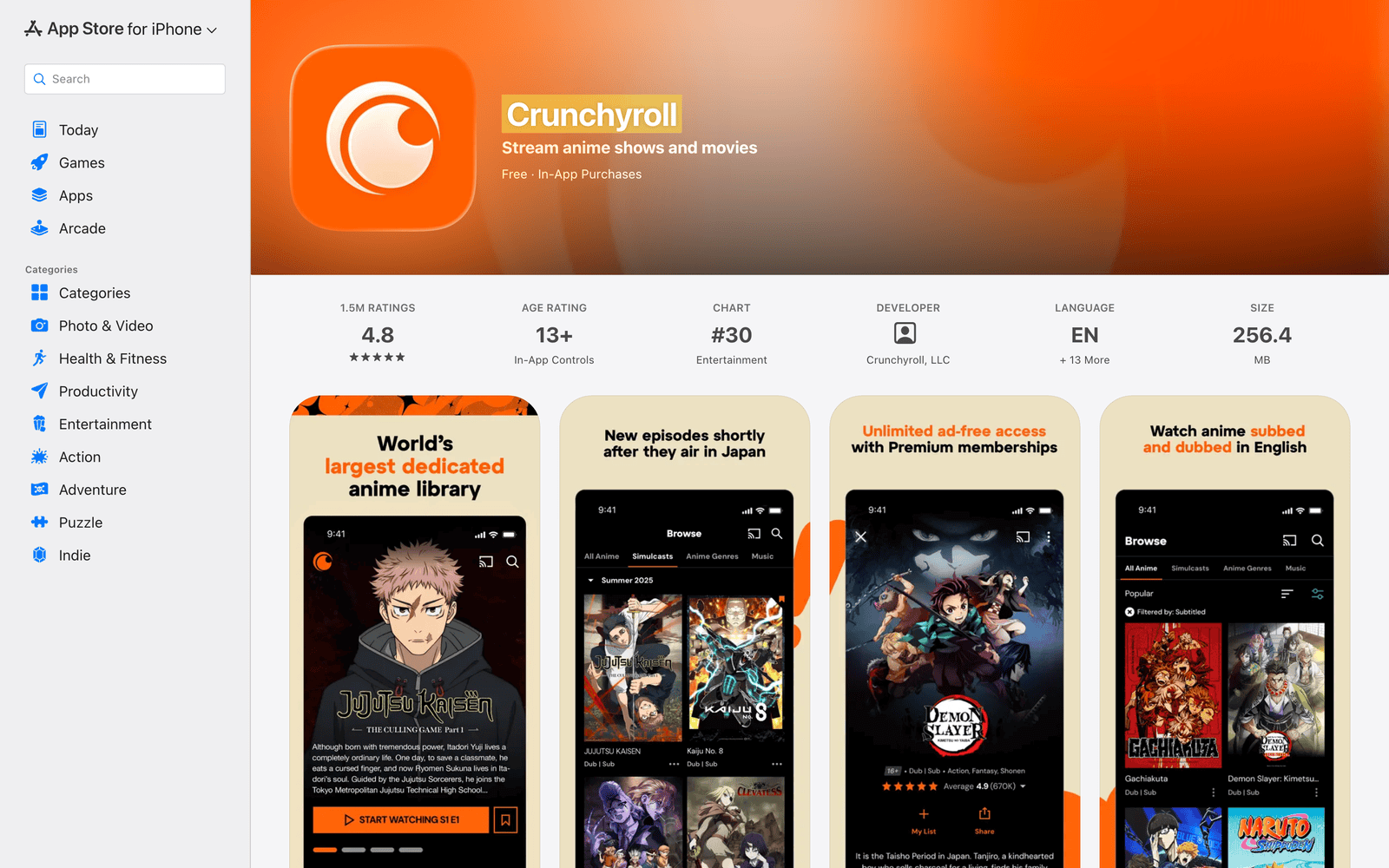
The payoff: Start here, but search your 3 priority shows before buying a tier. Library size cannot rescue a missing license.
Netflix
Netflix ranks 2nd because its mobile app is mature, downloads are straightforward, and many households already pay for it. It does not rank 2nd for catalog completeness. Netflix is a general streaming service with a worthwhile anime lane, not a substitute for an anime-first library.
- Best for: households that already subscribe and want anime alongside films and television.
- Cost model: monthly membership; the app is free to install, not free to watch.
- Platforms: iOS and Android.
- Main catch: country catalogs change, and anime alone rarely justifies adding Netflix.
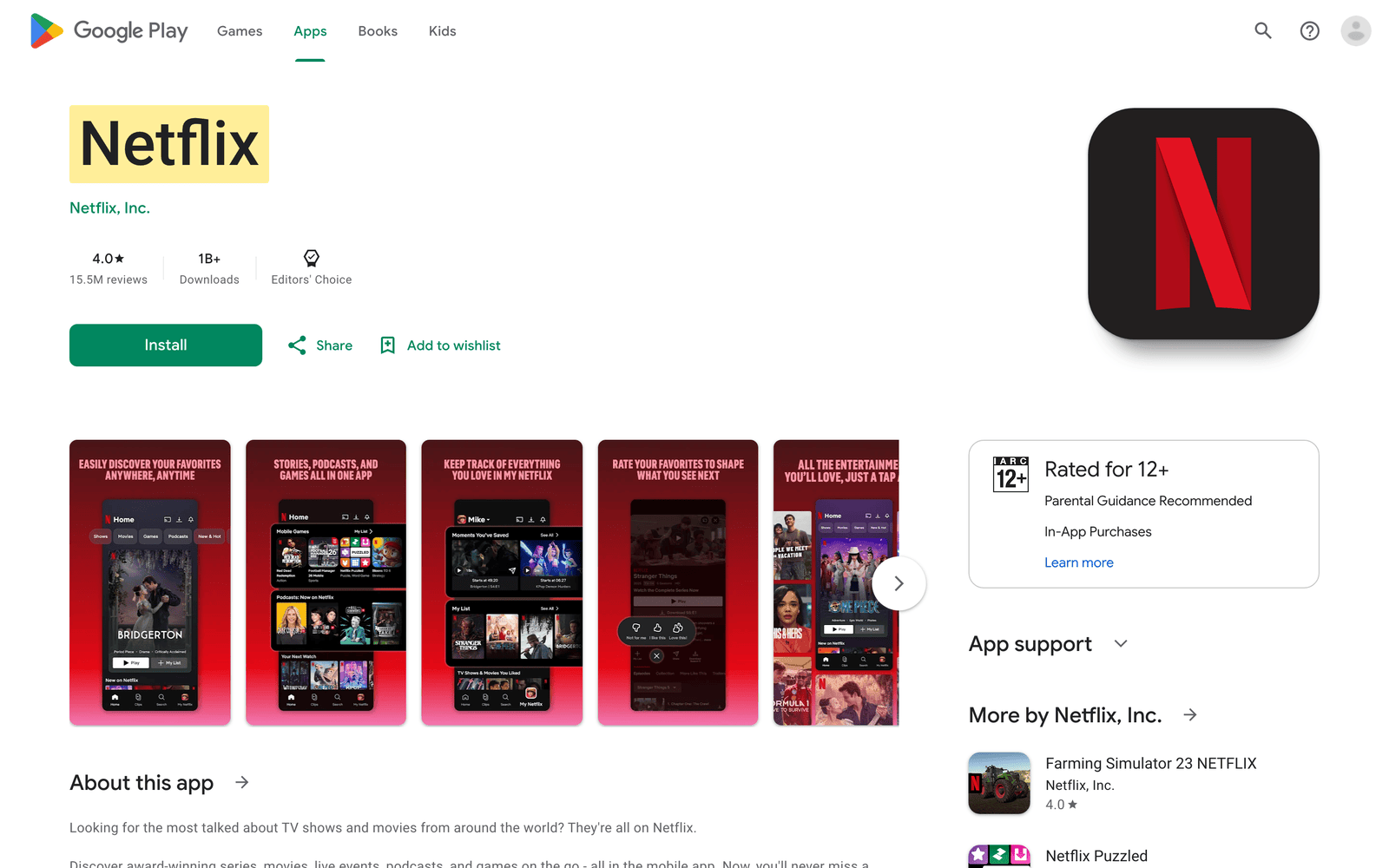
The payoff: Keep Netflix when the household uses Netflix. Do not buy it for 1 anime title and call that value.
YouTube
YouTube is the best free fallback in India and much of Asia, but only when the uploader owns or licenses the show. Channels such as Muse Asia and Ani-One Asia can publish legal episodes and playlists. A familiar app icon does not make every upload legal.
- Best for: legal free episodes from licensed publisher channels.
- Cost model: free with ads; Premium is optional and does not unlock unavailable anime licenses.
- Platforms: iOS and Android.
- Main catch: playlists rotate, regions are restricted, and search results include unauthorized uploads.
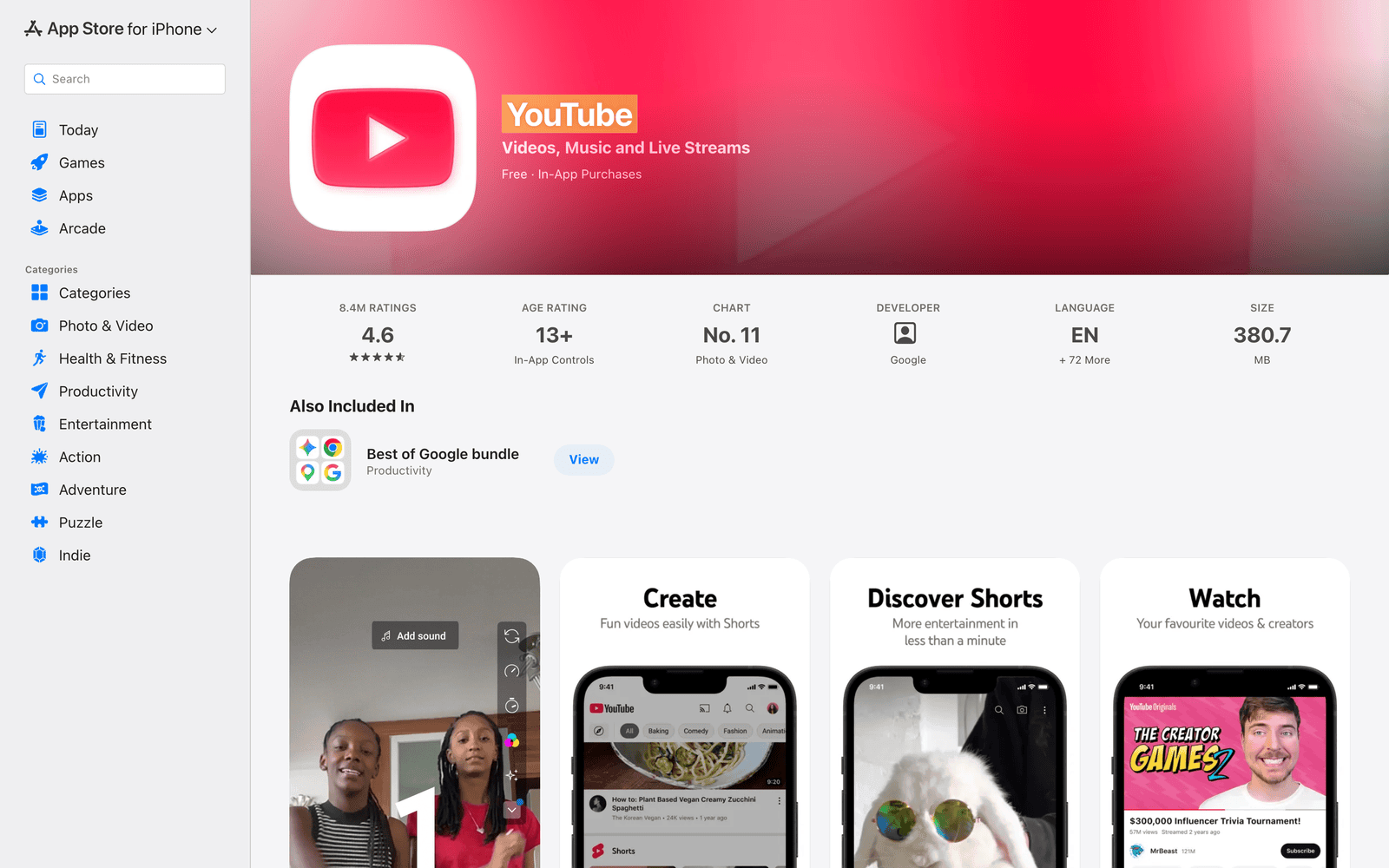
The payoff: Follow publishers, not uploaders with suspiciously complete catalogs and no licensing information.
JioHotstar
JioHotstar belongs high on an India-specific list because it may already be the family’s sports and entertainment app. It is a poor blind anime purchase. The current store listing foregrounds cricket, films, television, HBO, Peacock, Paramount, and Disney, not an anime-first catalog.
- Best for: Indian households that use the wider JioHotstar bundle.
- Current App Store tiers: Mobile from ₹79 monthly, Super from ₹149 monthly, and Premium from ₹299 monthly.
- Platforms: iOS and Android.
- Main catch: anime availability is selective, so title search comes before plan selection.
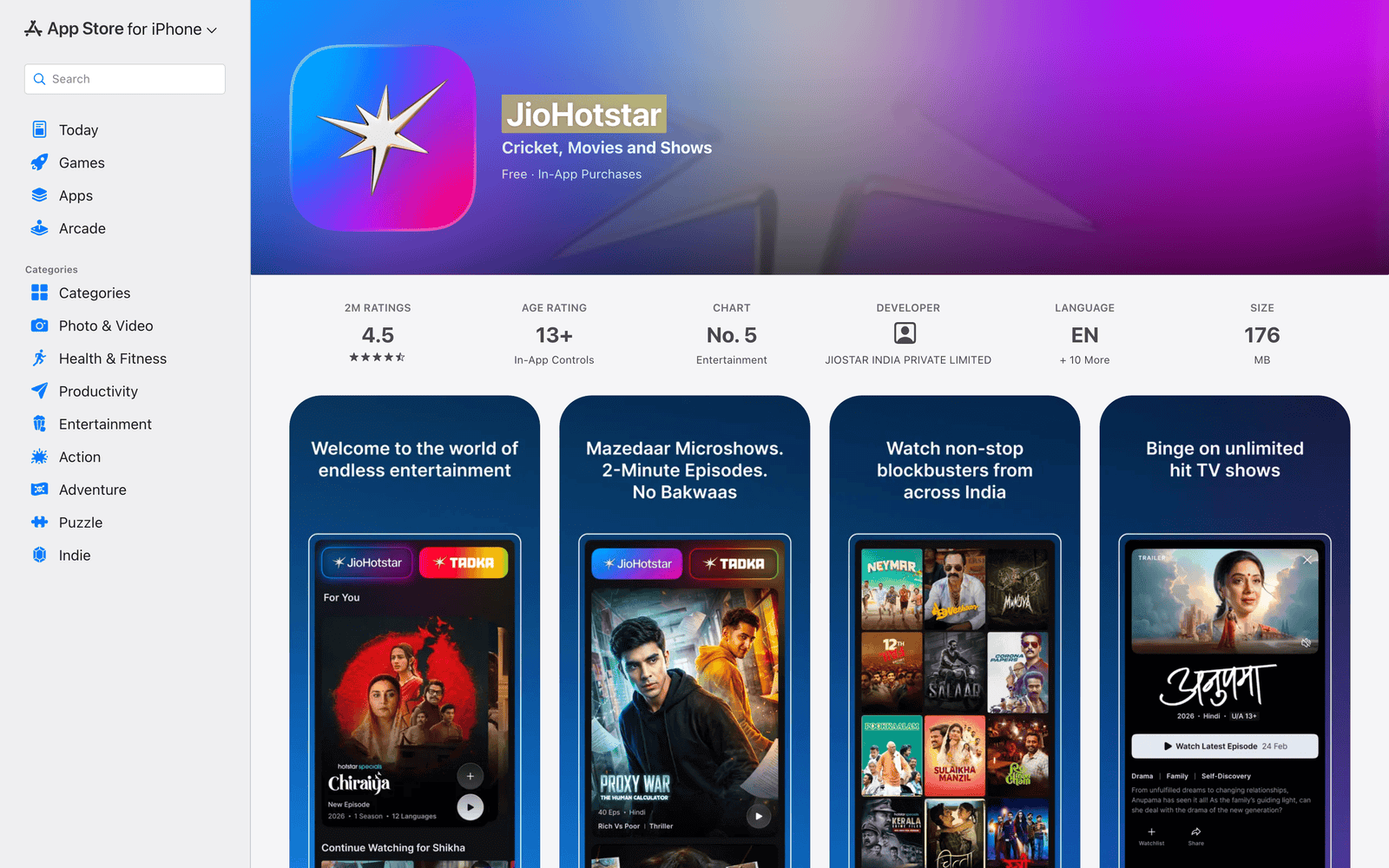
The payoff: Treat anime as a bundle bonus. If the exact show is absent, a low monthly price is still wasted money.
Prime Video
Prime Video is useful when Prime is already paid for. Its weakness is not the player. It is the storefront. Included titles, rentals, purchases, and channel add-ons can sit close enough together to make a promising search result look cheaper than it is.
- Best for: checking what an existing Prime membership already includes, or testing the anime row during the 30-day Prime trial in the US.
- Cost model: included Prime titles plus separate rentals, purchases, and add-ons.
- Platforms: iOS and Android.
- Main catch: the official listing confirms that rent-or-buy availability varies by marketplace.
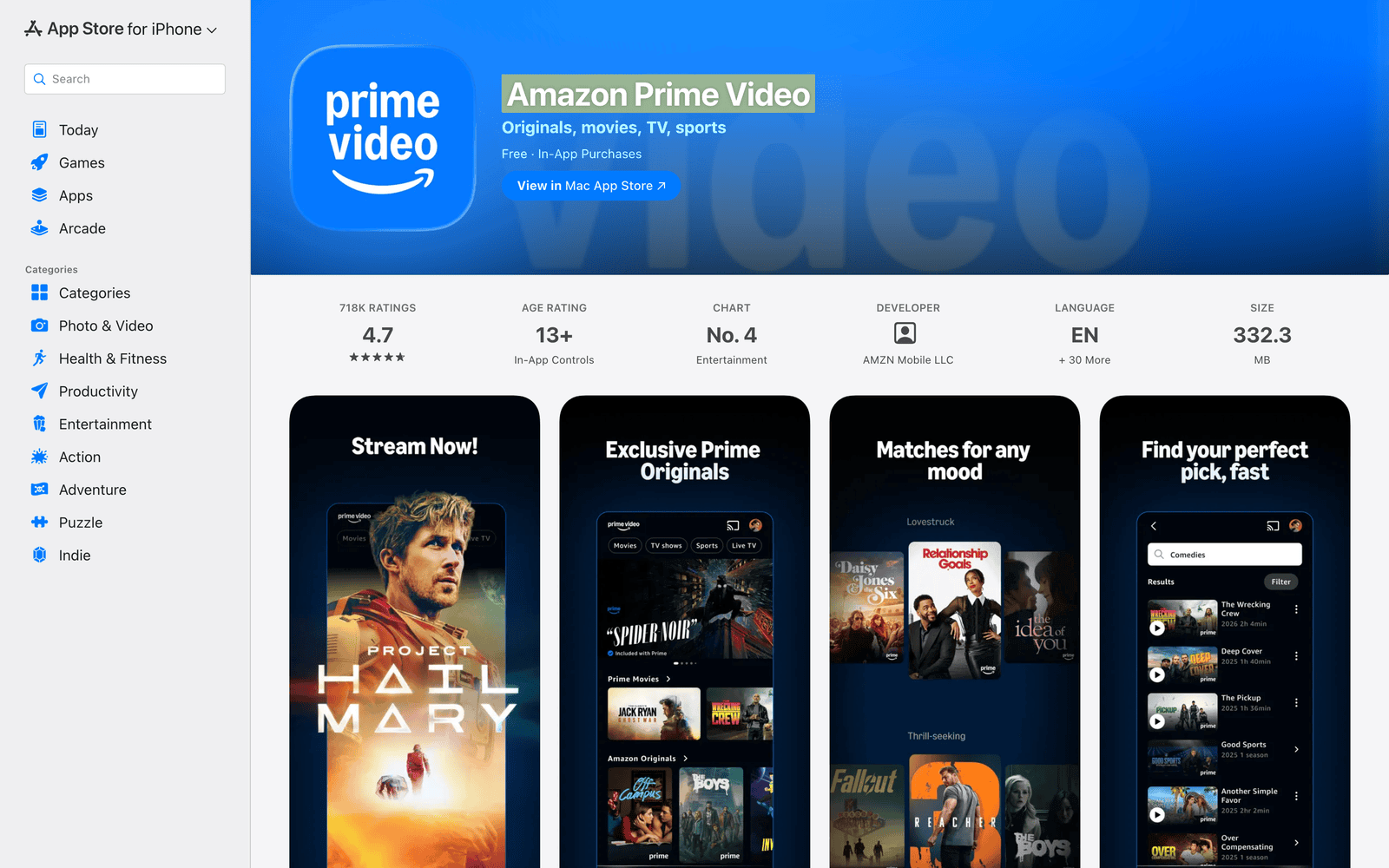
The payoff: Read the badge beside the title. A Prime Video result is not proof that the episode is included with Prime.
HIDIVE
HIDIVE has a better content argument than an app argument. It offers simulcasts, fresh dubs, classics, uncensored titles, and deep cuts that reduce overlap with Crunchyroll. The current iPhone listing shows a 2.0 rating, while Google Play shows roughly 2.4. That is too loud to ignore.
- Best for: a one-month rotation around exclusives and less obvious anime.
- Cost model: subscription with in-app purchasing.
- Platforms: iOS and Android.
- Main catch: limited country reach and poor visible app ratings on both stores.
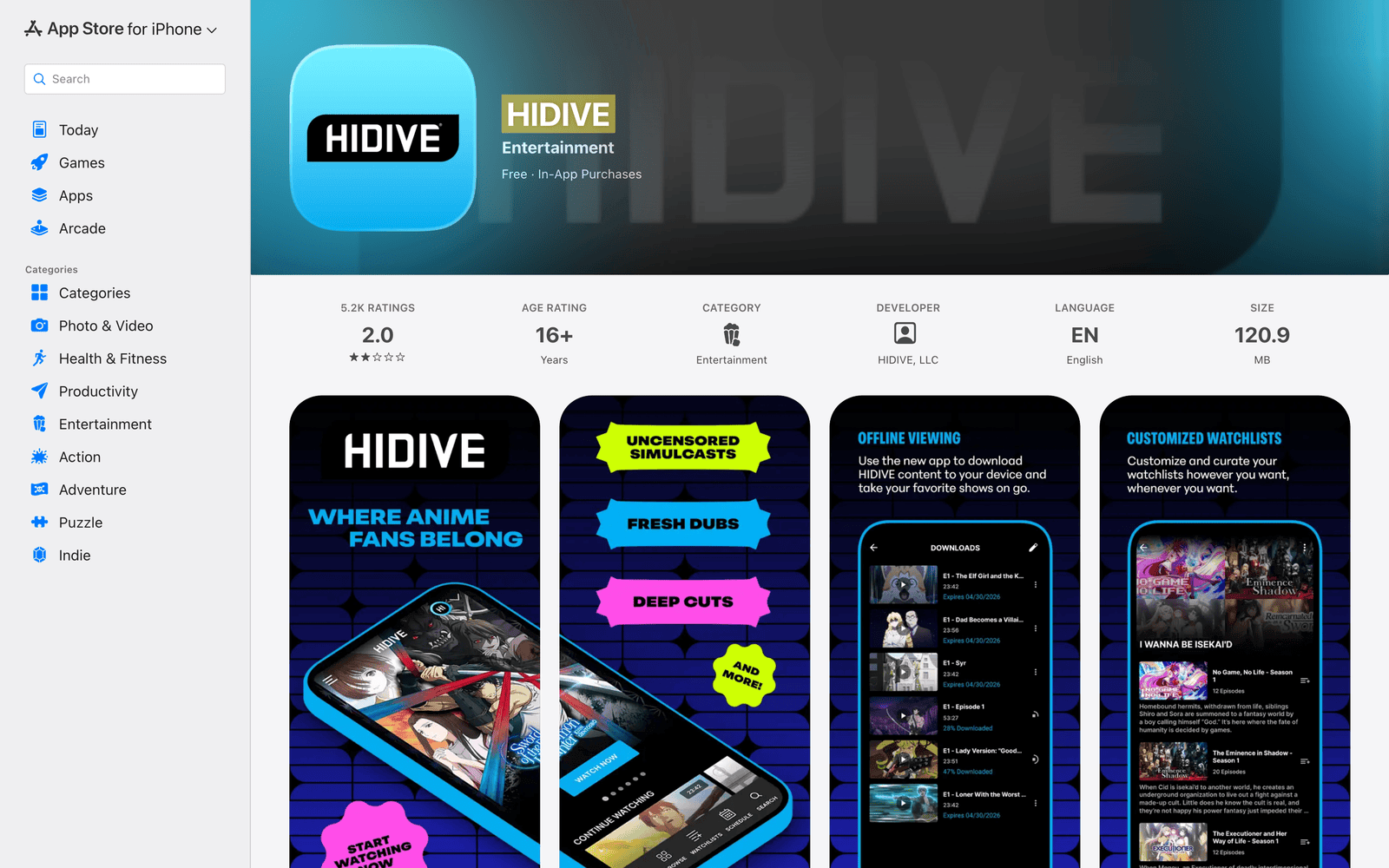
The payoff: Subscribe for the catalog, not the software. If 2 specific exclusives are not waiting, postpone the month.
Tubi
Tubi is a real free streamer, not a trial dressed as one. The official Android listing explicitly includes anime and says no credit card is required. That recommendation collapses outside supported countries, including India. Availability beats enthusiasm.
- Best for: free, legal viewing in supported markets.
- Cost model: free with advertising.
- Platforms: iOS and Android.
- Main catch: country coverage and a rotating catalog.
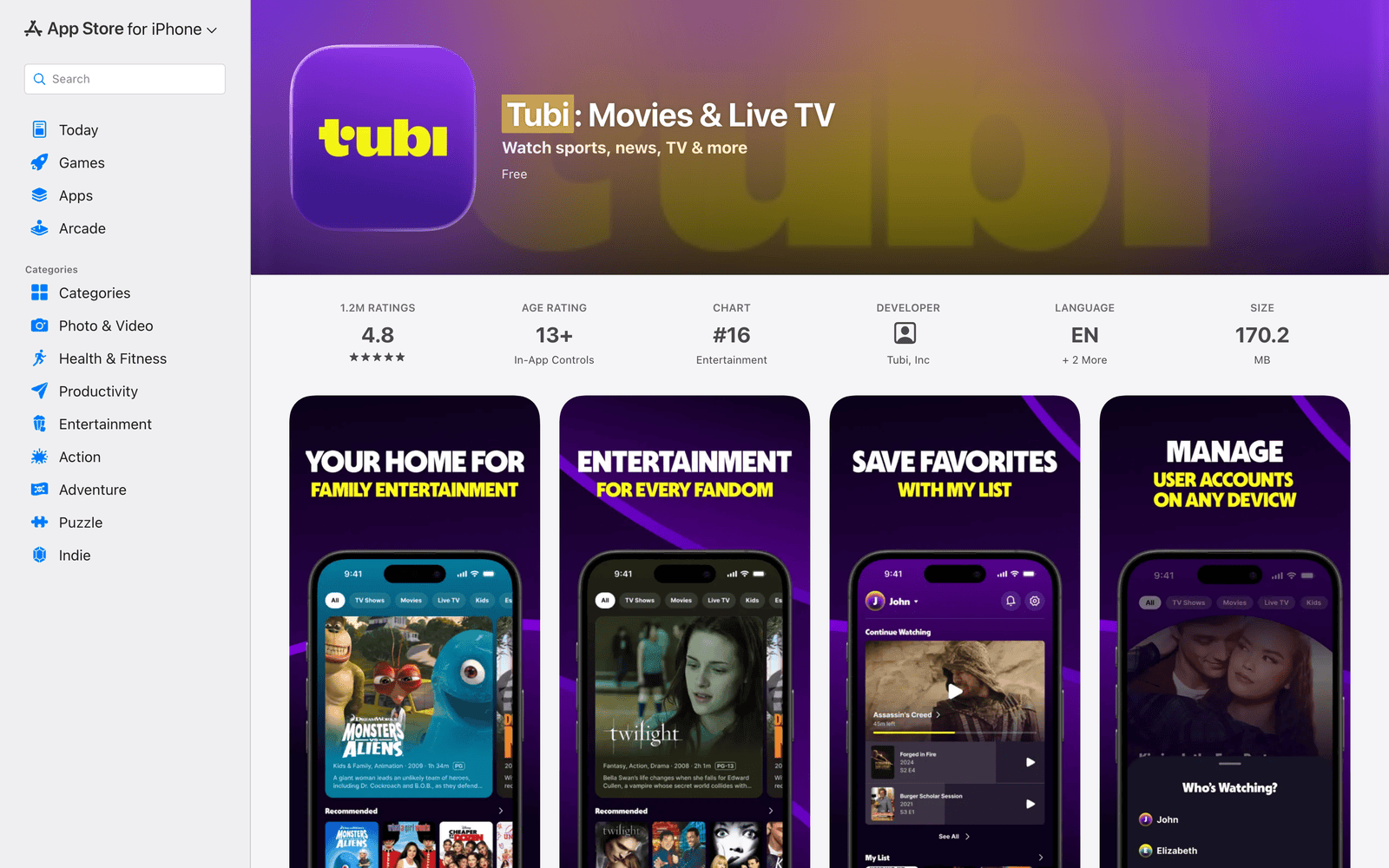
The payoff: If Tubi serves your country, keep it as the free fallback. If it does not, cross it out and move on.
Hoopla
Hoopla is the smartest app in this ranking for readers who qualify. A participating public library can provide anime, manga, films, books, and comics with no separate subscription and no ads. It is not universally available, which is why it cannot rank higher.
- Best for: viewers with a library card from a participating system.
- Cost model: no direct subscription charge and no ads.
- Platforms: iOS and Android.
- Main catch: the library controls availability, catalog, and borrowing limits.
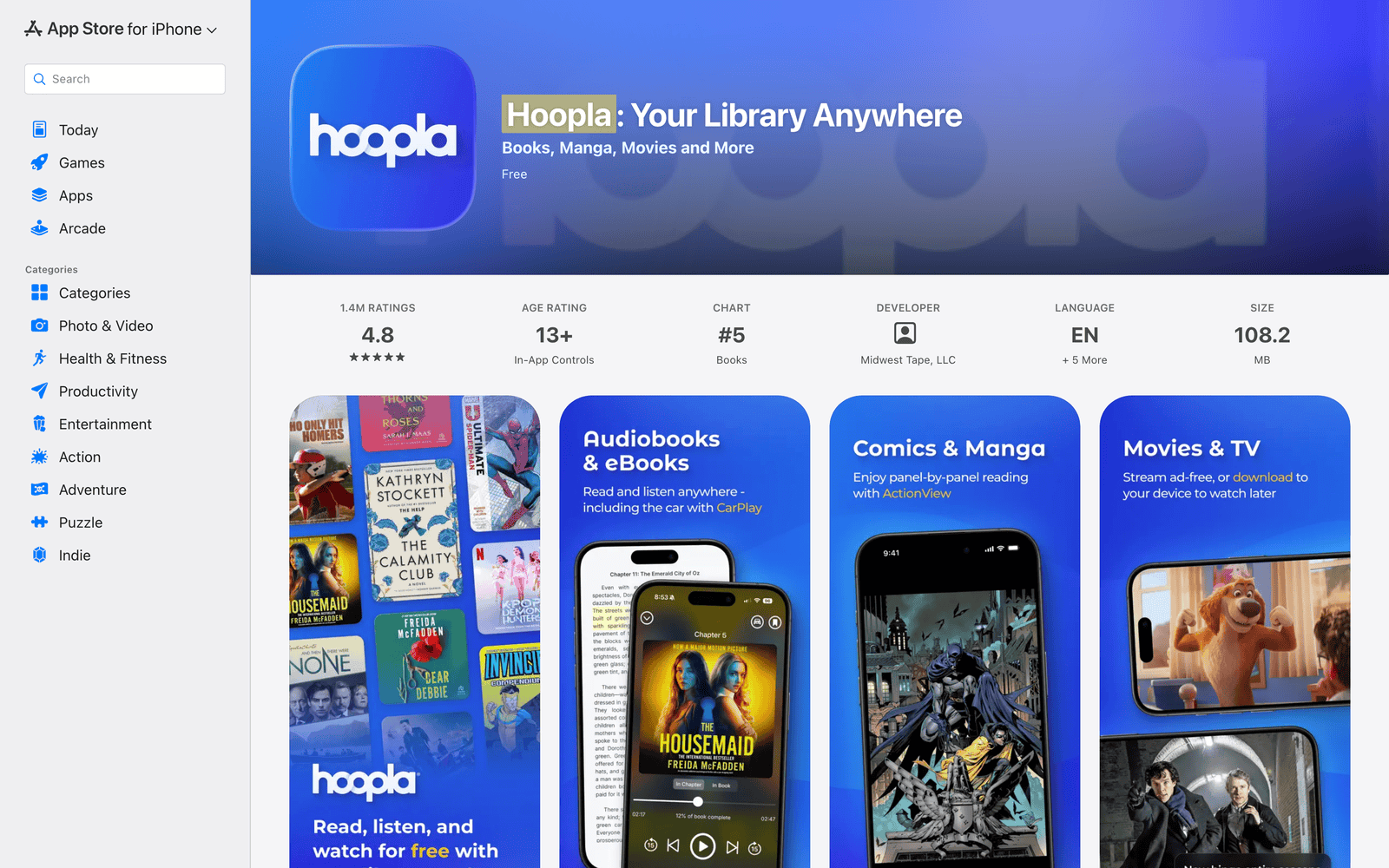
The payoff: Check the library before renting an older season. Free access can be hiding in a card already in your wallet.
Hulu
Hulu makes sense inside a US household bundle that watches much more than anime. It makes little sense as an anime-only subscription. The official app is built around mainstream television, films, add-ons, and live TV. Anime is part of the shelf space, not the organizing principle.
- Best for: US viewers who already value Hulu’s broader television catalog.
- Cost model: several subscription tiers and optional add-ons.
- Platforms: iOS and Android.
- Main catch: US focus and weak value when anime is the only reason to pay.
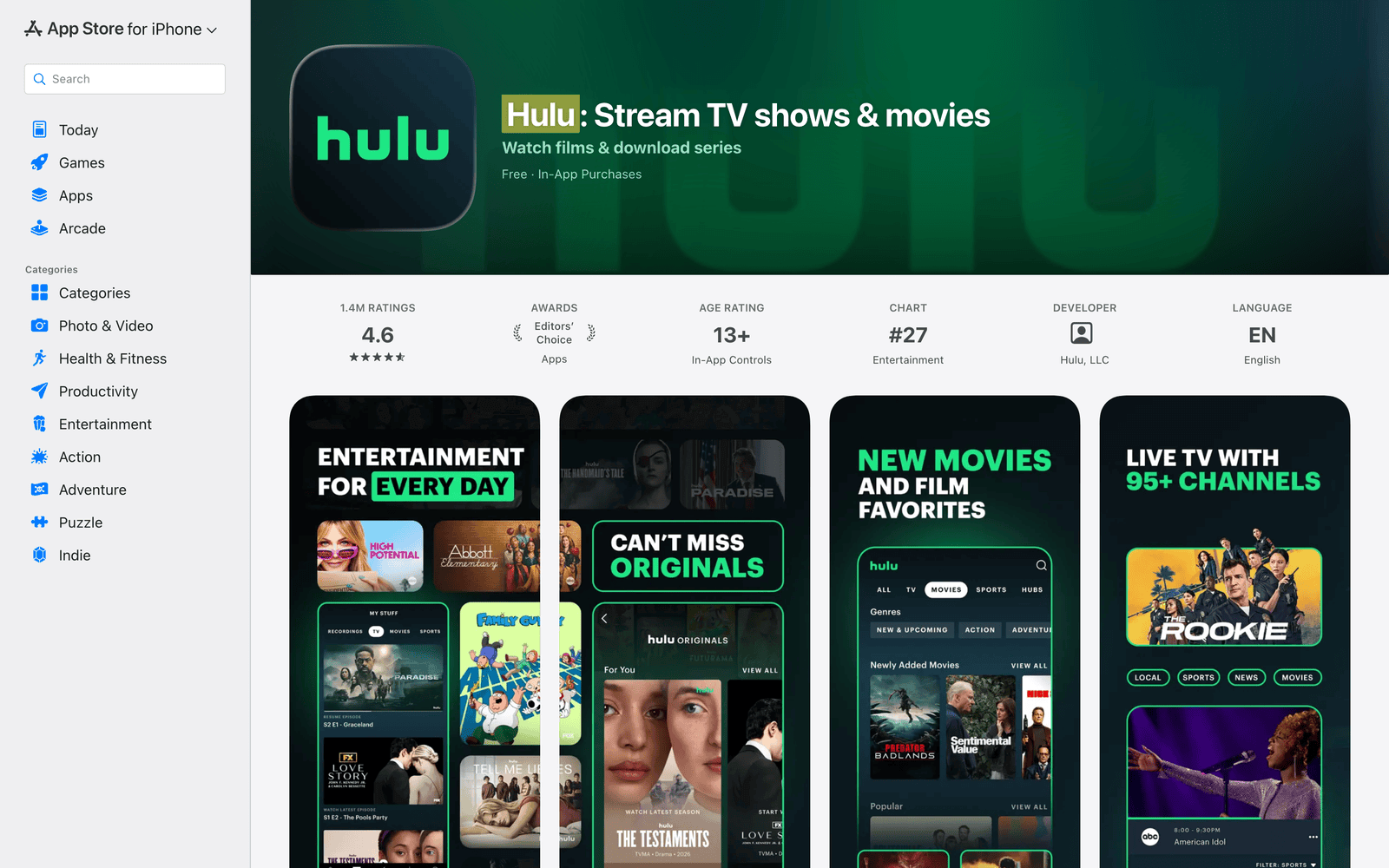
The payoff: Bundle value is still value, but only when the rest of the bundle gets watched.
Disney+
Disney+ can carry anime worth watching, but it is not a dependable anime discovery app. Its official listing leads with Disney, Pixar, Marvel, Star Wars, and National Geographic. Regional variation makes a universal anime recommendation especially unreliable.
- Best for: subscribers checking selective licensed or exclusive releases.
- Cost model: subscription, sometimes inside a bundle.
- Platforms: iOS and Android.
- Main catch: the anime selection is narrow and can differ sharply by country.
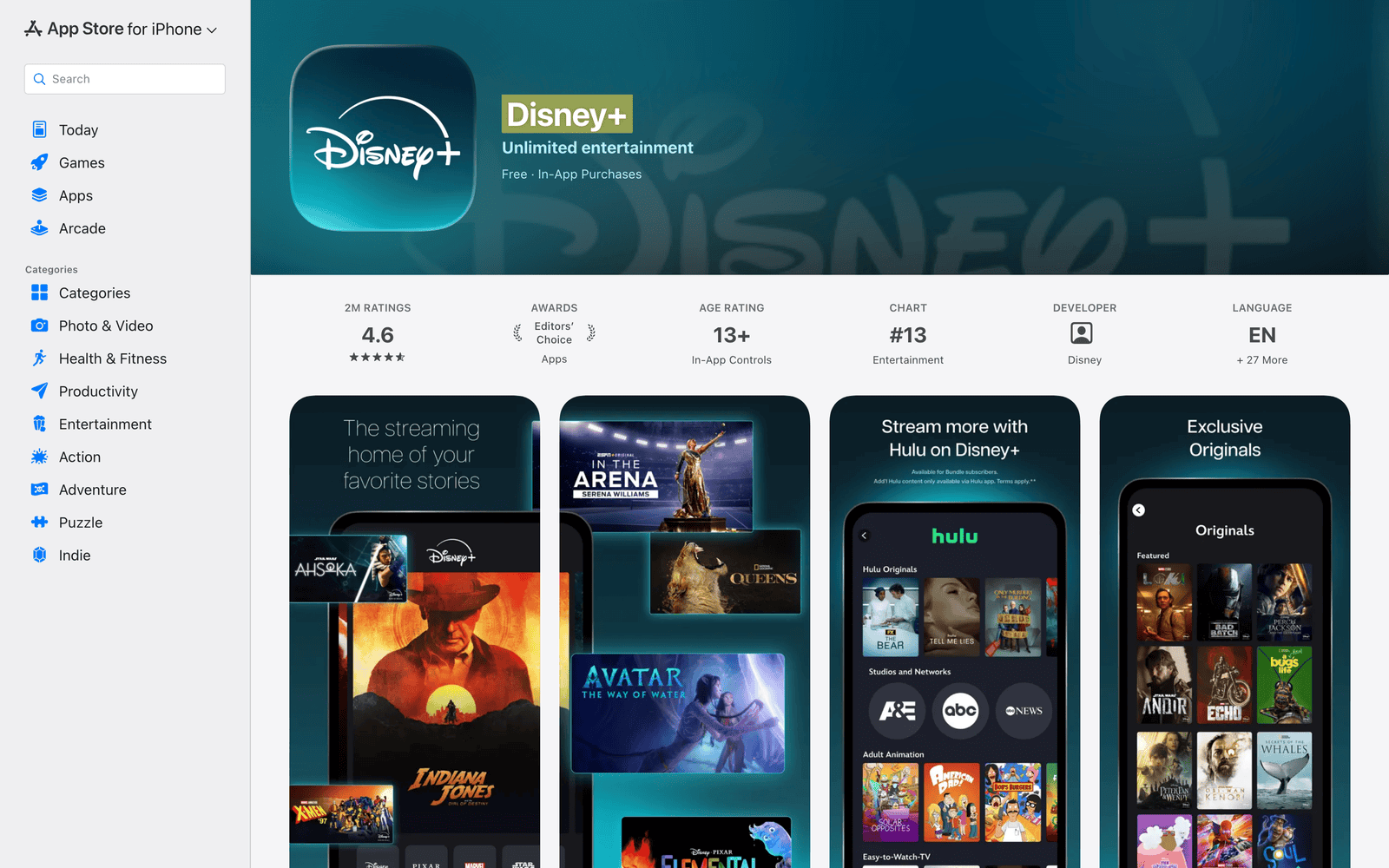
The payoff: Search first. A recognizable brand is not a catalog promise.
BiliBili
BiliBili is stronger than its low global visibility suggests. The international store listing claims more than 2,000 licensed anime titles, multilingual support, and some free viewing. Its real boundary is geography: this is a Southeast Asian recommendation.
- Best for: viewers in supported Southeast Asian markets.
- Cost model: some free viewing plus in-app memberships.
- Platforms: iOS and Android.
- Main catch: catalogs, subtitles, and even app availability are regional.
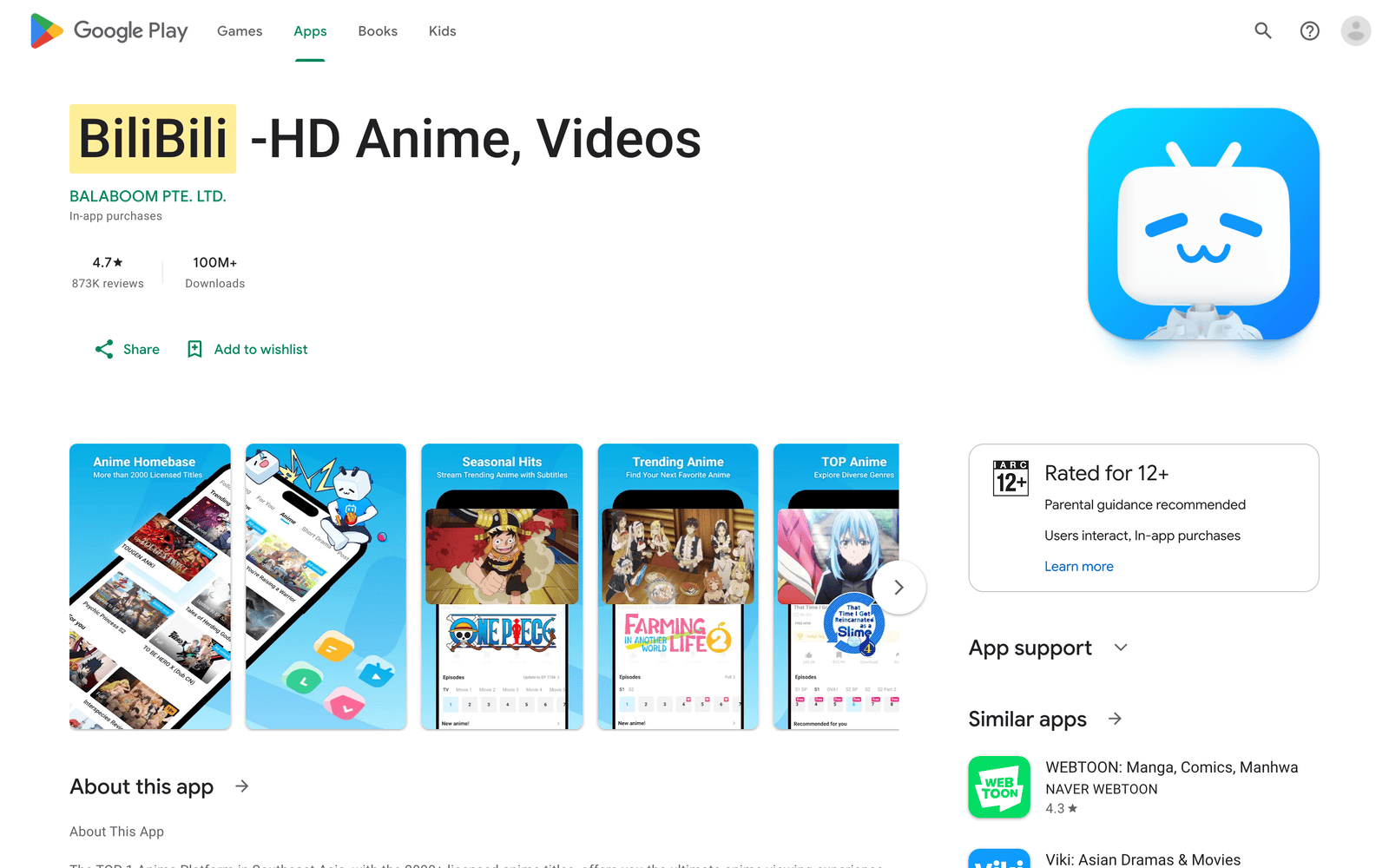
The payoff: BiliBili can be a primary app in the right country and a meaningless recommendation one border away.
RetroCrush
RetroCrush has a point of view. It focuses on classic anime, forgotten titles, and some first-time English releases. That editorial identity makes it more useful than a generic bargain-bin streamer, but only for viewers who want the period it serves.
- Best for: classic anime and less obvious catalog discoveries.
- Cost model: free app with ads and in-app purchases.
- Platforms: iOS and Android.
- Main catch: a narrow era, limited regions, and a small catalog beside the leaders.
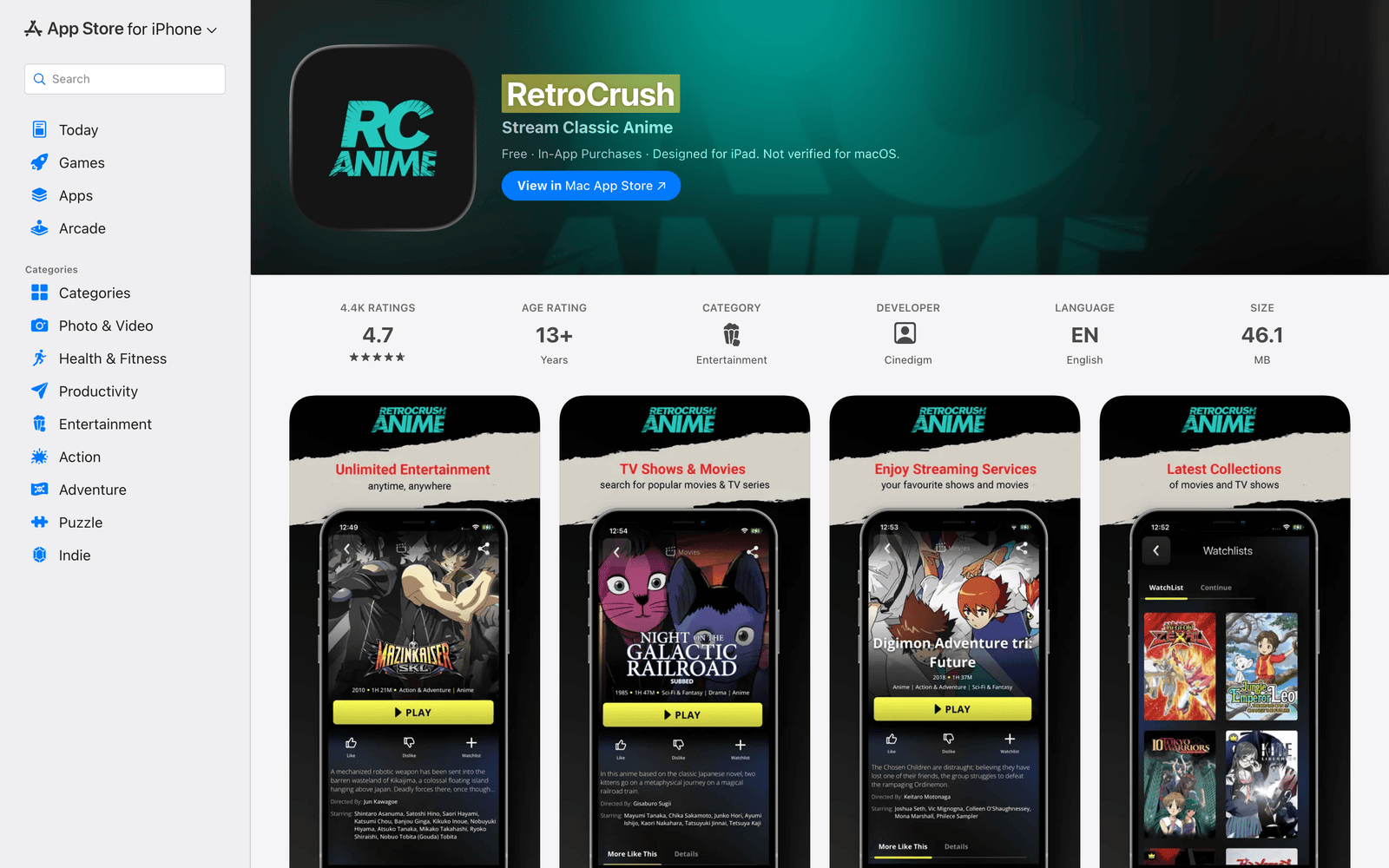
The payoff: Install it because you want classic anime, not because you want every kind of anime.
Viki
Viki is an Asian entertainment app that happens to include some animation. Its official listing leads with Korean, Chinese, Taiwanese, Japanese, and Thai dramas, then names a small animated selection. The 150-plus subtitle languages are impressive, but they do not turn Viki into an anime-first service.
- Best for: drama viewers who want occasional animated titles in the same app.
- Cost model: ad-supported access plus Viki Pass tiers.
- Platforms: iOS and Android.
- Main catch: animation is secondary and availability varies by region.
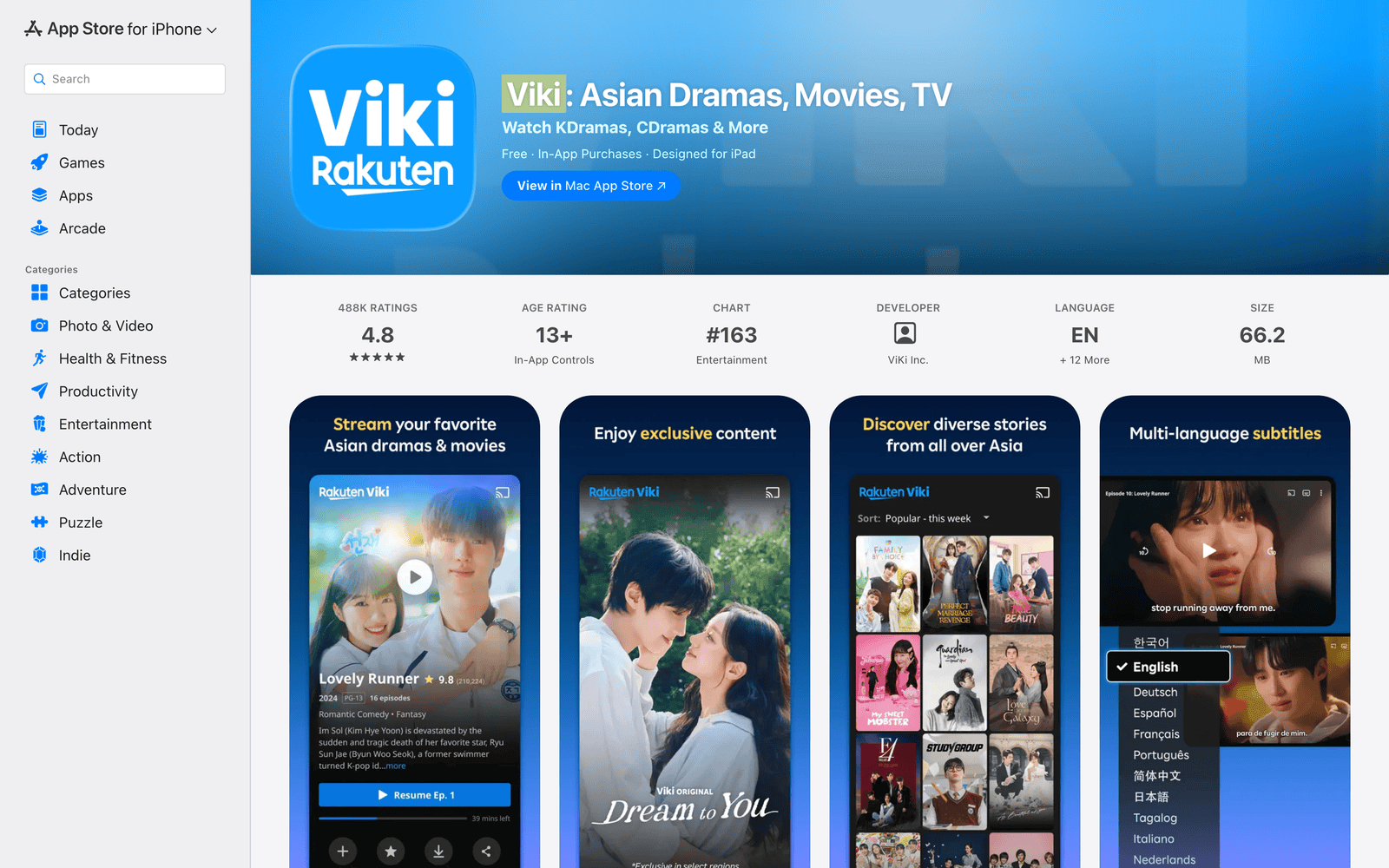
The payoff: Keep Viki for Asian drama. Treat its anime as a pleasant extra, not the buying argument.
Pluto TV
Pluto TV is useful when you want free, legal, channel-style viewing. The official listing includes anime among its live channel categories. That television model is also the problem: schedules decide more of the experience, and regional catalogs decide the rest.
- Best for: casual, free channel surfing rather than a fixed watchlist.
- Cost model: free with advertising.
- Platforms: iOS and Android.
- Main catch: less episode control and region-specific live channels.
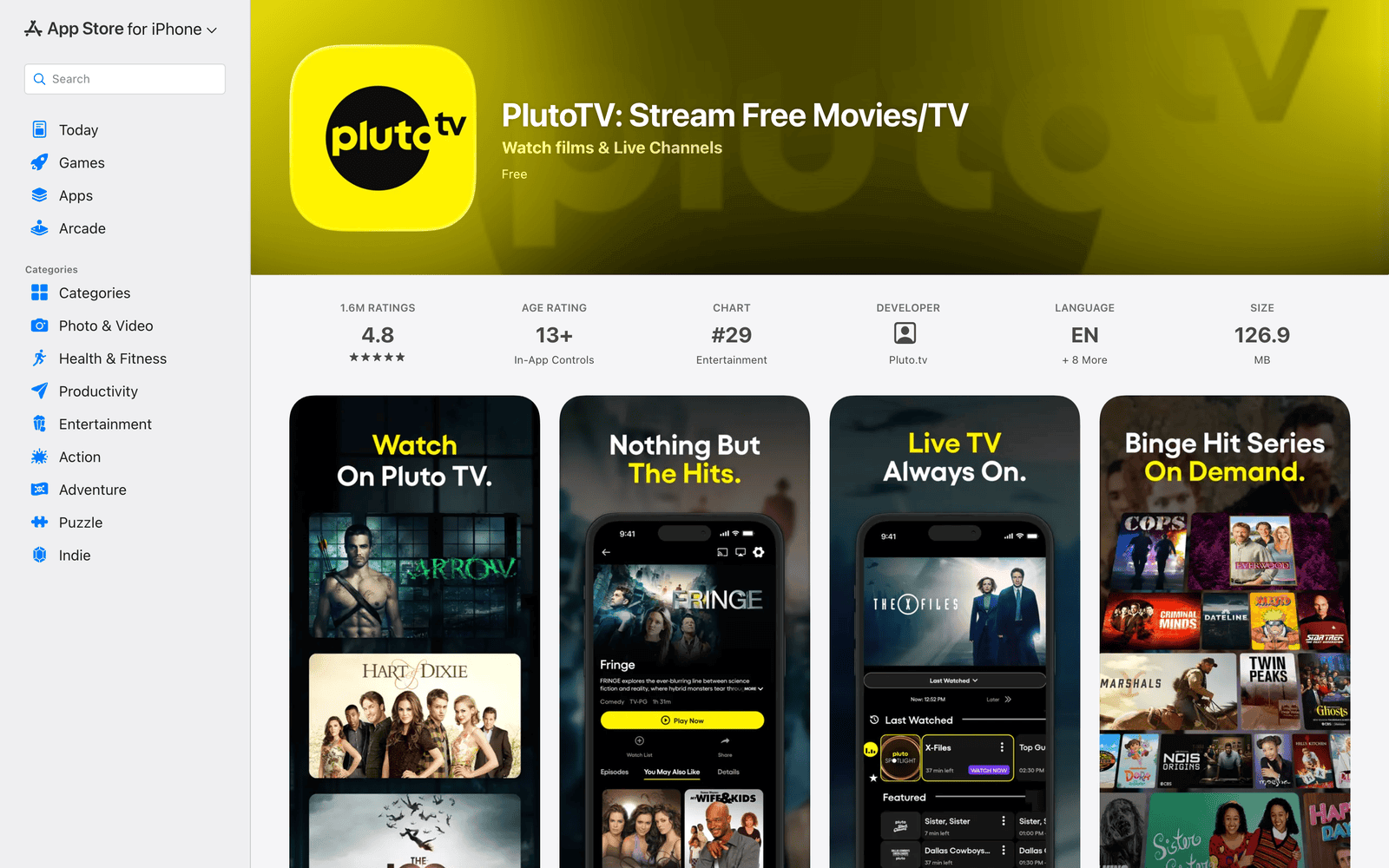
The payoff: Pluto TV is a good background channel and a bad plan for finishing a precise series on schedule.
MyAnimeList
MyAnimeList finishes the list because a tracker solves a problem that no streamer does. It remembers episodes, seasons, ratings, and what to watch next across fragmented catalogs. It does not stream anime. The current iOS listing is also iPhone-only, while Android has a separate official app.
- Best for: watchlist management, seasonal discovery, and progress tracking.
- Cost model: free official apps.
- Platforms: iOS and Android; the iOS version is currently listed for iPhone only.
- Main catch: it is a database and tracker, not a viewing service.
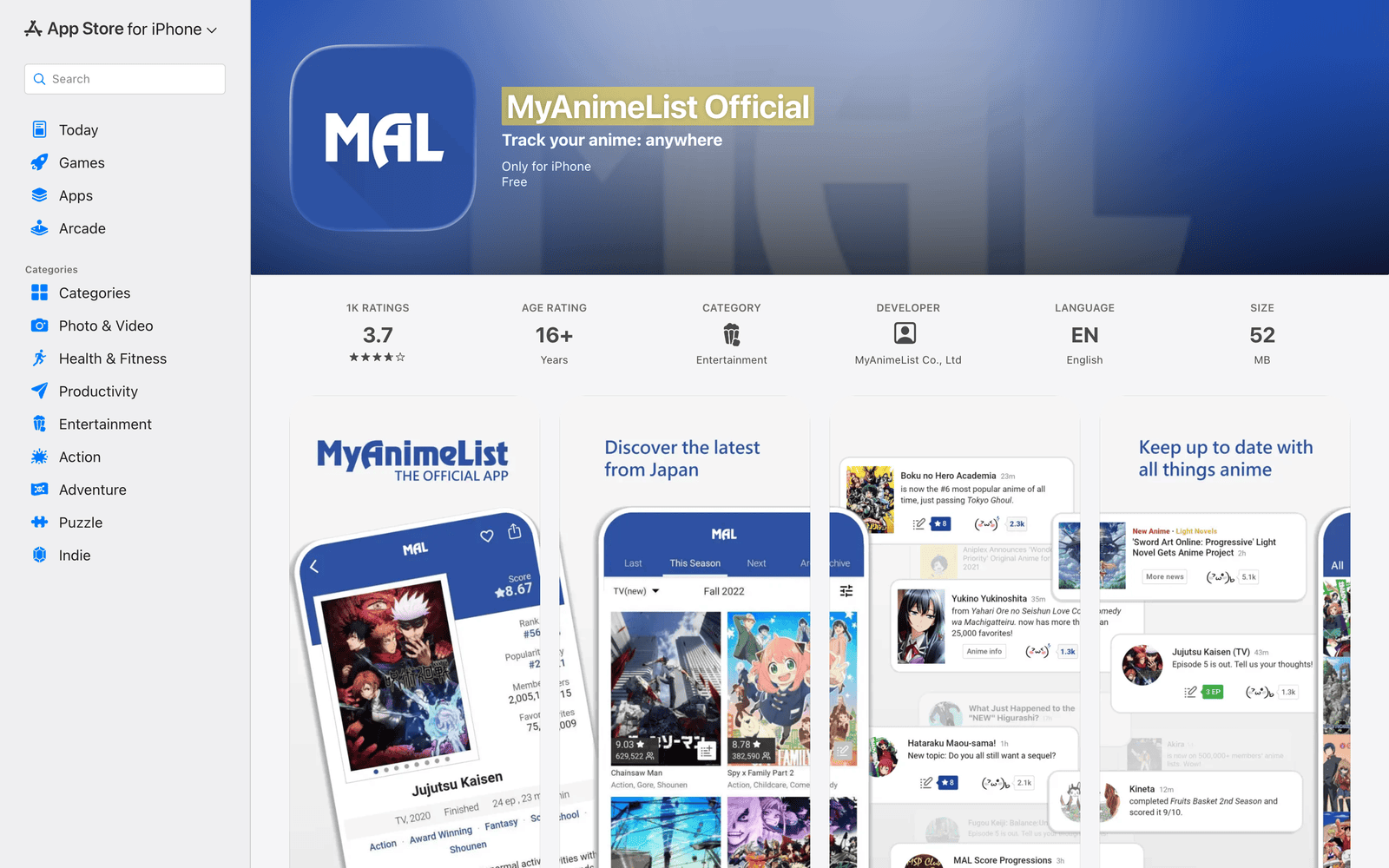
The payoff: A tracker earns the 3rd slot in the recommended setup because streaming rights keep moving even when your list should not.
Build a 3-app setup
The efficient setup is deliberately small. Pick the paid app around a written watchlist, keep a legal free fallback for browsing, and use a tracker so licensing changes do not erase your progress.
- In India: Crunchyroll, licensed YouTube channels, and MyAnimeList. Keep JioHotstar or Prime Video only when the wider household already uses them.
- In the United States: Crunchyroll, Tubi or Hoopla, and MyAnimeList. Rotate HIDIVE in for specific exclusives.
- In Southeast Asia: compare Crunchyroll and BiliBili for your 3 priority shows, then keep YouTube and MyAnimeList as the other 2 slots.
- Everywhere else: search the exact titles on the exact country account before paying. A US catalog screenshot is not a local guarantee.
One paid anime subscription at a time is enough for most people. Rotation beats accumulation because streaming rights move while unused subscriptions renew perfectly on schedule.
What app-store labels hide
The App Store and Google Play are good evidence that an app exists. They are weak evidence that a show, language track, or subscription benefit exists for your account.
- Free often means free download: Netflix, Crunchyroll, Prime Video, and Disney+ can be free to install while meaningful viewing still requires payment.
- Offline does not mean permanent: downloads can expire, require periodic account checks, or sit behind a higher tier.
- Dub labels can be regional: the same title may have English audio in one country and subtitles only in another.
- A title page can carry several prices: Prime Video may mix included viewing, rent-or-buy offers, and add-on channels.
- Free libraries rotate: Tubi, Pluto TV, YouTube publishers, and Hoopla can change availability without preserving your queue.
If English audio is the deciding factor, use the separate guide to legal English-dubbed anime sites. An app can be excellent and still be wrong for a dub-first watchlist.
Where this ranking stops
No ranking can make regional licenses stable. It also cannot convert a general entertainment app into an anime specialist. An official app listing confirms that a product exists and which devices it supports. It cannot guarantee a local catalog.
Store ratings are signals, not verdicts. HIDIVE’s low ratings matter because they are unusually weak on both major platforms, but a viewer may still accept rough software for 1 exclusive. The correct tradeoff depends on the title, not fandom loyalty.
What quietly wastes money
Subscribing before searching is the most common mistake. The next is keeping 4 services because each has a watchlist. A watchlist is not consumption. It is a promise that a renewal email can monetize.
VPN-first recommendations waste attention too. A VPN can protect a connection, but it does not create a license, repair a bad app, or make bypassing a service’s regional terms a sound recommendation. Start with legal availability.
Finally, do not download clones of retired brands. Funimation, VRV, AnimeLab, and the old Cartoon Network app are not secret alternatives waiting in a third-party app store. A familiar name on an unofficial file is a risk signal.
Frequently asked questions
What is the best anime app in 2026?
Crunchyroll is the best anime app for most iPhone, iPad, and Android users because it combines an anime-first catalog with simulcasts, dubs, downloads on eligible tiers, and broad device support. Search your 3 priority shows in your country before paying.
What is the best free anime app?
YouTube is the most practical free option in India and much of Asia when you watch licensed channels such as Muse Asia or Ani-One Asia. Tubi is stronger as a dedicated free streamer in supported countries. Hoopla can be better still if a participating library gives you access.
Is Crunchyroll free on iPhone and Android?
The Crunchyroll app is free to download, but that label does not mean the full anime catalog is free. Membership features and availability vary by country and tier, so check the title page and current in-app offer before assuming access.
What is the best anime app in India?
Crunchyroll is the strongest anime-first default in India. Pair it with licensed YouTube channels for free viewing and MyAnimeList for tracking. JioHotstar and Prime Video are better treated as existing household bundles than anime-only purchases.
Can MyAnimeList stream anime?
No. MyAnimeList is a database, discovery tool, community, and progress tracker. The official iOS and Android apps help organize what you watch, but the actual episodes must come from a licensed streaming service.
Install fewer apps
The best anime apps are the 3 that serve your actual watchlist. Search 3 shows, choose 1 paid app, keep 1 legal free fallback, and track the rest outside the streaming services.
Pay for the month you will actually watch. Let the other icons wait.
Tell Google you want more of this.
Add Gaurav Tiwari as a preferred sourceOne tap, and this site shows up more often in your own Top Stories, AI Overviews and AI Mode. Remove it any time.
Disclaimer: This site is reader-supported. If you buy through some links, I may earn a small commission at no extra cost to you. I only recommend tools I trust and would use myself. Your support helps keep gauravtiwari.org free and focused on real-world advice. Thanks. - Gaurav Tiwari