
 by
by
The best Indian bloggers to follow in 2026 are Amit Agarwal, Harsh Agrawal, Shradha Sharma, Sandeep Jain, Dassana Amit, Deepak Shenoy, M. Pattabiraman, Anuradha Goyal, Anand Khanse, and Shivya Nath. Between them they cover automation, blogging, startups, programming, food, stock markets, personal finance, travel, and Windows help.
This is not a follower-count leaderboard. The ranking runs on current work: who still publishes, where readers actually go, and what each writer teaches that an AI summary can’t reproduce.
It’s also a bigger story about Indian blogging itself. Some of the loudest names of the 2010s have retired, sold their sites, or quietly stopped publishing. The numbers below show who’s still standing, who left, and what the survivors have in common.
Top 10 Indian bloggers to follow first
Start with the person whose subject matches your goal. A recipe blog, a markets desk, and a Windows help library shouldn’t be ranked against each other, so the traffic column is context, not a scoreboard.
| Blogger | Publication | Best for | Est. monthly search visits |
|---|---|---|---|
| Amit Agarwal | Digital Inspiration | Google Workspace and automation | 1.7M |
| Harsh Agrawal | ShoutMeLoud | Blogging and affiliate marketing | 66K |
| Shradha Sharma | YourStory | Startups and founders | 472K |
| Sandeep Jain | GeeksforGeeks | Programming education | 107M |
| Dassana Amit | Dassana’s Veg Recipes | Vegetarian Indian cooking | 7.9M |
| Deepak Shenoy | Capitalmind | Markets and investing | 17K |
| M. Pattabiraman | Freefincal | DIY personal finance | 9K |
| Anuradha Goyal | IndiTales | Heritage and culture travel | 308K |
| Anand Khanse | TheWindowsClub | Windows help | 254K |
| Shivya Nath | The Shooting Star | Responsible travel and identity | 322K |
Search estimates undercount newsletter-first publishers. Capitalmind and Freefincal look small in that column because their readers arrive by email and subscription, not Google. The profiles below explain each case.
The state of Indian blogging in 2026
My reading of this list: Indian blogging has split into a barbell. On one end sit platforms and specialists with a real subject: recipes, markets, code, temples, Windows errors. On the other end sit quiet archives that stopped updating years ago. The middle, the general-purpose tech-tips and make-money-blogging site, has mostly disappeared.
The mechanism isn’t mysterious, but the numbers deserve their boundaries. One large study measured organic search’s share of traffic falling 3.65% across the first 8 months of 2025. Pew’s 2025 browsing study shows what AI answers do to clicks: users clicked a traditional result in 8% of visits that contained an AI summary, against 15% of visits without one, and links inside the AI summaries themselves drew clicks in just 1% of visits. Ahrefs detected AI involvement in 74.2% of newly published English pages, though only 2.5% were fully AI-generated, and its index-wide model estimates 96.55% of pages get no Google traffic at all. Every figure is a modeled estimate, not a census, and the direction is still unambiguous: publishing got easier, getting read got dramatically harder. The full numbers are in this blogging statistics roundup.
Ad money thinned first, AI answers came second, and the people who ran India’s best-known blogs responded the way rational operators do. They left, sold, or productized.
- Malini Agarwal exited MissMalini after Good Glamm Group sold it to Creativefuel in an April 2025 distress sale. Media reports differ sharply on both the original acquisition valuation and the sale price, so no precise loss figure survives scrutiny; every version of the story is still a markdown.
- Srinivas Tamada, whose 9lessons tutorials taught a generation of Indian web developers, last published in June 2023 and now works in US corporate tech.
- Abhijeet Mukherjee sold Guiding Tech, a consumer-tech site he bootstrapped from a bedroom in 2010, to US-based Padre Media in November 2020. He writes a small personal newsletter now.
- Deepak Kanakaraju moved DigitalDeepak’s center of gravity into courses, community, and email; the blog sat quiet from mid-2024 before resuming in August 2026, and the newsletter now carries the cadence.
- Jitendra Vaswani rebranded BloggersIdeas, once a major affiliate-marketing blog, into an AI automation agency in late 2025. Its search traffic is now an estimated 200 visits a month.
- Kulwant Nagi relaunched kulwantnagi.com around AI images, video, and content systems. The affiliate-blogging archive that made his name is gone; the name itself carried over to the new business.
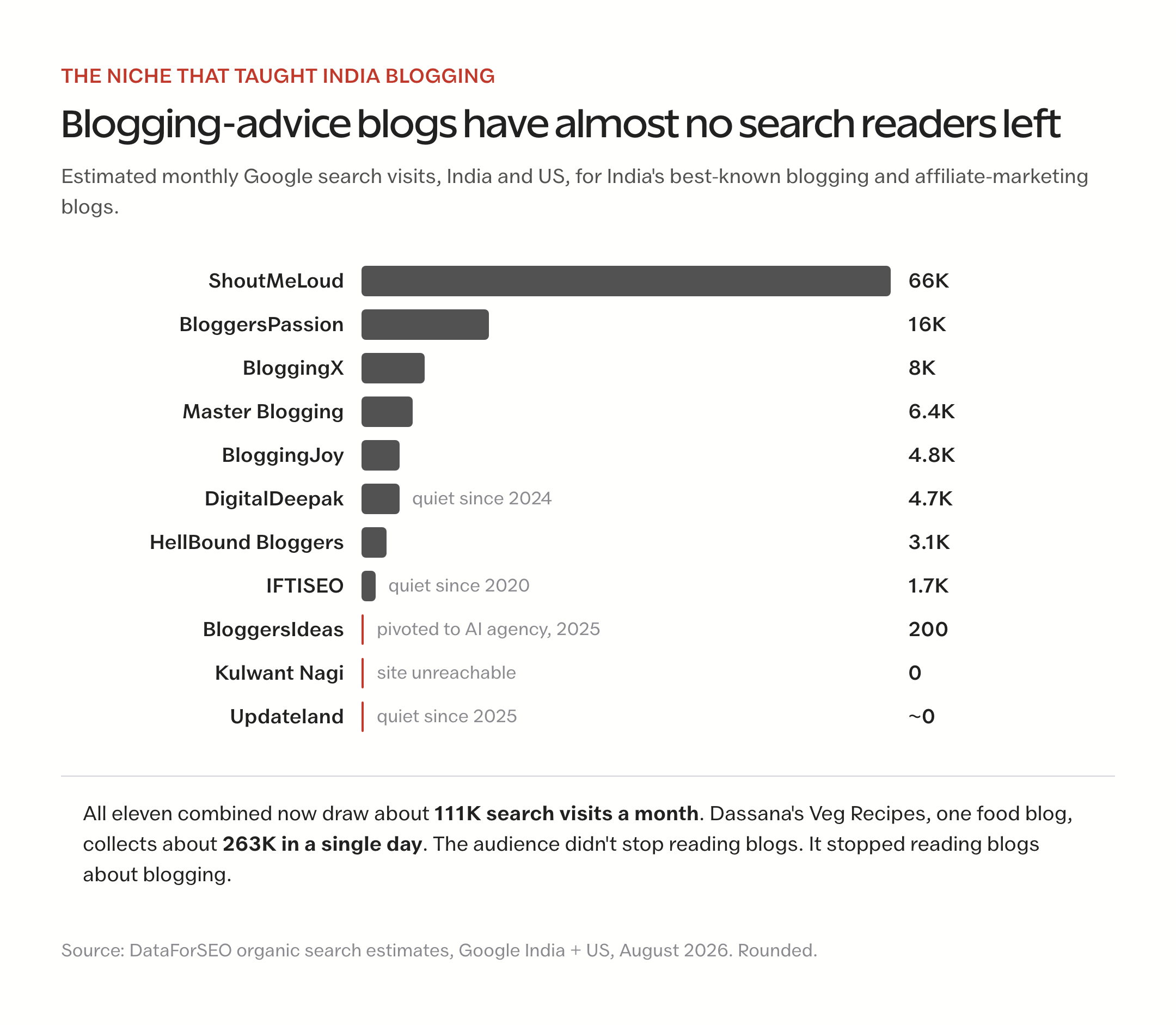
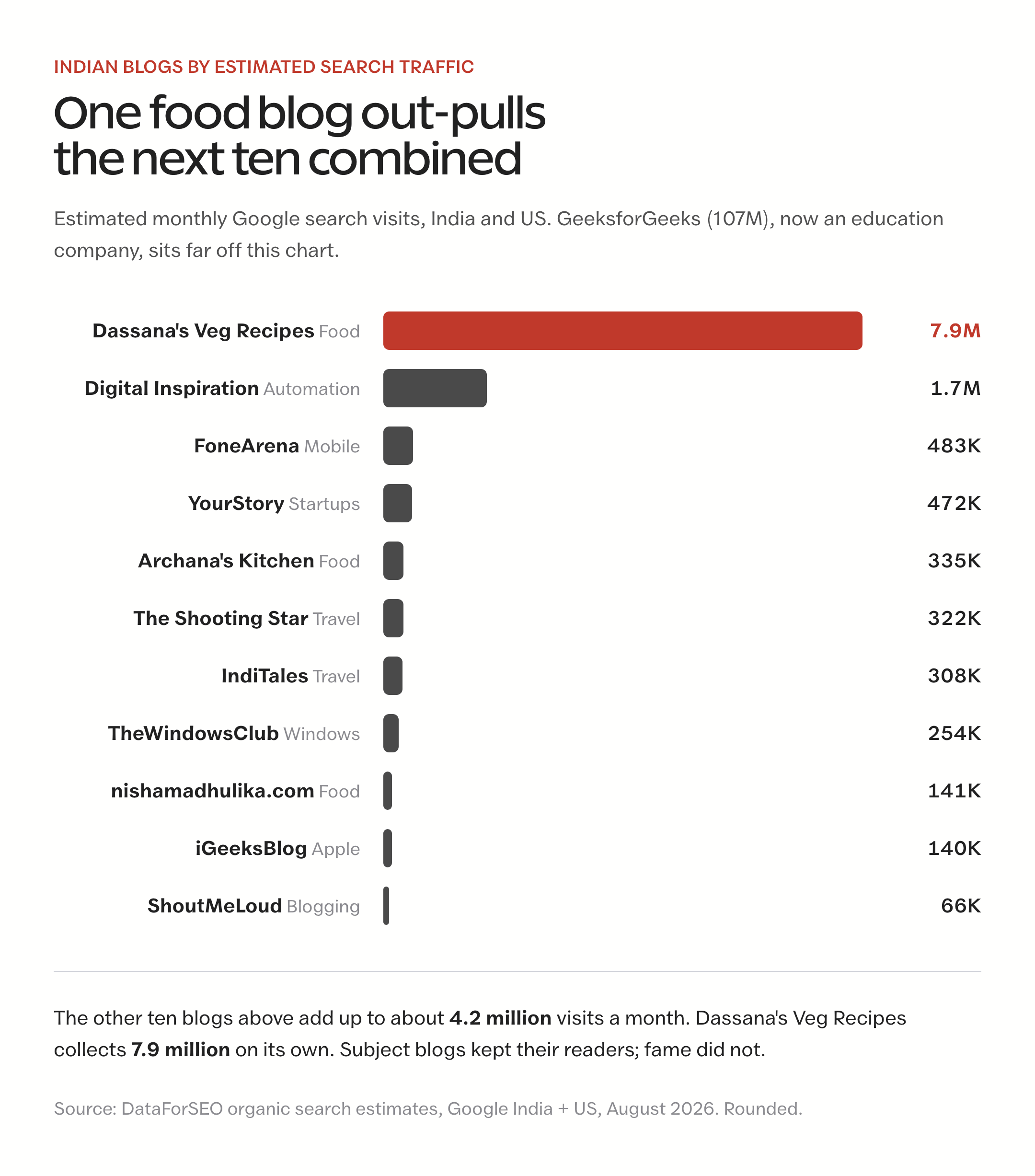
Now look at who’s fine. Dassana Amit’s recipe blog pulls an estimated 7.9 million monthly search visits. Freefincal publishes daily after 14 years. Capitalmind turned its blog audience into a SEBI-approved mutual fund house. GeeksforGeeks turned one man’s algorithm notes into an education company with an estimated 107 million monthly search visits. The pattern is consistent: a specific subject, a direct audience, and a product that isn’t ad inventory. The bloggers who treated the blog as the business mostly lost it. The ones who treated it as a distribution channel for something real are still here.
How this list is judged
Every name is held to the same editorial standard: current availability, recent dated publishing, a clear subject, accountable authorship, and a business model a reader can understand. Income screenshots and follower counts don’t count as evidence here.
Traffic figures are DataForSEO estimates of monthly Google search visits, India and US combined, captured in August 2026 and rounded. They’re modeled from ranking keywords, search volumes, and expected click-through rates, not from any site’s analytics, and they exclude direct, email, social, app, and YouTube audiences, which is exactly where several of the strongest publishers below have moved. Treat them as order-of-magnitude context, never as a scoreboard.
The numbers behind every name
One table, all 36 names, broadly ordered by estimated search traffic; my own site is in the table under the same methodology, flagged as mine. The status column reflects each site’s most recent dated publishing.
| Blogger | Blog | Niche | Est. monthly search visits | Status |
|---|---|---|---|---|
| Sandeep Jain | GeeksforGeeks | Programming | 107M | Active platform |
| Dassana Amit | Dassana’s Veg Recipes | Food | 7.9M | Active |
| Amit Agarwal | Digital Inspiration | Automation | 1.7M | Active |
| Varun Krishnan | FoneArena | Mobile tech | 483K | Active |
| Shradha Sharma | YourStory | Startups | 472K | Active platform |
| Archana Doshi | Archana’s Kitchen | Food | 335K | Active platform |
| Shivya Nath | The Shooting Star | Travel | 322K | Active |
| Anuradha Goyal | IndiTales | Travel | 308K | Active |
| Anand Khanse | TheWindowsClub | Windows help | 254K | Active |
| Nisha Madhulika | nishamadhulika.com | Food | 141K | YouTube-first |
| Jignesh Padhiyar | iGeeksBlog | Apple | 140K | Active |
| Gaurav Tiwari | gauravtiwari.org | WordPress, SEO | 117K | Active |
| Harsh Agrawal | ShoutMeLoud | Blogging | 66K | Active, slower |
| Arun Prabhudesai | Trak.in | Tech and business | 26K | Active, slower |
| Pritam Nagrale | MoneyConnexion | Online income | 23K | Active |
| Deepak Shenoy | Capitalmind | Markets | 17K | Active |
| Anil Agarwal | BloggersPassion | SEO, blogging | 16K | Active |
| Vishal Khandelwal | Safal Niveshak | Value investing | 12K | Active |
| Sourav Basak | Namaste UI | Multi-topic | 11K | Guest-post heavy |
| M. Pattabiraman | Freefincal | Personal finance | 9.1K | Active, daily |
| Amit Bhawani | PhoneRadar | Mobile tech | 8K | YouTube-first |
| Akshay Hallur | BloggingX | Blogging | 8K | Active |
| Ankit Singla | Master Blogging | Blogging | 6.4K | Active |
| Santanu Debnath | BloggingJoy | Blogging | 4.8K | Active |
| Deepak Kanakaraju | DigitalDeepak | Digital marketing | 4.7K | Active, newsletter-first |
| Manish Chauhan | JagoInvestor | Personal finance | 3.5K | Active |
| Pradeep Kumar | HellBound Bloggers | Blogging | 3.1K | Slower |
| Amit Varma | India Uncut | Essays | 1.9K | Newsletter-first |
| Iftekhar Ahmed | IFTISEO | SEO | 1.7K | Quiet since 2020 |
| Arvind Passey | passey.info | Personal essays | 1.3K | Active |
| Rahul Setia | TechBlogCorner | Tech | 280 | Quiet |
| Jitendra Vaswani | BloggersIdeas | Affiliate marketing | 200 | Pivoted to agency |
| Dipti Tiwari | Gorgeously Flawed | Beauty | 160 | Active, slower |
| Jyoti Chauhan | Updateland | Software reviews | None detected | Quiet |
| Kulwant Nagi | kulwantnagi.com | AI content education | None detected | Pivoted, relaunched |
| Siddharth Sharma | sanusiddharth.com | Tech | None detected | Quiet |
Blogging, SEO, and making money online
This niche took the hardest hit, because its core queries are exactly what AI chatbots answer for free now. The writers still worth reading are the ones whose advice comes from running real sites, not from rewriting each other’s tutorials.
Harsh Agrawal
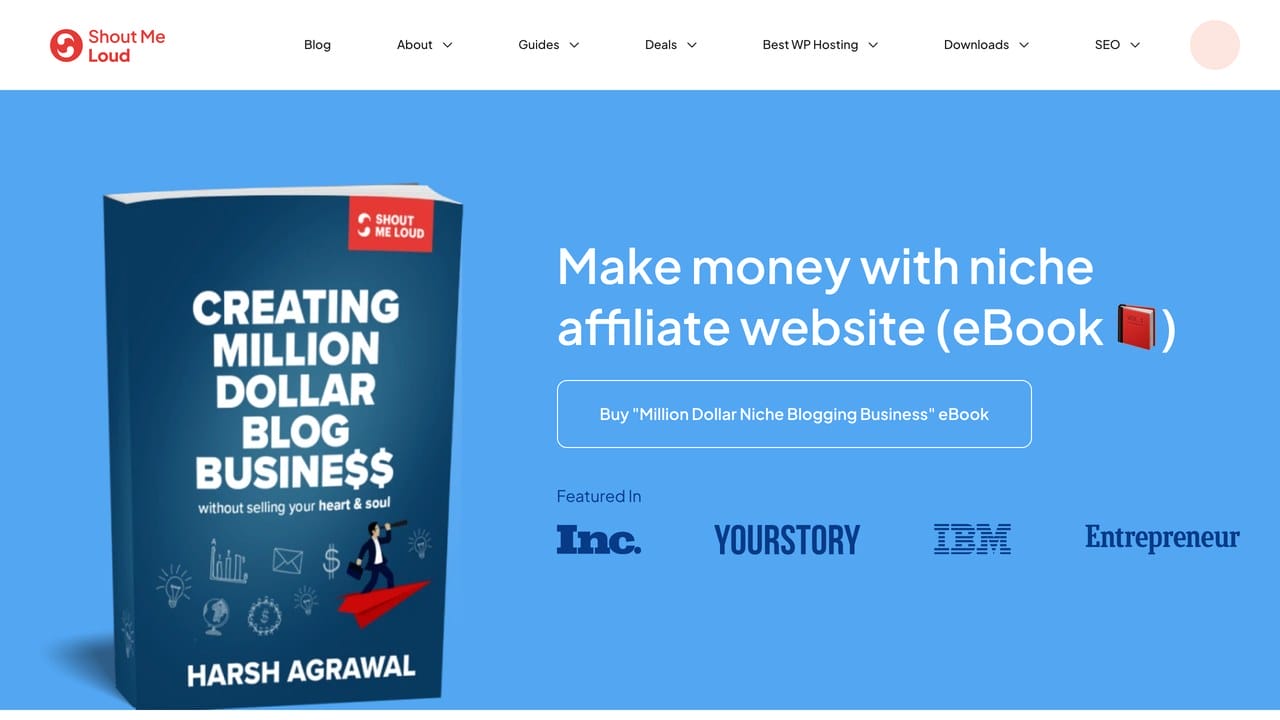
Harsh Agrawal started ShoutMeLoud in 2008 and built it into India’s best-known blogging-about-blogging brand. The archive on affiliate marketing, WordPress, and blog monetization is still the deepest of its kind in India, and it’s the honest place to see the niche’s arc: an estimated 66,000 monthly search visits today, a fraction of its early-2010s peak, with publishing slowed to occasional updates.
Read it for monetization fundamentals that haven’t changed. Cross-check any tutorial against current product interfaces, because many walkthroughs predate them.
Anil Agarwal
Anil Agarwal has run BloggersPassion since 2010, and unlike most of his peers he still publishes. Expect detailed SEO and affiliate tutorials with an estimated 16,000 monthly search visits behind them. The site earns through the products it reviews, so treat tool recommendations as a starting point rather than a verdict.
Ankit Singla
Ankit Singla’s Master Blogging stays close to the craft: outlines, pitching, affiliate strategy. It published as recently as July 2026, and most of its estimated 6,400 monthly search visits now come from the US rather than India, which tells you who still searches for blogging advice. The template-driven format means depth varies by post.
Akshay Hallur
Akshay Hallur’s BloggingX moved with the market, covering AI-assisted content workflows and creator tools alongside classic blogging strategy. It was publishing in August 2026, which most of this niche can’t claim. Reviews can be commercially supported, so check the disclosure on any recommendation.
Jitendra Vaswani
Jitendra Vaswani built BloggersIdeas into one of India’s biggest affiliate-marketing blogs and wrote Inside A Hustler’s Brain along the way. In late 2025 he rebranded the operation into an AI automation agency, and the blog’s search footprint collapsed to an estimated 200 monthly visits. He’s in this list as a case study now: the archive is useful, and the pivot itself is the lesson.
Deepak Kanakaraju
Deepak Kanakaraju remains one of India’s most recognizable digital-marketing educators, and an earlier version of this page called his blog quiet; that needs updating. The blog’s feed sat silent from mid-2024, then resumed with a fresh post in August 2026, and his newsletter publishes far more often than the site does. The operation is education-first now: courses, community, email, and AI-focused teaching, with the blog as one surface among several. Follow the email list rather than the RSS feed and you’ll see the current work.
Kulwant Nagi
Kulwant Nagi taught affiliate marketing to a generation of Indian bloggers and spoke at most of the era’s conferences. An earlier version of this page listed his site as unreachable; it’s live again, rebuilt entirely around AI images, video, and content systems, with programs instead of blog posts. The old affiliate archive is gone, and that’s the story: one of the niche’s most recognizable teachers concluded the affiliate-blogging classroom wasn’t coming back, and rebuilt on the new curriculum.
Santanu Debnath
Santanu Debnath’s BloggingJoy covers beginner blogging and WordPress, with fresh posts as recent as July 2026. It’s a small, steady site rather than an authority hub, which makes it a reasonable read for first-year bloggers who find the bigger archives overwhelming.
Pritam Nagrale
Pritam Nagrale’s MoneyConnexion covers online income ideas, careers, and side work, and was publishing in July 2026 with an estimated 23,000 monthly search visits. Income-idea content ages badly by nature. Verify any platform, rate, or job claim before acting on it.
Gaurav Tiwari
Gaurav Tiwari is this site, so read the next sentence knowing exactly who wrote it. The focus is WordPress, SEO, and the systems behind a solo publishing business, written from running one, with products and client work that don’t depend on ad rates. The table scores this site the same way it scores everyone else, an estimated 117,000 monthly search visits, but I’ve kept myself out of the top-ten picks because I’m not going to rank myself in a list I’m judging. Judge the archive for yourself; that’s what the rest of this list had to survive too.
Technology and gadgets
Tech blogging in India split cleanly: utility sites that solve a searchable problem kept their audience, while general gadget commentary migrated to YouTube. The active names here survive on the first model.
Amit Agarwal
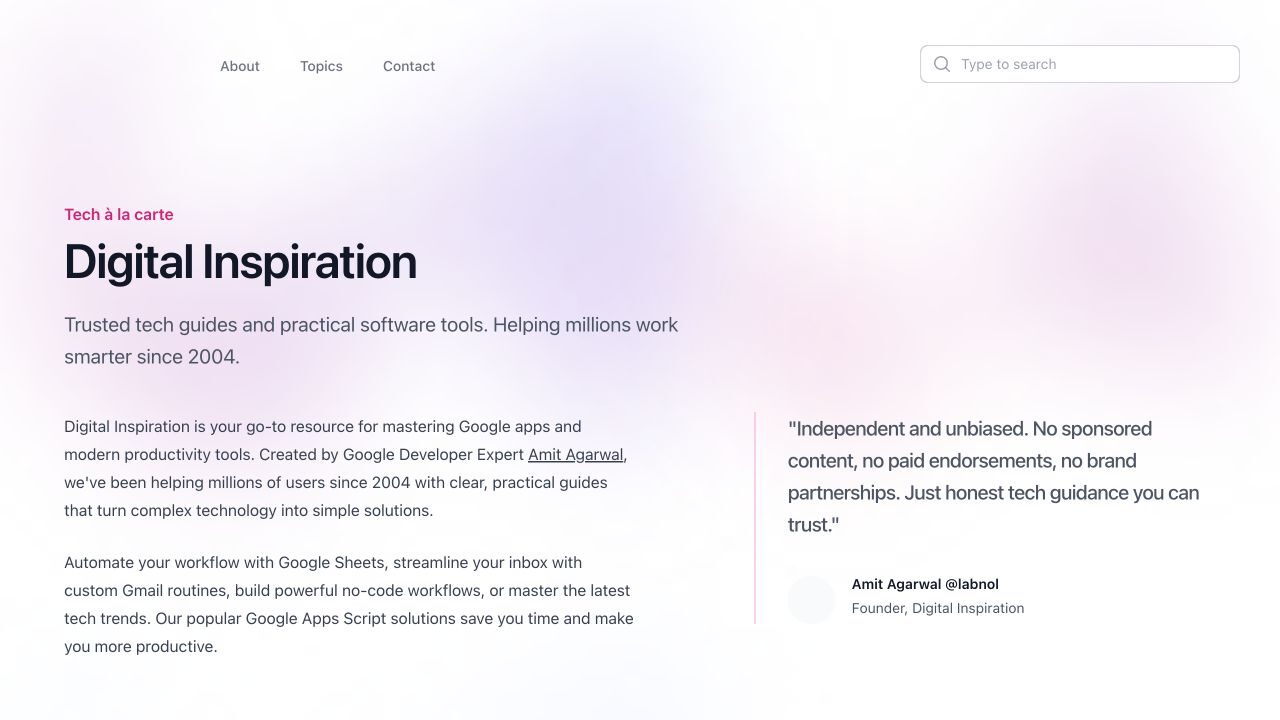
Amit Agarwal left his corporate job in 2004 and is widely credited as India’s first professional blogger, and Digital Inspiration is still the model of a technical library done right: Google Workspace, Apps Script, and automation tutorials that solve one problem each. The striking number: of an estimated 1.7 million monthly search visits, about 1.4 million come from the US. An engineer in Agra built a reference the whole world searches for.
Cadence is low and the archive is deep, so check dates on older tutorials before following them into a current product interface.
Anand Khanse
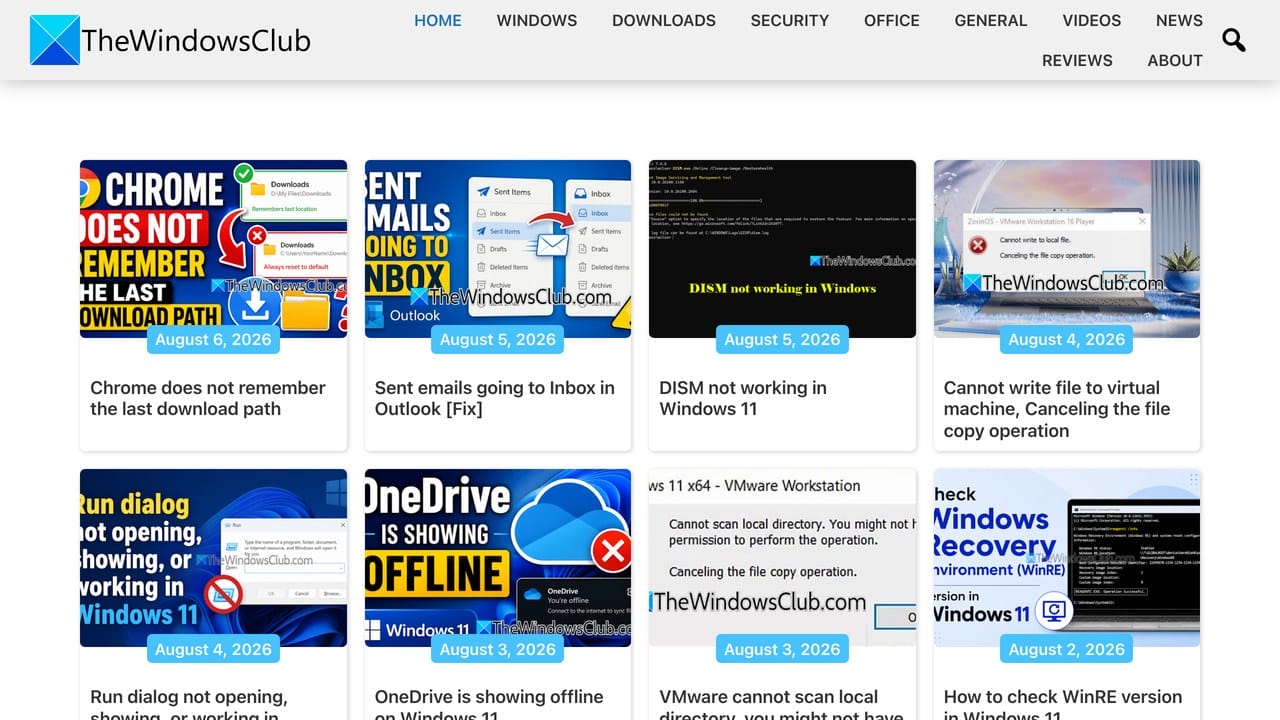
Anand Khanse leads TheWindowsClub, publishing Windows fixes daily with an estimated 254,000 monthly search visits, most of them from outside India. It’s a problem-solving archive, not commentary, which is exactly why it still works. Match any fix to your Windows version before running it.
Varun Krishnan
Varun Krishnan’s FoneArena has covered Indian mobile since 2005 and still publishes daily, drawing an estimated 483,000 monthly search visits, nearly all from India. It’s the fastest way to track Indian phone launches. Launch coverage is not long-term testing, so treat day-one verdicts accordingly.
Jignesh Padhiyar
Jignesh Padhiyar’s iGeeksBlog serves Apple users with how-to guides and troubleshooting, publishing daily. Its estimated 140,000 monthly search visits skew heavily American, which matches Apple’s market reality. It’s a team publication with commercial buying guides, not a personal diary.
Arun Prabhudesai
Arun Prabhudesai founded Trak.in in 2007, and its Stories section still covers Indian tech, telecom, and business news. The estimated 26,000 monthly search visits are a shadow of its influence years, and fast news should always lead you back to the primary source. The site matters most now as a running record of Indian tech’s last two decades.
Sourav Basak
Sourav Basak’s Namaste UI spans design, development, marketing, and business, with heavy guest contribution. That breadth is the tradeoff: an estimated 11,000 monthly search visits across many shallow categories, and the site now openly markets guest-posting and link-placement services, which tells you what it optimizes for. Read specific posts that match your problem rather than following the feed.
Startups and programming
Two projects here outgrew the word “blog” entirely, and both started as one person publishing consistently about one subject.
Shradha Sharma
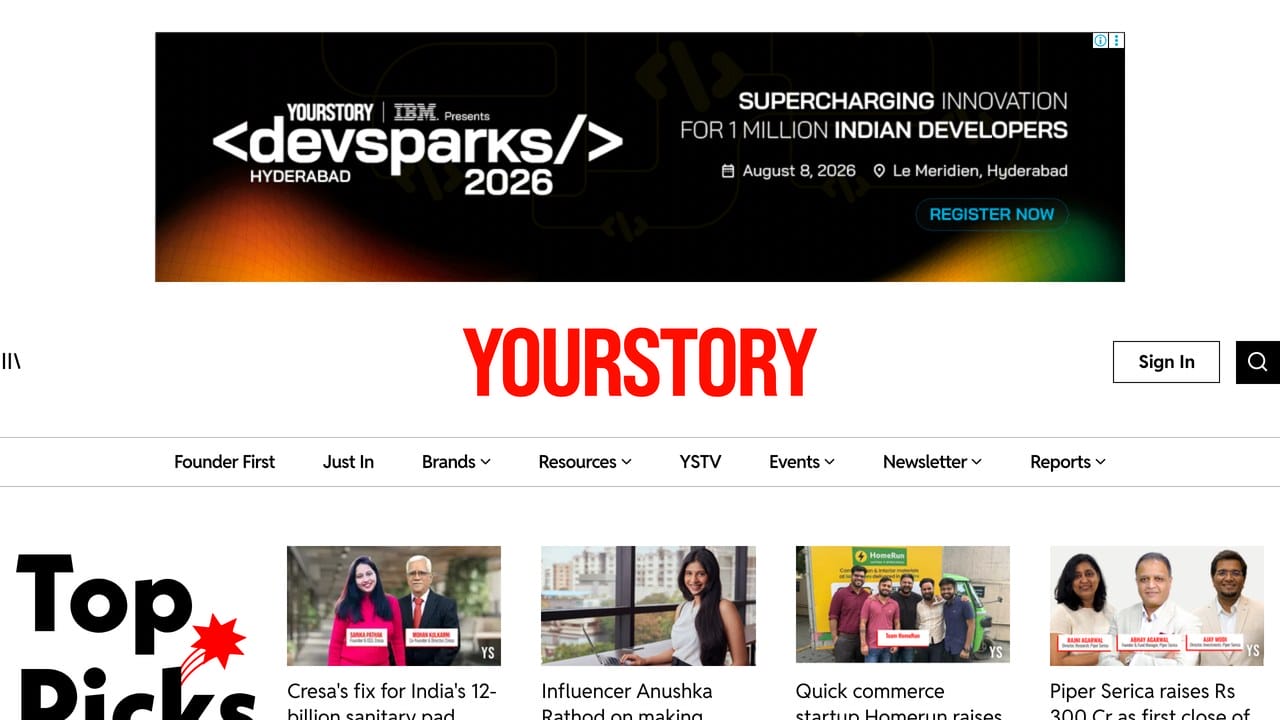
Shradha Sharma founded YourStory in 2008 to tell founder stories nobody else covered, and it’s now India’s largest startup media platform with an estimated 472,000 monthly search visits. It remains the fastest way to map the Indian startup ecosystem. Branded programs and events sit beside editorial, so note which one you’re reading.
Sandeep Jain
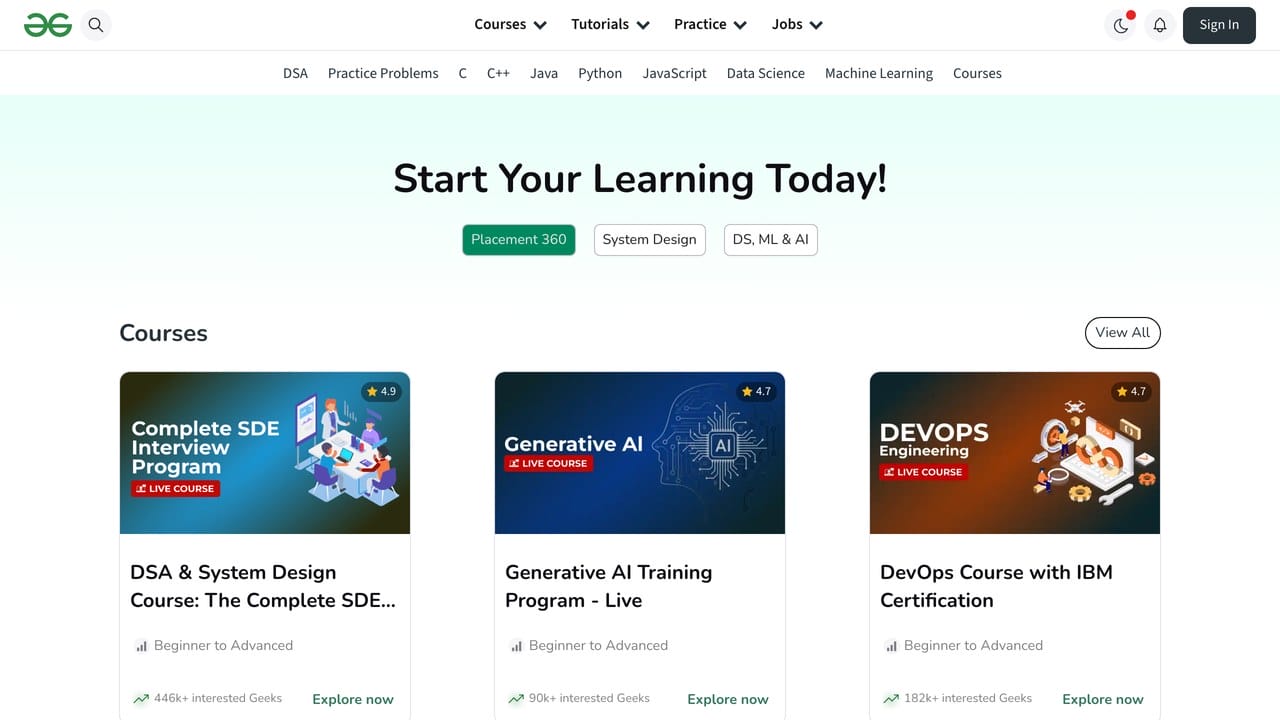
Sandeep Jain started GeeksforGeeks in 2009 as algorithm notes and built it into the largest thing on this page: an estimated 107 million monthly search visits across India and the US. It’s the default reference for Indian programming students and interview preparation. It’s also a multi-author education company now, so verify examples against current framework versions before shipping them.
Personal finance and investing
Finance is where Indian blogging aged best, because trust compounds the way money does. Three of the four names here turned their blogs into real financial businesses. None of what follows replaces regulated, personalized advice.
Manish Chauhan
Manish Chauhan co-founded JagoInvestor and spent 15+ years teaching Indian investors behavior before products: emergency funds, term insurance, goal-based planning. The blog publishes at a slower, steady pace, and the fundamentals archive holds up. Search traffic is modest because the audience is direct, and the firm’s advisory services sit behind the education.
Deepak Shenoy
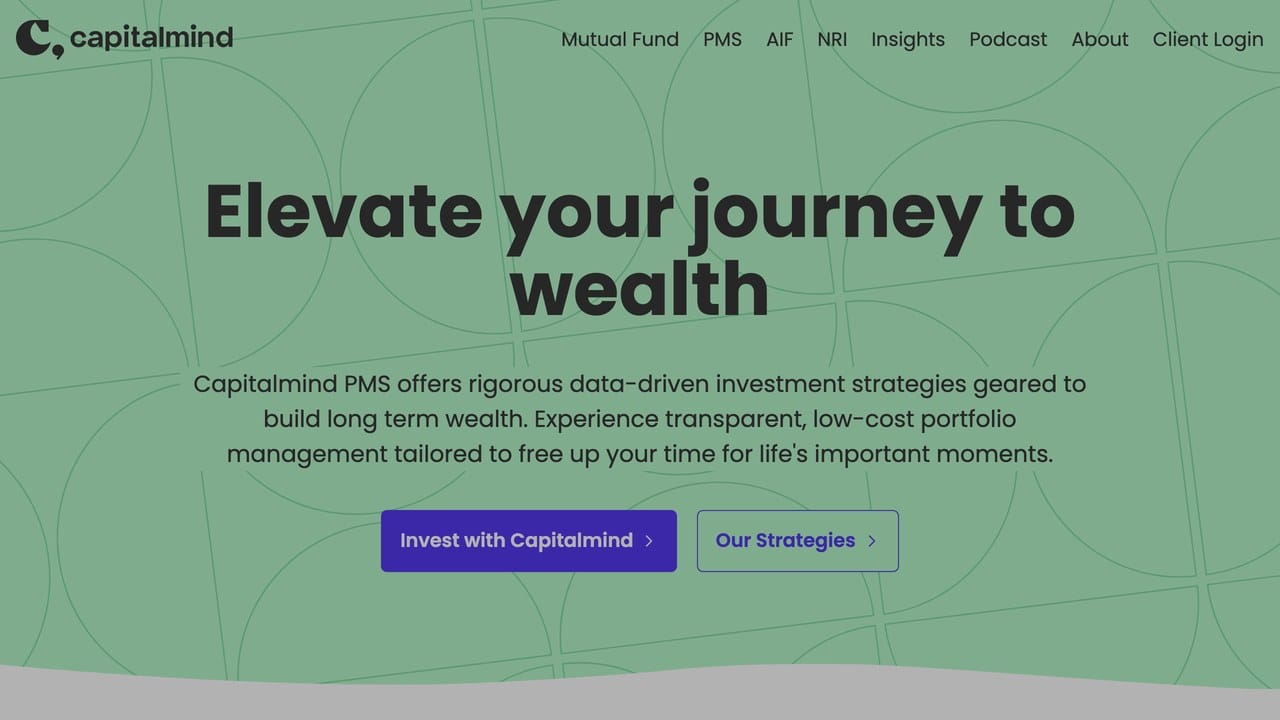
Deepak Shenoy’s Capitalmind is the strongest blog-to-business arc in Indian finance. The markets blog became a premium research service, then a PMS, and in April 2025 received final SEBI approval to run Capitalmind Mutual Fund; its Flexi Cap Fund crossed Rs 100 crore in assets within 35 days of its July 2025 launch. He also wrote Money Wise. The free blog is now the smaller surface of the operation, so expect the deepest work behind the subscription.
M. Pattabiraman
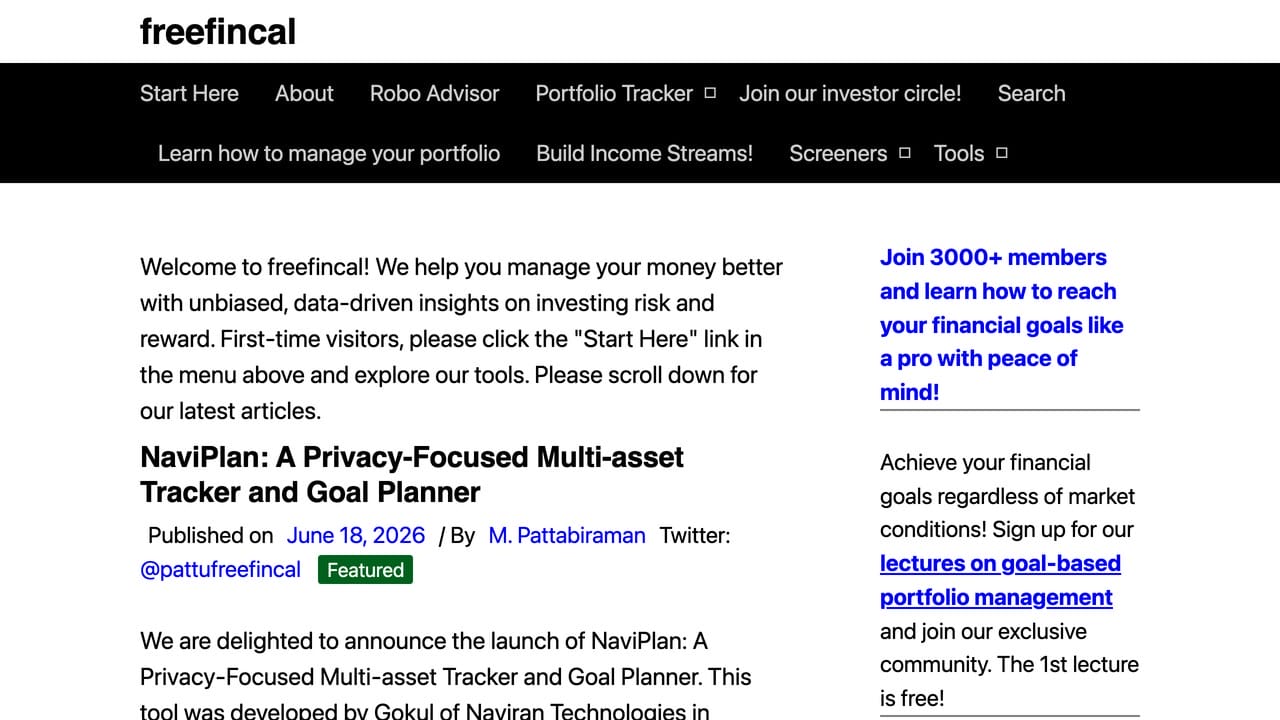
M. Pattabiraman, an IIT Madras professor known as Pattu, has published Freefincal daily for over a decade: portfolio audits, mutual fund analysis, and 100+ free calculators built on actual arithmetic instead of opinion. The site states over a million readers a year, most arriving directly rather than through Google. The house style is dense and unsparing, which is the point. If you want comfortable answers, this isn’t the desk.
Vishal Khandelwal
Vishal Khandelwal’s Safal Niveshak marked 15 years in July 2026, teaching value investing and investor psychology to a claimed 90,000+ newsletter subscribers. He sells thinking tools, including The Sketchbook of Wisdom, rather than stock tips. That’s also the limitation by design: you won’t get buy-sell calls, and that’s the reason to trust the rest.
Food
Food is the quiet giant of Indian blogging. While the tips niche argued about AdSense, the recipe writers built the largest independent audiences in the country and turned them into cookbooks.
Dassana Amit
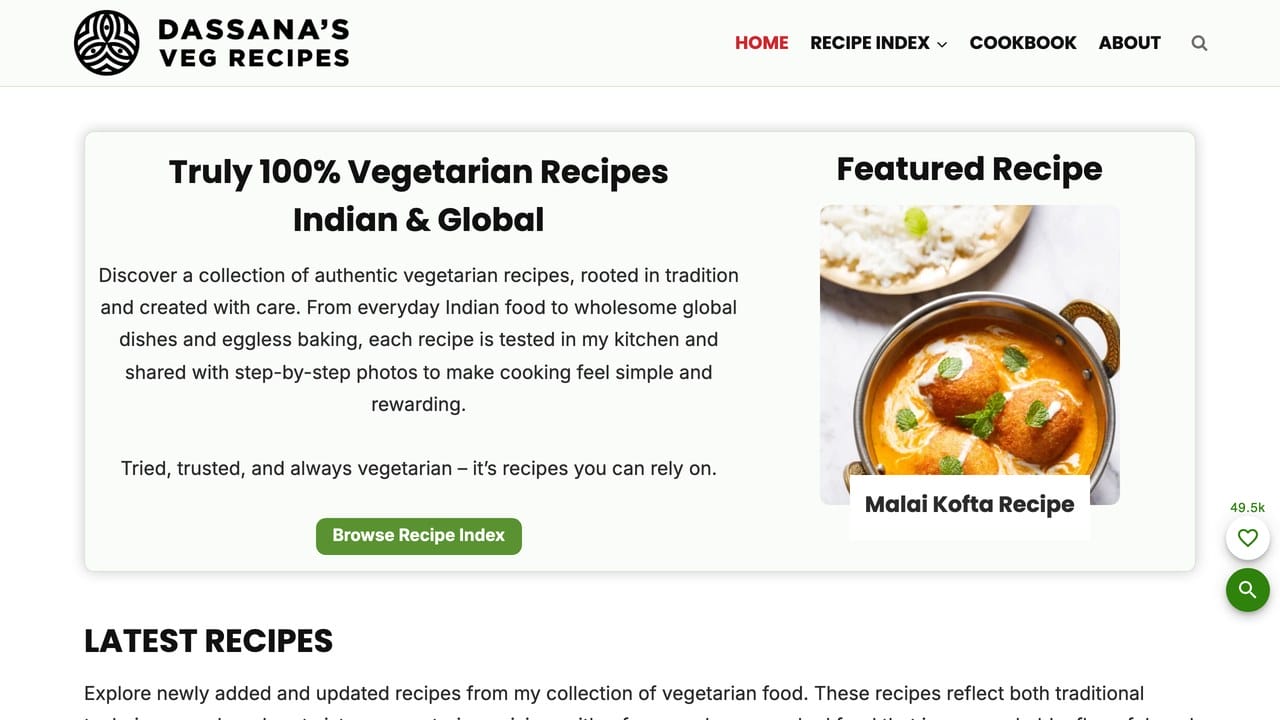
Dassana Amit has tested and photographed vegetarian recipes since 2009, and Dassana’s Veg Recipes is now the most-visited independent blog on this list at an estimated 7.9 million monthly search visits, more than every blogging-advice site here combined, many times over. Her first cookbook arrived in 2024. The scope is deliberately vegetarian-only, and recipe search is squarely in Google’s AI-answer crosshairs, which makes her direct audience the moat to watch.
Archana Doshi
Archana Doshi has run Archana’s Kitchen since 2007, growing it into a team-run food platform with an estimated 335,000 monthly search visits and, as of April 2026, the cookbook Everyday Indian, published with Weldon Owen and distributed by Simon & Schuster. Meal plans and everyday cooking are the strength. It’s a publication now, so individual recipes carry team bylines rather than one voice.
Nisha Madhulika
Nisha Madhulika started her Hindi recipe blog in 2007 and became the clearest example of blog-to-video migration in India: 15.1 million YouTube subscribers and around 3.5 billion lifetime views, against an estimated 141,000 monthly search visits to the site. Follow her on YouTube; use the site as the searchable index of the same recipes.
Travel
Indian travel blogging survived by going deeper than itineraries: heritage, sustainability, and lived experience that a generated summary can’t fake. These two anchor the niche, and the dedicated guide to the best travel bloggers in India goes further.
Anuradha Goyal
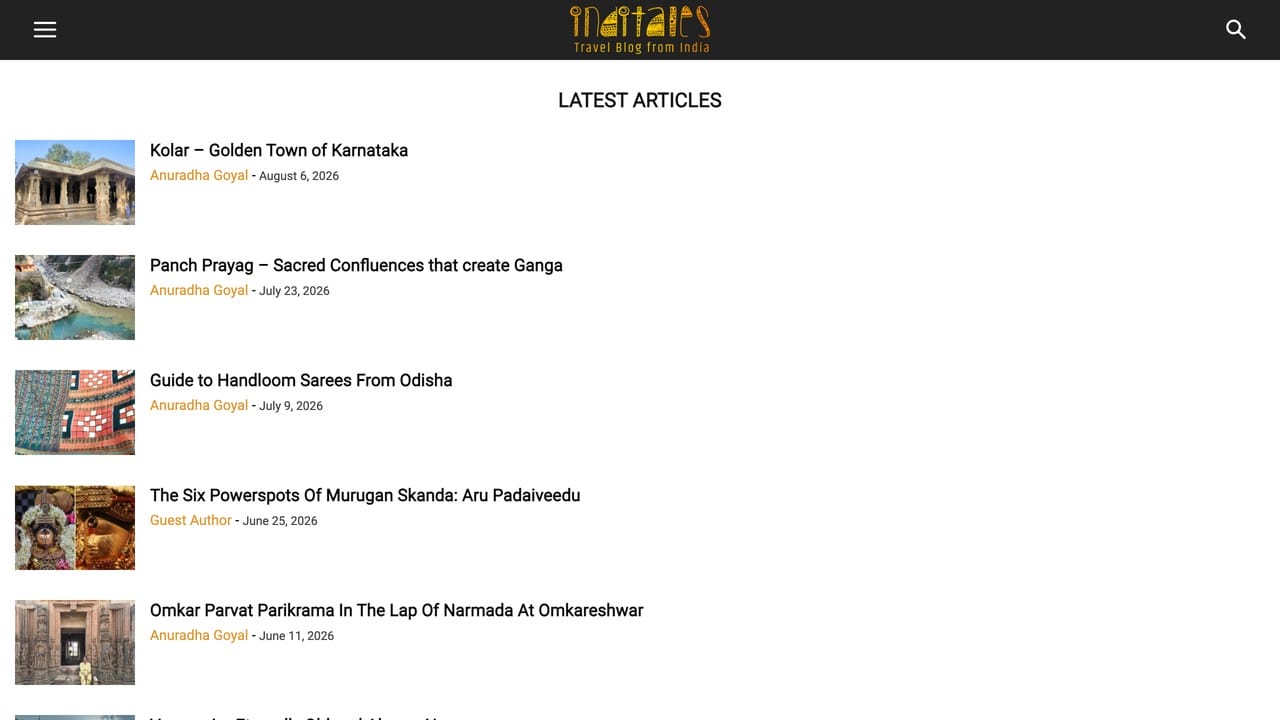
Anuradha Goyal has written IndiTales since 2004, documenting temples, heritage sites, and living culture across India, with eight books including Lotus in the Stone. The site publishes on a steady cadence and draws an estimated 308,000 monthly search visits, almost entirely from India. The focus is devotional and historical travel; if you want backpacker logistics, look elsewhere.
Shivya Nath
Shivya Nath sold her belongings at 23 and has written The Shooting Star since 2011, turning it into a Penguin bestseller of the same name. Her second book, Rootless and Restless, arrived from Penguin in April 2026 and pushes past destination writing into migration, identity, climate, and the costs of a rootless life. The blog draws an estimated 322,000 monthly search visits, and her most frequent writing now lands in her Substack newsletter first. She writes sustainable, solo, often vegan travel; luxury-resort readers are not the audience.
Personal essays and lifestyle
The personal blog, the form all of this started with, has thinned to a handful of committed holdouts in India. Three of them keep it alive in different registers.
Amit Varma
Amit Varma started India Uncut in 2004 and remains the only two-time winner of the Bastiat Prize for journalism, in 2007 and 2015. The blog’s search traffic is trivial because his audience follows him directly, through the India Uncut newsletter and The Seen and the Unseen, one of India’s most respected podcasts. He’s the proof that a writer can outlive every platform shift by owning the relationship with readers.
Arvind Passey
Arvind Passey has published essays, reviews, travel notes, and photography under his own name for decades, with posts as recent as March 2026. The mix is intentionally personal rather than niched, which caps its search traffic and is also exactly its charm. Read it like a long-running column, not a reference.
Dipti Tiwari
Dipti Tiwari’s Gorgeously Flawed covers beauty, skincare, and lifestyle, with a small but current archive updated as recently as May 2026. Independent beauty blogging has been almost entirely absorbed by Instagram, which makes a written, searchable review archive rarer than it sounds. Product suitability varies by skin type; treat health claims with the usual care.
The quiet archives
These names shaped Indian blogging’s first two decades, and their sites now publish rarely or not at all. They stay in this guide because the archives still hold value, and because pretending they’re active would defeat the point of it.
Iftekhar Ahmed
Iftekhar Ahmed’s IFTISEO documented SEO experiments and case studies, and its last substantial work dates to around 2020. SEO tactics from that era are historical reading now, occasionally useful, never a playbook.
Jyoti Chauhan
Jyoti Chauhan’s Updateland reviewed software and privacy tools into 2025, but its search presence has fallen to effectively zero. Check current versions, ownership, and pricing before acting on any review there.
Siddharth Sharma
Siddharth Sharma’s personal tech site under the Sanu Siddharth name shows no recent dated publishing and no measurable search footprint. It’s an archive of an earlier voice, kept here for the record.
Rahul Setia
Rahul Setia’s TechBlogCorner last published in mid-2025 and now draws an estimated few hundred search visits a month. The software and marketing archive is intact; its freshness isn’t.
Amit Bhawani
Amit Bhawani moved his energy from the PhoneRadar blog to YouTube years ago, where his Hindi tech content found the audience the blog couldn’t hold. The site remains as a smartphone archive with an estimated 8,000 monthly search visits. He didn’t quit publishing; he changed formats, which is its own lesson.
Pradeep Kumar
Pradeep Kumar’s HellBound Bloggers was one of India’s earliest community blogs, built on guest contributors before “creator economy” was a phrase. Its last post dates to late 2025. Study it as a model of community publishing; don’t expect a current feed.
How to use this list
Pick three sources with different incentives: one practitioner, one edited publication, and one specialist archive. Read their latest work before subscribing, then keep the two that consistently help you decide something. The bloggers who built real businesses make a useful companion read, because the business model behind a blog predicts its lifespan better than its fame does.
- Check the date. Software, SEO, finance, and product advice ages in months now, not years.
- Check the author. A named specialist and an anonymous team article carry different evidence.
- Check the business model. Affiliates, courses, funds, and events all shape what gets published and what gets skipped.
- Check the original source. News and numbers should trace back to filings, documentation, or official announcements.
- Check the fit. A famous blogger outside your problem is worth less than a small specialist inside it.
And if reading this makes you want to start rather than follow, start with the economics clear-eyed: the ad-supported generalist blog is gone, but a specialist with a subject and a product still works. The playbook in blogging from zero to your first $100 is the version of that path without the income-screenshot fantasy.
Frequently asked questions
Who are the top 10 bloggers in India?
A practical cross-niche starting ten: Amit Agarwal (Digital Inspiration), Harsh Agrawal (ShoutMeLoud), Shradha Sharma (YourStory), Sandeep Jain (GeeksforGeeks), Dassana Amit (Dassana’s Veg Recipes), Deepak Shenoy (Capitalmind), M. Pattabiraman (Freefincal), Anuradha Goyal (IndiTales), Anand Khanse (TheWindowsClub), and Shivya Nath (The Shooting Star). Pick by the subject you want to learn, not by fame.
Who is India’s number one blogger?
There is no defensible universal number one. Amit Agarwal has the longest full-time record and is widely credited as India’s first professional blogger, publishing since 2004. By search traffic, Dassana Amit’s recipe blog leads every independent site here with an estimated 7.9 million monthly Google visits. By raw scale, GeeksforGeeks is largest, but it operates as an education company now.
Is blogging dying in India?
Generic blogging is struggling. Organic search’s share of traffic slipped through 2025, AI summaries eat informational clicks (Pew found traditional results clicked in 8% of AI-summary visits versus 15% without), and most pages never receive a Google visit. But specialist Indian blogs in food, finance, travel, and programming still draw hundreds of thousands to millions of monthly readers, and they increasingly earn through products rather than ads.
How were these Indian bloggers selected?
Current publishing activity, subject focus, accountable authorship, an understandable business model, and third-party traffic estimates. Traffic figures are DataForSEO estimates of monthly Google search visits in India and the US, from August 2026, modeled from rankings rather than analytics. Income screenshots and follower counts were not treated as evidence, and my own site’s figure comes from the same methodology, disclosed as mine and kept out of the curated top ten.
Which Indian blogger should a beginner follow?
Choose by goal. Use Amit Agarwal for automation, Sandeep Jain’s GeeksforGeeks for programming, Dassana Amit or Archana Doshi for cooking, M. Pattabiraman for personal finance, Deepak Shenoy for markets, Anand Khanse for Windows help, Anuradha Goyal for travel, and Harsh Agrawal or Anil Agarwal for blogging itself.
Can blogging still become a business in India?
Yes, but rarely through ads alone. The blogs on this list that grew turned into products: Capitalmind became a SEBI-approved mutual fund house, Freefincal sells courses and calculators, GeeksforGeeks became an education platform, and both major food blogs published cookbooks. The blog is the audience engine; the business sits on top of it.
Final word
The Indian blogging era that measured success in AdSense checks is over, and this list stopped pretending otherwise. What replaced it is smaller and sturdier: specialists with real subjects, direct audiences, and products that survive an algorithm change. Follow the ones closest to your work, note their incentives, and watch what they sell, because that tells you what the writing is for. Reputation earns a click. Current, useful work earns the subscription.
Tell Google you want more of this.
Add Gaurav Tiwari as a preferred sourceOne tap, and this site shows up more often in your own Top Stories, AI Overviews and AI Mode. Remove it any time.