
 by
bySo you’re a student, you need income that fits between lectures, and tutoring looks like the obvious answer. It is. Online tutor jobs for students are one of the few part-time options where being a student works for you instead of against you: the syllabus is still fresh in your head, and you’ve already explained half of it to classmates the night before an exam.
Most students who search for this fall into one of two traps. The first group drifts toward sites that pay you to do someone else’s homework, which isn’t tutoring, it’s ghostwriting with your own account on the line. The second group never applies anywhere, assuming these platforms only want B.Ed holders and retired professors.
Both beliefs cost you money. Several legitimate platforms accept university students today, some of them explicitly, on their own tutor pages, and the legitimate route pays without putting your name inside someone else’s misconduct case.
You are paid to explain, not to impersonate.
The 7 platforms below cover the realistic routes, grouped by who they fit:
- Superprof India, MyPrivateTutor and TeacherOn, where you find students in India on your own terms
- Preply, where learners around the world find you, languages especially
- Vedantu, a structured teaching role with fixed evening hours
- Tutor.com and Wyzant, for students who live in the United States
I haven’t taught on these platforms myself. Everything below comes from their current tutor pages, fee documents and application rules, read the way I’d read them before signing up.
Compare Online Tutor Jobs for Students
Eligibility decides more than pay. A high advertised rate means nothing if the platform won’t take your country, your education level or your evening availability, and every platform here filters on at least one of those. Find your situation in the table, then jump to the platform that survives it.
| Platform | Best fit | Can a current student apply? | How money works | Main restriction |
|---|---|---|---|---|
| Superprof India | India-based academic or skill tutors | Yes, explicitly | You set the rate; no lesson commission stated | You must win inquiries through your profile |
| Preply | Languages and globally teachable subjects | Yes, if 18+ and approved | You set the rate; 100% commission on each new student’s trial, then 33% to 18% | Approval depends partly on subject demand |
| MyPrivateTutor | India students seeking direct clients | Yes, explicitly | You negotiate and collect payment directly; no transaction commission stated | You supply the teaching and payment tools |
| TeacherOn | Tutors comfortable evaluating individual leads | Possible; no universal degree rule stated | Direct terms with the student; some leads cost coins to contact | Lead quality and response are not guaranteed |
| Vedantu | India tutors who want a structured platform | Possible if the application passes screening and demo | Platform teaching role; no registration fee stated | Expects at least three hours daily between 4 PM and 10 PM IST |
| Tutor.com | US college sophomores and graduates | Yes, from college sophomore level | Set hourly rate by subject; details follow the exam stage | US residence, SSN, and work eligibility required |
| Wyzant | US tutors who want to set their own rate | Yes, subject to profile approval | You set the public rate and apply to matching jobs | US residence and a valid SSN required |
If a row disqualifies you, that’s the table doing its job. Reading 6 filters now is cheaper than building 6 dead profiles later.

Tutoring Is Not Homework Outsourcing
Before you build a profile, I want this boundary clear, because half the results for online tutoring jobs are quietly selling something else. A tutor explains a theorem, works through a similar example, comments on a draft and helps a learner plan revision. The learner still produces and understands the work they submit.
- Legitimate: teaching a method, checking an attempted solution, giving feedback and setting new practice.
- Not legitimate: writing a graded essay, solving an assessed take-home exam, impersonating a student or supplying a ready-to-submit answer.
- The test: after your session, can the learner solve a similar problem without copying your work?
If the answer is yes, you tutored. If the answer is no, you were the product, and the account risk, payment risk and college-record risk that come with assignment marketplaces are all yours.
Superprof India
Superprof India is my pick for a first profile if you’re an Indian student who can teach a school subject, a language, an instrument or a skill. Its tutor page welcomes university students by name, publishing your ad costs nothing, and the rate shown on your ad is the rate you chose.
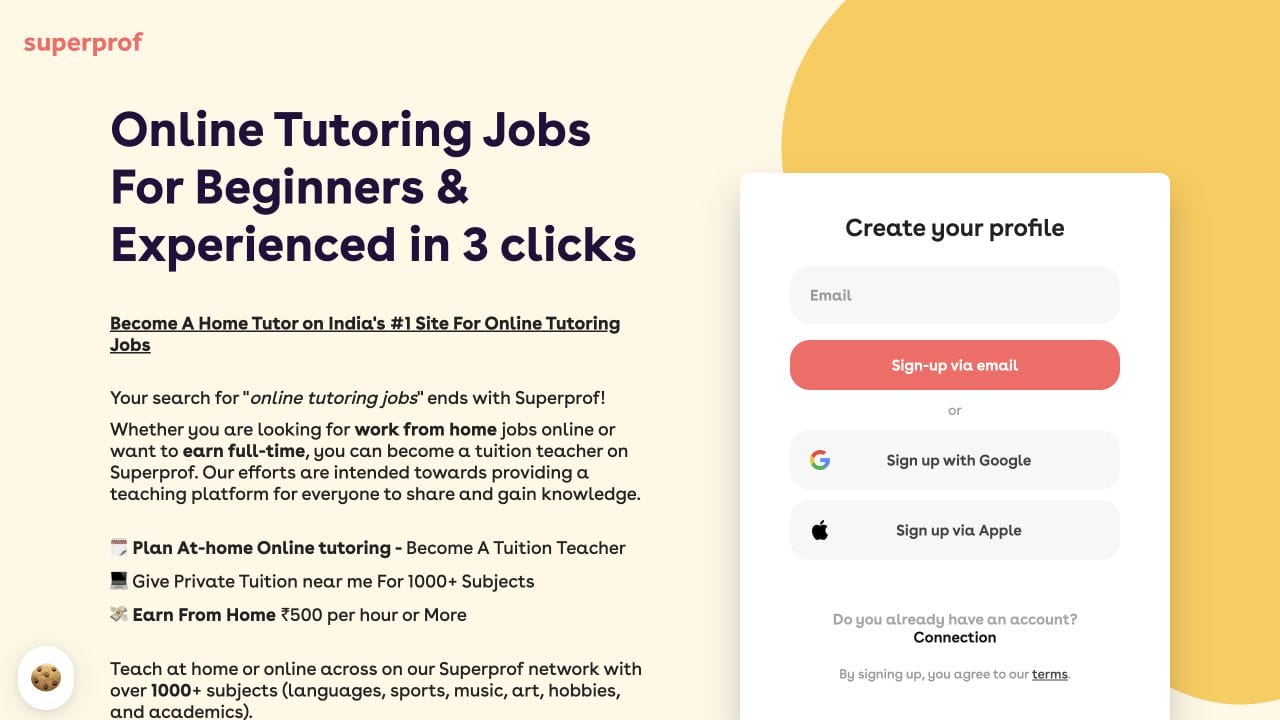
- Who can apply: experienced teachers, university students and working professionals, stated on the tutor page itself.
- Money: creating and publishing ads is free, and Superprof’s own page floats ₹500 an hour or more as the working range.
- How students arrive: they find your ad and contact you, online or in person.
The catch is that a published profile isn’t a booked lesson. Inquiries follow reviews, a specific subject line and a credible photo, and a new profile starts with none of the 3. Treat the first month as profile-building, not income.
Preply
Preply is the one to take seriously when your subject can travel: languages first, then school and university subjects with international demand. Applicants must be 18 or older, no teaching certificate is required, and every profile goes through review, where low demand for your subject can mean rejection even when your application is fine.
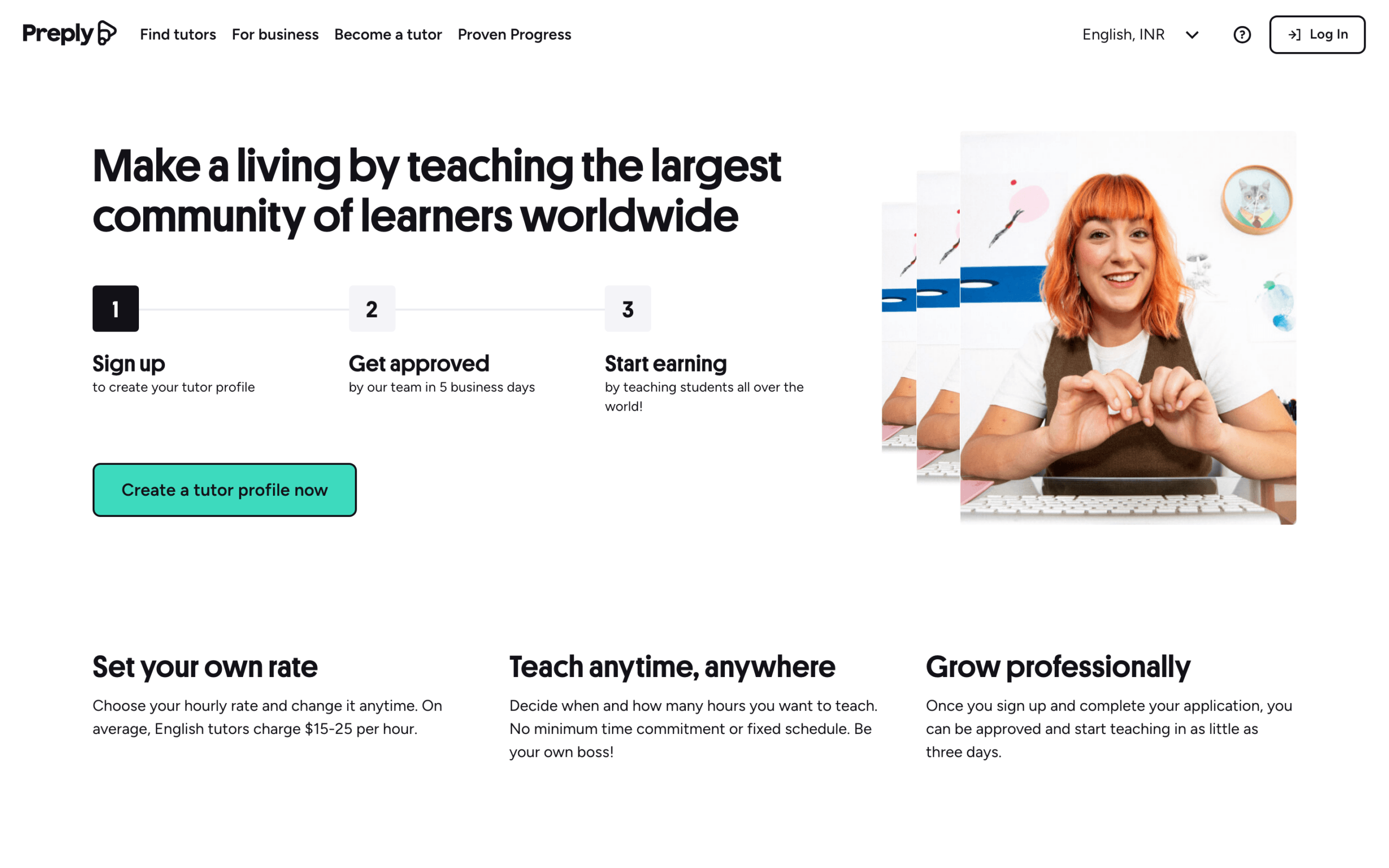
Now the commission, because this is where most new tutors misread the platform. Say you list at ₹800 an hour:
- The trial lesson with every new student pays you ₹0. Preply keeps all of it.
- After the trial, commission starts at 33%, so you keep ₹536 of that ₹800.
- It falls with completed hours, 28% after 20 hours, settling at 18%, which is ₹656.
So the displayed rate is the least honest number on your profile. I’d price around the commission from day one and treat every trial as an audition you’re funding yourself. Retention is the whole game here; a student who stays 20 lessons is worth more than 3 who try one each.
MyPrivateTutor
MyPrivateTutor says outright that current students can tutor, and it works the opposite way to a managed platform: it hands you the lead and steps aside. You apply to posted jobs or receive direct inquiries, negotiate the fee yourself and collect payment directly from the learner.
- Money: registration is free and the platform says it takes no commission from what the learner pays you.
- What you supply: the video-call setup, the scheduling, the invoices and the payment safety.
That freedom is the tradeoff. Superprof at least gives you a marketplace with rules; here you’re running a tiny tuition business from day one. For my money it makes sense as a second profile, once you know your subject sells, not as the first.
TeacherOn
TeacherOn is a lead board. Students post what they need, across academics, languages, software and music, and tutors respond. Direct inquiries through your profile are free, while contacting some posted leads costs coins, and you and the student settle the fee and payment method between yourselves.
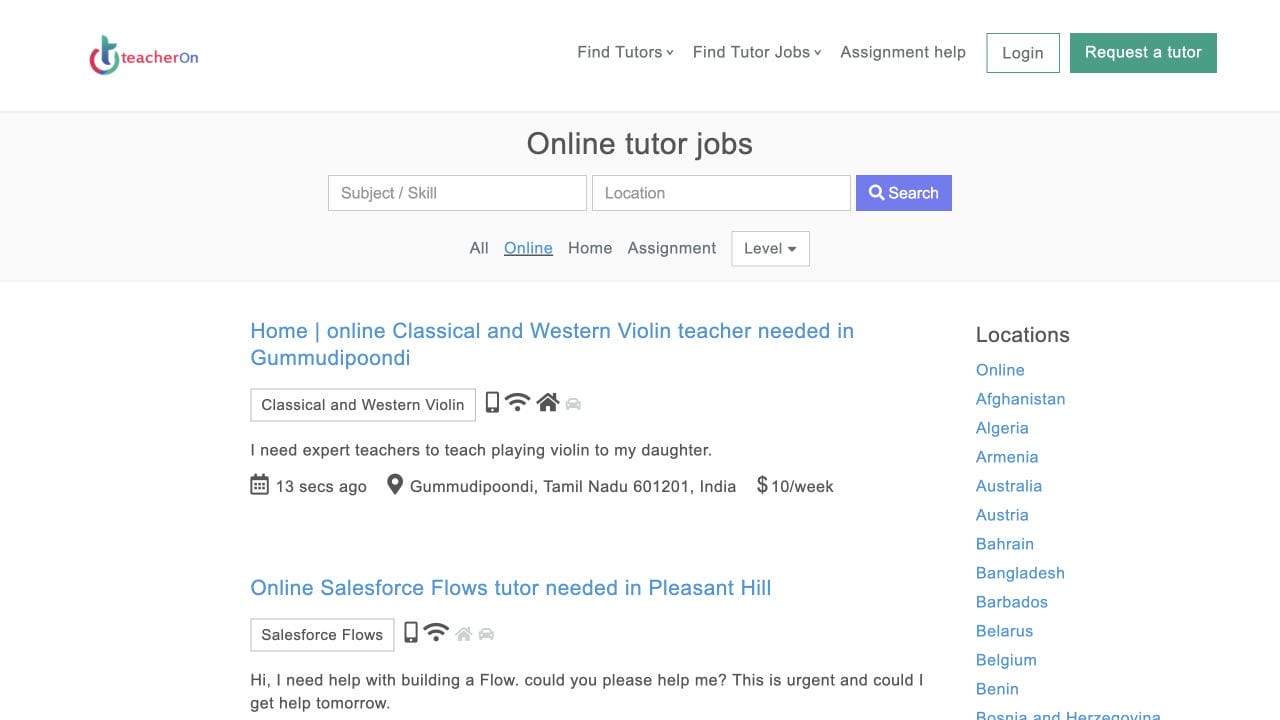
I’d skip buying coins until a free lead has actually converted into a paying student, because paying to contact someone doesn’t make them reply. And a steady share of posts on any lead board are really asking for assignment work in tutoring clothes. You now know the test for those. Decline and move on.
Vedantu
Vedantu is closer to a job than a marketplace. The application runs through profile screening, a teaching demo and onboarding with training, there’s no registration fee, and the expectation printed on the teacher page is at least 3 hours of daily availability between 4 PM and 10 PM IST, consistently.
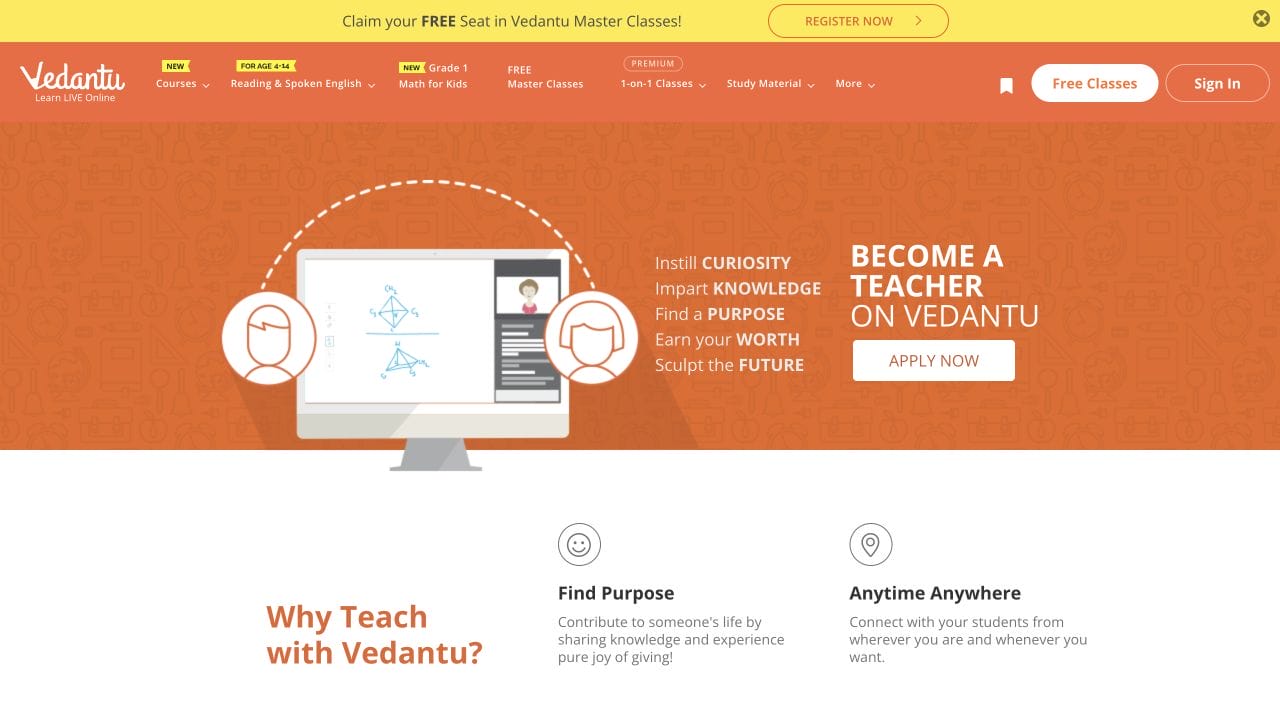
- Vedantu’s own numbers: ₹25,000 plus per month at about 4 hours a day, ₹75,000 plus for full-time educators. Treat both as the platform’s marketing ceiling, not a floor.
- Setup it expects: a capable laptop, broadband and a digital pen tablet for live classes.
The evening window is the real filter. 4 PM to 10 PM daily through a heavy semester is a commitment most college timetables won’t survive, so I wouldn’t apply mid-semester unless those hours are genuinely yours. If you do apply, a writing tablet stops being optional; the pen tablets guide for online teaching covers what works at student budgets.
Tutor.com
Tutor.com is the defined route for US college students, and the strictest gate on this page. You must live in the United States, hold a valid Social Security Number, be eligible to work there without sponsorship, and be at least a college sophomore in a 4-year program or already hold a 4-year degree.
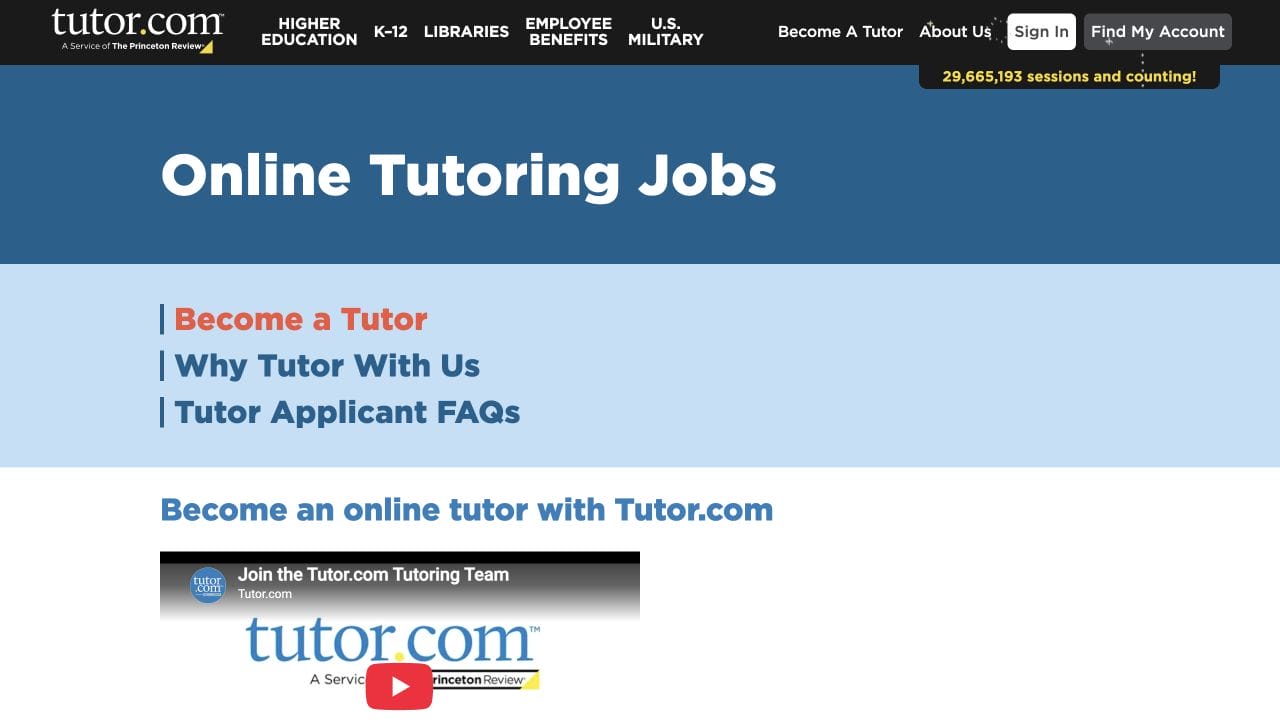
- Commitment: at least 5 tutoring hours a week, scheduled flexibly.
- Money: a set hourly rate by subject, disclosed after the application and subject-exam stage.
- Hard no: applicants needing F-1, OPT or H-1B sponsorship can’t be accepted.
Within its gate, this is the least entrepreneurial option here: pass the exam and the platform brings the students. If you’re an international student in the US, that visa line isn’t fine print, it’s the answer. Ask your campus adviser before you spend an evening on the application.
Wyzant
Wyzant is the US marketplace answer to the same problem: approved tutors publish a profile, set their own hourly rate, apply to matching jobs and take direct inquiries, online or in person. Like Tutor.com it requires US residence and a valid Social Security Number, and its support docs put profile review at 3 to 10 business days.
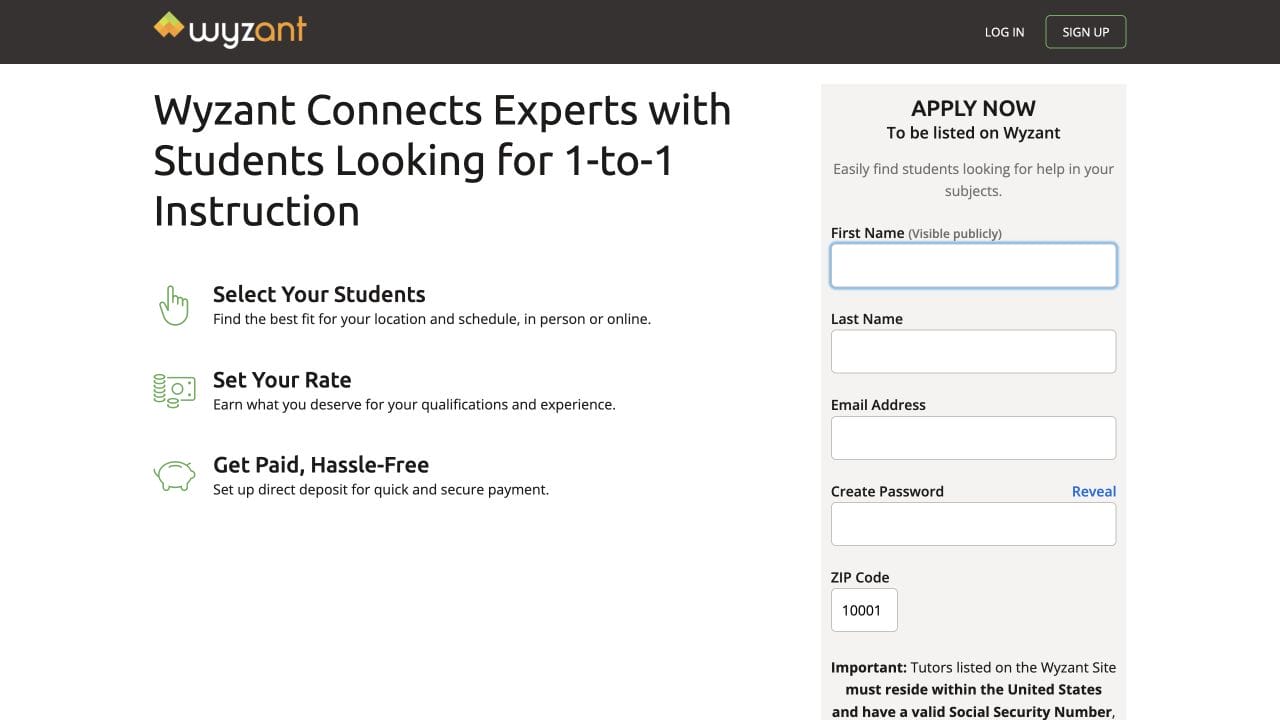
The tradeoff against Tutor.com above is who finds the student. Tutor.com feeds you sessions at its rate; Wyzant makes you compete for them at yours. That’s better pay per hour once reviews accumulate and slower money before they do, the same cold-start problem Superprof gives Indian tutors.
Choose by Eligibility, Not the Biggest Pay Claim
Shortlist in this order: country, education requirement, weekly availability, subject demand, fee model, payment protection. Rate comes last because it’s the only number the platforms inflate and the only one you can’t verify before teaching.
- Flexible income in India: start with Superprof, add MyPrivateTutor once demand is proven.
- A subject with global demand: Preply, priced around its commission.
- Active lead hunting: TeacherOn, free inquiries first.
- Free evenings and a managed role: Vedantu, only if the 4 to 10 PM window fits.
- Eligible in the US: Tutor.com for fed sessions, Wyzant for your own rate.
If tutoring is one option among several for you, the guide to online jobs that need little or no experience lines up the alternatives by skill and schedule.
Build an Application That Gets Replies
The fastest way to get ignored on every one of these platforms is the profile that says “I teach all subjects.” Nobody books it. A parent choosing a tutor isn’t buying knowledge in general, they’re buying one gap closed for one learner, and your profile either names that gap or it doesn’t.
What most student profiles say:
I am an engineering student. I can teach maths, physics, chemistry, English and computer science for all classes. Fees negotiable.
What gets replies:
I teach CBSE Class 10 maths, algebra and trigonometry mainly. I scored 95 in boards and these are the chapters I’ve coached my juniors through. Tuesday and Thursday evenings, ₹300 an hour online.
Same student. The second one gets the inquiry because every claim in it can be verified and a parent can picture the exact class being booked. Build the rest of the application the same way:
- Pick one teachable outcome. CBSE Class 10 algebra, first-year Python, conversational Hindi, IELTS speaking. One, not five.
- Name the learner. Grade, exam, curriculum or starting level.
- Prepare a 10-minute sample. Explain one idea, let the learner attempt a similar task, correct the method without taking over. This doubles as your Vedantu demo and your Preply video.
- Show proof you have. Marks, coursework, certificates, a sample note. Don’t invent experience; platforms and parents both check.
- State availability precisely. “Tuesday and Thursday, 7 to 9 PM IST” beats “flexible timings” every time.
- Compute your net rate. Subtract commission, unpaid trials, payment charges and preparation time before comparing platforms.
Avoid Scams and Account Risk
Legitimate online tutoring jobs still attract bad leads, and a familiar platform name doesn’t make every request safe. The rules that keep you out of trouble are boring and absolute:
- Never pay a recruiter for a guaranteed job or a guaranteed student.
- Never share one-time passwords, bank credentials, identity documents over chat or remote access to your computer.
- Keep early communication and payment inside the platform when it offers that protection.
- Refuse requests to take a test, log into a school portal, write a graded paper or hide who produced the work.
- For direct clients, agree on subject, session length, fee, cancellation terms and payment timing in writing.
Outdated lists of online tutoring jobs in India still route applicants to Chegg’s Q&A Expert program, which closed on March 18, 2026. The current status and the safer alternatives are covered in what happened to earning with Chegg.
A Practical First-Month Plan
Here’s how I’d run the first month: one marketplace plus one structured option you’re actually eligible for, and a small log of what happens on each.
- Week 1: define one subject offer, prepare the 10-minute sample and complete both profiles fully.
- Week 2: apply only to suitable requests and log inquiries, replies, scheduled trials and net earnings.
- Week 3: fix whichever step is leaking. No inquiries means the headline and photo; inquiries but no trials means the price or the reply speed.
- Week 4: keep the platform producing serious conversations, pause the one producing noise.
Once repeat students and referrals replace marketplace luck, the next question is whether to run your own online tutoring business instead of renting a platform’s audience. Prove demand first, then build.
What Quietly Kills a New Tutor Profile
None of these are errors a platform will flag. They just make sure nothing happens.
Creating profiles on all 7 platforms in one evening. It feels like coverage, but 7 half-filled profiles generate less than 1 complete one, and you can’t answer inquiries seriously on platforms you’ve forgotten you joined.
Pricing at the top of the market with zero reviews. The rate says expert, the empty review column says risk, and the parent resolves that contradiction by booking someone else.
Replying to every lead with the same paragraph. Students and parents post specific problems; a pasted reply tells them you didn’t read it, and on lead boards like TeacherOn it wastes exactly the coins you paid for.
Going quiet for 3 days. Tutoring inquiries are impulse purchases at exam time. The parent who wrote to you tonight books whoever answers by tomorrow evening.
The Limits
Tutoring pays for hours, and only hours. There’s no version of this where the income continues while you sit your own exams, which is why the platform-dependence question matters more the longer you stay.
- Income scales with your calendar, not your skill. Doubling your rate is hard; doubling your booked hours during a semester is harder.
- Demand follows the exam cycle. Board and entrance seasons flood you, holidays go silent. Budget on the average, not the peak.
- The platforms set the rules. Commission tiers, coin prices and eligibility gates have all changed before and will change again, without asking you.
- The first weeks are slow everywhere. Reviews compound. Nothing you write in a profile substitutes for the first 5 of them.
What no platform supplies: a clearly named subject, sessions that help, and the patience to hold both for a month before judging the results. That part stays yours.
Frequently Asked Questions
Can a college student become an online tutor?
Yes. Superprof India and MyPrivateTutor accept current students explicitly, Preply takes applicants aged 18 or older subject to approval, and Tutor.com accepts eligible US college sophomores or higher. The platforms that don’t state a student rule usually judge your subject knowledge and a teaching demo instead.
Which online tutoring platform is best for students in India?
Superprof India is the simplest starting point because it welcomes university students and lets you set your own rate. MyPrivateTutor suits direct arrangements, Preply suits subjects with global demand, TeacherOn suits active lead browsing and Vedantu suits applicants who can commit to fixed evening hours.
Do online tutoring jobs require a degree?
Not always. Preply says no specific certification or teaching experience is required, and Superprof India welcomes university students. Tutor.com is the strict one: college sophomore standing in a 4-year program or a completed 4-year degree. Check the current country and subject rules before you apply, they change without notice.
How much can a student earn from online tutoring?
There’s no reliable universal figure. Superprof’s tutor page floats ₹500 an hour or more and Vedantu claims ₹25,000 plus per month at about 4 hours a day, but those are the platforms’ own marketing numbers. Your net depends on booked hours, commission, unpaid trial lessons, preparation time and cancellations. Compare money received per total hour worked, not the rate on a profile.
Is doing another student’s homework a tutoring job?
No. Tutoring teaches the method and gives feedback while the learner produces the submitted work. Writing an essay, taking a test or completing a graded assignment for someone else is academic misconduct, and it puts both accounts at risk.
Can an international student in the US use Tutor.com or Wyzant?
Don’t assume so. Tutor.com requires US work eligibility and says it can’t accept applicants who need F-1, OPT, H-1B or similar sponsorship. Wyzant requires US residence and a valid Social Security Number. Confirm your employment authorization with the platform and your campus adviser before applying.
Final Remarks
The search that brought you here treats tutoring as a way to squeeze money out of a degree you haven’t finished. Flip it. You’re selling the one thing you verifiably have, a fresh command of a syllabus someone younger is struggling with, and 7 platforms are willing to introduce you to that someone.
The trade is honest on both sides: you’ll earn less than the advertised rates suggest and more than a profile you never publish. Pick the 1 platform that survives your eligibility check, prepare 1 honest sample lesson and apply this week. The first goal isn’t an income figure, it’s a learner who understands more after your session than before it.
Best of luck.
Tell Google you want more of this.
Add Gaurav Tiwari as a preferred sourceOne tap, and this site shows up more often in your own Top Stories, AI Overviews and AI Mode. Remove it any time.