
 by
by
Chegg Study currently costs $15.95 a month and Study Pack costs $19.95. The service still offers homework solutions and AI-supported Q&A, but Chegg ended authoring access for its managed expert network on March 18, 2026 and shifted Study toward a smaller, AI-driven operation. So the honest question behind every search for Chegg alternatives isn’t “what looks like Chegg”, it’s “what part of Chegg do you actually use”.
No single alternative replaces all of it. ChatGPT’s Study Mode is better for conversational explanations, NotebookLM is better for studying from your own notes, Course Hero and Studocu are closer for course-specific documents, Photomath and Symbolab are stronger for mathematics, and Filo or Wyzant get you a real human tutor. The comparison below shows what is genuinely free, where each service works, who owns it, and what its main limitation is.
What Chegg offers and costs right now
You can’t judge a replacement without the current baseline. Chegg today looks like this:
| Chegg plan | Current price | Main features | Important limitation |
|---|---|---|---|
| Chegg Study | $15.95/month | Homework and textbook solutions, Expert Q&A | Fewer bundled study tools |
| Chegg Study Pack | $19.95/month | Solutions plus math help, quiz and exam help, proofreading, plagiarism detection | No live classroom instruction |
| Expert network | Changed March 18, 2026 | Study continues as a smaller, AI-supported operation | Large-scale human authoring network ended |
Two more facts belong in the picture. Chegg’s consumer pages still advertise 24/7 Expert Q&A, so the service is better described as transitioning away from its large-scale human-expert model than as having eliminated expert support. And in September 2025, Chegg agreed to pay $7.5 million to settle FTC allegations that it made recurring subscriptions difficult to cancel and sometimes failed to honor cancellation requests. Neither fact makes Chegg useless; both explain why so many students are comparing companies like Chegg before renewing.
What part of Chegg do you need to replace?
Chegg is not one feature. Match what you actually used to the right category, and the shortlist picks itself:
| Chegg need | Better category |
|---|---|
| Conversational explanation | ChatGPT Study Mode |
| Study from your own PDFs and notes | NotebookLM |
| Free lessons and practice | Khan Academy |
| Guided US K-12 tutoring | Khanmigo |
| Textbook video solutions | Numerade |
| Course-specific uploaded notes | Course Hero or Studocu |
| Flashcards and practice tests | Quizlet |
| Camera-based mathematics | Photomath |
| Advanced symbolic mathematics | Symbolab |
| Community answers and live science tutoring | Brainly |
| Instant human tutoring in India | Filo |
| Scheduled US one-to-one tutoring | Wyzant |
Chegg alternatives compared
These 12 sites and apps like Chegg each earn a place for one job, not for resembling Chegg’s homepage; websites similar to Chegg in looks alone didn’t make it. Ownership matters too: several apparently independent picks share a parent company, and that’s disclosed in its own column.
| Tool | Best for | What’s free | Human help? | Region | Current price | Parent company | Main limitation |
|---|---|---|---|---|---|---|---|
| ChatGPT | Conversational explanations across subjects | Free plan incl. Study Mode | No | Global | Plus $20/mo | OpenAI | Answers and citations need checking |
| NotebookLM | Studying from your own notes and files | Free with limits | No | Global | Higher limits via paid Google AI plans | Only as good as your sources | |
| Khan Academy | Free structured lessons and practice | Everything | No | Global | Free | Khan Academy (nonprofit) | Not an answer database |
| Khanmigo | Guided K-12 and AP tutoring | Teacher tools in supported countries | No (AI) | US learners only | $4/mo learner | Khan Academy (nonprofit) | US billing address required |
| Numerade | Video textbook explanations | Previews | No | Global | $29.95/mo or $95.90/yr | Numerade | Monthly plan is expensive |
| Course Hero | Course-specific uploaded documents | Basic membership | Tutor questions on Premier | Global, US-leaning | Premier, price varies at checkout | Learneo | Quality and upload rights vary |
| Studocu | Notes, summaries, and AI study tools | Large free library share | No | Global | Premium, varies by country | Studocu | Many documents need Premium |
| Quizlet | Flashcards, practice tests, recall | Core flashcards | No | Global | Plus $35.99/yr; Plus Unlimited $44.99/yr | Quizlet | Q-Chat was discontinued |
| Photomath | Camera-based school math | Steps included | No | Global (mobile) | Plus $9.99/mo or $69.99/yr | Math only, app only | |
| Symbolab | Symbolic math with full steps | Answers, limited guidance | No | Global | Pro $9.95/mo or $39.95/yr | Learneo | Full steps need Pro |
| Filo | Instant human tutoring | Varies by plan | Yes, live | India + 60 countries | Varies by region | Filo | Pricing varies, check in app |
| Wyzant | Scheduled 1-to-1 US tutoring | No subscription needed | Yes, scheduled | US | Typically $35-60/hr + 9% fee | IXL Learning | Hourly costs add up |
Prices and availability were checked on each operator’s official web pricing or support pages on August 26, 2026. Regional, app-store, tax, trial, and promotional pricing can differ. Brainly is a worthwhile 13th option where its region-specific Plus and Tutor plans fit; it’s covered in the tutoring section.
Best general AI study assistant
ChatGPT with Study Mode
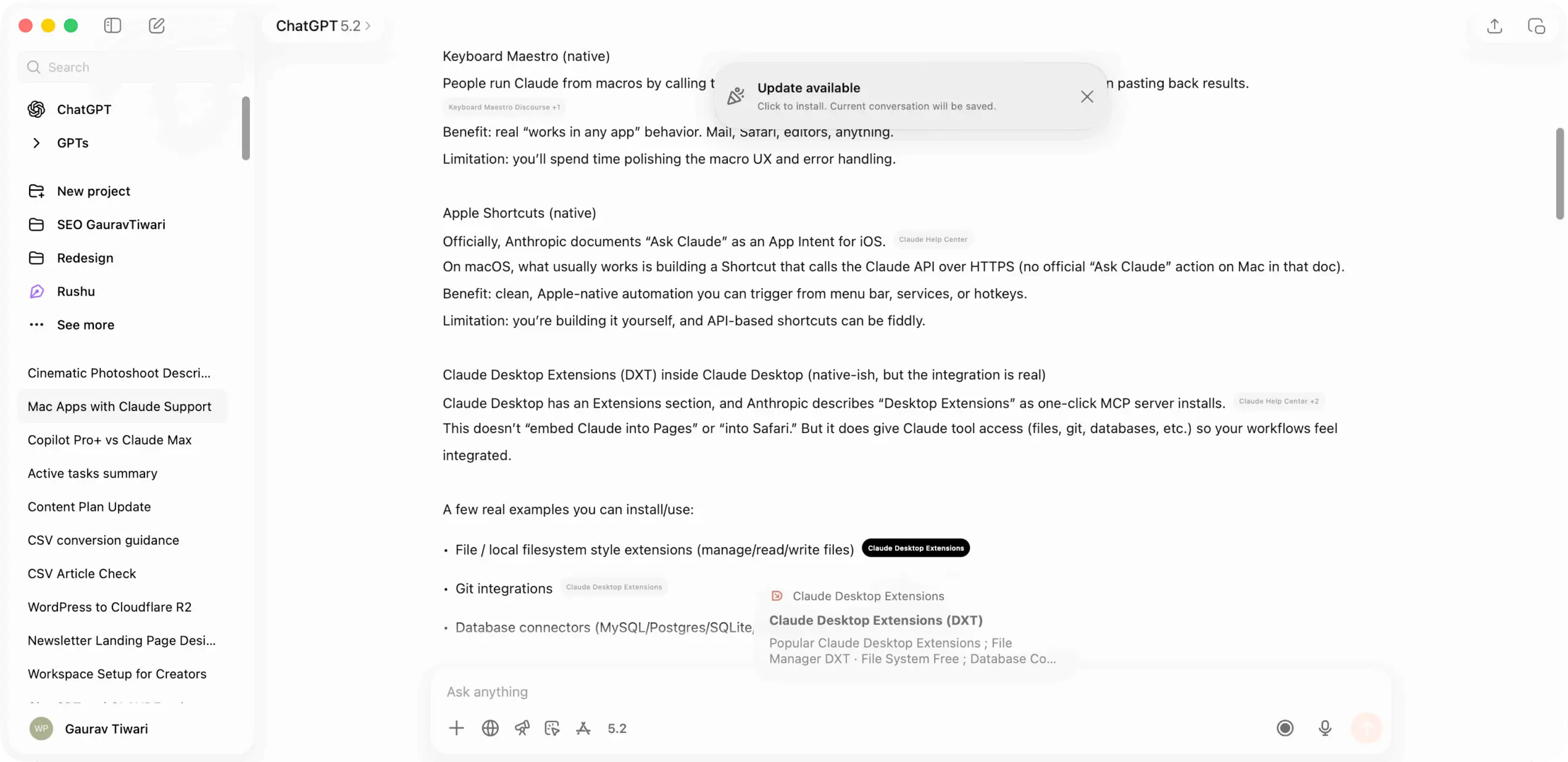
ChatGPT is best for conversational explanations and mixed-subject questions. Study Mode, available on the free plan, guides you through a problem instead of immediately supplying a final response, which makes it the closest thing to a patient explainer that costs nothing. Plus at $20 a month raises usage limits and feature access; free access to uploads, vision, data analysis, and memory is limited.
The honest limitation: answers, calculations, and citations still require verification, and model names or plan routing change often enough that you should check the in-app model picker rather than any blog’s claim about what powers which tier. One privacy note that matters for students: personal Free and Plus conversations may be used to improve models unless you opt out in Data Controls.
Best for your own notes and PDFs
NotebookLM
NotebookLM solves the need most Chegg-like websites ignore: studying from the material your course actually uses. Upload PDFs, audio, pasted text, Google Docs, or Slides, and it generates source-grounded study guides, quizzes, flashcards, and overviews that cite your own documents instead of reconstructing the topic from the open web.
The free tier has usage limits, with higher limits on paid Google AI plans. The equally honest limit is structural: it’s only as good as the sources you feed it, and it won’t answer beyond them. That’s the point, and it’s why hallucination control here beats every open-web chatbot for revision work.
Best free learning platform
Khan Academy
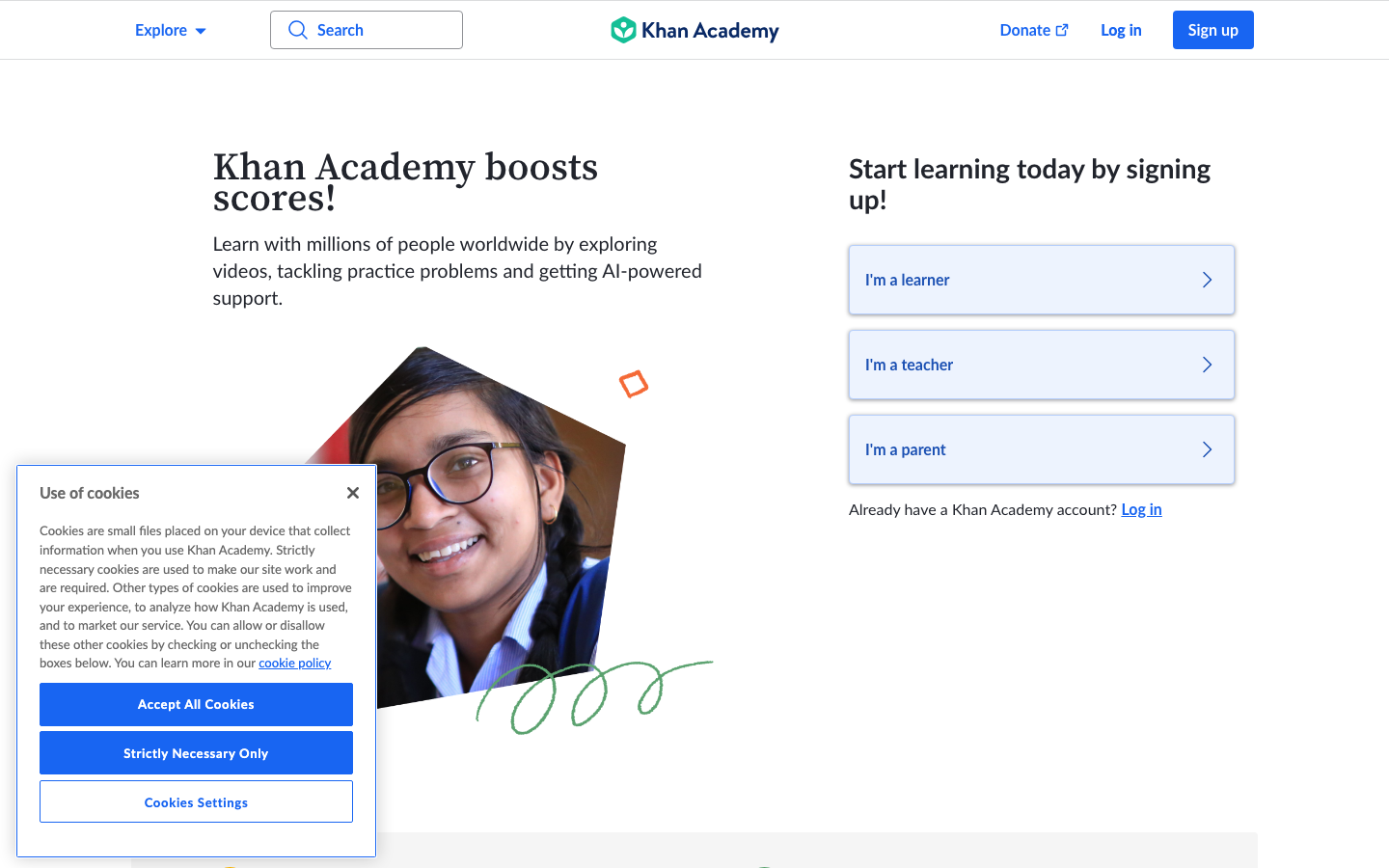
Khan Academy remains the strongest fully free option: structured lessons and mastery practice from arithmetic through calculus, plus science, economics, and SAT and AP prep. It’s free everywhere, with no catch, because it’s a nonprofit.
It is not an on-demand answer database, and that’s the tradeoff: Khan Academy teaches the topic rather than solving tonight’s specific problem set. Pair it with a solver or an AI assistant when you need the specific answer explained.
Khanmigo
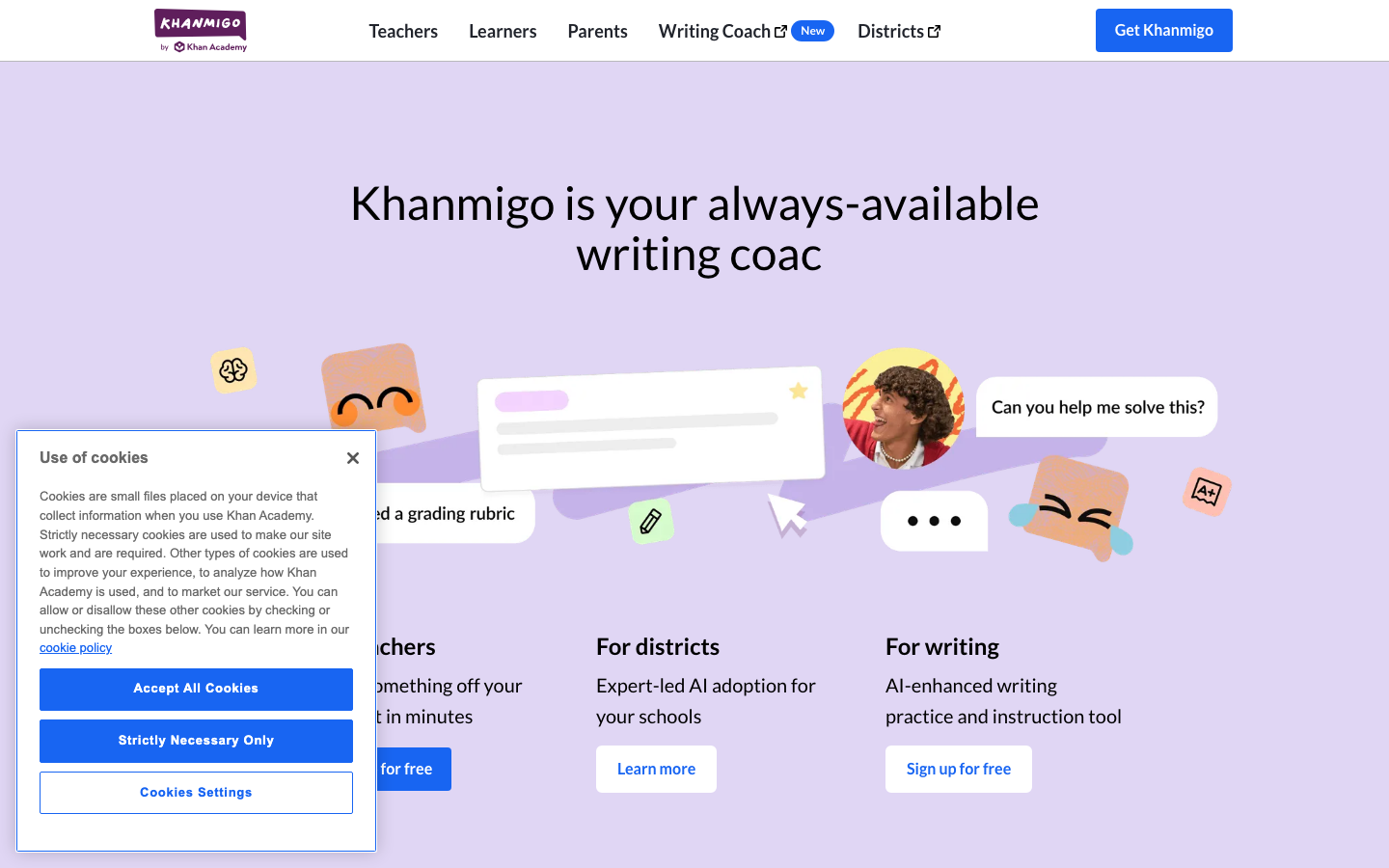
Khanmigo is Khan Academy’s optional AI layer, and it’s best for guided K-12 and AP learning in the United States. It’s designed to ask questions and guide reasoning rather than hand over answers. The $4-a-month learner plan requires a US billing address, under-18 students need a parent or guardian to set up access, and free teacher tools exist only in supported countries. Keep the two products separate in your head: Khan Academy is the global free recommendation, Khanmigo is a US-restricted add-on.
Best textbook-video platform
Numerade
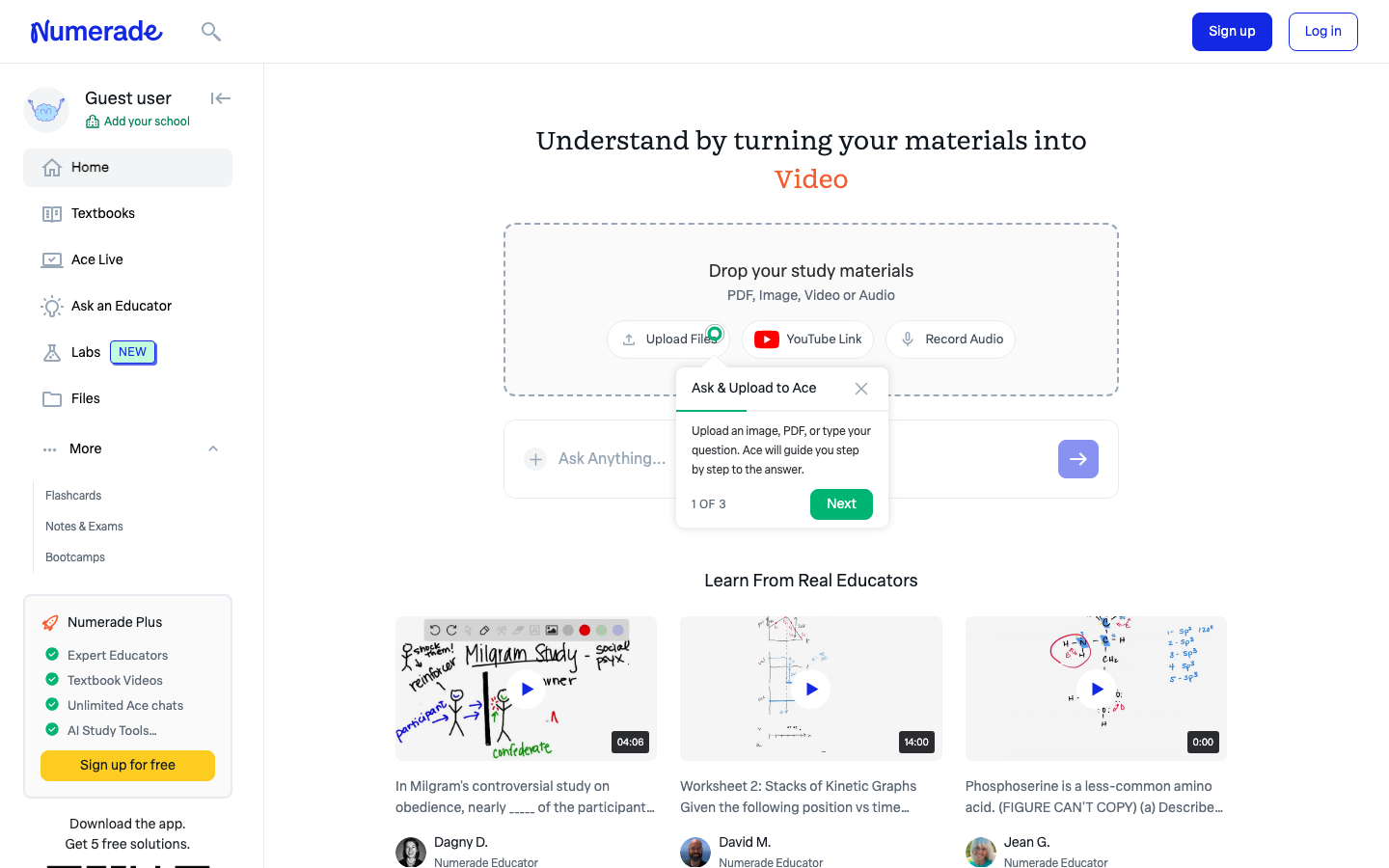
Numerade is best for students who prefer watching a problem get solved over reading typed steps. Educator-created videos cover major STEM textbooks, and the Ace AI tutor rides along in the subscription.
Price is the catch, and older reviews get it badly wrong: after the 7-day trial, Numerade now costs $29.95 a month, which is more than Chegg Study Pack. The $95.90 annual plan is the only sensible way in, and only after you’ve confirmed your exact textbooks and courses are covered.
Best course-document platforms
Course Hero
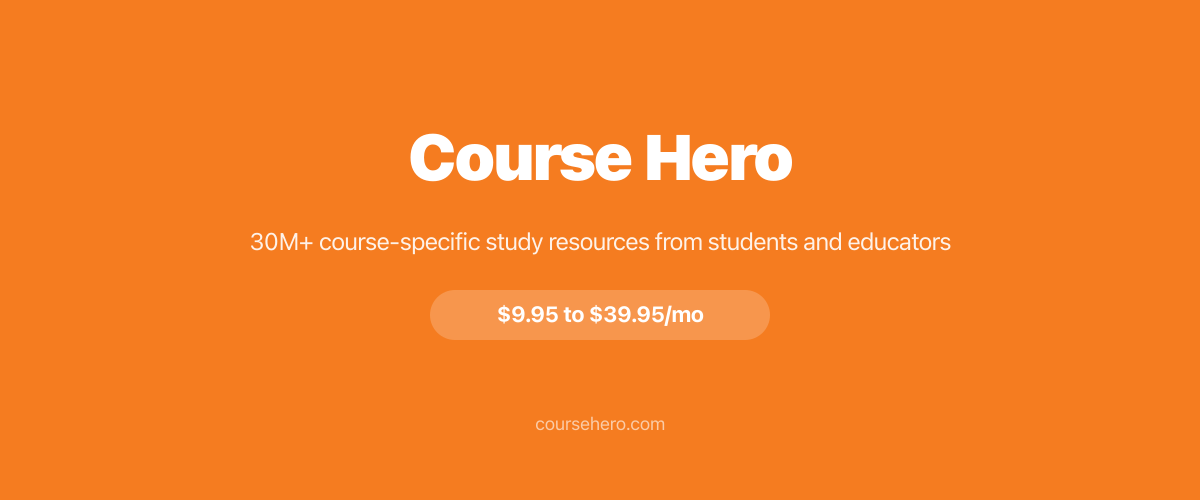
Course Hero is the closest traditional Chegg-style alternative for uploaded course materials. It earns the subscription when it holds documents from your exact institution and course. The free Basic membership previews; the paid Premier membership includes 30 document unlocks a month, textbook solutions, and up to 40 tutor questions depending on membership.
Two cautions. Course Hero doesn’t publish one universal price, so read the figure on the checkout page rather than any blog table, this one included. And the quality and legality of uploaded material depend on the contributor: upload only work you own or have permission to share.
Studocu
Studocu is the omission most Chegg alternative sites make. It reports more than 65 million student-uploaded documents, with course-specific notes, summaries, quizzes, flashcards, and AI study tools layered on top. A substantial share of the library is free; Premium adds full-library access and downloads, at prices that vary by country.
The same upload-rights rule applies: contributors must own the material or have permission to share it. For students outside the US, Studocu’s library often matches local universities better than Course Hero’s.
Best flashcard and revision tool
Quizlet
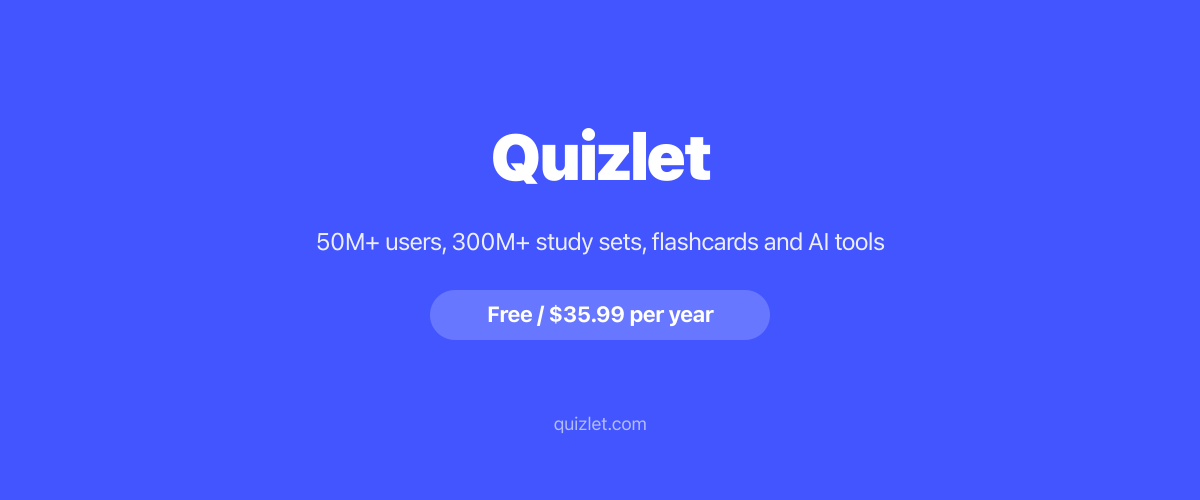
Quizlet is best for flashcards, retrieval practice, and turning notes into study materials, and it needs an honest reset in every roundup: Q-Chat, the AI tutor older articles still lead with, was discontinued in June 2025. What Quizlet actually sells now is Flashcards, Learn, Practice Tests, Study Guides, Expert Solutions, and offline studying.
Current upgrade pages show annual pricing such as $35.99 for Quizlet Plus and $44.99 for Plus Unlimited, varying by plan and checkout context. It isn’t a replacement for Chegg’s open-ended Q&A; it’s stronger than Chegg ever was at recall-based revision.
Best math solvers
Math deserves its own comparison, and the online math solvers guide goes deeper. The two that belong in a Chegg conversation:
Photomath
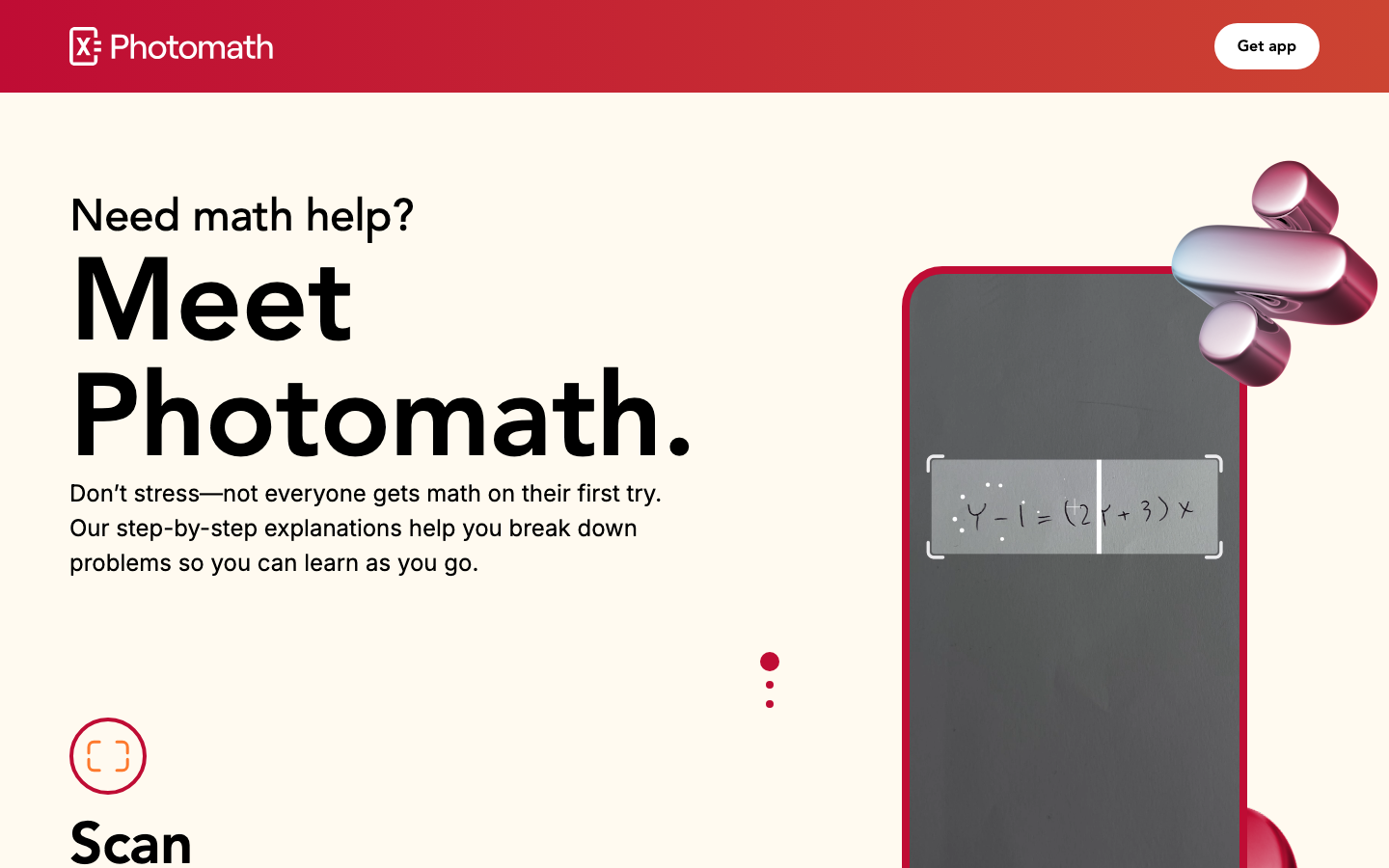
Photomath is best for scanning school and early-college mathematics. Three corrections to the usual write-up: it joined Google in 2023, not 2022; the free tier already includes step-by-step explanations; and Premium at $9.99 a month or $69.99 a year mainly adds richer visual aids and deeper how-and-why explanations, not the steps themselves. Its real limitation is scope: a mobile app, and mathematics only.
Symbolab
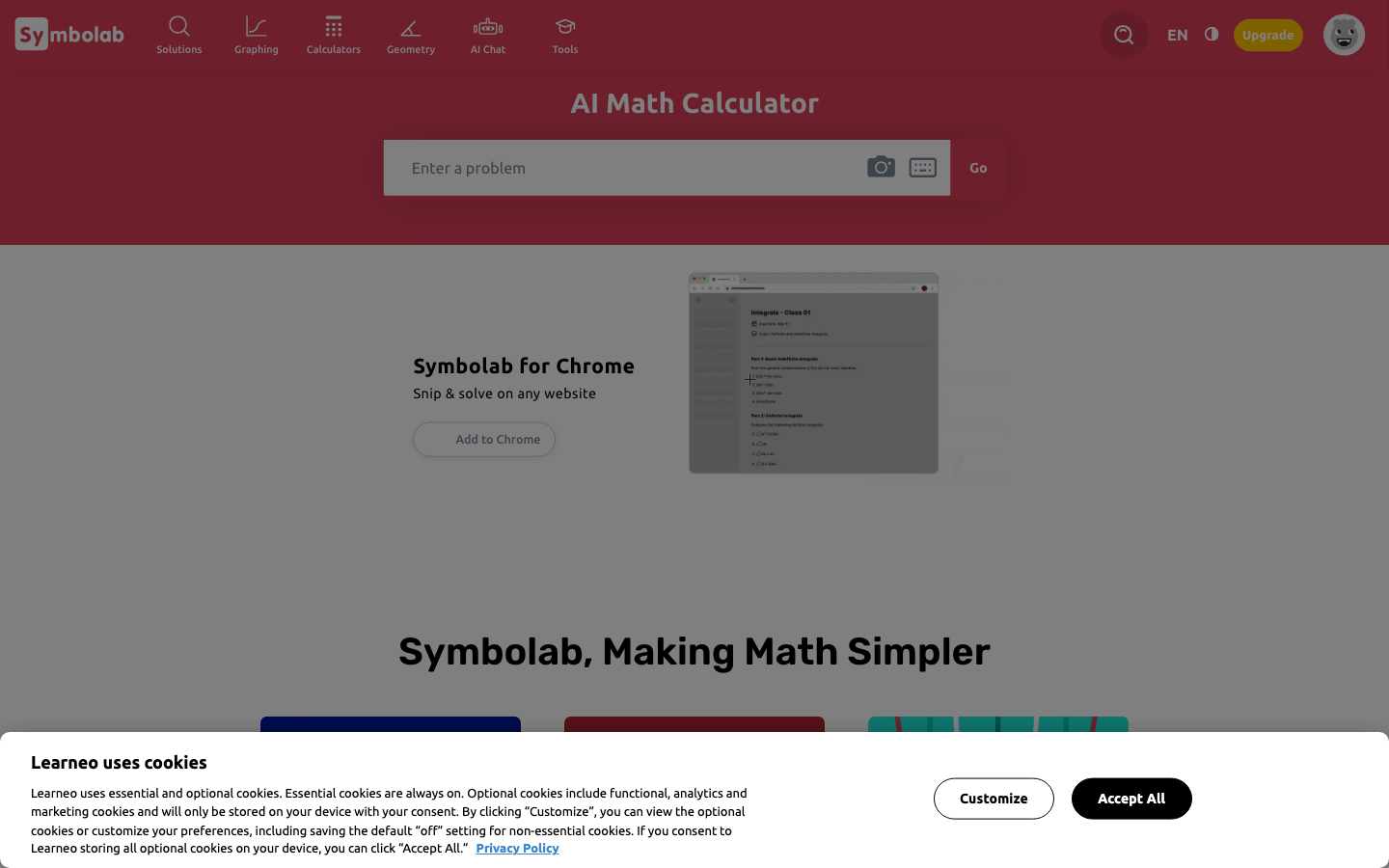
Symbolab is best for symbolic mathematics: algebra, calculus, linear algebra, ODEs, with every transformation shown. The free version generally exposes answers and limited guidance; Pro unlocks complete steps and AI chat follow-up at $9.95 monthly, $32.95 per six months, or $39.95 annually. Symbolab is a Learneo business, the same parent as Course Hero and Bartleby.
Best human tutoring alternatives
Filo
Filo is the pick for instant human help, especially in India. The company says it connects learners with a tutor in under 60 seconds, serves more than 5 million students across 60+ countries, and works with over 60,000 tutors. Those are Filo’s own figures, not independent measurements, but the core product is real: a live human on a short timer, not an answer database.
Plans vary by region and package, so read current pricing inside the app. For Indian students comparing against Chegg’s dollar pricing, Filo’s rupee-denominated plans are usually the more realistic budget line.
Wyzant

Wyzant is best for scheduled one-to-one tutoring in the US: about 65,000 tutors across 300+ subjects, no subscription, pay per session. Typical rates run $35 to $60 an hour with wide variation, students pay a 9% service fee on top, and Wyzant keeps 25% of the tutor’s listed rate, which is why tutors price accordingly.
Two corrections worth knowing before you book: background checks aren’t universal, a student or guardian can request and purchase one for a specific tutor; and session recording is an available feature, not something every lesson does automatically.
Brainly
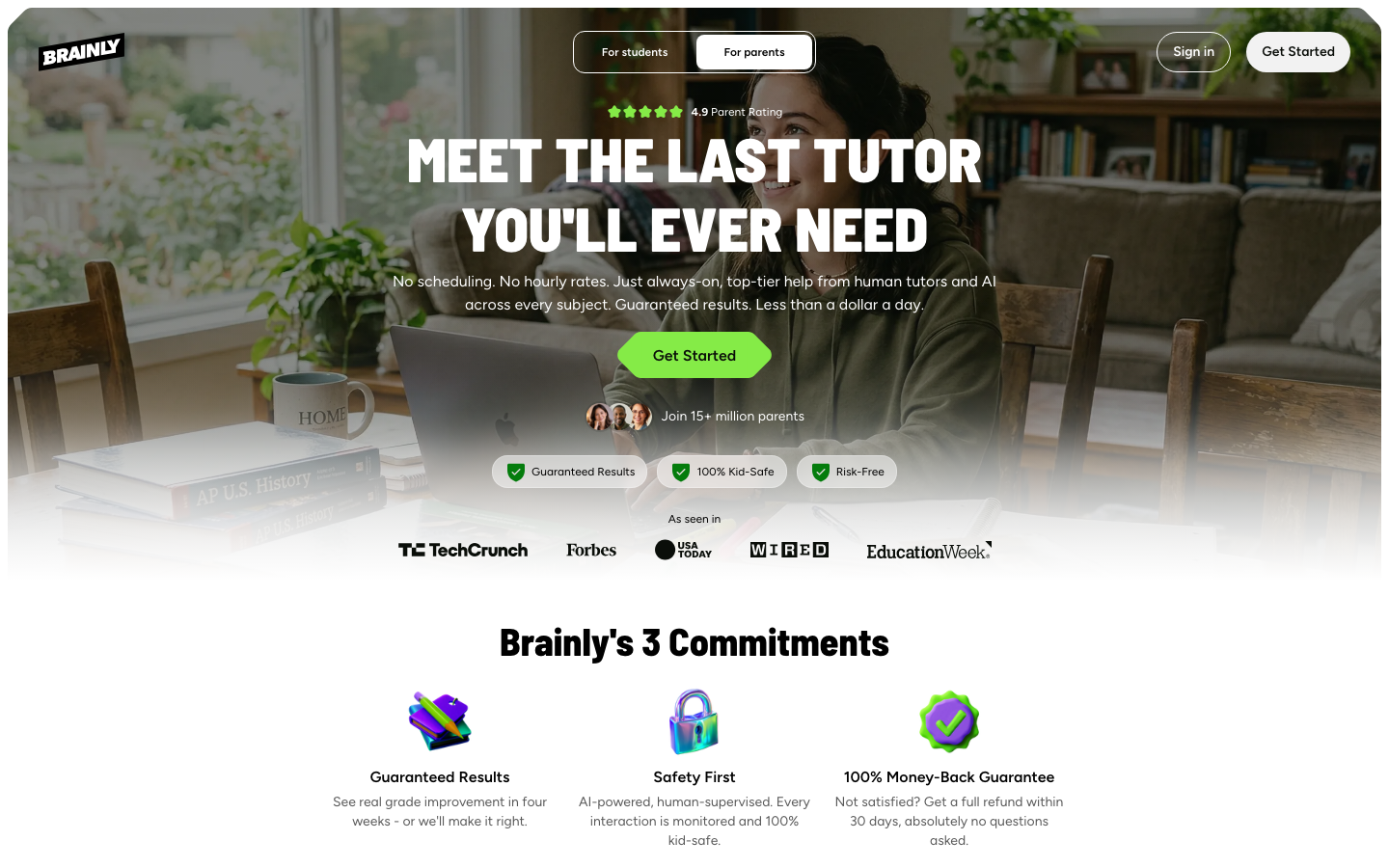
Brainly is the community option with a human upgrade path: peer answers plus AI assistance free, and in supported markets the Brainly Tutor plan adds up to 20 live expert sessions a month in math and science on top of the Plus benefits. Answer quality varies, because anyone can answer, and plans and pricing differ by platform and region, so check the figure inside your regional app rather than trusting a static price.
Best Chegg alternatives for students in India
Most Chegg roundups quietly assume a US reader. For India, the working shortlist is different: ChatGPT Study Mode and NotebookLM for explanations and notes, Khan Academy for free structured lessons, Filo for instant human tutoring, Studocu for course documents, Photomath and Symbolab for math, and Quizlet for revision. Khanmigo’s learner plan and Wyzant are US-centric, so skip them unless you have US billing.
One more intent hides inside this search. If you’re looking for Chegg-like websites to earn money in India, joining as a tutor or expert rather than studying, that’s a different comparison entirely: the earn money with Chegg guide covers Chegg’s own expert program and the platforms like Chegg that pay tutors.
Chegg-owned and same-parent alternatives
A list of companies like Chegg should disclose when the choices aren’t as independent as they look. Mathway belongs to Chegg itself, and Course Hero, Symbolab, and Bartleby all operate under Learneo, which acquired Bartleby from Barnes & Noble Education in 2023. Ownership doesn’t disqualify a product; it does mean the market has fewer genuinely separate players than the rankings imply.
Mathway

Mathway can replace Chegg’s general interface when you only need mathematics: free answers, with Premium at $9.99 a month or $39.99 a year for step-by-step working across algebra, calculus, statistics, and chemistry. Just know that subscribing still supports the same parent company you may be trying to leave, and the free Mathway alternatives guide exists for exactly that reason.
Bartleby
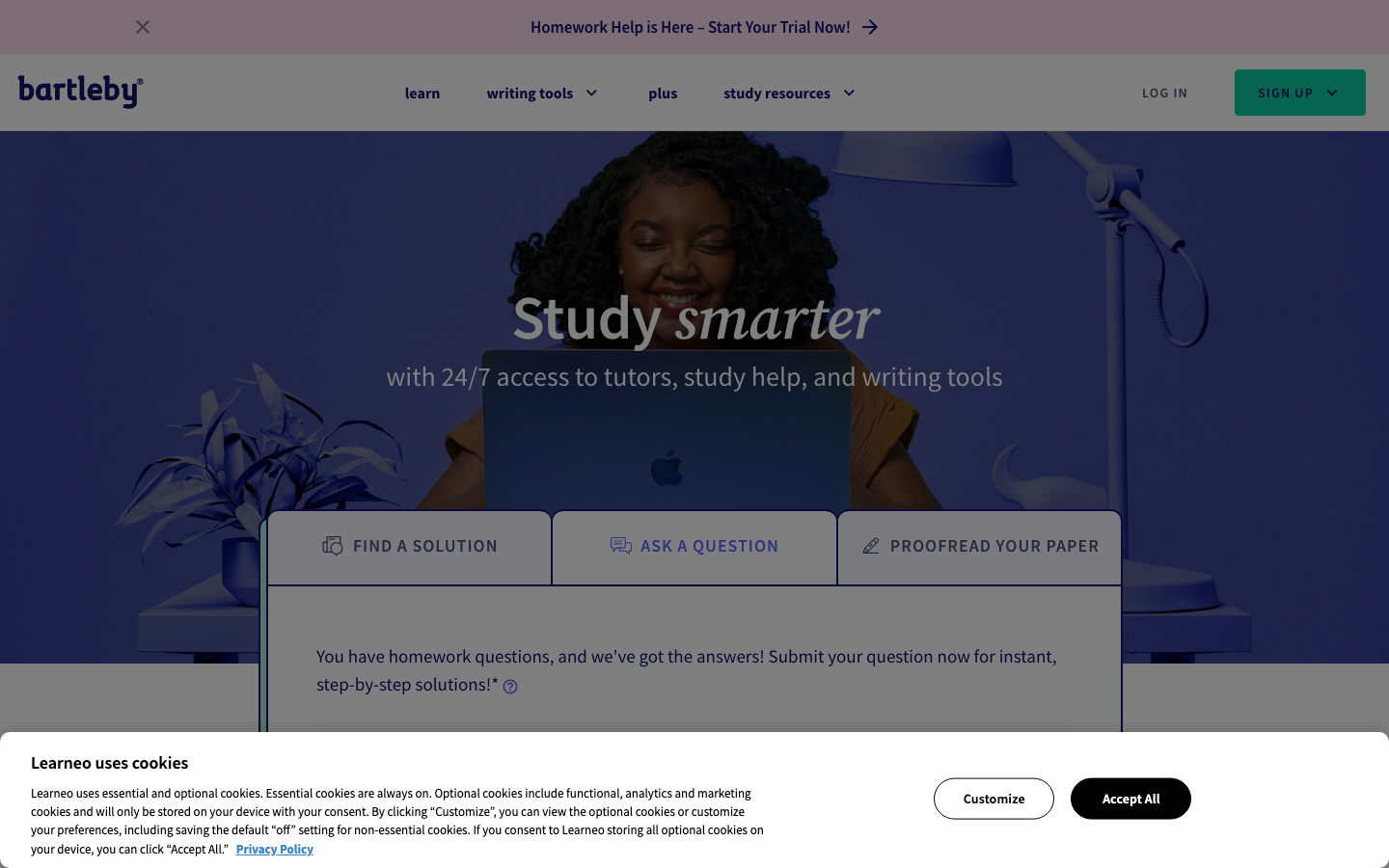
Bartleby offers textbook solutions, expert Q&A, math help, and writing tools, but the old budget framing is dead: the current offer is a $6.95 first week that renews at $19.95 a month, the same as Chegg Study Pack and more than Chegg Study. It’s also a Learneo business, not a Pearson product, whatever older reviews claim. Consider it a Chegg-style second opinion, not a cheaper Chegg.
What free actually means on each tier
A “free tier” checkbox hides more than it reveals. On this list alone, free means at least 5 different things:
- Complete product free: Khan Academy, and Photomath’s steps.
- Free answers, paid steps or chat: Symbolab and Mathway.
- Free with usage limits: ChatGPT and NotebookLM.
- Free previews of a paid library: Numerade, Course Hero, and parts of Studocu.
- Free community layer, paid priority: Brainly.
When a comparison table says yes in a free column, ask which of these it means before you build your study routine on it.
Privacy, copyright, and academic integrity
Students upload risky things to these tools: unpublished exam questions, instructor handouts, entire copyrighted textbooks, class recordings, graded work. Don’t. Upload only material you own or have permission to share, keep confidential assessments out of AI tools entirely, and check whether your conversations are used for model improvement; ChatGPT’s personal Free and Plus tiers can use content for training unless you opt out in Data Controls.
On integrity, the line is simple: use these tools for feedback on your own drafts, grammar and clarity editing, citation formatting, guided explanations, and practice, the way a writing center or tutor would help. Submitting generated or purchased work as your own is the thing none of these tools should be used for, and no service that writes assignments from scratch belongs on a study-help list. Your university’s writing center and office hours remain the most underused free Chegg alternatives in existence.
Replacing Chegg’s textbook rentals
None of the study tools above replaces Chegg’s rental business. For books, compare rental, used, ebook, international-edition, and resale prices for the exact ISBN, and factor in access-code requirements before choosing the cheapest listing; a bundled access code can make a used copy worthless for a graded course. Amazon’s textbook store covers used and rental comparisons in one place.
Frequently Asked Questions
What is the closest direct alternative to Chegg Study?
Course Hero for uploaded course documents and textbook solutions, with Studocu as the stronger option outside the US. For textbook problems specifically, Numerade’s educator videos are the closest paid equivalent, at $29.95 a month or $95.90 a year.
What is the best free Chegg alternative?
Khan Academy for structured lessons and practice, ChatGPT’s free plan with Study Mode for guided explanations, and NotebookLM for studying from your own notes. Between those three, most of Chegg’s everyday value is covered without payment.
Which Chegg alternative is best for students in India?
Filo for instant human tutoring, plus ChatGPT Study Mode, NotebookLM, Khan Academy, Studocu, Photomath, Symbolab, and Quizlet, all of which work in India. Khanmigo’s learner plan and Wyzant are US-centric.
Which services offer real human tutors?
Filo connects you to live tutors on demand, Wyzant offers scheduled one-to-one US tutoring at typically $35 to $60 an hour plus a 9% service fee, and Brainly Tutor adds up to 20 live math and science sessions a month in supported markets.
Is Khanmigo available outside the United States?
Learner and parent plans require a US billing address, and under-18 students need a parent or guardian to create access. Free teacher tools exist in supported countries. Khan Academy itself stays free and global; only the Khanmigo learner layer is restricted.
Is Mathway independent from Chegg?
No. Mathway is part of Chegg’s own network, so subscribing supports the same parent company. It’s still a capable math solver at $9.99 a month for steps; it just shouldn’t be counted as leaving Chegg.
Are Course Hero, Symbolab, and Bartleby related?
Yes. All three operate under Learneo, which acquired Bartleby from Barnes & Noble Education in 2023. Bartleby is not a Pearson product, and Symbolab is best described as a Learneo business rather than a Course Hero subsidiary.
Which tool is best for studying from my own notes?
NotebookLM. It builds source-grounded study guides, quizzes, and flashcards from your uploaded PDFs, audio, Docs, and Slides, and it stays inside your sources instead of improvising. Quizlet can also turn notes into flashcard sets for recall practice.
Which math solvers show complete steps for free?
Photomath includes step-by-step explanations on its free tier. Symbolab shows answers free but reserves complete steps for Pro, and Mathway reserves steps for Premium. For graded work, verify any solver’s output by hand at least once.
Can I use AI to review an essay without violating academic rules?
Usually yes, when it stays feedback on your own draft: clarity, structure, grammar, and citation formatting, with your course policy checked first. Submitting AI-generated or purchased essays as your own work is the line, and no tool on this page should be used for it.
What should I avoid uploading to an AI study tool?
Unpublished exams, instructor handouts you don’t have rights to, entire copyrighted textbooks, class recordings, other students’ work, and personal data. Also check the training-data setting: ChatGPT’s personal tiers can use conversations for model improvement unless you opt out.
Can I earn money on Chegg-like websites?
Yes, but that’s a tutor-side comparison, not a study-side one. Chegg’s own expert program, Filo, and Wyzant all pay tutors, and the earn money with Chegg guide on this site covers those platforms like Chegg that pay, including options in India.
Final recommendations by use case
- General explanations: ChatGPT free with Study Mode, verify anything graded.
- Your own course files: NotebookLM.
- Free structured learning: Khan Academy; add Khanmigo only with US billing.
- Textbook problems on video: Numerade, on the annual plan, after checking your textbooks.
- Course documents: Course Hero in the US, Studocu elsewhere, upload only what’s yours.
- Revision: Quizlet.
- Math: Photomath for the camera, Symbolab for full symbolic steps.
- A real human: Filo in India, Wyzant in the US, Brainly Tutor where offered.
Chegg itself is still a defensible buy at $15.95 if textbook solutions are your whole need; the Chegg Study review makes that call in detail. Pick one tool from this list, use it for 2 weeks before paying anyone, and you’ll know exactly which paid layer, if any, you still need. Best of luck.
Sources
Prices, plan names, ownership, and availability on this page come from each operator’s official pricing, support, or corporate pages, checked on August 26, 2026, and the page carries no claims from hands-on benchmark testing.
Tell Google you want more of this.
Add Gaurav Tiwari as a preferred sourceOne tap, and this site shows up more often in your own Top Stories, AI Overviews and AI Mode. Remove it any time.
Disclaimer: This site is reader-supported. If you buy through some links, I may earn a small commission at no extra cost to you. I only recommend tools I trust and would use myself. Your support helps keep gauravtiwari.org free and focused on real-world advice. Thanks. - Gaurav Tiwari