
 by
by
The best homework help websites for college students do not begin with the final answer. They help you identify the missing concept, see a sound method, correct your own attempt, and solve a similar problem without the page open. That is the difference between support and answer recognition.
Start free. Use course-aligned explanations for a knowledge gap, a writing reference for a citation problem, and live tutoring when you need feedback on your work. Pay for a textbook-solution library only when the edition and exercise number genuinely matter, and only after you have made an attempt you can compare.
| Website | Best task | Access | Main catch |
|---|---|---|---|
| Khan Academy | Repair a prerequisite gap | Free | Not tied to your exact textbook |
| OpenStax | Read a college-level explanation | Free | Course order may differ |
| MIT OpenCourseWare | See full course context | Free | Materials vary by course |
| Purdue OWL | Fix writing and citation questions | Free | No individualized paper feedback |
| Paul’s Online Math Notes | Work through calculus and algebra | Free | Narrow subject range |
| LibreTexts | Find open explanations and worked examples | Free | Dense navigation |
| WolframAlpha | Check computation and symbolic steps | Free basic; paid steps | Easy to use before thinking |
| Tutor.com | Get live feedback | Often institution-provided | Access depends on your school or library |
| Quizlet Expert Solutions | Check textbook-specific work | Limited free; paid plans | Answer-recognition risk |
| Chegg Study | Check an edition-specific solution | Paid monthly | Highest copying and policy risk |
Use the learn-it-or-copy-it test before choosing a site
A useful homework-help site leaves enough friction for you to think. Before opening an account or paying for a plan, check whether the resource makes the method visible and keeps your own attempt at the center.
The homework help websites for college students that earn a place here pass four checks:
- Reasoning is visible. You can see why each step follows, not merely the final expression, citation, or paragraph.
- The source is transparent. The page names the textbook, course, edition, author, or assumptions behind the answer.
- There is a correction path. Practice, feedback, hints, or a comparable example helps you repair the mistake.
- You still do the assessed work. The tool explains, checks, or questions your attempt without producing work to submit as your own.
The quickest self-check is simple: close the page and solve a nearby problem. If the method disappears with the tab, the site gave you familiarity, not mastery. The same distinction explains why active recall works better than rereading.
Start with free course-owned explanations
Course libraries are the safest first stop because they explain a topic before they expose a polished answer to your exact exercise. Khan Academy is strongest for prerequisites, OpenStax for textbook-level reading, and MIT OpenCourseWare for the wider course structure.
1. Khan Academy: best for repairing a prerequisite gap
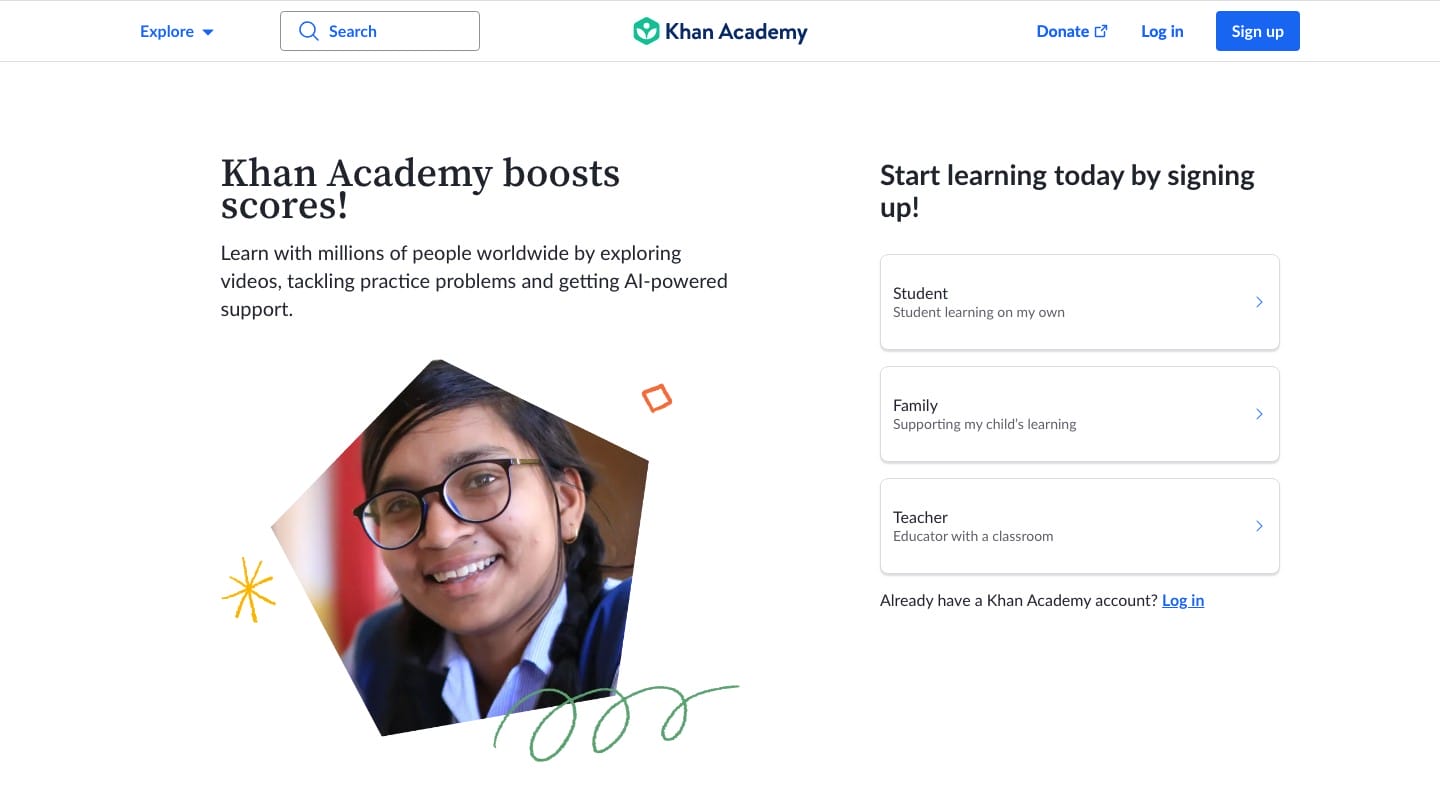
Khan Academy is the first resource to open when the assignment exposes an earlier concept you never fully learned. Its free lessons, examples, and practice cover math through early college as well as science, computing, economics, and other subjects.
- Best for: rebuilding algebra before calculus, reviewing statistics, or relearning a science prerequisite.
- Why it teaches: lessons and practice sit together, so you can move from explanation to retrieval without hunting for another site.
- Access: the learning library is free.
- Limitation: it will not mirror your instructor’s notation, textbook order, or edition-specific question.
2. OpenStax: best free college textbook replacement
OpenStax, a nonprofit initiative at Rice University, publishes more than 80 free, peer-reviewed textbooks across mathematics, science, business, social science, and the humanities. Use it when a lecture slide is too compressed and you need a full definition, derivation, or worked example.

- Best for: reading a complete college-level explanation before attempting the exercise again.
- Why it teaches: concepts, examples, review questions, and chapter structure preserve context.
- Access: web and downloadable textbook access is free; optional print formats can cost money.
- Limitation: your course may sequence topics differently or use another notation.
3. MIT OpenCourseWare: best for seeing the whole course
MIT OpenCourseWare is useful when one homework problem makes no sense because you have lost the course’s larger argument. It provides free materials from more than 2,500 MIT courses, including combinations of notes, readings, assignments, exams, and videos.
- Best for: engineering, mathematics, computing, science, economics, and other subjects where sequence matters.
- Why it teaches: you can see what came before the assignment and what the problem is preparing you to do next.
- Access: free, with no enrollment or start date.
- Limitation: OpenCourseWare does not provide MIT credit, a certificate, or instructor support, and each course exposes a different set of materials.
Fix writing and citation problems
Writing homework often fails at a small rule: how to integrate a quotation, format a reference, build a thesis, or distinguish evidence from commentary. A reliable reference should settle that rule without pretending to evaluate the full argument in your draft.
4. Purdue OWL: best for writing and citation rules
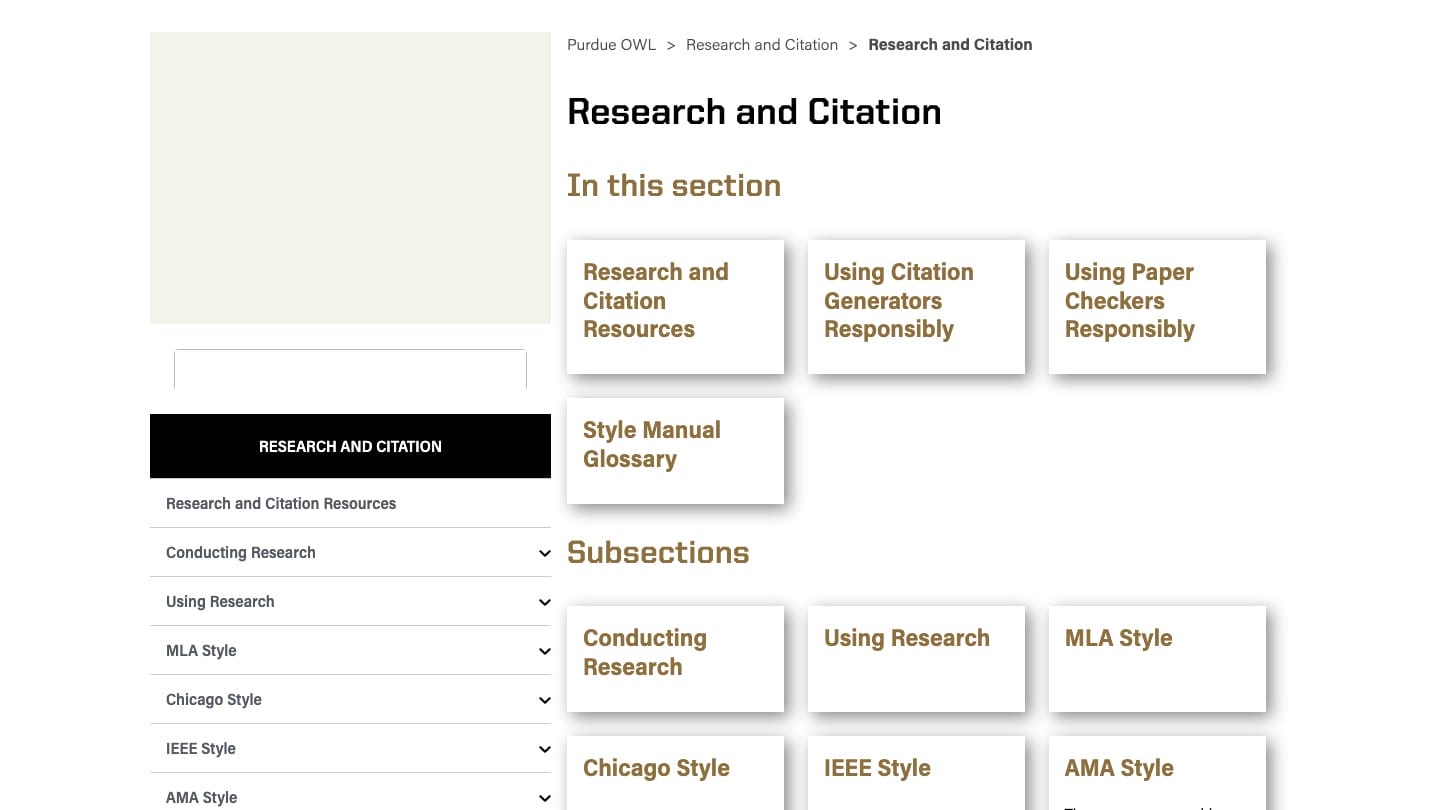
Purdue OWL is the best free reference in this list for citation, grammar, research writing, and common paper structures. Its pages explain a rule and show a usable model without writing the assignment for you.
- Best for: APA, MLA, Chicago, grammar, research writing, paragraph structure, and source use.
- Why it teaches: it explains the rule and usually shows a model you can adapt to your own source.
- Access: free.
- Limitation: it is a reference library, not a writing center. It will not diagnose the argument in your draft.
For the underlying difference between a quotation, citation, reference list, and bibliography, use the longer guide to academic citations and bibliographies. If your college has a writing center, take the draft there after checking the rule.
Work through math and technical problems
Math homework help needs three different tools: a worked explanation, a broad open reference, and a checker. Paul’s Online Math Notes handles the first job, LibreTexts the second, and WolframAlpha the third. A larger guide to math help websites covers graphing, geometry, and interactive practice in more depth.
5. Paul’s Online Math Notes: best for readable worked mathematics
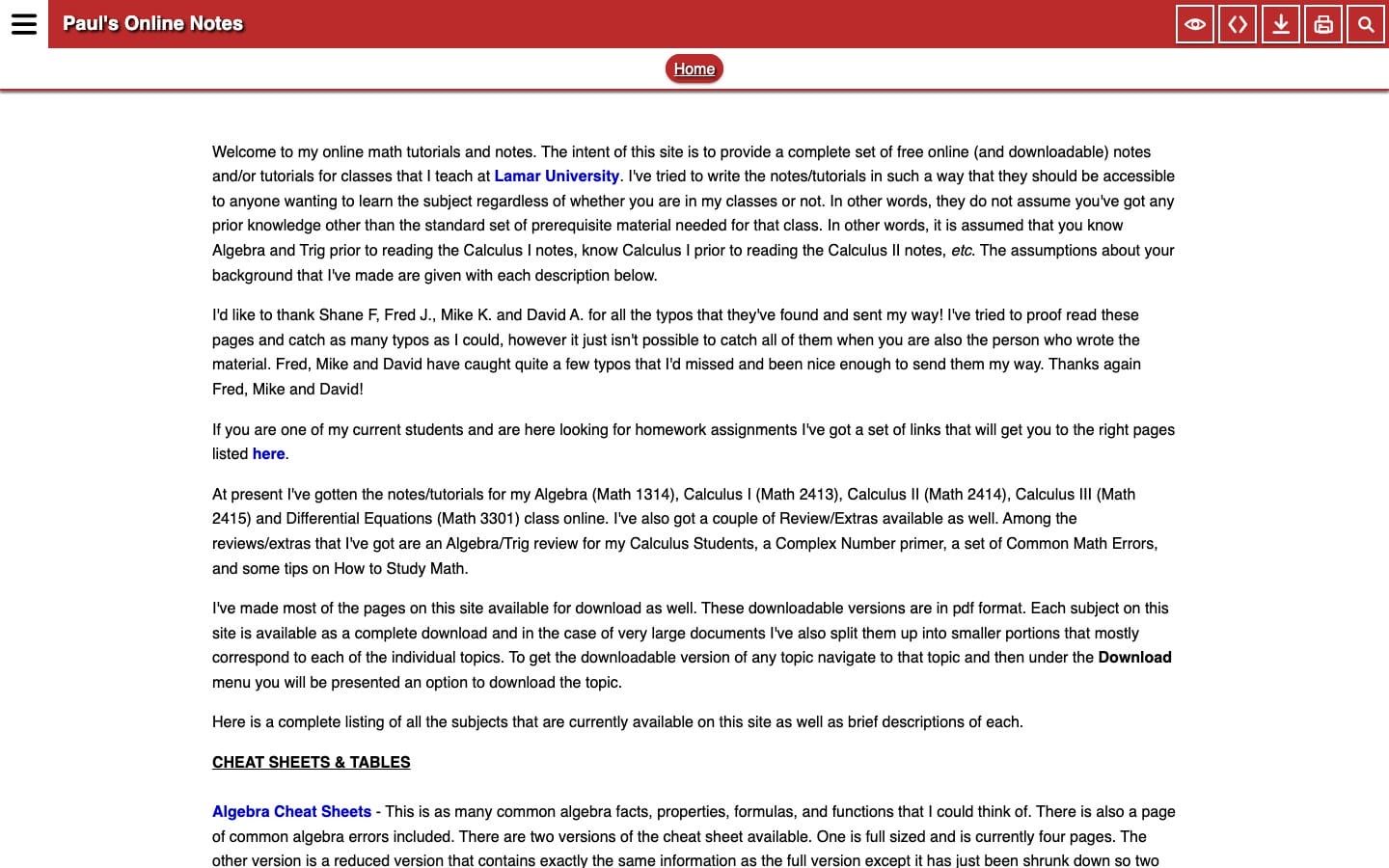
Paul’s Online Math Notes is unusually good at explaining the middle of a calculation, where many textbook solutions jump from setup to result. The free site covers Algebra, Calculus I-III, and Differential Equations with notes, examples, practice problems, and downloadable material.
- Best for: algebra review, calculus technique, differential equations, and common-error checks.
- Why it teaches: examples include the decisions and algebraic steps students usually lose.
- Access: free.
- Limitation: the subject range is narrow, and there is no live tutor or personalized feedback.
6. LibreTexts: best broad open reference with worked material
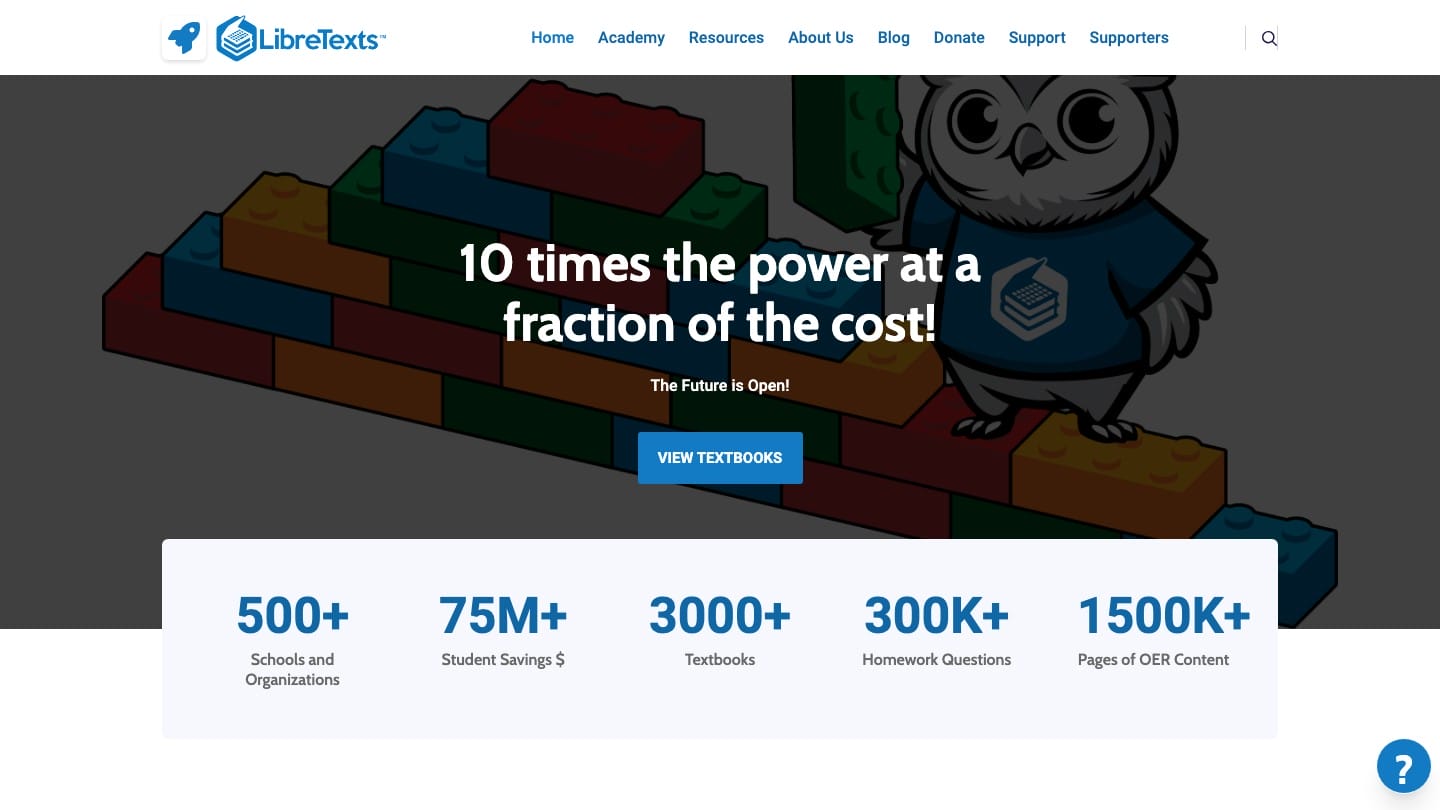
LibreTexts is the broadest free reference in this list. Its current homepage presents more than 3,000 textbooks, 300,000 homework questions, and 1.5 million pages of open educational content across science, mathematics, engineering, business, humanities, and social science.
- Best for: finding an alternative explanation, example set, or open textbook chapter across many college subjects.
- Why it teaches: the resource stays close to textbook structure while offering multiple libraries and authors.
- Access: free and openly licensed.
- Limitation: the catalog is dense. Search the exact concept plus “LibreTexts” rather than browsing from the front page.
7. WolframAlpha: best as a final computation checker
WolframAlpha is strongest after you have chosen the method and carried out the calculation. It can check algebra, calculus, equations, units, plots, statistics, chemistry, and many other computational results. Opening it first turns a diagnostic tool into an answer vending machine.
- Best for: verifying a derivative, integral, equation, unit conversion, graph, or symbolic result.
- Free access: Basic provides results but not the full step-by-step experience.
- US student pricing: Pro is shown at $5 per month billed as $60 annually; Pro Premium is $8.25 per month billed as $99 annually.
- Limitation: correct computation does not prove that you selected the right model, assumptions, or interpretation.
Use live tutoring when the bottleneck is feedback
A human tutor becomes worth more than another solution page when your attempt is plausible but you cannot locate the wrong assumption. Before paying a marketplace, check your learning-management system, tutoring center, student-success office, and library for institution-funded access.
8. Tutor.com: best when your institution already provides it
Tutor.com partners with colleges, schools, libraries, and other institutions to provide one-to-one online tutoring. If your college subscribes, access may be included through the LMS, student portal, or library rather than sold to you as another personal subscription.
- Best for: showing a tutor your attempt, asking a focused question, and getting immediate correction.
- Coverage: Tutor.com advertises on-demand tutoring across more than 250 subjects.
- Current learner data: its 2025 post-session surveys report that 94% said the service helped with homework completion and 95% would recommend it.
- Limitation: hours, subjects, and session limits depend on the program purchased by your institution.
Use textbook-solution libraries only after an attempt
Textbook-solution libraries solve an exact-match problem the free course sites cannot: edition, chapter, page, and exercise number. That convenience is also the risk. If you see the finished route before forming your own, you can confuse recognition with problem-solving ability.
9. Quizlet Expert Solutions: the lighter textbook-reference option
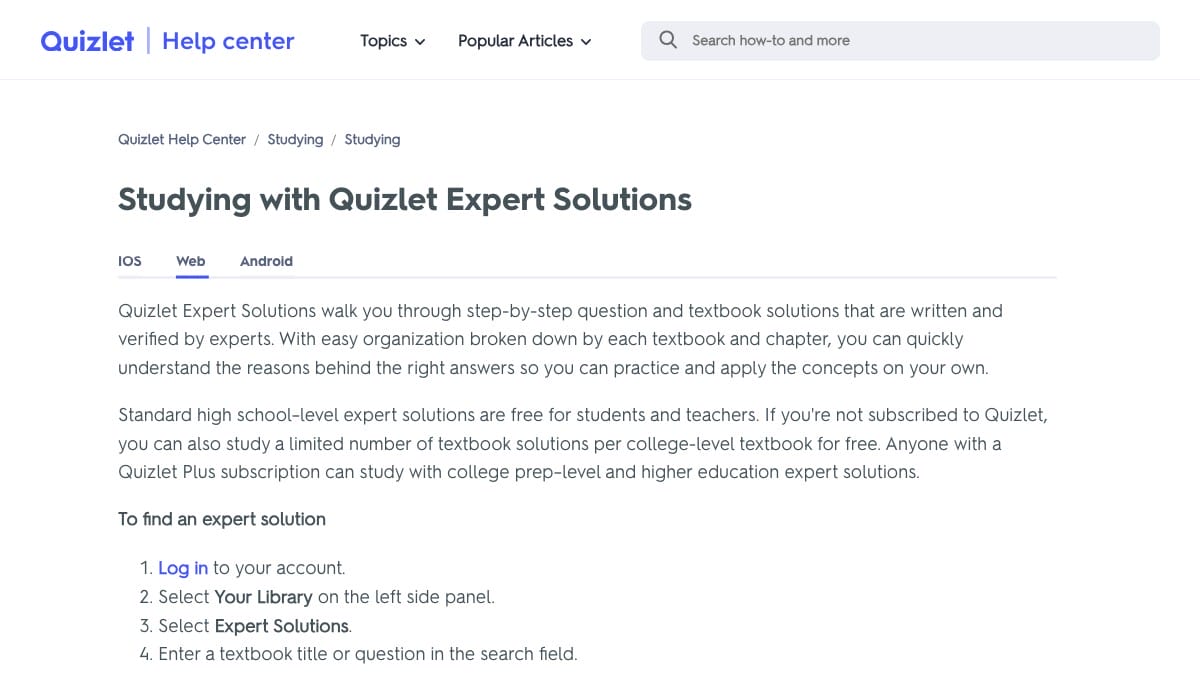
Quizlet Expert Solutions organizes step-by-step solutions by textbook and chapter. Its official help page says standard high-school solutions are free, non-subscribers can view a limited number of college-level solutions, and Quizlet Plus expands access to higher-education solutions.
- Best for: comparing your attempt with an expert-written route for a known textbook exercise.
- US pricing: Quizlet currently shows Plus at $35.99 per year and Plus Unlimited at $44.99 per year.
- Why it can teach: the better entries explain intermediate steps and connect the solution to the textbook structure.
- Limitation: opening the exact solution too early removes the productive struggle that makes the method retrievable.
10. Chegg Study: useful for edition-specific context, risky as a default
Chegg Study combines textbook solutions and Expert Q&A with a large catalog. It belongs at the end of this list because its greatest strength, instant access to a close or exact solution, makes it the easiest resource to misuse.
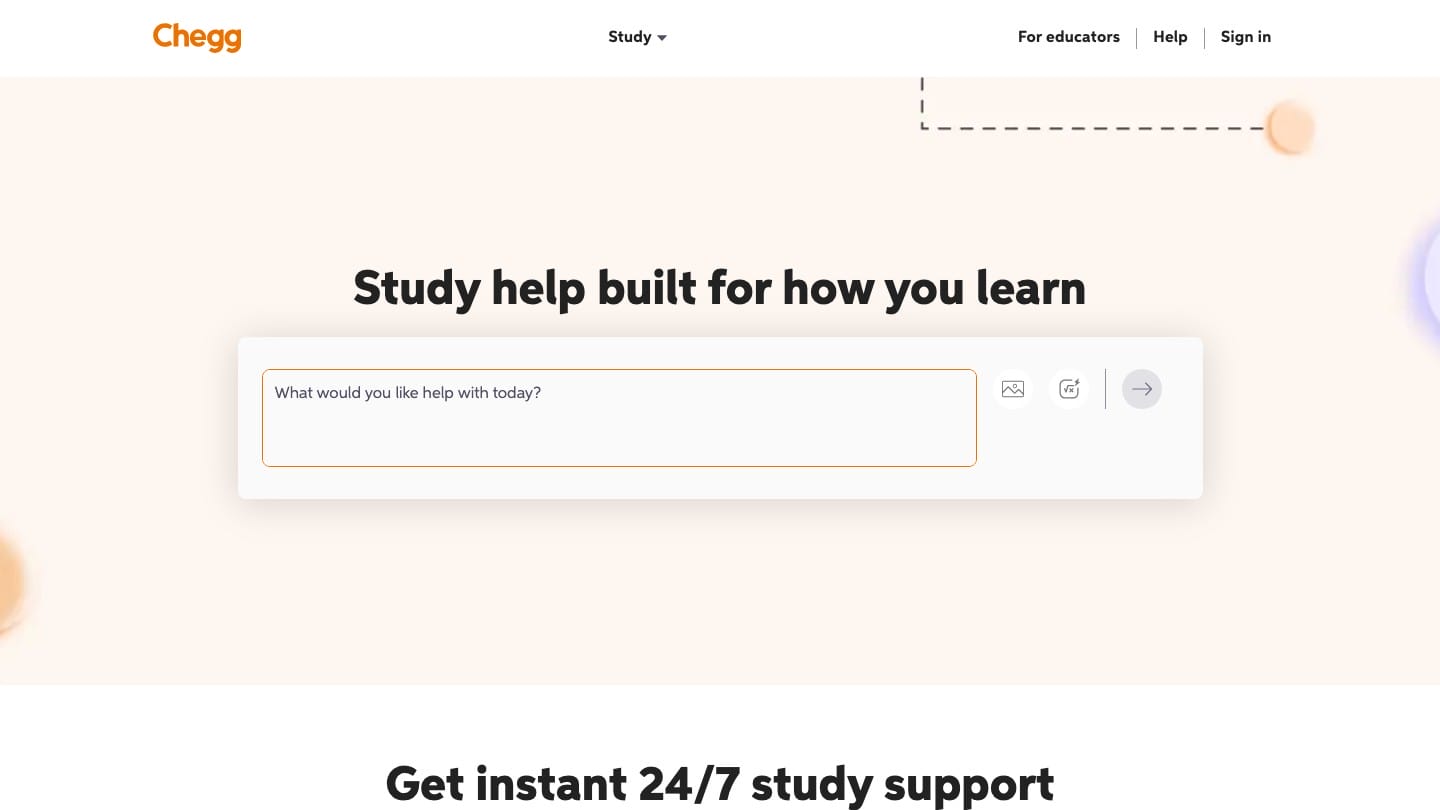
- Best for: checking an edition-specific route after your own attempt or finding context absent from a short answer key.
- Current US pricing: Chegg Study is shown at $15.95 per month; Study Pack is $19.95 per month and adds more quiz, writing, plagiarism, and math support.
- Why it can teach: a complete worked solution can expose the first step where your reasoning diverged.
- Limitation: copying, accessing restricted material, or submitting generated work can violate course rules. The deeper Chegg Study review covers the product’s tradeoffs beyond this task-based list.
Use a five-step homework-help workflow
The resource matters less than the order in which you use it. A short attempt-before-support loop preserves the diagnostic value of the homework and prevents a checking tool from becoming the person doing the thinking.
- Attempt the problem for 15 focused minutes. Write the givens, the target, the rule you think applies, and the first step.
- Name the gap in one sentence. “I do not know the chain rule” needs Khan Academy; “my derivative disagrees” needs WolframAlpha; “my evidence does not support the paragraph” needs a writing center.
- Use one matching resource. Avoid opening five tabs that answer different questions.
- Close the resource and solve again. Reproduce the method without looking, then try one nearby problem.
- Save the error, not the borrowed answer. Record the misconception, correction, and one cue that will help you recognize the pattern next time.
This loop fits beside the broader set of study tools for college students. The website handles the immediate gap; your notes and retrieval practice make the correction survive the week.
What this list deliberately excludes
Essay mills, take-my-class services, answer mirrors, and marketplaces that promise to complete assessed work are not homework help. They remove the learning task, create authorship and plagiarism problems, and can expose your course account, identity, and payment details.
- Do not share an LMS login. A legitimate tutor can help without impersonating you.
- Do not upload unpublished exams or restricted instructor material. Access does not make redistribution permitted.
- Do not assume an AI or solution site is allowed. Course policies differ by assignment, so ask before using it on assessed work.
- Do not submit a polished answer you cannot explain. If you cannot reproduce the reasoning, the resource replaced rather than supported your work.
Frequently asked questions
What is the best free homework help website for college students?
Khan Academy is the best free first stop for prerequisite gaps, while OpenStax is stronger for college-level textbook explanations. Purdue OWL handles writing and citation questions, and MIT OpenCourseWare adds full course context. The best choice depends on the missing task, not the size of the website.
Is using Chegg considered cheating?
Chegg is not automatically cheating, but copying a solution, accessing restricted material, or submitting work you did not create can violate a course’s academic-integrity policy. Use Chegg Study only after a genuine attempt, compare the method, close the page, and reproduce the solution in your own reasoning.
Is WolframAlpha allowed for college homework?
WolframAlpha is usually appropriate for checking practice work, but permission depends on the course and assignment. Use it after selecting the model and completing the calculation. If a graded task restricts calculators, computer algebra systems, or external tools, follow that rule and ask the instructor when the policy is unclear.
How can college students get free online tutoring?
Check the learning-management system, tutoring center, student-success office, and library before paying. Colleges and public libraries often provide Tutor.com or another tutoring platform through an institutional subscription. Access may appear as a course-menu link and can include subject, hour, or session limits chosen by the institution.
Which homework help website is best for college writing?
Purdue OWL is the best free reference for citation styles, grammar, research writing, and common paper structures. It will not evaluate your argument or assignment-specific evidence, so pair it with your college writing center when you need feedback on a draft rather than a rule.
What should I do when a website’s answer disagrees with my lecturer?
Compare definitions, notation, assumptions, units, textbook edition, and rounding before choosing either answer. OpenStax, MIT OpenCourseWare, LibreTexts, and WolframAlpha may use valid conventions that differ from your course. For assessed work, document the conflict and ask the lecturer or teaching assistant which convention controls.
Choose the gap before you choose the website
The right homework help websites for college students solve a named gap without taking over the assignment. Do not buy a bigger resource library because one problem is difficult. Use the smallest matching tool, close it, and solve again. That loop makes a free explanation more valuable than a subscription used only to reveal answers.
For the wider stack around research, study, writing, design, and organization, use the main guide to useful websites for students.
Tell Google you want more of this.
Add Gaurav Tiwari as a preferred sourceOne tap, and this site shows up more often in your own Top Stories, AI Overviews and AI Mode. Remove it any time.