by
by
If you’re comparing Tailwind CSS alternatives and don’t want to give up utility classes, start with UnoCSS. If the class-heavy HTML is the problem, choose a different workflow: Bootstrap or Bulma for ready-made components, Pico CSS for semantic HTML, Open Props for design tokens, or Panda CSS for typed styles.
There isn’t one universal replacement because these tools solve different problems. My practical shortlist is UnoCSS for the closest utility-first experience, Bootstrap for shipping conventional interfaces quickly, and Pico CSS for small sites that should stay mostly classless.
One distinction matters before comparing them: Tailwind CSS is a styling framework, while Tailwind Plus, previously Tailwind UI, is a paid component library. The options below replace the styling workflow, not merely the component catalog. If you’re choosing a broader stack, my guide to modern web development practices explains how styling fits into the rest of the front end.
Tailwind CSS alternatives at a glance
The fastest way to choose is to identify what you dislike about Tailwind. Is it the utility syntax, the lack of ready-made components, the JavaScript toolchain, or the amount of markup? Each complaint points to a different answer.
| Alternative | Best for | Approach | Runtime JavaScript | Main catch |
|---|---|---|---|---|
| UnoCSS | Tailwind-like utilities with more control | On-demand atomic CSS engine | No | More decisions and preset choices |
| Panda CSS | TypeScript teams | Build-time typed styling | No styling runtime | Tied closely to a JS/TS build workflow |
| Bootstrap | Fast app and admin UI delivery | Components plus utilities | Optional | Recognizable defaults unless customized |
| Bulma | CSS-only component styling | Components and helpers | No | You supply interactive behavior |
| Pico CSS | Small semantic sites | Class-light and classless CSS | No | Limited visual range out of the box |
| Open Props | Custom design systems | CSS custom-property tokens | No | It doesn’t provide complete components |
| UIkit | Modular marketing sites | CSS and JavaScript components | For interactive components | Smaller ecosystem than Bootstrap |
| Chakra UI | Accessible React applications | React component system | Yes | React-specific and runtime-styled |
| Primer CSS | Structured product interfaces | GitHub’s design-system CSS | No for CSS | Opinionated visual language |
Which Tailwind alternative should you choose?
Use this decision table before reading the detailed reviews. It keeps the choice tied to your actual constraint instead of whichever framework has the loudest community.
| If you want… | Choose | Why |
|---|---|---|
| The closest utility-first replacement | UnoCSS | It generates atomic CSS on demand and supports multiple utility presets. |
| Type-safe styles without a CSS-in-JS runtime | Panda CSS | It extracts typed style objects at build time. |
| Ready-made components and familiar conventions | Bootstrap | Its grid, utilities, components, and plugins cover common application UI. |
| Components without bundled JavaScript | Bulma | It is CSS-only, so behavior stays under your control. |
| Semantic HTML with almost no classes | Pico CSS | Native elements receive usable defaults automatically. |
| Reusable tokens without adopting a framework | Open Props | You get design primitives while keeping your own CSS architecture. |
The 9 best Tailwind CSS alternatives by workflow
These are not ranked as if every project had the same needs. The order starts with the closest Tailwind CSS alternatives, then moves toward component frameworks, semantic CSS, design tokens, and framework-specific systems.
1. UnoCSS: best for a faster, more flexible utility engine
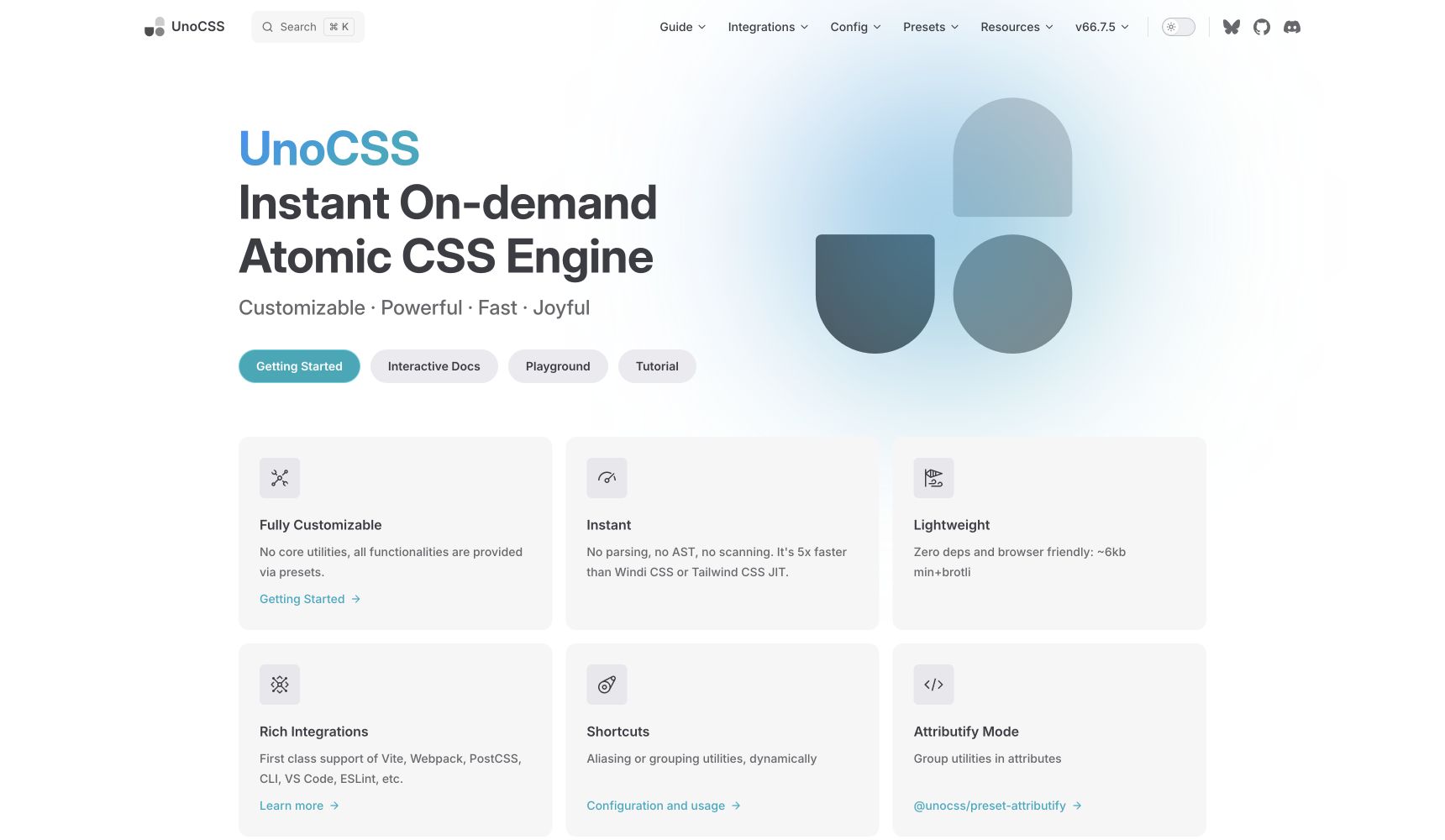
UnoCSS is the closest alternative if you like utility-first styling but want a more configurable engine. It generates only the atomic rules your project uses, and its presets can imitate familiar utility conventions or support your own shorthand.
- Choose it when: you want utility classes, on-demand generation, and fewer framework opinions.
- Compared with Tailwind: UnoCSS behaves more like an engine with interchangeable presets than a single fixed framework.
- Main catch: flexibility moves more architecture decisions onto your team, and it is not a drop-in replacement for every Tailwind plugin.
Verdict: this is my first pick for developers who want Tailwind’s speed without committing to Tailwind’s exact ecosystem.
2. Panda CSS: best for type-safe design systems
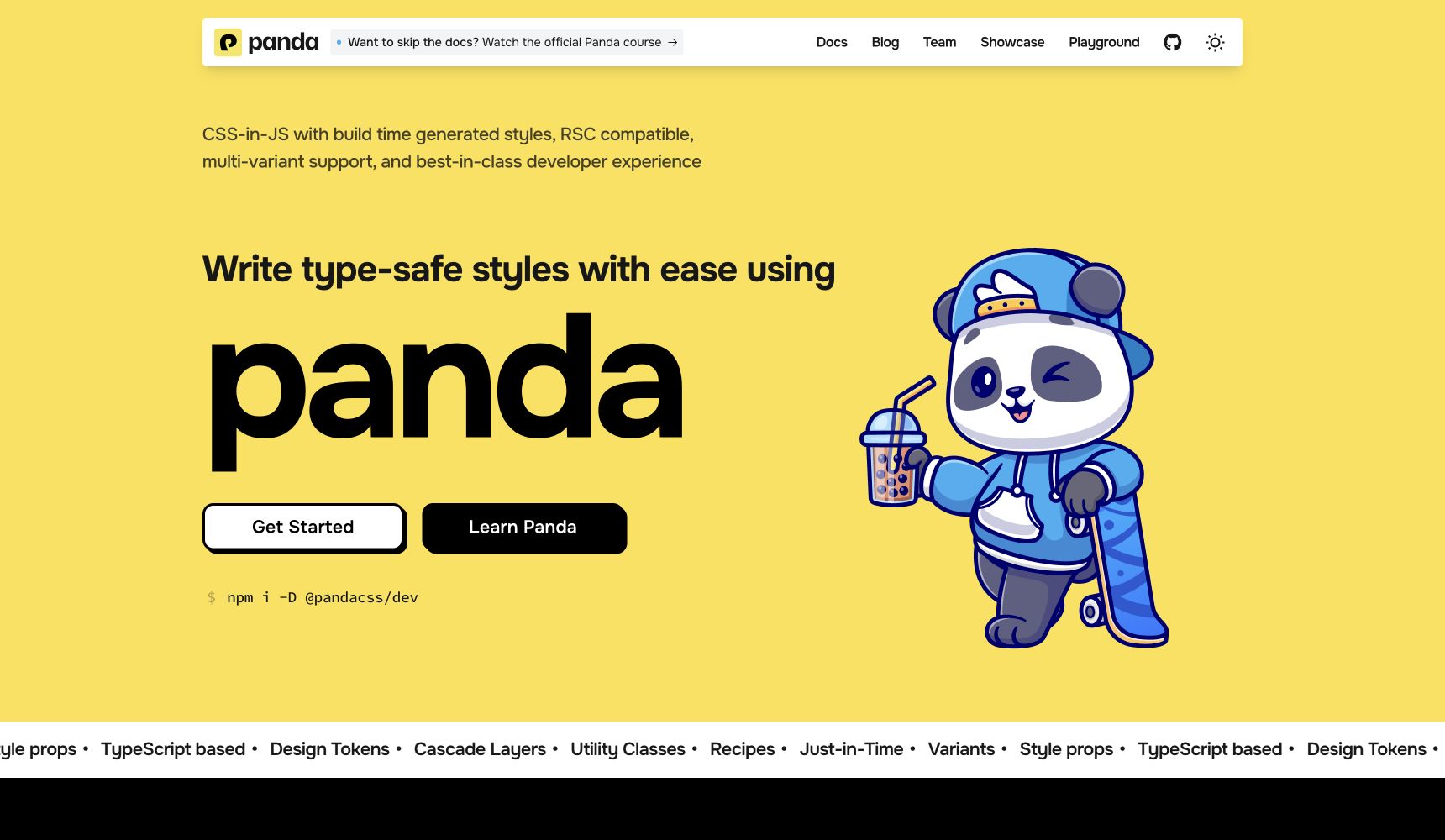
Panda CSS generates atomic CSS at build time from typed JavaScript or TypeScript style objects. It is a strong fit when your design tokens, variants, and component recipes need editor autocomplete and compile-time feedback.
- Choose it when: your team builds React-style component systems and values type safety.
- Compared with Tailwind: styles live in structured objects and recipes rather than long utility strings in markup.
- Main catch: the workflow is less attractive for plain HTML sites or teams that want CSS to remain independent of JavaScript tooling.
Verdict: Panda CSS makes the most sense when a typed design system is the product requirement, not just a developer preference. My guide to building design systems covers the broader decisions around tokens and reusable components.
3. Bootstrap: best for shipping familiar interfaces quickly
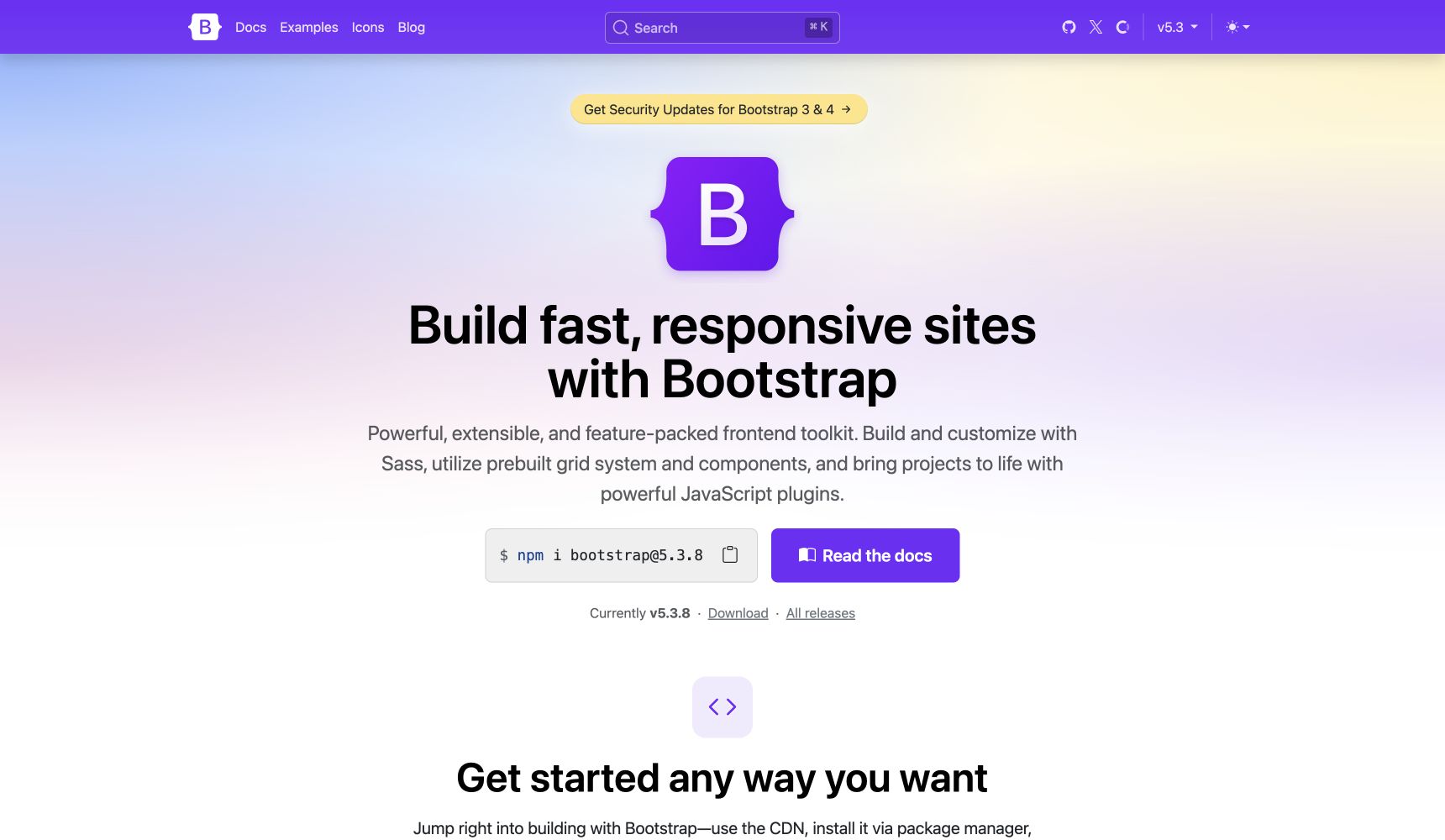
Bootstrap remains the pragmatic choice when you need a responsive grid, form controls, navigation, modals, dropdowns, and utilities in one documented package. It reduces the amount of interface design you must invent before the product works.
- Choose it when: speed, team familiarity, and ready-made application components matter most.
- Compared with Tailwind: Bootstrap gives you styled components first and utilities second.
- Main catch: sites can look unmistakably Bootstrap unless you customize Sass variables, tokens, spacing, and component styles.
Verdict: for internal tools, admin panels, prototypes, and conventional business interfaces, Bootstrap is often faster than assembling a design system from utilities.
4. Bulma: best for CSS-only components
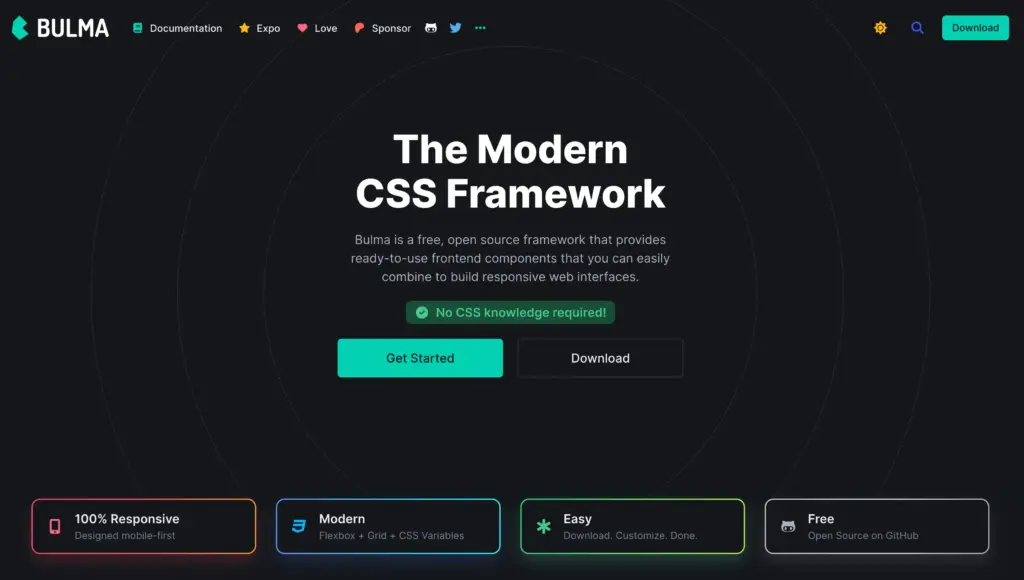
Bulma provides readable component classes, layout helpers, form styles, and responsive utilities without bundling JavaScript. That makes it useful when you want a coherent UI layer but prefer to implement menus, modals, and tabs with your own JavaScript or framework.
- Choose it when: you want component-level CSS with a small conceptual surface.
- Compared with Tailwind: you write semantic component classes such as buttons, cards, and columns instead of composing every property from utilities.
- Main catch: CSS-only also means interactive behavior is your responsibility.
Verdict: Bulma is cleaner than Bootstrap when you already have an interaction layer and only need dependable CSS components.
5. Pico CSS: best for semantic HTML and small sites
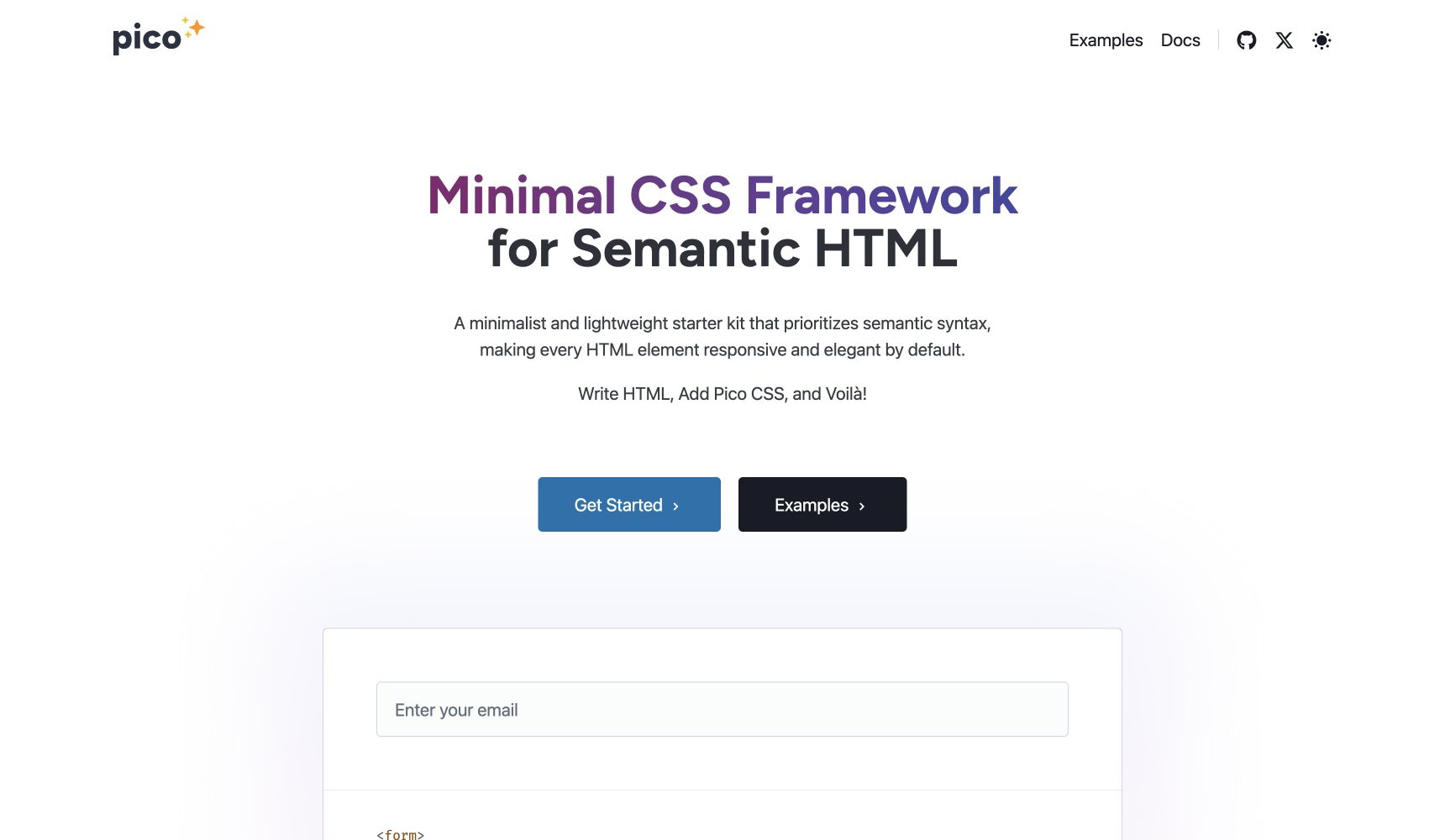
Pico CSS styles native HTML elements with sensible defaults, so a form, table, article, or navigation can look respectable before you add a large set of classes. It is especially good for documentation, small tools, personal sites, and server-rendered applications.
- Choose it when: you want clean semantic markup and minimal CSS decisions.
- Compared with Tailwind: Pico reduces classes instead of giving you more granular classes.
- Main catch: its deliberate simplicity becomes limiting when a product needs a highly distinctive interface or a large component library.
Verdict: Pico CSS is the strongest answer when your complaint about Tailwind is that the markup carries too much styling information.
6. Open Props: best for custom CSS with better primitives
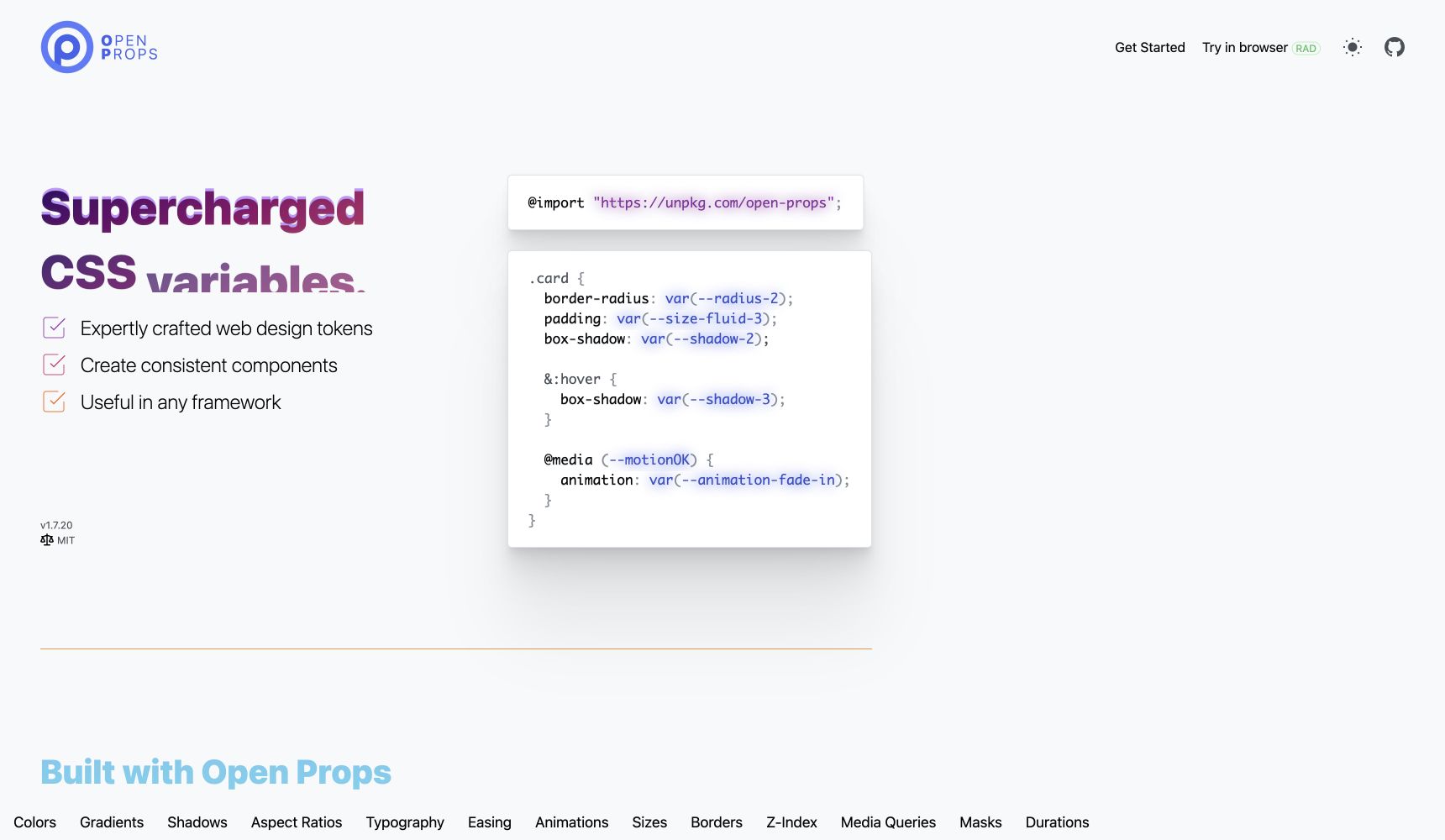
Open Props is a library of CSS custom properties for colors, spacing, typography, shadows, easing, gradients, and other design primitives. You keep writing normal CSS, but you stop inventing every token from scratch.
- Choose it when: you like vanilla CSS and want a consistent token foundation.
- Compared with Tailwind: tokens are consumed inside your CSS rather than represented as utility classes in HTML.
- Main catch: Open Props is not a complete UI framework. You still design and maintain the components.
Verdict: this is the option I would use when ownership and portability matter more than having a framework dictate the finished interface. It also pairs well with small techniques such as a pure CSS tooltip.
7. UIkit: best for modular marketing and content sites
UIkit combines a modular CSS framework with JavaScript components for navigation, sliders, off-canvas panels, filters, sticky elements, and other common site features. Its naming is systematic, and you can import only the pieces a project needs.
- Choose it when: you are building content-heavy or marketing interfaces and want polished components without React.
- Compared with Tailwind: UIkit supplies visible component behavior and styling rather than low-level utilities.
- Main catch: the ecosystem and pool of experienced developers are smaller than Bootstrap’s.
Verdict: UIkit is a credible middle ground between a CSS-only framework and a JavaScript application component library.
8. Chakra UI: best for accessible React components
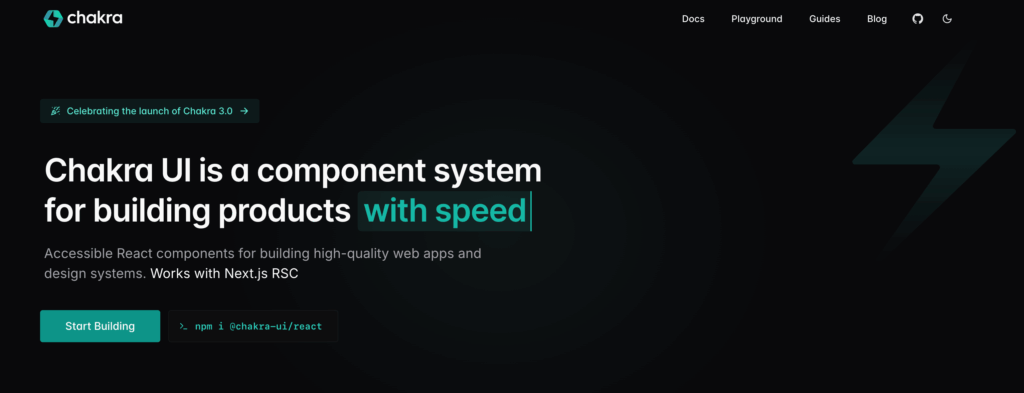
Chakra UI is an accessible React component system with composable layout primitives, theming, and style props. It is useful when your real requirement is not “replace Tailwind CSS” but “stop building accessible application components from scratch.”
- Choose it when: the project is already React-based and accessibility needs to be built into the component layer.
- Compared with Tailwind: Chakra gives you React components and runtime style APIs, not framework-agnostic CSS utilities.
- Main catch: it increases framework coupling and is a poor fit for static HTML or non-React stacks.
Verdict: Chakra UI is a React architecture choice, not a general CSS replacement. Make that decision consciously.
9. Primer CSS: best for structured product interfaces
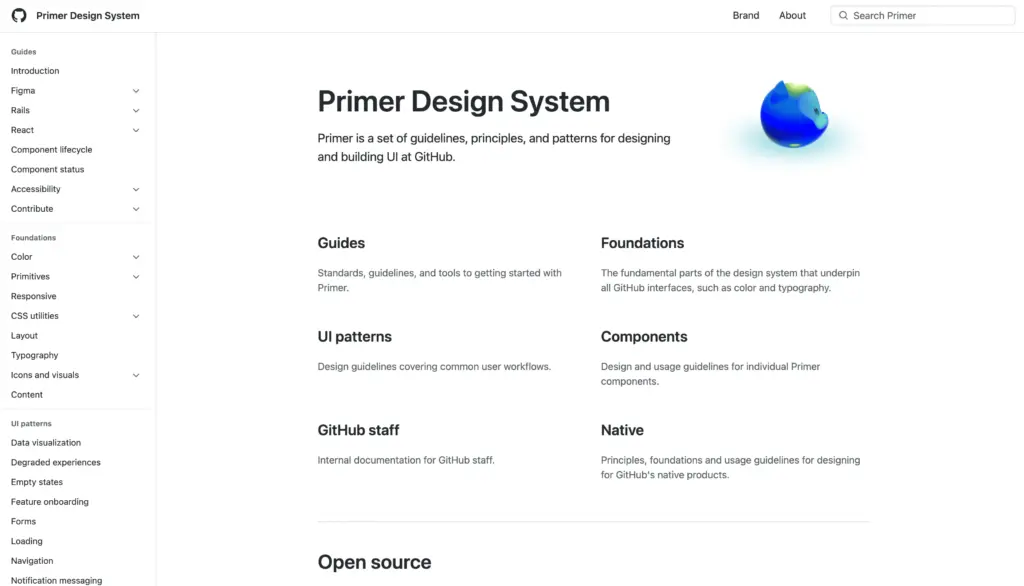
Primer CSS is the CSS foundation of GitHub’s design system. It offers utilities, layout primitives, components, support classes, and a mature visual language shaped by complex product interfaces.
- Choose it when: you need dense, structured product UI and value established design-system conventions.
- Compared with Tailwind: Primer carries stronger product-design opinions and supplies more recognizable components.
- Main catch: those opinions can make a site feel GitHub-like unless you invest in a separate visual layer.
Verdict: Primer is best treated as a design-system foundation for product teams, not a neutral utility toolkit.
When Tailwind CSS is still the better choice
Do not migrate a working project just because utility-heavy HTML looks busy. Tailwind CSS 4 improved the setup with CSS-first configuration, automatic content detection, modern CSS features, and a faster build engine. If your team already shares conventions and reusable components, switching frameworks may create more maintenance than it removes.
- Keep Tailwind when your team already knows it and the project has a stable component layer.
- Keep it when your design system maps cleanly to utilities and variants.
- Keep it when the ecosystem, editor tooling, and community integrations save real delivery time.
- Replace it when the markup model causes repeated friction, not merely aesthetic discomfort.
The wrong migration replaces familiar problems with unfamiliar ones. Test one representative screen before changing the whole codebase, then compare generated CSS, component complexity, accessibility, and the time required for future edits. For a larger stack decision, compare these tools alongside the full-stack frameworks your application already uses.
Final recommendation
For most developers searching for Tailwind CSS alternatives, the shortlist should be small:
- UnoCSS if you want to keep utility-first styling.
- Bootstrap if you want to ship standard components quickly.
- Pico CSS if you want semantic HTML and minimal classes.
- Panda CSS if you need typed styles and design-system recipes.
- Open Props if you want to own the CSS while reusing strong design tokens.
Choose the workflow that removes your actual bottleneck. A framework is useful only when it makes the next six months of changes easier, not just the first afternoon of coding.
Frequently asked questions
What is the closest alternative to Tailwind CSS?
UnoCSS is the closest alternative for most utility-first projects. It generates atomic CSS on demand and supports configurable presets, but it is an engine rather than a perfect drop-in replacement for every Tailwind plugin.
Is Bootstrap better than Tailwind CSS?
Bootstrap is better when you need ready-made components, a conventional grid, and optional JavaScript plugins. Tailwind is better when you want low-level styling control and already have a component architecture.
Can I replace Tailwind CSS with vanilla CSS?
Yes. Modern CSS supports custom properties, cascade layers, container queries, nesting, and powerful layout primitives. Open Props can supply reusable design tokens if you want a head start without adopting another full framework.
Is UnoCSS faster than Tailwind CSS?
UnoCSS is designed as an on-demand atomic CSS engine and can be extremely fast, but real build performance depends on the project, integrations, presets, and file scanning. Test it against a representative screen instead of relying on a generic benchmark.
Is Chakra UI a direct Tailwind CSS replacement?
No. Chakra UI is a React component system with accessibility, theming, and style props built in. It can replace Tailwind inside a React application, but it changes the component architecture as well as the styling method.
What is the difference between Tailwind CSS and Tailwind Plus?
Tailwind CSS is the utility-first styling framework. Tailwind Plus, previously Tailwind UI, is a paid collection of components and templates built for the Tailwind ecosystem. A component-library alternative does not necessarily replace the underlying CSS framework.
Tell Google you want more of this.
Add Gaurav Tiwari as a preferred sourceOne tap, and this site shows up more often in your own Top Stories, AI Overviews and AI Mode. Remove it any time.