
Modern India history book · Volume 4 · Free PDF + EPUB
Modern India Reference Companion: A Modern India History Book
Recognition is not recall.
This companion turns the Modern India set into a working reference and retrieval system through chronology, laws and constitutional proposals, office-holders, movements and organizations, historical maps, historiographical schools, comparisons, and cumulative questions with answers.
Download the free history book289 pages · 7 chapters · PDF + EPUB · Price: ₹0
This history book explains the machinery behind the chronology.
Dates and rulers are useful only when you can reconstruct the relationships around them. This book keeps power, institutions, society, economy, and political choices in the same frame.
Classification prevents confusion
Enacted laws, executive measures, commissions, proposals, pacts, plans, office-holders, movements, organizations, and political language are separated by what they actually were.
Retrieval replaces rereading
Chronology, matrices, comparisons, and 180 questions with answer keys make you reconstruct the history instead of merely recognizing it on the page.
Interpretation stays usable
Historians and schools are connected to recurring debates, then turned into a method for writing a historiographical answer.
The governing idea
A reference book should shorten the path to the right fact.
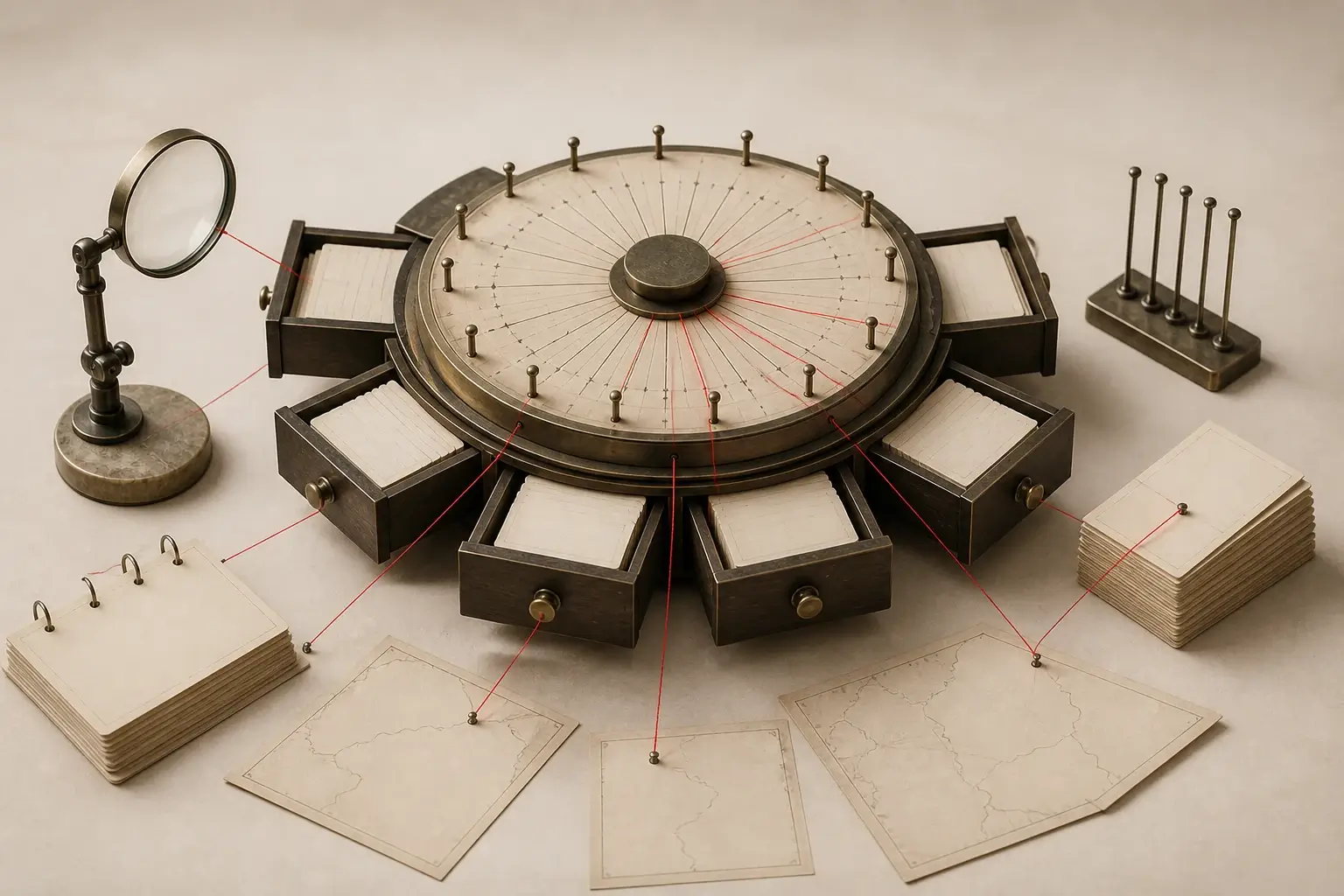
The illustration organizes chronology, acts, movements, maps, historians, and questions around a central retrieval dial. The point is not to store more material. It is to locate, classify, compare, and recall it faster.
What this history book covers
The 7-chapter structure is organized around historical transitions, not arbitrary note packets.
Part 01
Chronology and constitutional record
The master chronology runs from 1707 to 10 August 2026, followed by acts, regulations, commissions, plans, constitutional proposals, treaties, pacts, and classification rules.
Part 02
People, movements, places, and interpretation
Office-holders, decisive events, movements, organizations, press, political language, historical maps, historians, works, and interpretive schools form the reference layer.
Part 03
Comparison and cumulative retrieval
High-confusion comparisons lead into 180 integrated questions with answer keys across state formation, economy, society, movements, democracy, development, federalism, geography, and historiography.
Read, reconstruct, retrieve.
The page order is the reading method. Explanation comes first, reconstruction second, and retrieval last.
01
Locate
Use the chronology, office-holder lists, movement matrix, or act classification to find the right record.
02
Compare
Put similar laws, movements, institutions, plans, or interpretations side by side before writing.
03
Retrieve
Answer the cumulative questions from memory, then repair the exact category or relationship you missed.
Use this book if
Readers using the three Modern India narrative volumes
Students who confuse similar acts, commissions, movements, and proposals
Anyone building a repeatable retrieval practice instead of another note pile
The Limits
Use it beside the narrative volumes, not instead of them
It is a structured reference, not a dictionary of every person and place
Contemporary entries stop at the stated 10 August 2026 cutoff
FREE HISTORY BOOK
Get the complete PDF and EPUB for ₹0.
Choose the fixed-layout PDF for reading or printing, and the reflowable EPUB for phones and e-readers. Both protected files are included in one free checkout.
289 pages · PDF + EPUB · No paid edition required
Download Questions
Can I use this without the narrative volumes?
Yes for lookup and retrieval, but not as a replacement for explanation. The narrative volumes show the mechanism; the companion helps you locate and reconstruct it.
How many practice questions are included?
The integrated self-test bank contains 180 cumulative questions with answer keys across six retrieval sets.
Does it distinguish acts from proposals and commissions?
Yes. Classification is one of the book’s main jobs, so enacted law, executive action, committee reports, pacts, plans, and unimplemented proposals are not collapsed into one list.
Continue through the Indian history books
Each volume stands alone, but the series is designed to carry institutions, political choices, and retrieval practice across periods.