Top Online Marketing Strategies That Actually Work in 2026
Staying ahead of competitors in online marketing requires constant adaptation and strategic execution. From SEO and content marketing to paid…
A brand becomes useful when it makes a choice easier. The right customer understands who the offer is for, what it helps them do, why it is different, and what evidence supports the promise. A logo can express that system, but it cannot replace it.
This hub organizes my branding guides around four jobs: choosing a position, expressing it consistently, earning recognition, and protecting the reputation that follows. Measure progress with direct searches, qualified referrals, repeat purchase, conversion by audience, and the language customers use to describe you.
The strongest branding work is operational. The promise appears in the product, the support response, the invoice, and the decision to say no to a customer who is not a fit. The guides below help make that consistency visible.
Staying ahead of competitors in online marketing requires constant adaptation and strategic execution. From SEO and content marketing to paid…
Compare 16 Canva alternatives by the job you need done: Adobe Express for everyday graphics, Affinity for free desktop editing…
A well-designed letterhead does more for brand building than most people realize. It's one of the first things clients see…
Hashtags drive discoverability on social media, but tracking which ones perform best requires analytics. Hashtag analytics tools show you reach,…
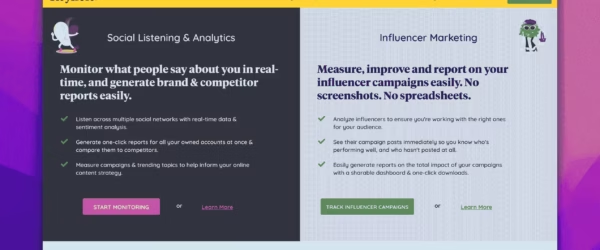
Brand marketing requires the right tools, and SaaS platforms make enterprise-level marketing accessible to businesses of every size. I've used…
Your brand name is one of the most important business decisions you'll ever make. It affects memorability, SEO, trademark viability,…
Struggling to name your business? A business name generator can spark ideas you'd never come up with on your own.…
Branding strategies for solopreneurs: position the offer, align every touchpoint, choose awareness channels, calculate break-even CPC, and track demand.
What people find when they search your name is your first impression. How to leave a lasting impression online with…
Decide whether to rebrand your business using four evidence-based triggers, a refresh-or-repair matrix, a worked budget, and Google's site-move controls.
Strong brands aren't built overnight, but they are built deliberately. Beyond quality products and services, you need consistent messaging, visual…
It's never too late to build a brand identity. Whether you're a startup or an established business that never focused…