by
by
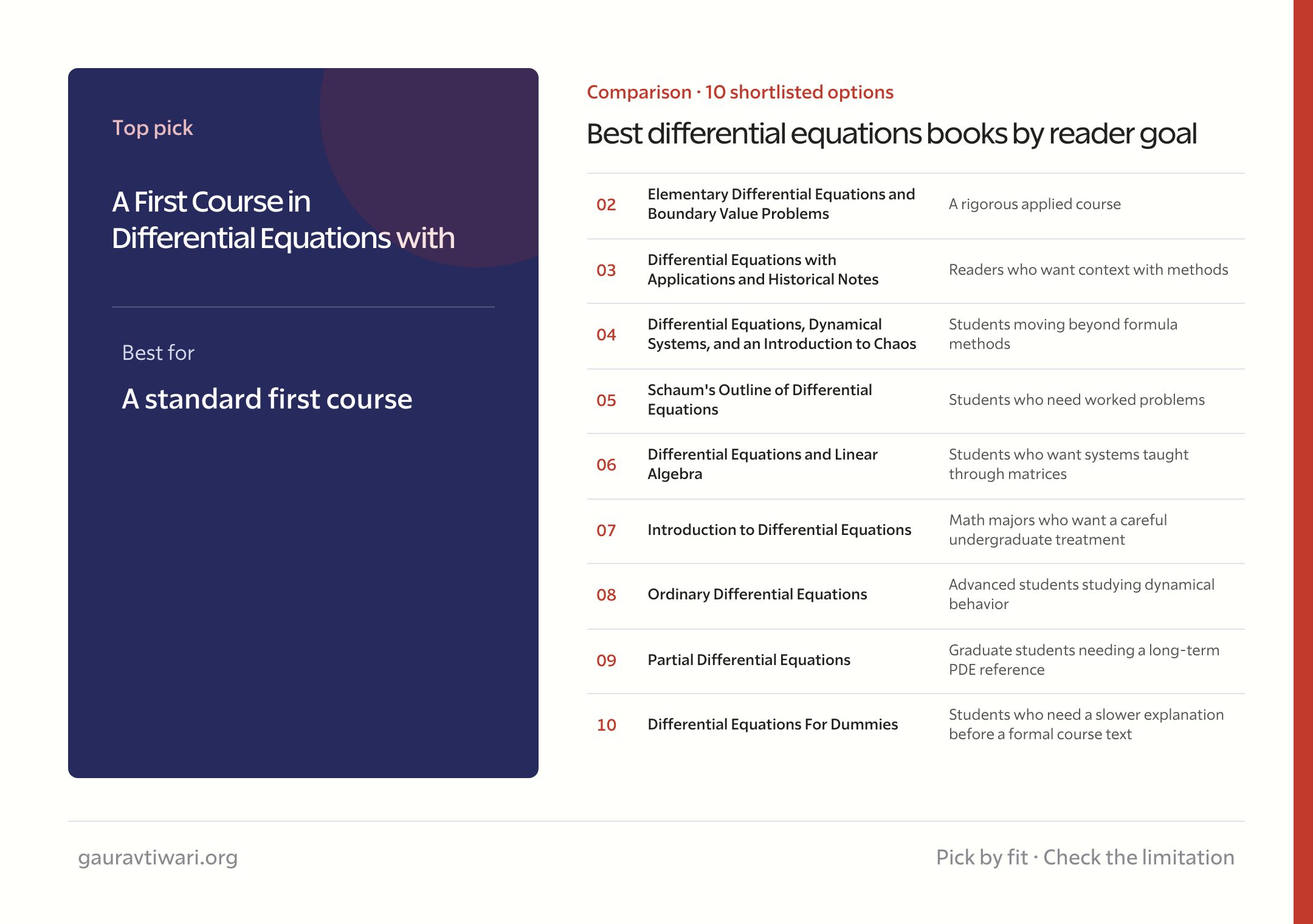
The best differential equations books solve different problems. Dennis G. Zill’s A First Course in Differential Equations with Modeling Applications is the best default for a standard introductory course because it balances solution methods, modeling, and familiar course sequencing. Boyce and DiPrima fits a more demanding engineering course, while Schaum’s Outline is a practice supplement rather than a main text.
Do not buy the most famous title until you know whether your course emphasizes computation, modeling, proofs, dynamical systems, or PDE theory. Evans and Arnold address advanced questions, but neither belongs in a beginner’s first week.
Check your prerequisites first: weak integration techniques or basic linear algebra will make every differential equations book feel harder than it is.
Quick Comparisons
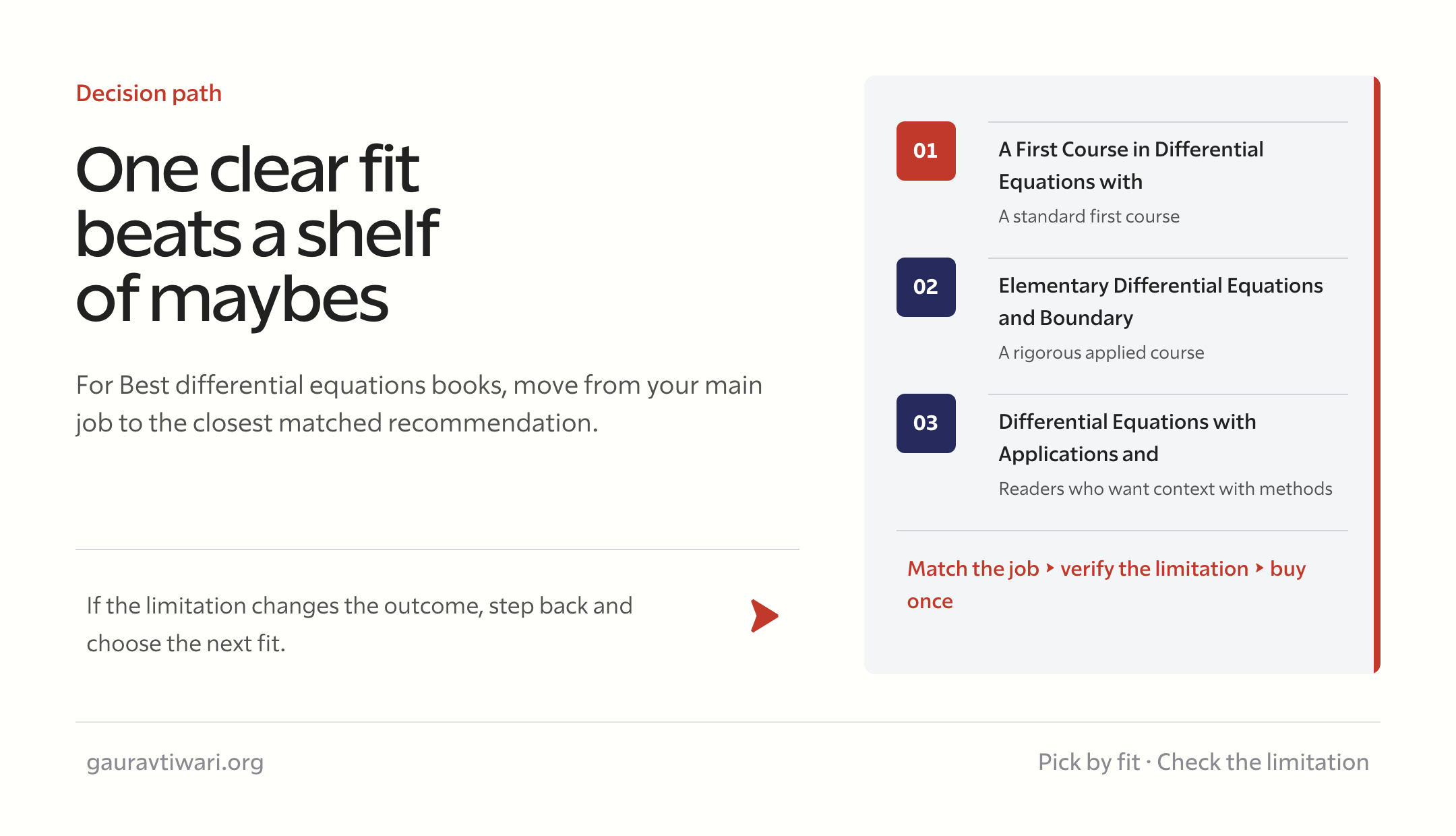
Start with Zill for a standard first course. Choose Boyce and DiPrima when the course is more applied and exercise-heavy. Choose Simmons when historical development helps you understand why the methods were invented. The table separates level and purpose because a single bestseller rank hides the decision.
| Recommendation | Verdict | Best for | Starting level |
|---|---|---|---|
| A First Course in Differential Equations with Modeling Applications | Top Pick | a standard first course | Calculus required |
| Elementary Differential Equations and Boundary Value Problems | Best for Engineering | a rigorous applied course | Calculus and linear algebra helpful |
| Differential Equations with Applications and Historical Notes | Best for Insight | readers who want context with methods | Calculus required |
| Differential Equations, Dynamical Systems, and an Introduction to Chaos | Best for Dynamical Systems | students moving beyond formula methods | Calculus and linear algebra required |
| Schaum's Outline of Differential Equations | Best for Practice | students who need worked problems | Use beside a main text |
| Differential Equations and Linear Algebra | Best for the Linear-Algebra Connection | students who want systems taught through matrices | Calculus and basic matrix familiarity |
| Introduction to Differential Equations | Best for Mathematical Maturity | math majors who want a careful undergraduate treatment | Calculus and proof experience helpful |
| Ordinary Differential Equations | Best for Geometric Insight | advanced students studying dynamical behavior | Advanced undergraduate mathematics |
| Partial Differential Equations | Best for Graduate PDE | graduate students needing a long-term PDE reference | Graduate analysis |
| Differential Equations For Dummies | Best for Gentle Review | students who need a slower explanation before a formal course text | Calculus basics |
If calculus is the bottleneck, use the calculus book guide or free online calculus textbooks before buying another differential equations title.
Best Differential Equations Books
Read each limitation as seriously as the strength. A book built for graduate PDE can still be useless in an introductory ODE course.
A First Course in Differential Equations with Modeling Applications
Zill is the broadest default for a calculus-based first course. It pairs standard solution methods with modeling examples and follows a structure many university courses use. Choose it when you need 1 main text; skip it if price or edition-specific access makes the package poor value.
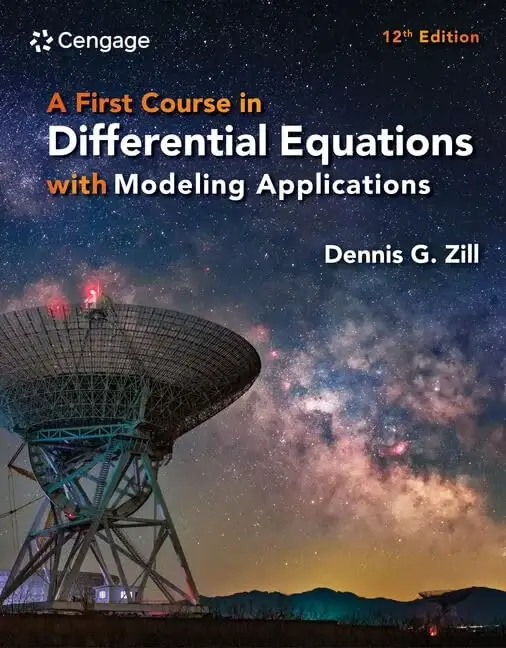
A First Course in Differential Equations with Modeling Applications
- By Dennis G. Zill
- Best for: a standard first course
- Level: Calculus required
- Main strength: Combines core solution methods with modeling examples and a familiar course structure.
- Watch-out: The commercial textbook package can be expensive and edition-dependent.
- Verify the exact edition, format, and seller
Elementary Differential Equations and Boundary Value Problems
Boyce and DiPrima goes deeper than Zill on boundary-value problems, applications, and exercises. That makes it a better fit for engineering courses that need breadth and sustained practice. But the size and pace make it a clumsy starting point for casual self-study.
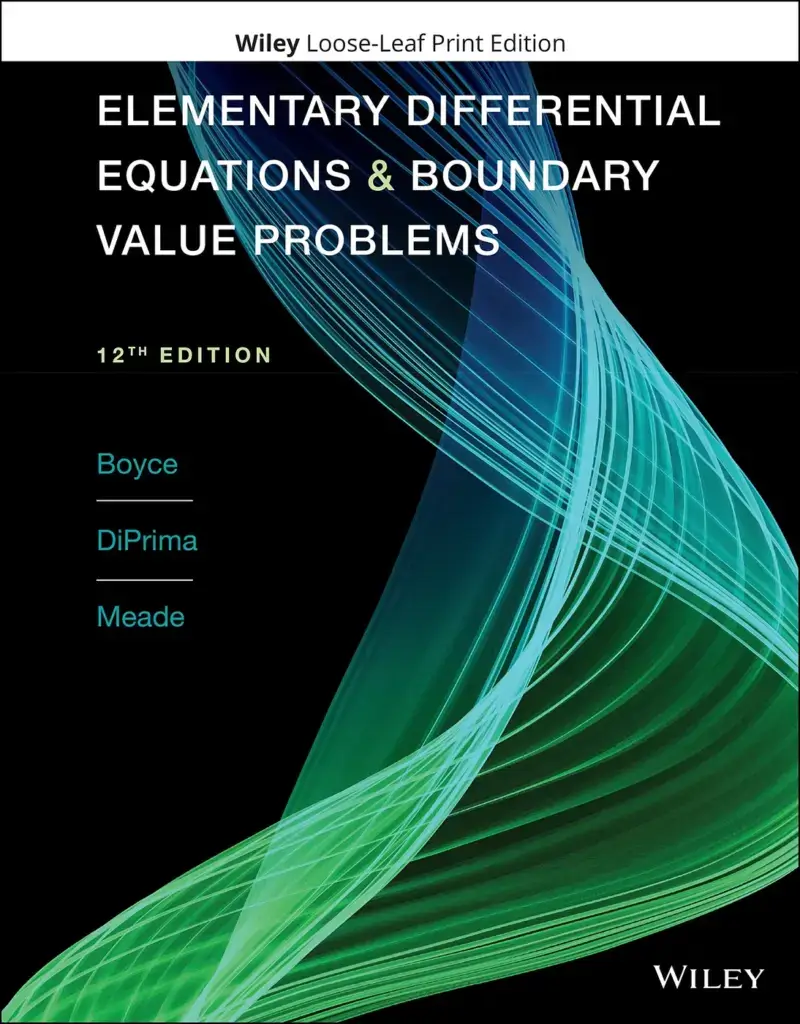
Elementary Differential Equations and Boundary Value Problems
- By William E. Boyce and Richard C. DiPrima
- Best for: a rigorous applied course
- Level: Calculus and linear algebra helpful
- Main strength: Provides a deep bank of methods, applications, boundary-value problems, and exercises.
- Watch-out: The size and pace can be excessive for a short self-study introduction.
- Verify the exact edition, format, and seller
Differential Equations with Applications and Historical Notes
Simmons teaches the standard material through applications and historical development. It is the better choice when you want to see where the methods came from instead of treating every equation as a recipe. The tradeoff is a chapter order that may not track a modern syllabus week by week.
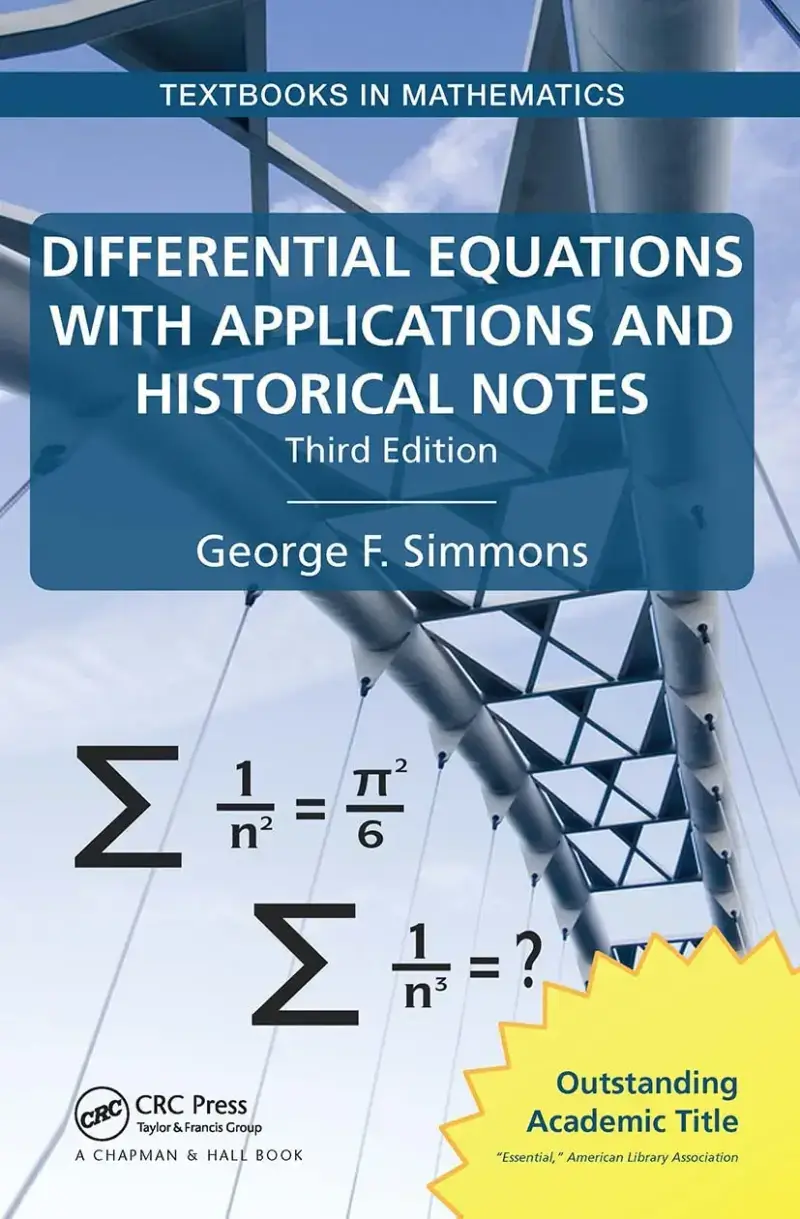
Differential Equations with Applications and Historical Notes
- By George F. Simmons
- Best for: readers who want context with methods
- Level: Calculus required
- Main strength: Uses historical development and applications to make standard equations less mechanical.
- Watch-out: Its organization may not match a modern syllabus week for week.
- Verify the exact edition, format, and seller
Differential Equations, Dynamical Systems, and an Introduction to Chaos
Hirsch, Smale, and Devaney move from routine solution methods to phase space, nonlinear systems, and chaos. Choose this after a first course or alongside one with a strong linear-algebra component. It is not a substitute for learning the standard computational toolkit.
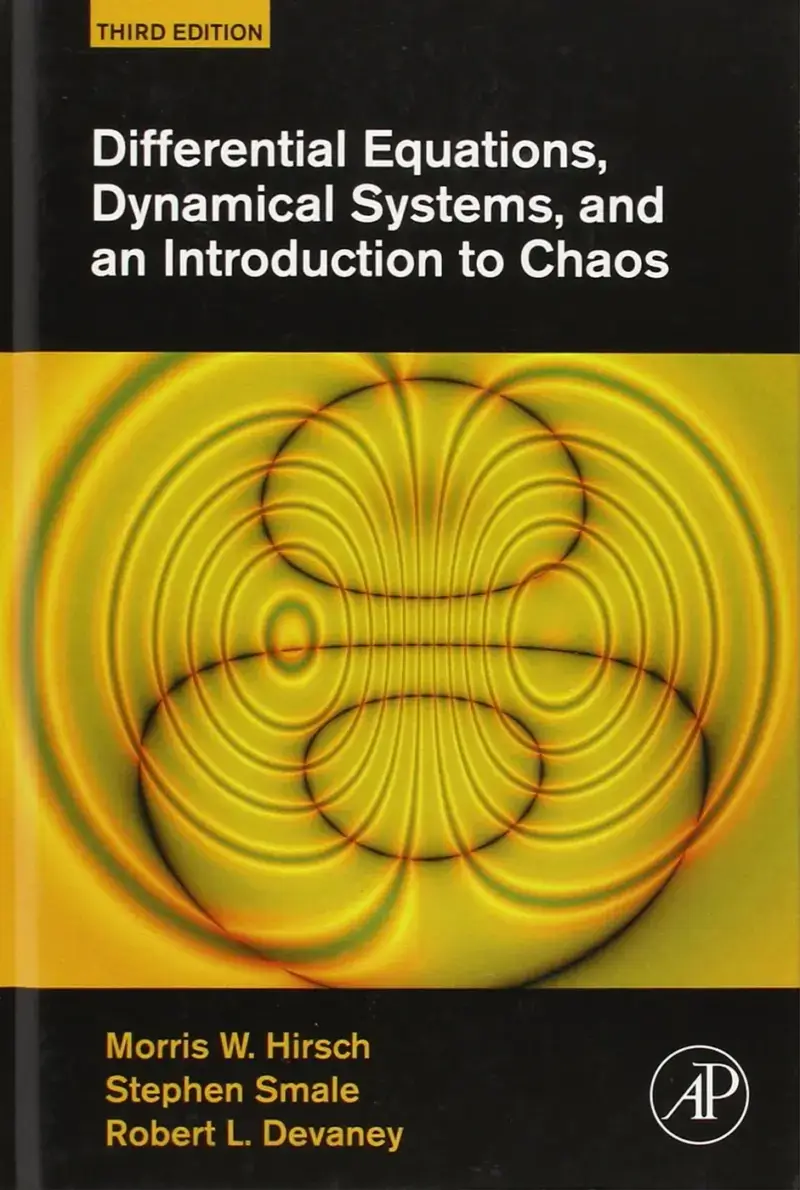
Differential Equations, Dynamical Systems, and an Introduction to Chaos
- By Morris W. Hirsch, Stephen Smale, and Robert L. Devaney
- Best for: students moving beyond formula methods
- Level: Calculus and linear algebra required
- Main strength: Connects differential equations with phase space, nonlinear systems, and chaos.
- Watch-out: It is not the easiest first exposure to routine solution techniques.
- Verify the exact edition, format, and seller
Schaum's Outline of Differential Equations
Schaum’s Outline is the practice book on this list. Its worked problems can sharpen method recognition and speed, especially before exams. Use it beside a main textbook, because compressed solutions are not enough when you still need the concept explained.
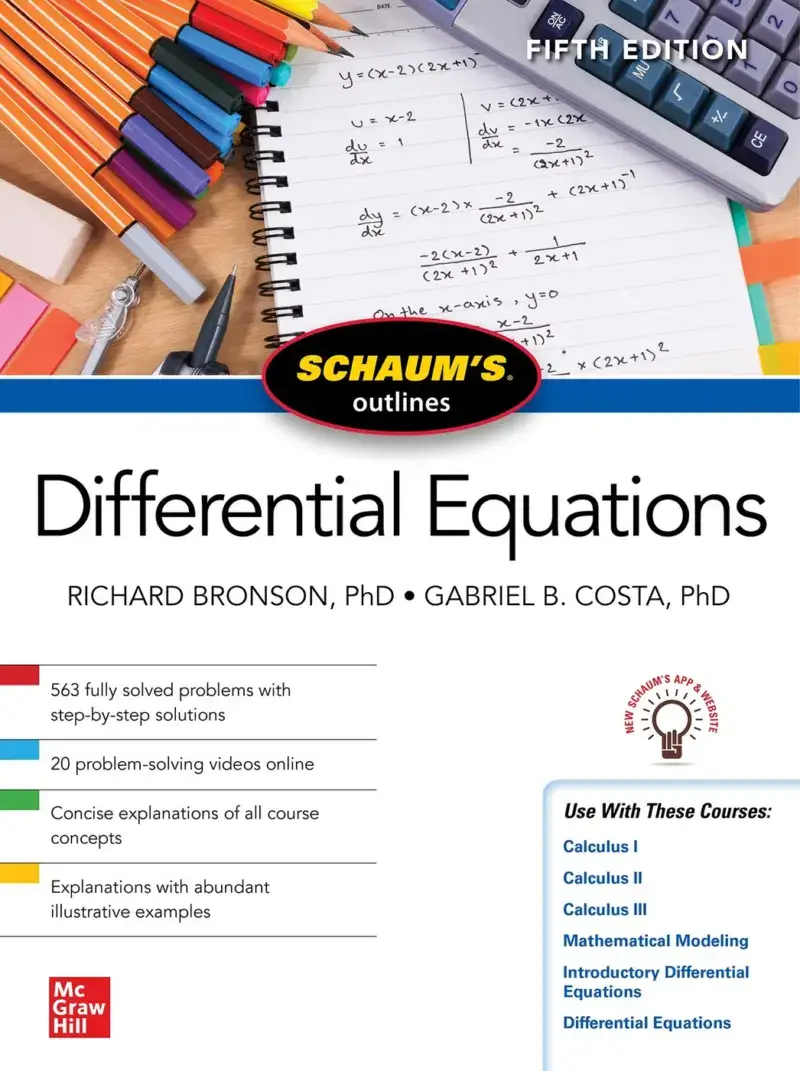
Schaum's Outline of Differential Equations
- By Richard Bronson and Gabriel Costa
- Best for: students who need worked problems
- Level: Use beside a main text
- Main strength: Supplies compact review and many solved problems for method practice.
- Watch-out: It is strongest as a supplement, not as the only source of explanation.
- Verify the exact edition, format, and seller
Differential Equations and Linear Algebra
Strang connects differential equations to eigenvalues, matrices, and linear systems instead of treating the subjects as separate boxes. That makes it a strong fit for students whose course uses the matrix viewpoint. It may be awkward if the syllabus postpones linear algebra.
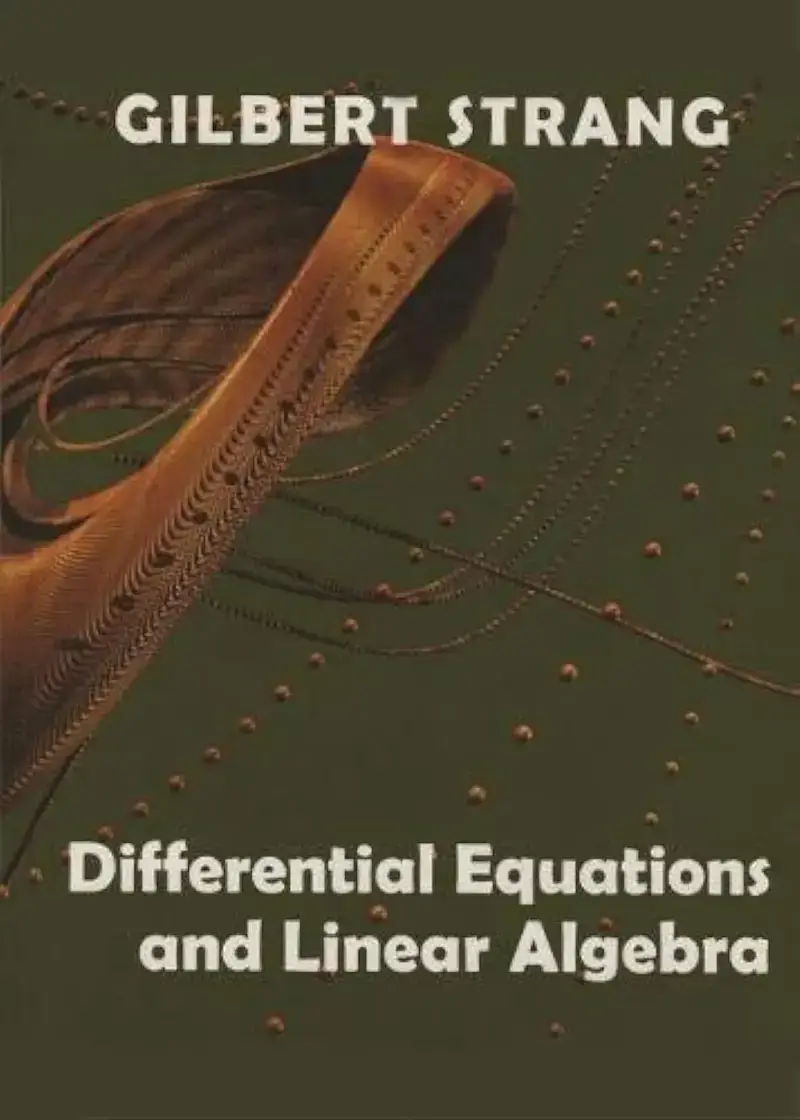
Differential Equations and Linear Algebra
- By Gilbert Strang
- Best for: students who want systems taught through matrices
- Level: Calculus and basic matrix familiarity
- Main strength: Integrates differential equations with eigenvalues, linear systems, and computational intuition.
- Watch-out: The combined approach may not match courses that teach the subjects separately.
- Verify the exact edition, format, and seller
Introduction to Differential Equations
Taylor gives mathematics majors a careful undergraduate treatment with proofs, qualitative ideas, and applications. It asks for more maturity than a computation-first service-course text. Choose it when proofs matter, not just for extra exercises.
Introduction to Differential Equations
- By Michael E. Taylor
- Best for: math majors who want a careful undergraduate treatment
- Level: Calculus and proof experience helpful
- Main strength: Develops ordinary differential equations with proofs, qualitative ideas, and meaningful applications.
- Watch-out: It is more demanding than a computation-first service-course text.
- Verify the exact edition, format, and seller
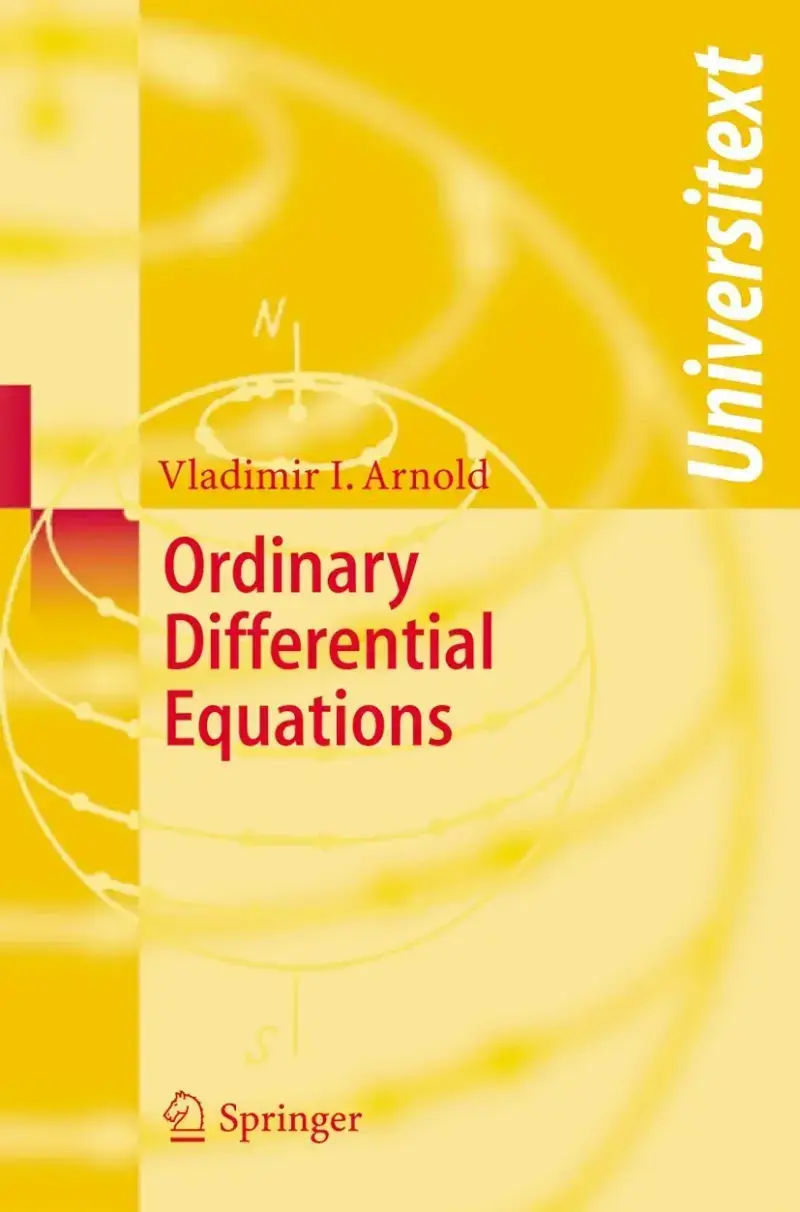
Ordinary Differential Equations
Arnold treats ordinary differential equations geometrically, emphasizing transformations and dynamical behavior. The book is conceptually rich and terse. It belongs after the procedural basics, not at the beginning of a first course.
Ordinary Differential Equations
- By Vladimir I. Arnold and R. Cooke
- Best for: advanced students studying dynamical behavior
- Level: Advanced undergraduate mathematics
- Main strength: Presents differential equations through geometry, transformations, and conceptual structure.
- Watch-out: Its style is terse and unsuitable for a first procedural course.
- Verify the exact edition, format, and seller
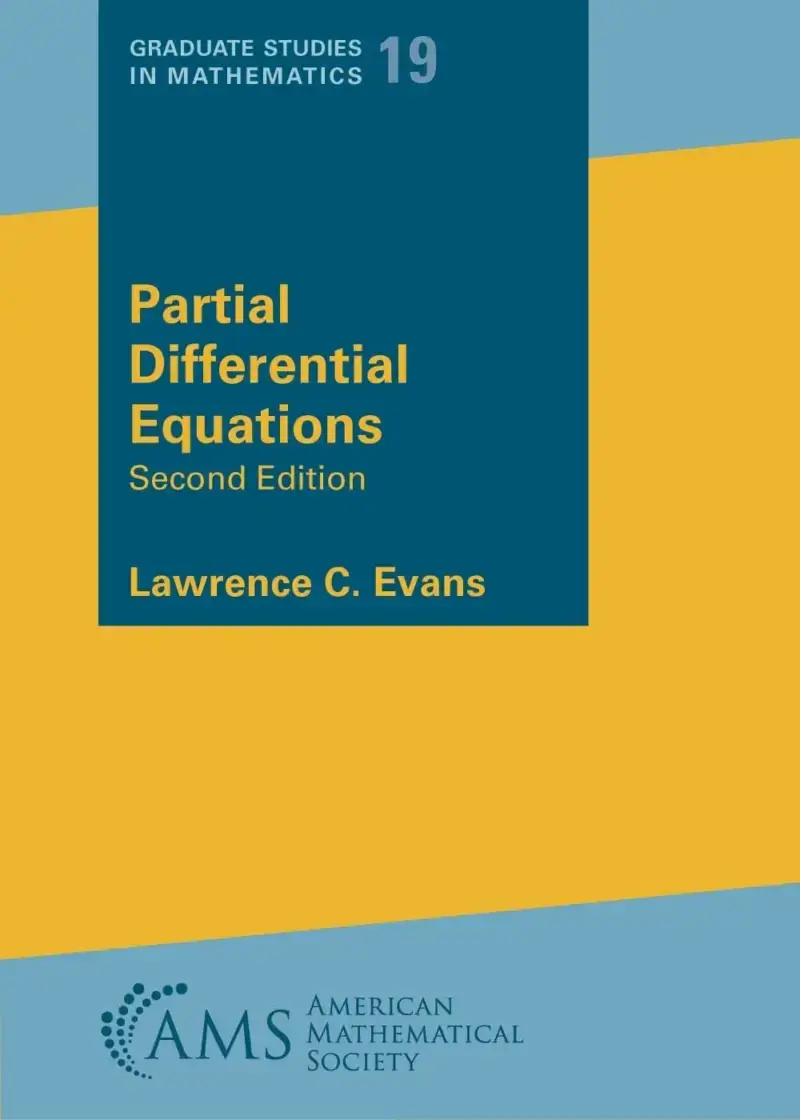
Partial Differential Equations
Evans is a graduate PDE reference, not a general differential equations textbook. Its strength is rigorous coverage of major PDE methods and theory. Choose it only with real-analysis maturity and a graduate-level need; for introductory ODEs, it is the wrong category.
Partial Differential Equations
- By Lawrence C. Evans
- Best for: graduate students needing a long-term PDE reference
- Level: Graduate analysis
- Main strength: Provides rigorous coverage of major partial differential equation methods and theory.
- Watch-out: It is far beyond an introductory ODE course and requires real-analysis maturity.
- Verify the exact edition, format, and seller
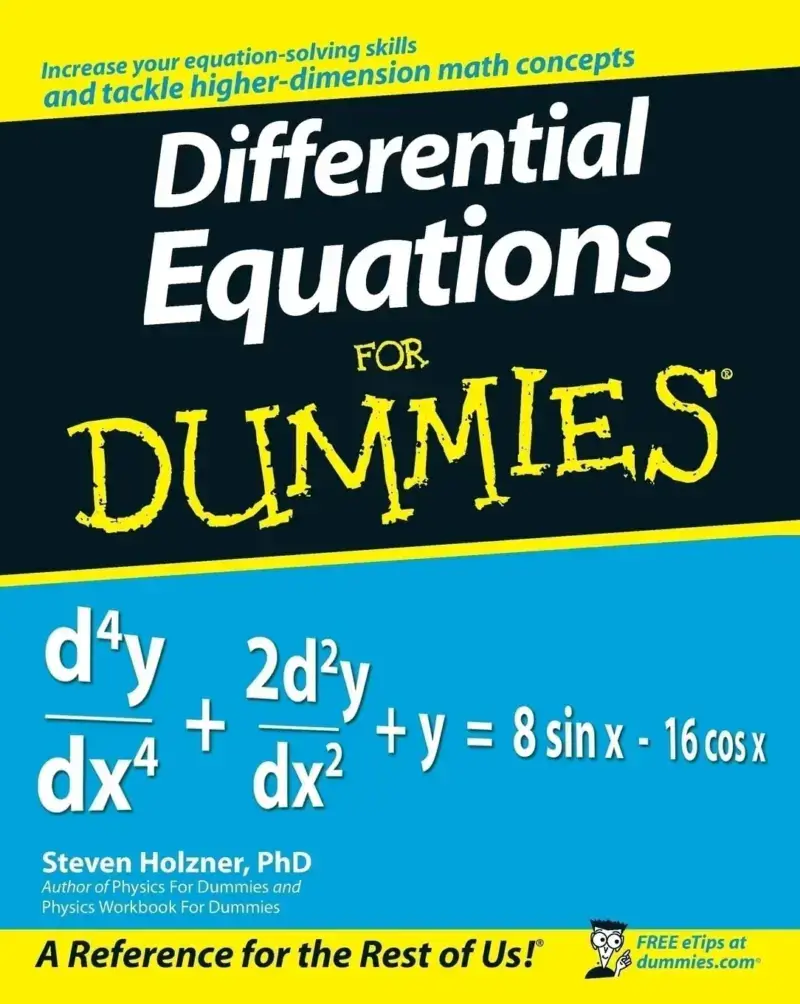
Differential Equations For Dummies
Differential Equations For Dummies slows the material down and works through common equation types step by step. It can prepare you for a formal course or support a difficult first pass. It does not replace the rigor, exercise depth, or syllabus coverage of a university textbook.
Differential Equations For Dummies
- By Steven Holzner
- Best for: students who need a slower explanation before a formal course text
- Level: Calculus basics
- Main strength: Breaks common equation types and methods into approachable, worked steps.
- Watch-out: It offers less rigor, theory, and exercise depth than a university textbook.
- Verify the exact edition, format, and seller
Free Differential Equations Resources
Try a free course before buying a second textbook. It will show whether your gap is calculus, method practice, or theory.
- MIT OpenCourseWare 18.03 Differential Equations: lectures, notes, problem sets, and exams.
- LibreTexts Differential Equations: legal open textbooks and worked topics at several levels.
Paid books can still earn their place through better sequencing, curated exercises, and print usability. Buy after the free material exposes a specific limitation.
How to Choose a Differential Equations Book
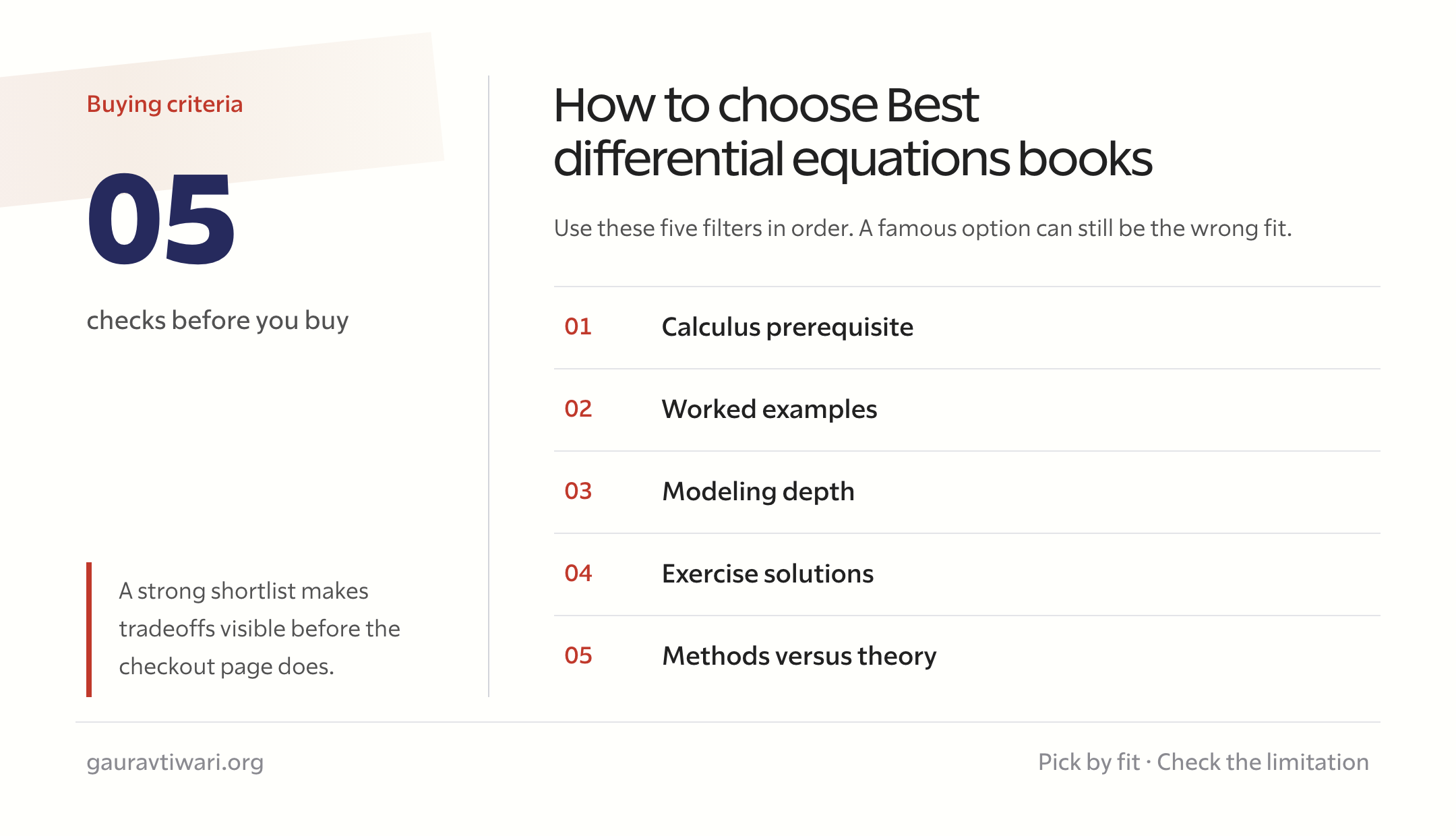
Start with the course, not the cover. The right book must match your prerequisites, the teaching mode, and the kind of work you will repeat.
- Prerequisites: Introductory ODE usually needs calculus. Matrix-heavy systems need linear algebra. Evans needs graduate analysis.
- Methods or theory: Zill and Boyce emphasize methods, Simmons adds context, Taylor adds proofs, Hirsch and Arnold develop dynamics, and Evans covers PDE theory.
- Worked practice: Use Schaum’s as a supplement when you need solved problems. Keep a main text for explanation and course sequence.
- Edition and access: Match the ISBN or ASIN, assigned problem numbers, binding, and any required digital code before ordering.
A Practical Reading Plan
Use 1 main book and 1 practice source. Reading several introductions in parallel feels productive, but it delays the part that builds fluency: solving equations without looking at the worked example.
- Choose the main text that matches your course level and emphasis.
- Pair it with MIT OpenCourseWare, LibreTexts, or Schaum’s only for a gap the main text leaves open.
- Solve problems after each reading session and keep a short error log.
- Move to a specialist text only when the syllabus or project demands it.
For the next step beyond an undergraduate ODE course, use the real analysis book guide or the differential equations calculator collection when that is the specific gap.
If your next course is integral equations, I wrote a textbook for that step. Chapters 9 and 10 of Integral Equations turn initial and boundary value problems into Volterra and Fredholm equations, so the ODE work you do here carries straight over.
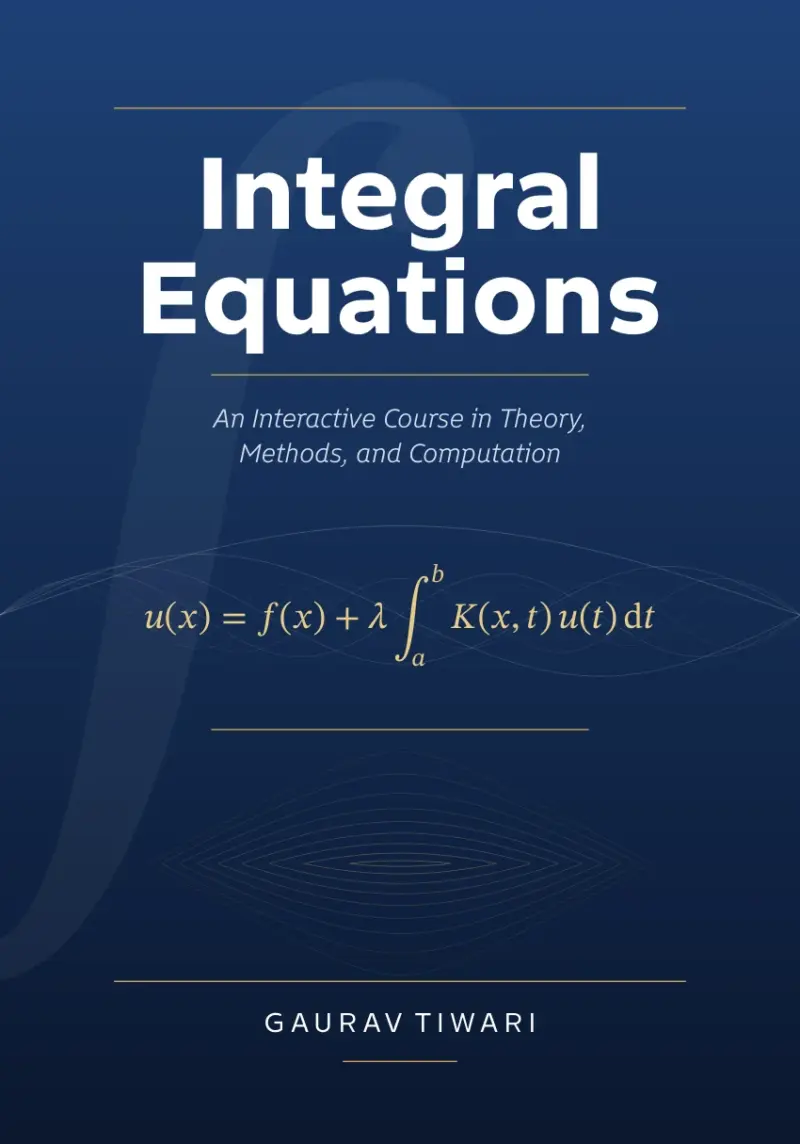
Integral Equations: An Interactive Course in Theory, Methods, and Computation
- 24 chapters
- 321 exercises
- 60 figures
- Kindle + paperback
- 24 chapters in 6 parts, from reading an equation to defending a solution
- 321 exercises, each with a hint or answer at the back
- Fredholm and Volterra equations, separable kernels, the Neumann series and resolvents
- Initial and boundary value problems in integral form, with Green's functions
- The Fredholm alternative, symmetric kernels and spectral methods
- Nyström, collocation, Galerkin and Tikhonov regularization for noisy data
- 6 benchmark problems revisited with several methods
- Prerequisites: calculus, basic ODEs and linear algebra
Price checked
- Free PDF with worked solutions to all 321 exercises
The Limits
No roundup can tell you which edition your instructor assigned or whether a used copy includes the required access code. Compare the exact ISBN or ASIN with the syllabus before ordering.
This list also spans introductory ODEs, dynamical systems, and graduate PDEs. Those are neighboring subjects, not interchangeable difficulty levels. If weak calculus is the immediate problem, another differential equations book will not repair it.
FAQs on Differential Equations Books
How many differential equations books should I buy?
Start with 1 main textbook. Add a second book only for a specific gap, such as worked problems, proof-based theory, dynamical systems, or PDEs. More books do not create more practice time.
Is an older edition worth buying?
Yes, when the core theory is unchanged and your course does not require a current access code or matching problem numbers. Check the assigned ISBN before buying a used copy.
Should I buy print, ebook, or used?
Choose print for handwritten equation work, ebook for search and portability, and used for stable texts without required digital access. Match the ISBN or ASIN to the edition you intend to study.
Are there good free differential equations books?
Yes. MIT OpenCourseWare 18.03 and LibreTexts Differential Equations provide legal notes, problems, exams, and open textbooks. Use them to test your level before paying for a specialized book.
Final Remarks
For most first-course students, Zill is the right main text. Choose Boyce and DiPrima for engineering depth, Simmons for historical context, or Schaum’s beside a main book when practice is the missing piece.
Buy 1 book and work its problems long enough to discover the next gap. Let that gap, not the shelf, choose your second book.
Tell Google you want more of this.
Add Gaurav Tiwari as a preferred sourceOne tap, and this site shows up more often in your own Top Stories, AI Overviews and AI Mode. Remove it any time.
Disclaimer: This site is reader-supported. If you buy through some links, I may earn a small commission at no extra cost to you. I only recommend tools I trust and would use myself. Your support helps keep gauravtiwari.org free and focused on real-world advice. Thanks. - Gaurav Tiwari