by
by
Struggling to pick the right real analysis textbook? I’ve been there. As a math postgraduate who has read every book on this list cover to cover, I can tell you: the wrong textbook will make real analysis feel impossible, and the right one will make it click.
What makes me qualified to rank these? (a) I’m a maths postgraduate, and (b) I’ve read all of these books.
Best picks at a glance
Start with the use case, not the brand. The shortlist below separates the strongest recommendations by the job they do best, then shows the one detail you should verify before buying.
| Use case | Recommendation | Why it stands out | What to check |
|---|---|---|---|
| 1. Principles of Mathematical Analysis | Principles of Mathematical Analysis | Covers real number system as a complete ordered field | Check the edition, prerequisite level, and whether you need an answer manual. |
| 2. Real Analysis by Carothers | Real Analysis by Carothers | Covers function spaces in depth | Check the edition, prerequisite level, and whether you need an answer manual. |
| 3. Real Analysis by Royden | Real Analysis by Royden | In-depth Lebesgue integration and measure theory | Check the edition, prerequisite level, and whether you need an answer manual. |
How I assessed the shortlist: I compared intended use, practical specifications, current availability, and value. I have not put every item through a standardized laboratory test, so I do not present synthetic benchmark scores. The detailed sections below explain fit, limitations, and alternatives.
Free options worth using
You do not need to buy every book on this list. Start with these legal, free resources, then pay for a book when you know which teaching style or depth you still need.
- Basic Analysis by Jiří Lebl: a current open textbook for undergraduate real analysis, available in web and PDF formats.
- Introduction to Real Analysis by William Trench: a free two-semester real analysis textbook approved by the AIM Open Textbook Initiative.
Here are the 10 best real analysis books for math majors in 2026, sorted by content quality and how well they actually teach the subject.
Best Real Analysis Books in 2026: Quick Summary
- 1. Principles of Mathematical Analysis
- 2. Real Analysis by Carothers
- 3. Real Analysis by Royden
- 4. Counterexamples in Analysis by Gelbaum
- 5. Real Analysis: Modern Techniques and Their Applications by Folland
- 6. Principles of Real Analysis by S. C. Malik
- 7. Introduction to Real Analysis by Bartle
- 8. Real and Complex Analysis by Rudin
- 9. Introductory Real Analysis by Kolmogorov
- 10. A First Course in Mathematical Analysis by Brannan
Best Real Analysis Books for Math Majors
1. Principles of Mathematical Analysis
Author: Walter Rudin
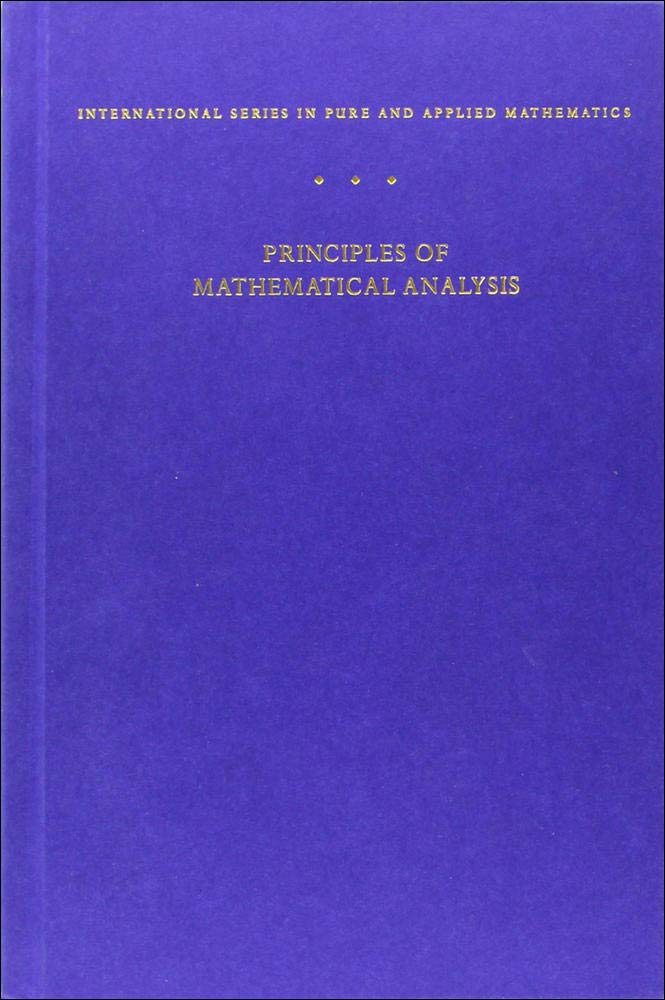
Principles of Mathematical Analysis
- Covers real number system as a complete ordered field
- Includes Dedekind's Cut in appendix to Chapter 1
- Topological foundations for continuity and convergence
- Dedicated section on the gamma function
- Part of the Walter Rudin Student Series
- Ideal for undergraduates and first-year graduate students
Principles of Mathematical Analysis by Walter Rudin (math lovers call it Baby Rudin) is one of the most well-known and respected real analysis textbooks ever written. It builds a solid foundation in mathematical analysis for both undergraduates and first-year graduate students.
It starts by discussing the real number system as a complete ordered field. In the latest edition, Dedekind’s Cut is described in an appendix to Chapter 1.
Chapter 2 covers the topological background required for differentiation, integration, continuity, and convergence. The latest edition also includes a section on the gamma function, along with several new exercises.
If you’re serious about learning real analysis for self study or coursework, this is the book most professors recommend first. It’s rigorous, concise, and doesn’t waste your time.
Get on Amazon.in / Get on Amazon.com
2. Real Analysis by Carothers
Author: N.L. Carothers
- Covers function spaces in depth
- Thorough treatment of metric and normed linear spaces
- Lebesgue measure and integration on the line
- Informal and enticing writing style
- Numerous exercises and study suggestions
- Suitable for non-specialists in mathematics
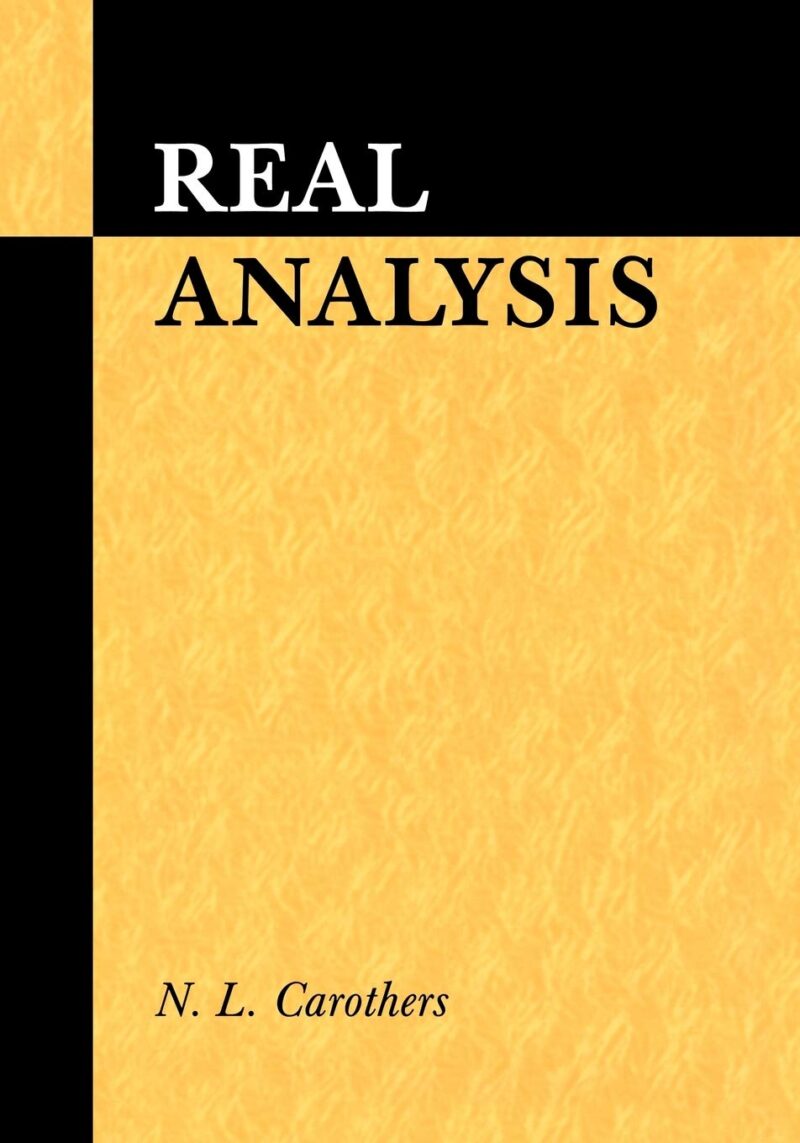
Real Analysis by N.L. Carothers is aimed at advanced undergraduates and beginning graduates. It requires only a basic understanding of advanced calculus, making it a great choice for both specialists and non-specialists.
The book covers three important topics: function spaces, metric and normed linear spaces, and Lebesgue measure and integration on the line.
Carothers’ writing style is informal and enticing. He provides an overview of new ideas and encourages readers to understand them while supplying complete details and proofs. The book also contains numerous helpful exercises and suggestions for further study.
Get on Amazon.in / Get on Amazon.com
3. Real Analysis by Royden
Author: H.L. Royden
- In-depth Lebesgue integration and measure theory
- First half covers theorems on the real line
- Second half covers arbitrary topological spaces
- Lucid, clear, and concise writing style
- Ideal introductory graduate text
- Builds from undergraduate to advanced-level analysis
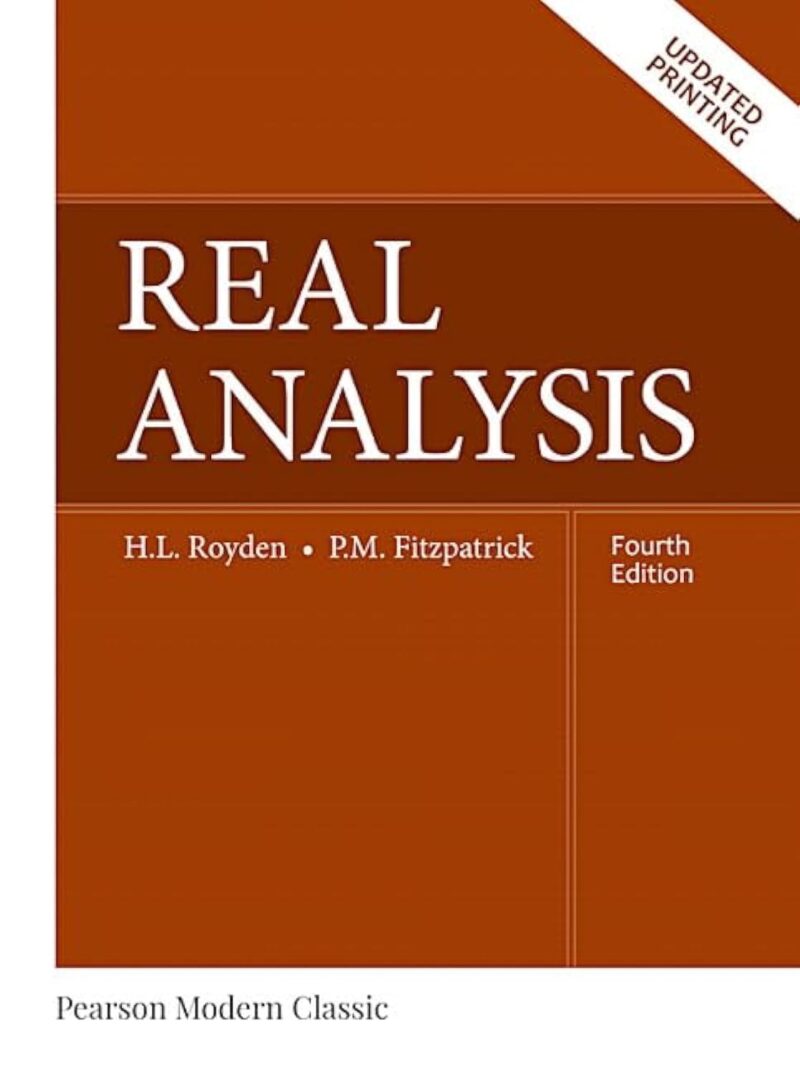
This book serves as an introductory graduate text on Lebesgue integration and measure theory. Royden encourages the reader to return to the subject and relearn it from a more advanced point of view.
The first half deals with theorems on the real line, while the second half covers arbitrary topological spaces. Royden’s writing style is charmingly simple. He keeps the text lucid, clear, and to the point. After finishing this book, you’ll have solid exposure to real analysis at a fairly advanced level.
Get on Amazon.in / Get on Amazon.com
Most professors recommend starting with Rudin’s Principles (Baby Rudin) for a rigorous introduction, then moving to Royden or Folland for graduate-level measure theory. If you’re self-studying, Bartle or Carothers offer a gentler on-ramp.
4. Counterexamples in Analysis by Gelbaum
Author: Bernard R. Gelbaum
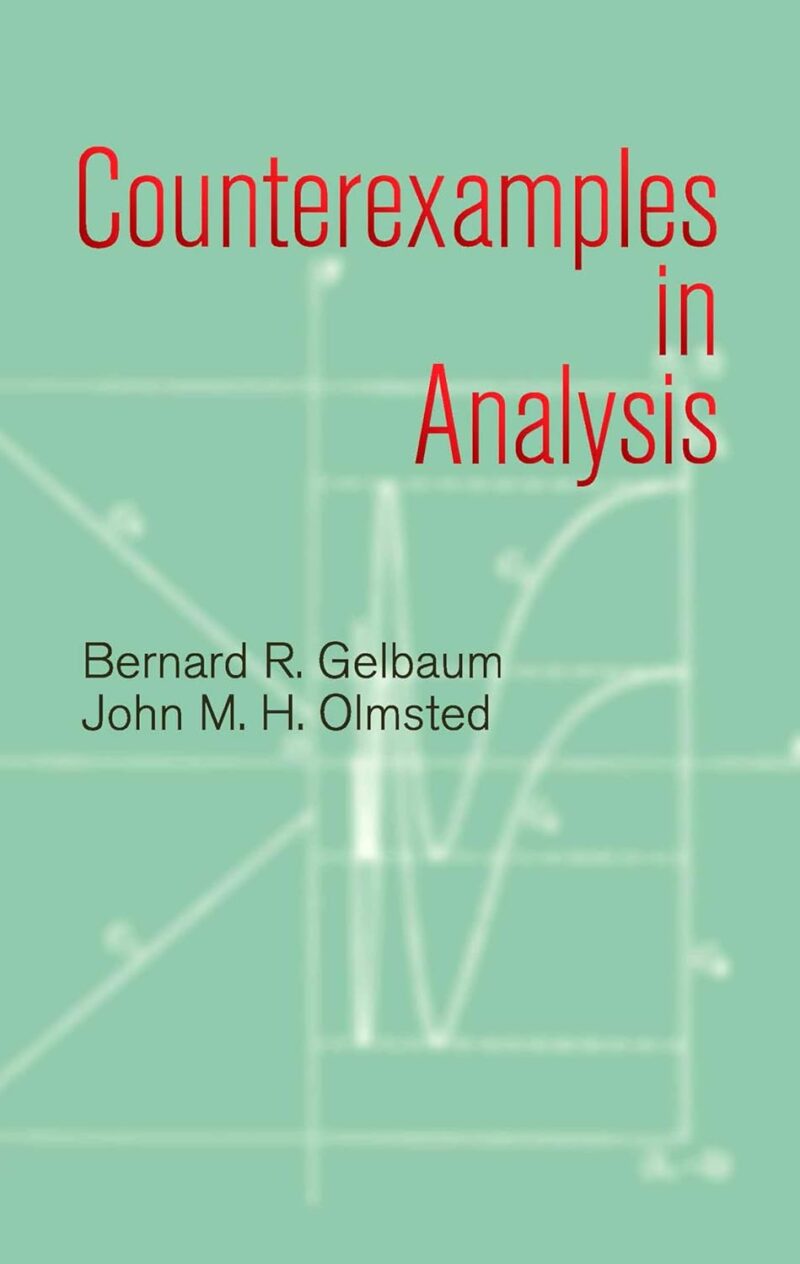
Counterexamples in Analysis by Gelbaum
- Covers real variables counterexamples extensively
- Topics include differentiation and Riemann integration
- Covers plane sets, metric, and topological spaces
- Illustrates why theorems are phrased precisely
- Great for producing functions with unusual properties
- Available as affordable Dover paperback
This compelling text by Bernard R. Gelbaum is a great companion for anyone studying analysis. The counterexamples largely deal with “real variables” and span two halves: the first covers the real number system, differentiation, Riemann integration, functions, limits, infinite series, and sequences. The second describes plane sets, metric and topological spaces, area, function spaces, and functions of two variables.
The book illustrates why certain theorems are phrased the way they are. If you need to produce functions with bizarre properties, this is a particularly useful resource. It offers a concise collection of solid counterexamples that many students overlook.
Get on Amazon.in / Get on Amazon.com
5. Real Analysis: Modern Techniques and Their Applications by Folland
Author: Gerald B. Folland
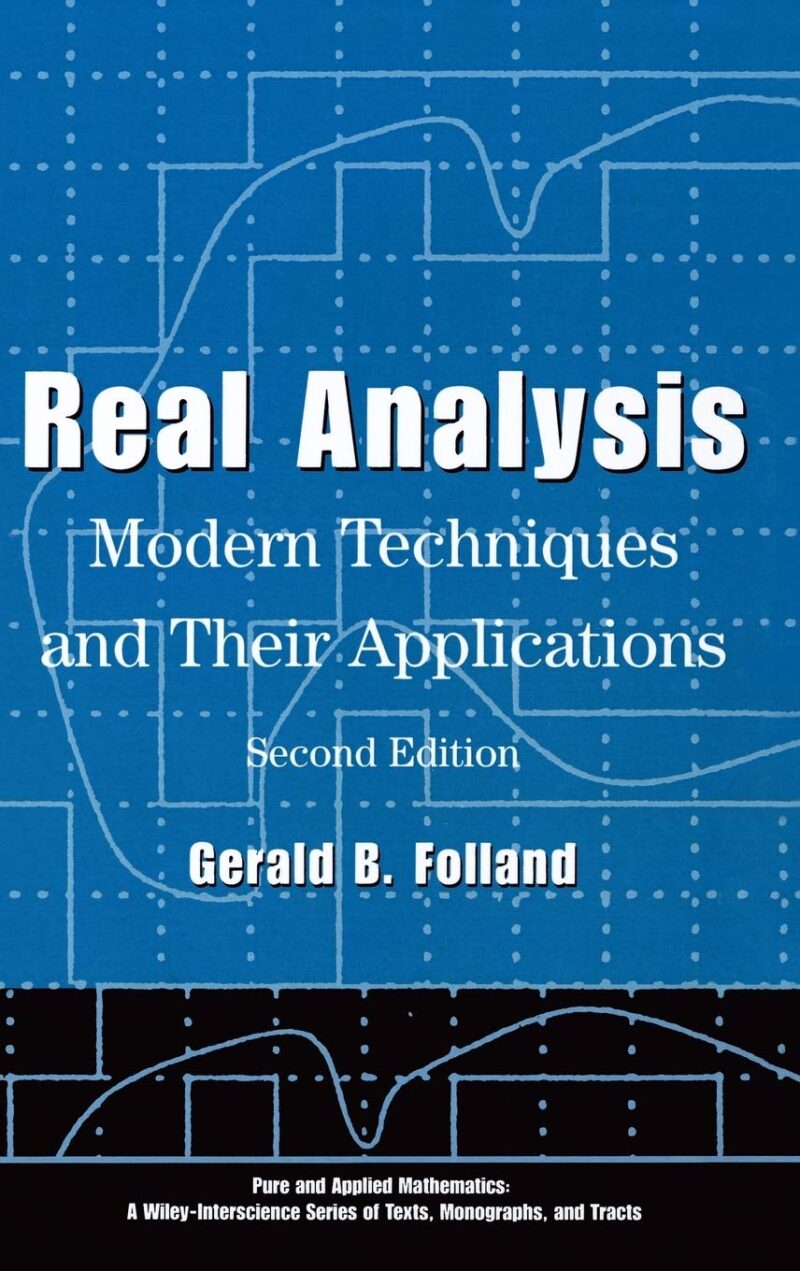
Real Analysis: Modern Techniques and Their Applications by Folland
- Point-set topology and measure theory emphasis
- Integration theory and functional analysis fundamentals
- Introduction to probability and distribution theory
- Fourier analysis coverage included
- Large bibliography and numerous exercises
- Review chapter on metric spaces and sets
Folland’s Real Analysis offers a comprehensive approach to the subject and its applications. It covers the subject in greater detail and at a more advanced level than most available textbooks. The emphasis is on point-set topology, measure and integration theory, and the fundamentals of functional analysis.
The book also introduces probability theory, distribution theory, and Fourier analysis. With a large bibliography, numerous exercises, and a review chapter on metric spaces and sets, it’s a strong choice for graduate-level real analysis courses.
Get on Amazon.in / Get on Amazon.com
6. Principles of Real Analysis by S. C. Malik
Author: S. C. Malik
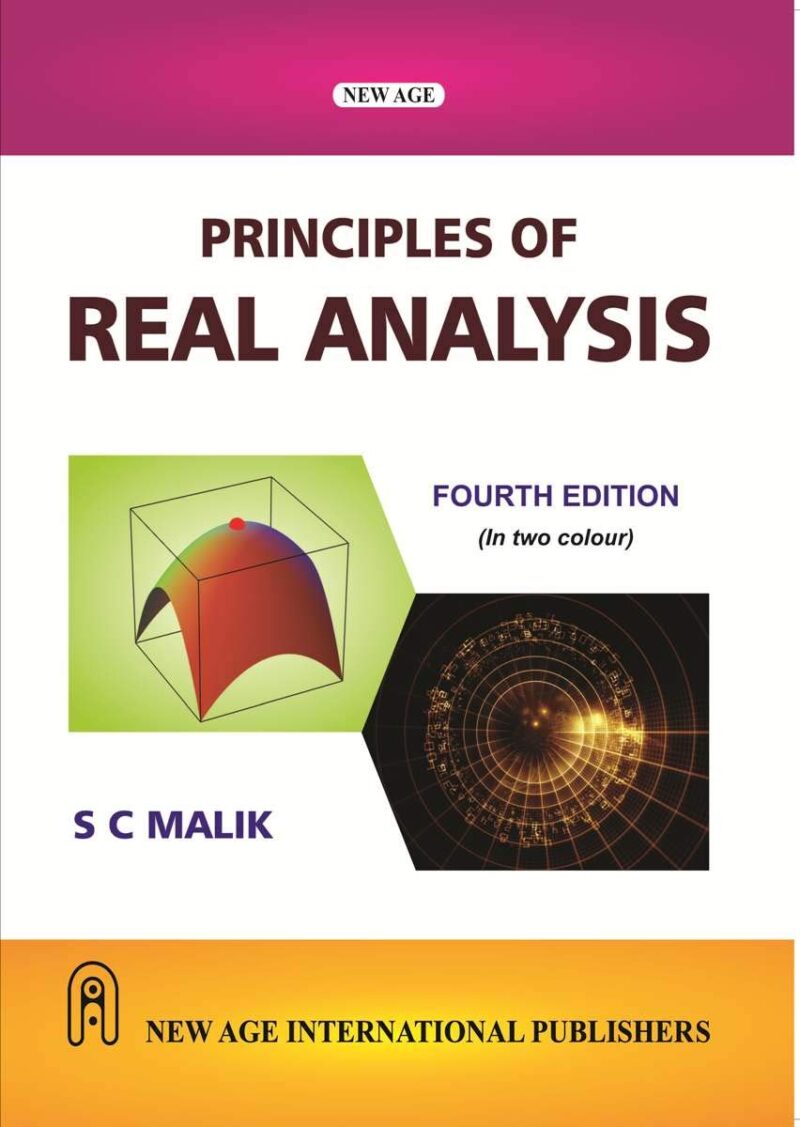
Principles of Real Analysis by S. C. Malik
- Designed for Indian university postgraduate courses
- Uses Dedekind's construction of real numbers
- Covers differentiation and indeterminate forms
- Continuity and convergence treated thoroughly
- Numerous well-graded solved examples
- Affordable and widely available in South Asia
Principles of Real Analysis by S. C. Malik serves as a textbook for postgraduate students of Indian universities and a course in real analysis for honors. It deals with the theory right away and explains the fundamentals meticulously.
Beginning with the essential properties of rational numbers and using Dedekind’s form, it establishes the properties of real numbers. This forms a solid foundation for the subsequent chapters on differentiation, indeterminate forms, continuity, and more. The book is notable for its well-graded examples, many of which are fully solved.
Get on Amazon.in / Get on Amazon.com
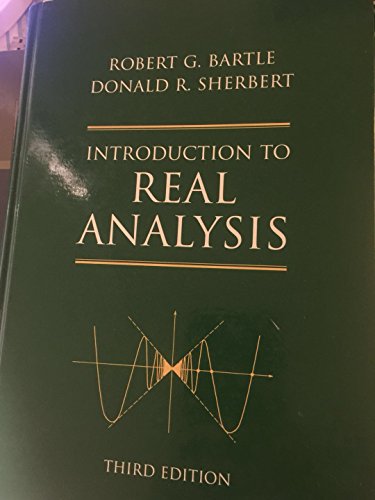
7. Introduction to Real Analysis by Bartle
Author: Robert G. Bartle
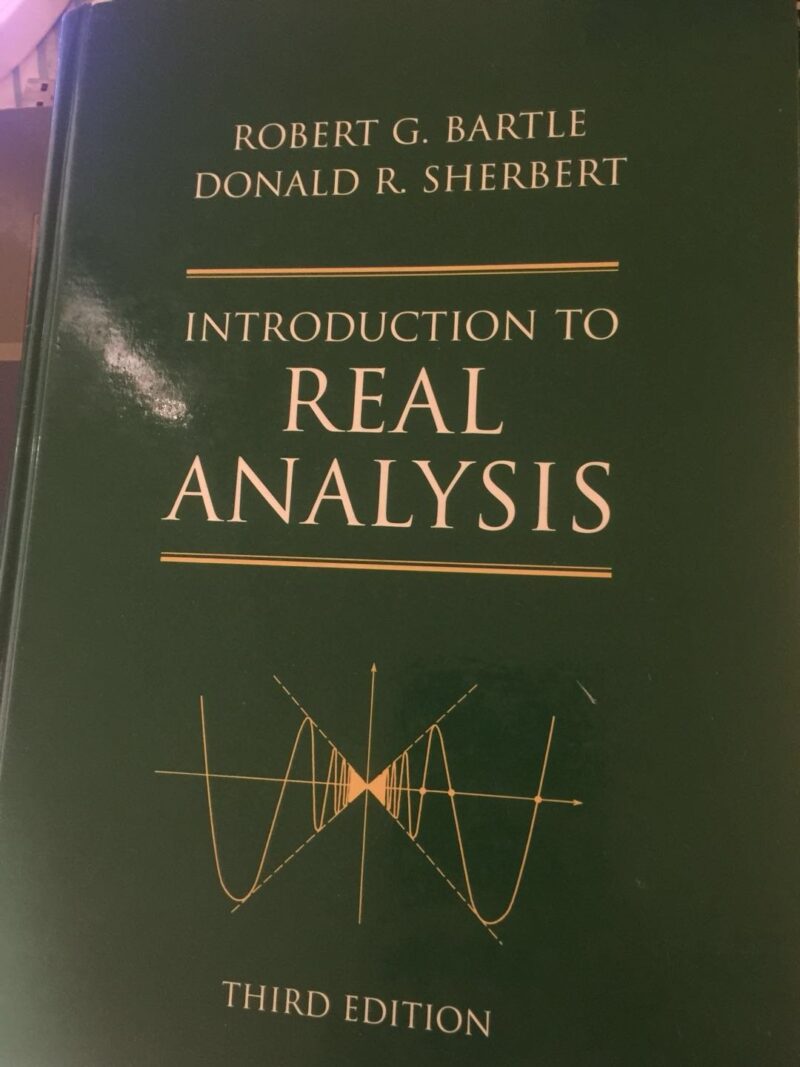
Introduction to Real Analysis by Bartle
- Suitable for math, economics, and science students
- Encourages rational mathematical thinking
- Includes chapter on Generalized Riemann Integral
- User-friendly and engaging writing style
- Streamlined arguments in the latest edition
- Best real analysis book for self study at undergrad level
Robert G. Bartle’s Introduction to Real Analysis presents the basic techniques and concepts for readers in mathematics, economics, and the physical sciences. It encourages rational, analytical thinking and pushes you to think outside the box.
This edition maintains the user-friendly approach of earlier versions. It features streamlined arguments, rearranged topics, new examples, and a chapter on the Generalized Riemann Integral. If you’re looking for the best real analysis book for self study at the undergraduate level, Bartle is hard to beat.
Get on Amazon.in / Get on Amazon.com
If you’re at DDU Gorakhpur University, the M.Sc. Mathematics first-semester syllabus breaks down every paper and recommended text.
Looking for affordable options? Dover publishes Kolmogorov’s Introductory Real Analysis and Gelbaum’s Counterexamples in Analysis at a fraction of the cost of standard textbooks. Both are excellent for self study and supplementary reading.
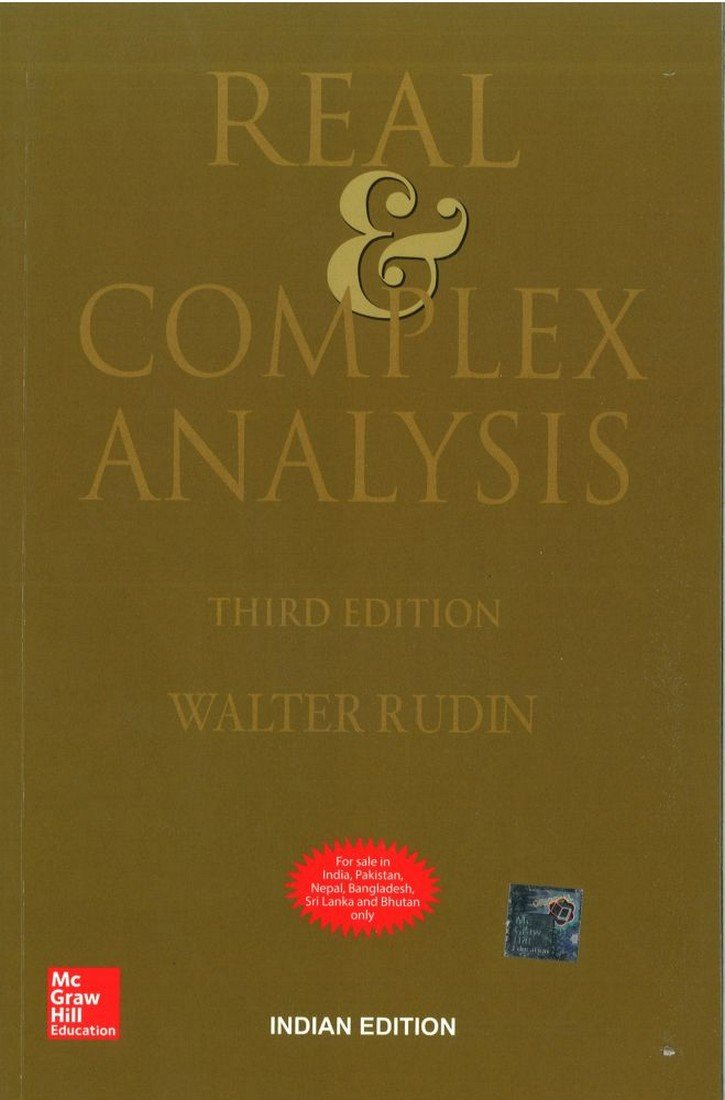
8. Real and Complex Analysis by Rudin
Author: Walter Rudin
Real and Complex Analysis by Rudin
- Unifies real and complex analysis in one volume
- Includes functional analysis foundations
- Part of the Walter Rudin Student Series
- For junior, senior, and graduate level courses
- Chapters build progressively on each other
- Suited for math, engineering, and CS majors
Real and Complex Analysis (commonly called Big Rudin) is part of the Walter Rudin Student Series. It serves as an advanced text for one- or two-semester courses aimed at math, electrical engineering, and computer science students at junior, senior, and graduate levels.
What makes this book stand out is how it unites “real analysis” and “complex analysis” in a single volume. It also introduces fundamental ideas from functional analysis. Each chapter builds on the previous one, giving students a gradual and thorough understanding of the subject.
Get on Amazon.in / Get on Amazon.com
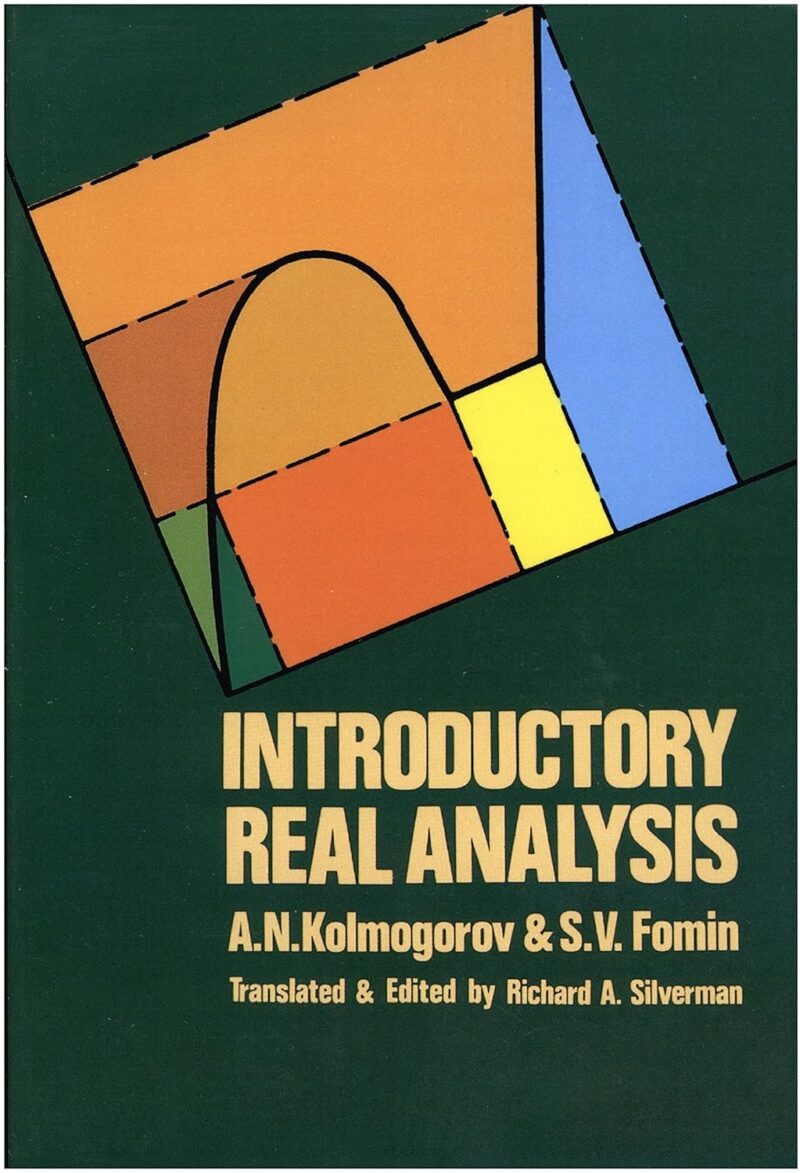
9. Introductory Real Analysis by Kolmogorov
Author: A.N. Kolmogorov
Introductory Real Analysis by Kolmogorov
- Part of Silverman's translations of Russian math works
- Introduction to both real and functional analysis
- Self-contained and properly paced
- 37 sections with 350+ carefully chosen problems
- Ideal one-year course textbook
- Available as affordable Dover paperback
This is part of Richard Silverman’s legendary series of translations of Russian works in mathematical science. It’s a detailed and elementary introduction to real and functional analysis by two renowned Moscow University faculty members.
The book is self-contained, properly paced, and accessible to readers well-versed in advanced calculus. There are 37 sections, each containing a problem set, totaling around 350 carefully chosen problems. It’s an excellent one-year course resource and a strong pick for self-study.
Get on Amazon.in / Get on Amazon.com
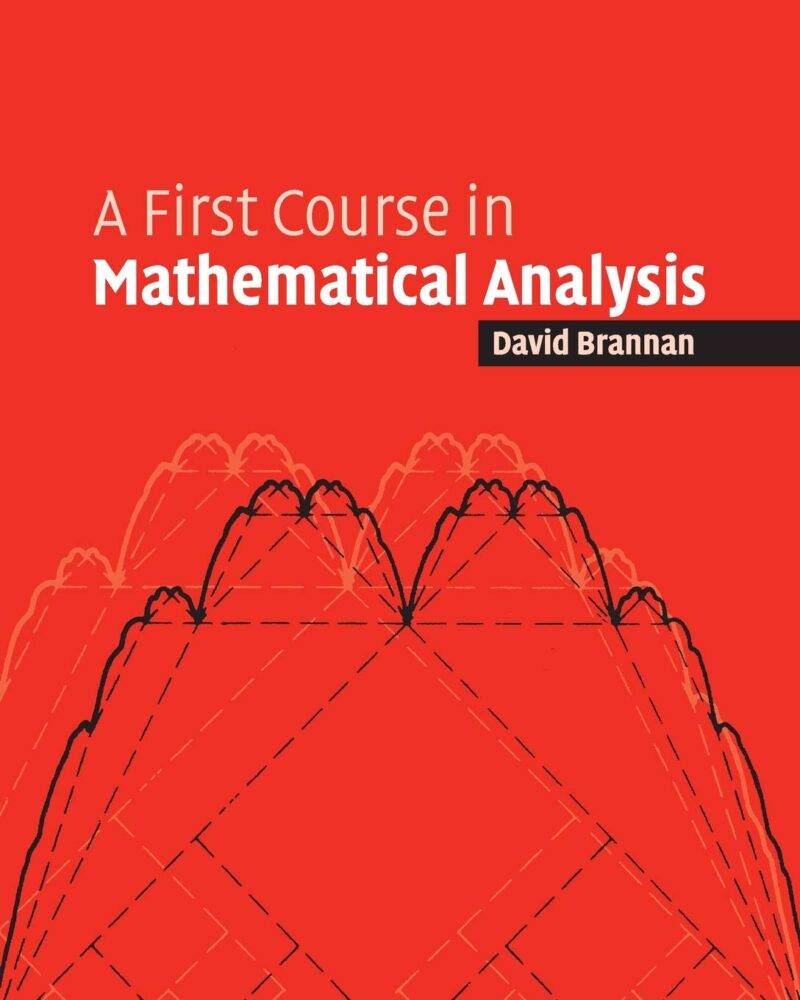
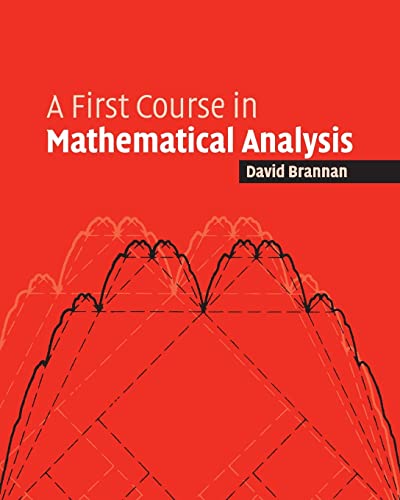
10. A First Course in Mathematical Analysis by Brannan
Author: David Alexander Brannan
A First Course in Mathematical Analysis by Brannan
- Sequential approach to continuity and differentiability
- Covers integration from first principles
- Useful margin notes and diagrams throughout
- Numerous graded exercises and examples
- Emphasis on topics glossed over in standard calculus
- Great for self-study and university coursework
Students often consider mathematical analysis one of the toughest math courses. Brannan’s book aims to make it accessible by taking a sequential approach to continuity, differentiability, and integration. It emphasizes topics that standard calculus courses usually gloss over.
The text features useful margin notes and attractive diagrams. It guides students through trickier points with graded exercises and examples. For beginners looking for the best real analysis book to start with, Brannan is an excellent first choice.
Get on Amazon.in / Get on Amazon.com
Best Real Analysis Books: Quick Comparison
Here’s a side-by-side comparison of all 10 real analysis textbooks to help you pick the right one for your level and goals.
| Preview | Product | Purchase |
|---|---|---|
 |
Principles of Mathematical Analysis (International Series in Pure and Applied Mathematics) Classic | View on Amazon |
 |
Real Analysis by Royden Graduate Standard | View on Amazon |
 |
Real Analysis (Classic Version) (Pearson Modern Classics for Advanced Mathematics Series) | View on Amazon |
 |
Counterexamples in Analysis (Dover Books on Mathematics) | View on Amazon |
 |
Real Analysis: Modern Techniques and Their Applications | View on Amazon |
 |
Principles of Real Analysis | View on Amazon |
 |
Introduction to Real Analysis, 3rd Edition | View on Amazon |
 |
Real & Complex Analysis | View on Amazon |
 |
Introductory Real Analysis (Dover Books on Mathematics) Best Value | View on Amazon |
 |
A First Course in Mathematical Analysis | View on Amazon |
Best Real Analysis Books for Beginners
If you are taking real analysis for the first time, skip the advanced classics. They will frustrate you. Start with a book that assumes only calculus knowledge and builds proofs gradually.
My top picks for beginners:
- Introduction to Real Analysis by Robert Bartle and Donald Sherbert. The most beginner-friendly option. Clear explanations, worked examples before every theorem, and exercises that start easy. Used at hundreds of universities for first courses in real analysis. This is the book I recommend to students who have never written a formal proof before.
- A First Course in Mathematical Analysis by David Brannan. Written specifically as a bridge between calculus and real analysis. Brannan explains why each concept matters before defining it formally. Great for self-motivated beginners who want to understand, not just memorize.
- Understanding Analysis by Stephen Abbott. Not in our main list but worth mentioning for beginners. Abbott writes like a patient tutor, introducing each concept through its historical motivation. Popular for bridging courses in honors calculus to real analysis.
Avoid Rudin’s Principles of Mathematical Analysis as your first real analysis book. Baby Rudin is an excellent reference, but Rudin writes for readers who already think like mathematicians. Coming to it without proof-writing experience is how students end up hating analysis.
Best Real Analysis Books for Self-Study
Self-study requires different qualities than classroom learning. You need a book that explains its own examples, provides enough exercises with solutions, and does not assume a professor is available to fill gaps.
What makes a real analysis book good for self-study:
- Detailed proofs, not “left as an exercise.” Many advanced texts skip steps that a professor would fill in. Self-learners get stuck at those gaps.
- Solutions manual available. You need to check your work when no one else can.
- Worked examples before theorems. Helps build intuition before the formal statement.
- Affordable. Self-learners rarely have university textbook budgets.
Top picks for self-study:
- Bartle and Sherbert’s Introduction to Real Analysis. Best overall for self-study. Solutions to selected exercises are available online, and the prose is thorough enough to teach yourself without a lecturer.
- Introductory Real Analysis by Kolmogorov and Fomin. Dover edition under $20. Comprehensive, with exercises that build systematically. The older style takes some getting used to but the explanations are some of the clearest ever written.
- Counterexamples in Analysis by Gelbaum and Olmsted. Not a primary textbook but essential alongside any self-study text. Shows you why theorems need their exact hypotheses. Helps prevent common misconceptions.
- S.C. Malik’s Principles of Real Analysis. Strong self-study option, especially for students in India or those on a tight budget. Plenty of solved examples and clear derivations.
A practical self-study workflow: read one section per day, work through every worked example with pen and paper, then attempt 5-10 exercises. If you cannot solve them, re-read the section and try again before looking at solutions. Expect to spend 2-4 hours per section.
Good First Course Book for Real Analysis
The ideal first course book meets three criteria: it assumes only calculus as a prerequisite, it teaches proof techniques as part of the content (not as a separate skill you should already have), and it has exercises that range from computational to conceptual.
Bartle and Sherbert’s Introduction to Real Analysis is the most widely adopted first course textbook in the United States. It is the book your professor probably assigned. Here is why it works so well:
- Every chapter begins with motivation and informal discussion before formal definitions.
- Proofs are written out completely, not summarized.
- Exercises are graded: easy computational ones first, then conceptual, then challenging.
- Covers sequences, limits, continuity, differentiation, Riemann integration, and sequences of functions in that order (standard first-course sequence).
- Multiple editions are available, older editions (4th, 3rd) are cheaper and essentially identical.
Other strong first course options:
- Brannan’s A First Course in Mathematical Analysis. British style with more emphasis on the “why” behind each concept. Good if Bartle feels too dry.
- Abbott’s Understanding Analysis. Conversational tone, historical context, smaller scope than Bartle. Best if you want to understand analysis as an intellectual subject rather than just pass the course.
- Rudin’s Principles of Mathematical Analysis. Only if you have strong proof-writing background already. Many honors programs use Baby Rudin as a first course. For most students, it is too terse for a first pass.
My recommendation: start with Bartle, supplement with Abbott for when you want a different perspective on tricky topics, and keep Baby Rudin as a reference for later.
Best Real Analysis Books by Indian Authors
Indian universities have a strong tradition in analysis, and several textbooks by Indian authors are standard reading for undergraduate and postgraduate math programs across the country. These books typically cover the CSIR NET, GATE Mathematics, and state university syllabi more precisely than American or European texts.
S.C. Malik and Savita Arora: Principles of Real Analysis. The most widely used real analysis textbook in Indian universities. Clear exposition, extensive solved examples, and comprehensive coverage of sequences, series, continuity, differentiation, Riemann integration, and sequences of functions. This is the book I used as an undergraduate, and it remains the standard recommendation for students preparing for CSIR NET, GATE, and university exams across India. Published by New Age International, it is affordable (under 500 INR in paperback) and widely available in Indian bookstores.
Shanti Narayan and M.D. Raisinghania: Elements of Real Analysis. Another staple for Indian undergraduates. Published by S. Chand, this book has been in print for decades and remains a go-to for BSc mathematics students. Slightly more traditional in style than Malik, with detailed proofs and exercise sets that mirror university exam patterns.
S.K. Mapa: Introduction to Real Analysis. Popular in eastern Indian universities, particularly in Bengal. Mapa’s approach is rigorous but accessible, and the book is often used as a text for MSc mathematics programs. Strong coverage of metric spaces and Lebesgue integration for students moving toward graduate-level analysis.
H.L. Vasudeva: Elements of Topology and Real Analysis. For students who want topology woven into their analysis course. Covers the foundational topology concepts (open sets, closed sets, compactness, connectedness) needed for a deeper understanding of real analysis on metric spaces.
Why choose an Indian textbook? Three reasons: (1) the syllabus alignment with Indian university courses is exact, (2) the price is a fraction of international textbooks (Malik is under 500 INR; Rudin is over 3,000 INR), and (3) the examples and exercises match the style of Indian competitive exams like CSIR NET and GATE. If you are preparing for these exams, an Indian textbook should be your primary reference, not a supplement.
How to Choose the Best Real Analysis Book for Your Level
Your ideal real analysis textbook depends on where you are in your math journey. Here’s my recommendation based on experience:
- Undergraduate (first course): Start with Bartle or Brannan. Both assume only advanced calculus and build concepts step by step.
- Advanced undergraduate: Move to Rudin’s Principles (Baby Rudin) or Carothers. These demand more mathematical maturity but reward it.
- Graduate level: Royden for measure theory, Folland for a comprehensive treatment, or Big Rudin for unified real and complex analysis.
- Self study on a budget: Kolmogorov or Gelbaum from Dover. Both are under $20 and surprisingly thorough.
- Indian university exams (CSIR NET): S.C. Malik’s Principles of Real Analysis covers the syllabus well and includes solved examples.
Frequently Asked Questions About Real Analysis Books
What is the best real analysis book for beginners?
For beginners, Introduction to Real Analysis by Robert G. Bartle and A First Course in Mathematical Analysis by David Brannan are the best starting points. Both books assume only advanced calculus knowledge and build concepts sequentially. Bartle is widely used in undergraduate programs, while Brannan offers more diagrams and margin notes for visual learners.
What is Baby Rudin and why is it so popular?
Baby Rudin refers to Principles of Mathematical Analysis by Walter Rudin. It’s called “Baby” Rudin to distinguish it from “Big” Rudin (Real and Complex Analysis). The book is popular because of its rigorous, concise treatment of real analysis fundamentals. Most U.S. math departments use it as a standard text for upper-level undergraduate and first-year graduate courses.
Which real analysis book is best for self study?
For self study, Bartle’s Introduction to Real Analysis and Carothers’ Real Analysis are the top recommendations. Both have clear explanations, numerous exercises with varying difficulty, and an accessible writing style. Kolmogorov’s Introductory Real Analysis (Dover) is also excellent for self-learners who want an affordable, self-contained option with 350+ problems.
What is the difference between Baby Rudin and Big Rudin?
Baby Rudin (Principles of Mathematical Analysis) covers foundational real analysis: real number systems, sequences, series, continuity, differentiation, and Riemann integration. Big Rudin (Real and Complex Analysis) is a graduate-level text that unifies real analysis, complex analysis, and functional analysis in a single volume. Start with Baby Rudin, then progress to Big Rudin.
Which book covers Lebesgue integration best?
For Lebesgue integration, Real Analysis by H.L. Royden and Real Analysis: Modern Techniques by Gerald B. Folland are the top choices. Royden provides a clear, focused treatment of Lebesgue measure and integration. Folland offers a more comprehensive approach that also covers probability theory, distribution theory, and Fourier analysis alongside measure theory.
Are Dover real analysis books any good?
Dover publishes two excellent real analysis books on this list: Kolmogorov’s Introductory Real Analysis and Gelbaum’s Counterexamples in Analysis. Both are high-quality texts available at a fraction of the price of standard textbooks. Kolmogorov’s book works well as a primary course text, while Gelbaum’s counterexamples serve as an invaluable companion to any real analysis textbook.
What math prerequisites do I need for real analysis?
You need a solid foundation in single-variable and multivariable calculus, plus basic proof-writing skills. Familiarity with set theory, logic, and mathematical induction is essential. Some books like Bartle and Brannan assume only advanced calculus. Graduate-level texts like Folland and Royden assume you’ve already completed an undergraduate real analysis course.
Is S.C. Malik’s Principles of Real Analysis good for CSIR NET preparation?
Yes. S.C. Malik’s Principles of Real Analysis is widely used for CSIR NET and other competitive math exams in India. It covers the real analysis syllabus thoroughly, includes well-graded solved examples, and is structured around Indian university curricula. Pair it with Rudin or Bartle for a more rigorous theoretical foundation.
Which real analysis book is best for Indian students?
S.C. Malik and Savita Arora’s Principles of Real Analysis is the most widely used in Indian universities. It aligns with CSIR NET, GATE, and state university syllabi, includes extensive solved examples, and costs under 500 INR. Shanti Narayan’s Elements of Real Analysis and S.K. Mapa’s Introduction to Real Analysis are strong alternatives, particularly for BSc and MSc mathematics students.
Is Bartle good for a first course in real analysis?
Yes, Bartle and Sherbert’s Introduction to Real Analysis is the most widely adopted first course textbook in the US. It assumes only calculus, teaches proof techniques as you go, and has exercises graded from easy to challenging. Most first-year analysis courses use it. Start here if you have not written formal proofs before.
How do I self-study real analysis without a professor?
Pick a book designed for self-study (Bartle, Kolmogorov, or Malik), read one section per day, work through every worked example with pen and paper, then attempt 5-10 exercises before looking at solutions. Pair it with Counterexamples in Analysis by Gelbaum to understand why theorems need their exact hypotheses. Budget 2-4 hours per section. Expect to spend 3-6 months for a complete first pass.
Related Math Book Recommendations
If you found this list of real analysis textbooks helpful, check out these related guides:
- Best Calculus Textbooks
- Best Free Online Calculus Books
- Best Free Online Algebra and Topology Books
- Best Books on Measure Theory
Tell Google you want more of this.
Add Gaurav Tiwari as a preferred sourceOne tap, and this site shows up more often in your own Top Stories, AI Overviews and AI Mode. Remove it any time.
Disclaimer: This site is reader-supported. If you buy through some links, I may earn a small commission at no extra cost to you. I only recommend tools I trust and would use myself. Your support helps keep gauravtiwari.org free and focused on real-world advice. Thanks. - Gaurav Tiwari