by
by
The best electromagnetism textbooks are not interchangeable. Electromagnetism becomes much easier when vector calculus is fluent. The right book should match both the mathematics and the course level. This guide gives physics and engineering students choosing between a first E&M course, undergraduate electrodynamics, applications, and graduate depth a clear first choice, 9 useful alternatives, and the limitation that should move you away from each pick.
My top pick is Introduction to Electrodynamics for undergraduate physics majors. Choose Electricity and Magnetism for a first honors E&M course, or Fundamentals of Applied Electromagnetics for electrical engineering students. The rest of the guide explains why those jobs should not be collapsed into one bestseller ranking.
Important: Do not start Jackson because it is famous. A graduate reference is a poor first teacher when vector calculus and boundary-value methods are still new.
Quick verdict
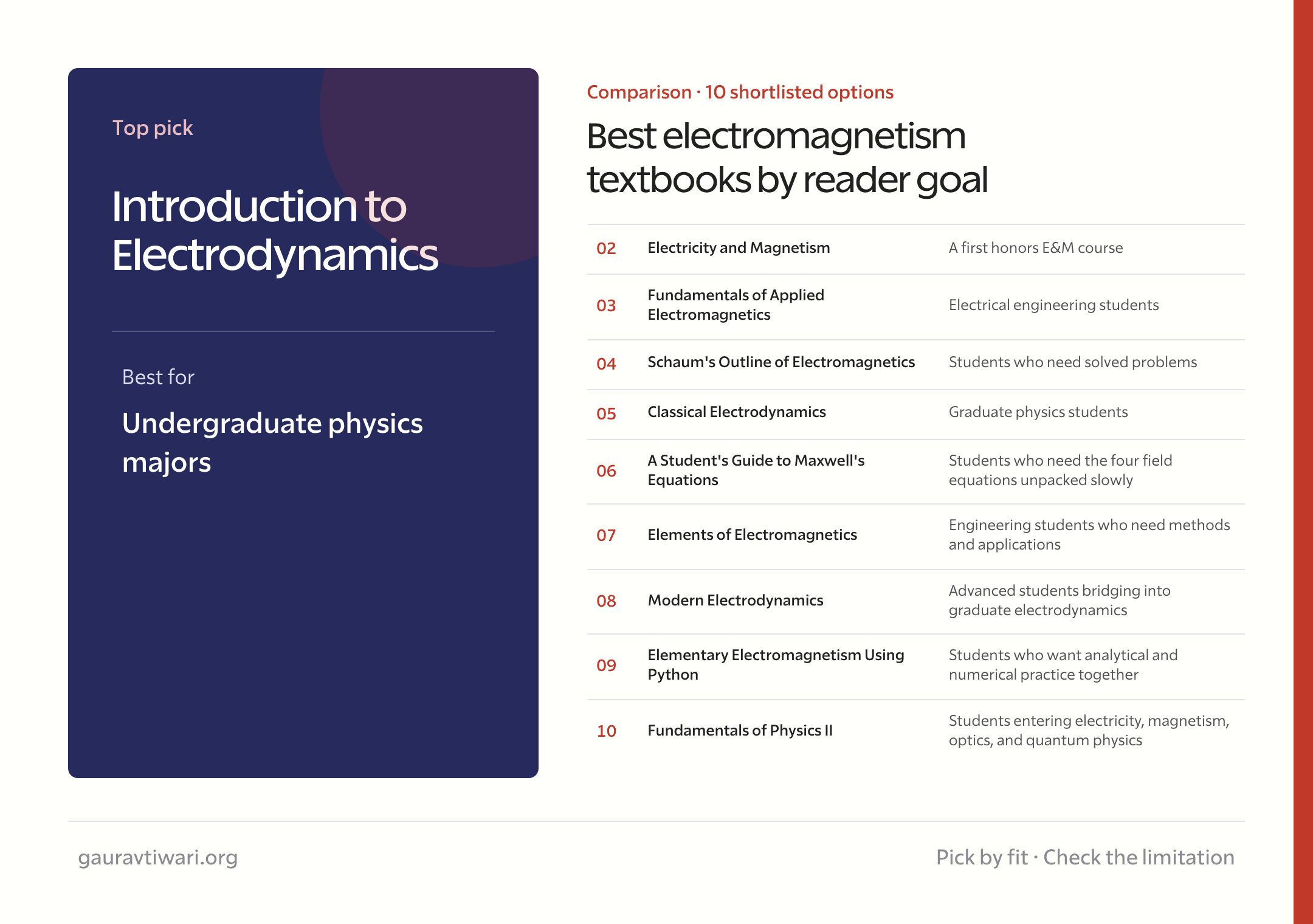
If you want one answer, start with Introduction to Electrodynamics. Its main strength is clear: The fifth edition combines clear derivations, physical intuition, and a strong progression through electrostatics, magnetostatics, waves, and radiation. The comparison table links every recommendation directly, including Electricity and Magnetism and Fundamentals of Applied Electromagnetics.
| Recommendation | Verdict | Best for | Starting level |
|---|---|---|---|
| Introduction to Electrodynamics | Top Pick | undergraduate physics majors | Multivariable calculus required |
| Electricity and Magnetism | Best for Physical Intuition | a first honors E&M course | Calculus and mechanics required |
| Fundamentals of Applied Electromagnetics | Best for Engineering | electrical engineering students | Calculus and circuits helpful |
| Schaum's Outline of Electromagnetics | Best for Practice | students who need solved problems | Use beside a main text |
| Classical Electrodynamics | Best for Advanced Reference | graduate physics students | Graduate mathematical physics |
| A Student's Guide to Maxwell's Equations | Best for Maxwell's Equations | students who need the four field equations unpacked slowly | Vector calculus helpful |
| Elements of Electromagnetics | Best for Engineering Depth | engineering students who need methods and applications | Calculus and differential equations required |
| Modern Electrodynamics | Best for Advanced Undergraduates | advanced students bridging into graduate electrodynamics | Strong vector calculus and differential equations |
| Elementary Electromagnetism Using Python | Best for Computational Learning | students who want analytical and numerical practice together | Calculus and basic Python helpful |
| Fundamentals of Physics II | Best for a First Survey | students entering electricity, magnetism, optics, and quantum physics | Single-variable calculus and mechanics helpful |
If you are still building the surrounding skills or setup, use the college physics textbook guide and symmetry in physical laws. Those published guides cover adjacent decisions without forcing another overlapping purchase.
How I built this shortlist
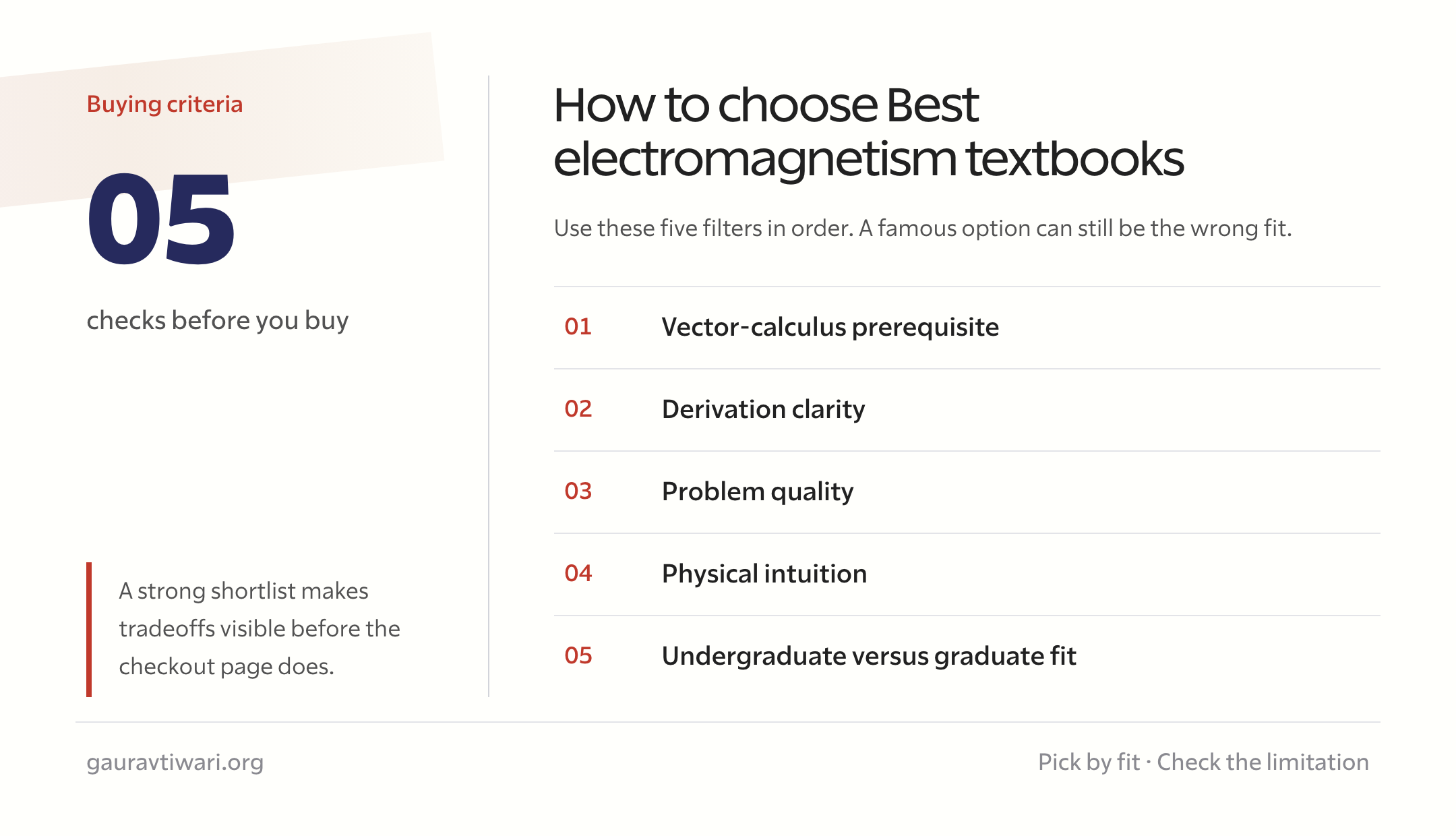
I shortlisted these books by vector-calculus prerequisite, derivation clarity, problem quality, physical intuition, and undergraduate versus graduate fit. I also separated the job each book does from the reputation attached to its title. A famous advanced text is not automatically the right first book.
The best electromagnetism textbooks for different needs
The electromagnetism order favors a usable starting point before specialist depth.
1. Introduction to Electrodynamics: Undergraduate physics majors
Introduction to Electrodynamics by David J. Griffiths is my top pick for undergraduate physics majors. The fifth edition combines clear derivations, physical intuition, and a strong progression through electrostatics, magnetostatics, waves, and radiation.
The entry point is multivariable calculus required. The problems are essential and can be demanding without steady practice.
Buy it if: Undergraduate physics majors. Skip it if: You can’t commit to steady problem work. Check Amazon.com or Amazon.in for the exact edition, format, and current seller terms.
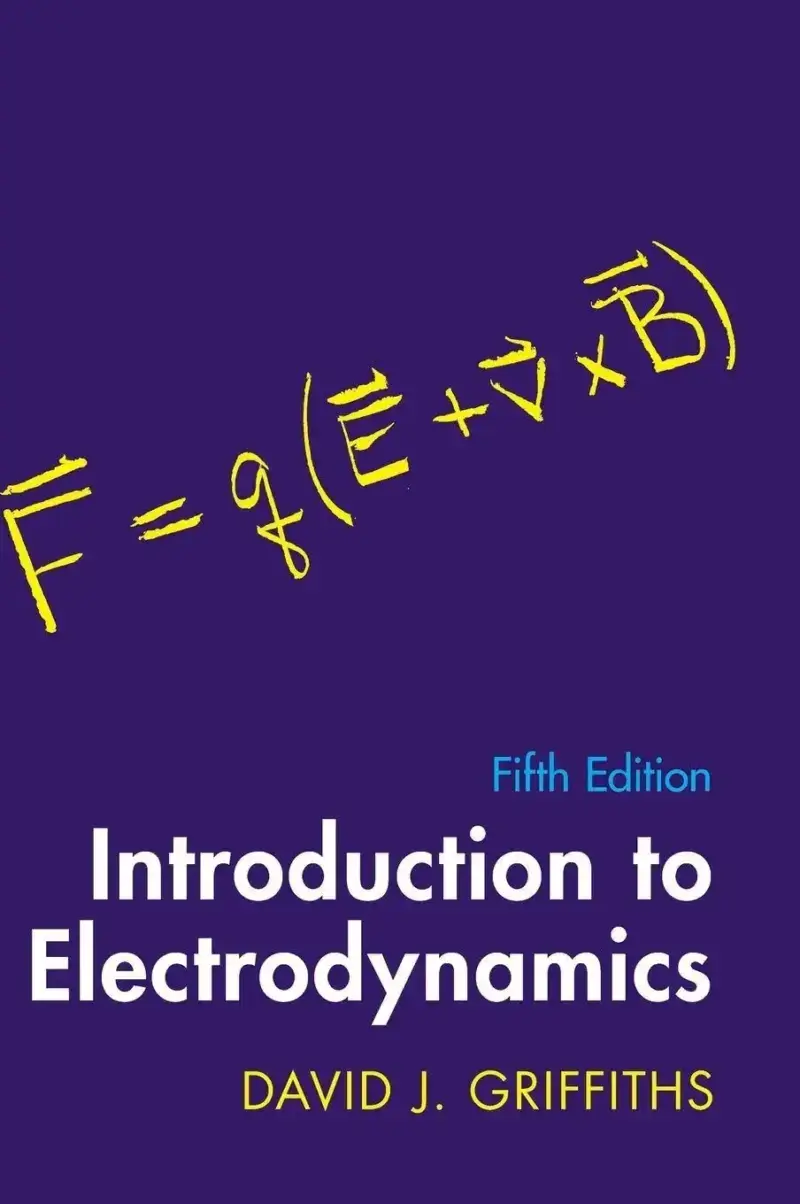
Introduction to Electrodynamics
- By David J. Griffiths
- Best for: undergraduate physics majors
- Level: Multivariable calculus required
- Main strength: The fifth edition combines clear derivations, physical intuition, and a strong progression through electrostatics, magnetostatics, waves, and radiation.
- Watch-out: The problems are essential and can be demanding without steady practice.
- Verify the exact edition, format, and seller
2. Electricity and Magnetism: A first honors e&m course
Electricity and Magnetism by Edward M. Purcell and David J. Morin is my best for physical intuition for a first honors E&M course. Develops fields and relativity with unusually strong physical reasoning.
The entry point is calculus and mechanics required. Its approach and unit conventions may differ from a standard course sequence.
Buy it if: A first honors e&m course. Skip it if: Your course follows standard conventions and sequence. Check Amazon.com or Amazon.in for the exact edition, format, and current seller terms.
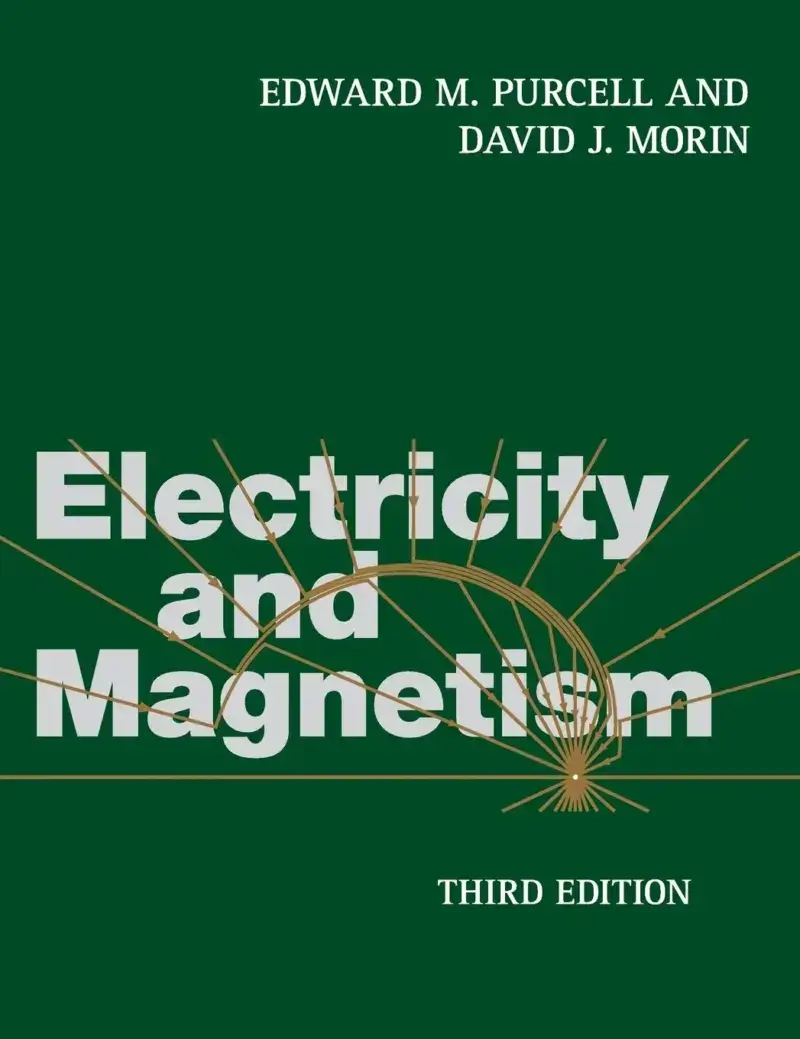
- By Edward M. Purcell and David J. Morin
- Best for: a first honors E&M course
- Level: Calculus and mechanics required
- Main strength: Develops fields and relativity with unusually strong physical reasoning.
- Watch-out: Its approach and unit conventions may differ from a standard course sequence.
- Verify the exact edition, format, and seller
3. Fundamentals of Applied Electromagnetics: Electrical engineering students
Fundamentals of Applied Electromagnetics by Fawwaz T. Ulaby and Umberto Ravaioli is my best for engineering for electrical engineering students. Connects fields, waves, transmission lines, and practical electromagnetic systems.
The entry point is calculus and circuits helpful. It is less suited to a theory-first physics-major course.
Buy it if: Electrical engineering students. Skip it if: You’re in a theory-first physics-major course. Check Amazon.com or Amazon.in for the exact edition, format, and current seller terms.
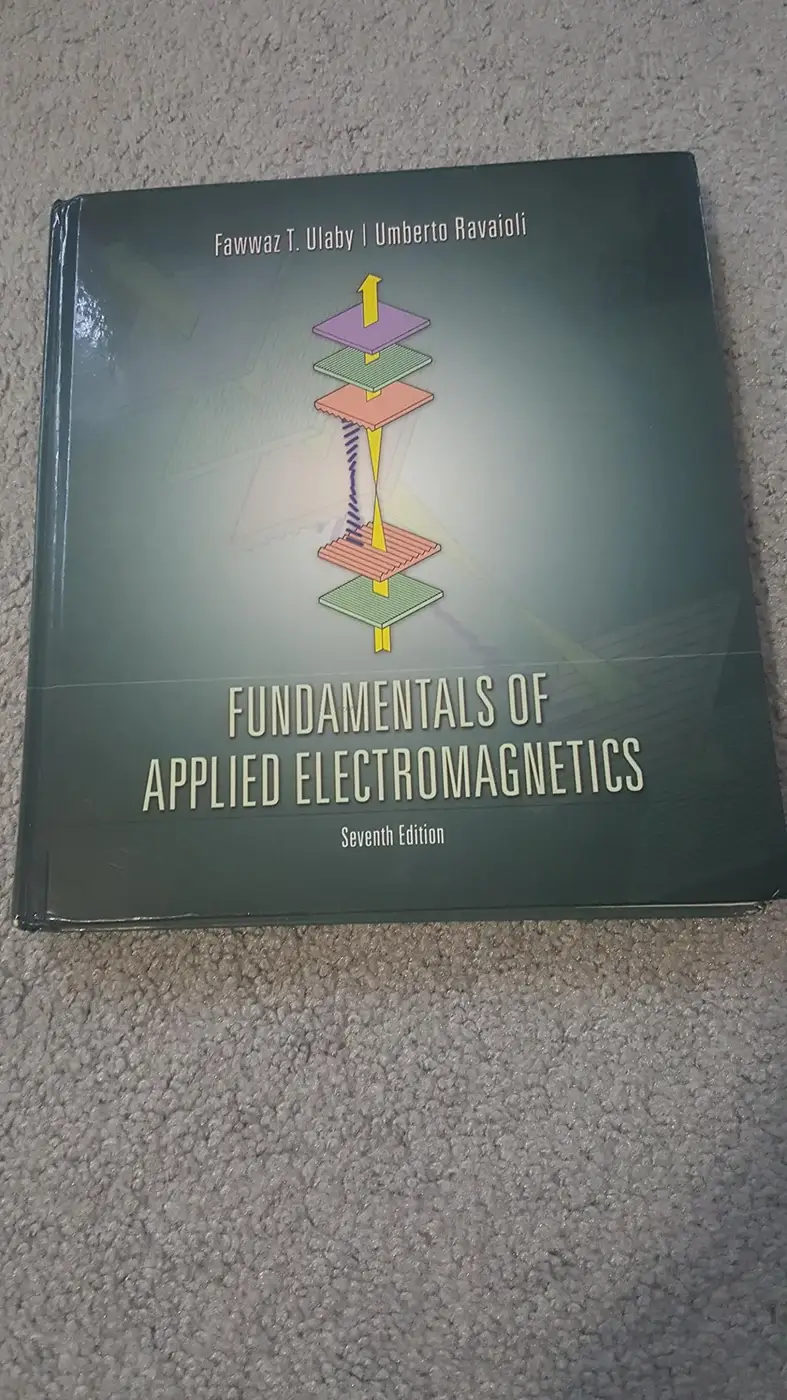
Fundamentals of Applied Electromagnetics
- By Fawwaz T. Ulaby and Umberto Ravaioli
- Best for: electrical engineering students
- Level: Calculus and circuits helpful
- Main strength: Connects fields, waves, transmission lines, and practical electromagnetic systems.
- Watch-out: It is less suited to a theory-first physics-major course.
- Verify the exact edition, format, and seller
4. Schaum's Outline of Electromagnetics: Students who need solved problems
Schaum’s Outline of Electromagnetics by Mahmood Nahvi and Joseph Edminister is my best for practice for students who need solved problems. Provides compact review and many worked examples across standard engineering topics.
The entry point is use beside a main text. It should supplement, not replace, a derivation-focused main text.
Buy it if: Students who need solved problems. Skip it if: You don’t have a derivation-focused main text. Check Amazon.com or Amazon.in for the exact edition, format, and current seller terms.
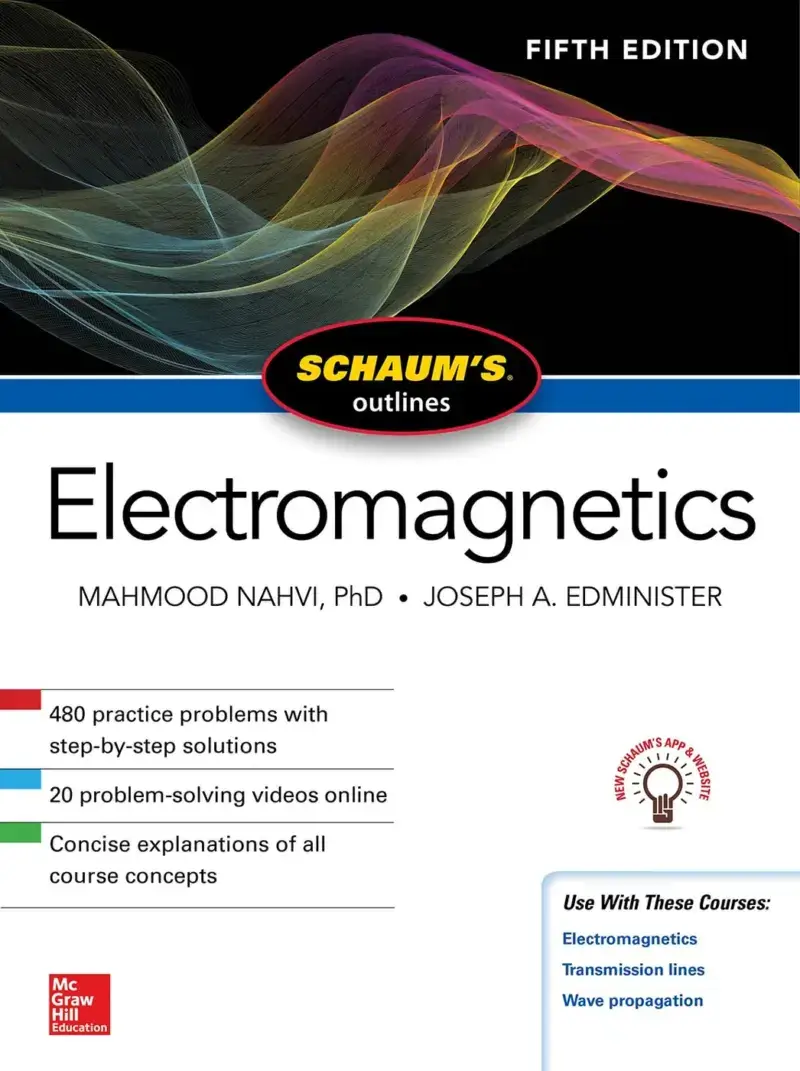
Schaum's Outline of Electromagnetics
- By Mahmood Nahvi and Joseph Edminister
- Best for: students who need solved problems
- Level: Use beside a main text
- Main strength: Provides compact review and many worked examples across standard engineering topics.
- Watch-out: It should supplement, not replace, a derivation-focused main text.
- Verify the exact edition, format, and seller
5. Classical Electrodynamics: Graduate physics students
Classical Electrodynamics by John David Jackson is my best for advanced reference for graduate physics students. Provides deep, demanding coverage with long-term reference value.
The entry point is graduate mathematical physics. It is famously difficult and inappropriate as a first electromagnetism book.
Buy it if: Graduate physics students. Skip it if: This is your first electromagnetism course. Check Amazon.com or Amazon.in for the exact edition, format, and current seller terms.
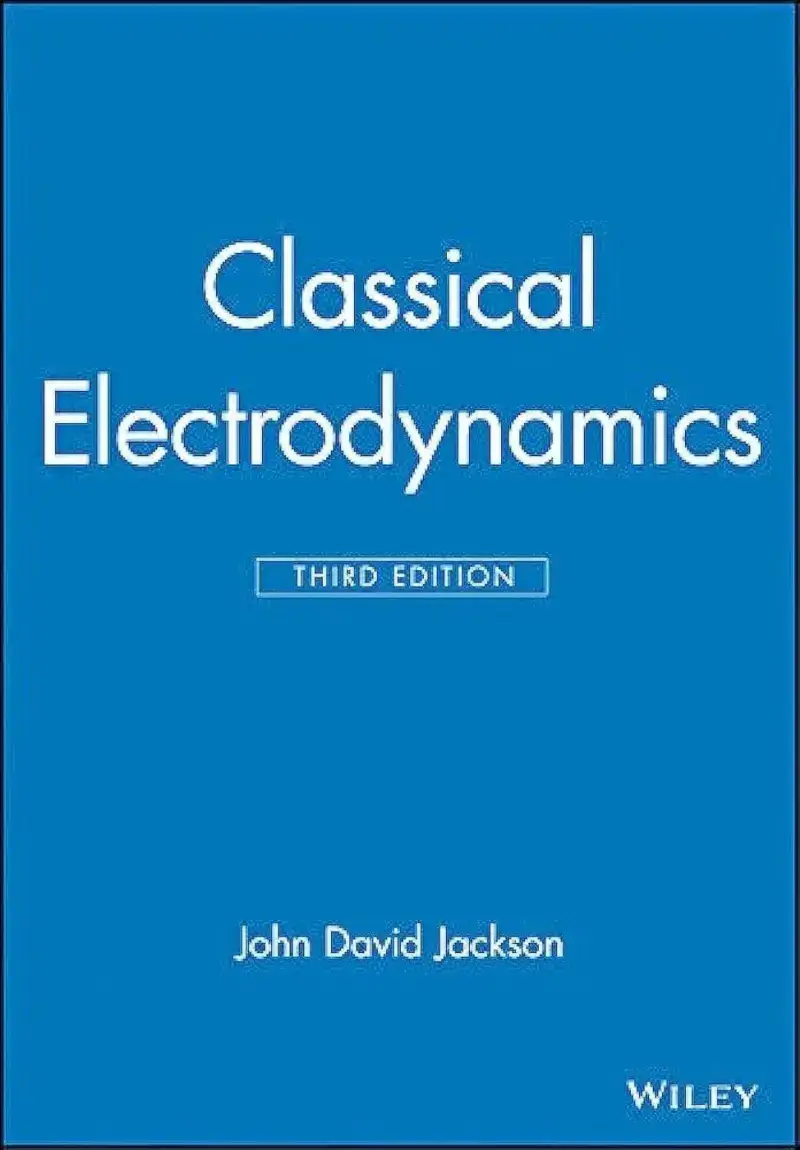
- By John David Jackson
- Best for: graduate physics students
- Level: Graduate mathematical physics
- Main strength: Provides deep, demanding coverage with long-term reference value.
- Watch-out: It is famously difficult and inappropriate as a first electromagnetism book.
- Verify the exact edition, format, and seller
6. A Student's Guide to Maxwell's Equations: Students who need the four field equations unpacked slowly
A Student’s Guide to Maxwell’s Equations by Daniel Fleisch is my best for maxwell’s equations for students who need the four field equations unpacked slowly. Explains the integral and differential forms symbol by symbol, then connects them to electromagnetic waves.
The entry point is vector calculus helpful. Its narrow focus makes it a companion, not a complete electrodynamics course.
Buy it if: Students who need the four field equations unpacked slowly. Skip it if: You need a complete electrodynamics course. Check Amazon.com or Amazon.in for the exact edition, format, and current seller terms.
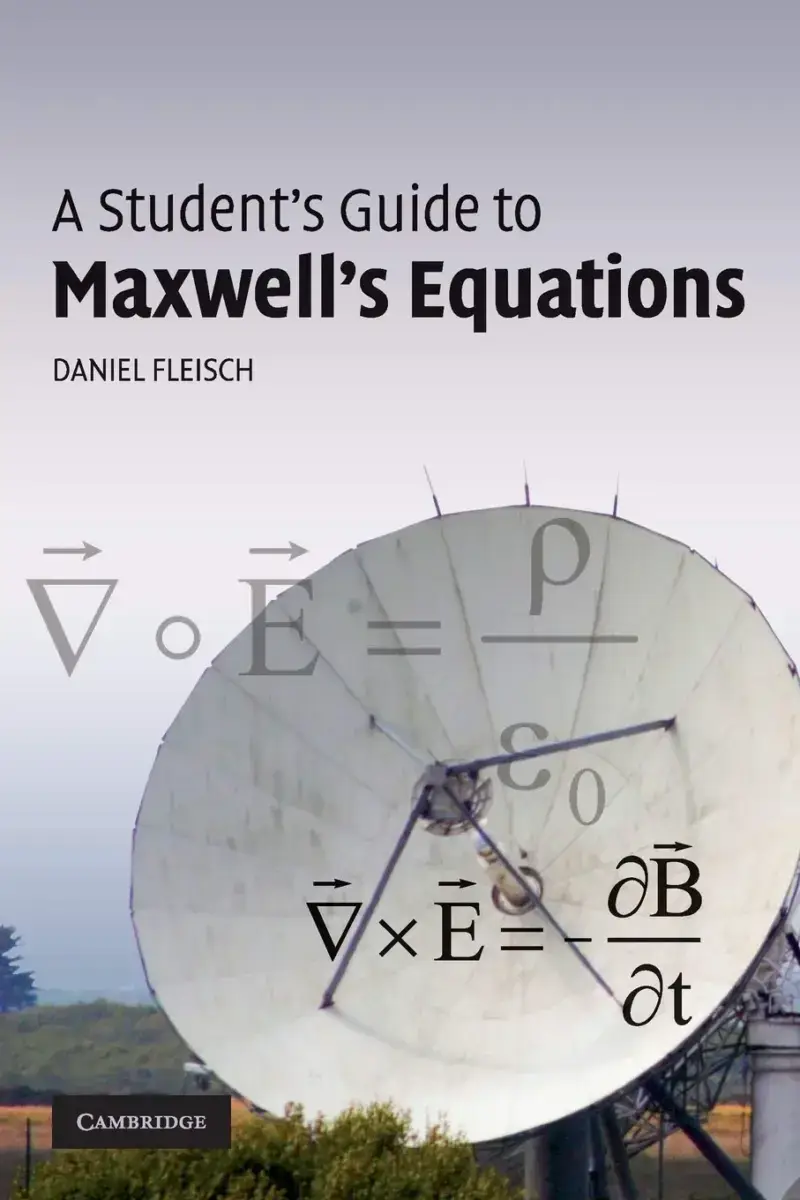
A Student's Guide to Maxwell's Equations
- By Daniel Fleisch
- Best for: students who need the four field equations unpacked slowly
- Level: Vector calculus helpful
- Main strength: Explains the integral and differential forms symbol by symbol, then connects them to electromagnetic waves.
- Watch-out: Its narrow focus makes it a companion, not a complete electrodynamics course.
- Verify the exact edition, format, and seller
7. Elements of Electromagnetics: Engineering students who need methods and applications
Elements of Electromagnetics by Matthew N. O. Sadiku is my best for engineering depth for engineering students who need methods and applications. Builds vector analysis, fields, waves, transmission lines, and applications through worked examples and numerical methods.
The entry point is calculus and differential equations required. The engineering emphasis is less natural for a theory-first physics sequence.
Buy it if: Engineering students who need methods and applications. Skip it if: You’re in a theory-first physics sequence. Check Amazon.com or Amazon.in for the exact edition, format, and current seller terms.
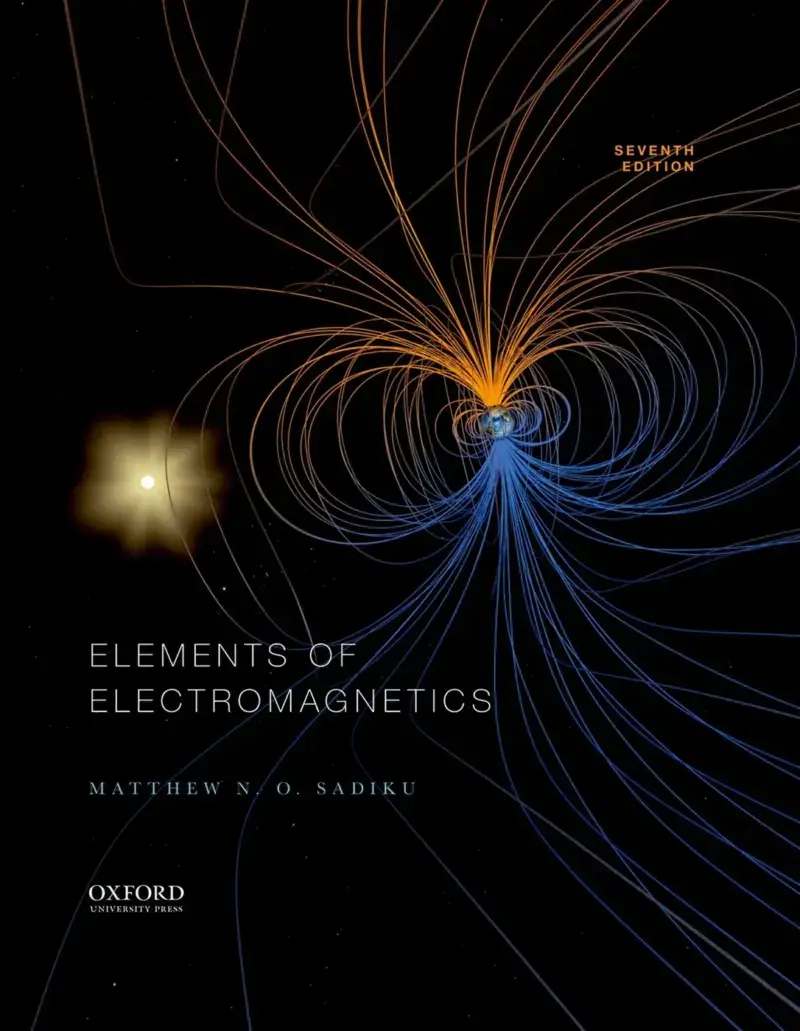
- By Matthew N. O. Sadiku
- Best for: engineering students who need methods and applications
- Level: Calculus and differential equations required
- Main strength: Builds vector analysis, fields, waves, transmission lines, and applications through worked examples and numerical methods.
- Watch-out: The engineering emphasis is less natural for a theory-first physics sequence.
- Verify the exact edition, format, and seller
8. Modern Electrodynamics: Advanced students bridging into graduate electrodynamics
Modern Electrodynamics by Andrew Zangwill is my best for advanced undergraduates for advanced students bridging into graduate electrodynamics. Combines classical field theory with modern notation, physical insight, and a large exercise set.
The entry point is strong vector calculus and differential equations. It moves faster and expects more mathematical maturity than a first undergraduate text.
Buy it if: Advanced students bridging into graduate electrodynamics. Skip it if: You’re taking your first undergraduate E&M course. Check Amazon.com or Amazon.in for the exact edition, format, and current seller terms.

- By Andrew Zangwill
- Best for: advanced students bridging into graduate electrodynamics
- Level: Strong vector calculus and differential equations
- Main strength: Combines classical field theory with modern notation, physical insight, and a large exercise set.
- Watch-out: It moves faster and expects more mathematical maturity than a first undergraduate text.
- Verify the exact edition, format, and seller
9. Elementary Electromagnetism Using Python: Students who want analytical and numerical practice together
Elementary Electromagnetism Using Python by Anders Malthe-Sørenssen is my best for computational learning for students who want analytical and numerical practice together. Integrates field theory with Python-based computation, visualisation, and exercises built for a modern course.
The entry point is calculus and basic python helpful. It is too new and tool-dependent for readers who want a purely analytic reference.
Buy it if: Students who want analytical and numerical practice together. Skip it if: You want a purely analytic reference. Check Amazon.com or Amazon.in for the exact edition, format, and current seller terms.
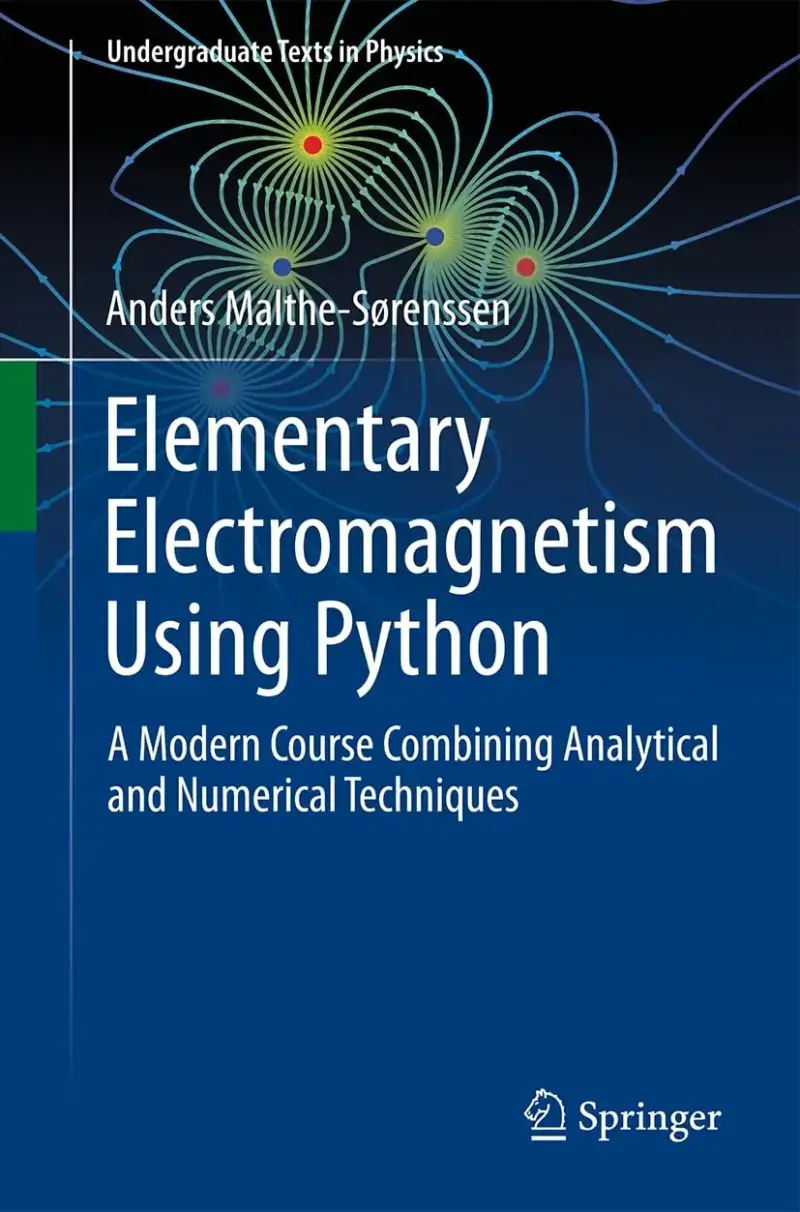
Elementary Electromagnetism Using Python
- By Anders Malthe-Sørenssen
- Best for: students who want analytical and numerical practice together
- Level: Calculus and basic Python helpful
- Main strength: Integrates field theory with Python-based computation, visualisation, and exercises built for a modern course.
- Watch-out: It is too new and tool-dependent for readers who want a purely analytic reference.
- Verify the exact edition, format, and seller
10. Fundamentals of Physics II: Students entering electricity, magnetism, optics, and quantum physics
Fundamentals of Physics II by R. Shankar is my best for a first survey for students entering electricity, magnetism, optics, and quantum physics. Uses R. Shankar’s lecture-based explanations, problem sets, and answer key to build a broad calculus-based foundation.
The entry point is single-variable calculus and mechanics helpful. Only part of the book is electromagnetism, so it lacks the depth of a dedicated upper-level text.
Buy it if: Students entering electricity, magnetism, optics, and quantum physics. Skip it if: You need dedicated upper-level electromagnetism depth. Check Amazon.com or Amazon.in for the exact edition, format, and current seller terms.
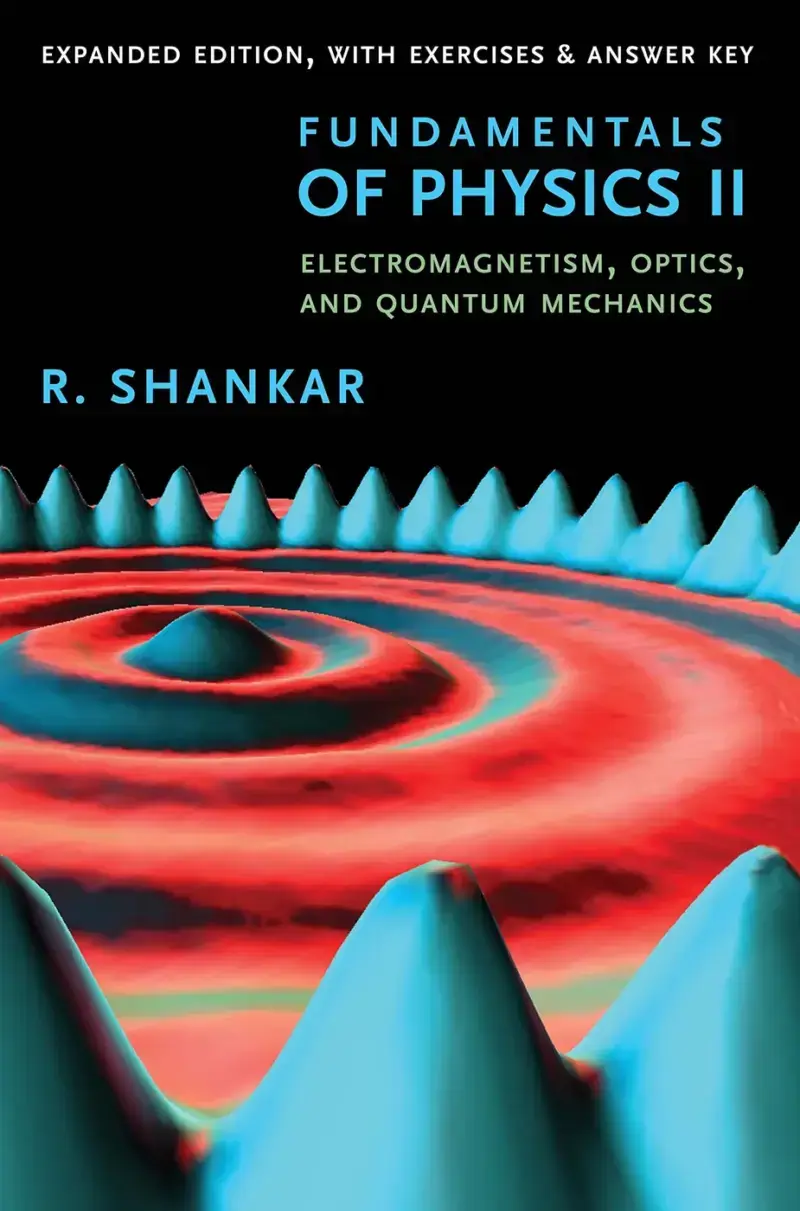
- By R. Shankar
- Best for: students entering electricity, magnetism, optics, and quantum physics
- Level: Single-variable calculus and mechanics helpful
- Main strength: Uses R. Shankar's lecture-based explanations, problem sets, and answer key to build a broad calculus-based foundation.
- Watch-out: Only part of the book is electromagnetism, so it lacks the depth of a dedicated upper-level text.
- Verify the exact edition, format, and seller
Free options to use before you buy
These free resources are enough to test the subject and your preferred depth.
- OpenStax University Physics Volume 2: a free calculus-based foundation in electricity, magnetism, and optics.
- MIT OpenCourseWare Electricity and Magnetism: free lectures, notes, problem sets, and exams.
How to choose among the best electromagnetism textbooks
Start with the failure condition, not the bestseller rank. For this topic, vector-calculus prerequisite, derivation clarity, and problem quality change the decision faster than a longer feature list.
Check vector-calculus prerequisite
Write down what you already know, what the next course, project, or workday demands, and what would make the purchase unusable. A recommendation that ignores vector-calculus prerequisite can be technically excellent and still waste your time or money. Use derivation clarity only after the basic fit is clear.
Check derivation clarity
More derivation clarity often brings extra cost, weight, complexity, or prerequisite load. Decide how much of it the next six months actually require. Then compare that need with problem quality instead of paying for a larger promise you may never use.
Check problem quality
Look for evidence of problem quality in the sample, specification, table of contents, or exact model details. Marketing language is not enough. If the evidence is unclear, let physical intuition decide the tie or choose a seller with safer return terms.
Check physical intuition
Treat physical intuition as a practical test of long-term value. A product can feel impressive for ten minutes and still become frustrating during repeated work. Compare it with undergraduate versus graduate fit, because support, fit, and depth usually matter after the novelty is gone.
Check undergraduate versus graduate fit
Check undergraduate versus graduate fit last, but do not skip it. This is where edition problems, missing access, poor fit, weak support, and the wrong use case become expensive. Save the exact listing details before checkout so you can verify what arrives.
A practical reading plan
Read one book, apply it, and add another only when a specific gap appears.
- Start with Introduction to Electrodynamics if its level and use case match your goal.
- Use Electricity and Magnetism only when you need its specific strength: develops fields and relativity with unusually strong physical reasoning.
- Schedule practice, notes, exercises, or applied work after every reading block.
- Review errors and unclear terms once a week instead of highlighting more pages.
- Move to Fundamentals of Applied Electromagnetics when its specialization becomes the next bottleneck.
For adjacent material, use cosmic radiation and physics calculators. Those guides can fill prerequisite or application gaps without turning this list into a pile of overlapping purchases.
Common buying mistakes
Most bad purchases in this category are predictable.
- Buying for reputation: A famous advanced text can be the wrong first teacher.
- Ignoring the edition: Exam formats, software libraries, examples, and bundled access can change.
- Collecting instead of practicing: A smaller book completed with exercises beats a shelf of unread references.
- Skipping free material: Use the open resources below to test the level and your interest first.
- Confusing scope with quality: A concise review book and a full textbook solve different problems.
Use this five-minute decision worksheet
Before choosing from the best electromagnetism textbooks, answer these questions in writing. The exercise makes hidden assumptions visible and gives you a reason for the final choice. Keep the answers beside the comparison table, because a product that cannot satisfy them should leave the shortlist even when its reviews look impressive.
- Outcome: Write the exact course, project, exam section, or skill you want the book to support.
- Starting point: Name the mathematics, coding, proof, science, or business knowledge you already have.
- Practice: Decide whether you need worked examples, exercises, solutions, projects, or a compact reference.
- Format: Check whether print, ebook, used, rental, or bundled access fits the way you study.
- Stop rule: Do not buy Electricity and Magnetism until Introduction to Electrodynamics or a free resource exposes a specific gap.
The worksheet gives you a stop rule before another book enters the cart.

Which option should you choose?
Choose Introduction to Electrodynamics when undergraduate physics majors is the main job. Move to Electricity and Magnetism for a first honors E&M course. Pick Fundamentals of Applied Electromagnetics only when electrical engineering students is the real requirement.
The shortest useful decision is this: match the best electromagnetism textbooks to your next task, confirm the exact edition or model, and keep the limitation visible. A well-matched second choice is better than a famous top pick aimed at someone else.
Frequently asked questions
What are the best electromagnetism textbooks?
Introduction to Electrodynamics is the top pick for undergraduate physics majors. Electricity and Magnetism is better for a first honors E&M course, while Fundamentals of Applied Electromagnetics suits electrical engineering students. Match the prerequisite and teaching style before choosing.
How many of the best electromagnetism textbooks should I buy?
Buy one main book first. Add a second only when it fills a specific gap such as extra problems, visual explanation, technical depth, or exam practice. More books do not create more study time.
Is an older edition worth buying?
An older edition can be good value when the core theory is stable and you do not need online access. Avoid old editions for changing exams, software libraries, platform instructions, or assignments tied to a current course.
Should I buy print, ebook, or used?
Choose print for heavy annotation and equation work, ebook for search and portability, and used for stable textbooks without required access codes. Always match the ISBN or ASIN to the edition you intend to study.
Are there good free alternatives?
Yes. OpenStax University Physics Volume 2 and MIT OpenCourseWare Electricity and Magnetism are legal free starting points for this topic. Use them to test the level and build a foundation before paying for a specialized book.
How were these books shortlisted?
The shortlist compares vector-calculus prerequisite, derivation clarity, problem quality, physical intuition, and undergraduate versus graduate fit. It does not use unverified ratings, fixed prices, or claims that every title was personally completed.
Tell Google you want more of this.
Add Gaurav Tiwari as a preferred sourceOne tap, and this site shows up more often in your own Top Stories, AI Overviews and AI Mode. Remove it any time.
Disclaimer: This site is reader-supported. If you buy through some links, I may earn a small commission at no extra cost to you. I only recommend tools I trust and would use myself. Your support helps keep gauravtiwari.org free and focused on real-world advice. Thanks. - Gaurav Tiwari