by
by
The best headphones for video editing are not interchangeable. For editing, low latency and repeatable sound matter more than Bluetooth convenience. Open and closed headphones also solve different rooms. This guide gives video editors who need predictable wired monitoring, comfort, and serviceable parts rather than consumer bass effects a clear first choice, four useful alternatives, and the limitation that should move you away from each pick.
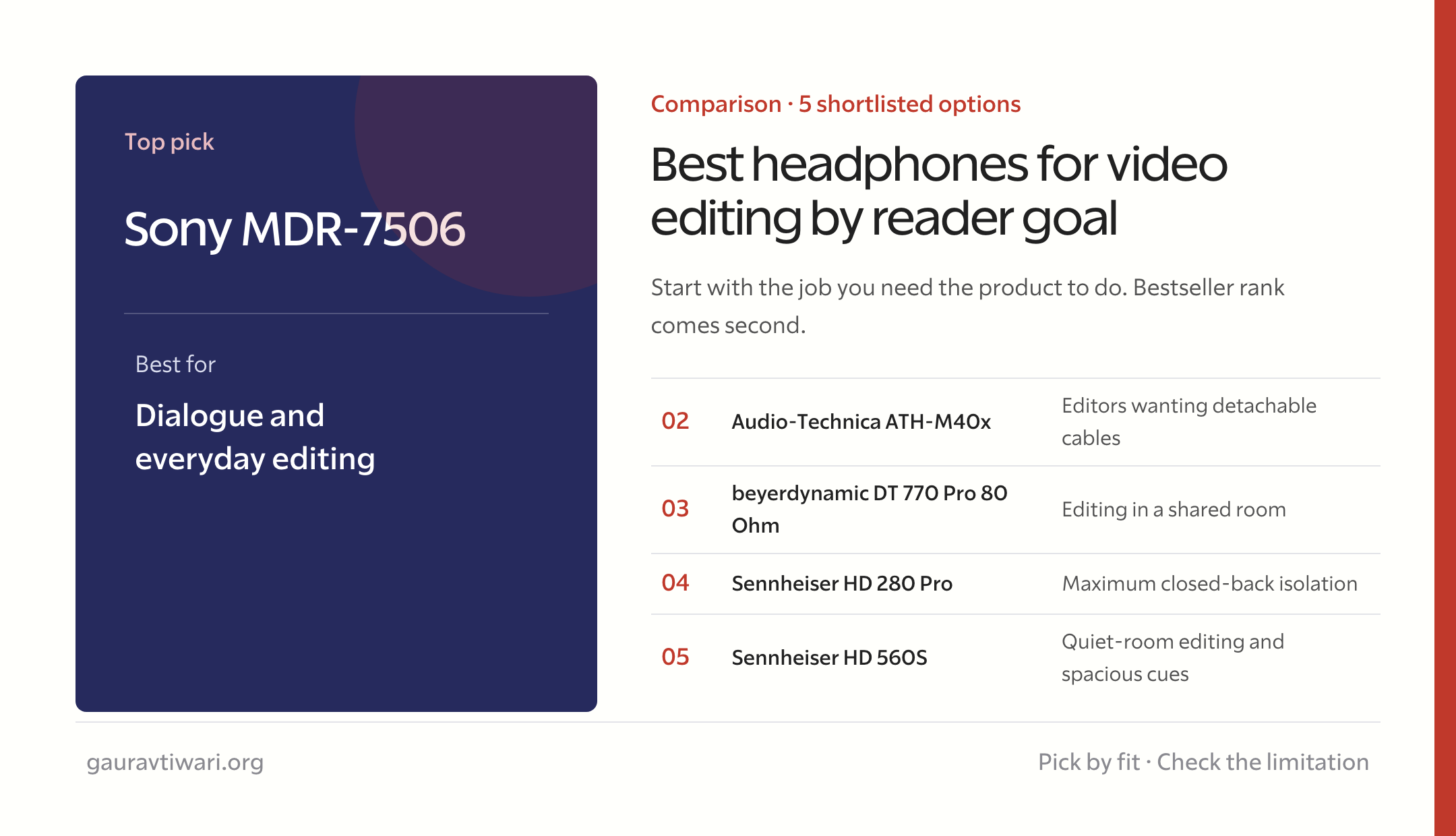
My top pick is Sony MDR-7506 for dialogue and everyday editing. Choose Audio-Technica ATH-M40x for editors wanting detachable cables, or beyerdynamic DT 770 Pro 80 Ohm for editing in a shared room. The rest of the guide explains why those jobs should not be collapsed into one bestseller ranking.
Important: Headphones cannot show how a mix translates to speakers by themselves. Check dialogue and final mixes on more than one playback system.
Quick verdict
If you want one answer, start with Sony MDR-7506. Its main strength is clear: A long-running closed-back studio design with a clear midrange and easy drive requirements. The comparison table links every recommendation directly, including Audio-Technica ATH-M40x and beyerdynamic DT 770 Pro 80 Ohm.
| Recommendation | Verdict | Best for | Starting level |
|---|---|---|---|
| Sony MDR-7506 | Top Pick | dialogue and everyday editing | Works from common interfaces |
| Audio-Technica ATH-M40x | Best for Balanced Budget Editing | editors wanting detachable cables | Easy to drive |
| beyerdynamic DT 770 Pro 80 Ohm | Best for Isolation | editing in a shared room | Best with a capable interface |
| Sennheiser HD 280 Pro | Best for Tracking and Editing | maximum closed-back isolation | Easy to drive |
| Sennheiser HD 560S | Best for Quiet Rooms | quiet-room editing and spacious cues | Use in a quiet room |
If you are still building the surrounding skills or setup, use the headphone buying guide and the best home office setup. Those published guides cover adjacent decisions without forcing another overlapping purchase.
How I built this shortlist
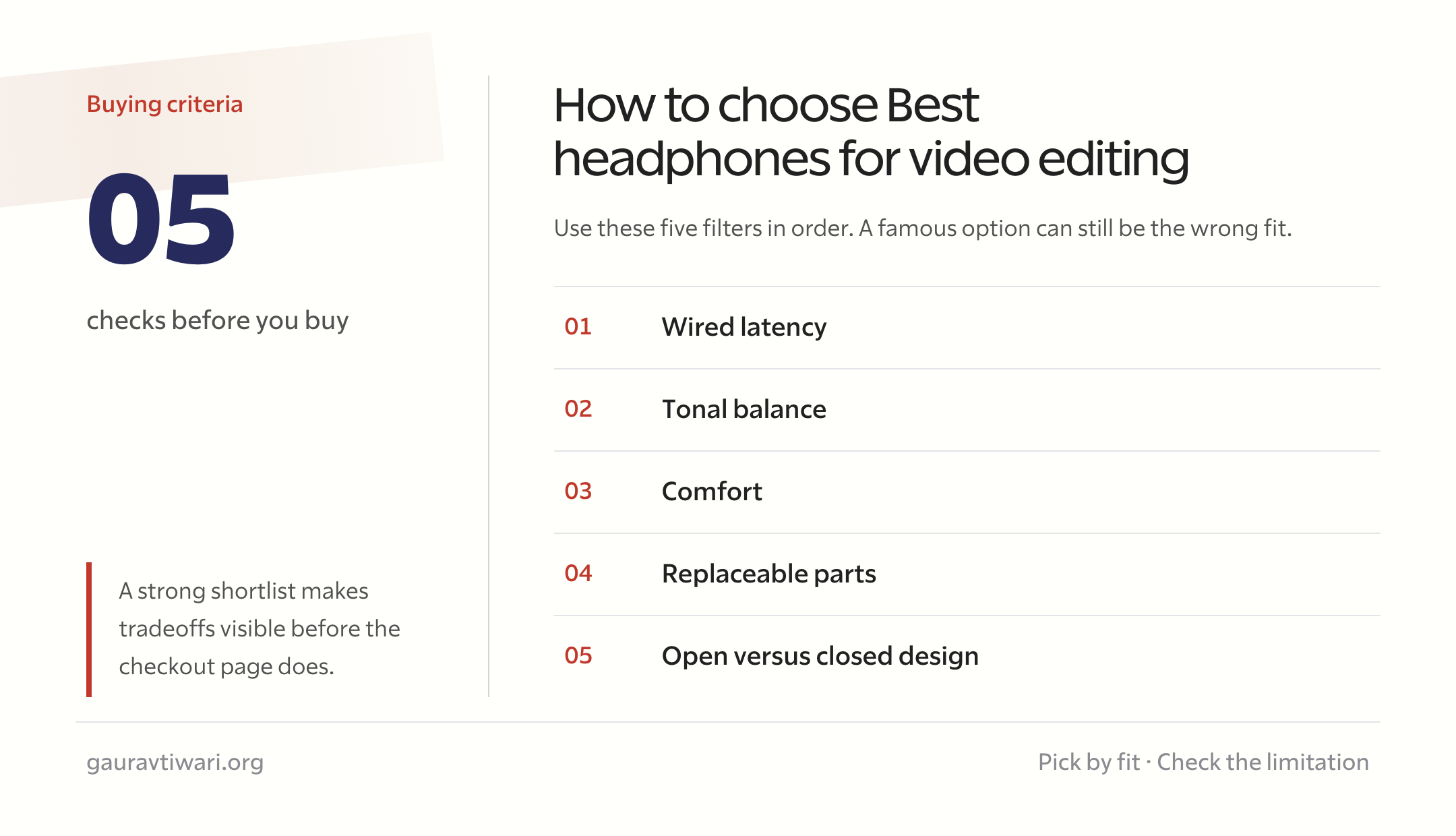
I shortlisted these products by wired latency, tonal balance, comfort, replaceable parts, and open versus closed design. The aim is to make the tradeoffs visible, not to turn a feature list into an invented score.
The recommendations are based on current listing details, manufacturer-stated specifications where available, fit constraints, warranty or return risk, and the use case each product can reasonably handle. I have not described the products as lab-tested.
Prices and variants change by region. Match the exact model, dimensions, accessories, seller, warranty, and return window before buying.
Some links are affiliate links. If you buy through them, I may earn a commission at no extra cost to you. That does not change the recommendation or the limitations listed for each product.
The best headphones for video editing for different needs
Every recommendation below names the job it handles well and the reason another reader should skip it. That distinction matters more than forcing five different products into one score.
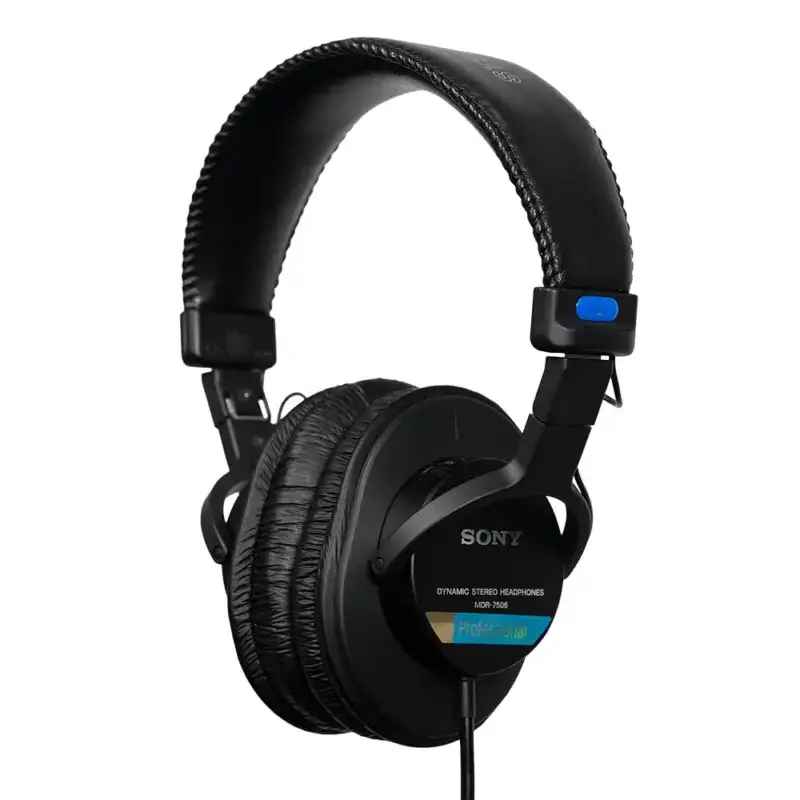
1. Sony MDR-7506: Dialogue and everyday editing
Sony MDR-7506 is my top pick for dialogue and everyday editing. A long-running closed-back studio design with a clear midrange and easy drive requirements.
The fit boundary matters: The coiled cable is fixed and the upper treble can sound sharp. The right starting assumption is works from common interfaces.
Buy it if: Dialogue and everyday editing. Skip it if: You want a detachable cable or a softer top end. Check Amazon.com or Amazon.in for the exact variant, current seller, warranty, and return terms.
- Works from common interfaces
- Best for: dialogue and everyday editing
- Use case: dialogue and everyday editing
- Main strength: A long-running closed-back studio design with a clear midrange and easy drive requirements.
- Watch-out: The coiled cable is fixed and the upper treble can sound sharp.
- Verify dimensions, variant, warranty, and return terms
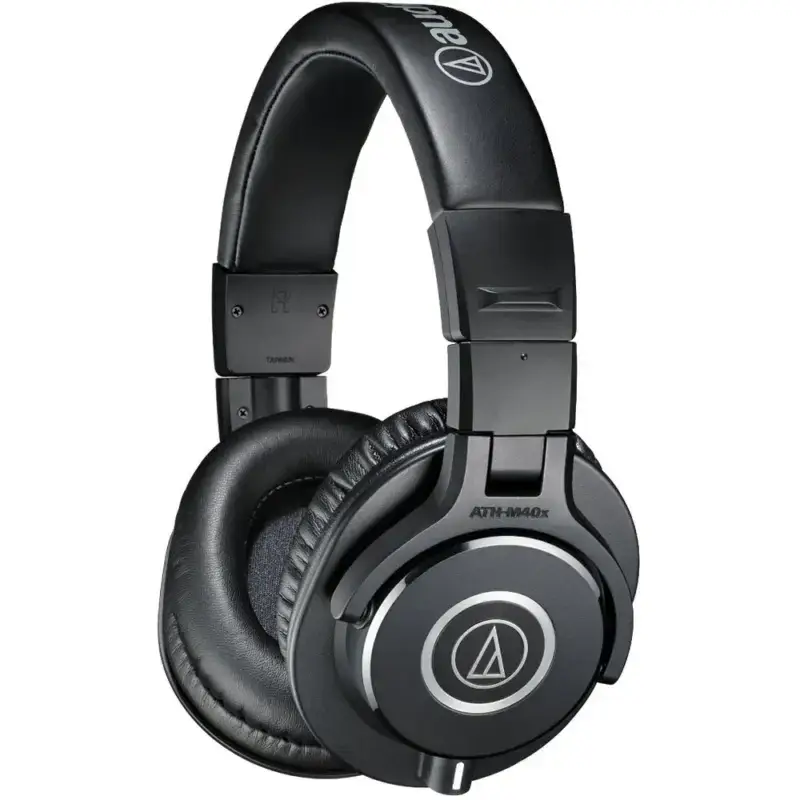
2. Audio-Technica ATH-M40x: Editors wanting detachable cables
Audio-Technica ATH-M40x is my best for balanced budget editing for editors wanting detachable cables. Offers closed-back isolation, folding earcups, and a more restrained tuning than many consumer headphones.
The fit boundary matters: Stock pads and clamp may tire some listeners during long sessions. The right starting assumption is easy to drive.
Buy it if: Editors wanting detachable cables. Skip it if: You wear headphones for hours without a pad upgrade. Check Amazon.com or Amazon.in for the exact variant, current seller, warranty, and return terms.
- Easy to drive
- Best for: editors wanting detachable cables
- Use case: editors wanting detachable cables
- Main strength: Offers closed-back isolation, folding earcups, and a more restrained tuning than many consumer headphones.
- Watch-out: Stock pads and clamp may tire some listeners during long sessions.
- Verify dimensions, variant, warranty, and return terms
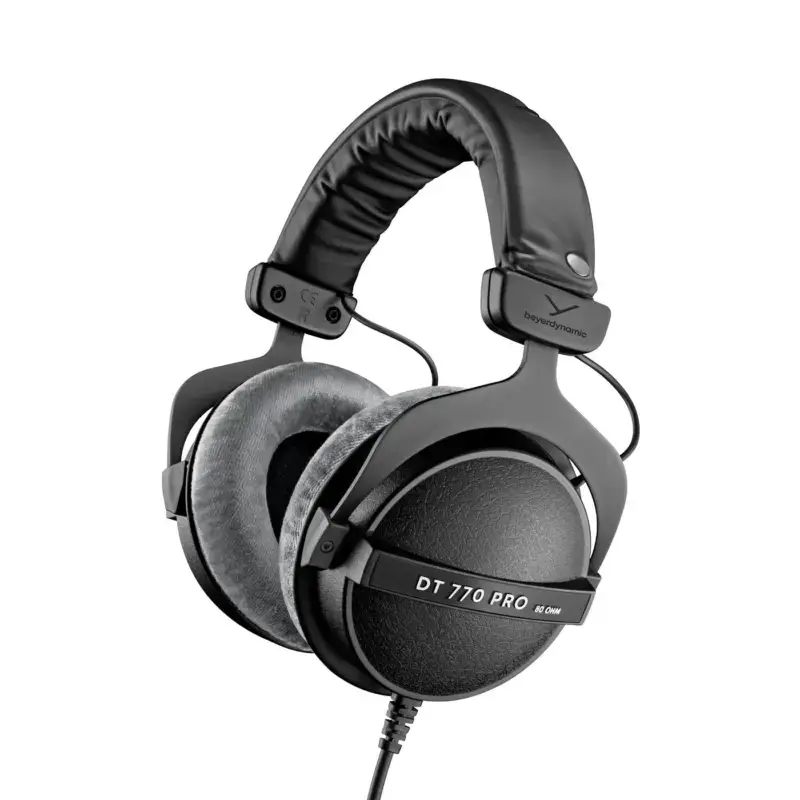
3. beyerdynamic DT 770 Pro 80 Ohm: Editing in a shared room
beyerdynamic DT 770 Pro 80 Ohm is my best for isolation for editing in a shared room. Combines strong passive isolation, durable construction, and replaceable velour pads.
The fit boundary matters: The pronounced treble and fixed cable divide listeners. The right starting assumption is best with a capable interface.
Buy it if: Editing in a shared room. Skip it if: You’re treble-sensitive or need to swap cables. Check Amazon.com or Amazon.in for the exact variant, current seller, warranty, and return terms.
beyerdynamic DT 770 Pro 80 Ohm
- Best with a capable interface
- Best for: editing in a shared room
- Use case: editing in a shared room
- Main strength: Combines strong passive isolation, durable construction, and replaceable velour pads.
- Watch-out: The pronounced treble and fixed cable divide listeners.
- Verify dimensions, variant, warranty, and return terms
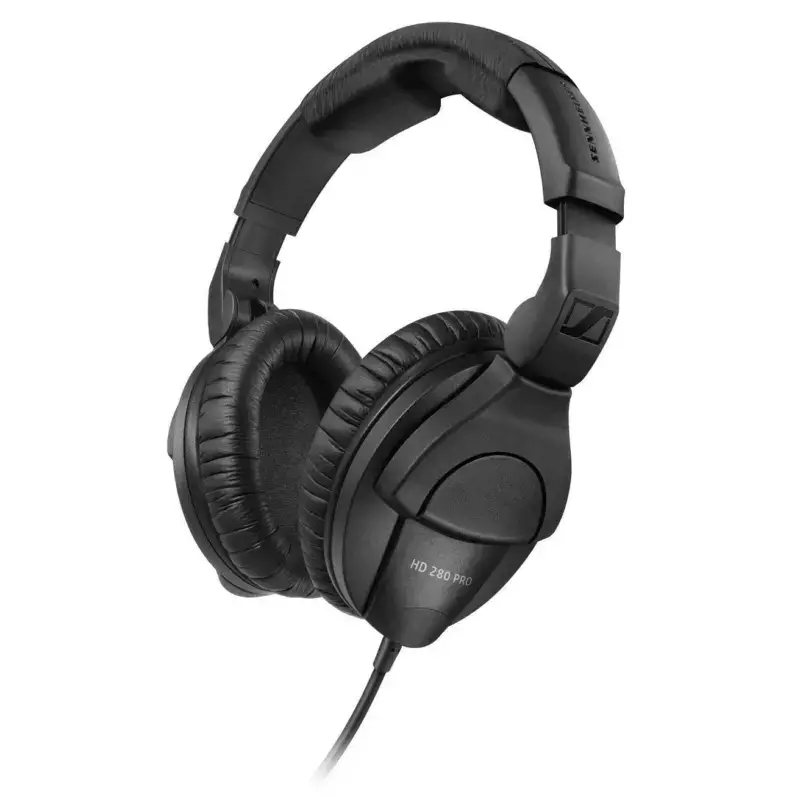
4. Sennheiser HD 280 Pro: Maximum closed-back isolation
Sennheiser HD 280 Pro is my best for tracking and editing for maximum closed-back isolation. Folds, isolates well, and keeps outside sound from masking quiet dialogue details.
The fit boundary matters: Clamp pressure and a warm closed-back presentation won’t suit everyone. The right starting assumption is easy to drive.
Buy it if: Maximum closed-back isolation. Skip it if: You dislike firm clamp or want an airy presentation. Check Amazon.com or Amazon.in for the exact variant, current seller, warranty, and return terms.
- Easy to drive
- Best for: maximum closed-back isolation
- Use case: maximum closed-back isolation
- Main strength: Folds, isolates well, and keeps outside sound from masking quiet dialogue details.
- Watch-out: Clamp pressure and a warm closed-back presentation won't suit everyone.
- Verify dimensions, variant, warranty, and return terms
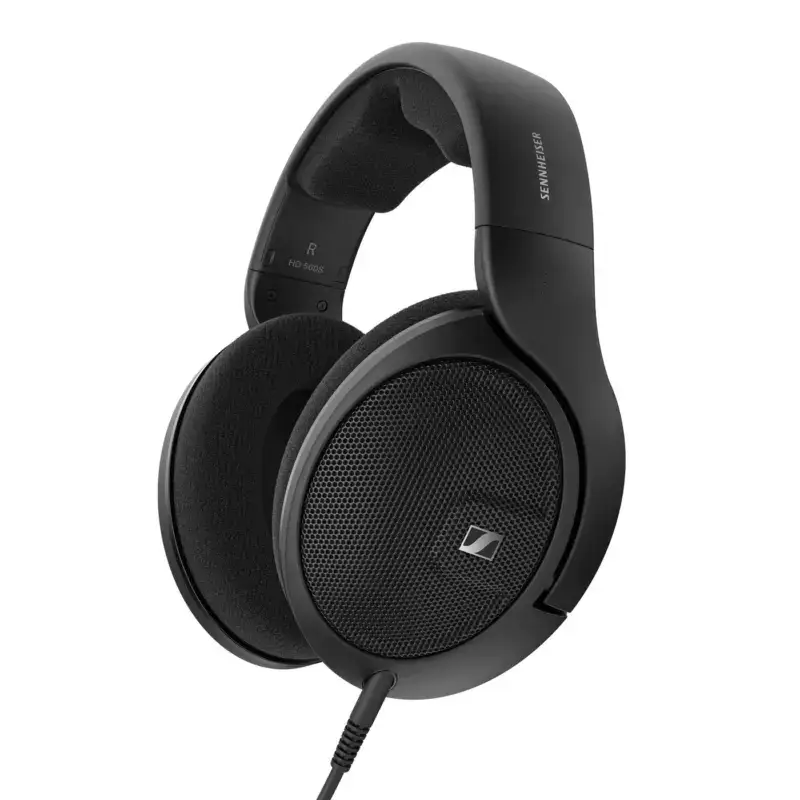
5. Sennheiser HD 560S: Quiet-room editing and spacious cues
Sennheiser HD 560S is my best for quiet rooms for quiet-room editing and spacious cues. Uses an open design with a broad soundstage and relatively neutral presentation.
The fit boundary matters: It leaks sound and provides almost no isolation. The right starting assumption is use in a quiet room.
Buy it if: Quiet-room editing and spacious cues. Skip it if: You’re editing anywhere other than a quiet room. Check Amazon.com or Amazon.in for the exact variant, current seller, warranty, and return terms.
- Use in a quiet room
- Best for: quiet-room editing and spacious cues
- Use case: quiet-room editing and spacious cues
- Main strength: Uses an open design with a broad soundstage and relatively neutral presentation.
- Watch-out: It leaks sound and provides almost no isolation.
- Verify dimensions, variant, warranty, and return terms
How to choose among the best headphones for video editing
Start with the failure condition, not the bestseller rank. For this topic, wired latency, tonal balance, and comfort change the decision faster than a longer feature list.
Check wired latency
Write down what you already know, what the next course, project, or workday demands, and what would make the purchase unusable. A recommendation that ignores wired latency can be technically excellent and still waste your time or money. Use tonal balance only after the basic fit is clear.
Check tonal balance
More tonal balance often brings extra cost, weight, complexity, or prerequisite load. Decide how much of it the next six months actually require. Then compare that need with comfort instead of paying for a larger promise you may never use.
Check comfort
Look for evidence of comfort in the sample, specification, table of contents, or exact model details. Marketing language is not enough. If the evidence is unclear, let replaceable parts decide the tie or choose a seller with safer return terms.
Check replaceable parts
Treat replaceable parts as a practical test of long-term value. A product can feel impressive for ten minutes and still become frustrating during repeated work. Compare it with open versus closed design, because support, fit, and depth usually matter after the novelty is gone.
Check open versus closed design
Check open versus closed design last, but do not skip it. This is where edition problems, missing access, poor fit, weak support, and the wrong use case become expensive. Save the exact listing details before checkout so you can verify what arrives.
A practical buying and setup plan
Treat the return window as part of the purchase. Measure first, keep the packaging, and use the product in the exact task that motivated the order.
- Start with Sony MDR-7506 if its stated fit matches your main use case.
- Choose Audio-Technica ATH-M40x when editors wanting detachable cables matters more.
- Record the dimensions, model number, included parts, seller, and warranty shown at checkout.
- Set up the product with the rest of the workspace instead of judging it in isolation.
- Return it rather than rationalizing a poor fit. beyerdynamic DT 770 Pro 80 Ohm solves a different use case.
For the wider setup, see MacBook accessories for work and business productivity apps. The surrounding desk, device, and workflow often change the value of one accessory.
Common buying mistakes
Most bad purchases in this category are predictable.
- Buying the category label: ‘Ergonomic,’ ‘studio,’ and ‘starter’ do not prove fit.
- Ignoring dimensions: Product photos hide size, height, clearance, and weight.
- Mixing product types: A travel product and a permanent desk product solve different jobs.
- Trusting the badge: Match the exact model and seller instead of relying on a search-page label.
- Keeping a bad fit: Use the return window before discomfort or frustration becomes normal.
Use this five-minute decision worksheet
Before choosing from the best headphones for video editing, answer these questions in writing. The exercise makes hidden assumptions visible and gives you a reason for the final choice. Keep the answers beside the comparison table, because a product that cannot satisfy them should leave the shortlist even when its reviews look impressive.
- Space: Record the desk area, device size, room conditions, or body measurements that constrain the product.
- Main task: Name the one job the product must handle well before considering secondary features.
- Compatibility: Check the exact model, dimensions, connections, power, accessories, and operating system where relevant.
- Risk: Save the seller, warranty, return window, and included-parts information shown at checkout.
- Stop rule: Do not upgrade from Sony MDR-7506 to Audio-Technica ATH-M40x unless the second product solves a measured constraint.
This worksheet is deliberately simple. Five written answers will prevent more bad purchases than another hour of scrolling through search results.
Which option should you choose?
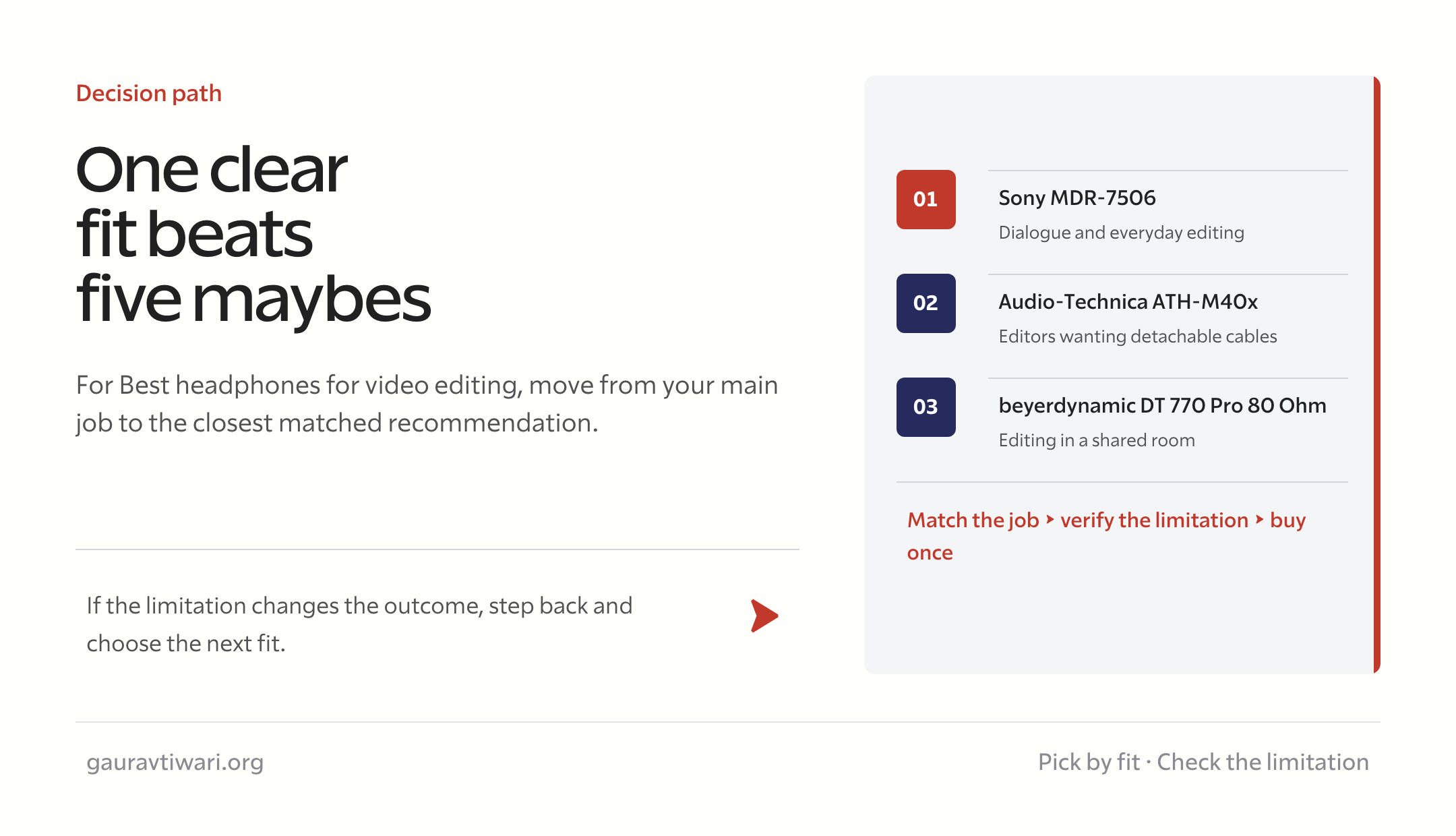
Choose Sony MDR-7506 when dialogue and everyday editing is the main job. Move to Audio-Technica ATH-M40x for editors wanting detachable cables. Pick beyerdynamic DT 770 Pro 80 Ohm only when editing in a shared room is the real requirement.
The shortest useful decision is this: match the best headphones for video editing to your next task, confirm the exact edition or model, and keep the limitation visible. A well-matched second choice is better than a famous top pick aimed at someone else.
Frequently asked questions
What are the best headphones for video editing?
Sony MDR-7506 is the top pick for dialogue and everyday editing. Audio-Technica ATH-M40x is better for editors wanting detachable cables, while beyerdynamic DT 770 Pro 80 Ohm fits editing in a shared room. Check the exact model and dimensions before buying.
Does the most expensive option fit best?
No. Fit, dimensions, adjustability, compatibility, and return terms matter more than price alone. A lower-cost product that matches the main task can be the better purchase.
Should I use the Amazon.com or Amazon.in link?
Use the marketplace that serves your location, then match the exact model, seller, warranty, accessories, voltage where relevant, and return terms. Search results can mix variants.
How should I compare two close options?
Compare wired latency, tonal balance, and comfort first. Use replaceable parts and open versus closed design as tie-breakers.
Are these recommendations lab-tested?
No universal lab score is claimed. The shortlist is based on current product details, fit constraints, documented specifications where available, and the job each model is designed to handle.
What should I do when the product arrives?
Keep the packaging, confirm the model and included parts, set it up in the real workspace, and use the return window if fit, comfort, stability, compatibility, or quality is wrong.
Tell Google you want more of this.
Add Gaurav Tiwari as a preferred sourceOne tap, and this site shows up more often in your own Top Stories, AI Overviews and AI Mode. Remove it any time.
Disclaimer: This site is reader-supported. If you buy through some links, I may earn a small commission at no extra cost to you. I only recommend tools I trust and would use myself. Your support helps keep gauravtiwari.org free and focused on real-world advice. Thanks. - Gaurav Tiwari