Arc Length Calculator
Calculate the length of a curve using the arc length formula.
Arc Length
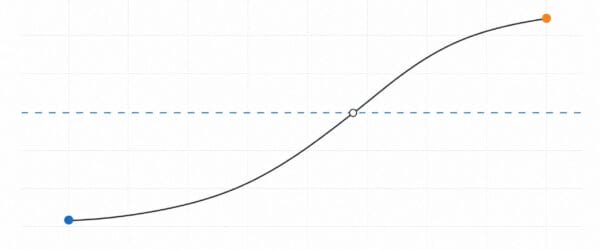
Curve Visualization
Formula Used
Calculation Details
Use this free arc length calculator to find the distance along any curve. Enter your function in Cartesian or parametric form, set the bounds, and get instant results with step-by-step solutions. Perfect for calculus students and engineers working with curved paths.
What is Arc Length?
Arc length is the distance along a curved line between two points. Unlike straight-line distance, arc length accounts for every twist and turn of the curve. Calculating arc length requires calculus because you’re essentially summing infinitely many tiny straight segments.
The Arc Length Formula
For Cartesian Curves \( y = f(x) \)
$$ L = \int_a^b \sqrt{1 + \left(\frac{dy}{dx}\right)^2} \, dx $$
This formula comes from the Pythagorean theorem applied to infinitesimal segments of the curve. Each tiny piece has horizontal length \( dx \) and vertical length \( dy \), so its length is \( \sqrt{dx^2 + dy^2} \).
For Parametric Curves \( x(t), y(t) \)
$$ L = \int_a^b \sqrt{\left(\frac{dx}{dt}\right)^2 + \left(\frac{dy}{dt}\right)^2} \, dt $$
When both \( x \) and \( y \) depend on a parameter \( t \), you compute the derivatives with respect to \( t \) and integrate over the parameter range.
How to Use This Calculator
- Choose Input Type – Select Cartesian for functions like \( y = x^2 \) or Parametric for curves defined by \( x(t) \) and \( y(t) \).
- Enter Your Functions – Type the function(s) using standard math notation.
- Set Bounds – Specify the interval over which to calculate the arc length.
Common Examples
Circle (Parametric)
\( x(t) = r\cos(t) \), \( y(t) = r\sin(t) \) from \( t = 0 \) to \( 2\pi \) gives circumference \( 2\pi r \)
Parabola \( y = x^2 \)
From \( x = 0 \) to \( x = 1 \), the arc length is approximately 1.4789
Semicircle \( y = \sqrt{1-x^2} \)
From \( x = -1 \) to \( x = 1 \), the arc length is \( \pi \) (half the circumference)
Why Arc Length Matters
Engineering Applications
- Cable and wire length calculations
- Road and railway design
- Pipeline routing
Physics Applications
- Distance traveled along a curved path
- Work done by forces along curves
- Center of mass calculations
Computer Graphics
- Rendering smooth curves
- Animation path length
- Font design
Numerical Integration
Most arc length integrals cannot be solved analytically. This calculator uses numerical methods (Simpson’s rule) to approximate the integral. The visualization shows the actual curve being measured.
Tips for Accurate Results
- For sharp curves, the numerical approximation may need more subdivisions
- Parametric form often gives cleaner results for closed curves
- Check that your function is continuous over the integration interval
Arc length measures distance along a curve, not the straight chord between its endpoints. Calculus builds that distance from tiny right triangles whose horizontal and vertical changes combine through the Pythagorean theorem.
How to use this calculator
For \(y=f(x)\), enter the function and x-bounds. For a parametric curve, enter \(x(t)\), \(y(t)\), and t-bounds. Check that the derivatives exist and the speed does not create an unhandled singularity.
Use radians for trigonometric parameterizations. A circle of radius r written as \(x=r\cos t\), \(y=r\sin t\) traces one full revolution as t runs from 0 to \(2\pi\).
- Differentiate the coordinate function or functions.
- Build the speed expression under the square root.
- Integrate over the correct parameter interval.
- Compare with the straight-line endpoint distance, which must not exceed the arc length.
Worked example
For \(y=x^2\) from 0 to 1, \(y’=2x\), so the length is \(\int_0^1\sqrt{1+4x^2}\,dx\). The antiderivative involves an inverse hyperbolic function, so a numerical result is often more useful.
For the unit circle parameterization, the speed is \(\sqrt{\sin^2t+\cos^2t}=1\). Integrating from 0 to \(2\pi\) gives \(2\pi\), matching the circumference.
How to read the result
The parameter must trace the intended curve once. If it loops over the same path twice, the integral counts both passes because it measures distance traveled.
A curve can have finite endpoint separation but infinite length. Continuity alone does not guarantee a rectifiable curve.
Common mistakes to avoid
- Integrating \(f(x)\) instead of \(\sqrt{1+[f'(x)]^2}\).
- Using degrees inside trigonometric parameterizations.
- Choosing bounds that trace only part of the curve or repeat it.
- Assuming every arc-length integral has an elementary antiderivative.
How to verify the result
A quick lower-bound check is the straight-line distance between the endpoints. The length of the curve cannot be shorter than that chord. For a circular arc, compare the result with \(r\theta\) when the angle is in radians.
The derivative and the bounds are the two places most arc-length errors begin. Differentiate before squaring, and confirm that a parametric interval traces the intended curve exactly once. A repeated loop is counted again because the integral measures distance traveled.
Arc length uses the same distance unit as the coordinates. If x and y are measured in meters, the result is meters, not square meters. Near cusps or vertical tangents, split the interval and compare numerical results at tighter tolerances.
Limits of the calculation
Numerical integration may struggle near cusps, vertical tangents, or rapidly oscillating segments. Split the interval at difficult points.
For measured GPS or engineering data, a polyline estimate may be more defensible than fitting a smooth function that introduces unobserved curvature.
Related calculators
Use Definite Integral Solver, Volume of Revolution Calculator, Riemann Sum Calculator when the next part of the problem needs a different method.
Useful calculus books and tools
For arc length, sketch the curve and inspect the derivative because a small differentiation error changes the entire integrand. Calculus answers are easier to trust when you can connect the symbolic work to a graph, an estimate, and the theorem behind the method.
- Practice beyond one example: Browse calculus textbooks and workbooks on Amazon. Look for worked problems, review exercises, and clear treatment of limits and applications.
- Sketch before calculating: Browse graph-paper notebooks on Amazon. A quick graph often reveals sign errors, incorrect bounds, and unreasonable answers.
As an Amazon Associate, I earn from qualifying purchases.
Frequently Asked Questions
What is arc length?
Arc length is the distance measured along a curved path between two points. For a function y = f(x) on the interval [a, b], it’s L = ∫ₐᵇ √(1 + (f'(x))²) dx.
How do I find arc length without calculus?
For a circle, use s = rθ where r is the radius and θ is the central angle in radians. For non-circular curves, calculus is required — there’s no closed-form shortcut.
Why do I need (f'(x))² inside the square root?
Because the differential arc length ds satisfies ds² = dx² + dy². Dividing by dx² gives (ds/dx)² = 1 + (dy/dx)², so ds = √(1 + (f'(x))²) dx.
Does this work for parametric curves?
Yes — for x(t), y(t) the formula becomes L = ∫ √((dx/dt)² + (dy/dt)²) dt over the parameter interval. The calculator supports both forms.
How is arc length used in real life?
Roller-coaster track design, road curve fitting, GPS path estimation, robot-arm motion planning, and any case where you need the actual distance traveled along a curved path rather than the straight-line distance.
What’s the arc length of a sine wave?
For y = sin(x) from 0 to 2π, the arc length is approximately 7.640396… It has no elementary closed form and requires numerical integration — which this calculator handles automatically.
Can I compute the perimeter of an ellipse with this?
Partially. An ellipse’s perimeter is the integral around the full curve, which involves elliptic integrals — they don’t have an elementary antiderivative. You’ll get a numerical estimate, not a clean formula.