
Use this net worth calculator to total assets and debts, compare total and liquid net worth, and track the same personal balance sheet over time.
Add current asset values and current debt balances. Use conservative resale values.
Your result
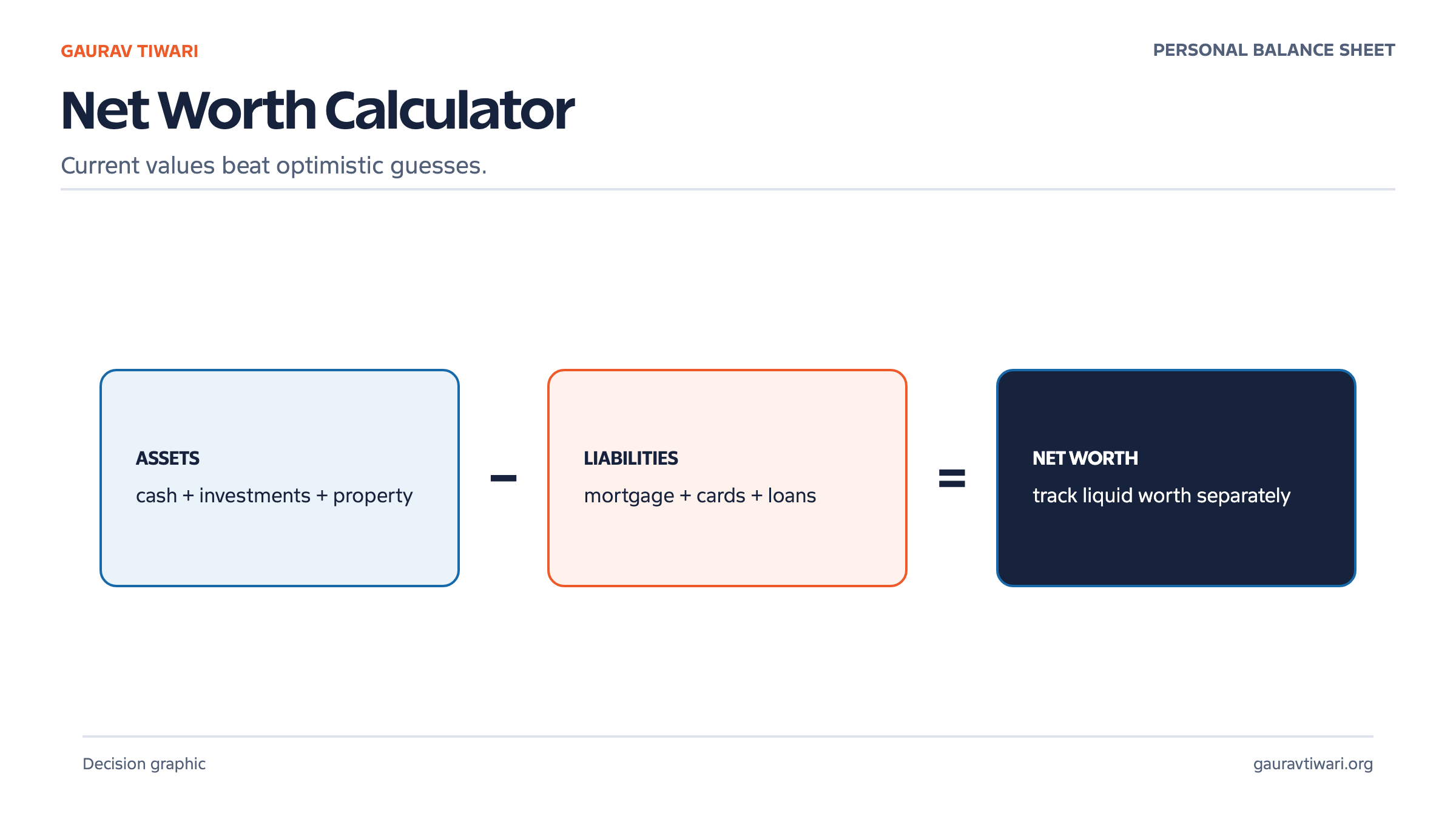
This net worth calculator adds what you own, subtracts what you owe, and shows both total net worth and liquid net worth. The second number matters because a house-rich, cash-poor balance sheet can still leave you exposed.
Use realistic current values, not what you originally paid or what you hope an asset will be worth. The output is a snapshot for planning, not a valuation or investment recommendation.
Net worth formula
Net worth = total assets – total liabilities.
A net worth calculator can return a negative result, but that is information, not a verdict. It is common early in a career or after a large education, housing, or business investment. What matters is whether the trend and the underlying cash flow are improving.
Investor.gov: Figure out your finances recommends listing everything you own, listing everything you owe, subtracting liabilities from assets, and updating the statement regularly.
How to value assets without fooling yourself
Use the amount you could reasonably receive today, after obvious selling costs. Purchase price is irrelevant when the market value has changed.
- Cash and bank balances: current statement balance.
- Investments and retirement accounts: current market value.
- Property: conservative current value, not the highest nearby listing.
- Vehicles and equipment: realistic resale value.
- Business ownership: include only if you can support the estimate; show it separately.
- Collectibles and personal items: omit unless they are material and genuinely saleable.
Total net worth and liquid net worth answer different questions
The net worth calculator reports both measures because total wealth and accessible financial flexibility are not the same thing.
| Measure | Includes | Best question |
|---|---|---|
| Total net worth | All reasonable assets less all liabilities | Is my overall balance sheet improving? |
| Liquid net worth | Cash and readily sellable financial assets less liabilities | How much flexibility do I have now? |
I would review total net worth quarterly or twice a year. Weekly tracking turns a slow financial signal into noise, especially when markets move.
What to do after you calculate net worth
Do not chase the number by making every asset estimate more generous. Improve the components you control.
- Protect liquidity with an emergency fund.
- Reduce high-cost liabilities first.
- Automate contributions to productive assets.
- Avoid adding depreciating debt for status purchases.
- Compare the same categories and valuation method each review.
If spending is the part that keeps undoing progress, use the published budget-balancing guide before adding another tracking app.
Frequently asked questions
Do I include my home in net worth?
Yes for a general personal net worth statement: include a conservative current value as an asset and the mortgage balance as a liability. Some legal or eligibility tests use different rules.
Do I include retirement accounts?
Yes. Use the current account value. If early-withdrawal restrictions matter to your planning, keep retirement assets out of the separate liquid net worth result.
Should I include my car?
Include a realistic resale value if it is material, and include the full remaining auto loan. Do not use the original purchase price.
How often should I calculate net worth?
Quarterly or twice a year is enough for most people. Use the same categories and valuation approach so the trend remains comparable.
The next step
Run the net worth calculator with conservative current values, save the result, and review the same categories quarterly or twice a year. The trend matters more than one flattering snapshot.