
Use this emergency fund calculator to set a starter buffer, risk-adjusted savings range, monthly target, and funding timeline from essential expenses.
Estimate a starter buffer and a risk-adjusted planning range from essential monthly expenses.
Your result
An emergency fund calculator should do more than multiply your salary by six. Your real safety number depends on essential monthly expenses, how predictable your income is, and how many people rely on it.
Use the calculator to estimate a starter buffer, a target range, and the monthly contribution needed to close your savings gap. The result is a planning estimate, not personal financial advice.
What should count as an essential monthly expense?
Count the bills you would still need to pay during a job loss, medical interruption, or sudden income drop. This is a survival budget, not your normal lifestyle.
- Housing: rent or mortgage, property tax, and essential maintenance.
- Utilities: electricity, water, basic internet, and phone service.
- Food: groceries and essential household supplies.
- Transport: fuel, public transit, insurance, and required payments.
- Health: insurance premiums, medicines, and recurring care.
- Minimum debt payments and essential dependent care.
Leave holidays, upgrades, subscriptions you can cancel, and discretionary shopping out of the base. The goal is to calculate how long your household can keep functioning.
Why the calculator uses a range instead of one magic number
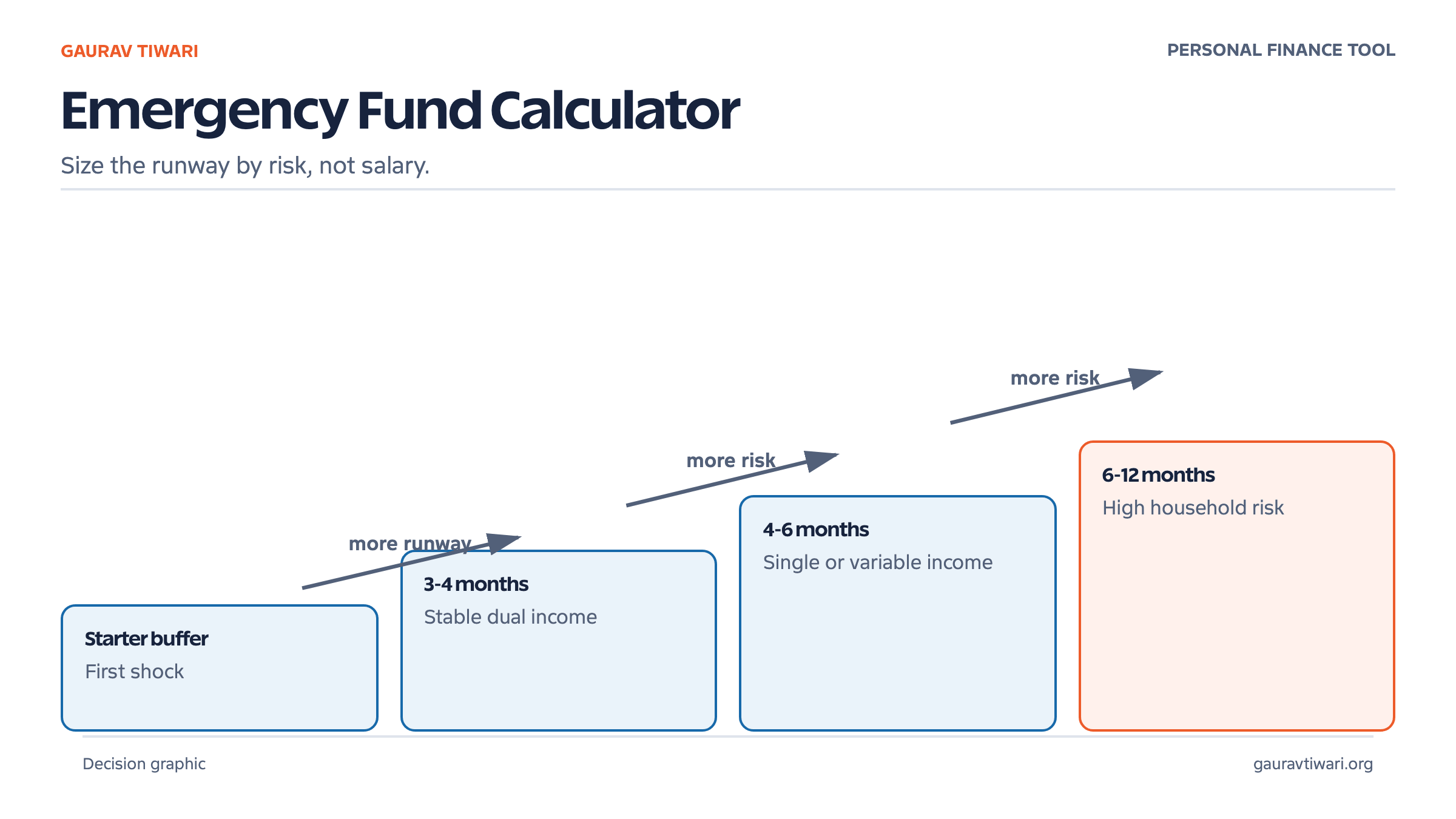
The emergency fund calculator uses a range because the right number changes with the fragility of your income. A salaried worker in a stable two-income household does not carry the same risk as a freelancer with one large client.
| Income situation | Planning range | Why |
|---|---|---|
| Two stable incomes | 3 to 4 months | One income may continue during a disruption. |
| One stable income | 4 to 6 months | The household has one primary earnings engine. |
| Variable or freelance income | 6 to 9 months | Revenue timing and client concentration add risk. |
| High medical or dependent risk | 6 to 12 months | A longer disruption may be harder to absorb. |
How to build the fund without freezing every other goal
After the emergency fund calculator gives you a range, build it in layers. A small buffer is useful before the full target exists, and it prevents every minor surprise from returning to a credit card.
- First milestone: one high-frequency surprise, such as a repair, deductible, or urgent trip.
- Second milestone: one month of essential expenses.
- Third milestone: the lower end of your risk-adjusted range.
- Final milestone: the upper target only if your risks justify it.
Automate the contribution just after income arrives. If your income varies, transfer a percentage of every payment instead of forcing a fixed monthly amount.
Where should an emergency fund stay?
Keep emergency savings boring, liquid, and separate from everyday spending. The money must be available when the emergency happens, not after a market recovery.
- Use an insured savings or money-market deposit account where available.
- Avoid stocks, long lock-in periods, and assets that can fall when you need cash.
- Separate the account from your spending account, but keep transfers practical.
- Review the target after a major change in housing, dependents, insurance, or income.
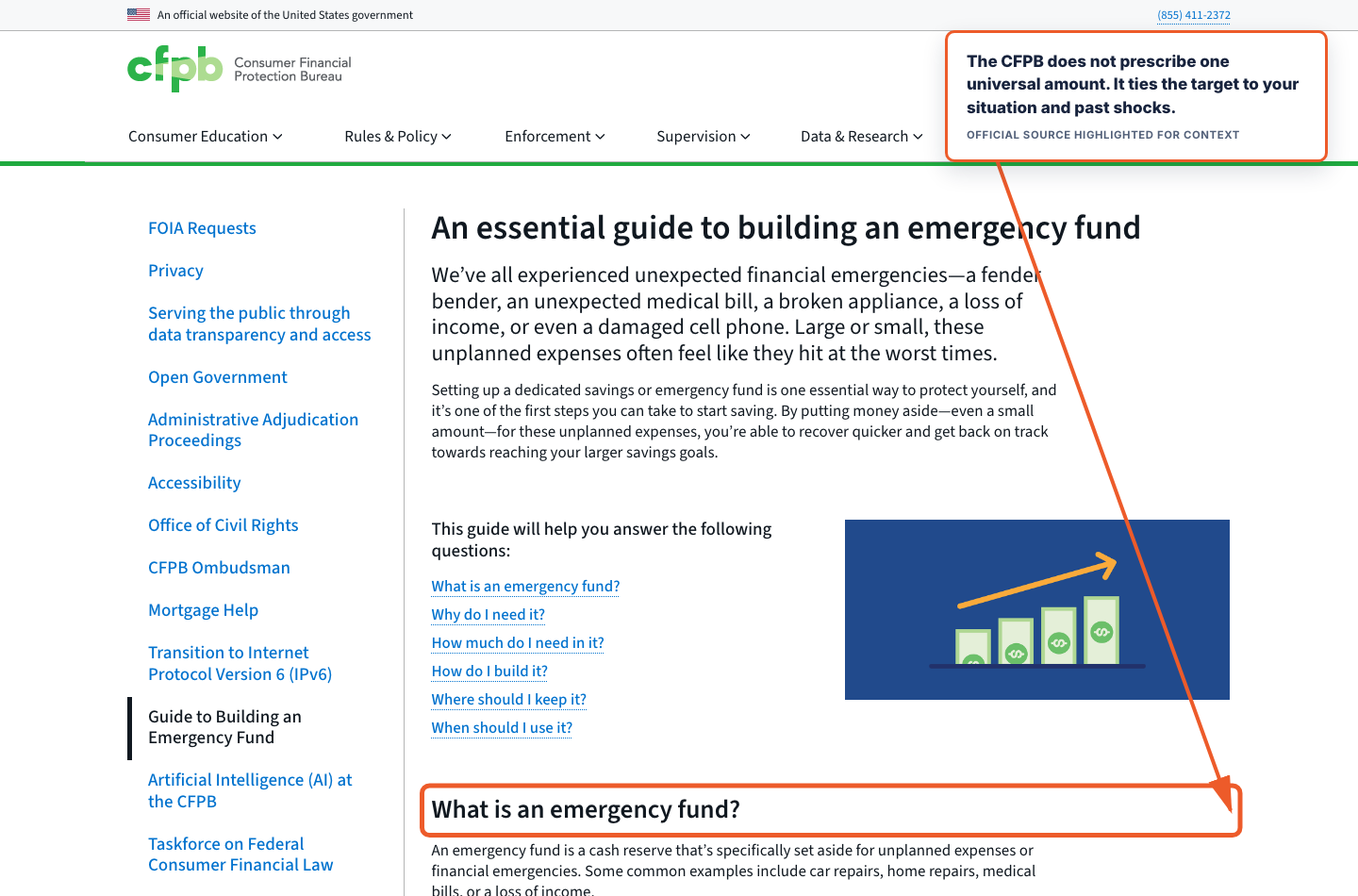
The Consumer Financial Protection Bureau: An essential guide to building an emergency fund makes the same core point: the amount depends on your situation, and the reserve should be safe and accessible.
Frequently asked questions
Is three months of expenses enough for an emergency fund?
It can be enough for a stable two-income household with strong insurance and low fixed costs. A single-income household, freelancer, or person with dependents may need a longer runway.
Should I use monthly income or monthly expenses?
Use essential monthly expenses. Income can overstate the amount because part of normal income funds wants, investing, and other costs you could pause during an emergency.
Should I pay debt or build an emergency fund first?
Build a small starter buffer first, then attack expensive debt while continuing a modest automatic contribution. The buffer helps prevent the next surprise from becoming new debt.
Does the calculator include inflation or investment returns?
No. It estimates a current target from current essential expenses and risk. Review it at least annually and after major life changes.
The next step
Run the emergency fund calculator with your essential expenses and income risk, then automate one contribution you can sustain. Recalculate after a major change in housing, dependents, insurance, or income.