
 by
by
The best AI SEO tools don’t write the winning strategy for you. They bring reliable search data into the workflow, expose gaps you missed, and remove repetitive work before and after the draft.
That’s the line I use now. If a tool is only a chatbot in a polished dashboard, I don’t count it as SEO software. The useful products connect to SERPs, Search Console, WordPress, prompt tracking, or a data API that gives the model something factual to work with.
I compared these ten tools on real WordPress publishing and content-refresh jobs. Semrush is my primary paid AI SEO platform because it joins keyword, competitor, content, and AI-visibility data. Rank Math is still the practical WordPress execution layer. Surfer is the sharper specialist when content optimization is the bottleneck. Below, I’ll show you what each tool earns its place for, what it costs, and where it breaks.
Quick verdict: Pick Semrush when you need one paid system for research, competitor intelligence, content work, and AI visibility. Pick Rank Math Content AI when your work begins and ends inside WordPress. Add SEO Utils when you want local Search Console and DataForSEO data without building another cloud dashboard. Pick Surfer SEO only when draft optimization is the job you need solved best. No tool here ranks a weak page for you.
How I picked these tools: I kept the ranking practical, not feature-count driven.
- I judged every tool against a real WordPress publishing job. Where I did not run a full paid workflow, I used official documentation and the public product interface instead of inventing performance results.
- I checked one real SEO job per tool: SERP research, content scoring, metadata, schema, internal linking, or first-draft cleanup.
- I pushed down tools that produced generic content after two prompts, even if their dashboards looked good.
- I used public prices from official pricing pages and treated them as a buying checkpoint because SaaS plans change often.
My actual AI SEO stack
My working AI SEO stack has five layers because no single product is best at research, judgment, publishing, and measurement. Semrush is the primary paid platform, but the stack gets better when each tool has one clear job.
| Layer | Tool | The job I give it |
|---|---|---|
| Research and market data | Semrush | Keywords, competitor gaps, SERP evidence, content briefs, and AI visibility |
| Local analysis | SEO Utils | Search Console reporting, rank tracking, DataForSEO pulls, and repeatable local workflows |
| Reasoning and editing | Claude or Codex | Clustering, brief synthesis, gap analysis, and a skeptical edit against the source data |
| WordPress execution | Rank Math | Metadata, schema, internal links, on-page checks, and publishing cleanup |
| Raw data when needed | DataForSEO | Pay-as-you-go SERPs, keywords, backlinks, and AI-search endpoints for custom jobs |
The stack matters more than the chatbot. My LLM SEO guide explains what makes a page citation-ready, while the AI visibility tracking workflow shows how I measure mentions, citations, traffic, and conversions after publication.
What the public data says about these AI SEO tools
The market data tells a different story from a feature checklist. I pulled exact-match US search demand for 13 category and brand queries, domain-wide Google footprints for 11 official sites, and public WordPress.org data for the three plugins in this list. The pull uses July 2026 DataForSEO data and the WordPress.org Plugins API.
The useful finding: the category is small but commercially valuable. DataForSEO estimates 2,400 monthly US searches for AI SEO tools at $56.43 CPC and 880 for best AI SEO tools at $30.77 CPC. Those are demand signals, not proof that a tool works.
I kept three evidence types separate:
- Hands-on evidence: whether the product fits a real research, optimization, WordPress, or publishing job in my workflow.
- Search demand: DataForSEO’s monthly US estimate for the exact brand query, plus keyword difficulty, CPC, and intent.
- Market footprint: the official domain’s US organic keyword estimate, estimated organic visits, and referring domains. This measures reach, not product quality.
Brand and category search demand
ChatGPT and Claude dwarf the specialist tools because they are general assistants. I left them in the table to show the scale difference, but I do not use that scale to rank their SEO ability.
| Exact US query | Monthly searches | Difficulty | CPC | Main intent |
|---|---|---|---|---|
| ChatGPT | 124,000,000 | 100 | $0.13 | Informational |
| Claude AI | 2,740,000 | 75 | $1.36 | Informational |
| Semrush | 90,500 | 100 | $3.26 | Informational |
| Jasper AI | 22,200 | 46 | $4.29 | Informational |
| Frase | 6,600 | 0 | $5.17 | Informational |
| Surfer SEO | 6,600 | 18 | $11.45 | Commercial |
| Rank Math | 3,600 | 37 | $4.38 | Informational |
| AI SEO tools | 2,400 | 10 | $56.43 | Commercial |
| Best AI SEO tools | 880 | 4 | $30.77 | Commercial |
| NeuronWriter | 720 | 7 | $1.81 | Transactional |
| SEOPress | 720 | 7 | $10.92 | Mixed |
| Scalenut | 480 | 29 | $41.38 | Informational |
| GetGenie AI | 30 | 37 | $5.53 | Informational |
The nine specialist product queries total 131,450 estimated US searches a month. Semrush accounts for 68.8% of that total, but it is also a much broader SEO platform. Surfer is the clearest specialist buying query in the set because DataForSEO classifies it as commercial. NeuronWriter is the only exact brand query classified as transactional.
Organic and backlink footprint of the official domains
This second table answers a narrower question: how much searchable content and link authority sits behind each product’s official domain? It does not tell you which editor gives better recommendations.
| Official domain | US organic keywords | Estimated US visits | Referring domains | Domain rank |
|---|---|---|---|---|
| openai.com | 108,007 | 35,975,263 | 345,933 | 710 |
| semrush.com | 123,748 | 3,664,827 | 138,820 | 616 |
| anthropic.com | 29,894 | 2,222,961 | 87,087 | 620 |
| jasper.ai | 7,172 | 135,974 | 34,492 | 530 |
| surferseo.com | 13,081 | 123,006 | 19,265 | 432 |
| rankmath.com | 17,913 | 79,307 | 22,363 | 562 |
| scalenut.com | 12,437 | 21,568 | 4,366 | 344 |
| seopress.org | 1,154 | 7,877 | 4,377 | 360 |
| frase.io | 1,207 | 7,587 | 9,354 | 382 |
| getgenie.ai | 1,056 | 834 | 2,920 | 479 |
| neuronwriter.com | 248 | 330 | 3,054 | 366 |
Semrush has the strongest search footprint among the dedicated SEO products: 123,748 ranking US keywords, about 3.66 million estimated monthly organic visits, and 138,820 referring domains. Surfer and Rank Math form the next practical tier. NeuronWriter’s footprint is tiny by comparison, which reinforces why I rank it as a budget product rather than a market leader.
The open WordPress plugin data
WordPress gives us one unusually transparent comparison. Its public plugin API exposes active-install bands, ratings, rating counts, versions, and repository updates.
| Plugin | Active installs | Rating | Ratings | Version |
|---|---|---|---|---|
| Rank Math | 4,000,000+ | 96% | 7,475 | 1.0.275 |
| SEOPress | 300,000+ | 96% | 1,240 | 10.0.2 |
| GetGenie | 80,000+ | 96% | 118 | 4.5.1 |
All three show a 96% rating, but the sample sizes are not remotely equal. Rank Math has more than six times SEOPress’s install base and about sixty-three times GetGenie’s rating count. That is stronger adoption evidence, not proof that every user needs its AI features.
How to read this study: use the numbers to judge market maturity, adoption, and buying interest. Use the practical reviews below to judge job fit. I deliberately did not combine unrelated signals into a fake overall score.
The 10 best AI SEO tools at a glance
The best AI SEO tools for most creators are Rank Math Content AI, Surfer SEO, Semrush Content Toolkit, Frase, NeuronWriter, SEOPress AI, Scalenut, GetGenie AI, Jasper, and ChatGPT or Claude. My primary paid pick is Semrush because its research, competitor, content, and AI-visibility toolkits share the same data layer. Rank Math Content AI remains the best WordPress-specific pick because it lives where the publishing work happens.
- Surfer SEO: best for matching your content to what’s already ranking, by NLP term coverage, not guesswork
- Rank Math Content AI: best for WordPress users who want AI on-page scoring and schema without leaving the editor
- Semrush Content Toolkit: best when you need keyword research, competitor data, and AI drafts under one login
- Frase: best for fast, SERP-researched content briefs on a freelancer budget
- NeuronWriter: best Surfer-style NLP optimization for a fraction of the price (lifetime deals exist)
- SEOPress AI: best for performance-obsessed sites that want AI meta titles, not bloat
- Scalenut: best for running a full keyword-to-draft workflow in one sitting
- GetGenie AI: best for writing and optimizing inside the WordPress block editor
- Jasper: best for brand-voice content at scale, with SEO bolted on
- ChatGPT and Claude: best free-form option for briefs, clustering, and schema if you know how to prompt
Not sure where to start? Match your situation to the pick below, then read its full breakdown.
| If you want… | Pick | Why |
|---|---|---|
| The safest choice for most WordPress sites | Rank Math Content AI | AI on-page scoring, schema, and internal-link suggestions inside the editor |
| Research, competitor data, and AI drafts together | Semrush Content Toolkit | Briefs and drafts built on Semrush keyword and SERP data |
| The best free start | Rank Math + ChatGPT/Claude | Free WordPress SEO plus a paid chatbot for briefs, clustering, and schema |
| Sharp content optimization and briefs | Surfer SEO | Strong term and topic scoring against the live SERP |
| Budget-friendly NLP optimization | NeuronWriter | Surfer-style scoring at a lower monthly entry point, with lifetime deals appearing often |
| Brand-voice writing at scale | Jasper | Trainable voice, reusable templates, and Surfer integration for SEO teams |
Use this table as a current pricing and use-case snapshot, then check the official plan page before you buy.
| Tool | Best for | What the AI does | Current entry point |
|---|---|---|---|
| Surfer SEO | Content optimization | Scores drafts against SERP and entity coverage | Discovery $49/mo billed yearly |
| Rank Math | WordPress on-page SEO | Content AI handles research, metadata, FAQs, links, and schema prompts | Free plugin; Content AI uses monthly feature limits |
| Semrush | All-in-one research | Content Toolkit drafts and optimizes from Semrush data | Content Toolkit $60/mo; SEO Toolkit from $139.95/mo |
| Frase | Content briefs | Pulls SERP data into outlines and drafts | Check the current official plan |
| NeuronWriter | Budget optimization | NLP term scoring, AI writing, and AI monitoring | Bronze $23/mo or $19/mo yearly |
| SEOPress AI | Lightweight WordPress SEO | Generates titles, descriptions, and image alt text with your API key | PRO $49/yr for one site; no SEOPress AI surcharge |
| Scalenut | End-to-end workflow | Cruise Mode builds drafts from keyword research | Check the current official plan |
| GetGenie AI | Writing inside WordPress | In-editor AI writing and SERP analysis | Free tier; paid plans vary |
| Jasper | Brand-voice content | Long-form AI writing with SEO integrations | Check the current official plan |
| ChatGPT / Claude | DIY briefs and clustering | Prompt-based clustering, briefs, schema, and editing | Paid chatbot plans vary |
For this article, I’m using “AI SEO tool” narrowly:
- It helps with search work such as SERP research, content briefs, entity coverage, metadata, schema, internal links, or draft cleanup.
- It is different from a general SEO suite, which is why my best SEO tools roundup covers crawlers, rank trackers, and backlink tools separately.
- It is different from a pure AI writer, which is why my best AI writing tools list is a better fit if drafting is your main bottleneck.
1. Surfer SEO: the one I trust to tell me what’s missing
Surfer SEO is the tool I open when a post should be ranking and isn’t. It reads the pages already winning for your keyword, pulls the terms and entities they all share, and scores your draft against that set. You write, the Content Score moves, and you can see exactly which terms you skipped.
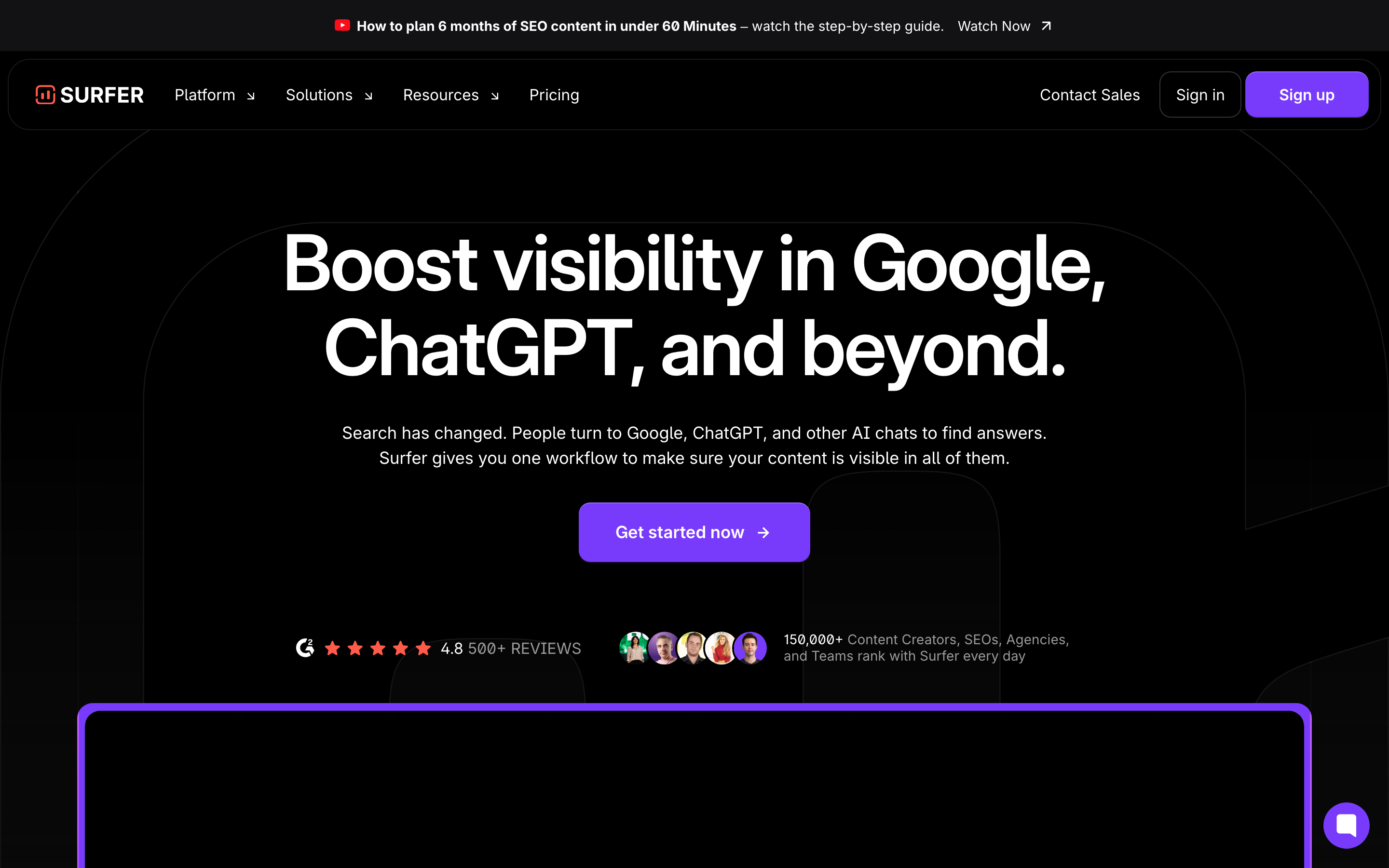
Best for: writers and SEOs who want a data-backed second opinion on a draft before it goes live.
What makes Surfer different is restraint in the right place. It doesn’t just count keywords. It clusters related terms and weights them, so you’re optimizing for topic coverage instead of stuffing a phrase fifteen times. I’ve watched mid-page-two posts climb into the top five after a single Surfer pass that added three subtopics I’d genuinely forgotten to cover.
The downside is real. Surfer makes it dangerously easy to over-optimize. Chase a green 90+ score on every post and your writing starts reading like it was assembled to please a robot, because it was. Use the term suggestions as a checklist of ideas, not a quota. Surfer’s Discovery plan now starts at $49 a month when billed yearly, while Standard is $99. Discovery is easier to test, but this is still a specialist subscription, not the first tool I’d buy for a new site.
I keep paying for it anyway. For content optimization specifically, nothing else I tested matched its accuracy. Try it on the Surfer SEO site.
Skip it if: you only publish a few posts a month or you’re on a tight budget. NeuronWriter starts at $23 monthly or $19 a month on annual billing, so it is the saner starting point when you only need content scoring.
2. Rank Math Content AI: the AI SEO tool I actually run every day
If your site runs on WordPress, Rank Math is the AI SEO tool you’ll touch most, because it lives inside the editor where you already work. I’ve run Rank Math on nearly every site I’ve built since I left Yoast, and its Content AI feature is the part people underuse.
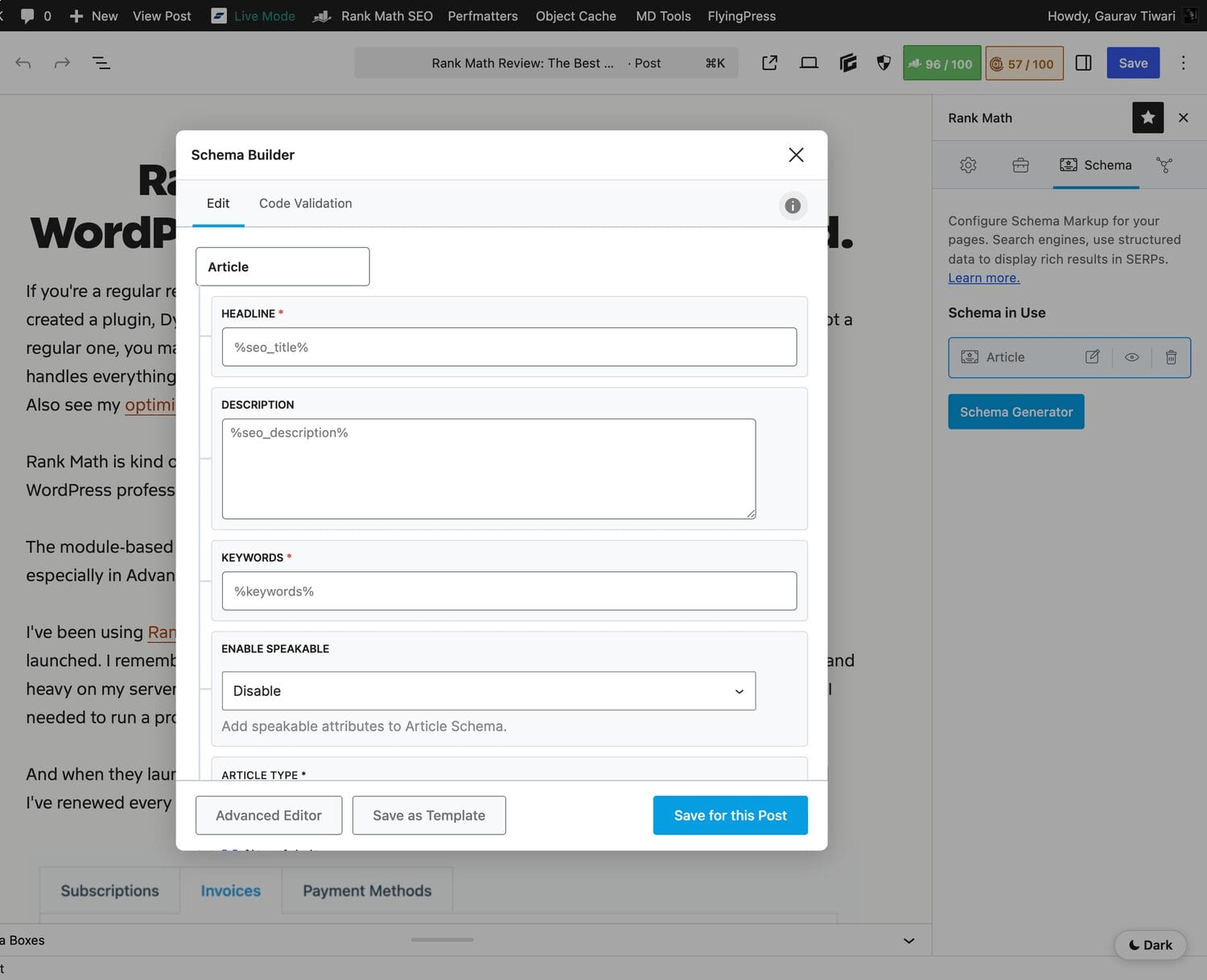
Best for: WordPress users who want AI suggestions, schema, and on-page scoring without paying for a separate platform.
Content AI does the unglamorous SEO chores well. It suggests related keywords and questions pulled from live SERP data, writes meta titles and descriptions that fit the character limits, drafts FAQ sections, and recommends internal links. It scores your post as you write, similar to Surfer, but tuned for the block editor. The newer AI Link Genius feature handles internal linking suggestions automatically, which used to be a manual slog.
The catch is plan limits. Rank Math moved Content AI away from the old word-credit framing and now ties usage to feature limits such as keyword research, AI-generated metadata, Alt Text AI, and AI command runs. The core plugin still has a useful free version, and the current Pro offer starts around EUR 7.99 a month on annual billing, with renewal around EUR 8.99 a month plus tax.
For a WordPress-first workflow, that’s the cleanest value in this entire list. My full Rank Math review breaks down every setting if you want the deep version.
Skip it if: you’re not on WordPress. Content AI is built around the block editor, so off-WordPress you’ll get more from Surfer or Frase.
3. Semrush Content Toolkit: the all-in-one built on search data
Semrush earned its reputation on data, not AI. I’ve used it for seven years across ninety-plus client sites, mostly for keyword research, competitor gap analysis, and rank tracking. The Content Toolkit now turns that same keyword and SERP data into briefs, drafts, optimization advice, and repurposed content.
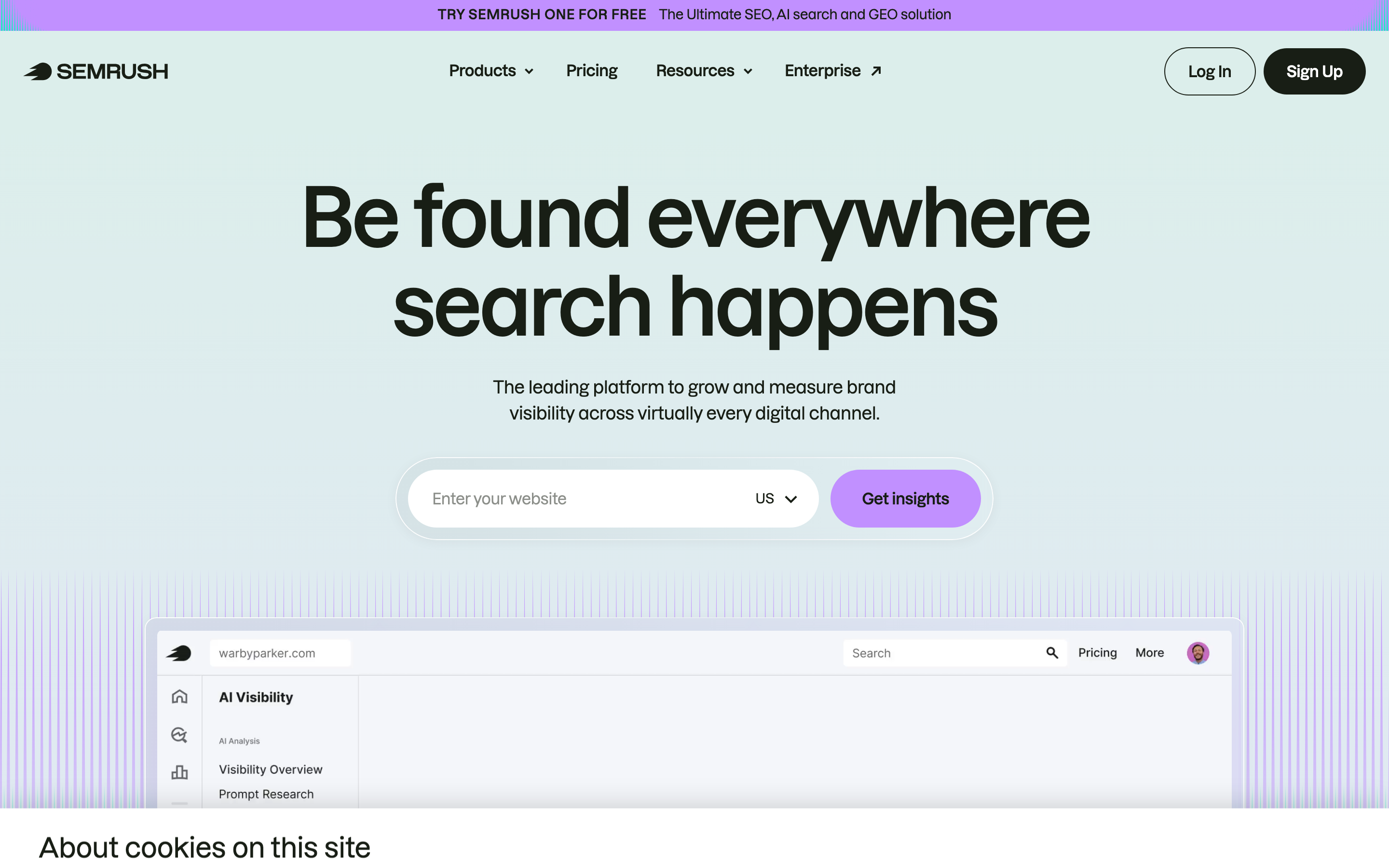
Best for: teams and agencies that want research, competitor intelligence, and AI drafting under one roof.
The advantage is obvious once you use it. Most AI writers guess at what to cover. Content Toolkit starts from Semrush’s actual keyword and SERP database, so the brief it builds is grounded in real search demand, not a hallucinated outline. It suggests topics from your competitors’ winning pages, drafts the article, and scores it for SEO and readability in the same window.
The downside is money and sprawl. The Semrush SEO Toolkit starts at $139.95 a month, while the Content Toolkit is $60 a month if you only want the content side. For a solo blogger who just wants to optimize posts, that’s overkill. For an agency already living in Semrush, it’s a natural extension.
If you’re weighing the platform itself, my Semrush review covers where it beats Ahrefs and where it doesn’t. As an AI SEO tool, its edge is the data underneath the AI. You can start a Semrush trial here.
Skip it if: you’re a solo blogger who just wants to optimize posts. At $139.95 a month for the entry SEO Toolkit, you’d use a fraction of it. Rank Math or NeuronWriter covers that job for far less.
4. Frase: SERP-researched briefs without the enterprise price
Frase is what I recommend to freelancers who can’t justify Surfer plus Semrush. It does one job well: it reads the top results for your keyword and turns them into a structured content brief in about a minute, with headings, questions, and stats pulled straight from the SERP.
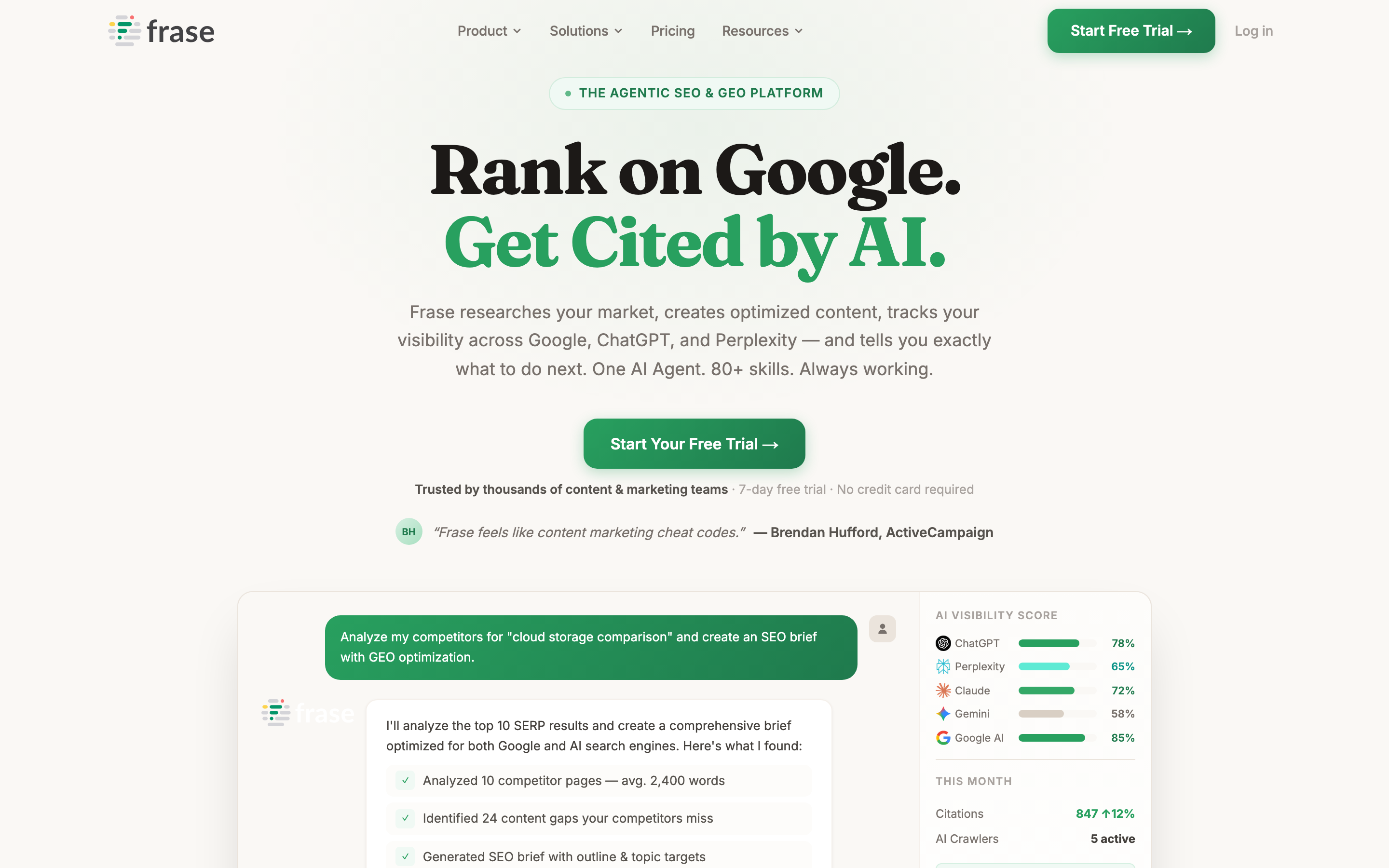
Best for: solo writers and freelancers who need fast, research-backed outlines.
The brief-building is the star. Drop in a keyword, and Frase shows you what every ranking page covers, the questions People Also Ask, and the word counts you’re competing against. That alone saves an hour of manual SERP reading per article. The AI writer can draft from there, and the optimize view scores your content against competitors much like NeuronWriter does.
Be strict with the AI output, though. Frase’s drafting is fine for first drafts and outlines, but it needs real editing before it’s publishable. Frase starts at $39 a month on annual billing, or $45 month to month at the Basic tier, so it still lands in the sane range for brief-driven work.
Frase pairs well with solid keyword research, since the brief is only as good as the keyword you feed it. Grab it at the Frase site.
5. NeuronWriter: Surfer-grade optimization at a startup price
NeuronWriter is the budget pick that punches far above its price. It does what Surfer does, NLP-based term scoring against the live SERP, but it routinely shows up on AppSumo as a lifetime deal, which makes it the obvious choice if a recurring subscription stings.
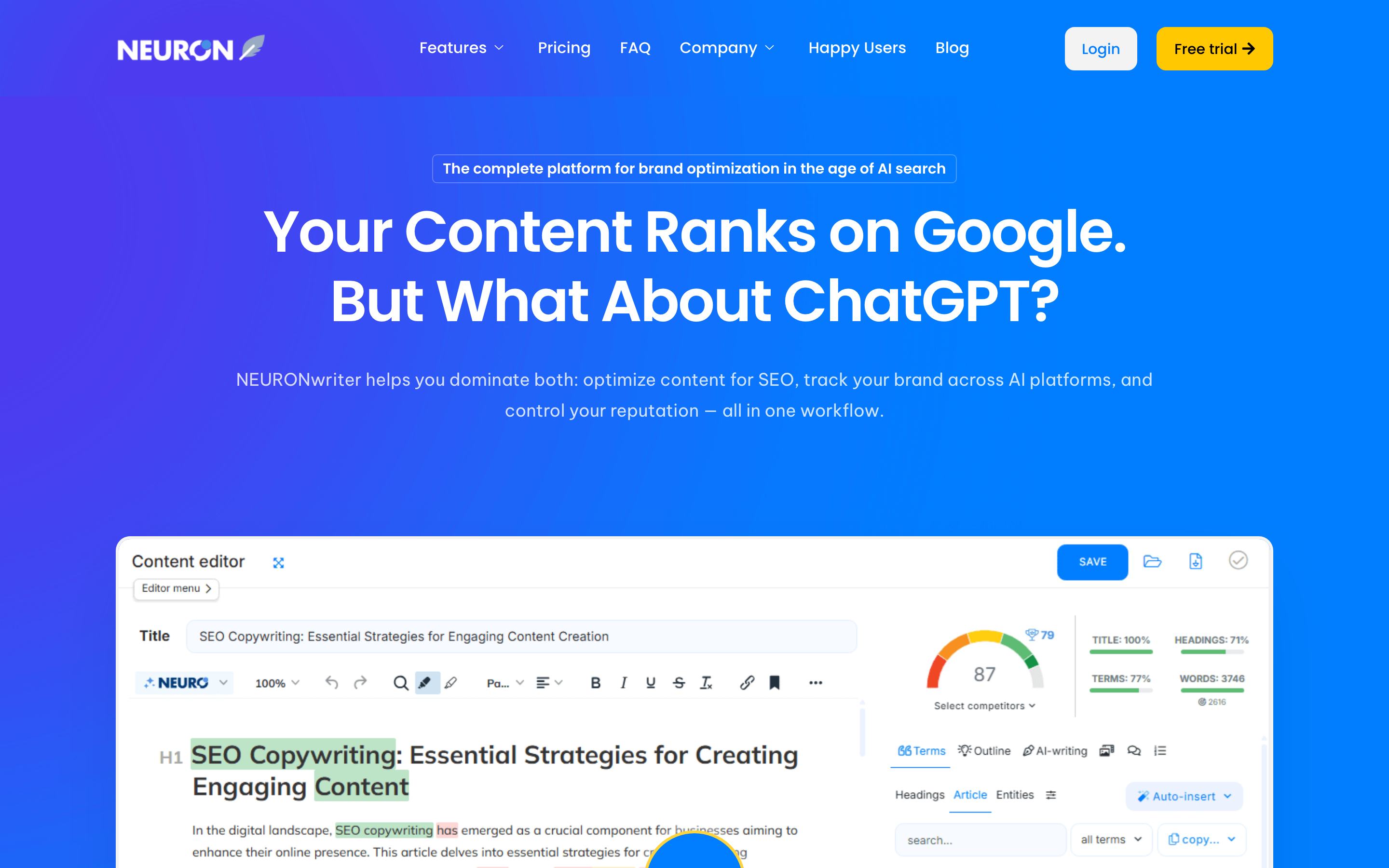
Best for: budget-conscious bloggers who want competitor-based content scoring without a monthly bill.
The optimization engine is strong for the price. NeuronWriter analyzes the top-ranking pages, builds a term list weighted by importance, and scores your draft as you write. It also handles content planning and basic internal link suggestions. For most blog posts, I couldn’t tell the difference between a NeuronWriter-optimized draft and a Surfer one in the final rankings.
The trade-off is polish. The interface feels busier and less intuitive than Surfer’s, and the onboarding assumes you already know what an NLP term is. Monthly plans start around $19, but the lifetime deals are the real reason to watch it.
If you optimize a lot of content and hate monthly fees, this is the value play of the list.
6. SEOPress AI: lightweight on purpose
SEOPress is the WordPress SEO plugin for people who think Rank Math and Yoast do too much. It’s deliberately lean, fast, and light on the database, and its AI features follow the same philosophy: targeted, not sprawling.
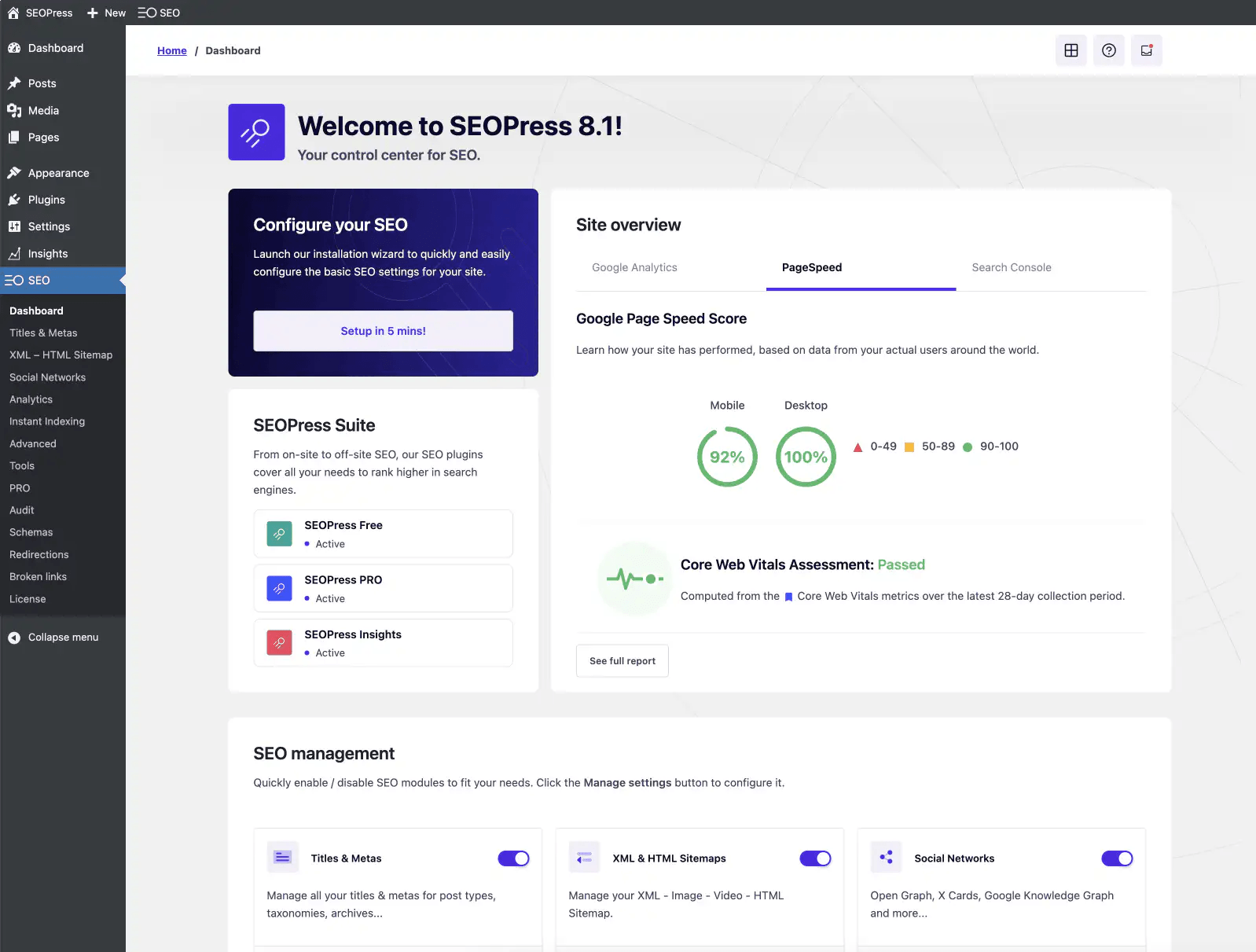
Best for: performance-focused WordPress sites that want AI-generated metadata without plugin bloat.
SEOPress AI focuses on the metadata most people write badly or skip entirely. It generates SEO titles, meta descriptions, and image alt text in bulk using AI, which is a real time-saver when you’re cleaning up a site with hundreds of posts that have empty meta fields. The plugin itself stays light, so you get the AI help without the performance tax heavier suites can add.
The limitation is scope. SEOPress AI doesn’t try to be a content optimizer or a writing assistant. If you want SERP-based content scoring, this isn’t it. The free plugin is capable. SEOPress PRO starts at $49 a year for one site, $59 for five sites, and $149 for unlimited sites. AI needs your own OpenAI, DeepSeek, Gemini, Claude, or Mistral key, but SEOPress does not charge an extra AI fee.
For a fast site where you mainly need clean metadata at scale, SEOPress AI does exactly enough and nothing more.
7. Scalenut: keyword to draft in one sitting
Scalenut tries to own the entire content workflow, from keyword research to a finished, optimized draft, and its Cruise Mode is the feature that makes that ambition real. You give it a keyword, answer a few prompts, and it walks you to a full first draft built on SERP research.
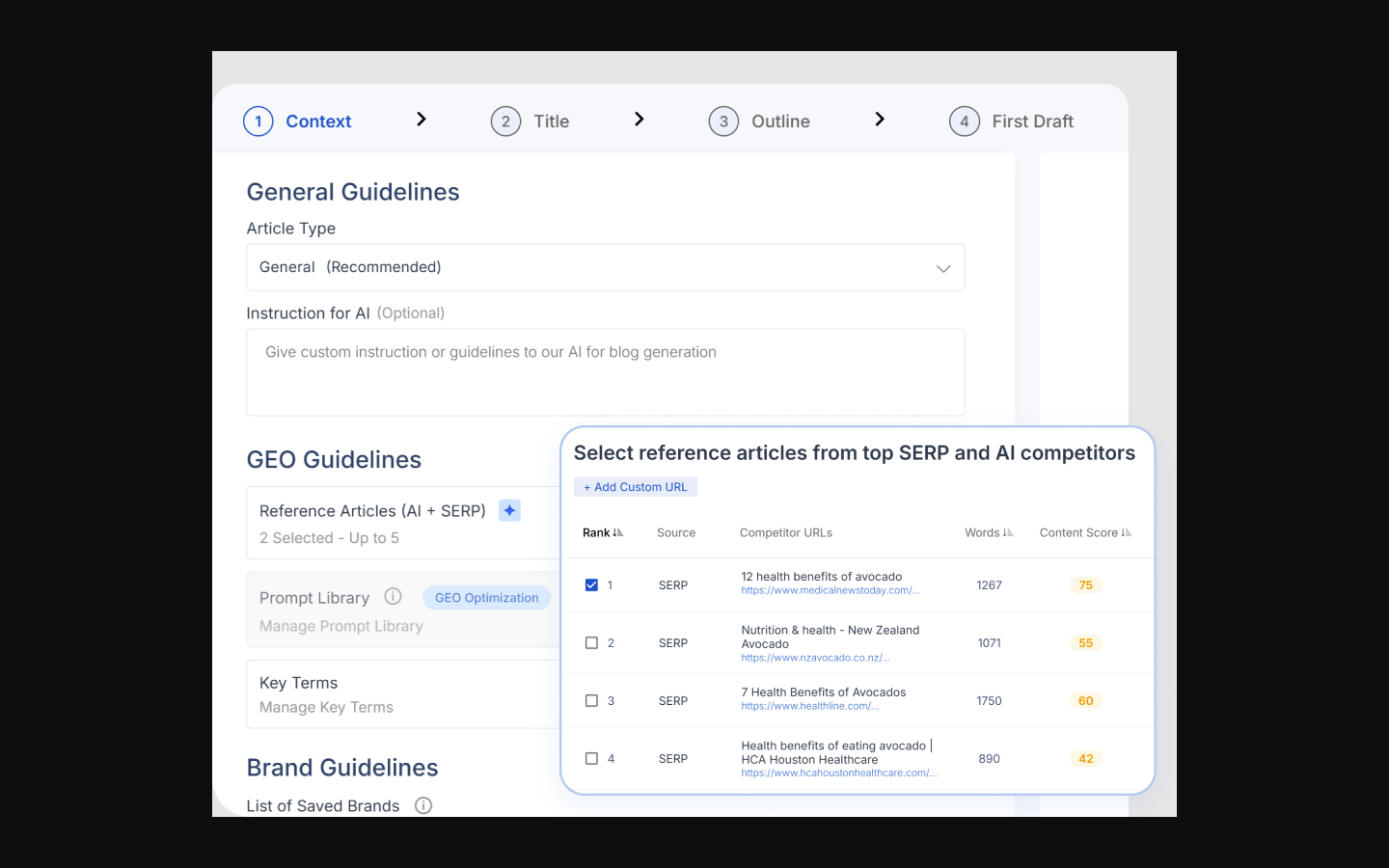
Best for: content teams that want to produce optimized drafts quickly at volume.
Cruise Mode is the differentiator. Instead of bouncing between a research tool, a writer, and an optimizer, you stay in one flow: it generates the outline from ranking pages, drafts section by section, and scores the result against competitors. For pumping out a high volume of decent SEO drafts, it’s faster than stitching three tools together.
Speed has a cost here, and it’s quality. Scalenut’s raw output leans generic and needs a firm editing pass to sound like a human wrote it, which, given everything I write about AI slop, I won’t skip. Plans now start around $59 a month. Treat it as a drafting accelerator, not an autopilot, and you’ll get value at the Scalenut site.
8. GetGenie AI: AI writing that lives in your WordPress editor
GetGenie AI is for WordPress users who want the AI writing and the SEO analysis to happen right inside the block editor, not in a separate browser tab. It’s part AI writer, part on-page optimizer, and it never makes you leave WordPress.
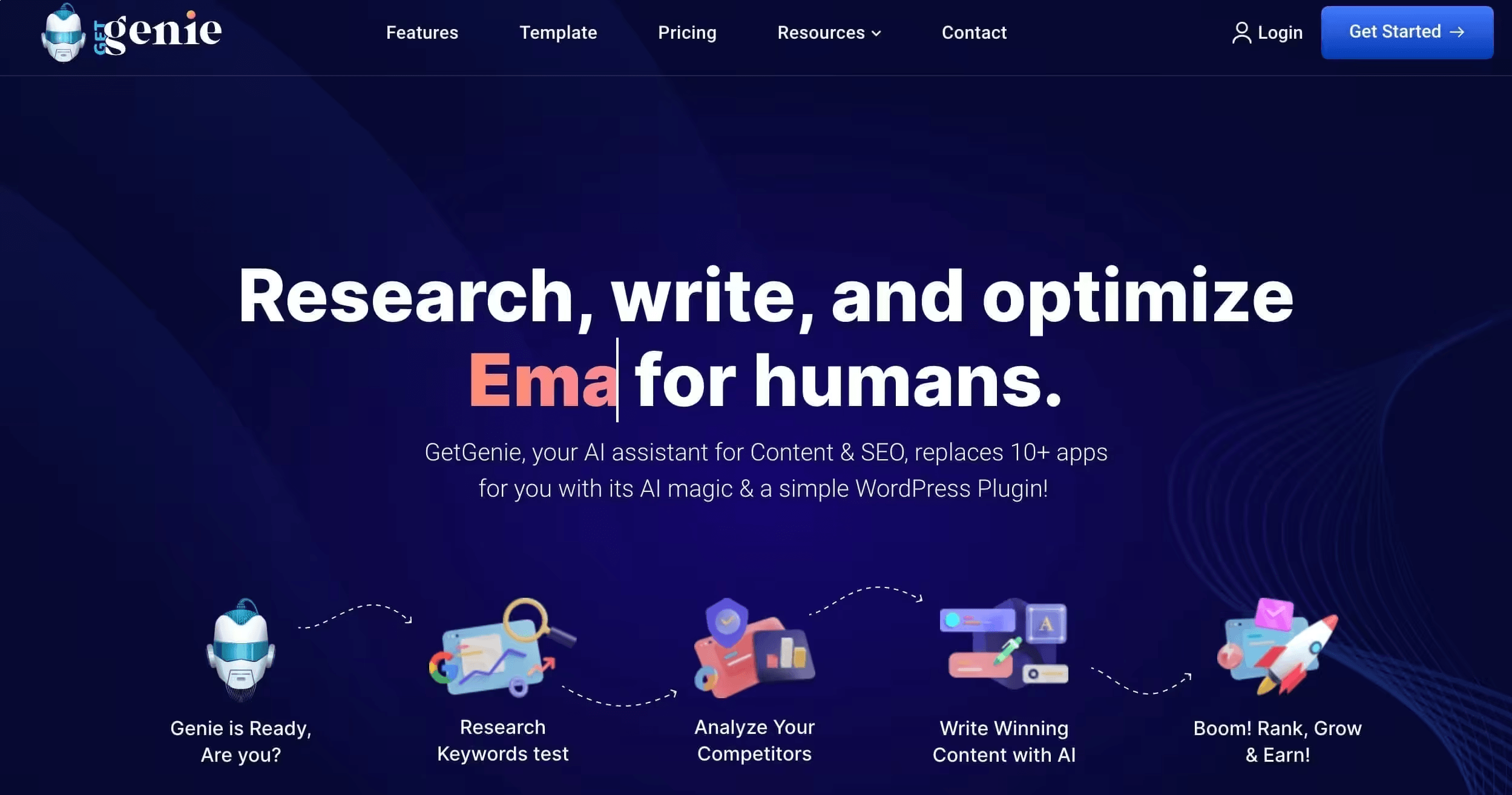
Best for: bloggers who want in-editor AI drafting plus competitor analysis without switching tools.
The in-editor experience is the selling point. GetGenie adds a writing assistant and a SERP-analysis panel inside WordPress, so you can research competitors, generate sections, and check your optimization score against the top results without copy-pasting between apps. It has templates for different content types and a one-click blog mode for fast drafts.
The constraint is the usual AI usage ceiling. The free tier is useful for trying it, but serious use means a paid plan. The current annual promo puts Starter around $6 a month, Writer around $11.40 a month, and Pro around $29.40 a month, with higher monthly prices if you don’t pay annually. Output quality is solid for the price but, like all of these, needs a human edit before it ranks.
If you live in the WordPress editor and want AI help without context-switching, GetGenie fits the workflow better than any standalone tool.
9. Jasper: brand voice first, SEO second
Jasper is the most polished AI writer in this list, and that’s exactly how to think about it. It’s a writing platform with SEO features attached, not an SEO tool that happens to write. Where it earns its place is brand voice and scale.

Best for: marketing teams producing a lot of on-brand content across channels.
Jasper’s strength is consistency. You can train it on your brand voice and tone, build templates, and keep dozens of pieces sounding like they came from the same team. For SEO specifically, it integrates with Surfer, so you can write in Jasper while optimizing against Surfer’s term scores in the same view. That combination is genuinely strong for content teams.
The downsides are price and focus. Jasper Pro is currently $59 a month on annual billing or $69 month to month, and the bill climbs once you add Surfer. Because it’s SEO-second, you’re partly paying for writing features you may not need if ranking is your only goal.
For brand-voice content at scale, it’s the stronger writing platform. For pure SEO on a budget, the dedicated tools higher on this list make more sense.
10. ChatGPT and Claude: the DIY AI SEO tool you already pay for
Here’s the one nobody selling a subscription wants to mention. A good chunk of what these tools do, you can do directly with ChatGPT or Claude, if you know how to prompt them. I use Claude for keyword clustering, brief outlines, schema markup, and FAQ generation constantly.
Best for: hands-on SEOs and writers who’d rather prompt than pay for another platform.
The flexibility is high because there’s no fixed workflow. Paste your keyword research and ask for topic clusters. Hand it a SERP and ask what angle is missing. Ask it to draft valid FAQ schema, write meta descriptions to length, or turn a transcript into an outline. For one-off SEO tasks, ChatGPT Plus at $20 a month, or a paid Claude plan, can replace several single-purpose tools if you bring the SERP data yourself.
What you give up is the SERP data and scoring the dedicated tools build in. ChatGPT and Claude don’t know what’s actually ranking unless you tell them, and they’ll happily invent statistics if you let them. So you verify everything, and you bring your own data. Used that way, with real inputs and a skeptical eye, they’re the most cost-effective AI SEO tool on this page. Just don’t trust a single number they produce without checking it, and remember that raw AI output still needs a human edit to rank, which is the whole point of my take on AI content vs human content for SEO.
Where AEO fits into these AI SEO tools
A good AI SEO tool in 2026 has to help with answer engine optimization too. The old job was mostly ranking a blue link. The newer job is making a page easy for Google AI Overviews, Perplexity, ChatGPT, Claude, and Gemini to understand, quote, and trust.
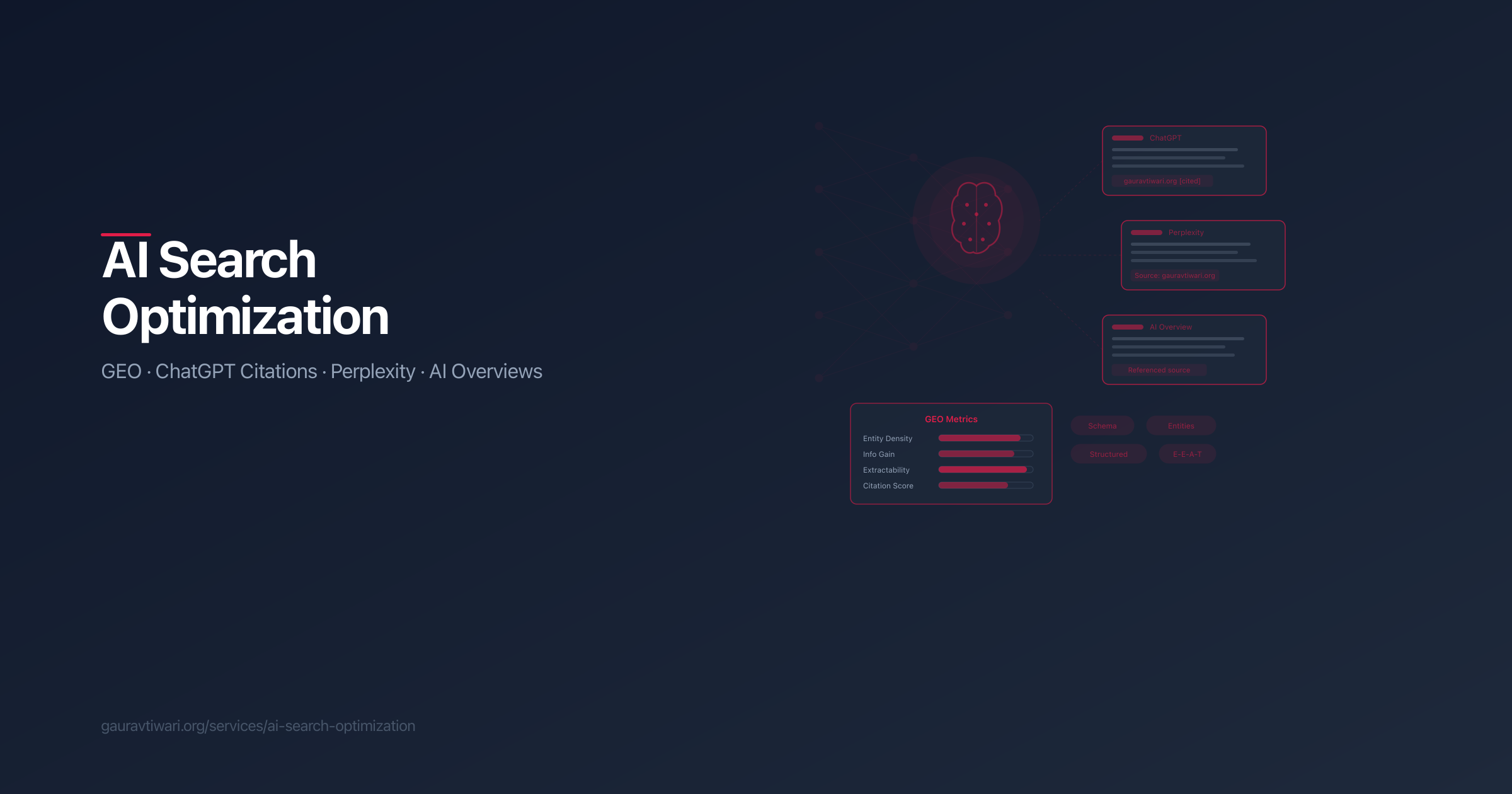
That doesn’t mean you need a separate AEO tool for every site. For most bloggers and small businesses, AEO is a workflow layered on top of SEO:
| AEO job | What your tool should help with | Best fits from this list |
|---|---|---|
| Question targeting | Find real questions from keywords, People Also Ask, support conversations, and forums. | Semrush, Frase, ChatGPT, Claude |
| Direct answers | Rewrite H2 openings so the answer appears before the explanation. | Rank Math Content AI, Frase, ChatGPT, Claude |
| Entity coverage | Check whether the page names the tools, features, prices, formats, and standards readers expect. | Surfer SEO, NeuronWriter, Semrush |
| Schema cleanup | Create or validate Article, FAQPage, HowTo, Product, Review, and breadcrumb schema. | Rank Math, SEOPress, GetGenie AI |
| Freshness checks | Catch outdated prices, tool names, screenshots, dates, and claims before the page goes live. | Semrush, Surfer SEO, manual review |
The mistake is buying an “AI visibility” dashboard before the article itself is worth citing. If the answer is buried, the claims are vague, and the product table uses stale prices, no tracker fixes that. Start with structure, proof, schema, and freshness. Then use tracking once the page is strong enough to deserve a citation.
If you want the deeper strategy layer, my GEO vs SEO guide explains how generative engine optimization and classic SEO overlap without turning your workflow into two separate jobs.
How to choose the right AI SEO tool for you
The right AI SEO software depends less on the feature list and more on the bottleneck in your publishing workflow. Most tools in this list fall into four practical buckets:
- WordPress AI SEO: Rank Math, SEOPress, and GetGenie help inside the editor with metadata, schema, on-page checks, image alt text, and publishing cleanup.
- AI SEO content optimization: Surfer and NeuronWriter compare your draft with the live SERP and show which topics, entities, headings, or terms are missing.
- AI-assisted research and drafting: Semrush, Frase, Scalenut, Jasper, ChatGPT, and Claude help with briefs, clustering, outlines, drafts, and editing.
- AEO and AI visibility prep: Rank Math, Semrush, Frase, Surfer, and ChatGPT or Claude help turn a normal article into an answer-first, entity-rich page that AI search can parse.
After that, choose with these questions:
- Where do you write? If the answer is WordPress, start with Rank Math Content AI or GetGenie because the AI meets you in the editor and you’ll actually use it.
- What’s the gap in your process? If you write fine but don’t know what to cover, use Surfer or NeuronWriter. If you research fine but write slowly, use Frase or Scalenut. If you’re missing both research and competitor data, Semrush covers the widest ground.
- Do you need AEO support? If the page must win AI Overviews, Perplexity, or ChatGPT citations, prioritize tools that expose questions, entities, schema, and freshness gaps. A plain AI writer won’t do that.
- What’s the budget? A solo blogger shouldn’t start with a $140 monthly suite. Begin with a free tier, Rank Math, SEOPress, GetGenie, or a single $20 ChatGPT Plus subscription, prove it improves published pages, then upgrade.
One rule ties all four together. No AI SEO tool ranks your content for you. They tell you what to cover, score what you wrote, and speed up the boring parts. The judgment, the angle, and the proof still have to come from you.
The verdict: which AI SEO tool wins
Semrush is the AI SEO tool I’d keep as the primary paid platform because the data layer stretches from keyword research and competitor gaps to content optimization and AI visibility. It is the broadest useful system here, not the cheapest.
If you publish only in WordPress, start smaller. Rank Math handles metadata, schema, internal links, and on-page cleanup where you already write. Pair it with the chatbot you already pay for. Add Semrush only when competitor research, repeatable content briefs, or cross-channel visibility becomes a weekly job.
If content optimization is the bottleneck, Surfer remains the sharper specialist. If privacy, local ownership, or custom reporting matters more, SEO Utils plus DataForSEO gives you a controllable data layer without another large cloud suite.
The products I kept made me faster at work I already understood. The ones I cancelled tried to hide weak data behind generated prose. Buy the tool that fixes a measured bottleneck, not the dashboard with the longest feature list.
Official pricing and product sources
SaaS prices and limits move faster than most articles. Check the official Semrush Content Toolkit limits, Surfer pricing, Rank Math Content AI migration guide, NeuronWriter pricing, and SEOPress pricing before purchase.
Frequently asked questions
What is an AI SEO tool?
An AI SEO tool uses machine learning to help you rank higher in search, usually by analyzing top-ranking pages and scoring your content against them, suggesting keywords and topics, or drafting optimized copy. It’s different from a general SEO suite, which focuses on crawling, rank tracking, and backlinks.
Can AI SEO tools actually improve my rankings?
Yes, but indirectly. They make your content more complete and better targeted, which helps it rank. They don’t rank pages on their own. The strategy, expertise, and editing still have to come from you. Tools that promise hands-off rankings are selling a fantasy.
What’s the best free AI SEO tool?
Rank Math is the best free AI SEO tool to start with if your site runs on WordPress because it covers on-page SEO, schema, and editor-level suggestions without a separate platform. SEOPress and GetGenie also have useful free tiers, but Rank Math is the cleanest starting point for most WordPress users.
Are AI SEO tools worth it for a small business?
For a small business on WordPress, start free with Rank Math, then add a budget optimizer like NeuronWriter only when you’re publishing enough content to need it. Avoid starting on a $140-a-month suite you’ll barely use.
Do Semrush, Rank Math, and SEOPress have AI features?
Yes. Semrush has Content Toolkit for research-backed drafting, Rank Math has Content AI with feature-based monthly limits, and SEOPress AI generates titles, meta descriptions, and alt text with your own model API key. All three are SEO tools first that added AI, rather than AI tools that added SEO.
Will Google penalize content made with AI SEO tools?
No. Google judges content quality and helpfulness, not how it was produced. AI-assisted content ranks fine when it’s accurate, original, and genuinely useful. Thin, unedited AI output gets filtered, which is a quality problem, not an AI one.
Which AI SEO tool is best for WordPress?
Rank Math Content AI is the best AI SEO tool for most WordPress users because it handles on-page scoring, schema, internal links, and metadata inside the editor. GetGenie AI is the better fit if you want more in-editor drafting.
Are AEO tools different from AI SEO tools?
AEO tools are narrower than AI SEO tools. They focus on answer-first structure, entities, schema, and AI-search visibility. The best AI SEO tools now cover some AEO work, but a general AI writer does not replace a proper AEO workflow.
Which AI SEO tool is best for answer engine optimization?
For WordPress sites, Rank Math is the best starting point because it handles schema, on-page checks, internal links, and metadata in the editor. For content optimization, pair it with Surfer SEO or NeuronWriter, then use ChatGPT or Claude to stress-test question coverage.
Tell Google you want more of this.
Add Gaurav Tiwari as a preferred sourceOne tap, and this site shows up more often in your own Top Stories, AI Overviews and AI Mode. Remove it any time.
Disclaimer: This site is reader-supported. If you buy through some links, I may earn a small commission at no extra cost to you. I only recommend tools I trust and would use myself. Your support helps keep gauravtiwari.org free and focused on real-world advice. Thanks. - Gaurav Tiwari