by
by
If you’re learning how to write a product review for your blog, the awkward part isn’t the outline. It’s money. An affiliate commission, sponsor fee, free sample, or discount can influence what gets written before you notice it.
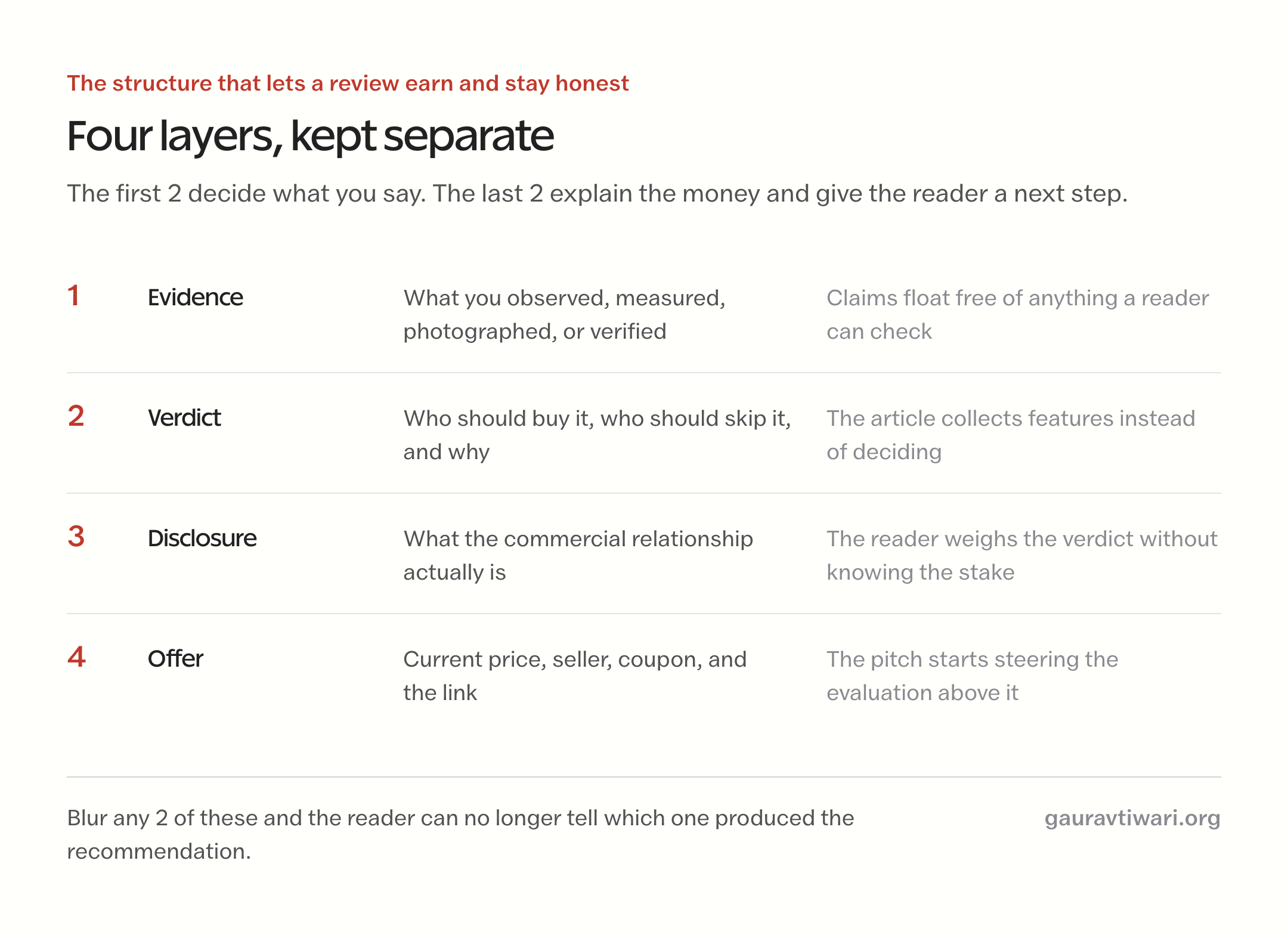
You don’t have to choose between honesty and earning. Keep four layers separate: evidence, verdict, disclosure, and offer. The first two decide what you say. The last two explain the commercial relationship and give the reader a next step.
That separation gives you room to change affiliate programs, accept a sponsor, add a second seller, or remove every commercial link without quietly rewriting the conclusion.
A review is a decision document
A useful product review helps one kind of buyer make one decision. It does not merely repeat the manufacturer’s feature page and place a button underneath it.
- Evidence is what you observed, measured, photographed, or verified.
- Verdict says who should choose the product, who should skip it, and why.
- Disclosure explains any payment, free access, commission, employment, or other material connection.
- Offer is the current price, seller, coupon, affiliate link, or call to action.
The evidence earns the verdict. The disclosure helps the reader weigh it. The offer comes last.
Pick products you can judge without pretending
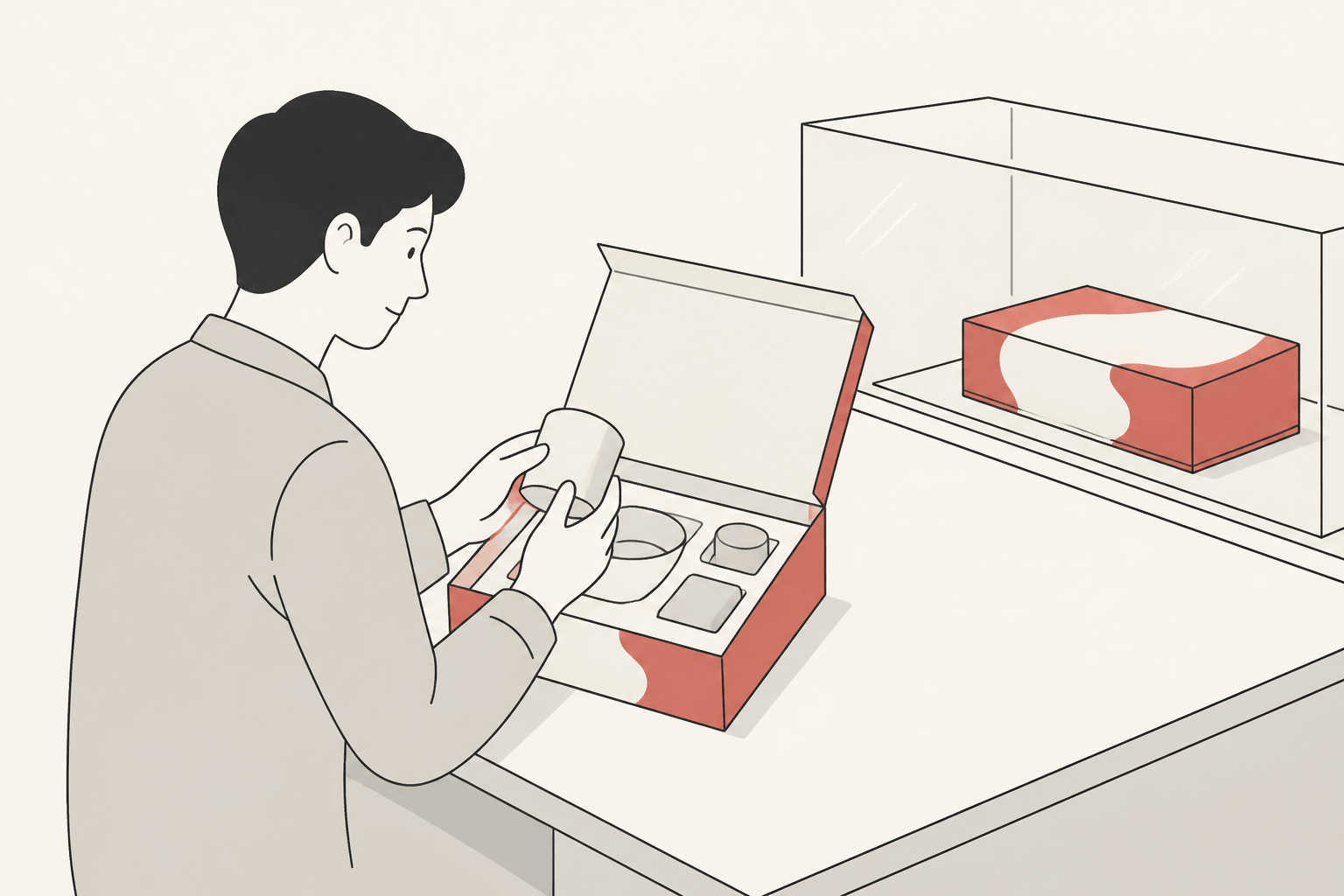
Choose a product only when you can get enough access to answer the buyer’s real questions. Buying it yourself is one route. A trial, demo account, review unit, rental, press access, or client-owned installation may also give you meaningful access, depending on what you’re evaluating.
The boundary is simple: never present research as experience.
- If you used the product, state the conditions that matter: device, plan, task, duration, or workload.
- If you only studied documentation and other people’s reports, call the piece a product overview, researched comparison, or buying guide.
- If the main claim needs long-term use, safety testing, or specialist equipment you do not have, narrow the claim or do not publish the verdict.
- If the product has no plausible fit for your readers, a high commission does not create one.
A review loses its footing the moment the writer needs the sale more than the reader needs the product.
Choose the earning model before you write

Decide how the article may earn before drafting, then write down the editorial line the deal cannot cross. This prevents a commercial arrangement from quietly changing the scope, rating, or conclusion halfway through.
| Model | How you earn | What you disclose | What stays independent |
|---|---|---|---|
| Affiliate | Commission after a tracked sale or lead | That qualifying purchases or actions may pay you | Product selection, evidence, verdict, rating, and alternatives |
| Sponsored | Agreed fee for access, work, or placement | Who paid and what the relationship covers | The conclusion and any material downside |
| Gifted access | Free product, service, trip, discount, or extended account | What the brand provided | Whether the item deserves a recommendation |
| Hybrid | Fee or free access plus affiliate commission | Every material part of the relationship | The evidence and verdict |
| No direct relationship | Ads, newsletter growth, services, or no immediate revenue | Nothing unless another material connection exists | The same evaluation standard used for paid relationships |
The model can change later. Your editorial standard should not.
Write the verdict before the feature list
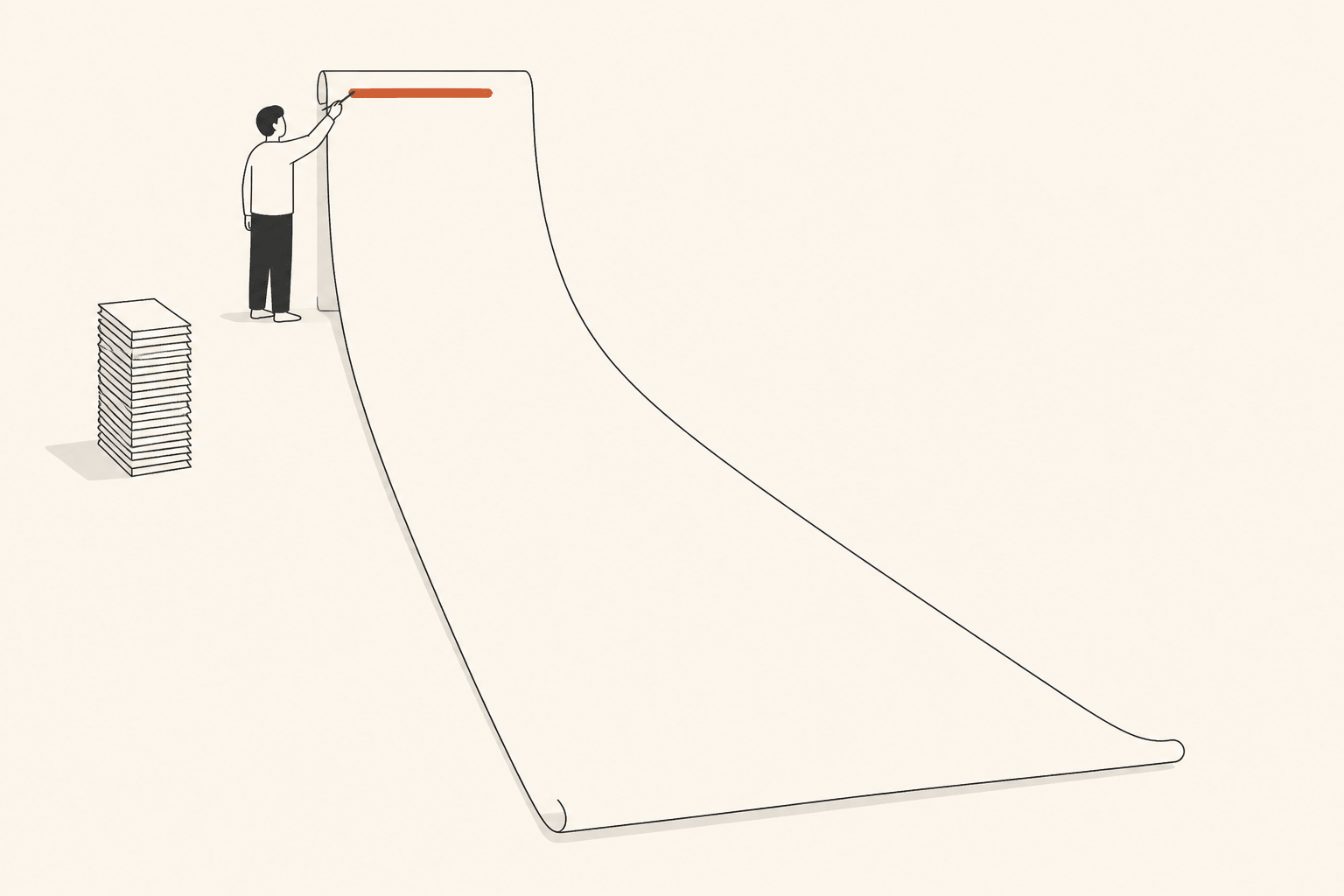
Write a provisional verdict as soon as you understand the product and the buyer. This forces you to identify the decision instead of collecting every feature you can find.
Verdict template: [Product] is best for [specific user] because [decisive result or advantage]. Skip it if [material limitation]. Choose [alternative or category] instead when [different condition].
Now try to disprove that verdict. Use the product under the conditions your reader will face. Check the weak point. Compare the nearest alternative on the same plan, task, and constraints.
If the evidence changes the verdict, change it. That is the work.
Test the factors that change the buying decision
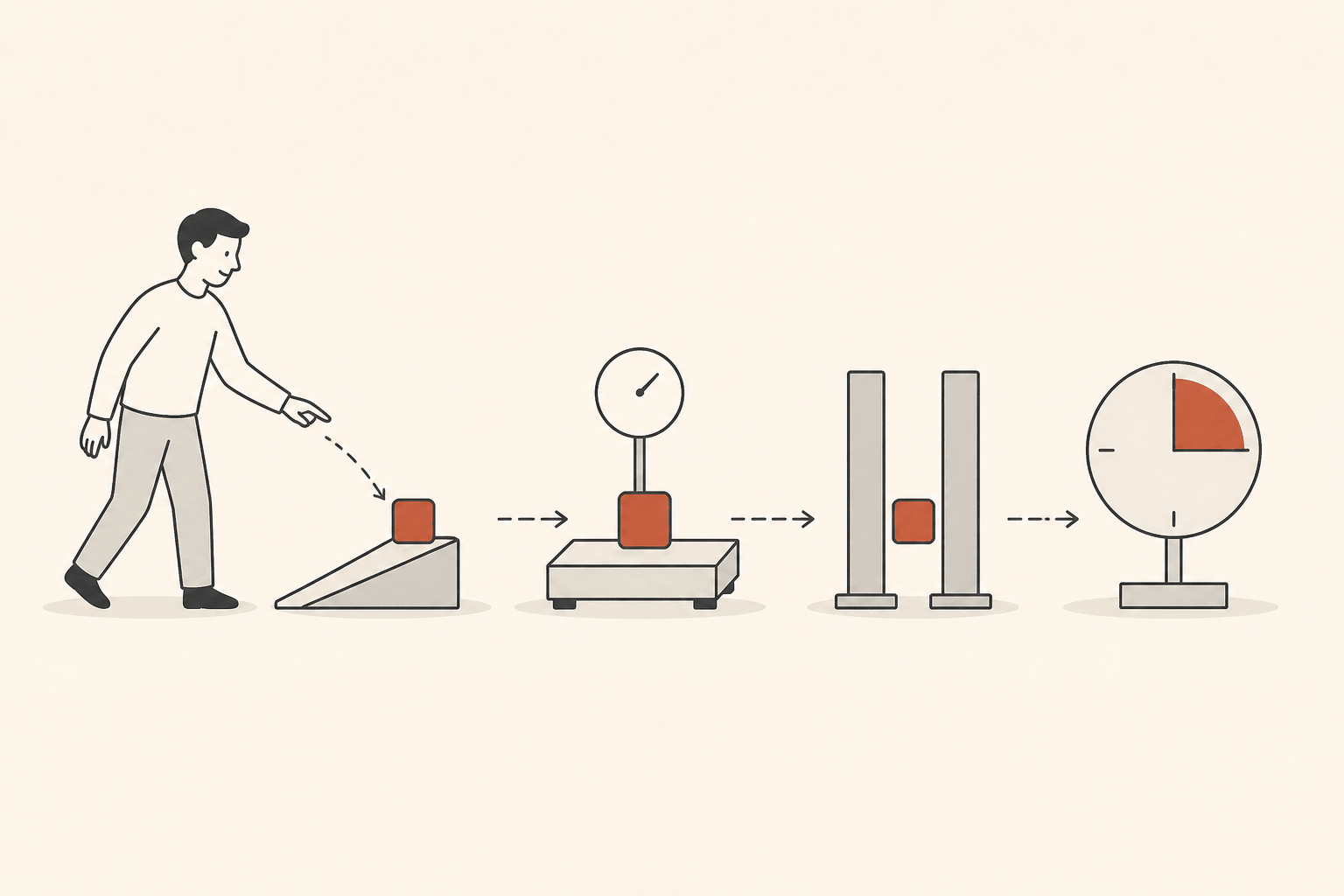
A review does not need a universal testing checklist. It needs the criteria that matter for this product, this buyer, and this price.
- Core task: Does the product complete the job it is bought to do?
- Setup cost: What time, skill, hardware, migration, or configuration does the buyer need?
- Failure condition: Where does the product slow down, become confusing, or stop fitting?
- Ongoing cost: What happens after the trial, first year, included quota, warranty, or introductory price?
- Support and exit: Can the buyer get help, export data, return the item, cancel, or move away?
- Nearest alternative: What else solves the same problem for the same type of buyer?
Google’s guidance for high-quality reviews follows the same direction: evaluate from the user’s perspective, show evidence, cover benefits and drawbacks, compare alternatives, and focus on the factors that affect the purchase. Google also says to prioritize quality and originality over length.
Show evidence a buyer can check
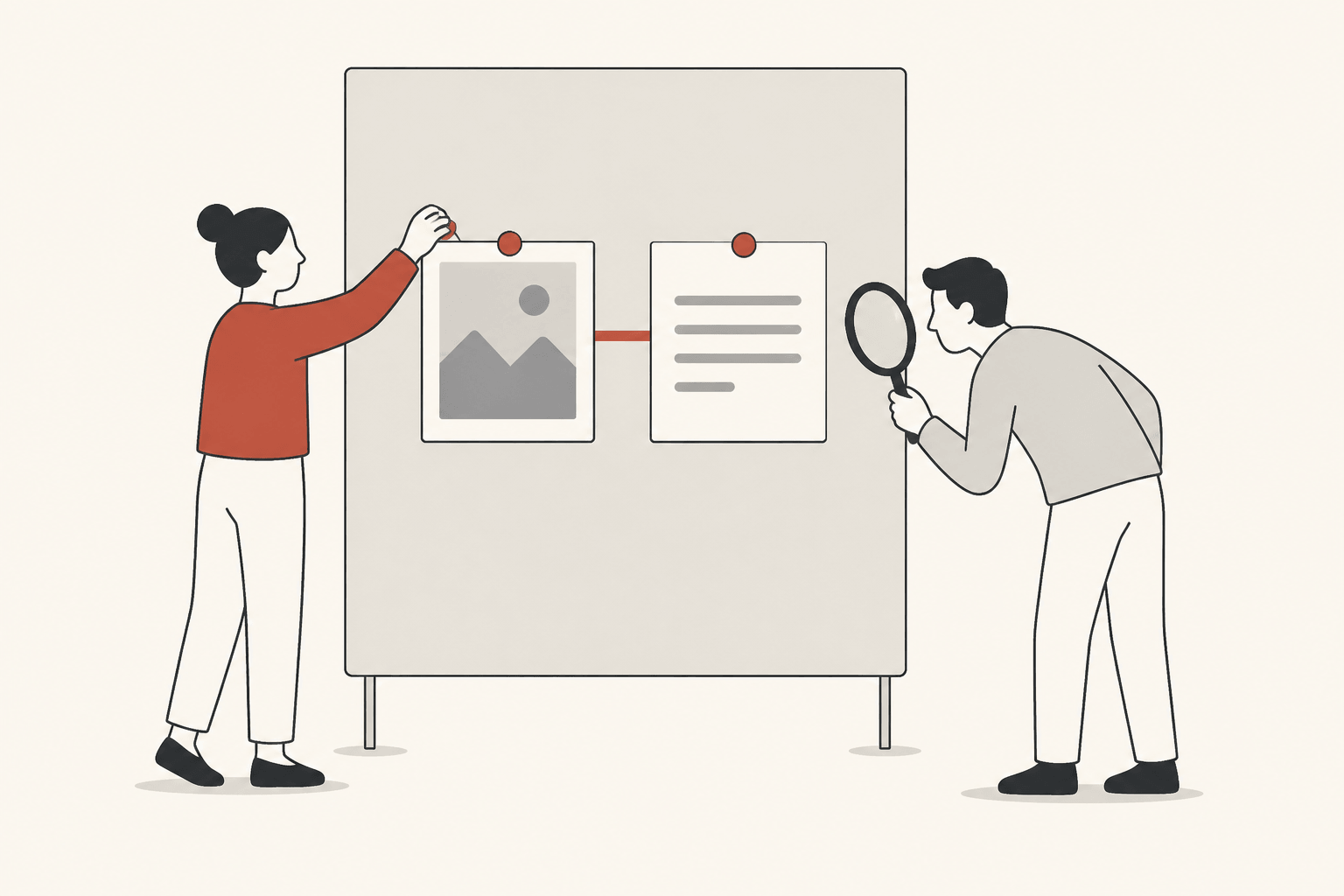
Evidence makes a review more useful because the reader can inspect the path from observation to verdict. It also stops vague praise from doing work it has not earned.
- Original photos or screenshots that show the feature, result, or limitation being discussed
- Measurements with the device, plan, input, conditions, and comparison baseline attached
- A short description of the task performed and what happened
- Official specifications clearly identified as manufacturer claims
- Support, refund, portability, or cancellation behavior when it changes the buying decision
One relevant screenshot with a clear consequence can teach more than ten decorative images. One fair measurement can carry more weight than a page of adjectives. Capture and annotation belong in your regular kit, which is why they sit in my content marketing stack.
Compare tradeoffs, not praise
Weak reviews describe products with floating adjectives: fast, intuitive, affordable, powerful. A reader cannot test those words or know whether they apply to the task at hand.
Brochure copy: “The app is fast, easy to use, and packed with useful features.”
Decision-ready copy: “The main task takes three screens, but export settings sit under an Advanced menu that new users may miss.”
The second sentence gives the reader a behavior, a limitation, and the person affected by it. No inflated praise is needed.
- Compare the same tier, storage, audience, workload, or price range.
- Name where the alternative wins, even when it has no affiliate program.
- Include a downside only when it can change fit, cost, effort, risk, or the final decision.
- Do not manufacture a tiny complaint to make a promotional review look balanced.
A useful negative is not a ritual. It is a boundary.
Put the disclosure beside the recommendation
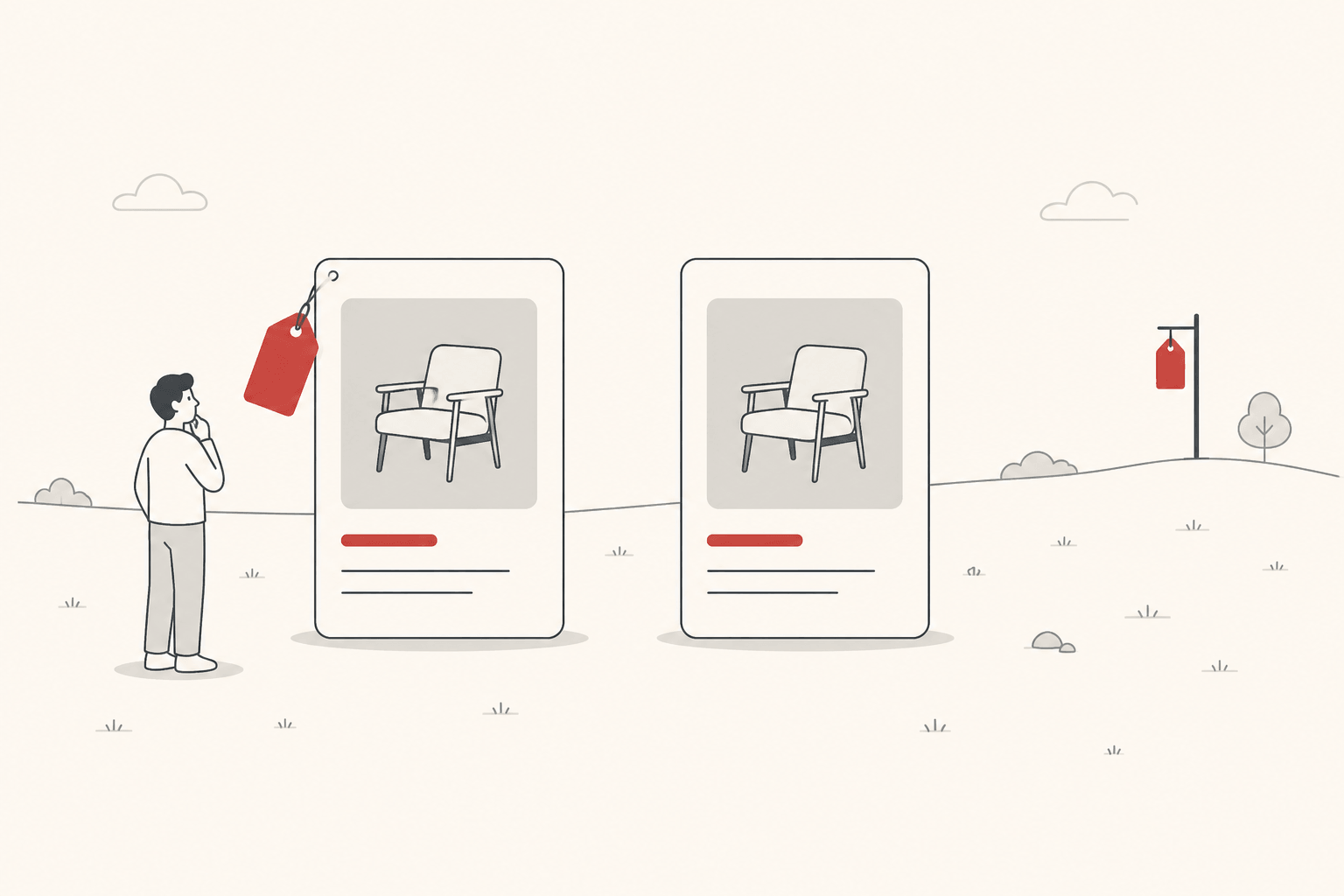
A disclosure works when an ordinary reader can see it, understand it, and connect it to the recommendation. A policy page in the footer cannot do that job for an individual review.
- Affiliate: “I may earn a commission if you buy through links in this review.”
- Sponsored: “[Brand] paid for this review. The company could check factual details but did not approve the verdict.”
- Gifted: “[Brand] provided this product at no cost for evaluation.”
- Hybrid: “[Brand] provided access and paid for this review. I may also earn a commission from qualifying purchases.”
Adapt the wording to the actual relationship. “Affiliate link,” “partner,” “gifted,” or “all opinions are my own” may be too vague on its own because the reader still does not know whether you were paid, received something, or earn from the purchase.
The U.S. Federal Trade Commission’s endorsement guidance says material connections should be clear and conspicuous. It also says an endorsement must reflect the endorser’s accurate experience and opinion. Free products and affiliate commissions can both be material connections.
Scope: These examples follow U.S. FTC guidance. Your country, platform, affiliate program, or contract may impose additional requirements.
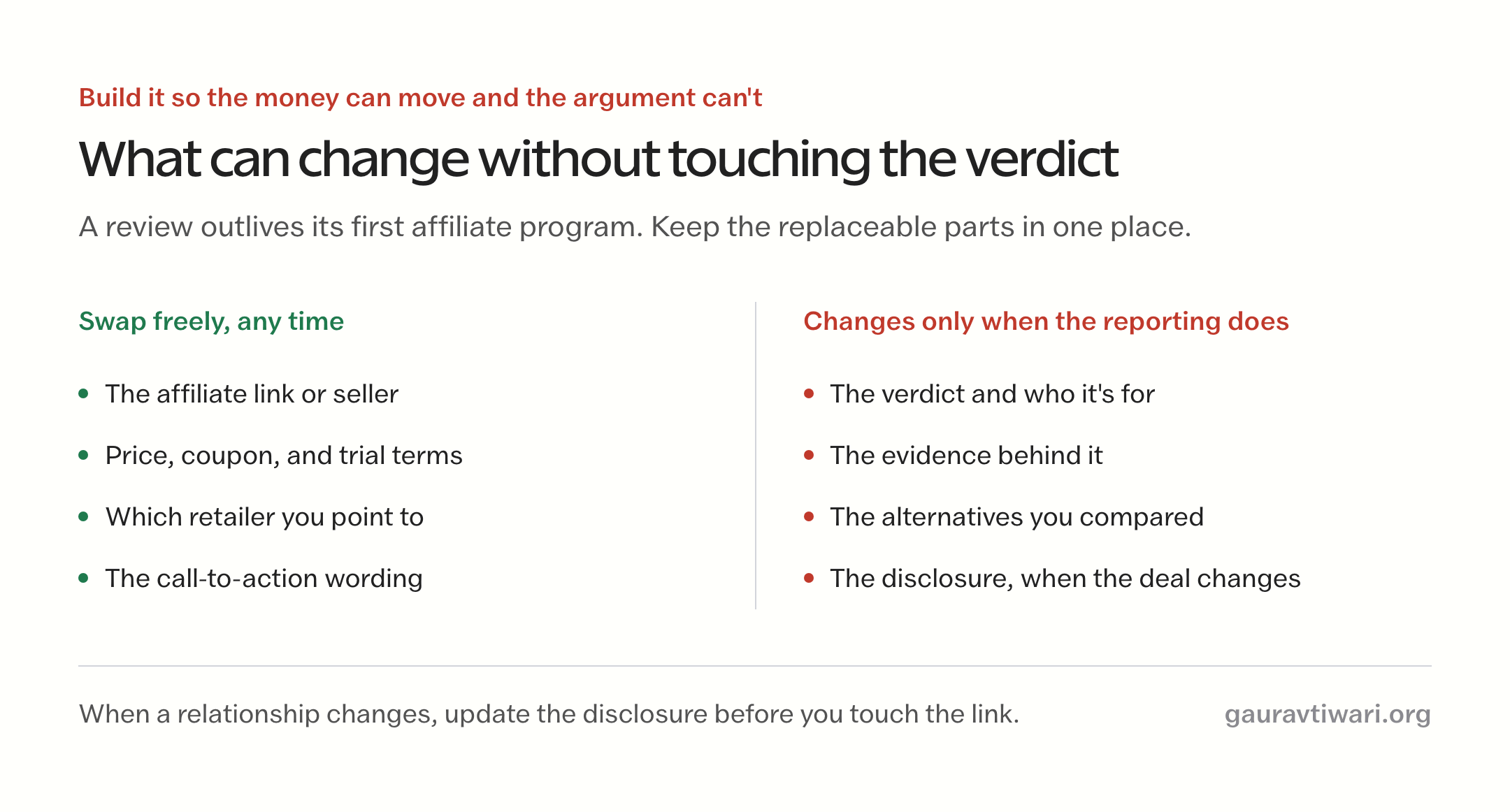
Keep the offer modular
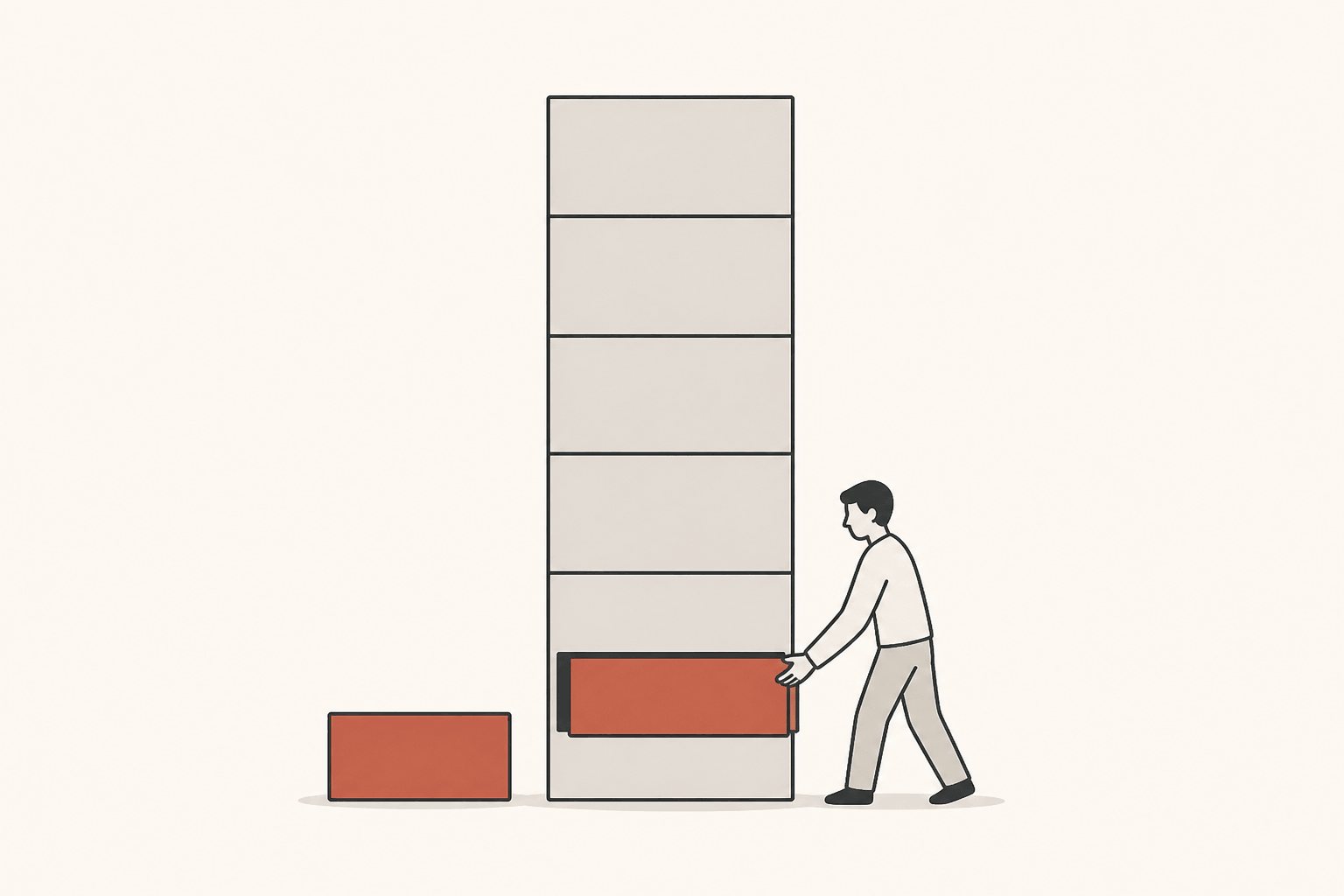
A review published in 2026 may outlive its first retailer, sponsor, or affiliate program. Monetization stays flexible when the commercial parts can change without disturbing the evaluation. Treat the link and offer as replaceable components, not as the article’s argument.
- Keep the verdict in ordinary editorial copy, separate from the CTA.
- Place the relationship disclosure near the recommendation and relevant commercial link.
- Use a managed link when possible so a retailer or affiliate destination can change centrally; the affiliate tools I actually use covers the link managers worth running.
- Keep volatile prices, coupons, and trial terms in one easy-to-update offer area.
- When a relationship changes, update the disclosure before changing the link.
- Let a sponsor verify names, specifications, and factual errors. Do not sell approval over the conclusion.
If an affiliate program closes, you can switch to an official seller or remove the link. If a brand later sponsors the page, you can add the new disclosure. The evidence should need revision only when the product or facts change.
This is where affiliate marketing fits cleanly: the commission rewards a useful recommendation, but it does not choose the recommendation.
Use this product review template
The final structure should follow the buyer’s decision, not the order in which the manufacturer lists features.
- Disclosure: State any material relationship in plain language before or beside the endorsement.
- Quick verdict: Name the best-fit buyer, decisive reason, and main disqualifier.
- Who should buy and who should skip: Turn the verdict into clear conditions.
- Evaluation basis: Explain the access, task, conditions, and claim boundary the reader needs.
- Decision factors: Evaluate the product on the criteria that matter for this buyer.
- Evidence: Add relevant observations, screenshots, photos, measurements, or documents.
- Tradeoffs and alternatives: Show where the product wins, where it loses, and who should choose differently.
- Price and ownership cost: State the current plan, renewal, add-on, return, cancellation, or migration facts that affect value.
- Final recommendation and offer: Restate the decision briefly, place the appropriate link, and repeat the disclosure if distance could make the relationship unclear.
Readers can now move from fit to proof to purchase without hunting for the conclusion.
The same recommendation, written both ways
Principles are easy to agree with and easy to skip. Here is a single recommendation for an invented $12 a month invoicing app, written first the way most reviews write it, then the way the 4 layers require.
The brochure version:
This invoicing app is fast, clean, and packed with features. The interface is intuitive and the pricing is affordable for freelancers. Highly recommended if you want to get paid faster. Start your free trial today.
The same recommendation with the layers separated:
The company provided a 3 month account, and I earn a commission if you subscribe.
Worth $12 a month if you send fewer than 30 invoices and want automatic payment reminders. Skip it if you bill hourly, because tracked time has to be retyped by hand into each invoice.
A recurring invoice took 4 fields and one save. Reminders fired on schedule across 6 weeks of billing. The hourly workaround is a CSV import that drops the task descriptions.
$12 a month billed annually, 14 day trial, CSV export on cancellation.
The second version runs about twice as long and answers the only 3 questions a buyer has: is this for me, how do you know, and what does it cost. Notice the disclosure did not soften the verdict. It told the reader where to stand while reading it.
Honesty cannot repair a weak review subject

An honest method improves the article. It cannot make a poor product useful, create access you do not have, or force a commercial page to earn.
- A weak product may deserve a negative verdict or no article at all.
- A short trial may not support claims about durability, support quality, or long-term cost.
- Health, finance, safety, and performance claims may need evidence beyond personal use.
- A sponsor that demands a positive rating is buying an advertisement, not funding an independent review.
- A strong review still cannot guarantee rankings, clicks, commissions, or sales.
Good boundaries sometimes cost a deal. They also keep the next review believable.
The quiet ways bloggers lose trust
Burying the disclosure after the article. Hiding the price to manufacture scroll depth. Describing official specifications as personal findings. Adding one harmless “con” to excuse a page of praise. Comparing a paid plan with a competitor’s free tier. Removing an alternative because it has no affiliate program. Changing the verdict when the commission changes.
Each shortcut solves a small commercial problem by creating a larger editorial one.
Flexible monetization starts with a fixed editorial line
The safest way to keep your earning options open is to decide what money cannot change. Payment can buy your time. A free account can give you access. An affiliate program can reward a useful referral. None of them should purchase the verdict.
Choose one product you can evaluate honestly. Write the three-sentence verdict before the feature list. Then decide whether affiliate links, sponsorship, gifted access, or another route from this guide to monetizing a blog fits the article.
The review stays commercially useful because the conclusion is not for sale.
Frequently asked questions
Can I review a product without buying it?
You do not always need to buy a product, but you need enough legitimate access to support the claims you make. A trial, review unit, demo, rental, or client-owned account may be enough for a limited evaluation. If you only studied documents and third-party reports, publish a researched overview or comparison and do not imply first-hand experience.
Can a sponsored product review still be honest?
Yes, if the agreement pays for access, work, or placement rather than a favorable conclusion. Disclose who paid, keep the verdict independent, and reject terms that let the sponsor remove material criticism or approve the rating.
Where should an affiliate disclosure appear?
Place it where readers can notice it and connect it to the recommendation or affiliate link. Plain language near the endorsement is stronger than a footer policy, vague label, or disclosure page that readers must open separately.
Can I add affiliate links after publishing a review?
Yes. Add a clear disclosure when the affiliate relationship begins, check that the recommendation still follows the evidence, and keep the commercial link separate from the verdict. The conclusion should change only when the product, evidence, price, or buyer fit changes.
How long should a product review be?
As long as the decision needs and no longer. Google’s reviews guidance tells writers to prioritize quality and originality over length. A 900 word review that names the buyer, shows evidence, and compares one real alternative beats 3,000 words of paraphrased feature list, because only one of them answers something the manufacturer’s own page cannot.
Does a negative review need a disclosure too?
Yes. A material connection is disclosed because it exists, not because the verdict was favorable. If a brand sent the product free and you concluded most buyers should skip it, the free product still gets disclosed. Dropping disclosures on unfavorable reviews would leave readers with a visible pattern of disclosed praise and undisclosed criticism.
The honest review and the profitable review were never two different articles. They are the same article with the money kept in its own layer, where the reader can see it and where it cannot quietly rewrite the conclusion above it.
Decide what money cannot buy before you need the money.
Tell Google you want more of this.
Add Gaurav Tiwari as a preferred sourceOne tap, and this site shows up more often in your own Top Stories, AI Overviews and AI Mode. Remove it any time.