
Free ebook · Physics
Entropy is not a mystery. It is counting, done carefully.
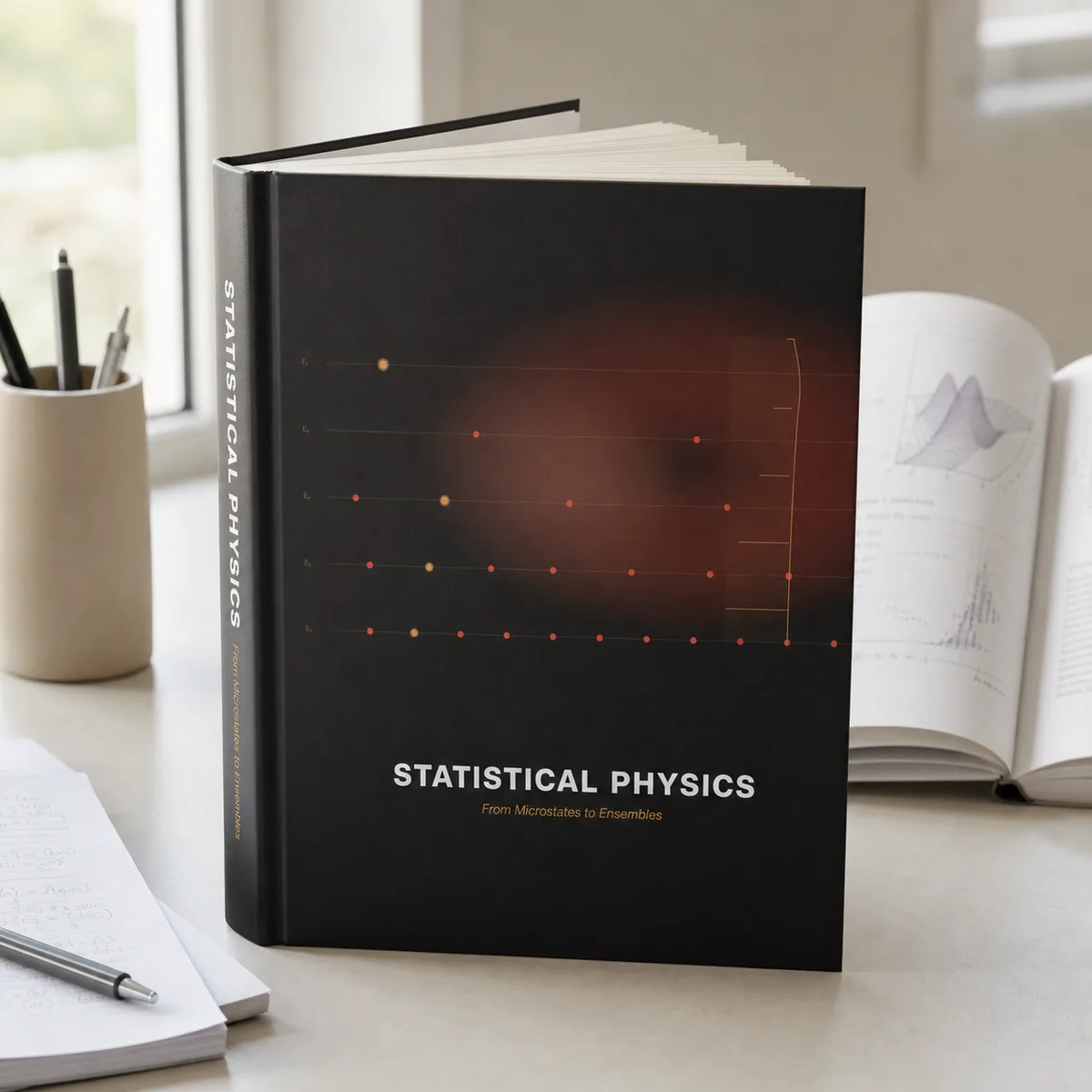
Statistical physics is the bridge between atoms you cannot see and the thermodynamics you can measure. This free book builds that bridge systematically, from phase space to quantum statistics.
Free digital download · from phase space to quantum statistics · no payment at checkout
What’s inside
One line of argument, from microstates to ensembles.
The theory is developed systematically. Nothing is pulled out of the air, and the famous formula gets the derivation it deserves.
Foundations
- Phase space, microstates, and macrostates, defined before they’re used
- Boltzmann entropy. S = k ln W is motivated, its properties are proved, and the connection to thermodynamic entropy is established
- The H-theorem
The three ensembles
- Microcanonical, where the counting starts
- Canonical, developed with partition functions
- Grand canonical, with Fermi-Dirac and Bose-Einstein quantum statistics
Worked applications
- Partition functions with worked examples
- The ideal gas and the harmonic oscillator
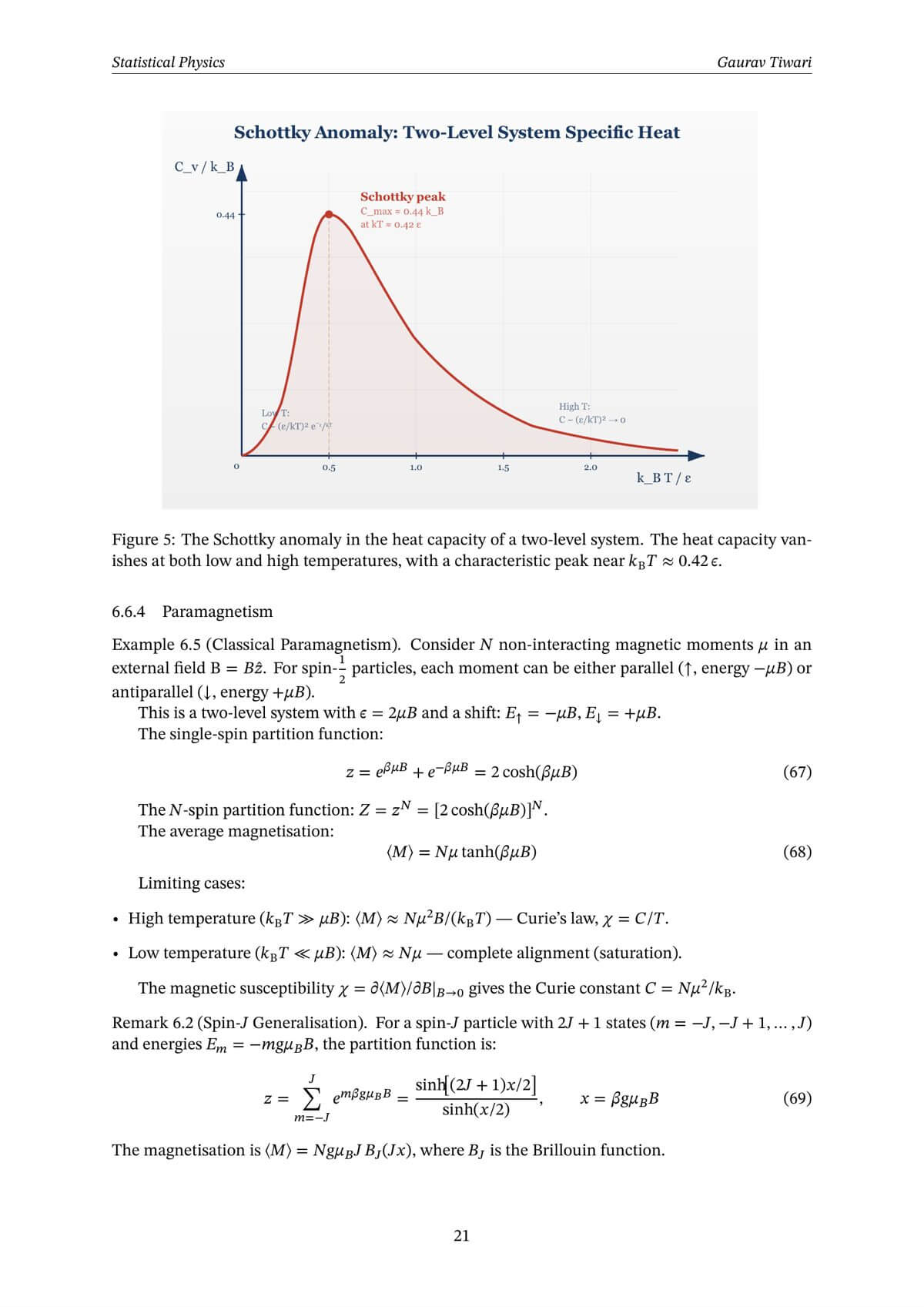
- Paramagnetism
From counting microstates to quantum statistics, in the order the subject actually builds.
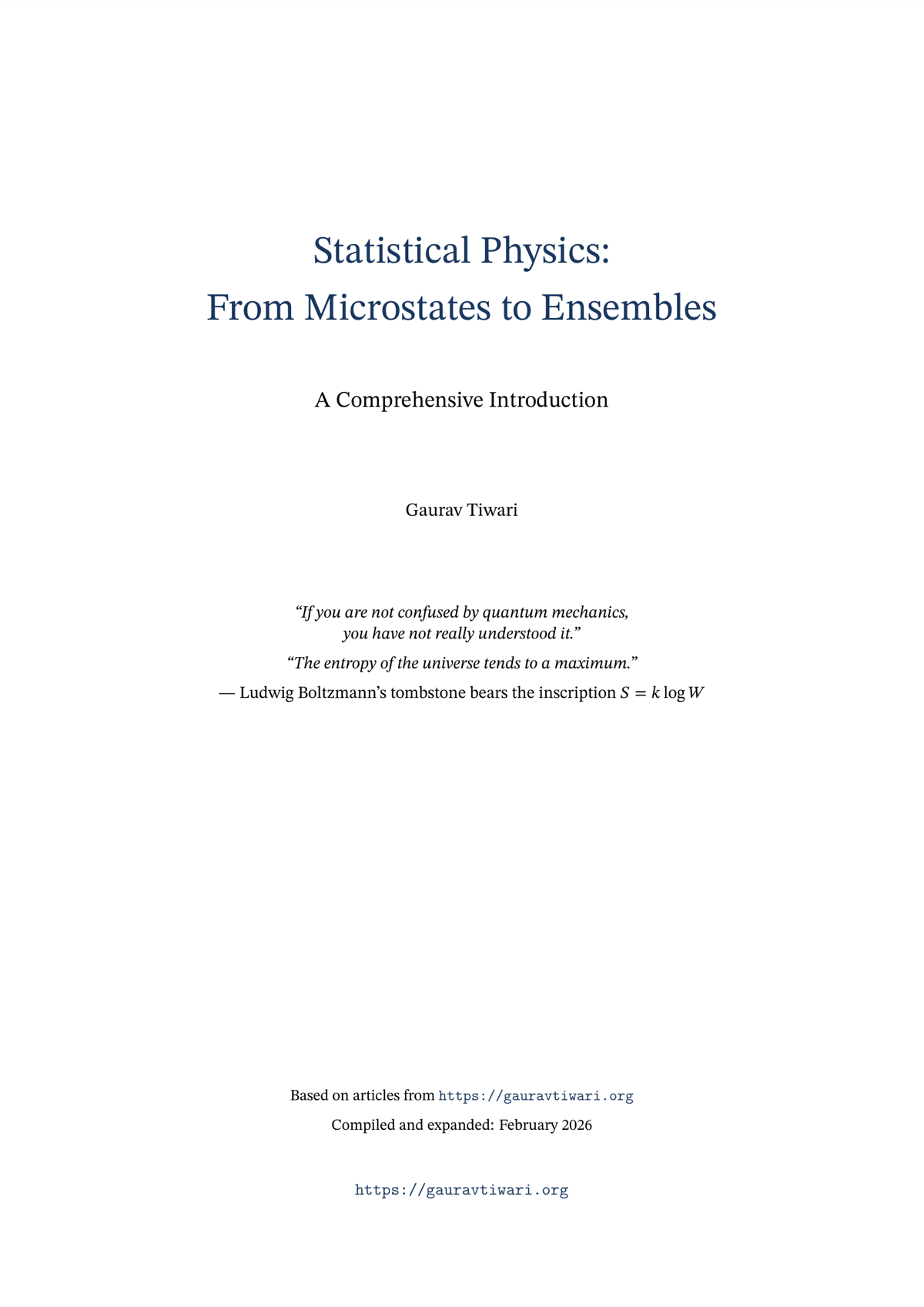
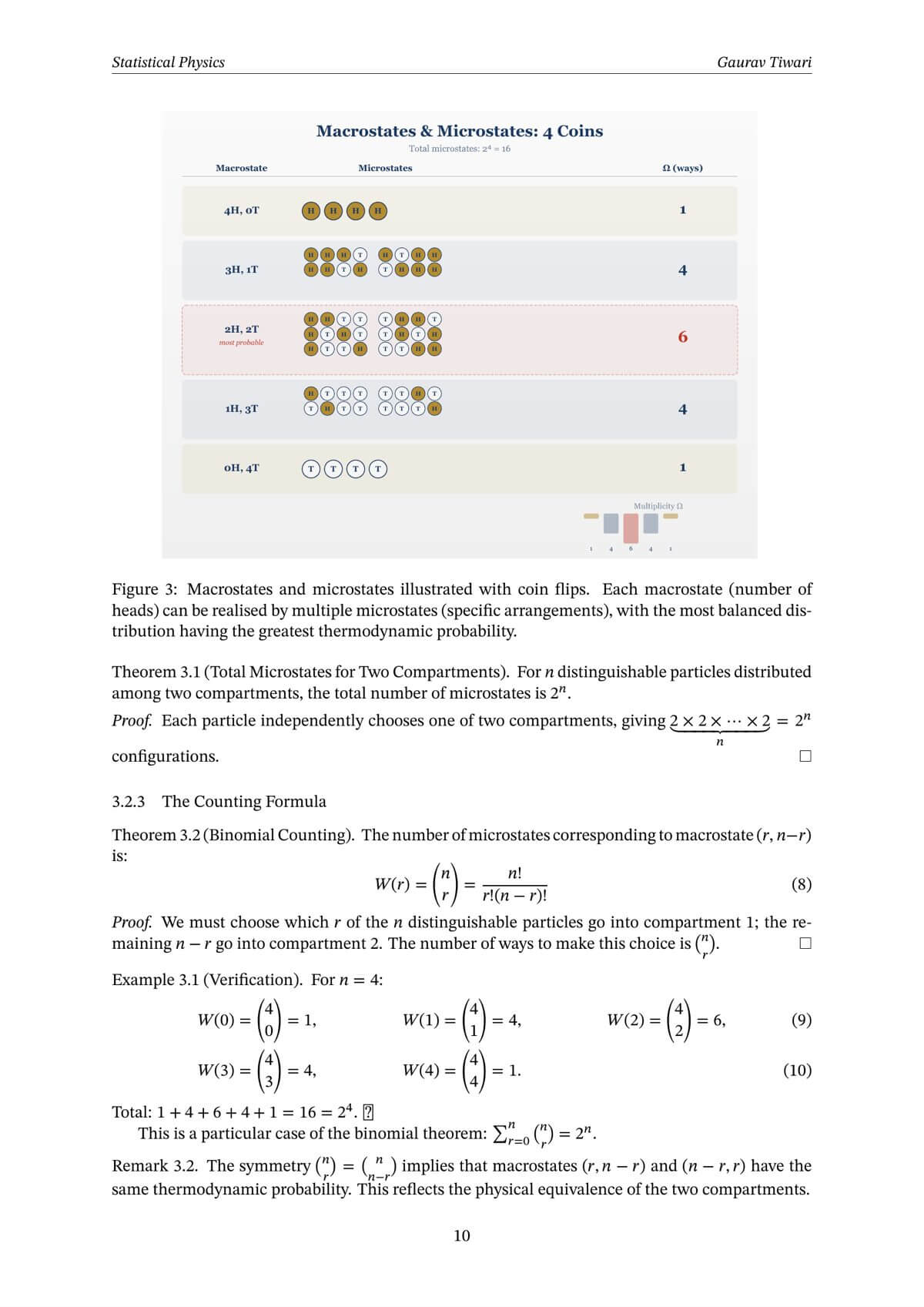
Book Preview
Preview the writing, structure, and page layout before you decide.
Get the book
Statistical Physics: From Microstates to Ensembles
Free
Digital download · the checkout exists only to create your download link
- The Boltzmann entropy formula derived properly, with its properties proved
- All three ensembles developed: microcanonical, canonical, and grand canonical
- Partition functions with worked examples, not just definitions
- Fermi-Dirac and Bose-Einstein quantum statistics
- Applications you can check yourself: ideal gas, harmonic oscillator, paramagnetism
- The connection between microscopic counting and thermodynamic entropy, made explicit
No payment. Checkout creates your download link instantly.
Questions students ask
Download Questions
Is it actually free?
Yes. There’s no payment step. The checkout exists only to create your download link, and it does that instantly.
Is S = k ln W just stated, like most courses do?
No, and that’s the point of the book. The formula is motivated, its properties are proved, and the connection to thermodynamic entropy is established rather than asserted.
Which ensembles does it cover?
All three. Microcanonical first, canonical with partition functions, and grand canonical with Fermi-Dirac and Bose-Einstein statistics, so the quantum cases sit inside the same framework instead of arriving as a separate subject.
Are there worked examples, or only theory?
Both. Partition functions come with worked examples, and the applications chapters work through the ideal gas, the harmonic oscillator, and paramagnetism.
What I’m not going to claim
This book has no ratings yet, and I’d rather tell you that than manufacture social proof. It’s free, so the cost of finding out whether it suits you is one download and one evening.
I’m also not going to claim that reading it does the work for you. Statistical physics is learned by following derivations with a pen in hand, and the book is written to be read that way. If you want a text that lets you skip the counting, this isn’t it.

Hey, I’m Gaurav 👋
I’ve been writing math and physics for students since 2008, mostly because my own textbooks kept stating results without showing where they came from. S = k ln W got that treatment more than most formulas, which is exactly why this book derives it properly.
The numbers, since you probably won’t read a full bio:
- 18 years building on the web, and a WordPress core contributor
- 2,000+ articles published since 2008, a lot of them explanations like this one
- 850+ clients shipped in that time, from study notes to software
Start tonight
Download it, start at phase space, and let the ensembles arrive in order.
It costs nothing, and the checkout only exists to hand you the link. The counting starts on page one.
Free · no payment · download link issued instantly