Copywriting & Marketing Wisdom · Kindle & Paperback
You know how to publish. Nobody taught you what to publish, or why.
Most blogging advice tells you to write more, post more, and hustle more, which is advice for someone who hasn’t started. If you’ve been publishing for a year and the revenue is flat, more volume is not your problem.
Kindle and paperback · 270 pages · published 11 January 2026 · free to read on Kindle Unlimited · Amazon shows the price before you buy
Read it on:
Why this book
You can’t out-publish a positioning problem.
Publishing more is the advice you give someone with no content. Once you have 200 posts and flat revenue, the constraint has moved. It’s usually positioning, topic selection, or the fact that nothing on the site is built to convert.
The standard blogging playbook
the default- Write for everyone. Broad topics attract broad readers, and broad readers don’t buy.
- Chase search volume. You pick topics by traffic potential and end up with visitors who never had intent.
- Post on a schedule. Cadence becomes the goal, and the goal stops being connected to revenue.
- Add affiliate links afterwards. Links dropped into posts that were never built to convert anything.
- Say yes to every sponsor. Short-term money, long-term erosion of the reason people read you.
- Watch pageviews. The one metric that reliably rises while the business stays flat.
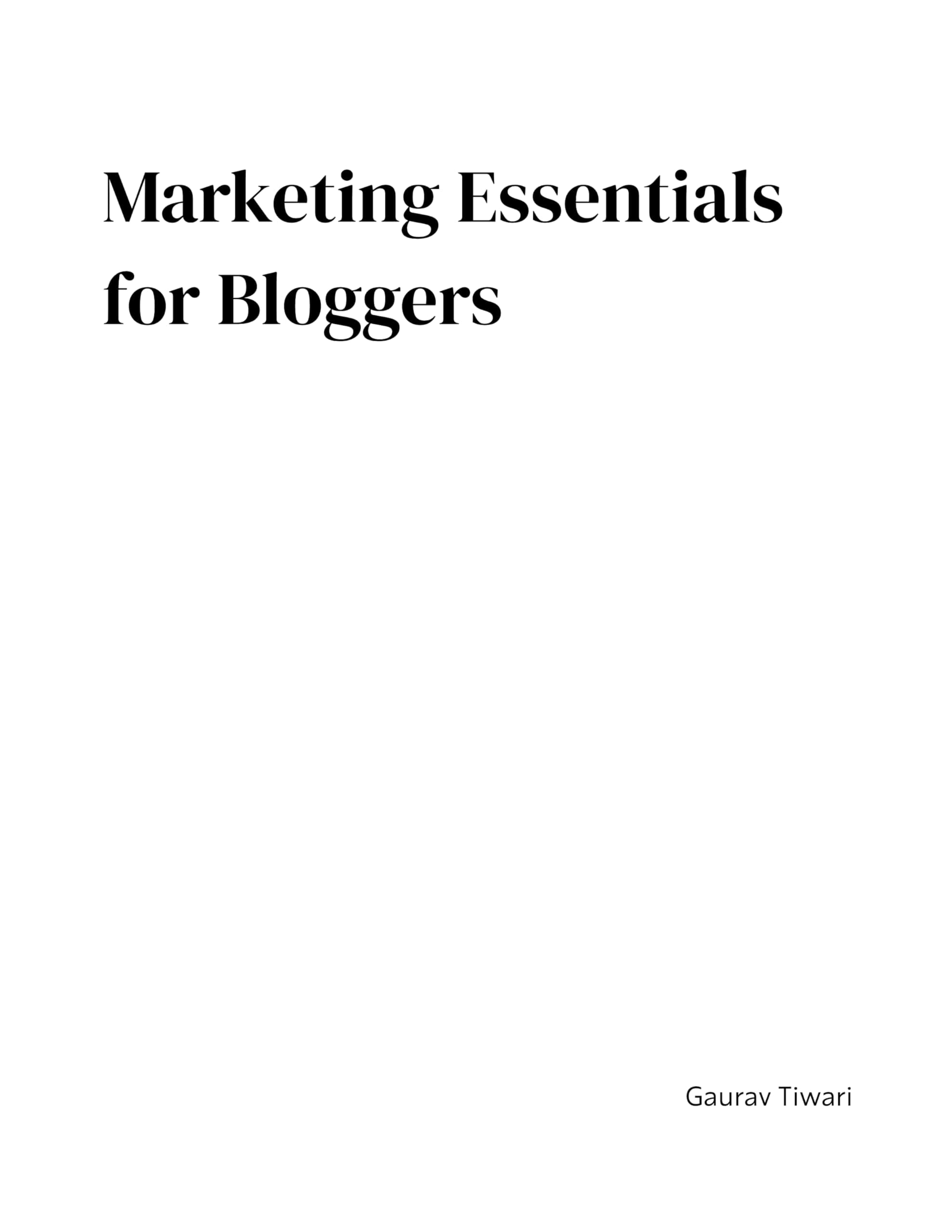
Marketing Essentials for Bloggers
the book- The Unfair Advantage Method. Start from what you specifically can say that others can’t, and build outward from it.
- The Right Reader Framework. Write for the person who would buy, which usually means writing for fewer people.
- Topics that compound. Choose subjects that build traffic and revenue together instead of trading one for the other.
- Pages built to convert. On-page structure that turns readers into subscribers and customers without pressure tactics.
- Affiliates and sponsors, ethically. Recommend products and work with brands without losing the voice people came for.
- Metrics that drive decisions. What to act on, and which numbers exist purely to make you feel good.
What’s inside
Nine areas, each one a decision you’re currently making by default.
The book is organized around the choices that determine whether a blog becomes a business: who you’re for, what you cover, how pages are built, and how the money actually arrives.
Positioning
- The Unfair Advantage Method
- Why your perspective is the asset
- Finding what only you can say
Audience
- The Right Reader Framework
- Writing for buyers, not for everyone
- Reader intent and where it comes from
Topic strategy
- Choosing topics that compound
- Traffic and revenue together
- What to stop covering
Conversion
- On-page conversion structure
- Turning readers into subscribers
- Calls to action without pressure tactics
Affiliate revenue
- Recommending products ethically
- Disclosure done properly
- Where affiliate income actually comes from
Sponsorship
- Working with brands
- Keeping your voice
- What to turn down
SEO
- The backlink reality check
- What matters
- What’s a waste of your time
- Building a list that earns
- Sequences that work
- Revenue on demand
Analytics
- Metrics that drive decisions
- Vanity numbers to ignore
- What to review and how often
270 pages across nine areas. Each section stands on its own, so you can start with the constraint you actually have.
Before you buy anything else
Turning a blog into a business is not complicated. And most of what you’re being sold, you don’t need.
Four purchases bloggers make instead of fixing the actual constraint.
You don’t need more traffic
Plenty of blogs with good traffic earn nothing. If yours is one of them, more visitors will change the size of the problem and not the problem.
You don’t need a bigger stack
No tool fixes positioning. The chapters here need a text editor and a decision, not another subscription.
You don’t need to niche down to nothing
The Right Reader Framework is about who you’re writing for, which is not the same as shrinking your subject until nobody’s left.
You don’t need to become a salesperson
The conversion chapters are about structure and clarity. If pressure tactics worked on you, you wouldn’t be reading this.
Get the book
Marketing Essentials for Bloggers
Free on Kindle Unlimited
Kindle and paperback · 270 pages · published 11 January 2026 · Amazon shows the current price before you buy
- Name the specific advantage that makes your version of a topic worth reading
- Choose topics on whether they compound, instead of on search volume alone
- Restructure a money page so it converts without resorting to pressure tactics
- Recommend affiliate products in a way that survives your reader checking your work
- Take sponsored work without spending the trust you built to get it
- Decide what to change next from the three or four metrics that actually indicate something
It went on sale on 11 January 2026 and has no ratings yet, so read the free sample first. Check the nine areas against the problem you actually have, and skip the book if your constraint is somewhere else. Page count, formats, and Kindle Unlimited status checked on Amazon, July 27, 2026.
Payment and delivery happen on Amazon. These are affiliate links, so I earn a small commission at no extra cost to you.
How to actually use it
Work on one constraint at a time.
Changing everything at once tells you nothing about what worked.
1. Fix the positioning first
The Unfair Advantage Method and the Right Reader Framework. Everything downstream depends on these two answers.
You leave with: a reason for someone to read you specifically.2. Re-aim the topic plan
Audit what you’ve published against whether it compounds, and decide what to stop covering.
You leave with: a topic list tied to revenue.3. Rebuild the money pages
Take your best-trafficked commercial posts and restructure them using the conversion chapters.
You leave with: pages that convert the traffic you already have.4. Turn on the compounding channels
Email sequences and internal structure, so each new post makes the old ones worth more.
You leave with: growth that doesn’t need more volume.Questions readers ask
Buying Questions
Is this for beginners?
No, and it will waste your money if you are one. It assumes you already write, publish, and have some traffic. If you’re setting up a blog this week, you need a setup guide instead, and this will be more useful in a year.
Will it tell me how much I can earn?
No. The honest answer depends on your niche, your existing traffic, and how commercial your topics are. Anyone quoting you a figure is quoting you their own case study.
Does it have reviews?
Not yet. It went on sale on 11 January 2026 and the ratings page is empty. Read the free sample and check the nine areas against the problem you actually have before you buy.
Do I need more traffic before this is useful?
Probably not. Plenty of blogs with good traffic earn nothing. If yours is one of them, more visitors will change the size of the problem and not the problem.
Is it about niching down to nothing?
No. The Right Reader Framework is about who you’re writing for, which is not the same as shrinking your subject until nobody’s left.
Will it turn me into a pushy marketer?
No. The conversion chapters are about structure and clarity, and the sponsorship chapter is partly a list of what to turn down. If pressure tactics worked on you, you wouldn’t be reading this.
What I’m not going to claim
This is not a beginner’s book, and it will waste your money if you’re one. It assumes you already write, publish, and have some traffic. If you’re setting up a blog this week, you need a setup guide instead, and this will be more useful in a year.
It also won’t give you a number. I’m not going to tell you this takes a blog from X to Y, because the honest answer depends on your niche, your existing traffic, and how commercial your topics are. Anyone quoting you a figure is quoting you their own case study.
And it has no reviews yet. It went on sale on 11 January 2026 and the ratings page is empty. Read the free sample, check the nine areas against the problem you actually have, and skip it if your constraint is somewhere else.

Hey, I’m Gaurav 👋
I ran a blog for years that grew traffic steadily and earned almost nothing, and I kept fixing it by publishing more. That was the wrong lever, and it took me an embarrassingly long time to work out that the problem was who I was writing for. This book is the thing I needed then, and most of what’s in it got tested on my own sites before it went anywhere near a client.
The numbers, since you probably won’t read a full bio:
- 18 years building on the web, and a WordPress core contributor
- 2,000+ articles published since 2008
- 850+ clients
I also build the WordPress plugins that run the commercial side of my sites, which is why the conversion chapters are about page structure rather than about tools. I’ve seen what the tools can and can’t fix.
Read the sample tonight
Find out which constraint you’re actually stuck on.
The free sample is enough to check the nine areas against your own site. If the constraint is one of them, the rest of the book is the fix.
Kindle and paperback · free to read on Kindle Unlimited · price shown on Amazon before you buy