
How to Harness the Experience and Knowledge of an SEO Agency?
Hiring the wrong SEO agency costs more than money. It costs you 6 to 12 months of wasted time while your competitors keep climbing the rankings. I’ve worked with dozens of agencies over the years, both as a client and a collaborator, and the gap between a great SEO partner and a mediocre one is staggering. A good agency can 3x your organic traffic in a year. A bad one can get your site penalized and buried on page five.
The SEO industry has a trust problem. Too many agencies promise page-one rankings in 30 days, use outdated tactics, or simply don’t have the expertise to move the needle. The good news? You can spot the difference before you sign a contract. You just need to know what to look for, which questions to ask, and what red flags should send you running.
This guide breaks down exactly how to evaluate an SEO agency’s experience, verify their results, and build a partnership that actually drives revenue for your business.
Why SEO Agency Experience Matters More Than Ever
SEO isn’t what it was five years ago. Google rolls out thousands of algorithm updates every year, and the major core updates can completely reshape search results overnight. An agency that’s been around for a few years has likely navigated multiple algorithm shifts. They’ve seen what works long-term and what falls apart when Google changes the rules.
Experience matters because SEO is full of nuance. The same strategy that works for a local plumber won’t work for a national SaaS company. A seasoned agency understands these differences. They’ve made mistakes, learned from them, and built systems that produce consistent results across different industries.
I’ve seen businesses waste $50,000+ on agencies that talked a big game but delivered nothing. The common thread? Those agencies lacked real, verifiable experience. They had flashy websites and smooth sales pitches but couldn’t point to a single case study with measurable results.
What Professional SEO Actually Involves
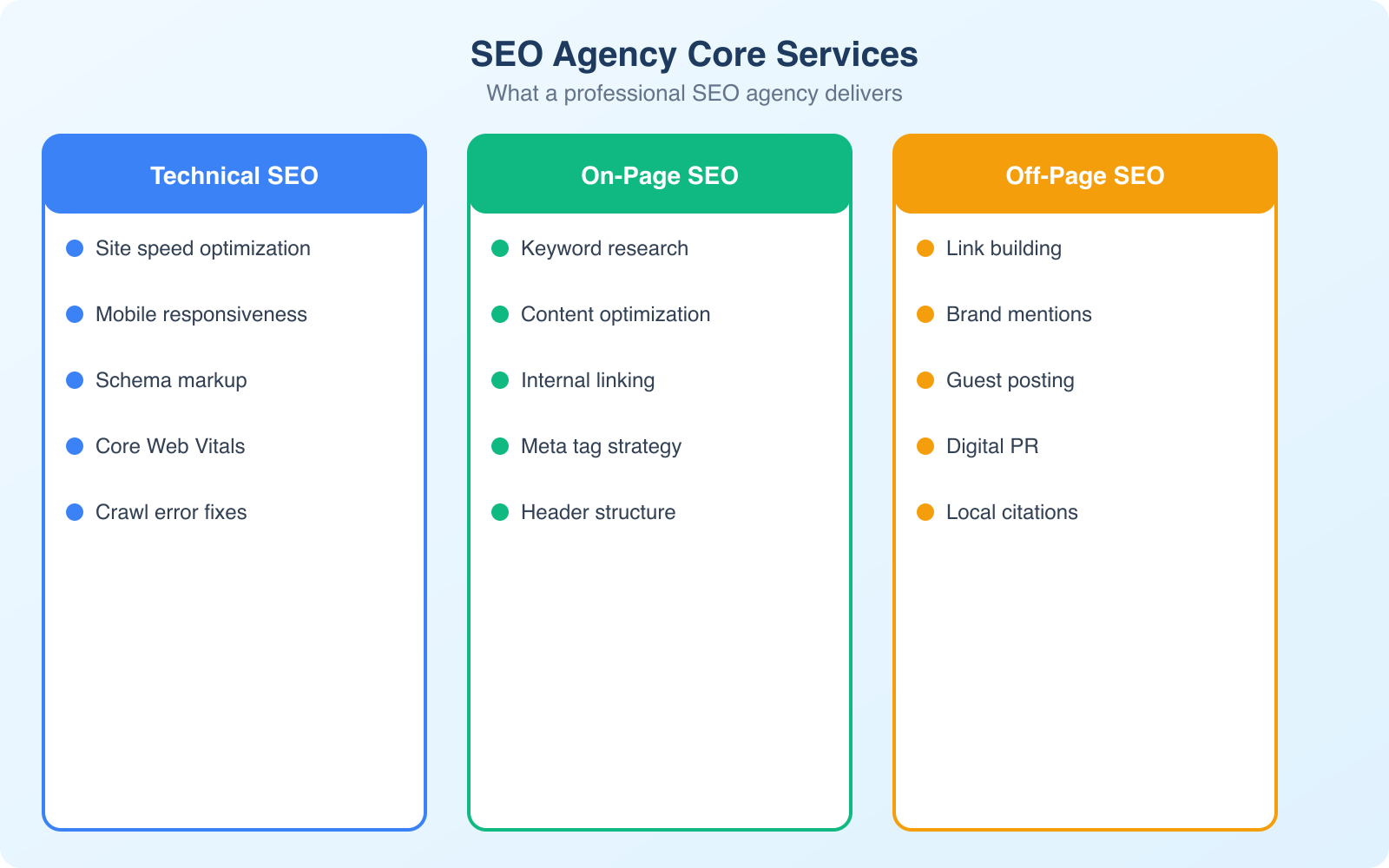
Before you can evaluate an agency, you need to understand what a legitimate SEO campaign looks like. Professional SEO isn’t just stuffing keywords into pages. It’s a multi-layered discipline that touches every part of your online presence.
A comprehensive SEO strategy includes technical optimization (site speed, crawlability, structured data), on-page optimization (content quality, keyword targeting, internal linking), and off-page optimization (backlink building, brand mentions, digital PR). Most agencies specialize in one or two of these areas. The best ones cover all three.
The key thing to understand: SEO is a long game. You won’t see meaningful results for 3 to 6 months in most cases. Any agency promising faster results is either cutting corners or lying. Optimizing your content for search takes patience and consistent effort.
The Different Types of SEO You Should Know
Not all SEO is created equal. The type of SEO your business needs depends on your goals, your audience, and your competitive landscape. A good agency should be able to explain which approach fits your situation and why.
Local SEO
If you run a brick-and-mortar business or serve a specific geographic area, local SEO is your priority. This includes optimizing your Google Business Profile, building local citations, earning reviews, and targeting location-specific keywords. A restaurant in Austin doesn’t need to rank nationally for “best pizza.” They need to dominate “best pizza in Austin.”
National and International SEO
For e-commerce brands or businesses serving a wide geographic area, national SEO focuses on broader keyword strategies, content marketing at scale, and building domain authority through high-quality backlinks. International SEO adds another layer with hreflang tags, multi-language content, and country-specific strategies.
Technical SEO
This is the foundation everything else sits on. Technical SEO covers site architecture, page speed, mobile-friendliness, crawl budget optimization, structured data, and Core Web Vitals. If your technical foundation is broken, no amount of content or backlinks will save you.
E-commerce SEO
Online stores face unique challenges: duplicate product descriptions, faceted navigation, thin category pages, and managing thousands of product URLs. An agency that specializes in e-commerce SEO knows how to handle these issues without tanking your crawl budget.
Ask any prospective agency which type of SEO they specialize in. If they say “all of them,” dig deeper. The best agencies have specific verticals or SEO types where they consistently produce results. Generalists often mean mediocre at everything.
How to Evaluate an SEO Agency’s Case Studies
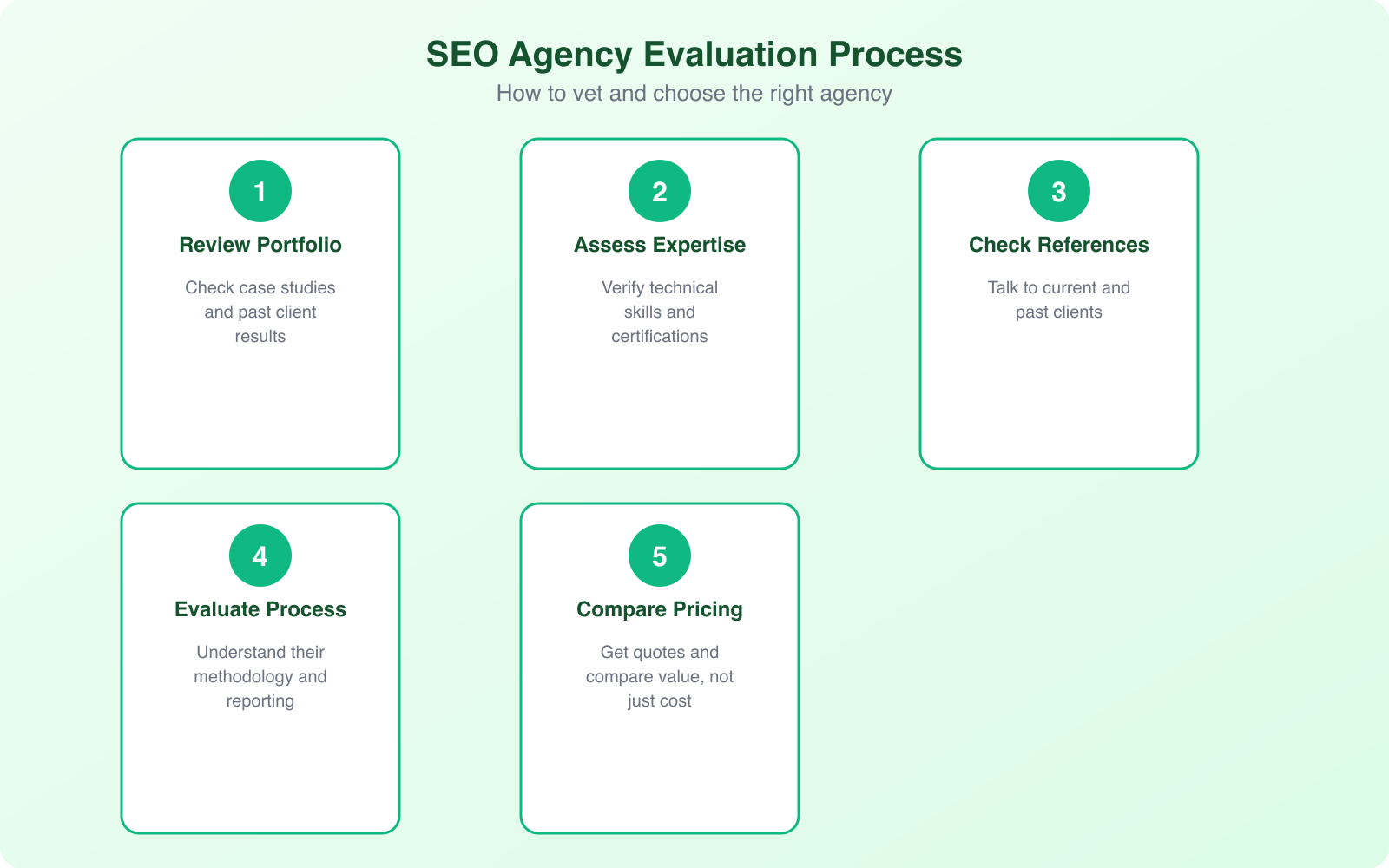
Case studies are the single best way to evaluate an agency’s actual capability. But not all case studies are created equal. You need to know what separates a genuine case study from marketing fluff.
A legitimate case study should include the client’s starting position (baseline metrics), the specific strategies implemented, the timeline of the campaign, and the measurable results. Look for specific numbers: “Increased organic traffic by 187% over 9 months” is a lot more credible than “significantly improved search visibility.”
Here’s what to look for in case studies:
- Before and after metrics. Traffic numbers, keyword rankings, conversion rates, revenue impact. Vague claims without numbers are worthless.
- Industry relevance. An agency that’s grown dozens of SaaS companies may not be the right fit for your local dental practice. Look for case studies in your industry or a similar one.
- Realistic timelines. If every case study shows incredible results in 30 days, something’s off. Real SEO takes time.
- Named clients (ideally). Agencies that can name their clients and point to live results are far more trustworthy than those hiding behind anonymized case studies.
- Strategy details. What did they actually do? If the case study is vague about tactics, the agency may not want you to know their methods.
Don’t just read case studies on their website. Ask for references. Call those references and ask pointed questions: Did the agency deliver on their promises? Were they transparent about challenges? Would you hire them again?
Technical Competency Checklist for SEO Agencies
A competent SEO agency should demonstrate proficiency across several technical areas. You don’t need to be an SEO expert to ask these questions. Just pay attention to how they answer. Confident, detailed answers signal real expertise. Vague, buzzword-heavy responses are a red flag.
Here’s a checklist of technical competencies to evaluate:
- Site audit capability. Can they run a comprehensive site audit and explain the findings in plain language? Tools like Screaming Frog, Ahrefs, or Semrush are standard. Ask which tools they use and why.
- Core Web Vitals knowledge. Google’s page experience signals (LCP, INP, CLS) directly impact rankings. Ask how they’ve improved these metrics for other clients.
- Structured data implementation. Schema markup helps search engines understand your content. A good agency should know how to implement FAQ schema, product schema, local business schema, and article schema.
- Backlink analysis. Can they evaluate your current backlink profile, identify toxic links, and build a strategy for earning high-quality links? Ask about their link-building methods specifically.
- Content strategy. SEO without content is like a car without fuel. The agency should have a clear approach to keyword research, content gap analysis, and content creation.
- Analytics and reporting. They should be proficient in Google Analytics 4, Google Search Console, and at least one enterprise SEO platform. Monthly reporting should be detailed, actionable, and tied to your business goals.
The Value of Agency Connections and Relationships
One of the most underrated benefits of working with an established SEO agency is their network. Backlinks remain one of the top ranking factors, and earning high-quality backlinks from authoritative websites takes relationships that are built over years.
A well-connected agency already has relationships with publishers, journalists, bloggers, and website owners across multiple industries. When they need to secure a guest post placement or a press mention for your brand, they can make it happen quickly because they’ve invested hundreds of hours building those relationships.
If you tried to build these connections yourself, you’d spend months sending cold emails, negotiating placements, and building rapport. An agency has already done that work. You’re essentially buying access to their entire network of publishers and media contacts.
Ask potential agencies about their link-building network. How many publishers do they work with? What’s the average Domain Authority of the sites they can place content on? Do they have relationships with niche-specific publications in your industry?
Communication Expectations and Reporting
The biggest complaint I hear from businesses about their SEO agencies isn’t poor results. It’s poor communication. You’re paying thousands of dollars per month. You deserve to know exactly what’s being done, why, and what results it’s producing.
Set clear communication expectations before signing any contract:
- Reporting frequency. Monthly is the minimum. Weekly check-ins during the first 90 days are ideal.
- Report content. Reports should cover keyword ranking changes, organic traffic trends, backlinks earned, technical issues fixed, content published, and next month’s plan.
- Point of contact. You should have a dedicated account manager, not a rotating cast of junior staff.
- Strategy updates. The agency should proactively communicate when algorithm updates occur and how they plan to respond.
- Transparency about challenges. Honest agencies will tell you when something isn’t working and adjust the strategy. Dishonest ones will hide behind vanity metrics.
Never sign a contract that locks you in for more than 6 months without a performance clause. If the agency isn’t delivering measurable progress by month 4 or 5, you should have the option to walk away. Reputable agencies are confident enough in their work to offer flexible terms.
PPC and SEO: How They Work Together
A smart SEO agency won’t just focus on organic results. They’ll recommend a combined approach that uses PPC (pay-per-click) advertising to fill the gap while your organic strategy builds momentum.
Here’s why this combination works: SEO takes 3 to 6 months to produce significant results. During that waiting period, PPC campaigns on Google Ads or social platforms can drive immediate traffic and revenue. The data from PPC campaigns (which keywords convert, which landing pages perform best) also informs your SEO strategy.
A good agency will suggest gradually reducing PPC spend as organic rankings improve, eventually shifting your budget from paid to organic channels. This transition should be data-driven, not arbitrary. You reduce PPC spend on keywords where you’ve achieved strong organic rankings, while maintaining paid campaigns for high-competition terms where organic results are still growing.
If an agency only does SEO and refuses to discuss paid strategies, they’re leaving money on the table for your business. The best results come from an integrated approach to driving traffic to your website.
Red Flags to Watch For When Hiring an SEO Agency
I’ve seen businesses get burned by sketchy SEO agencies more times than I can count. Here are the warning signs that should make you walk away immediately:
- Guaranteed rankings. Nobody can guarantee a #1 position on Google. Not even Google employees. Any agency making this promise is either lying or planning to use tactics that will get your site penalized.
- Unusually low pricing. Good SEO costs money. If an agency is offering monthly SEO for $200, they’re either outsourcing to low-quality overseas freelancers or doing almost nothing.
- No transparency about methods. If an agency won’t explain what they’re doing to your site, that’s a massive red flag. You have every right to know exactly what strategies are being implemented.
- Outdated techniques. Directory submissions, article spinning, private blog networks (PBNs), keyword stuffing. These are all tactics from 2010 that will hurt your site today.
- No case studies or references. A legitimate agency should have verifiable results. If they can’t show you proof of their work, don’t trust their sales pitch.
- Overpromising on timelines. “Page one in 30 days” is almost always a lie for any competitive keyword. Real SEO takes time, and honest agencies set realistic expectations.
How to Structure Your SEO Agency Partnership
Once you’ve found the right agency, set the partnership up for success from day one. Here’s the framework I recommend:
Month 1: Discovery and audit. The agency should conduct a thorough audit of your site, your competitors, and your market. They should deliver a detailed strategy document outlining priorities, timelines, and expected outcomes.
Months 2 to 3: Foundation work. This is when technical fixes happen. Site speed improvements, crawl error fixes, content optimization, and initial backlink outreach. You won’t see dramatic ranking changes yet, and that’s normal.
Months 4 to 6: Growth phase. Content production ramps up, backlink acquisition gains momentum, and you should start seeing ranking improvements for target keywords. Monthly reporting becomes critical during this phase.
Months 7 to 12: Scaling. This is where the compounding effect of SEO kicks in. Your domain authority grows, content starts ranking for broader keywords, and organic traffic should be trending up consistently month over month.
Set quarterly goals with your agency and review them together. If targets aren’t being met, have an honest conversation about why and what needs to change. The best agency partnerships are collaborative, not transactional. Check these signs it’s time to hire an SEO company if you’re still on the fence.
Questions to Ask Before Signing a Contract
Before you commit to any SEO agency, get clear answers to these questions:
- What’s your experience with businesses in my industry?
- Can I speak with 2 to 3 current or recent clients?
- What does your typical monthly deliverable look like?
- How do you approach link building, and what’s your average link quality?
- What tools do you use for keyword research, auditing, and reporting?
- How do you measure success, and what KPIs will you track?
- What happens if I want to end the contract early?
- Do I own all the content and assets you create for me?
- How do you handle algorithm updates?
- What’s the biggest SEO challenge you’ve faced, and how did you solve it?
Their answers to these questions will tell you more about their expertise than any sales deck ever could. Pay attention to specificity. Regular SEO audits are something every business should prioritize, and a good agency will explain exactly how they approach them.
Building a Long-Term SEO Strategy
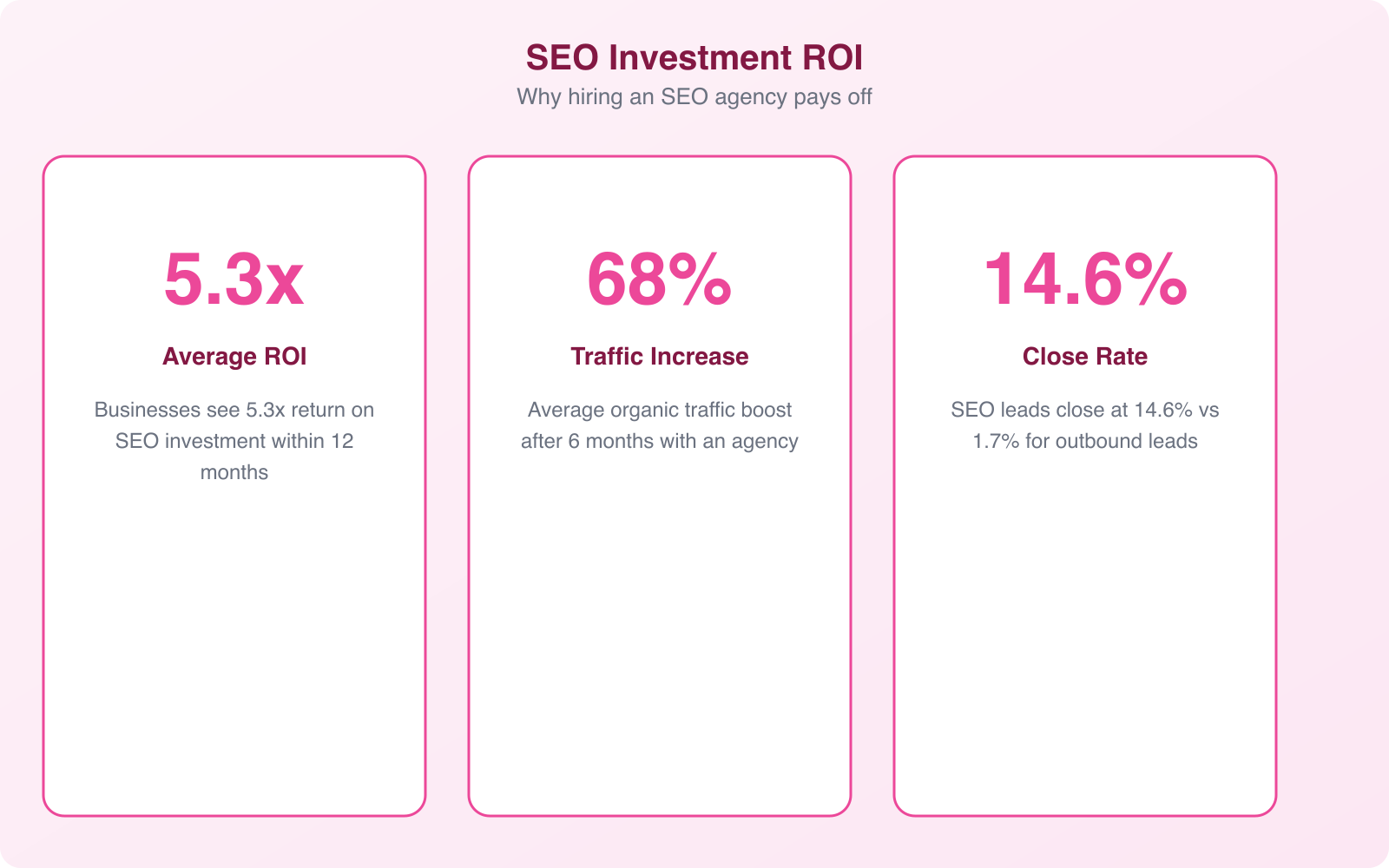
The best SEO results come from long-term commitments. I’ve seen businesses jump from agency to agency every 6 months, and their rankings never improve because they never give any strategy enough time to work.
Think of SEO like compound interest. The work done in month 1 starts paying dividends in month 6. The content published in month 3 might not rank until month 8. But by month 12, all of these efforts compound, and you start seeing exponential growth.
A long-term strategy should include consistent content production (at least 4 to 8 quality pieces per month), ongoing technical optimization, regular backlink acquisition, and continuous performance monitoring. Your agency should also be building an SEO-friendly website structure that supports scalable growth.
The businesses I’ve seen achieve the best SEO results all share one thing in common: they committed to a solid strategy and gave it time to work. Patience and persistence beat shortcuts every single time.
Frequently Asked Questions
How much should I expect to pay for SEO agency services?
Quality SEO services typically cost between $1,500 and $10,000 per month depending on your industry, competition level, and campaign scope. Local SEO campaigns for small businesses might start around $1,000 per month, while national or e-commerce SEO for competitive industries can run $5,000 to $15,000 per month. Be skeptical of agencies charging less than $500 per month, as they likely can’t deliver meaningful results at that price point.
How long does it take to see results from SEO?
Most SEO campaigns take 3 to 6 months to show measurable ranking improvements and 6 to 12 months for significant traffic growth. The timeline depends on your starting position, competition level, domain authority, and the resources invested. If an agency promises results in 30 days for competitive keywords, that’s a red flag.
Should I hire a local SEO agency or a remote one?
For local SEO campaigns, a local agency can be beneficial because they understand your market and may have existing relationships with local publishers. For national or international SEO, location matters less than expertise. The most important factors are the agency’s track record, their experience in your industry, and the quality of their communication, regardless of where they’re based.
What’s the difference between white hat and black hat SEO?
White hat SEO follows Google’s guidelines and focuses on creating genuine value through quality content, ethical link building, and technical excellence. Black hat SEO uses manipulative tactics like link schemes, cloaking, keyword stuffing, and private blog networks to game the system. Black hat tactics can produce short-term gains but almost always result in penalties that devastate your organic traffic. Any reputable agency should exclusively use white hat methods.
Can I do SEO myself instead of hiring an agency?
You can handle basic SEO tasks yourself, especially with tools like Google Search Console and free resources available online. However, competitive industries usually require professional expertise. Consider your time and opportunity cost: if learning and implementing SEO takes you 20 hours per week away from running your business, the agency investment often pays for itself. Many businesses start with DIY SEO and transition to an agency once they hit a growth ceiling.