
Content regression detection answers a question most WordPress sites can’t: did that last edit quietly damage the post? The Content Integrity module snapshots every post when you update it, compares the new version against recent history, and flags structural damage like dropped internal links, collapsed word counts, and broken heading hierarchies.
This module exists because I once gutted a tutorial by pasting over the wrong section and didn’t notice for three weeks. The post lost 40 percent of its words and every internal link in the bottom half. Rankings followed. A diff at save time would have caught it in five seconds.
What It Tracks
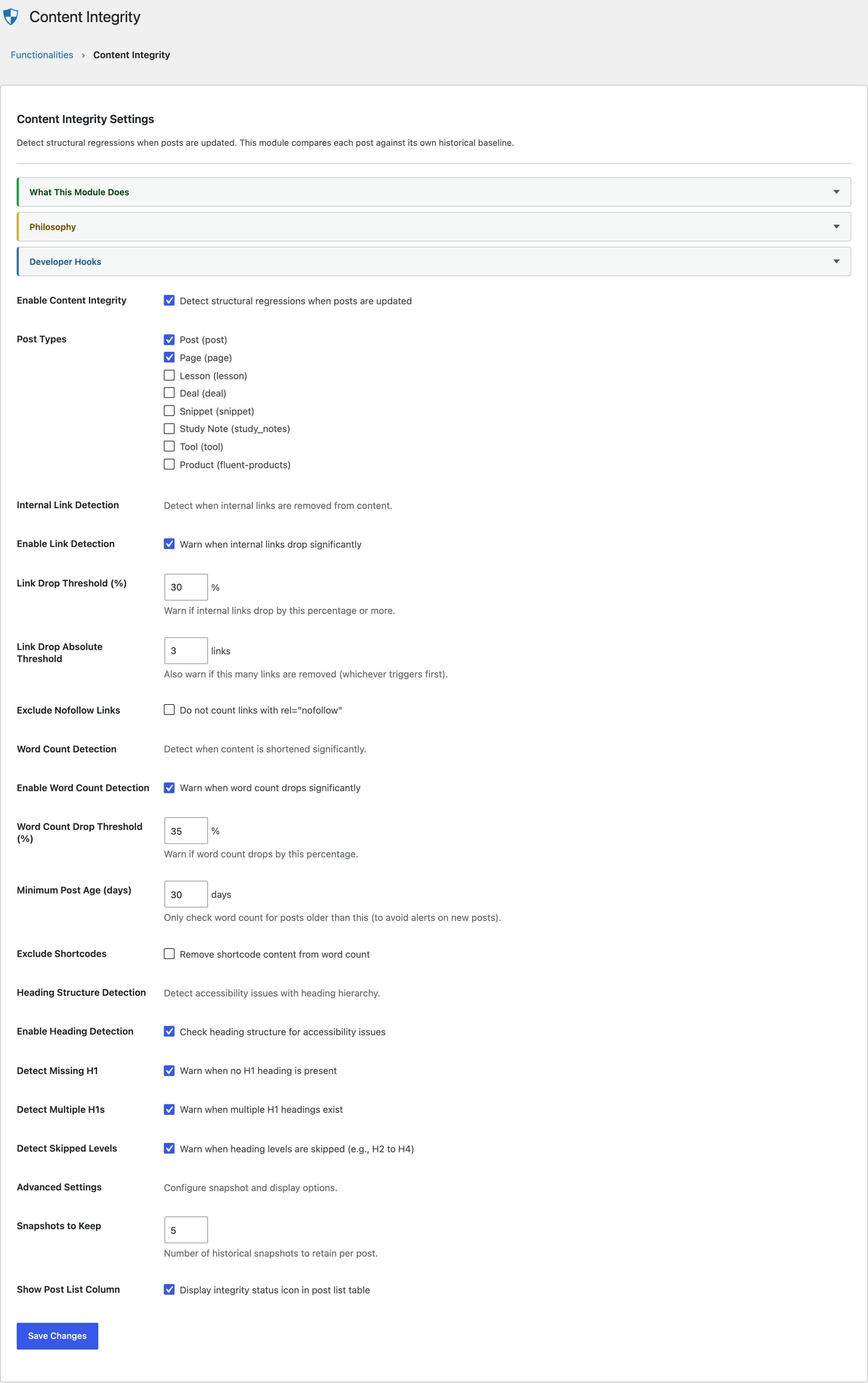
Content Integrity watches four kinds of regression, each with its own detector you can switch on or off:
- Internal link drops: warns when an update removes 30 percent of internal links or at least 3 of them, whichever triggers first
- Word count drops: flags a 35 percent reduction on posts older than 30 days, so trimming a fresh draft never fires a false alarm
- Heading structure: detects a missing H1, multiple H1s, and skipped heading levels, with an option to count the post title as the H1 since most themes render it that way
- Missing alt text: flags any image that loses its alt attribute
How Detection Works
Every save stores a structural snapshot, and the module keeps a rolling window of the last 5 snapshots per post. Comparisons can run against the previous version or the rolling average, which smooths out posts that legitimately fluctuate. When a detector fires, you get a warning instead of a silent regression, and you can mark the change as intentional so the same edit never nags you twice.
Every warning ships with a structural diff, not just a verdict. You see which internal links disappeared, which headings were added or removed, how the H1 changed, and the exact word-count delta between the snapshot and the current version. That turns “something broke” into “these 3 links broke,” which is the difference between a useful alert and a chore.
All thresholds are configurable: the link drop percentage, the absolute link count, the word count percentage, and the minimum post age. The defaults above are what I run on my own site.
Configuration
Detection is scoped by post type, with posts and pages monitored out of the box. The settings page also lets you exclude nofollow links from link counting and strip shortcodes before word counts, which keeps page-builder posts from inflating their numbers. A status column in the post list shows each post’s integrity state at a glance, and a REST endpoint exposes the same data if you want it in an external dashboard.
That column reads a result worked out at save time rather than rendering and parsing each post as the list loads. On an editor screen showing 50 posts the difference is the whole point: a status column that reparses 50 posts on every page view is a column people switch off.
4 filters cover the module for developers: functionalities_content_regression_post_types to change what is watched, functionalities_content_regression_snapshot to shape the snapshot before it is stored, functionalities_content_regression_warnings to add or suppress warnings, and the functionalities_content_regression_snapshot_saved action for anything that should run once a snapshot exists, such as posting to a team channel.
Why This Beats Manual Audits
A quarterly content audit finds damage months after it happened. Detection at save time finds it while the editor is still open and the fix is one Undo away. Pair this module with a deliberate internal linking strategy and the links you build actually stay built. For pruning decisions on content that’s beyond saving, my content pruning guide covers when to delete, redirect, or update.
Next in this module group: Header & Footer Snippets, the module that replaces your code snippets plugin.