
Abel Prize Winners: Complete List of Laureates, 2003-2026
Gerd Faltings won the 2026 Abel Prize, bringing the list to 29 laureates across 24 years. See every Abel Prize winner from 2003 to 2026 with official citations, fields, and plain-English explanations of the mathematics, plus the Indian connection and the Fields Medal comparison.
 by
by
German mathematician Gerd Faltings received the 2026 Abel Prize for introducing powerful tools in arithmetic geometry and resolving long-standing Diophantine conjectures of Mordell and Lang. His selection brings the list of Abel Prize winners to 29 laureates across 24 annual awards since Jean-Pierre Serre received the first prize in 2003.
The Norwegian Academy of Science and Letters awards the prize annually on behalf of the Norwegian government. It carries 7.5 million Norwegian kroner and can go to as many as 3 living mathematicians in one year. This page is a reader-friendly guide to every laureate: the complete winners list with official citations, plus plain-English explanations of what each mathematician actually did.
Abel Prize facts at a glance
| Fact | Answer |
|---|---|
| Established | 2002, by the Norwegian Parliament, for the bicentenary of Niels Henrik Abel’s birth |
| Awarded by | The Norwegian Academy of Science and Letters, on behalf of the Norwegian government |
| First prize | 2003, to Jean-Pierre Serre |
| Latest laureate | Gerd Faltings, 2026 |
| Prize years through 2026 | 24 |
| Individual laureates | 29 |
| Shared-prize years | 5 (2004, 2008, 2015, 2020, 2021) |
| First woman laureate | Karen Uhlenbeck, 2019 |
| Indian connection | S. R. Srinivasa Varadhan, 2007 |
| Prize money | 7.5 million Norwegian kroner; the dollar or rupee value moves with exchange rates |
Complete list of Abel Prize winners, 2026 to 2003
Latest first, because that’s how most people arrive at this page. Every citation below is the official one, quoted exactly.
| Year | Laureate(s) | Field | Cited for |
|---|---|---|---|
| 2026 | Gerd Faltings | Arithmetic geometry | for introducing powerful tools in arithmetic geometry and resolving long-standing diophantine conjectures of Mordell and Lang |
| 2025 | Masaki Kashiwara | Algebraic analysis, representation theory | for his fundamental contributions to algebraic analysis and representation theory, in particular the development of the theory of D-modules and the discovery of crystal bases |
| 2024 | Michel Talagrand | Probability, functional analysis | for his groundbreaking contributions to probability theory and functional analysis, with outstanding applications in mathematical physics and statistics |
| 2023 | Luis A. Caffarelli | Partial differential equations | for his seminal contributions to regularity theory for nonlinear partial differential equations including free-boundary problems and the Monge-Ampère equation |
| 2022 | Dennis Parnell Sullivan | Topology | for his groundbreaking contributions to topology in its broadest sense, and in particular its algebraic, geometric and dynamical aspects |
| 2021 | László Lovász and Avi Wigderson | Theoretical computer science, discrete mathematics | for their foundational contributions to theoretical computer science and discrete mathematics, and their leading role in shaping them into central fields of modern mathematics |
| 2020 | Hillel Furstenberg and Gregory Margulis | Dynamics, group theory | for pioneering the use of methods from probability and dynamics in group theory, number theory and combinatorics |
| 2019 | Karen Keskulla Uhlenbeck | Geometric analysis | for her pioneering achievements in geometric partial differential equations, gauge theory and integrable systems, and for the fundamental impact of her work on analysis, geometry and mathematical physics |
| 2018 | Robert P. Langlands | Representation theory, number theory | for his visionary program connecting representation theory to number theory |
| 2017 | Yves Meyer | Harmonic analysis | for his pivotal role in the development of the mathematical theory of wavelets |
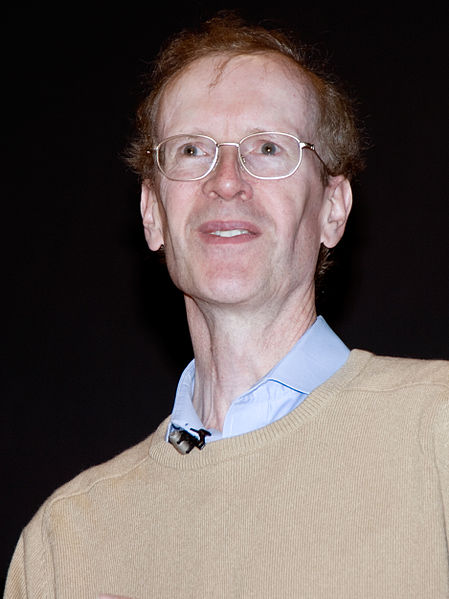
| 2016 | Sir Andrew J. Wiles | Number theory | for his stunning proof of Fermat’s Last Theorem by way of the modularity conjecture for semistable elliptic curves, opening a new era in number theory |
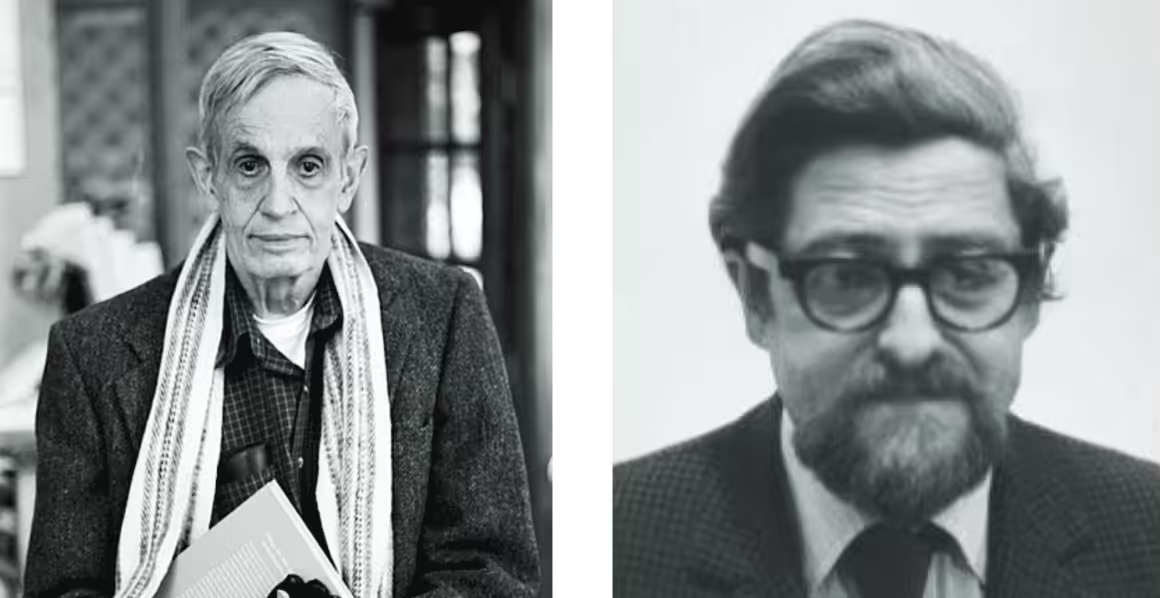
| 2015 | John F. Nash Jr. and Louis Nirenberg | Nonlinear PDEs, geometric analysis | for striking and seminal contributions to the theory of nonlinear partial differential equations and its applications to geometric analysis |
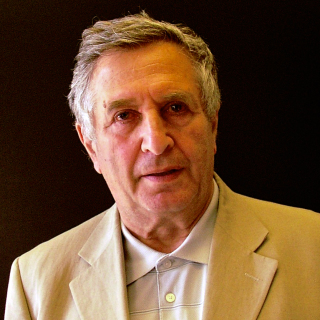
| 2014 | Yakov G. Sinai | Dynamical systems, mathematical physics | for his fundamental contributions to dynamical systems, ergodic theory, and mathematical physics |
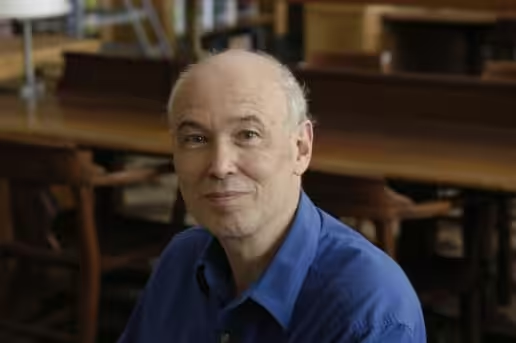
| 2013 | Pierre Deligne | Algebraic geometry | for seminal contributions to algebraic geometry and for their transformative impact on number theory, representation theory, and related fields |
| 2012 | Endre Szemerédi | Discrete mathematics | for his fundamental contributions to discrete mathematics and theoretical computer science, and in recognition of the profound and lasting impact of these contributions on additive number theory and ergodic theory |
| 2011 | John Milnor | Topology, geometry, algebra | for pioneering discoveries in topology, geometry and algebra |
| 2010 | John Torrence Tate | Number theory | for his vast and lasting impact on the theory of numbers |
| 2009 | Mikhail Gromov | Geometry | for his revolutionary contributions to geometry |
| 2008 | John Griggs Thompson and Jacques Tits | Group theory | for their profound achievements in algebra and in particular for shaping modern group theory |
| 2007 | S. R. Srinivasa Varadhan | Probability | for his fundamental contributions to probability theory and in particular for creating a unified theory of large deviations |
| 2006 | Lennart Carleson | Harmonic analysis, dynamical systems | for his profound and seminal contributions to harmonic analysis and the theory of smooth dynamical systems |
| 2005 | Peter D. Lax | Partial differential equations | for his groundbreaking contributions to the theory and application of partial differential equations and to the computation of their solutions |
| 2004 | Sir Michael Francis Atiyah and Isadore M. Singer | Geometry, analysis | for their discovery and proof of the index theorem, bringing together topology, geometry and analysis, and their outstanding role in building new bridges between mathematics and theoretical physics |
| 2003 | Jean-Pierre Serre | Topology, algebraic geometry, number theory | for playing a key role in shaping the modern form of many parts of mathematics, including topology, algebraic geometry and number theory |
Gerd Faltings and the 2026 Abel Prize

Faltings, of the Max Planck Institute for Mathematics in Bonn, works in arithmetic geometry, where geometric shapes are used to study equations involving integers and rational numbers. His most famous result is the 1983 proof of the Mordell conjecture, now called Faltings’ theorem: algebraic curves of genus greater than 1 have only finitely many rational points. In plain terms, a large class of polynomial equations can have at most finitely many fraction solutions, a fact conjectured in 1922 and open for roughly 6 decades.
The announcement on March 19, 2026 also recognized his later work around the Mordell-Lang conjecture, which extends the same finiteness philosophy to more general geometric settings. If you’ve heard that Wiles’ proof of Fermat’s Last Theorem stood on decades of arithmetic geometry, Faltings built several of the load-bearing walls.
Laureates of the 2020s
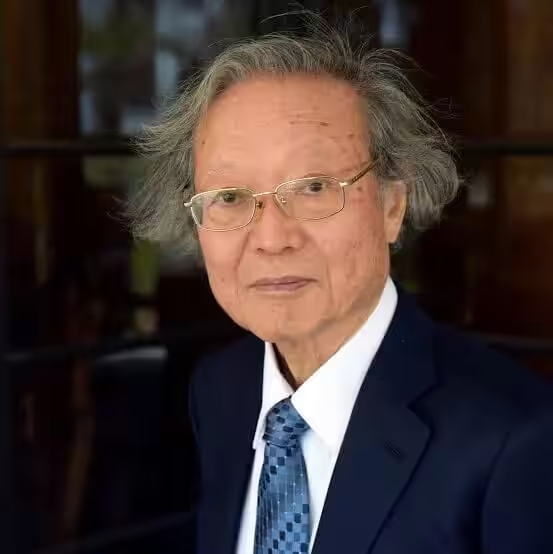
Masaki Kashiwara
- Abel Prize 2025
- Field: Algebraic analysis, representation theory
- Institution at award: RIMS, Kyoto University
Kashiwara spent 5 decades building algebraic analysis: the study of differential equations by algebraic means. His D-modules treat a system of differential equations as an algebraic object you can manipulate, classify, and glue, which turned analytic problems into algebra. His crystal bases then gave representation theory a combinatorial skeleton: infinite symmetry structures reduced to graphs you can literally draw. He is the first Japanese laureate.
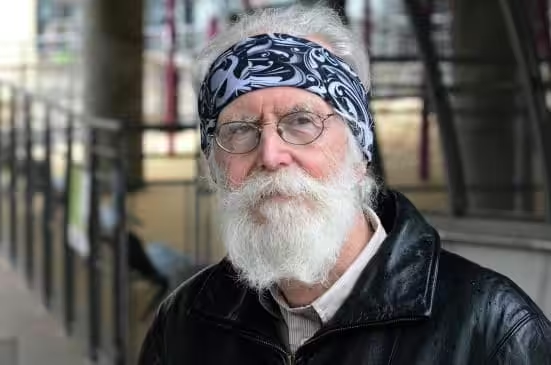
Michel Talagrand
- Abel Prize 2024
- Field: Probability, functional analysis
- Institution at award: CNRS, Paris
Talagrand made randomness predictable. His concentration-of-measure inequalities explain why systems built from many independent random pieces, spin glasses and airline delays alike, behave far more regularly than intuition suggests: a function of many independent variables that depends only a little on each one is nearly constant. Statistics, machine learning theory, and mathematical physics lean on that fact daily.
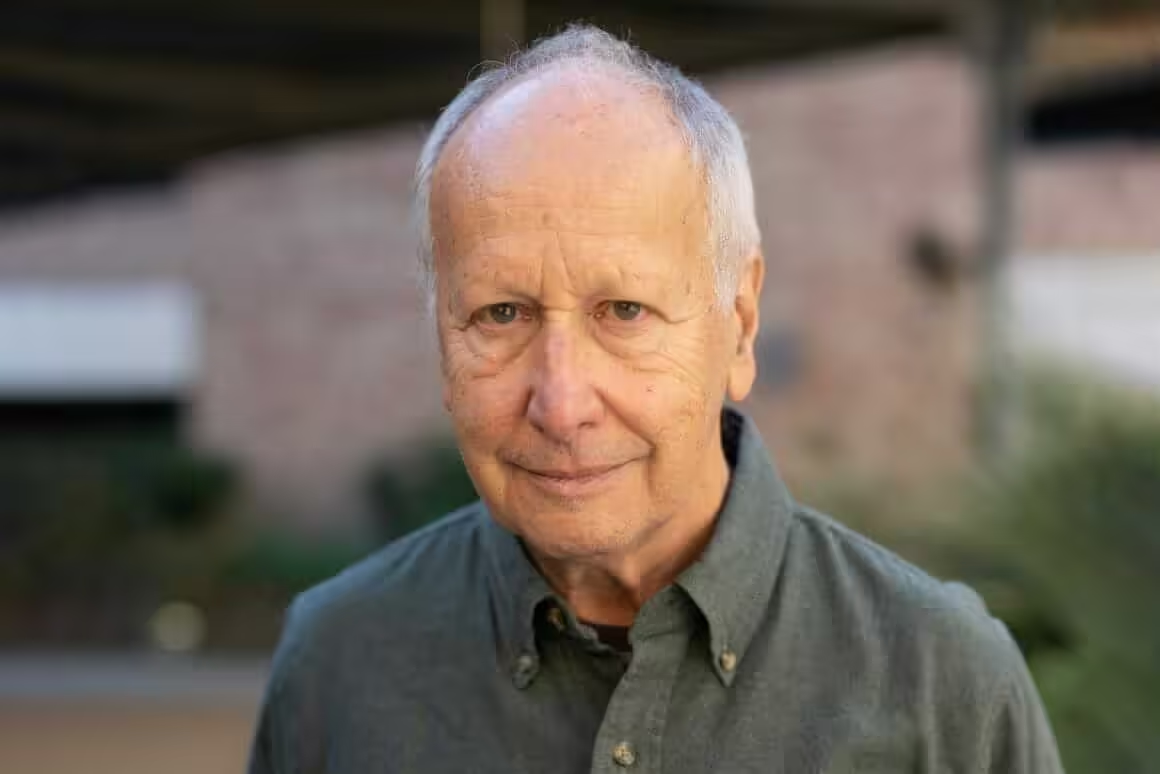
Luis A. Caffarelli
- Abel Prize 2023
- Field: Partial differential equations
- Institution at award: University of Texas at Austin
Caffarelli is the master of regularity: proving that solutions to nonlinear partial differential equations are smoother than they have any obvious right to be. His signature terrain is free-boundary problems, where the domain itself is unknown, like the moving edge of melting ice, and the Monge-Ampère equation that underlies optimal transport.
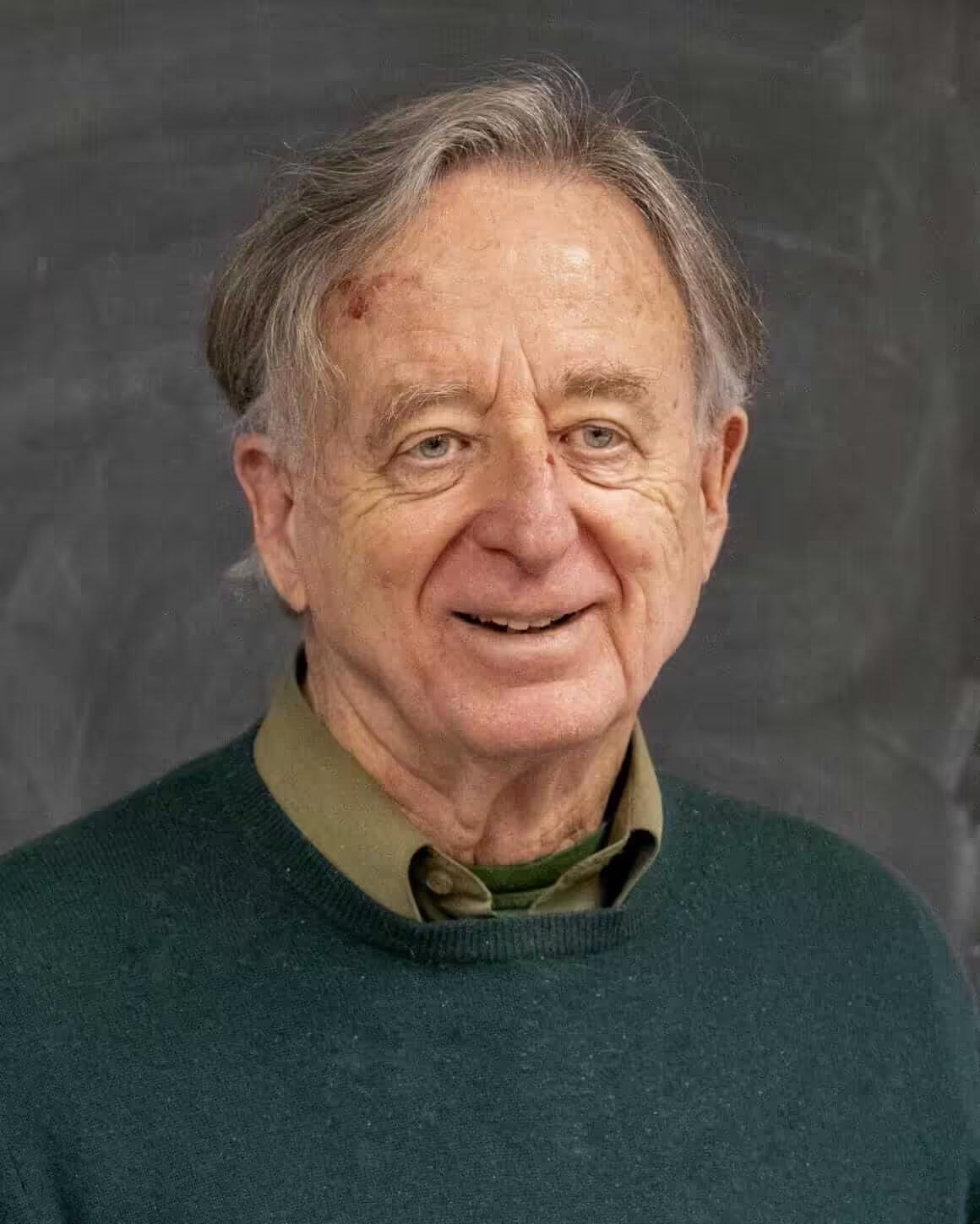
Dennis Parnell Sullivan
- Abel Prize 2022
- Field: Topology
- Institution at award: Stony Brook University and CUNY Graduate Center
Sullivan was cited for topology in its broadest sense: algebraic, geometric, and dynamical. Rational homotopy theory is one famous piece, a way to compute the essential shape of a space using only fraction-valued data, but the award spans his whole habit of importing tools across fields, down to his later work on the topology of fluid flow.
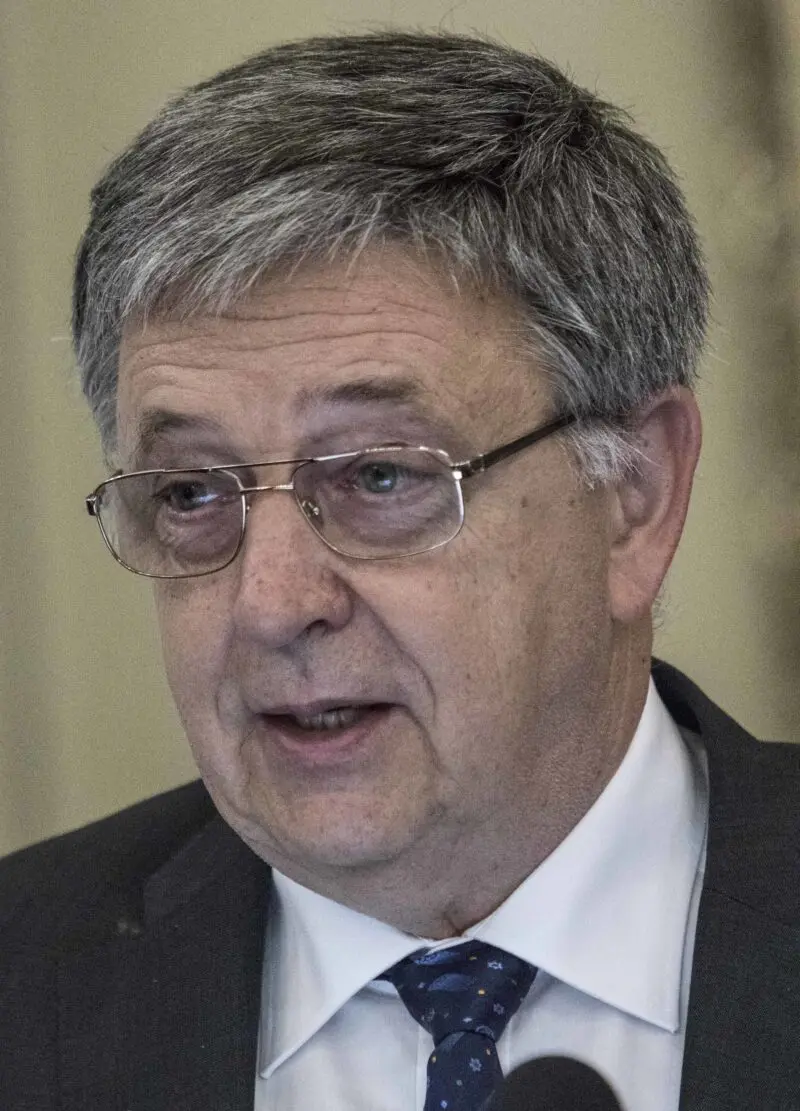
László Lovász
- Abel Prize 2021
- Field: Theoretical computer science, discrete mathematics
- Institution at award: Alfréd Rényi Institute, Budapest
Lovász connected graph theory to optimization and computing: the LLL lattice-reduction algorithm he co-created now underpins parts of cryptography, and his structural results made huge networks mathematically tractable. He shared the 2021 prize for turning theoretical computer science into a central field of mathematics.
Avi Wigderson
- Abel Prize 2021
- Field: Theoretical computer science, discrete mathematics
- Institution at award: Institute for Advanced Study, Princeton
Wigderson mapped what randomness really buys a computation: when random choices genuinely help, and when they can be removed without losing power. Modern complexity theory, zero-knowledge proofs included, owes him a large debt. He shared the 2021 prize with Lovász.
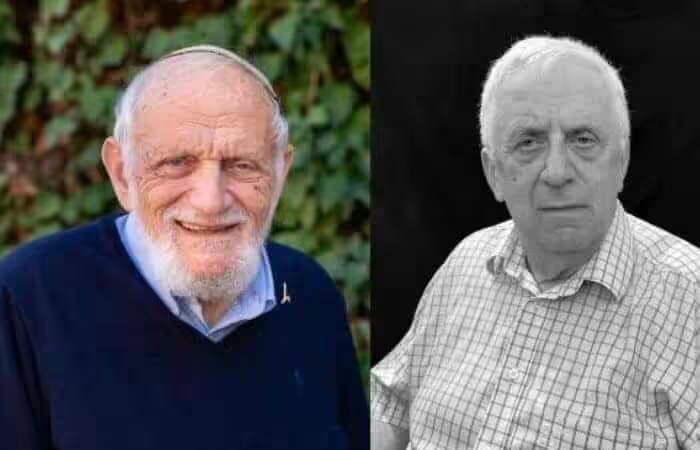
Hillel Furstenberg
- Abel Prize 2020
- Field: Dynamics, group theory
- Institution at award: Hebrew University of Jerusalem
Furstenberg showed that ergodic theory, the mathematics of long-run evolution, could prove hard static facts, including a celebrated dynamical proof of Szemerédi’s theorem on arithmetic progressions. Watching systems evolve became a way to settle questions that never mention time.
Gregory Margulis
- Abel Prize 2020
- Field: Dynamics, group theory
- Institution at award: Yale University
Margulis used random walks and rigidity to expose the structure of lattices in Lie groups, results so constraining they read like physics applied to algebra. Soviet authorities barred him from traveling to accept his 1978 Fields Medal; the mathematics traveled anyway.
Laureates of the 2010s
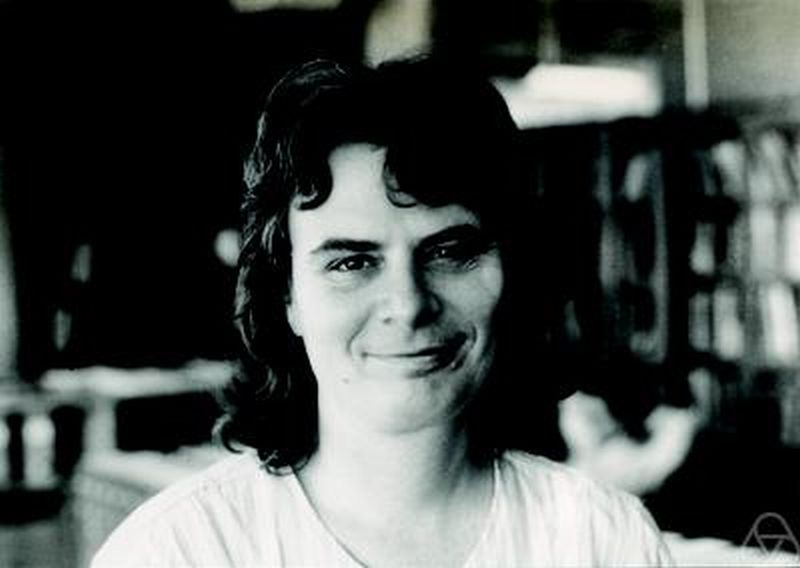
Karen Keskulla Uhlenbeck
- Abel Prize 2019
- Field: Geometric analysis
- Institution at award: University of Texas at Austin
The first woman to receive the Abel Prize, for geometric PDEs, gauge theory, and integrable systems. Her full story, and why her bubbling technique became standard equipment in geometric analysis, is in its own section below.
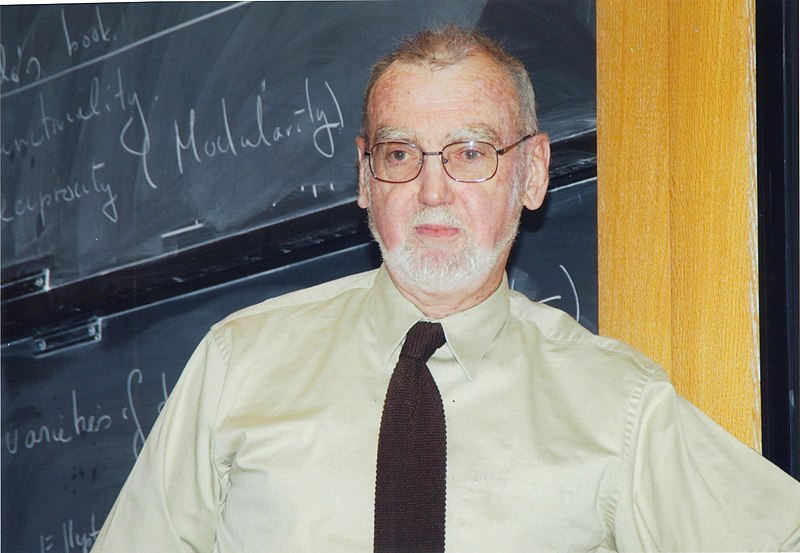
Robert P. Langlands
- Abel Prize 2018
- Field: Representation theory, number theory
- Institution at award: Institute for Advanced Study, Princeton
Langlands proposed in a 1967 letter what became the Langlands program: a web of conjectures connecting representation theory and number theory so ambitious it’s routinely called a grand unified theory of mathematics. Wiles’ Fermat proof walked through one corner of it; whole careers now live inside it.

Yves Meyer
- Abel Prize 2017
- Field: Harmonic analysis
- Institution at award: École Normale Supérieure Paris-Saclay
Meyer built the mathematical theory of wavelets: decomposing signals into little waves at multiple scales. It’s the rare Abel-level theory you carry in your pocket, running inside image compression and signal processing, and it helped process the LIGO gravitational-wave detections.
Sir Andrew J. Wiles
- Abel Prize 2016
- Field: Number theory
- Institution at award: University of Oxford
Wiles proved Fermat’s Last Theorem, the most famous unsolved problem in mathematics for 358 years, via the modularity conjecture for semistable elliptic curves. Seven years of secret work, a flawed 1993 announcement, and a repaired proof in 1994 make it the best mathematical drama of the century.
John F. Nash Jr.
- Abel Prize 2015
- Field: Nonlinear PDEs, geometric analysis
- Institution at award: Princeton University
Nash, famous publicly for game theory and A Beautiful Mind, did his deepest mathematics in PDEs: embedding theorems and regularity results that analysts rank above his Nobel-winning economics. He and his wife Alicia died in a car accident days after the Oslo ceremony; the prize was awarded while he lived.
Louis Nirenberg
- Abel Prize 2015
- Field: Nonlinear PDEs, geometric analysis
- Institution at award: Courant Institute, NYU
Nirenberg was the great connector of PDE theory: the Gagliardo-Nirenberg and John-Nirenberg inequalities carry his name, and half the field’s collaborations trace back to him. At 90, he shared the 2015 prize with Nash for nonlinear PDEs and geometric analysis.
Yakov G. Sinai
- Abel Prize 2014
- Field: Dynamical systems, mathematical physics
- Institution at award: Princeton University and Landau Institute
Sinai gave chaos its mathematics. Sinai billiards, Kolmogorov-Sinai entropy, and his ergodic theory measure exactly how unpredictable a deterministic system is, which is why statistical mechanics can trust probability at all.
Pierre Deligne
- Abel Prize 2013
- Field: Algebraic geometry
- Institution at award: Institute for Advanced Study, Princeton
Deligne completed the proof of the Weil conjectures, the deepest link between counting solutions of equations over finite fields and the topology of shapes. Grothendieck built the machine; Deligne drove it somewhere nobody else could.
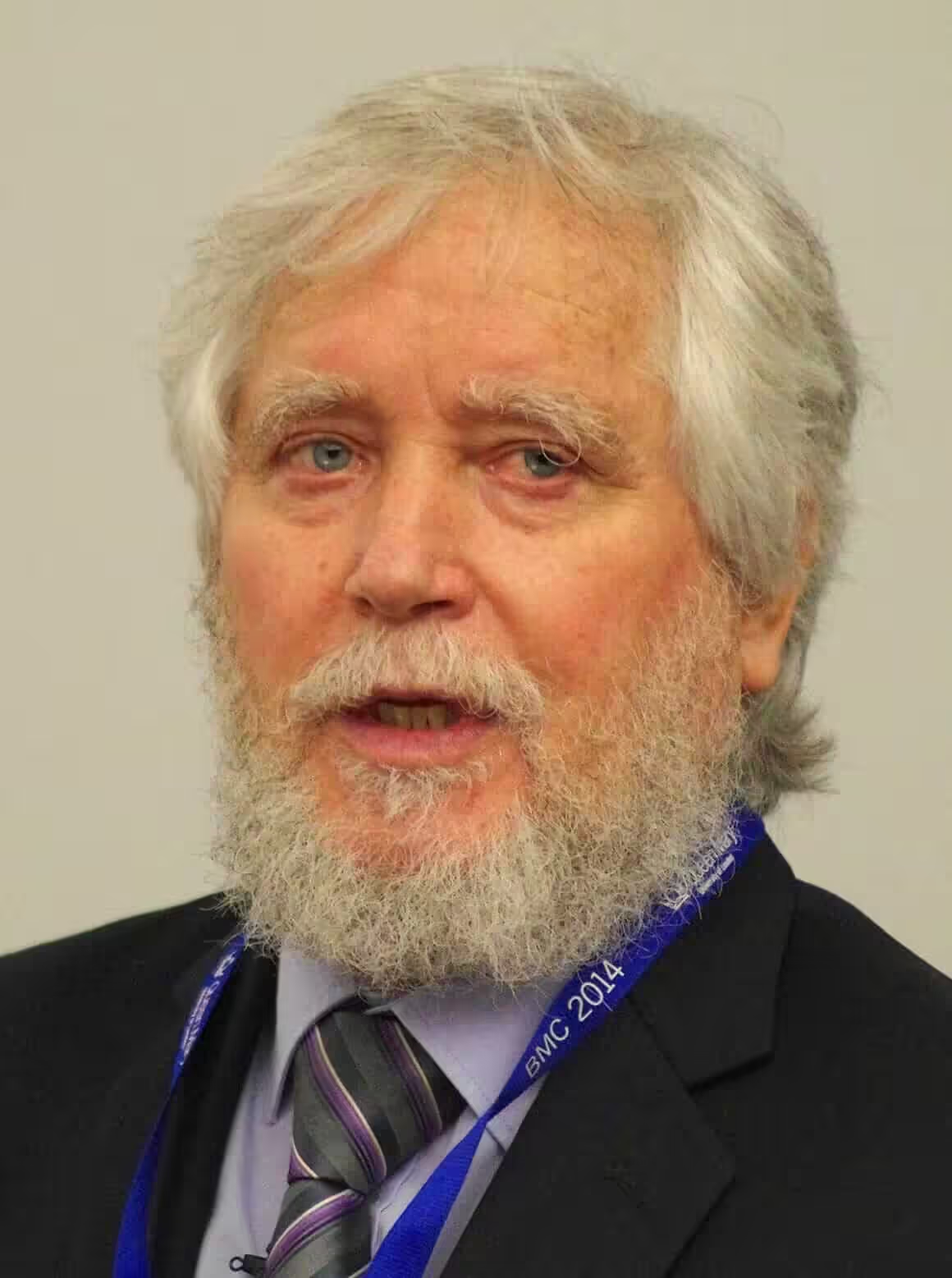
Endre Szemerédi
- Abel Prize 2012
- Field: Discrete mathematics
- Institution at award: Alfréd Rényi Institute and Rutgers University
Szemerédi proved that any set of integers with positive density contains arbitrarily long arithmetic progressions, and his regularity lemma showed that every huge graph looks approximately structured. Modern combinatorics, and a good part of computer science, stands on those two results.
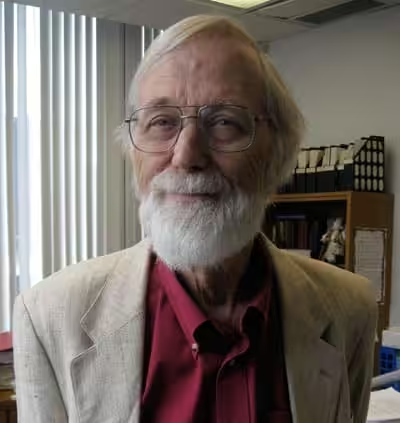
John Milnor
- Abel Prize 2011
- Field: Topology, geometry, algebra
- Institution at award: Stony Brook University
Milnor discovered exotic spheres: 7-dimensional spheres that are topologically identical to the standard one but smoothly different. That single 1956 example split topology into new fields and set the agenda for decades.
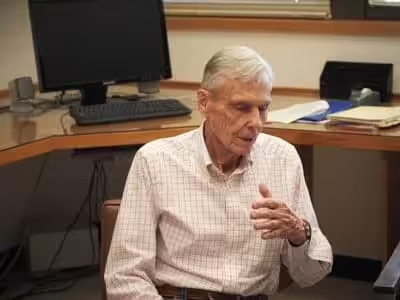
John Torrence Tate
- Abel Prize 2010
- Field: Number theory
- Institution at award: University of Texas at Austin
Tate built so much of modern number theory’s scaffolding that his name is attached everywhere: Tate modules, Tate cohomology, the Tate conjecture. The award citation is one line because the full list would be a syllabus.
Laureates of the 2000s
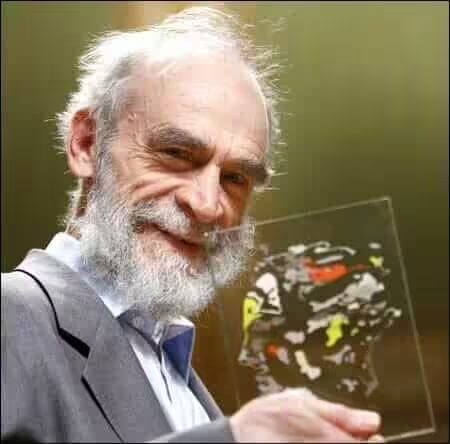
Mikhail Gromov
- Abel Prize 2009
- Field: Geometry
- Institution at award: IHÉS, Paris
Gromov reinvented geometry several times: groups viewed as geometric objects, spaces compared as wholes, and the h-principle that turns impossible-looking constructions into flexible ones. Ask a geometer which Gromov idea they use; the answer is usually several.
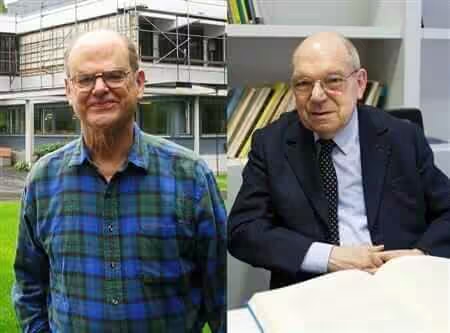
John Griggs Thompson
- Abel Prize 2008
- Field: Group theory
- Institution at award: University of Florida
Thompson proved with Feit that every finite group of odd order is solvable, the 255-page theorem that launched the classification of finite simple groups, arguably mathematics’ largest collaborative proof.
Jacques Tits
- Abel Prize 2008
- Field: Group theory
- Institution at award: Collège de France
Tits gave symmetry a geometry: his buildings turn abstract algebraic groups into combinatorial spaces you can navigate. Group theorists now live inside structures that carry his name. He shared the 2008 prize with Thompson.
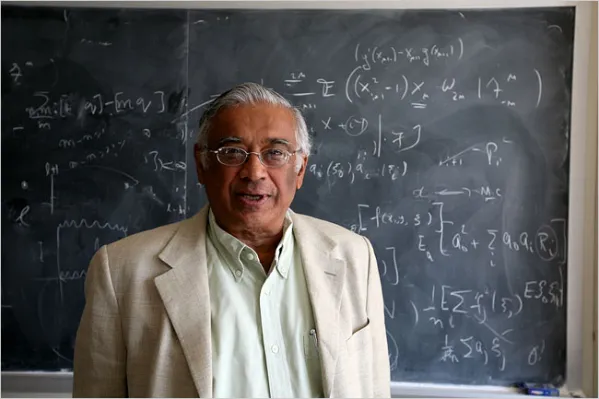
S. R. Srinivasa Varadhan
- Abel Prize 2007
- Field: Probability
- Institution at award: Courant Institute, NYU
The first Indian-born Abel laureate, for the unified theory of large deviations: the mathematics of rare events. The full story, from Chennai to Courant, is in its own section below.

Lennart Carleson
- Abel Prize 2006
- Field: Harmonic analysis, dynamical systems
- Institution at award: Royal Institute of Technology, Sweden
Carleson settled a 1913 question by proving that the Fourier series of a square-integrable function converges almost everywhere. Analysts had expected a counterexample; he delivered the theorem instead, and his corona theorem and dynamics work were nearly as influential.
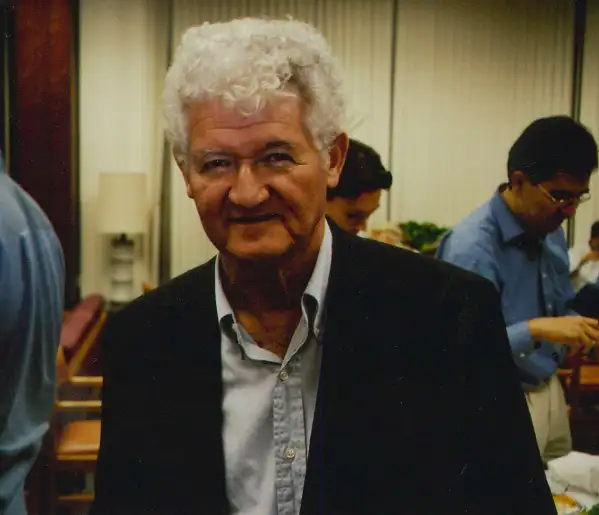
Peter D. Lax
- Abel Prize 2005
- Field: Partial differential equations
- Institution at award: Courant Institute, NYU
Lax shaped both the theory and the computation of partial differential equations: shock waves, scattering theory, and the Lax equivalence theorem that tells you when a numerical scheme can be trusted. Every serious PDE simulation still runs across his ideas.
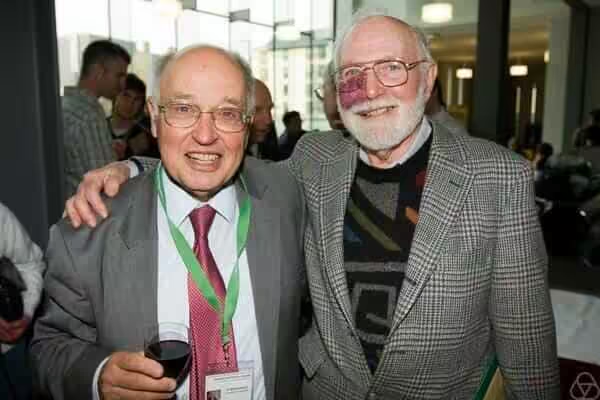
Sir Michael Francis Atiyah
- Abel Prize 2004
- Field: Geometry, analysis
- Institution at award: University of Edinburgh
Atiyah co-proved the index theorem with Singer: the number of solutions to a differential equation, computed from pure topology. He spent the rest of a famous career walking the bridge it built between geometry and quantum physics.
Isadore M. Singer
- Abel Prize 2004
- Field: Geometry, analysis
- Institution at award: MIT
Singer was the analyst half of the index theorem and one of the people who made mathematicians and physicists talk to each other again. Mathematical gauge theory owes much of its respectability to him. He shared the 2004 prize with Atiyah.
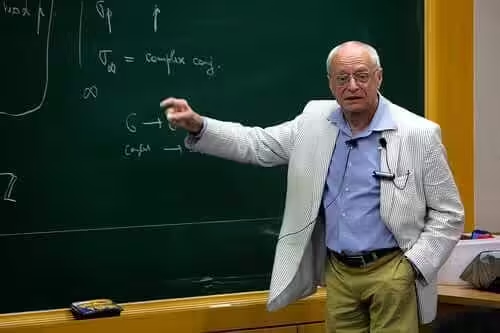
Jean-Pierre Serre
- Abel Prize 2003
- Field: Topology, algebraic geometry, number theory
- Institution at award: Collège de France
The first laureate. Serre reshaped topology, algebraic geometry, and number theory across a 7-decade career, and remains the youngest Fields Medalist ever at 27. Starting the Abel list with Serre set the bar exactly where the founders wanted it.
The Indian connection: S. R. Srinivasa Varadhan
The most-asked question about Abel Prize winners in India has a precise answer: S. R. Srinivasa Varadhan, born in Chennai in 1940, was the first Indian-born mathematician to receive the prize, in 2007, and through 2026 he remains the only laureate with Indian roots. He studied at Presidency College, Madras and the Indian Statistical Institute, Kolkata before spending his career at New York University’s Courant Institute.
His unified theory of large deviations is the mathematics of rare events: not what a random system usually does, but exactly how unlikely its extreme behaviors are. Insurance, statistical physics, queueing networks, and modern machine learning all need those probabilities, and before Varadhan each field computed them with its own ad hoc tricks. He gave everyone one theory.
Karen Uhlenbeck and women in the Abel Prize
Karen Keskulla Uhlenbeck became the first woman to receive the Abel Prize in 2019, and through 2026 she is still the only one. Her work sits where geometry meets hard analysis: gauge theory, the mathematical language underneath particle physics, and geometric partial differential equations, including the study of minimal surfaces like idealized soap films.
Her signature move was understanding singularities, the points where solutions try to blow up, well enough to work around them. The technique, now called bubbling, is standard equipment in geometric analysis, and it made large parts of mathematical gauge theory possible, including tools Donaldson later used to shock 4-dimensional topology.
Abel Prize vs Fields Medal
The two prizes get compared constantly, and the real differences are age rules, frequency, and career stage, not the importance of the mathematics. The Fields Medal committee is explicitly instructed to represent diverse mathematical fields, so neither award tells you which areas of math matter more. For the other side of this comparison, see the full list of Fields Medal winners.
| Factor | Abel Prize | Fields Medal |
|---|---|---|
| Frequency | Annual | Every 4 years |
| Age restriction | None, but the recipient must be living | The 40th birthday must not occur before January 1 of the award year |
| Career emphasis | Pioneering achievement, often across a long career | Existing achievement plus promise of future achievement |
| Recipients per cycle | 1 to 3 | Usually 2 to 4 |
| Money | 7.5 million NOK | Much smaller cash component |
| First awarded | 2003 | 1936 |
Abel laureates are often in their 70s or 80s, though the prize has recognized younger and older mathematicians; Louis Nirenberg was 90 when he shared the 2015 award. The Fields Medal, by design, catches mathematicians before 40. Serre managed the full sweep: youngest-ever Fields Medalist in 1954 and first Abel laureate 49 years later.
How nominations and selection work
Anyone may nominate a candidate, except for themselves. An international Abel Committee of 5 mathematicians reviews nominations and gives its recommendation to the Norwegian Academy of Science and Letters, which makes the formal decision each spring. The prize goes only to living mathematicians, can be shared by up to 3, and stands if a laureate dies after the announcement, as happened with John F. Nash Jr. in 2015.
About Niels Henrik Abel
The prize’s namesake packed a startling amount into 26 years. Niels Henrik Abel, born in 1802, proved that the general fifth-degree polynomial equation has no solution in radicals, closing a 250-year-old question, and co-founded the theory of elliptic functions that arithmetic geometers like Faltings still inhabit. He died of tuberculosis in 1829, 2 days before a letter arrived offering him his first proper professorship. The Norwegian Parliament established the prize in 2002, on the bicentenary of his birth, partly as the Nobel that mathematics never had.
Frequently asked questions
Who won the Abel Prize in 2026?
Gerd Faltings of the Max Planck Institute for Mathematics in Bonn, announced on March 19, 2026, for introducing powerful tools in arithmetic geometry and resolving long-standing Diophantine conjectures of Mordell and Lang. He is best known for proving the Mordell conjecture, now called Faltings’ theorem.
Who was the first Abel Prize winner?
Jean-Pierre Serre of the College de France received the first Abel Prize in 2003 for shaping the modern form of topology, algebraic geometry, and number theory. He is also the youngest Fields Medalist in history, from 1954 at age 27.
Which Indian mathematician has won the Abel Prize?
S. R. Srinivasa Varadhan, born in Chennai, received the 2007 prize for creating a unified theory of large deviations in probability. Through 2026 he is the only Indian-born Abel laureate.
Who was the first woman to win the Abel Prize?
Karen Keskulla Uhlenbeck, in 2019, for her pioneering work in geometric partial differential equations, gauge theory, and integrable systems. Through 2026 she remains the only woman on the laureate list.
How much money does the Abel Prize winner receive?
7.5 million Norwegian kroner, shared when there are multiple laureates. The equivalent in dollars or rupees changes with exchange rates, which is why this page states the amount in kroner rather than a converted figure that goes stale.
Is the Abel Prize awarded every year?
Yes. It has been awarded annually since 2003, which makes 24 prize years through 2026, compared with the Fields Medal’s 4-year cycle.
Can the Abel Prize be shared?
Yes, by up to 3 people, though no year has yet had 3. Five prizes have been shared by 2 laureates: 2004, 2008, 2015, 2020, and 2021.
Can the Abel Prize be awarded posthumously?
No. Recipients must be living when selected. If a laureate dies after the announcement, the award stands, which is what happened when John F. Nash Jr. died in a car accident days after the 2015 ceremony.
Who selects the Abel Prize winner?
An international committee of 5 mathematicians reviews nominations and recommends a laureate; the Norwegian Academy of Science and Letters makes the formal decision. Anyone may nominate a candidate except themselves.
What is the difference between the Abel Prize and the Fields Medal?
The Abel Prize is annual, has no age limit, and usually honors a long career with 7.5 million NOK. The Fields Medal arrives every 4 years, is restricted to mathematicians whose 40th birthday falls no earlier than January 1 of the award year, and carries a much smaller cash prize.
Why is the Abel Prize called the Nobel Prize of mathematics?
Because Alfred Nobel created no mathematics prize, and the Abel Prize was explicitly designed to fill that gap: national backing, comparable money, and an annual cycle. The comparison is informal but fair on prestige.
How many Abel Prize laureates have there been?
29 individual laureates across 24 annual prizes from 2003 through 2026, because 5 of those years honored 2 mathematicians each.
Sources and photo credits
Every name, institution, citation, and rule on this page comes from the official Abel Prize records at abelprize.no, with the Fields Medal rules from the International Mathematical Union. Portraits: Gerd Faltings by Peter Badge / Typos1 / The Abel Prize; László Lovász by Európa Pont (CC BY 2.0), Yves Meyer by Centre Henri Lebesgue (CC BY 3.0), and Lennart Carleson by Per Norbäck (CC BY-SA 3.0), via Wikimedia Commons. If you spot an error, the contact page reaches me directly, and more mathematics lives in the interesting math articles collection.
Tell Google you want more of this.
Add Gaurav Tiwari as a preferred sourceOne tap, and this site shows up more often in your own Top Stories, AI Overviews and AI Mode. Remove it any time.