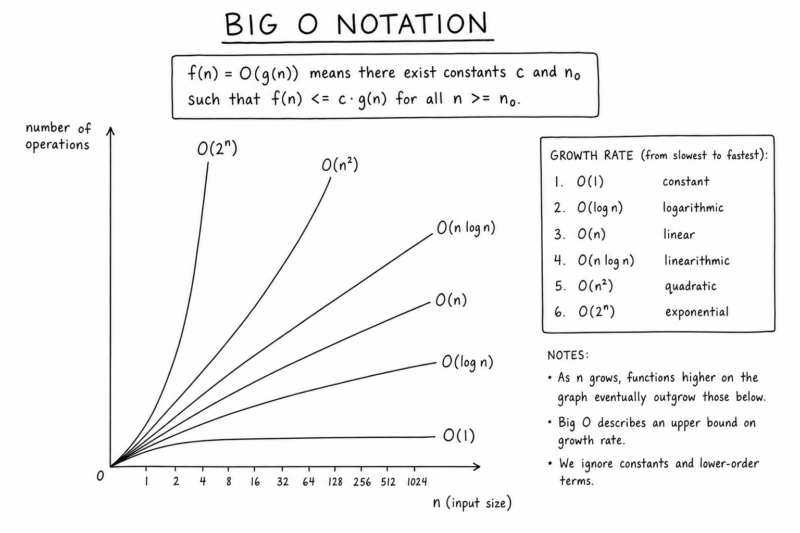
Big-O notation describes how algorithm runtime or space scales with input size. Full study note: definition, common complexity classes, examples, common mistakes, and applications.
Mathematics
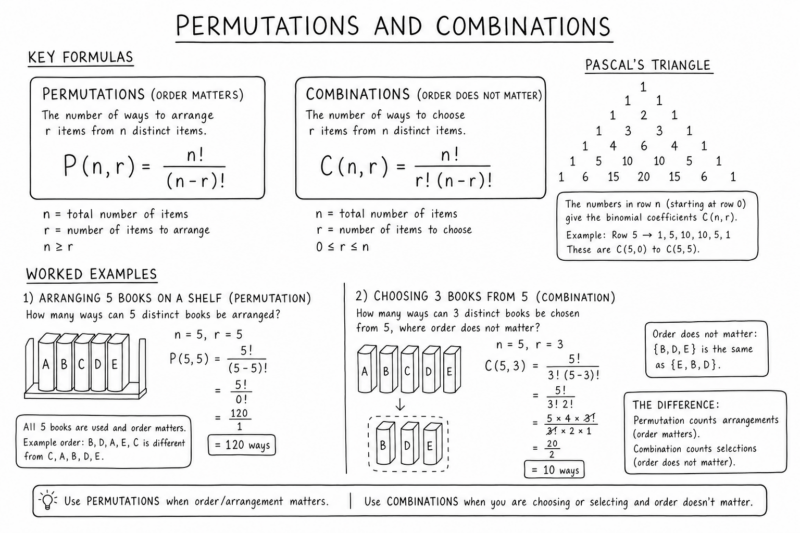
Permutations count ordered selections; combinations count unordered ones. Full study note: formulas, the difference, worked examples, Pascal’s triangle, the binomial theorem, and applications.
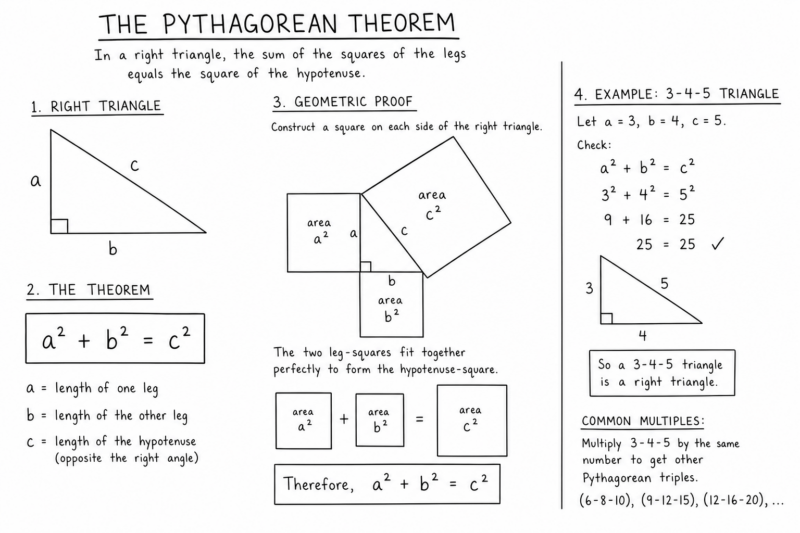
The Pythagorean theorem with three compared proofs, eight verified triples, worked examples, and wrong-answer diagnostics.
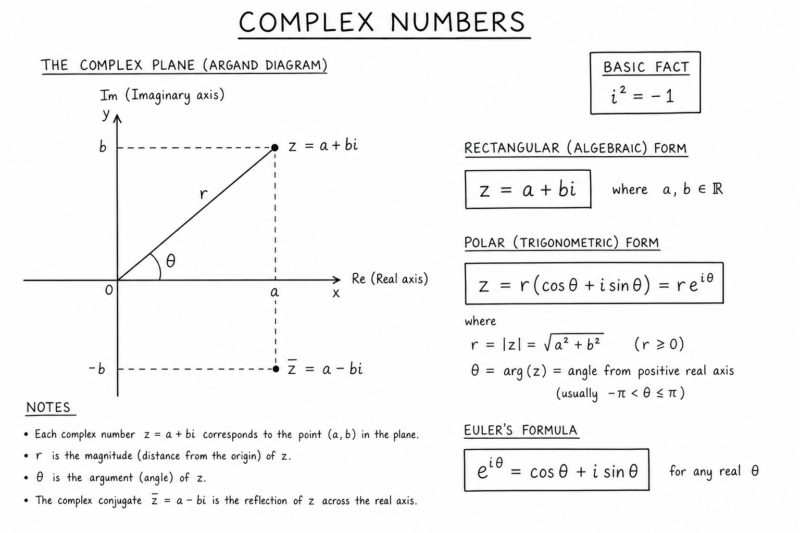
Complex numbers explained with an Argand-plane visual, checked operations, polar form, Euler form, roots, and applications.
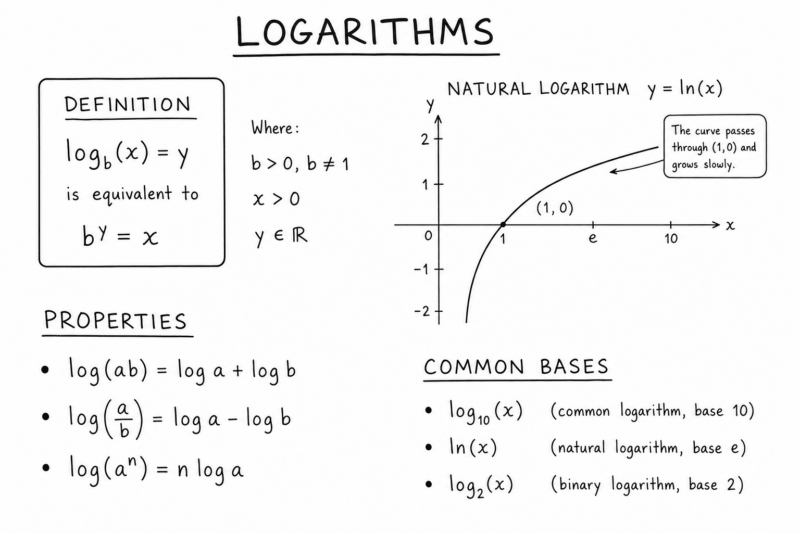
Logarithms are the inverse of exponentiation. Full study note: definition, the seven core rules, common bases, change of base, applications in science, computing, and finance, plus common pitfalls.
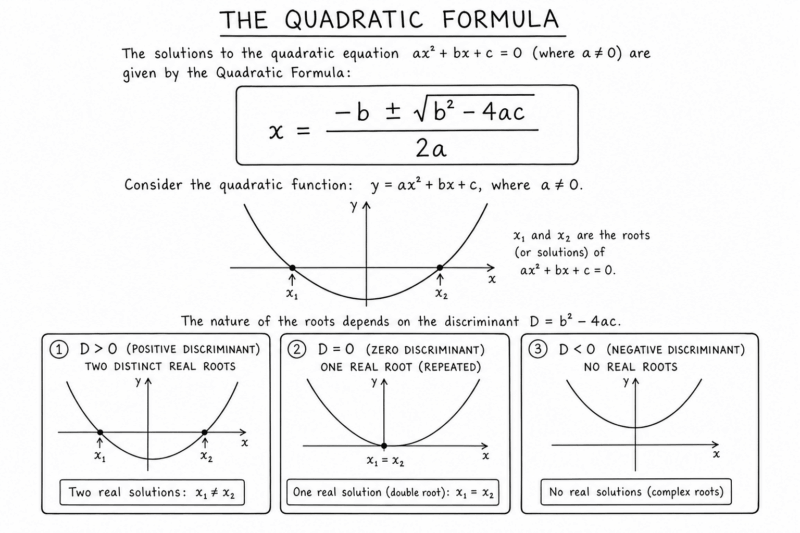
The quadratic formula with a step-by-step derivation, checked discriminant decisions, worked roots, and numerical-stability notes.
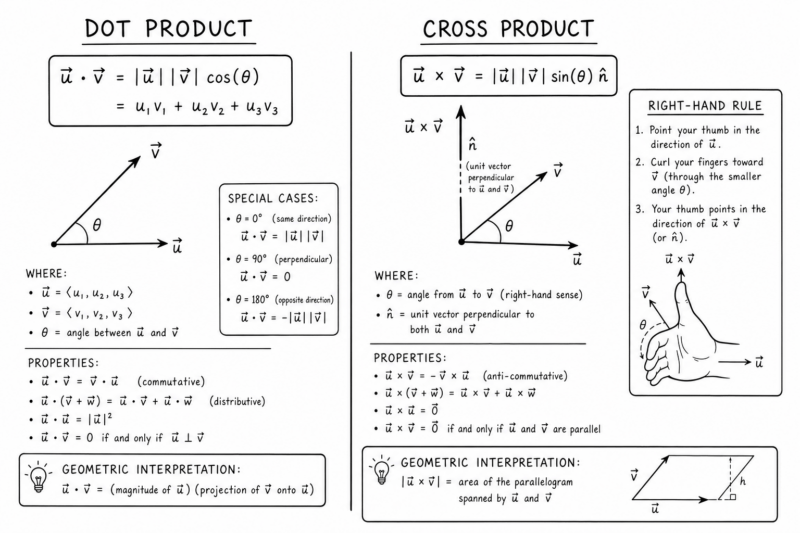
Dot product and cross product are the two fundamental vector operations. Full study note: formulas, geometric meaning, the right-hand rule, properties, and applications across physics, graphics, and ML.
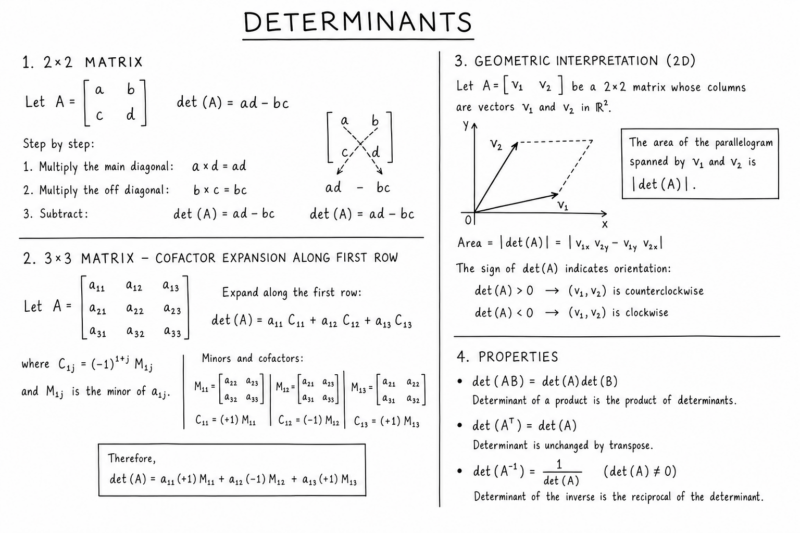
Determinants in linear algebra are scalar values that capture how matrices scale volumes. Full study note: 2×2 and 3×3 formulas, cofactor expansion, properties, geometric meaning, and applications.
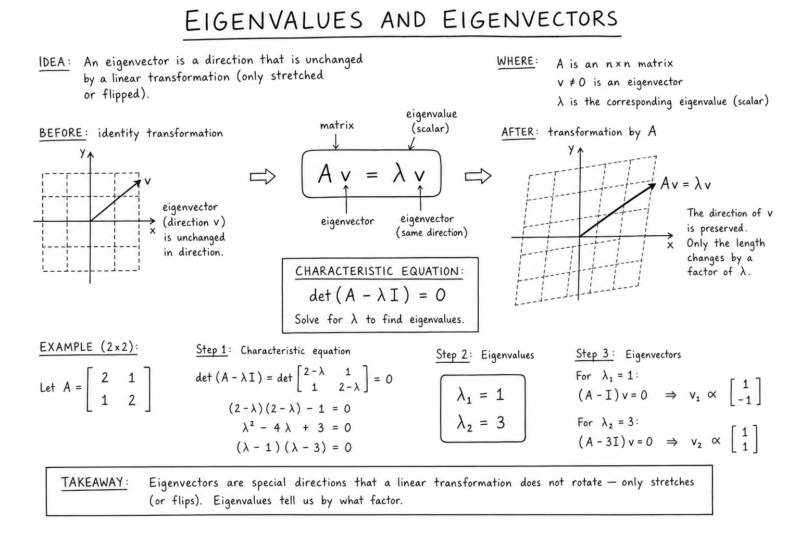
Eigenvalues and eigenvectors describe the directions a matrix preserves and the factor it scales them by. Full study note: definition, computation, geometric meaning, applications in PCA, dynamical systems, and quantum mechanics.
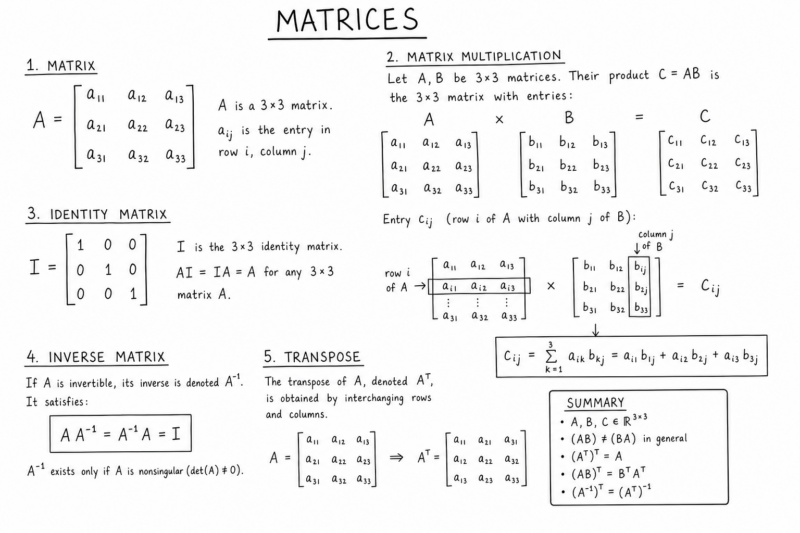
Matrices in linear algebra are rectangular arrays that encode linear transformations and systems of equations. Full study note: notation, operations, multiplication, inverse, identity, and applications.
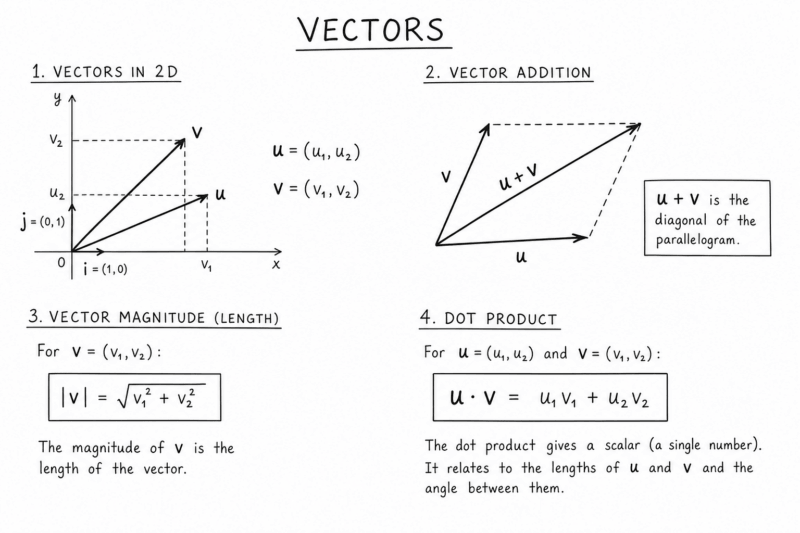
Vectors in linear algebra represent quantities with magnitude and direction. Full study note: components, addition, dot product, magnitude, unit vectors, and applications in physics, graphics, and machine learning.
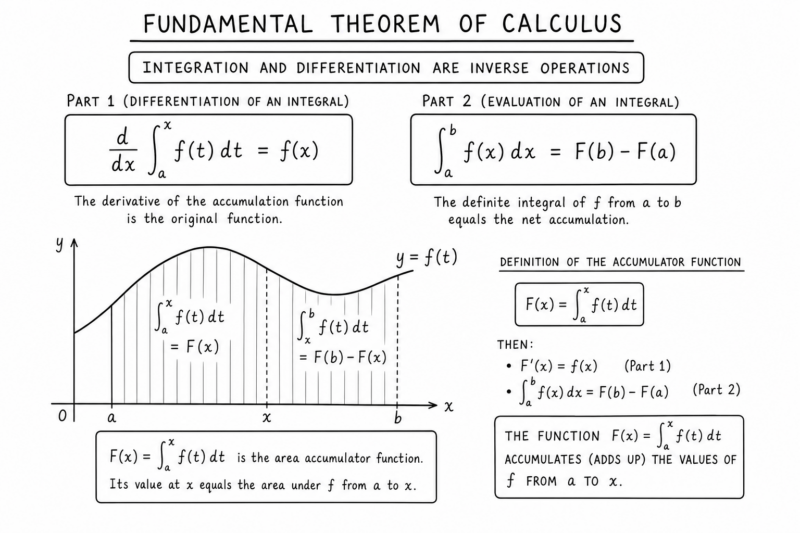
The Fundamental Theorem of Calculus links derivatives and integrals as inverse operations. Full study note on both parts, the proof intuition, worked examples, applications, and the history.