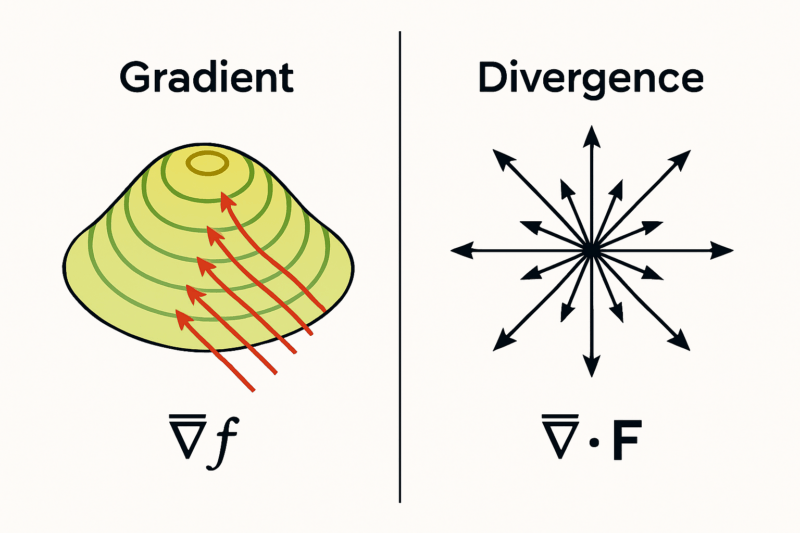
The gradient of a scalar field points in the direction of steepest increase. The divergence of a vector field measures net outflow per unit volume. This study note covers the nabla operator, the gradient and its geometric meaning, the divergence and its sources/sinks interpretation, a worked example, the divergence theorem, and applications in electromagnetism, fluid dynamics, heat transfer, and gradient-descent optimization.
Mathematics
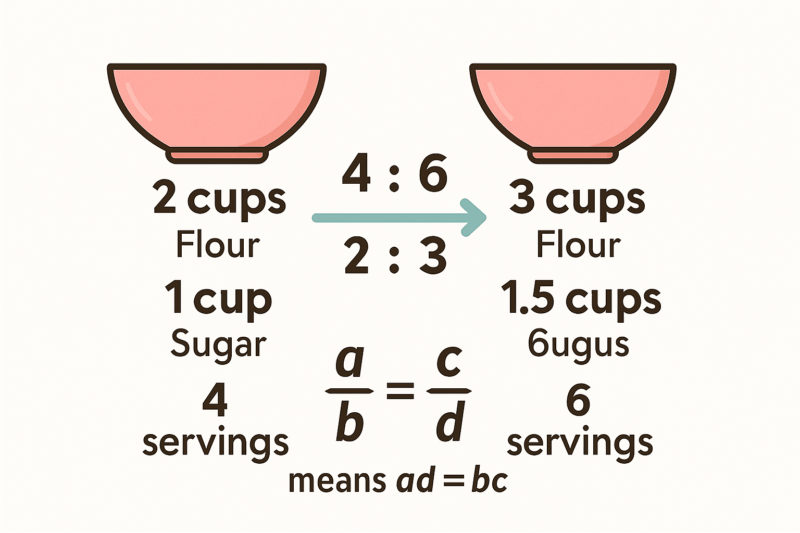
A ratio compares two quantities; a proportion equates two ratios. This study note covers ratio simplification, cross-multiplication, direct vs inverse proportion, worked examples (recipe scaling, workers and days, currency conversion), compound ratios and percentages, and applications in cooking, chemistry stoichiometry, map scales, finance ratios, mechanical advantage, and statistics.
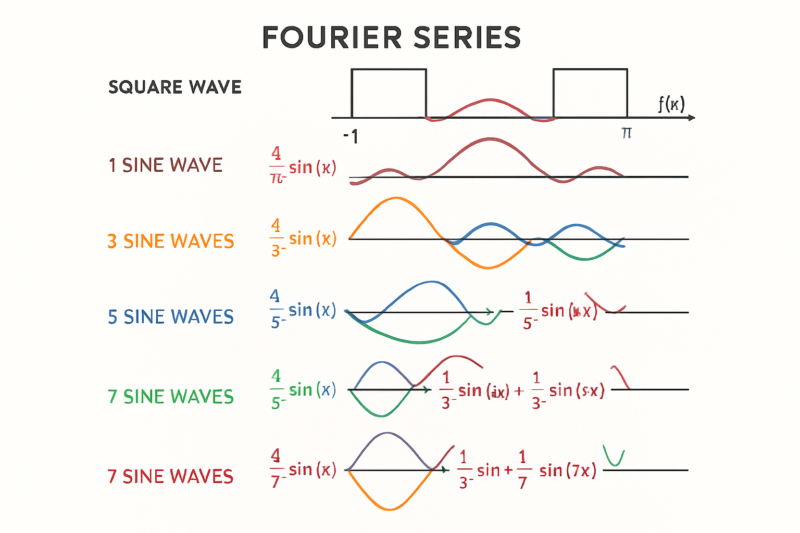
A Fourier series decomposes a periodic function into a sum of sines and cosines. This study note covers the standard real form, the complex-exponential form, orthogonality, convergence and the Gibbs phenomenon, a worked square-wave example, the connection to the Fourier transform, and applications in audio, image compression (JPEG), quantum mechanics, the heat equation, MRI, and communications (OFDM).
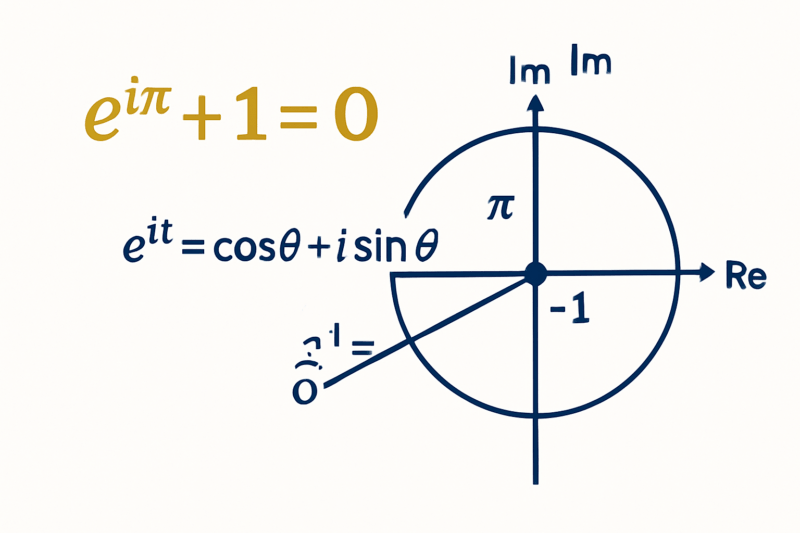
Euler’s identity e^(iπ) + 1 = 0 is often called the most beautiful equation in mathematics. This study note covers the identity, the underlying Euler’s formula e^(iθ) = cos θ + i sin θ, three derivations (Taylor series, differential equations, geometry), consequences and applications in trigonometry, physics, Fourier analysis, and electrical engineering, and why mathematicians find it beautiful.
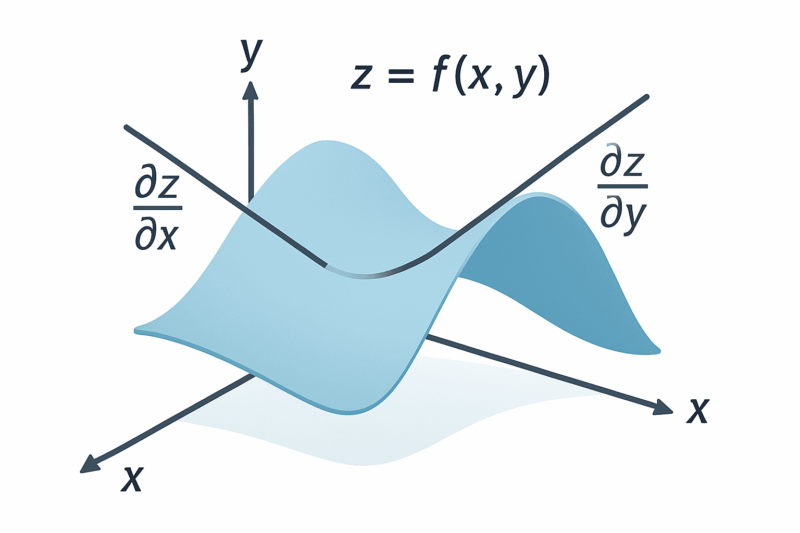
A partial derivative measures the rate of change of a multivariable function with respect to one variable, holding others constant. This study note covers the definition, computation rules, notation, higher-order partials, Clairaut’s theorem, geometric interpretation as tangent-plane slopes, and applications in physics (PDEs), thermodynamics, economics, optimization, and machine learning (gradients, backpropagation).
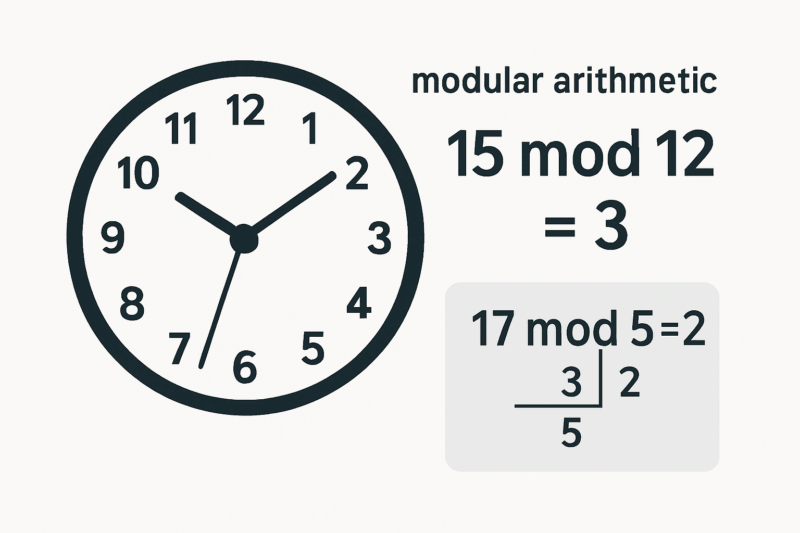
Modular arithmetic is the arithmetic of integers under wraparound at a fixed modulus, formalized by Gauss in 1801. This study note covers the definition of congruence mod n, addition/subtraction/multiplication and the rules for division, worked examples (day-of-week, last digit, solving congruences), Fermat’s Little Theorem, and applications in RSA cryptography, hash functions, check digits, pseudo-random generators, and error-correcting codes.
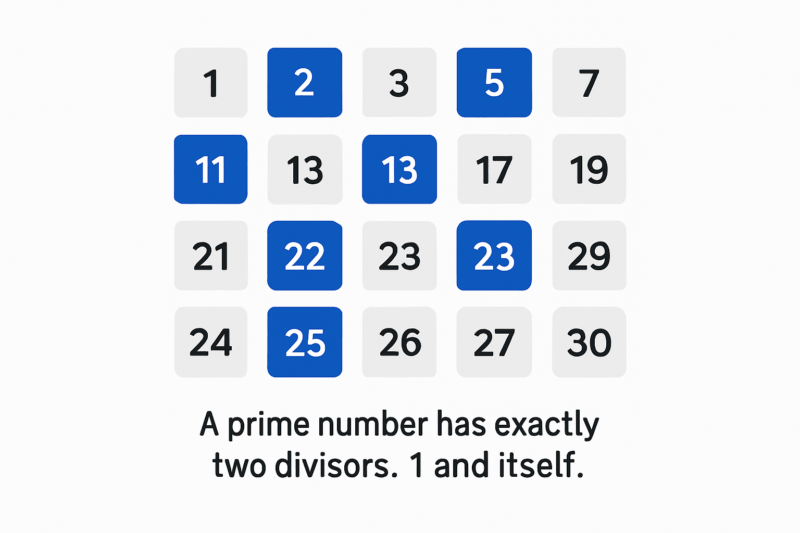
A prime number is a positive integer greater than 1 with no divisors other than 1 and itself. This study note covers the definition, the Fundamental Theorem of Arithmetic, Euclid’s proof that infinitely many primes exist, the Prime Number Theorem describing prime density, the Sieve of Eratosthenes, the asymmetry between primality testing and factoring, and applications in cryptography, hashing, and number theory.
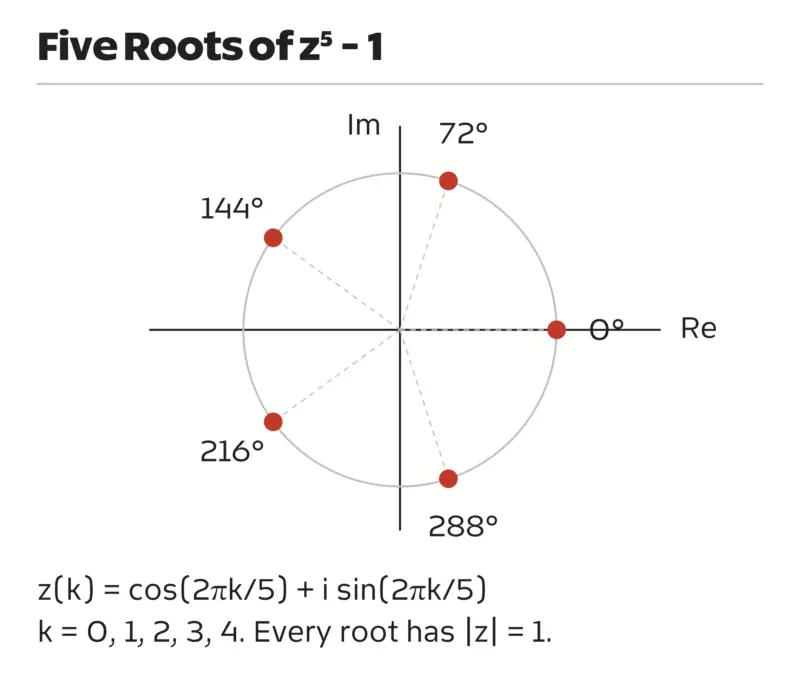
The Fundamental Theorem of Algebra states that every non-constant polynomial with complex coefficients has at least one complex root, and a degree-n polynomial has exactly n complex roots counted with multiplicity. This study note covers the statement, complete factorization, multiplicity, conjugate roots of real polynomials, the topological proof sketch, the Galois unsolvability of the quintic, and applications.
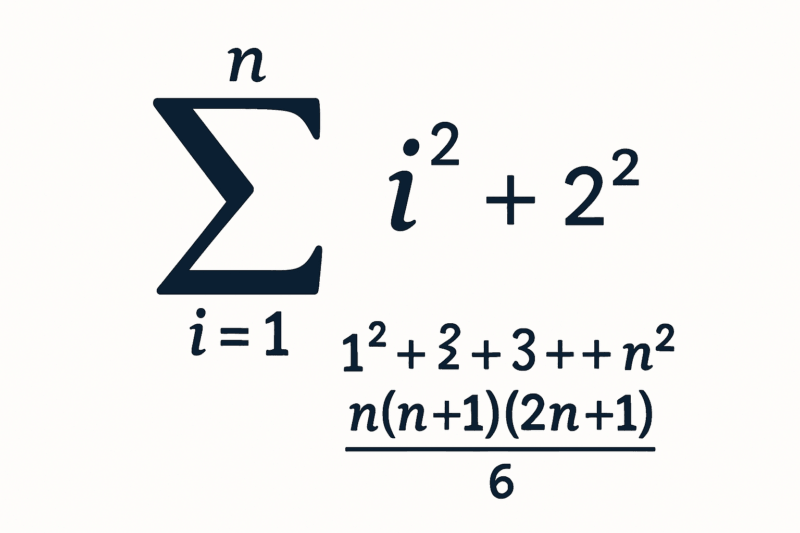
Summation notation uses the capital sigma symbol to compactly write the sum of many terms. This study note covers the parts of summation notation, basic and closed-form examples, the four classic closed-form sums (1, i, i², i³), properties (linearity, splitting, index shifts), worked examples, double sums, and applications in statistics, calculus, linear algebra, probability, and computer science.
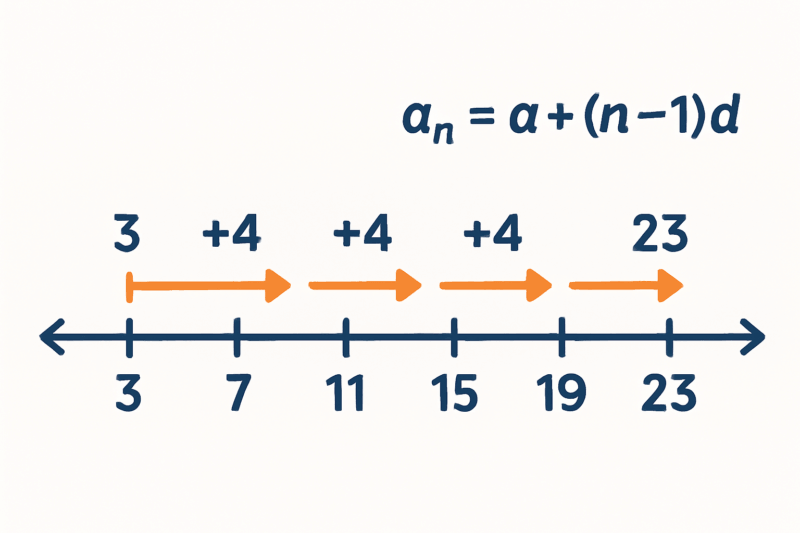
An arithmetic progression is a sequence with a constant difference between consecutive terms. This study note covers the general term a_n = a + (n−1)d, the sum formula S_n = (n/2)(a + a_n), worked examples, the Gauss summing story, AP versus GP, and applications in simple interest, salary increments, stadium seating, and kinematics.
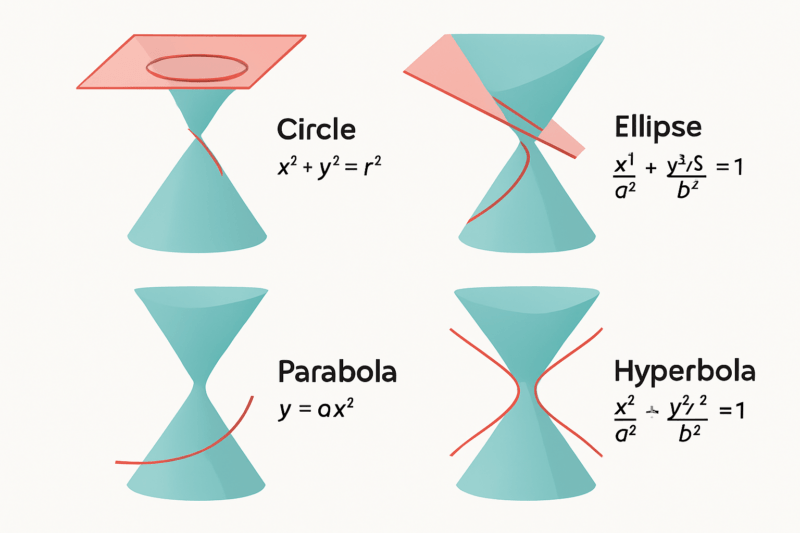
Conic sections are curves obtained by slicing a double cone with a plane: circle, ellipse, parabola, and hyperbola. This study note covers their geometric definitions, standard equations, the unifying second-degree polynomial and discriminant, the focus-directrix definition and eccentricity, reflective properties of each conic, the connection to Kepler’s laws of orbital motion, and applications in astronomy, optics, and engineering.
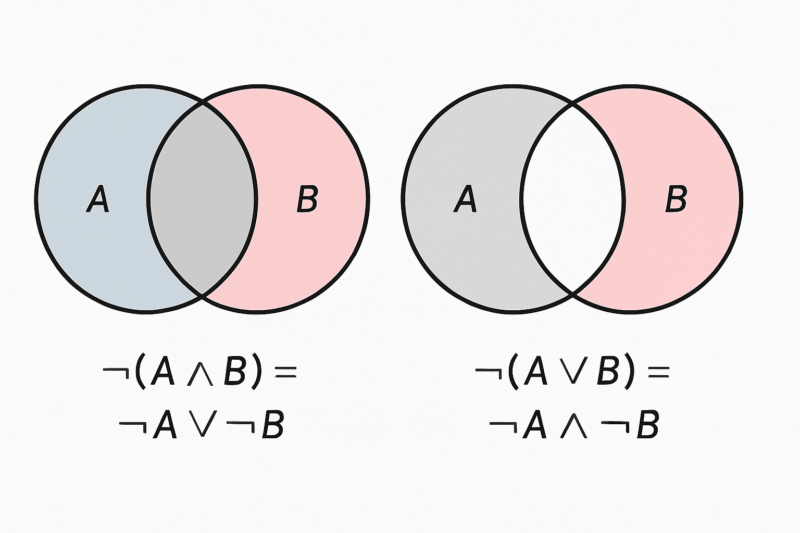
De Morgan’s laws are two logical equivalences relating negation, conjunction, and disjunction: NOT(P AND Q) ≡ NOT P OR NOT Q, and NOT(P OR Q) ≡ NOT P AND NOT Q. This study note covers the logical and set-theoretic forms, truth-table verification, Boolean algebra and digital logic implications, and applications in programming, database queries, and predicate logic with quantifiers.