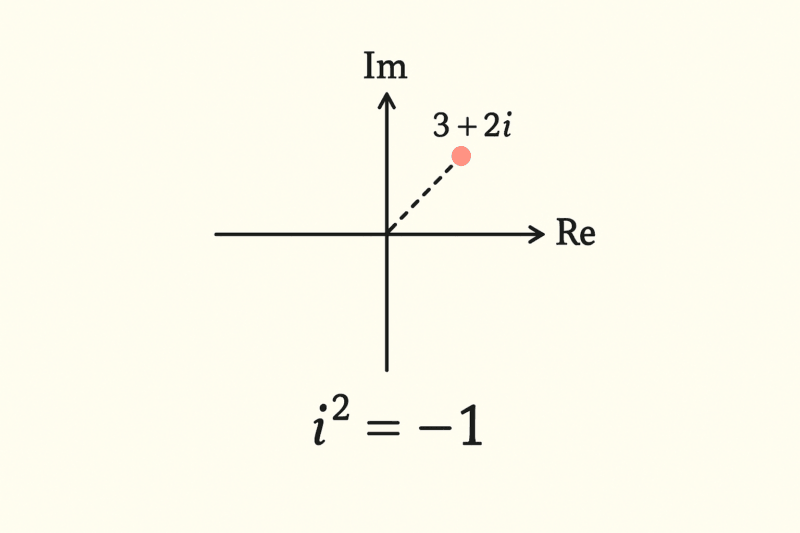
Imaginary numbers extend the real number system using the unit i, defined by i² = -1. This study note covers the imaginary unit, powers of i, complex numbers, the complex plane, and why imaginary numbers are essential in algebra, electrical engineering, quantum mechanics, signal processing, and Euler’s identity.
Mathematics
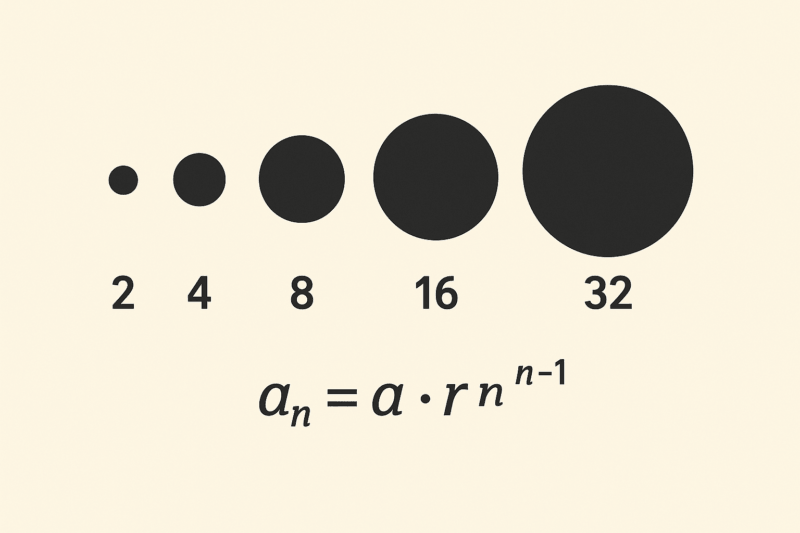
A geometric progression is a sequence where each term equals the previous term multiplied by a fixed common ratio. This study note covers the nth-term formula, finite and infinite sums, the geometric mean, worked examples, and real-world applications including compound interest, radioactive decay, and musical scales.
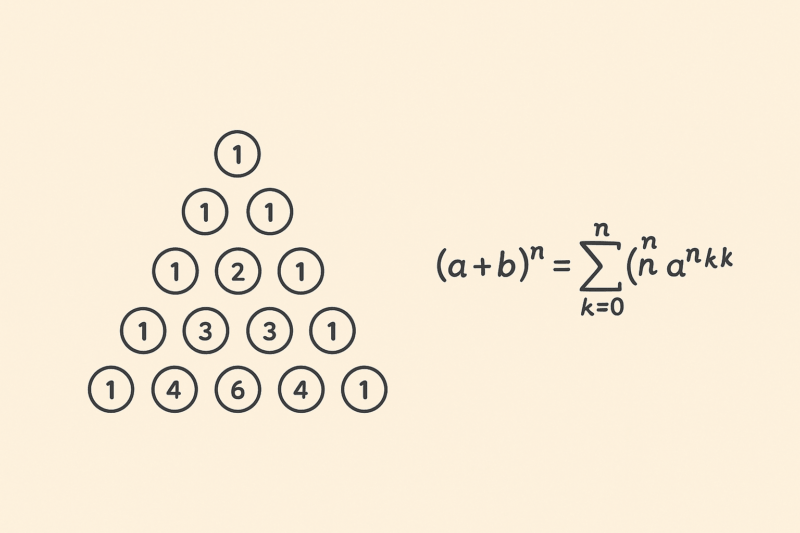
The binomial theorem expands (a+b)^n as a sum of polynomial terms with coefficients given by Pascal’s triangle. This study note covers the formula, binomial coefficients, worked examples, Pascal’s triangle, why the theorem works combinatorially, and applications across combinatorics, probability (binomial distribution), Newton’s generalized binomial for non-integer exponents, and physics approximations.
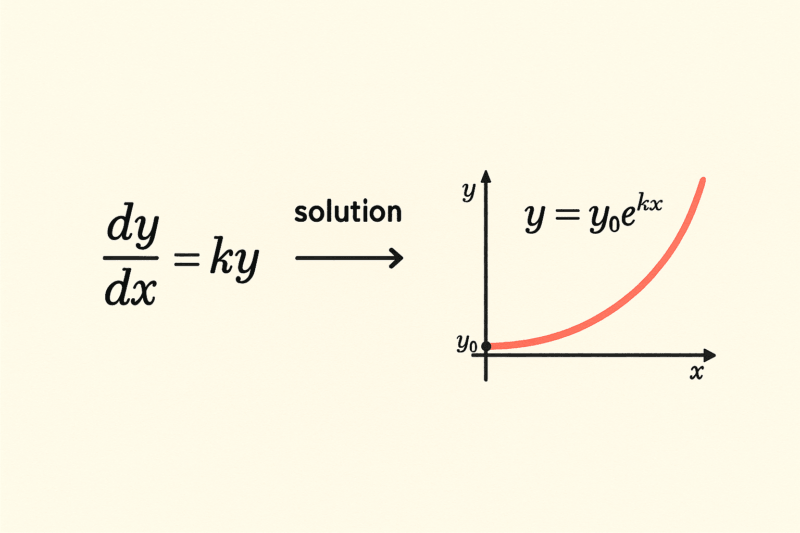
A differential equation relates a function to its derivatives. This study note covers what they are, order and linearity, ODEs vs PDEs, three canonical first-order ODEs (exponential growth, logistic, Newton’s cooling), the second-order SHM equation, initial conditions vs boundary conditions, and numerical methods for problems without closed-form solutions.
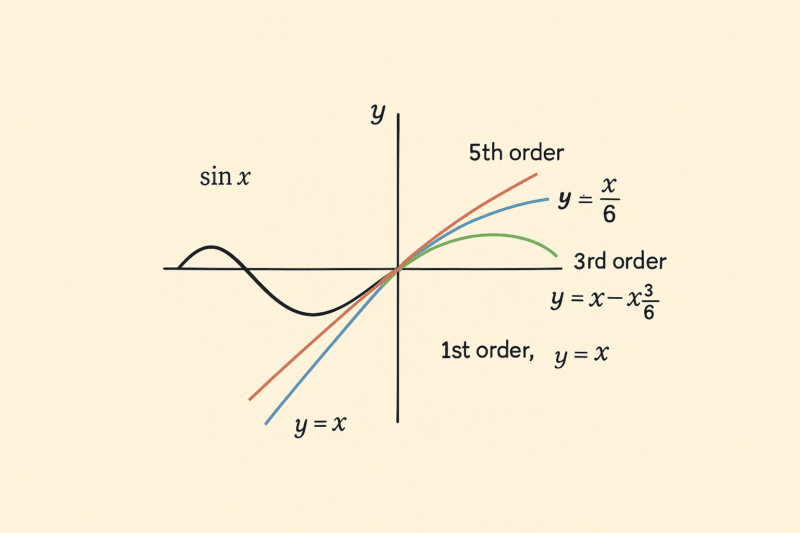
Taylor polynomials approximate functions locally. Learn when an infinite Taylor series represents the function, how to estimate the remainder and how common Maclaurin expansions are used in worked problems.
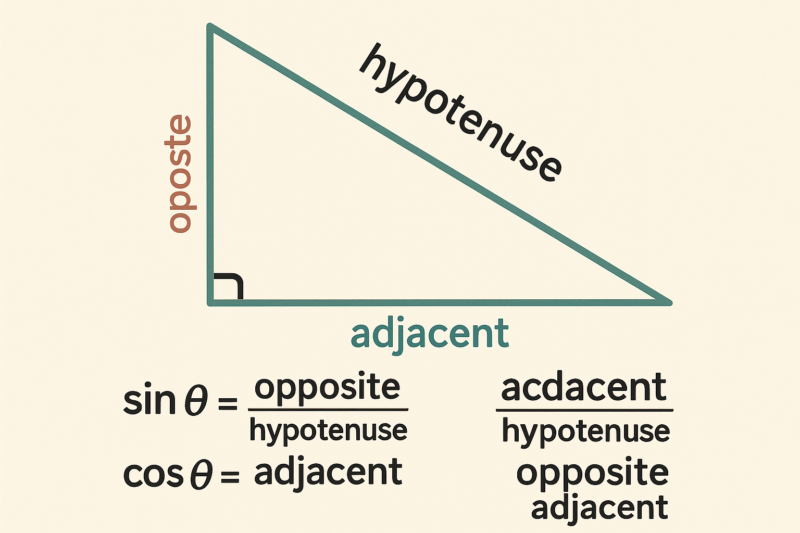
Sine, cosine, and tangent are the three fundamental trigonometric ratios. This study note covers SOH-CAH-TOA, worked examples, special triangles (30-60-90 and 45-45-90), the unit circle extension to all angles, radians vs degrees, and the key identities (Pythagorean, quotient, reciprocal, co-function, even/odd, sum-and-difference).
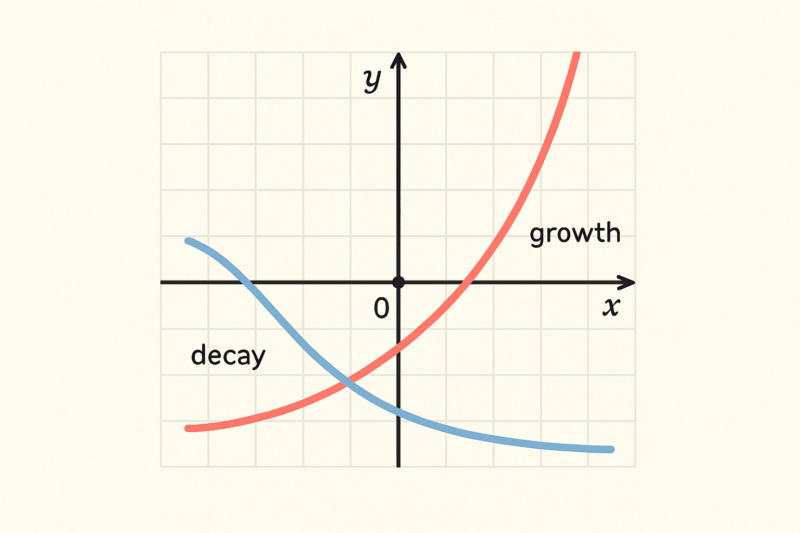
An exponential function f(x) = a^x has the variable in the exponent. This study note covers the definition, the difference between growth (a > 1) and decay (0 < a < 1), the algebraic properties, why the number e is the natural base, doubling time and half-life formulas, and the dozens of real-world processes (compound interest, radioactive decay, viral spread, RC circuits) that follow exponential dynamics.
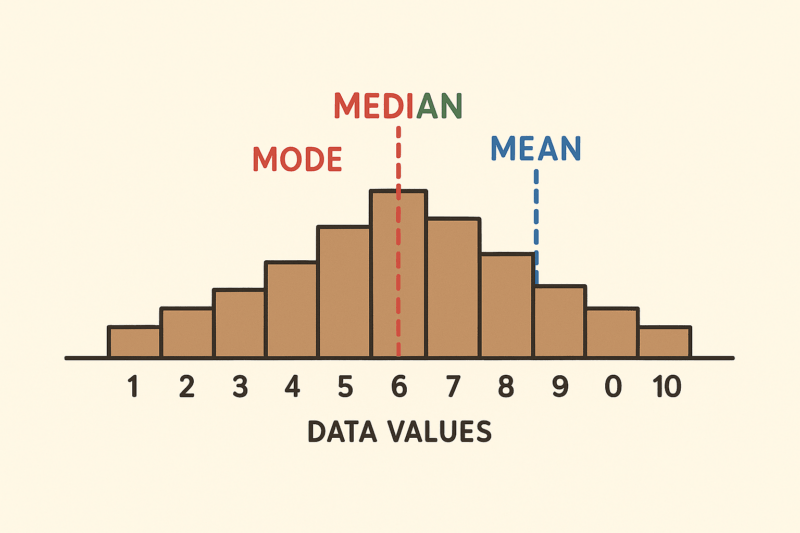
Mean, median, and mode are the three classic measures of central tendency in statistics. This study note covers how to calculate each, when to use which, what their relative positions tell you about the shape of a distribution (skewness), the weighted mean, and the practical rules of thumb for reporting central tendency on real data.
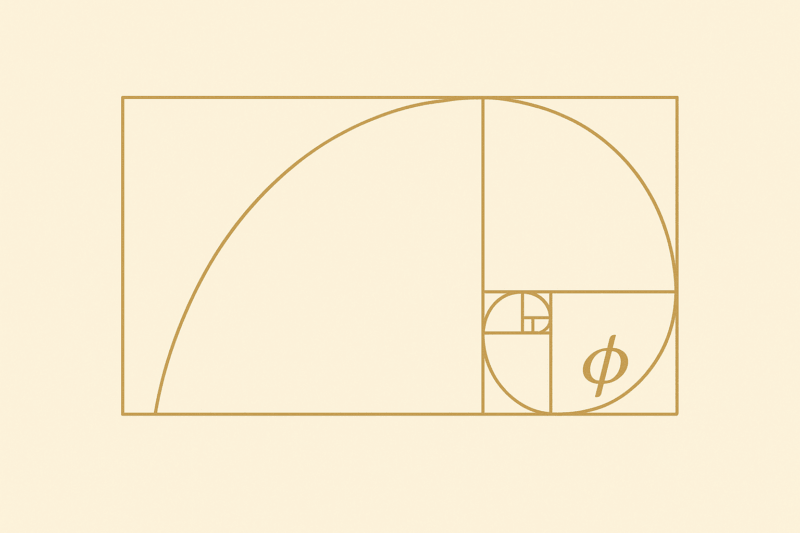
The golden ratio φ = (1 + √5) / 2 ≈ 1.618 is an irrational number with surprising mathematical depth. This study note covers the definition, key properties (self-similarity, reciprocal, continued fraction), the Fibonacci connection, the golden rectangle and spiral, where φ actually appears in nature (phyllotaxis, pentagonal symmetry, quasicrystals), and the famous claims about art and architecture that don’t survive scrutiny.
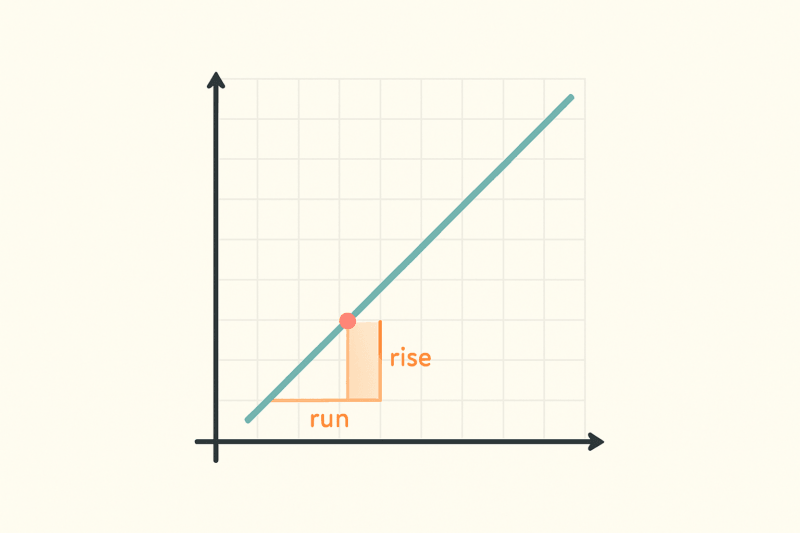
Slope-intercept form y = mx + b is the most useful way to write the equation of a straight line. This study note covers what m (slope) and b (y-intercept) mean, how to plot a line in two steps, conversions from standard form and point-slope form, special cases (horizontal, vertical, parallel, perpendicular lines), and why this one form underlies every linear model in physics, economics, and statistics.

The Fibonacci sequence (1, 1, 2, 3, 5, 8, 13, 21, …) is defined by F(n) = F(n-1) + F(n-2). This study note covers the definition, the original rabbit problem, the golden ratio connection, Binet’s closed-form formula, key identities (Cassini, sum-of-squares, GCD), and where the sequence appears in nature, computer science, and finance.

A Venn diagram is a visual representation of sets and the logical relationships between them. This study note covers the universal set, two-set and three-set Venn diagrams, the five core set operations (union, intersection, difference, complement, symmetric difference), the laws of set algebra (De Morgan’s, distributivity, etc.), and practical applications from probability to database joins.