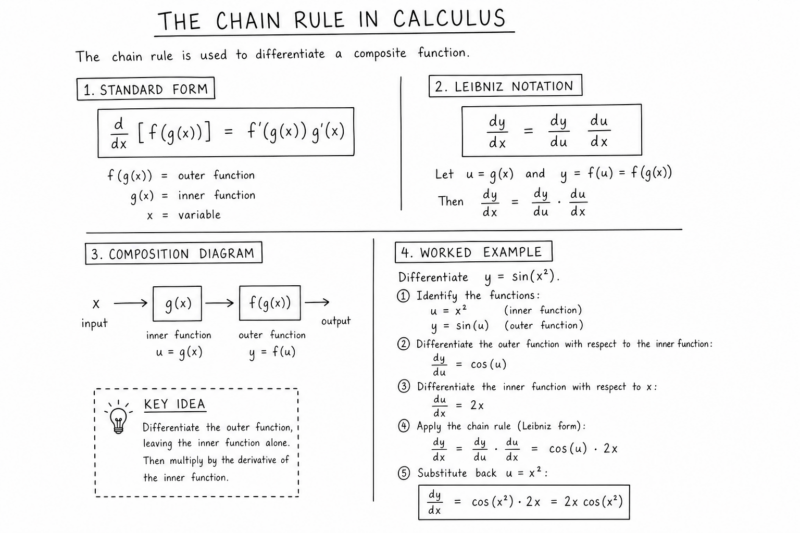
The chain rule differentiates composite functions. Full study note covering the formula, intuition, the three-step recipe, worked examples, multivariable extensions, and the central role in machine learning backpropagation.
Mathematics
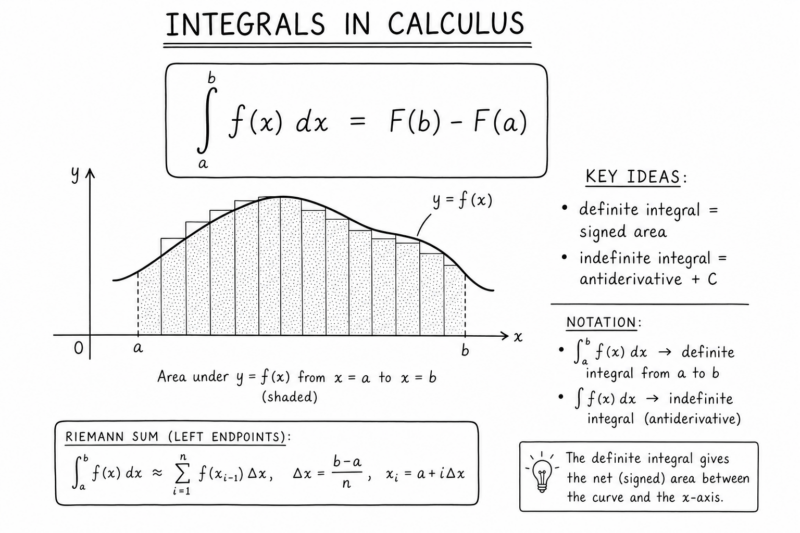
Integrals in calculus accumulate quantity over an interval. Full study note: definite vs indefinite, Riemann sums, antiderivatives, integration techniques, applications, and the connection to derivatives.
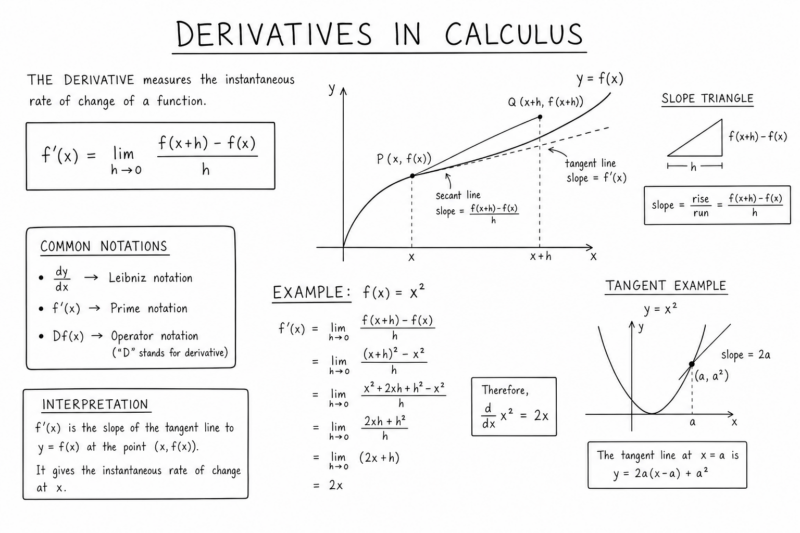
Derivatives in calculus measure instantaneous rate of change. Full study note on the limit definition, common rules, notation, applications, and what derivatives actually mean in physics, economics, and machine learning.
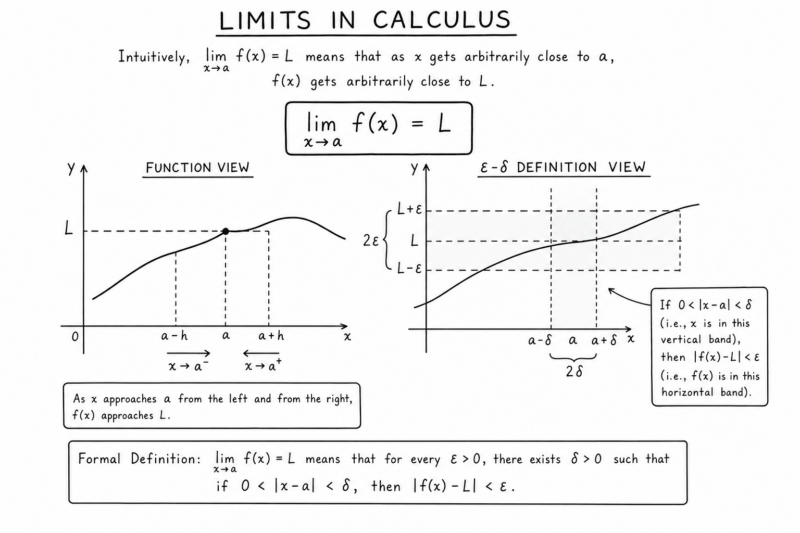
Limits in calculus describe what a function approaches near a point. Full study note covering the formal definition, limit laws, one-sided limits, indeterminate forms, and the everyday intuition that makes the rest of calculus work.
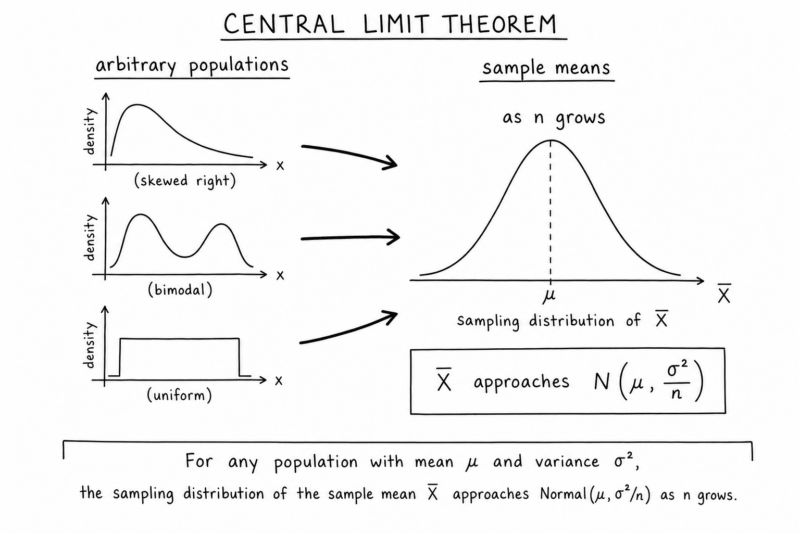
The Central Limit Theorem says sample means tend toward a normal distribution regardless of the underlying data shape. Why it works, how big a sample you need, and where it quietly fails.
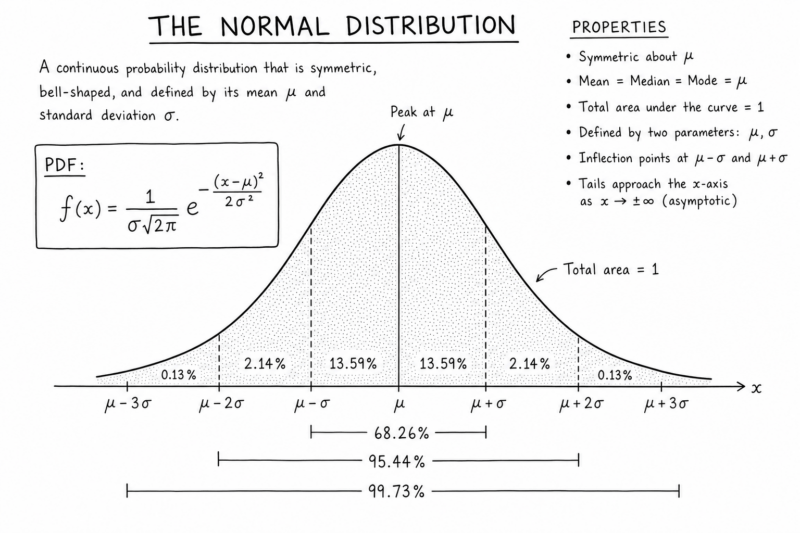
The normal distribution is the bell-shaped curve behind most of statistics. Get the formula, the 68-95-99.7 rule, z-scores, the central limit theorem connection, and the limits of the model.
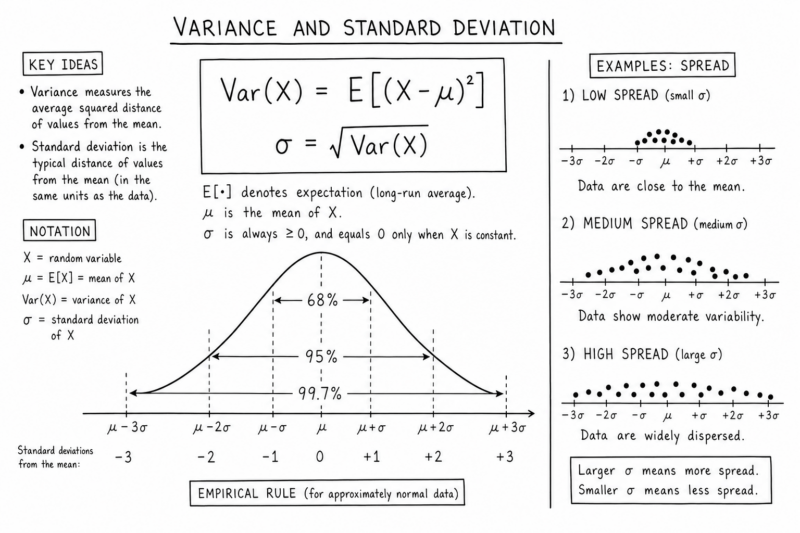
Variance and standard deviation measure how spread out data is around the mean. The two numbers that turn a flat average into a real picture of risk, with formulas, examples, and limits.
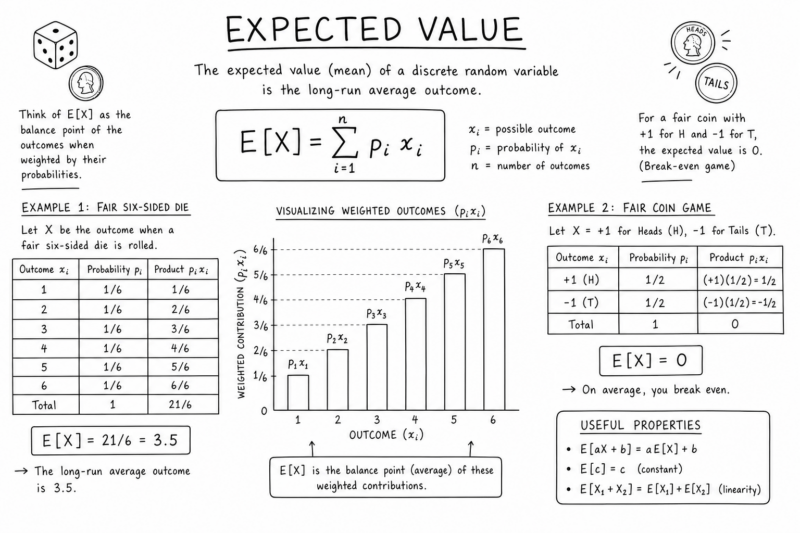
Expected value is the probability-weighted average of all possible outcomes. The simplest decision tool that beats gut feeling — and the conditions under which it quietly fails.
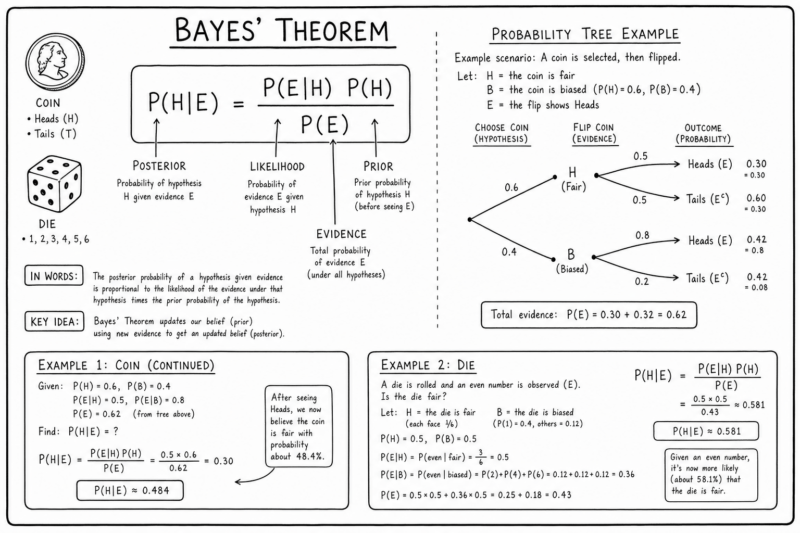
Bayes’ Theorem updates probabilities as new evidence arrives. Full guide to the formula, the base rate fallacy, worked examples, and the modern applications that make Bayesian thinking essential.
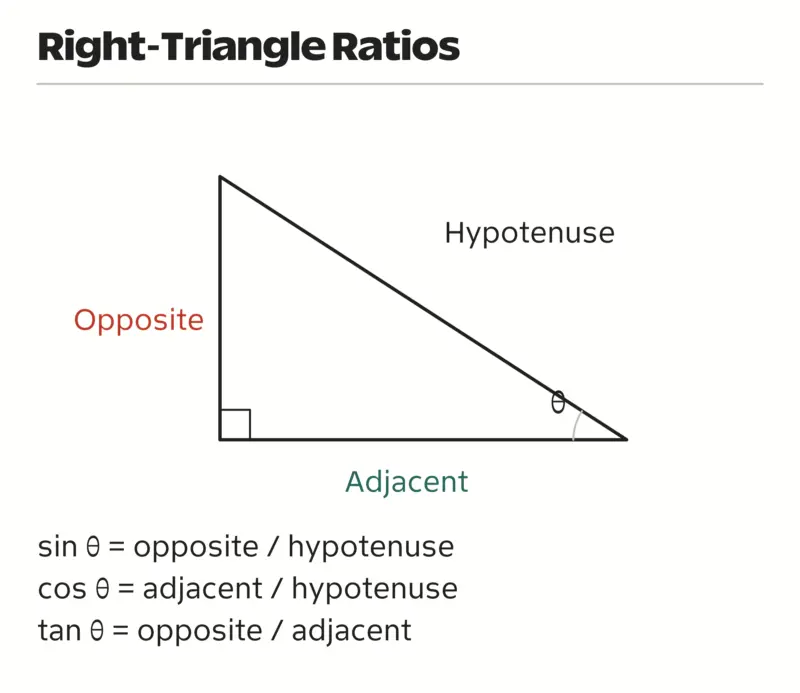
Trigonometric identities are the backbone of advanced mathematics, appearing in calculus, physics, engineering, and signal processing. This comprehensive reference organizes every essential trig identity with clear explanations and proofs. From Pythagorean and reciprocal identities to double-angle, half-angle, and sum-to-product formulas, everything you need is in one place. Bookmark this page for quick reference during problem-solving and exam preparation.

Whole numbers are the foundation of arithmetic and number theory. Starting from zero and extending infinitely, they form the basis for counting, ordering, and basic mathematical operations. Understanding whole numbers, their properties, and how they relate to integers, natural numbers, and rational numbers builds mathematical fluency. This reference page covers definitions, properties, operations, number line representation, and practice problems.

Supremum and infimum are fundamental concepts in real analysis that extend the ideas of maximum and minimum. The supremum is the least upper bound of a set, while the infimum is the greatest lower bound. These concepts are critical for understanding limits, continuity, and convergence. This reference page covers definitions, properties, theorems, and worked examples for both supremum and infimum in mathematical analysis.