
 by
by
Most affiliate marketing tools earn their keep only when they remove work you already understand. I learned that the boring, expensive way, paying for shiny dashboards that looked like progress and did nothing for revenue. The 11-tool stack that survived is WordPress and Rank Math for publishing, DataForSEO and Search Console for demand, GT Link Manager for redirects, Impact and PartnerStack for programs, and four content tools that keep the work from getting sloppy.
My test is dead simple. Does the tool protect a link, sharpen a decision, save a refresh, or help a reader trust the recommendation? If it can’t do at least one of those, it’s not in my stack anymore. Doesn’t matter how good the marketing page looks.
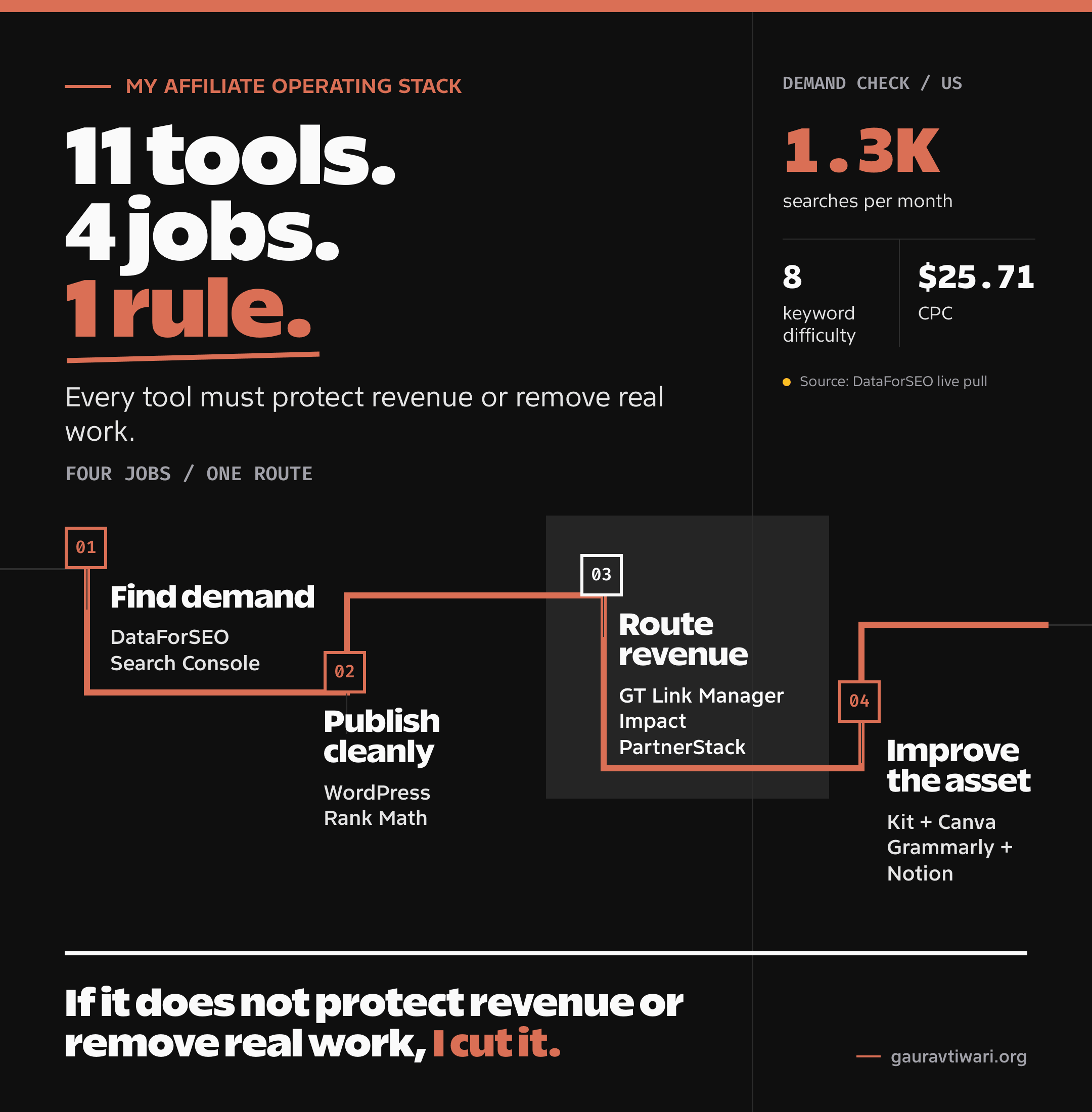
Start with four jobs, not 11 subscriptions: publish on WordPress, read demand in Search Console, route offers through one managed link system, and join one network that fits your niche. Add Rank Math, DataForSEO, Kit, Canva, Grammarly, Notion, or a second network only when the missing capability is slowing down work you already do.
Affiliate Marketing Tools: The Stack I Actually Use
The query has real buying intent, but the obvious expansion terms are not equally useful. My live DataForSEO pull on July 15, 2026 put affiliate marketing tools at 1,300 US monthly searches, $25.71 CPC, and keyword difficulty 8. Affiliate marketing platforms is larger at 6,600 searches but much harder at difficulty 66. The current US results mix Impact’s platform page with beginner videos and broad 7-, 12-, 17-, and 40-tool roundups.
That’s the gap. You don’t need another list of 40 tools. Bloggers, creators, and small publishers need a stack they can actually operate on a Tuesday. I care about links that survive a three-year-old post, SEO data that turns into something publishable, and content that earns trust, not about collecting one more login.
| Tool | Job | Cost model | The catch |
|---|---|---|---|
| WordPress | Publishing and ownership | Free, open source; hosting costs extra | You maintain the site. |
| Rank Math | SEO metadata and schema | Free tier; paid upgrades | Its checklist cannot fix weak advice. |
| Google Search Console | First-party query data | Free | It reports only your own search visibility. |
| DataForSEO | Keyword, intent, and SERP data | Pay as you go | The API has a learning curve. |
| GT Link Manager | Managed /go/ redirects | Free, publicly available WordPress plugin | It is WordPress-only. |
| Impact | SaaS, hosting, and marketing programs | Free for publishers | Program approval is never automatic. |
| PartnerStack | B2B SaaS programs | Free for partners | Weak fit for physical-product niches. |
| Kit | Email capture and sequences | Free Newsletter plan; paid upgrades | Automation is wasted without traffic. |
| Canva | Original comparison graphics | Free tier; paid upgrades | Use interface screenshots for step-by-step tutorials. |
| Grammarly | Editing | Free tier; paid upgrades | Accepting every suggestion flattens your voice. |
| Notion | Program and refresh tracking | Free tier; paid upgrades | It can become another system to maintain. |
Publishing Base: WordPress + Rank Math
The first affiliate tool isn’t a network dashboard. It’s the place your recommendations live, and for me that’s WordPress. It gives me full control over URLs, internal links, schema, Gutenberg blocks, disclosures, comparison tables, and the long-term updates that make affiliate content pay. Hosted platforms feel easier on day one. They get harder once you’re maintaining a few hundred posts.
WordPress
WordPress sits at the center of my affiliate workflow because it keeps the asset on my side. I can swap a CTA from one managed link, drop in a comparison table, embed FAQ schema, and keep an old post earning without rebuilding the page. If you’re just starting out, begin with my affiliate marketing for beginners guide first, then come back for the tools.
WordPress also solves a quiet problem that bites you later: ownership. You can change hosts, themes, and plugins and still keep your URLs. That matters the day an article that’s earned for three years gets hit by a partner quietly changing its tracking URL… and you don’t want to touch the post to fix it.
Rank Math
Rank Math is the SEO layer because it handles titles, descriptions, schema, redirects, breadcrumbs, and content checks in one plugin. It’s not magic. It won’t rescue a weak article. But it keeps the technical surface clean enough that I can spend my attention on the recommendation and the proof, which is where affiliate articles actually win or lose.
What keeps it installed is the repeatable checklist for SEO, AEO, and GEO. Good affiliate content now needs clean schema, answer-first sections, clear entities, and tight internal links, and Rank Math nudges me through all of it. My Rank Math review covers where it beats lighter SEO plugins and where it tips into too much.
Google Search Console
Search Console isn’t optional, and it’s free, so there’s no excuse. It tells you which queries Google already ties to your site, which pages are bleeding impressions, and which articles are begging for a refresh. On June 3, 2026, Google began rolling out dedicated generative AI performance reports to a subset of sites. They show impressions in AI Overviews, AI Mode, and Discover, with breakdowns by page, country, device, and date.
Use it for decisions, not decoration. If a post pulls impressions for “best affiliate networks for beginners” and no clicks, rewrite the intro, fix the table, test a stronger title. If it’s earning clicks for a tool you barely mentioned, expand that section and add a real CTA. New to it? My Search Console setup guide gets you connected in a few minutes.
Research Tools: Find Demand Before You Write
The fastest way to burn a week is writing affiliate content for a keyword with no commercial intent and no path to trust. So I check demand first. I use DataForSEO when I want fresh keyword volume, CPC ranges, SERP features, competitor URLs, and difficulty. It’s not glamorous, but it’s reliable, and it’s pay-as-you-go instead of another monthly seat.
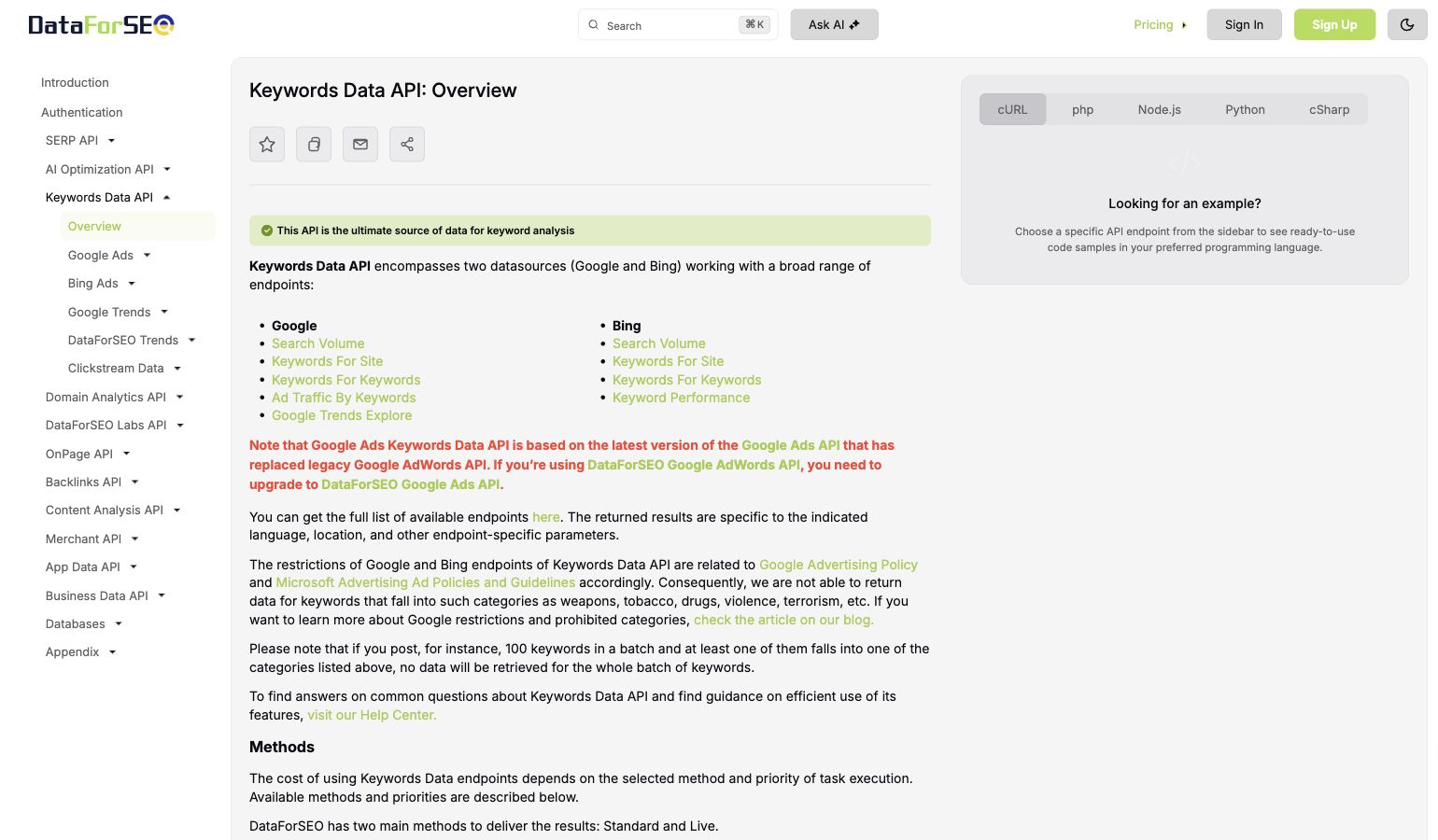
The numbers below came from live Google Ads volume, DataForSEO Labs difficulty and intent, and a live US organic SERP request on July 15, 2026. The main term is commercially useful without being brutally competitive. The broad platform and software terms belong here as supporting language, not as the page’s promise.
| Query | US searches/month | Difficulty | CPC | How I use it |
|---|---|---|---|---|
| affiliate marketing tools | 1,300 | 8 | $25.71 | Primary keyword and practical stack |
| affiliate marketing platforms | 6,600 | 66 | $24.95 | Supporting term for Impact and PartnerStack |
| affiliate marketing software | 1,900 | 54 | $45.92 | Supporting term for paid tools |
| best affiliate marketing tools | 110 | 2 | $25.85 | Comparison intent |
| affiliate marketing plugins WordPress | 320 | Not reported | $9.30 | Smaller WordPress section |
That told me exactly what to build: a practical stack, with the WordPress-plugin angle kept as a smaller section instead of its own bloated post. Data first, outline second. Not the other way around.
This is also where answer engine optimization and generative engine optimization begin. AI systems don’t reward another vague roundup. They reward clear entities: WordPress is the CMS, Rank Math is the SEO plugin, DataForSEO is the keyword-data source, Impact is the affiliate network, Kit is the email layer, GT Link Manager is the link-routing layer. Name the thing, every time.
Want the wider list? My best SEO tools guide has it. For affiliate work specifically, three tools I trust beat twelve that just make me feel busy.
Affiliate Link Tracking and Network Tools
The money layer is where beginners make the expensive mess. They paste raw affiliate URLs straight into posts, lose track of where those links live, then panic when a program switches networks and 80 articles point at a dead URL. A managed link system isn’t fancy. It’s basic hygiene, and it’s the cheapest insurance you’ll buy.
GT Link Manager
I route every offer through GT Link Manager, the /go/ link plugin I built for my own sites, because I want one place to change a destination, set sponsored and nofollow logic, and audit affiliate slugs. If a partner moves its program onto Impact, the article shouldn’t notice. The link manager absorbs the change, and the post keeps earning.
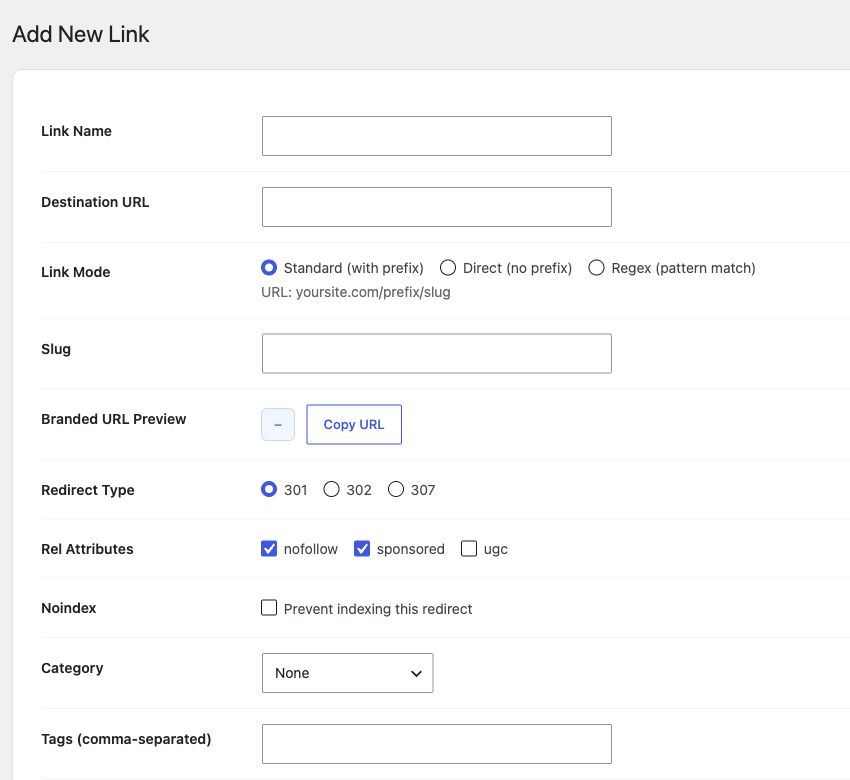
It also keeps two link types separate. Editorial internal links point to published guides. Affiliate redirects point to offers. Mix them and you get a site that’s painful to audit and easy to distrust. Fair catch: I built it, and it’s WordPress-only. If you prefer another tool, ThirstyAffiliates covers the same core redirect and organization job.
Disclosure rides along in that system too. The FTC’s disclosure guidance is blunt about it: readers shouldn’t have to dig to learn a link might pay you. So I keep disclosures visible and let the content earn the click anyway. If the recommendation only works when it’s hidden, it isn’t a recommendation.
Impact
Impact is the affiliate network I lean on for SaaS, hosting, and marketing programs. The reason’s simple: serious brands run their programs there, the reporting is readable, and once you know the interface, creating a tracked link isn’t a treasure hunt.
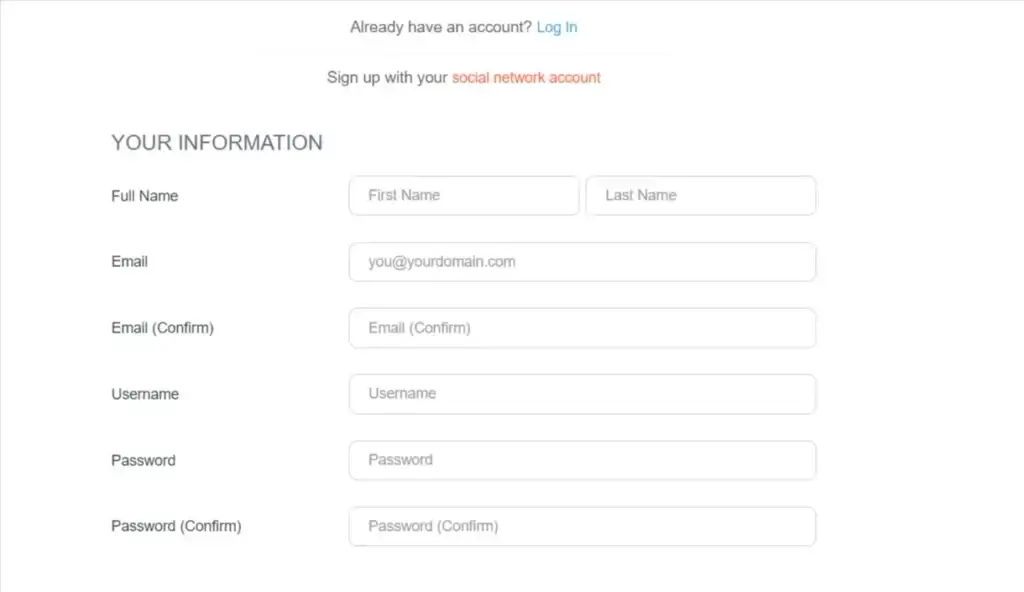
Joining a program is step one, and that’s all it is. You still have to pick the right offer, build the link, track it, and record which articles use which partner. That’s exactly why the network dashboard and a managed link system have to work as a pair.
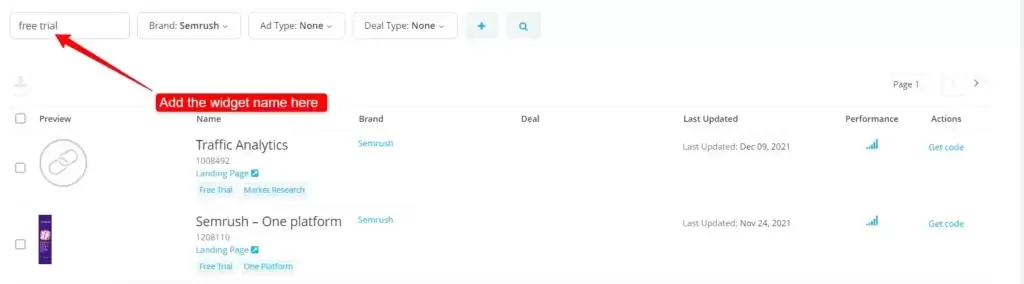
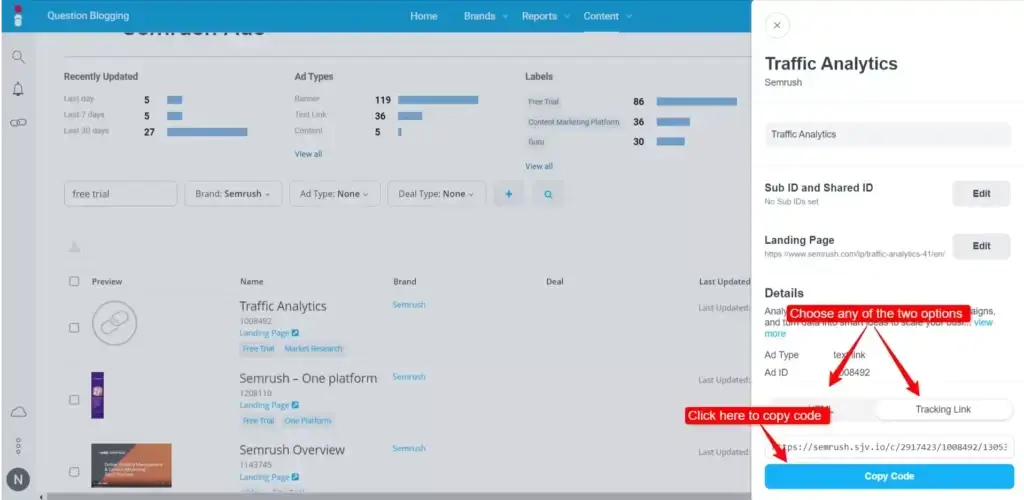
My Semrush affiliate program review shows how Impact fits a real workflow end to end. Look, the network isn’t the strategy. It’s the plumbing that lets the strategy pay you.
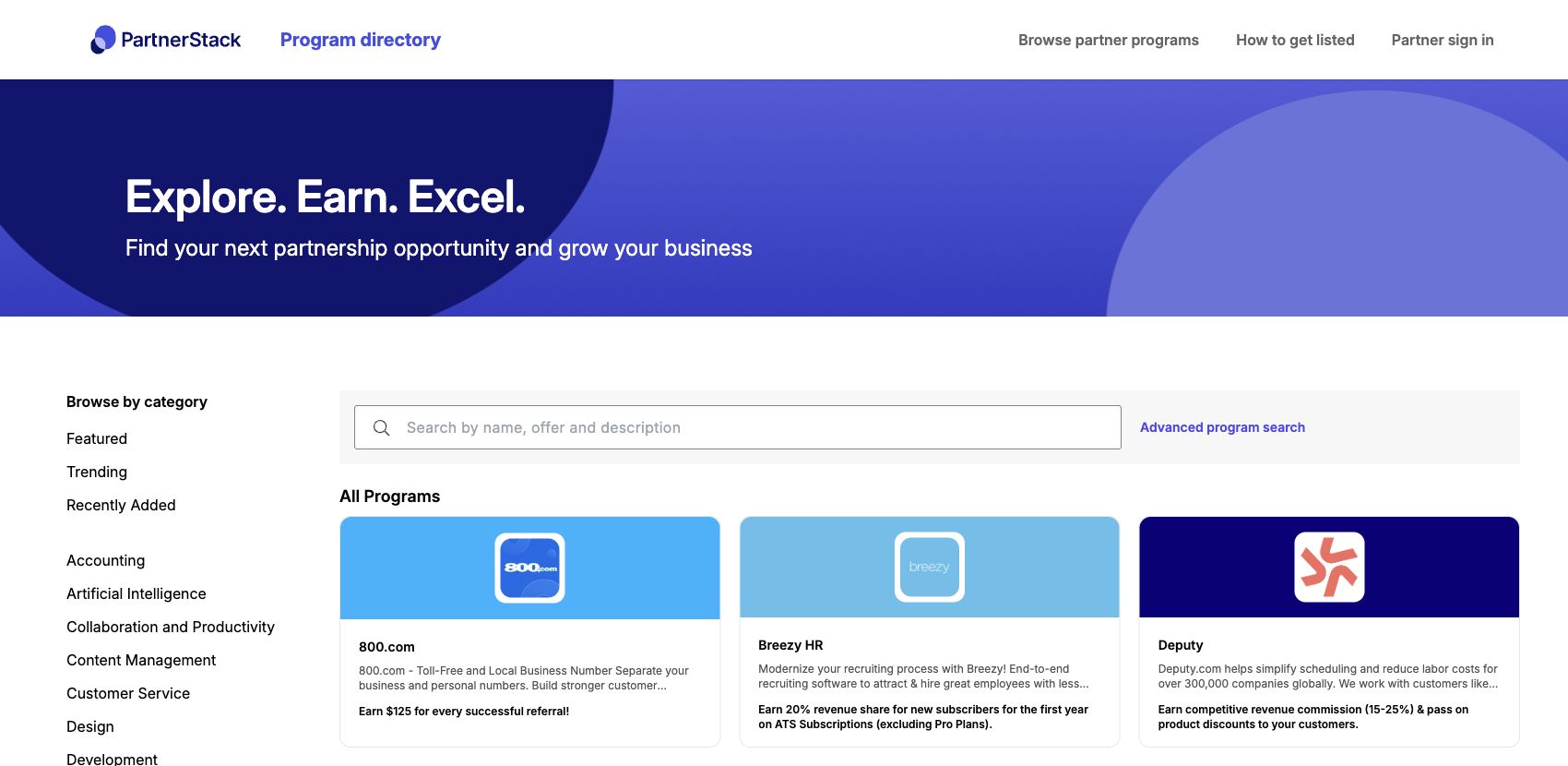
PartnerStack
PartnerStack is where I go for B2B SaaS. It’s not my first stop for every offer, but it’s strong when the purchase cycle is long and the commissions recur month after month. I treat it as the network I check once the content angle is already proven, not before. Skip it if your niche is physical products or consumer apps; the catalog leans B2B software, and you’ll find better fits on Impact or Amazon Associates.
Content and Conversion Tools
Affiliate content has two jobs: help the reader decide today, and help them remember you when they’re not ready to buy yet. That means writing, visuals, and email, in that order. You don’t need a bloated funnel stack before the content earns its first thousand visitors.
Kit
Kit is the email layer I trust when a topic has repeat value. Someone comparing hosting, SEO tools, or WordPress plugins probably won’t buy on the first visit. Capture them with a genuinely useful sequence and you get a second shot, without praying they bookmark the page. Kit’s free Newsletter plan supports up to 10,000 subscribers, so there is no reason to pay for advanced automation before traffic gives you someone to email.
This is also why I tie affiliate content to bigger money topics. My blog income diversification guide makes the case that affiliates shouldn’t be your only income stream, even when they’re working well. Especially when they’re working well, actually… that’s when people forget how fast a program can change its terms.
Canva and screenshots
Canva handles quick graphics when a visual comparison helps. For tutorials and network walkthroughs, I use screenshots from the actual interface so readers can match each step to what they see on screen. I check the media library first and make a new graphic only when a screenshot cannot explain the comparison.
Grammarly and Notion
Grammarly catches the typos and clunky lines I miss after a long writing session. Notion holds program notes, claims, old links, and refresh dates in one spot. Neither should become the work. They just keep the work from going sloppy at the edges.
WordPress Affiliate Tools I Keep Simple
For WordPress affiliate sites, I keep the plugin stack deliberately lean. More plugins mean more maintenance, more database tables, more update risk, and more weird edge cases the moment caching gets involved. If a plugin doesn’t protect revenue or save real time, it doesn’t get to live on the site just because it looks handy.
The only WordPress affiliate tools I treat as essential are a link manager, an SEO plugin, a solid caching setup, and sometimes a product plugin like AAWP for Amazon-heavy sites. Even then, AAWP only makes sense when Amazon is a real slice of the business. Otherwise my Amazon affiliate plugins guide is research, not a shopping list.
Performance matters here more than people admit. A slow affiliate page loses trust before it ever gets to the recommendation. So keep the plugin stack boring, measure the page, and add only the tool that fixes a problem you can actually see in the numbers.
Tools I Stopped Chasing
The category I dropped first was the “spy on everyone” tool. Competitive research has its place, but a tool that mostly teaches you to clone someone else’s funnel just makes your work flatter. You want competitor awareness, not competitor dependence. Here’s the rest of what fell off my list, and why.
- Generic AI writers: fine for rough notes, weak for trust-heavy recommendations unless you add real testing and a real opinion.
- Extra link shorteners: a nightmare to audit and quick to break when a program moves.
- Dashboard-heavy analytics: gorgeous screenshots, near-zero value if you never act on the data.
- One-off browser extensions: convenient at first, messy once five of them overlap.
- Spreadsheets as the only system: manageable at ten links, painful at a thousand.
Every tool has to earn its slot. If it doesn’t help me pick better keywords, publish cleaner content, protect links, lift conversions, or refresh old posts faster, it’s gone. No sentiment about it.
My Affiliate Marketing Workflow
The workflow matters more than the stack. Tools only help when they sit inside a process you’ll actually repeat. So here’s the one I run for affiliate posts, reviews, and comparison guides, in order.
- Start with the reader’s problem. What decision are they stuck on, and what would they regret buying?
- Validate the keyword. DataForSEO for volume and SERP shape, then Search Console for angles only my site can win.
- Check what I’ve already published. If a guide exists, I update or link to it instead of writing a competitor to myself.
- Write the actual recommendation. Who should buy, who should skip, what breaks, and the honest alternative.
- Route every offer through a managed link. /go/ links are what keep three-year-old posts maintainable.
- Add proof and visuals. Screenshots, tables, pricing notes, and first-hand caveats beat vague praise.
- Refresh on a schedule. Offers, prices, screenshots, and network terms drift. Set a review date before you publish.
That process is also how I avoid writing posts that read like they were stitched from other people’s lists. A useful affiliate article doesn’t mention every tool. It helps one reader make a cleaner decision.
Affiliate Marketing Tools for Different Use Cases
Picking your first stack? Don’t buy everything at once. Match the tools to your current bottleneck instead. A new blogger needs publishing and research. A site with 200 posts needs link management and a refresh system. A site with traffic but weak revenue needs email and better offer fit, not another analytics dashboard.
| Use case | Start here | Add later |
|---|---|---|
| New affiliate blog | WordPress, Rank Math, Search Console | DataForSEO, Canva, Kit |
| Existing blog with traffic | GT Link Manager, Impact, PartnerStack | Notion refresh tracker, stronger email capture |
| SEO-heavy affiliate site | DataForSEO, Search Console, Rank Math | Content-refresh cadence, internal-link audits |
| WordPress product reviews | Rank Math, screenshots, product-review schema | Comparison graphics, email sequence |
| Amazon-heavy site | AAWP or a similar product-box workflow | A dedicated price-and-update process |
The best affiliate marketing tools are the ones that cut friction between research, publishing, tracking, and updating. Everything else is decoration you’ll pay for monthly and open twice.
How to Choose Paid vs Free Affiliate Marketing Tools
Free tools are plenty while you’re still proving the niche. WordPress, Search Console, Kit’s free plan, a basic spreadsheet, and a manual list of programs will take you further than you’d think. I wouldn’t buy paid affiliate marketing software before I knew which pages attract buyers, which offers convert, and which content formats I can actually keep up with.
Paid starts making sense when the cost is lower than the mistake it prevents. DataForSEO is worth it the moment it stops you writing ten posts with no demand. A link manager pays for itself the first time one program migration would’ve sent you editing 80 old articles by hand. Kit earns its fee when email turns a one-time reader into someone who comes back for the next pick.
So make the paid-versus-free call boringly financial. Three questions: will this tool help me publish better content, protect revenue I already have, or learn faster from real data? If it’s a no, wait. The best stack isn’t the cheapest or the most expensive. It’s the one you can run every week without the business turning into tool maintenance.
For AEO and GEO, the same rule applies: pick tools that help you write clearer answers, not noisier articles. AI search wants clean claims, named entities, consistent definitions, and pages that stay current. Your tools should make that easier to produce, not bury it under one more dashboard.
Frequently Asked Questions
What are the best affiliate marketing tools for beginners?
Start small: WordPress, Rank Math, Google Search Console, a managed link system, and one affiliate network like Impact or PartnerStack. That’s enough to publish, get found, and track links properly. Add DataForSEO, Kit, Canva, and Grammarly once you’ve got enough content to justify them, not before.
Do I need affiliate link tracking software?
Yes, the moment you have more than a handful of links. A managed link plugin or affiliate link tracking tool lets you change a destination once, mark links sponsored, audit broken offers, and avoid editing dozens of old posts when a program switches networks. It’s the cheapest insurance in the whole stack.
Which affiliate marketing platform should bloggers use first?
Impact is a strong first affiliate marketing platform for SaaS, hosting, and marketing tools. PartnerStack is the better pick for B2B SaaS with recurring commissions. Amazon Associates works for product-heavy niches, but you’ll need more volume because the commission rates are lower.
Are AI tools useful for affiliate marketing?
They’re great for outlines, research, FAQs, and editing passes, but they can’t replace testing or opinion. Affiliate content lives on trust. Use AI to speed up the boring parts, then add the specific experience, screenshots, pricing checks, and honest tradeoffs that an AI simply doesn’t have.
How many affiliate marketing tools do I actually need?
Most bloggers need five to eight tool categories, not twenty subscriptions. Cover publishing, SEO, keyword research, link management, one or two networks, email, visuals, and editing. Then stop. Add a new tool only when it removes a bottleneck you can actually point to.
What’s the biggest mistake people make with affiliate tools?
Buying tools before building a workflow. A bigger stack won’t fix weak content, poor offer fit, thin internal linking, or broken trust. The tools support the system. They don’t replace the hard editorial work, and no subscription ever will.
Start with the smallest stack that keeps the business honest. Own the post in WordPress, prove demand before you write, route every affiliate link through a managed redirect, keep screenshots and prices fresh, and give readers an email path for the day they’re not ready to buy. Add paid tools only when a bottleneck costs more than the subscription does.
Your stack is allowed to be boring. Boring tools that protect revenue will always beat clever tools that hand you one more dashboard to ignore.
Tell Google you want more of this.
Add Gaurav Tiwari as a preferred sourceOne tap, and this site shows up more often in your own Top Stories, AI Overviews and AI Mode. Remove it any time.
Disclaimer: This site is reader-supported. If you buy through some links, I may earn a small commission at no extra cost to you. I only recommend tools I trust and would use myself. Your support helps keep gauravtiwari.org free and focused on real-world advice. Thanks. - Gaurav Tiwari