
 by
by
Kindle Unlimited is worth $11.99 a month if 2 things are true: you finish at least 2 books a month, and your taste runs to genre fiction. Romance, sci-fi, fantasy, thrillers, LitRPG, cozy mysteries… that’s where the catalog goes deepest. If your to-read list is mostly this year’s traditionally published bestsellers, the big five publishers keep almost everything out of the program.
Skip it.
The subscription covers more than 5 million digital titles: ebooks, a much smaller pool of audiobooks with Whispersync narration, and a rotating shelf of magazines and comics. You borrow up to 20 at a time, keep them with no due date, and read on anything that runs the free Kindle app. Two $6 ebooks a month and the fee has already paid for itself.
Most people weighing this fall into 2 camps, wrong in opposite directions. The first signs up on the strength of the word “unlimited,” reads 1 book in 3 months, and quietly funds Amazon’s page-read pot for a year. The second refuses because a bestseller they wanted was missing, and never notices that the 6-book series they’d actually finish is sitting right there.
The price was never the hard part. The catalog is.
Kindle Unlimited costs $11.99/month (₹169 in India, £9.49 in the UK) for more than 5 million digital titles, a 20-title borrowing cap, and no due dates. It’s a clear win if you finish 2 or more genre or indie books a month. If you mostly read big-publisher bestsellers, skip it: their books aren’t in the program. Start the 30-day free trial and run the 5-book test below before paying anything.
Kindle Unlimited at a Glance
- Cost: $11.99/mo in the US, ₹169/mo in India, £9.49/mo in the UK. 30-day free trial everywhere.
- What’s inside: more than 5 million digital titles, deepest in romance, sci-fi, fantasy, and mystery. Big-publisher books are mostly absent.
- Worth it?: Yes at 2 or more indie or genre books a month. No for bestseller-only readers.
- vs Prime Reading: millions of titles vs about 3,000; 20 borrows at a time vs 10.
- vs Audible: Kindle Unlimited is for readers who sometimes listen; Audible is for audio-first listeners.
- Devices: any phone, tablet, or computer with the Kindle app. The Paperwhite is the default e-reader pick.
- Cancel: 2 minutes, self-service, and you keep access until the billing period ends.
How Kindle Unlimited Works
Think of it as a library card for the self-published half of Amazon. You browse the catalog, tap the Kindle Unlimited badge on a listing, and the book lands on every device signed into your account. Borrow up to 20 titles at once. To take a 21st, return 1 first.
There are no due dates, so a slow read never gets yanked back mid-chapter.
You don’t need a Kindle e-reader. The free Kindle app covers iPhone, iPad, Android, Mac, Windows, and the web reader at read.amazon.com. Many titles also include Whispersync for Voice, Amazon’s position sync between ebook and audiobook: read 30 pages at night, then resume the same paragraph by ear on the morning commute.
The borrow cap got stricter in 2026. Since April 22, every magazine issue you borrow counts against the same 20 slots, and Amazon stopped delivering new issues automatically. Magazine readers used to get a separate allowance of up to 50 issues, and anything over the new limit was returned for them by the end of July. If you subscribed under the old rules and treated magazines as free extras, your shelf is smaller than you left it.
Check your shelf.
One boundary to know upfront: borrowed books are never yours. If a publisher pulls a title from the program, your access goes with it. Anything you want to keep permanently, you buy separately.
What Kindle Unlimited Costs
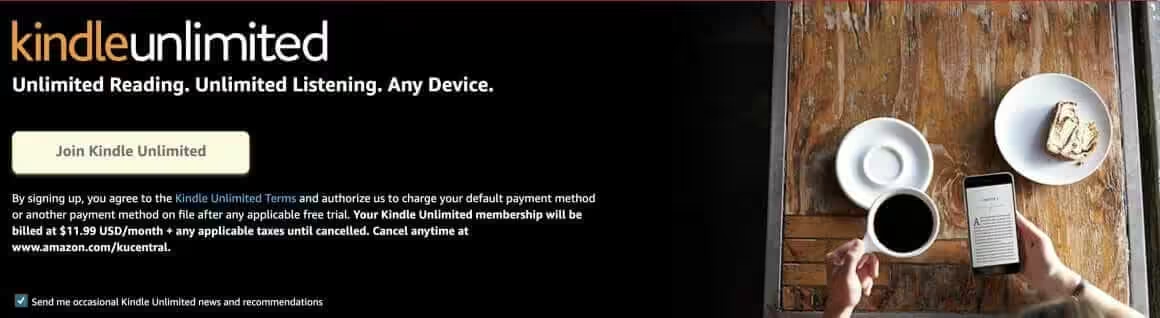
Pricing depends on your Amazon storefront, and your subscription stays locked to the country where you signed up. These are the 2026 rates.
| Country | Monthly price | Free trial | Signup |
|---|---|---|---|
| USA | $11.99 | 30 days | Signup |
| India | ₹169 | 30 days | Signup |
| UK | £9.49 | 30 days | Signup |
US pricing carries sales tax on top, which the checkout page adds at the last step. Amazon also sells prepaid gift subscriptions in 6, 12, and 24-month blocks, and the effective monthly rate on those runs below $11.99. The exact discount moves with whatever promotion is live, so read the current gift page before committing to 2 years of anything.
The bigger saving is patience. Amazon drops the first 3 months to roughly $0.99 a month around Prime Day, Black Friday, and Cyber Monday, and bundles free months with new Kindle hardware.
Wait for one.
For comparison anchors: 1 new Kindle ebook typically runs $5 to $15, and ₹169 is less than most paperbacks cost in India. The fee equals 2 or 3 cheap ebooks a month. One India-specific caveat: the amazon.in catalog is smaller than the US one and skews even harder toward indie titles, so run the 5-book test on the Indian storefront specifically before subscribing there.
What’s in the Library
Amazon publishes a single number, more than 5 million digital titles, and no breakdown underneath it. So treat any article quoting exact genre counts as guessing. What you can verify by browsing is the shape of the collection, and the shape is consistent: it runs deepest in indie-published romance, science fiction, fantasy, mystery, and self-help, because those are the categories where KDP Select pays authors to go Amazon-exclusive.
Where it thins out is just as predictable.
- Romance is deepest by a wide margin, with contemporary, historical, paranormal, and LGBTQ+ subgenres each carrying full shelves of their own.
- Science fiction and fantasy comes next, with unusually strong coverage of space opera, LitRPG, progression fantasy, and isekai.
- Mystery, thriller, and suspense is well stocked, and cozy mysteries in particular are close to bottomless.
- Self-help and business is broad but indie. Atomic Habits, The Subtle Art of Not Giving a F*ck, and the Ryan Holiday Stoicism titles are traditionally published, so they stay out.
- Audiobooks number in the thousands, not the hundreds of thousands, and only titles carrying Whispersync for Voice include narration at all.
- Magazines and comics rotate, and since April they share your 20 borrow slots.
- Children’s books have deep indie coverage, though most Penguin Random House and Scholastic titles are not in the program.
None of that tells you whether the catalog fits you, which is where most Kindle Unlimited reviews stop and most subscriptions go wrong.
What most people do:
Open the Kindle Unlimited storefront, scroll the promoted rows, and judge the catalog by whatever Amazon chose to feature that week.
What works better:
Open your own to-read list. Search those 5 exact titles on Amazon and count how many carry the Kindle Unlimited badge.
Same catalog, opposite verdicts. The storefront is merchandising, tuned to whatever Amazon wants moved this week, while your own list is the only sample that predicts your next 12 months of reading.
The 5-book test: search 5 books you already want to read. If 2 or more carry the Kindle Unlimited badge, the subscription pays for itself. If none do, your taste sits with the big five publishers, and no amount of catalog size fixes that.
Run it during the free trial, on the storefront you actually buy from, and let the badge count decide instead of the marketing copy.
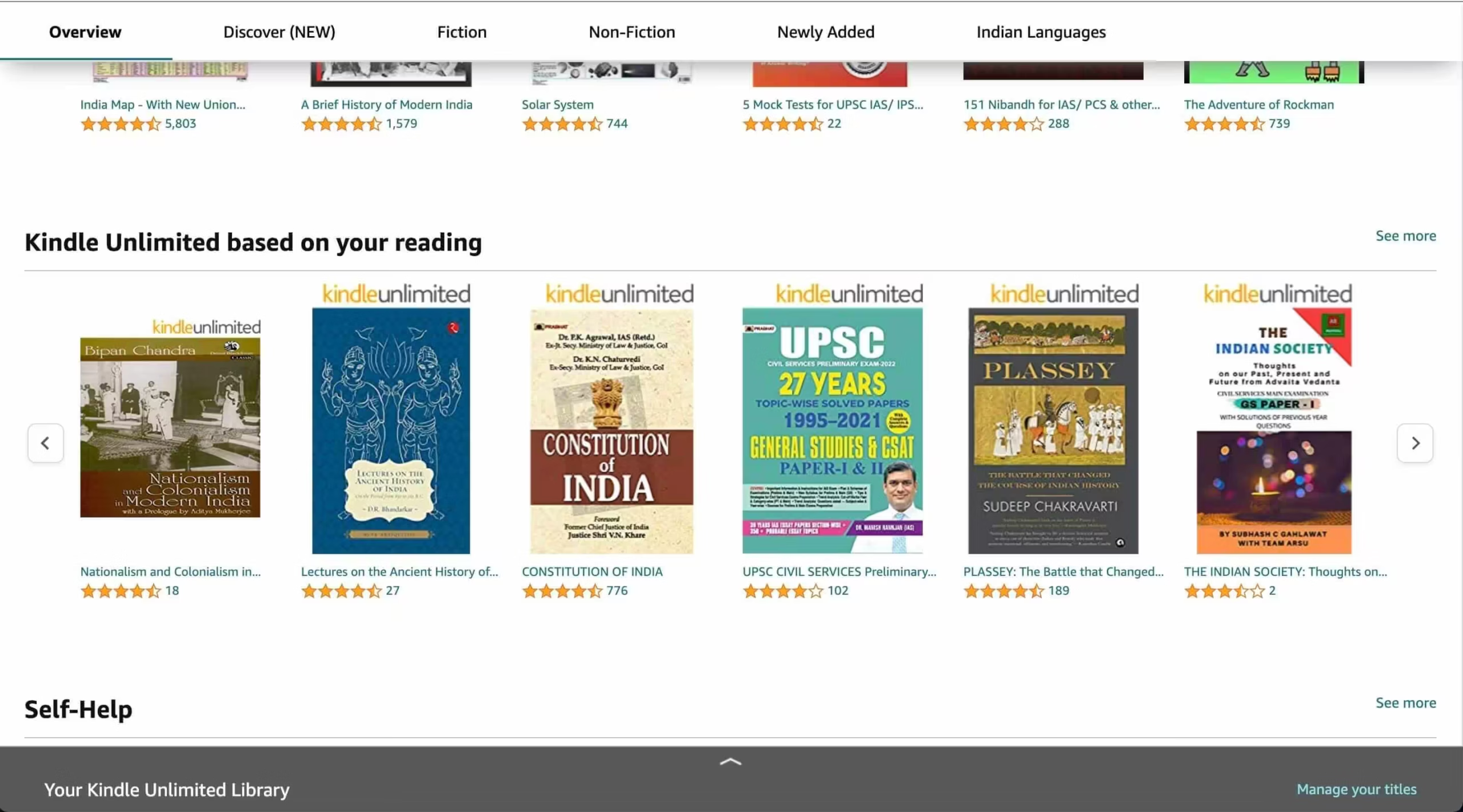
That orange wordmark across the cover is the whole test. It appears in search results, on the product page, and inside the Kindle app, and it’s the only signal that a book costs you nothing this month.
Why the Catalog Skews Indie
The skew isn’t an accident. It’s how the money moves. Authors get in through KDP Select, and enrolling means making the ebook exclusive to Amazon. In exchange they’re paid per page read out of a fixed monthly pot, the KDP Select Global Fund, which came to $67.6 million in July 2026.
Divided across every page read that month, that worked out to about $0.0042 a page. A complete read of a 350-page novel pays its author roughly $1.50, against about $10 in royalties on a single $14.99 sale of the same book. So the model rewards writers who publish fast, publish often, and write series readers finish in a weekend, which is exactly why the shelves fill with 6-book runs.
Volume, not prestige.
It also explains the big-publisher absence: enrolling would mean pulling their ebooks from Apple Books, Kobo, and Google Play and swapping retail sales for fractions of a cent per page. They won’t. What’s left is the largest indie library on the planet, and judging it as a discount pass to the bestseller list is judging the wrong product.
The Limits
The “unlimited” name is mostly accurate. The service still has hard edges the signup page doesn’t advertise, and going in informed saves the frustration later.
- 20 titles at a time: no due dates, but the shelf is capped, and since April 2026 magazine issues count against the same 20 slots.
- Big publishers mostly stay out: Penguin Random House, HarperCollins, Hachette, Macmillan, and Simon & Schuster keep the bulk of their catalogs elsewhere, which excludes most current bestsellers.
- Country-locked: your subscription is tied to the storefront where you signed up. Moving countries means starting a new one.
- No ownership: borrowed books are borrowed. When a publisher pulls a title, your access goes with it.
- Audio is a bonus, not a catalog: only Whispersync titles include narration, a small fraction of what Audible carries.
- Sharing is one-directional: you can send borrowed titles to Amazon Family members’ devices or turn on automatic sharing, but only the primary account holder can borrow. A second reader in the house gets your picks, never their own.
That last one gets misreported in both directions. It’s more generous than the “no family sharing” line most reviews still carry, and far less generous than a Spotify-style family plan. One borrower, many readers.
Is Kindle Unlimited Worth It?
Run the math against your own reading log, not the marketing. At $11.99 a month, Kindle Unlimited breaks even at 2 cheap ebooks or 1 mid-priced one. Read 5 genre books a month and you keep $30 to $50. Read 1 bestseller a month and you’re renting a library that doesn’t stock it.
Get Kindle Unlimited if:
- You finish 2 or more books a month and your shelf leans romance, sci-fi, fantasy, mystery, or thrillers
- You like sampling widely: borrow, read 30 pages, return, next
- You binge series fiction, where indie authors publish 6-book runs that would cost $30 or more to buy
- You’re in India, where ₹169 undercuts a single paperback
Skip it if:
- Your to-read list is mostly big-five bestsellers or literary fiction; they aren’t in the catalog
- Audiobooks are your main format; Audible’s catalog is far larger
- You read 1 book a month; buying it outright is cheaper
- You want to own your library permanently; these books are borrowed, never kept
Kindle Unlimited vs Prime Reading
People confuse these constantly because both are Amazon reading perks. They’re different tiers with different libraries. Prime Reading comes bundled with an Amazon Prime membership; Kindle Unlimited is its own subscription.
| Feature | Prime Reading | Kindle Unlimited |
|---|---|---|
| Price | Included with Prime ($14.99/mo) | $11.99/mo standalone |
| Catalog | About 3,000 rotating titles | More than 5 million digital titles |
| Borrow limit | 10 at a time | 20 at a time |
| Selection style | Curated, rotates monthly | Full KDP Select catalog |
| Best for | Casual readers who already have Prime | Readers who finish 2 or more books a month |
Prime Reading is the perk to exhaust before paying for anything else, and Kindle Unlimited is the upgrade you buy once that 3,000-title shelf runs dry. If Prime is already on your card, start there and see how long it lasts.
Kindle Unlimited vs Audible
Plenty of people subscribe expecting Audible-grade audiobook coverage, then find a few thousand narrated titles where they expected a full catalog.
| Feature | Kindle Unlimited | Audible Premium Plus |
|---|---|---|
| Price (US) | $11.99/mo | $14.95/mo |
| Audiobook catalog | Thousands of titles via Whispersync | Hundreds of thousands of titles, plus an included listening catalog |
| Bestsellers | Limited, indie-heavy | Most current bestsellers included |
| Ownership | No, borrowed | Yes, 1 credit a month buys a title you keep |
| Original content | Some Amazon Originals | Audible Originals, much deeper |
| Best for | Reading with occasional audio | Audio-first listeners |
If you read text and want audio for commutes, Whispersync handles it well: same book, switch between screen and ear mid-paragraph. If audio is your primary format, Audible is the service, and the credit you keep matters more than the borrowing you don’t. They’re complements, not substitutes.
Kindle Unlimited vs Your Public Library
Before paying Amazon anything, check what your library card already covers. Libby, the app most public libraries use for ebook lending, carries exactly what Kindle Unlimited lacks: current bestsellers and traditionally published titles, free. The catch is the queue. Popular titles run holds of weeks or months, and loans expire after 14 to 21 days whether you finished or not.
Kindle Unlimited is the mirror image. Instant, no waitlist, no expiry, and almost no big-publisher books.
Different jobs.
Use Libby for the bestsellers you can be patient about and Kindle Unlimited for the genre binge you want tonight. If your library also offers Hoopla, that adds borrowed audiobooks and comics with no waitlists at all. A reader holding a library card and a Kindle Unlimited subscription covers nearly everything short of a day-one hardcover.
Best Devices for Kindle Unlimited
The free Kindle app is enough to start, and for a lot of readers it’s enough permanently. For long sessions, a dedicated e-reader earns its price in eye comfort and battery life. The current lineup and what separates them:
- Kindle (basic): $109.99. 16GB, 6-inch display, USB-C, about 6 weeks of battery. The entry pick.
- Kindle Paperwhite: $159.99. 7-inch display, waterproof, warm-light mode, up to 12 weeks of battery. The default recommendation.
- Kindle Paperwhite Signature Edition: $199.99. 32GB, wireless charging, auto-adjusting front light. Worth the $40 if your reading light changes through the day.
- Kindle Colorsoft: $249.99 for 16GB. The color e-ink model, and the only one that makes graphic novels and magazines worth borrowing.
- Kindle Scribe: $499.99. An 11-inch display with a stylus for notes. Overkill for reading alone.
For most subscribers the Paperwhite is the right pick and the argument ends there. Take the basic Kindle if you only read in well-lit rooms, and the Colorsoft only if comics or magazines are a real part of your rotation. In India, the 12th-generation Paperwhite at ₹16,999 is the mainstream option. Browse the current Kindle lineup on Amazon for live pricing, or see the 10 best Kindle alternatives if you’d rather read on a non-Amazon device, since the Kindle app runs on most of them.
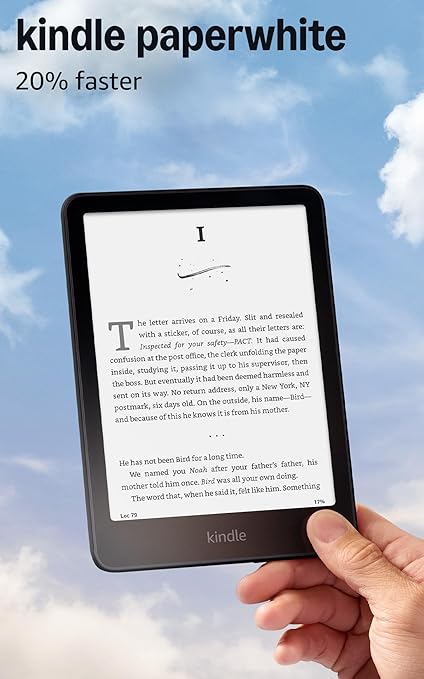
Amazon Kindle Paperwhite 16GB (12th Generation)
- 7-inch glare-free display with higher contrast and 25% faster page turns
- Up to 12 weeks of battery on a single USB-C charge
- Waterproof (IPX8), reads fine at the pool, in the bath, or on a monsoon commute
- Adjustable white-to-amber front light for bright sunlight or midnight reading
How to Sign Up and Find Books
You need an Amazon account and a valid payment method. Go to the Kindle Unlimited signup page, pick a plan, and start the trial. The subscription activates immediately on every device signed into your account.
Finding eligible titles is where new subscribers lose the most time. 3 routes work:
- Browse the Kindle Unlimited storefront: Amazon’s dedicated page lists popular and newly added titles, with genre filters down the sidebar.
- Filter a normal search: add “kindle unlimited” to any Amazon search, then look for the badge on the listing itself rather than trusting the result count.
- Turn on the filter inside the Kindle app: the app’s store and library views both carry a Kindle Unlimited toggle that hides everything else.
The app filter is the one worth learning. It’s the only route that strips out every book you’d have to pay for, which is also the fastest way to stop browsing and start reading.
How to Cancel Kindle Unlimited
Cancellation is self-service and takes under 2 minutes. No calls, no chat queue.
- Sign in to your Amazon account on the web. The mobile app doesn’t expose this setting cleanly.
- Go to Account & Lists → Memberships & Subscriptions.
- Find Kindle Unlimited and click Manage Membership.
- Click Cancel Kindle Unlimited Membership. Amazon will offer a retention deal or 2, usually a free month or 50% off for 3 months. Take it or decline it.
- Confirm. Access runs to the end of the current billing period.
Amazon doesn’t refund partial months. Cancel on day 5 and you keep access for the remaining 25, and downloaded books stay readable until the subscription actually expires.
Getting More Out of Kindle Unlimited
A few habits separate subscribers who pull $50 of value a month from those who quietly pay for nothing.
- Check the monthly picks: Amazon curates a small set of extra titles for members each month, on top of the regular library.
- Stack with Whispersync: when a book carries both formats, your position syncs between reading and listening automatically.
- Return books the day you finish: it keeps the 20 slots clear, and that matters more now that magazine issues share them.
- Sample before borrowing: almost every title has the standard preview. Use it to filter weak indie writing before it takes a slot.
- Time your signup: new subscribers rarely need to pay full price for month 1, because a promo is usually a few weeks away.
For more reading guides, see the 20 best websites to download free ebooks, the most important reading statistics, and the best book lights for night reading.
What Quietly Wastes the Subscription
The failures here are never dramatic. They’re small habits that turn a working subscription into a line item nobody reads.
Subscribing for 1 specific book. If the title shows the badge today, borrow it during the free trial and cancel before the charge lands. A full month’s fee for a single borrow is worse value than simply buying the book.
Buying a title that is already included. Amazon shows the buy button and the borrow option on the same page, and the buy button is the bigger one. Checking costs 2 seconds and saves $6 to $15 every time it catches something.
Treating the 20 slots as a wish list. Borrows sitting unread do nothing except block the next book you’d actually finish. The shelf is a queue, not a library you own.
Letting the trial roll into a month you know will be busy. Amazon charges the day after the trial ends and refunds nothing on the way out. Cancel, then restart when the reading time comes back, because the catalog isn’t going anywhere.
Judging the service by an American review. The US, UK, and Indian catalogs are genuinely different, and the Indian one leans harder on indie titles. A verdict copied across storefronts can be wrong in either direction.
FAQs on Kindle Unlimited
Yes. Amazon offers a 30-day free trial in the US, UK, and India, occasionally upgraded to 2 or 3 months during Prime Day, Black Friday, and Cyber Monday. The trial requires a valid payment method. Cancel any time before it ends and you aren’t charged.
No. Kindle Unlimited is a separate subscription. Prime members get Prime Reading, a rotating shelf of about 3,000 titles, included with membership. The full Kindle Unlimited library of more than 5 million digital titles costs an extra $11.99 a month.
Prime Reading is included with Amazon Prime at $14.99 a month and offers roughly 3,000 rotating titles with a 10-book borrow limit. Kindle Unlimited costs $11.99 a month standalone, carries more than 5 million digital titles, and allows 20 borrows at a time. Prime Reading is a perk; Kindle Unlimited is a reading subscription.
Partly. You can send borrowed Kindle Unlimited titles to Amazon Family members’ devices, or switch on automatic sharing so future borrows go out by default. But only the primary account holder can start a borrow, so a second adult reads your picks rather than choosing their own. It isn’t a family plan in the Spotify sense.
Up to 20 titles at any one time. Since April 22, 2026, each magazine issue you borrow also counts toward that 20-title cap, where magazines previously had a separate allowance. There’s no limit on how many books you read in total per month, only on how many sit on your shelf at once.
Any device that runs the free Kindle app: Kindle e-readers including the basic Kindle, Paperwhite, Colorsoft, and Scribe, plus iPhone, iPad, Android phones and tablets, Mac, Windows PC, and Amazon’s web reader at read.amazon.com. You don’t need a Kindle device to subscribe.
Yes. Sign in to Amazon on the web, go to Memberships & Subscriptions, click Manage Membership, then Cancel. You keep access until the end of the current billing period. Amazon does not refund partial months, and it will offer a retention discount before the cancellation goes through.
Yes, with limits. Thousands of Kindle Unlimited titles include narration through Whispersync for Voice, which is a fraction of what Audible carries. If audiobooks are your primary format, Audible is the better service. If they are an occasional add-on to reading, Whispersync works well.
₹169 a month on amazon.in, with a 30-day free trial, which is well below the US equivalent. The Indian library skews harder toward indie romance, fantasy, and self-help, with fewer traditionally published bestsellers than the US storefront, so run the 5-book test on amazon.in specifically.
Unlimited to read, not to keep. You can read as many titles as you want each month, but they are borrowed. To keep a book permanently you buy it separately, and if a publisher withdraws a title your access ends with it. The 20-title shelf cap is the only hard numeric limit.
Yes. Amazon sells Kindle Unlimited gift subscriptions in 6-month, 12-month, and 24-month blocks. The recipient gets an email with redemption instructions. The same gift route is how existing subscribers prepay at a lower effective monthly rate.
Yes, automatically. Amazon charges your default payment method the day after the trial expires. Cancel at least 24 hours before the trial-end date to avoid it. Cancelling is a self-service flow on Amazon’s website and doesn’t require contacting support.
Final Remarks
If the badge count on your own list comes back at 2 or more, start the 30-day trial, borrow 5 books in week 1, and see how many you finish before the charge lands.
Kindle Unlimited isn’t a cheaper way to read the books everyone is talking about. It’s a very wide door into the ones nobody mentioned to you, and the monthly fee mostly buys permission to be wrong about a book on page 30 and move on without counting the cost.
That’s the trade. You give up the bestseller list and you give up ownership, and in exchange you stop treating every purchase as a small commitment.
Count the badges on your own list. You’ll know inside 5 minutes.
Tell Google you want more of this.
Add Gaurav Tiwari as a preferred sourceOne tap, and this site shows up more often in your own Top Stories, AI Overviews and AI Mode. Remove it any time.
Disclaimer: This site is reader-supported. If you buy through some links, I may earn a small commission at no extra cost to you. I only recommend tools I trust and would use myself. Your support helps keep gauravtiwari.org free and focused on real-world advice. Thanks. - Gaurav Tiwari