
Best VPN Services in 2026
Looking for the best VPN services in 2026? You’re in the right place. I’ve tested and used multiple VPN tools over the years, and only a handful truly stand out in terms of speed, privacy, streaming support, and real-world reliability.
Here, you’ll find a refined list of the top VPNs for 2026, updated with the latest pricing, performance benchmarks, and long-term value. Whether you need a VPN for streaming, remote work, gaming, travel, or simply protecting your identity online, these options are fast, secure, and beginner-friendly. I’ve also included current offers for February 2026, so you can pick the perfect VPN without second-guessing your choice.
Here are the latest and probably the best VPN deals right now:
- Now get 83% off on Atlas VPN (which is just $1.83 per month).
- Get 84% off on Surfshark.
- Namecheap’s FastVPN can be tried at just $0.99 per month.
- Looking for the VPN that I always use? It is NordVPN – the best but not the cheapest.
Skip to:
What is a VPN?
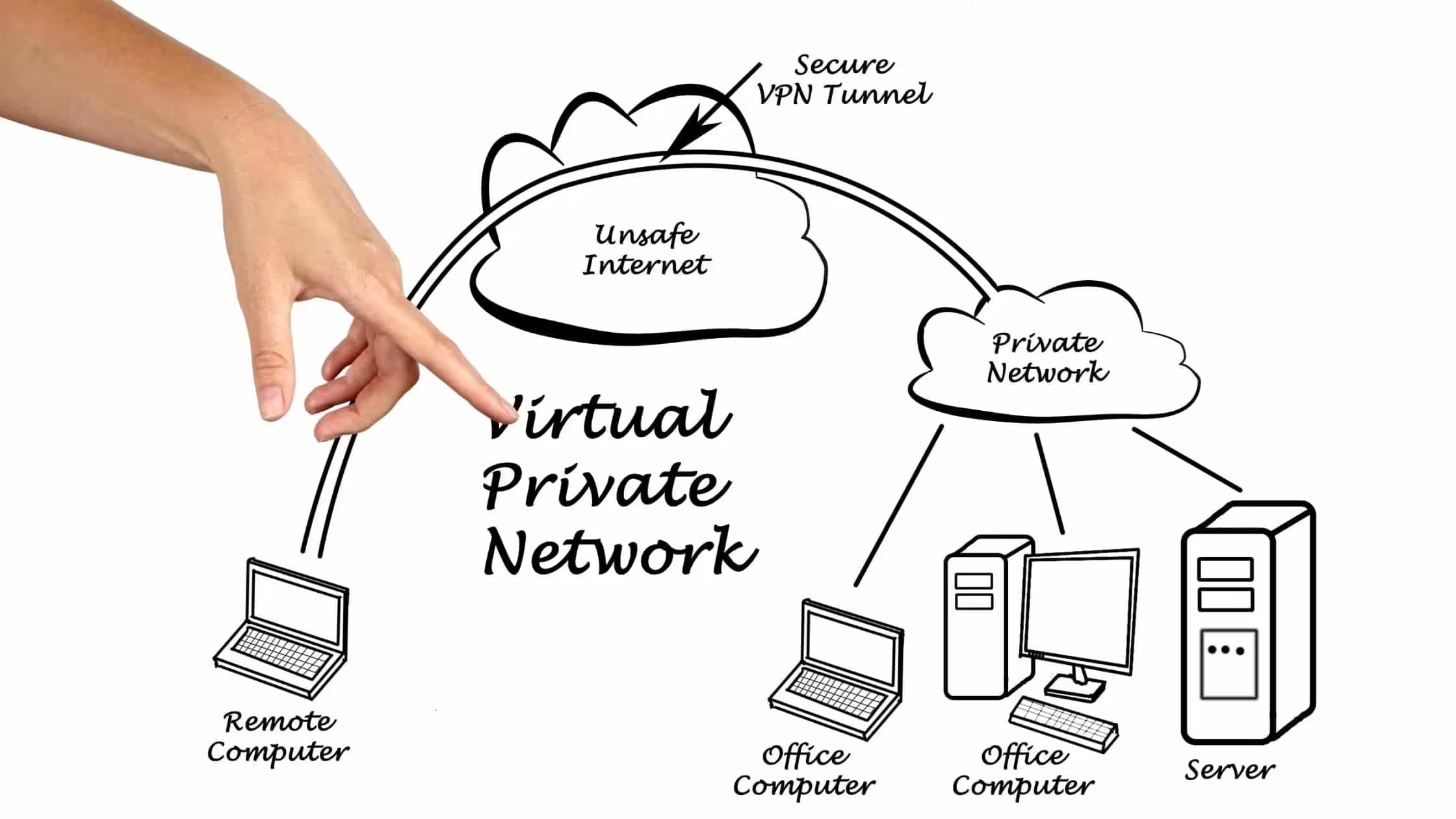
VPN, or Virtual Private Network, is a client-based service that appears as if a device’s traffic is coming from a different IP address. VPN uses a system that routes traffic through remote servers before sending it on to its intended destination.
When a VPN is turned on, it encrypts data as it’s sent over the network connection and then sends the traffic through a secure server. Encryption is what secures the connection and prevents others from rifling through someone’s internet traffic. Best VPN services make use of different connection protocols – each brings different benefits and downsides to the table.
The server acts as the replacement IP address for the connection and decrypts the data before sending it on. VPN services usually have servers in multiple locations across the globe, and their clients can connect to a server in the location of their choice.
VPNs catch a device’s traffic at the operating system level, which means everything is routed through the VPN. That includes traffic sent through a web browser, application, and even the OS itself.
Best VPN Services
Surfshark
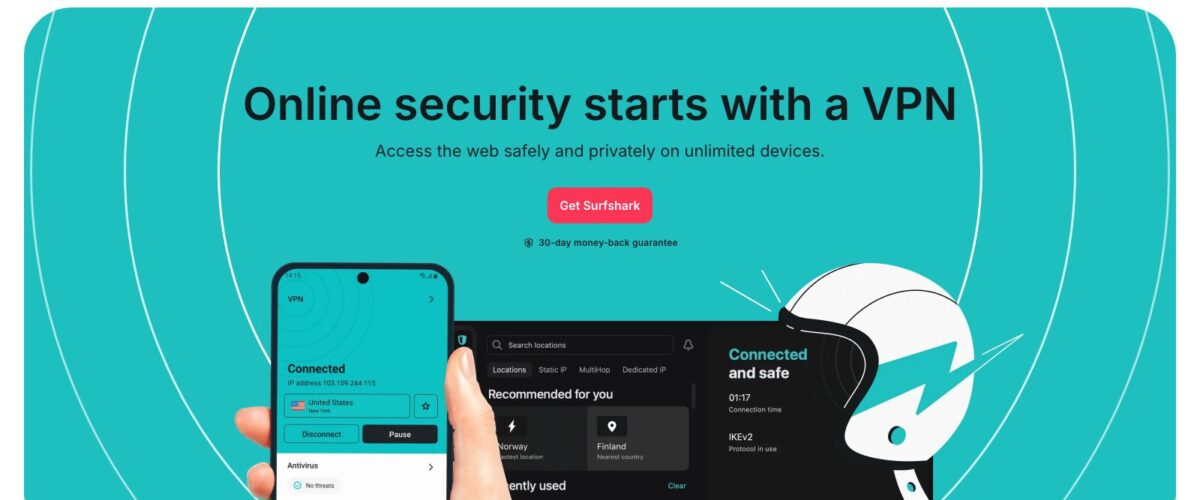
Surfshark is a VPN service that offers unlimited device connections, strong encryption, and competitive pricing. It provides privacy protection, geo-unblocking, and secure browsing across all your devices simultaneously. This page covers Surfshark's features, server network, speed performance, privacy policy, pricing, and how it compares to NordVPN and ExpressVPN.
Internxt
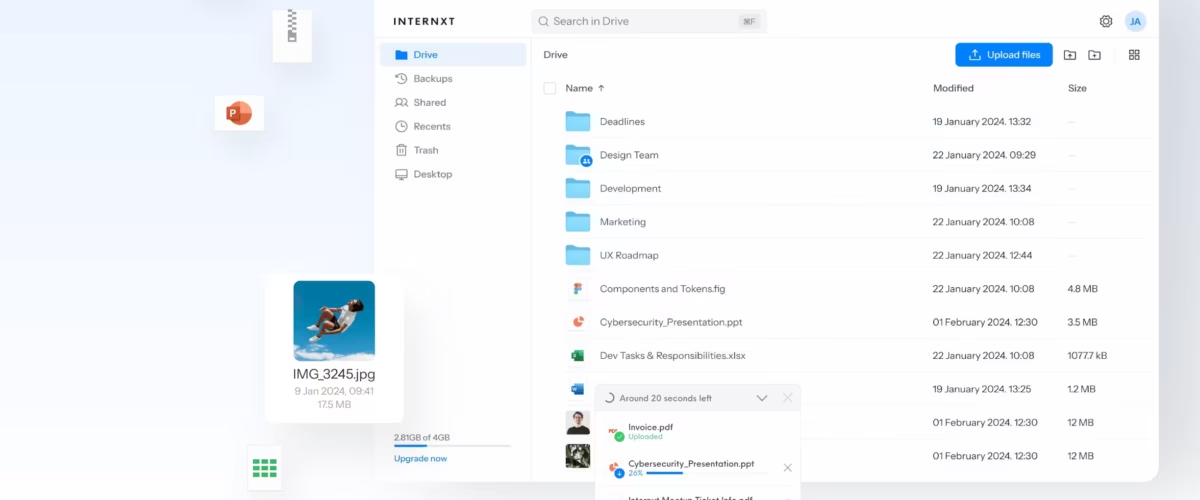
Internxt is a privacy-focused cloud storage provider that encrypts your files client-side before they ever leave your device. Unlike mainstream cloud services, Internxt can't access your data. This page covers Internxt's encryption approach, storage plans, pricing, file sharing capabilities, and how it compares to Google Drive, Dropbox, and other cloud storage options for privacy-conscious users.
NordVPN
NordVPN is consistently rated among the best VPN services available. With over 5,000 servers across 60+ countries, it delivers fast speeds, strong encryption, and a strict no-logs policy. I've tested NordVPN extensively for streaming, privacy, and general browsing security. From threat protection and split tunneling to dedicated IP options, NordVPN covers every VPN use case. This page covers features, pricing, and current offers.

Namecheap VPN
Namecheap VPN provides basic VPN protection bundled with their domain and hosting services. For existing Namecheap customers, it's a convenient add-on at competitive pricing. This page covers Namecheap VPN's features, server locations, speed performance, and whether it's a viable option compared to dedicated VPN providers like Surfshark and Private Internet Access.

Atlas VPN
Atlas VPN is a freemium VPN service that offers a surprisingly capable free tier alongside affordable premium plans. With servers optimized for streaming, strong WireGuard encryption, and built-in data breach monitoring, it punches above its weight class for the price. While it has fewer servers than premium competitors, the value proposition is strong. This page covers Atlas VPN's features, free plan limitations, pricing, and performance.
NordLayer
NordLayer is a business VPN and network security solution from the team behind NordVPN. It provides secure remote access, network segmentation, and threat protection for teams of all sizes. With easy deployment and centralized management, NordLayer simplifies business network security without requiring dedicated IT infrastructure. This page covers NordLayer's security features, deployment options, pricing, and team management capabilities.

FastestVPN
FastestVPN offers lifetime VPN plans at prices that seem too good to be true, but the service delivers decent performance for basic privacy needs. This page covers FastestVPN's features, server network, speed benchmarks, pricing structure, and how it compares to premium VPN providers like NordVPN and ExpressVPN for users who want affordable long-term VPN protection.
See: NordVPN Review
How does a VPN work?
Security and privacy remain the core purpose of any VPN, and when you choose one of the best VPN services, that protection becomes stronger by design. A VPN safeguards your connection by encrypting both incoming and outgoing traffic inside a secure tunnel. This encrypted data travels through a dedicated remote server from the VPN provider, masking your original IP and routing your activity safely to the open internet.
If you want to truly understand how the best VPN works, here are the key components that make it reliable:
- Encryption – Encryption is one of the important factors and components that a VPN uses to ensure security. Encryption is the use of algorithms that convert your VPN traffic to unreadable data. Encryption can be likened to a lock and a key. The stronger the encryption, the more secure a VPN is.
- Protocols – protocols are standards that determine and govern how communication is done on a network/channel. In a VPN, also establish how fast and secure the communication channel will be. Different VPN providers offer different protocols depending on the intended functionality. These protocols can be changed manually.
- Logging policies and jurisdiction – these are entities that broadly affect the VPN service provider and the user. They also determine the security and privacy of your data while using a VPN service.
Logging policies state what type of data a VPN provider collects. Some data can implicate a VPN user and hence violate their privacy. Jurisdiction concerns the data retention laws that are put in place in the state/country where a VPN service is located.
Who needs a VPN and why?
Regarding the current state of the internet, a VPN is a necessity that anyone who accesses the internet should have. Here is why:
- Security and Privacy: When surfing the internet, you might be under constant surveillance by your Internet Service Provider (ISP), government agencies and even cybercriminals. Surveillance violates your privacy while cybercriminals may violate the integrity of your data and make you vulnerable to internet attacks.
- Anonymity: Through security and privacy, a VPN can provide an acceptable level of anonymity. When you are anonymous, you don’t have to worry about being tracked or monitored.
- Access to content: Apart from security, another accrued function you get when using a VPN is gaining access to restricted online content. By using geo-restrictions, content providers may not deliver specific content to users of certain countries.
A VPN service is built around one core promise – strong security and iron-clad privacy. The best VPN services go further. They protect your identity, lock your connection behind advanced encryption, keep your browsing anonymous, and reduce the risk of cyber threats you can’t see coming. With the right VPN, you stay private, free to browse without tracking, and unlock content from around the world that would otherwise be blocked.