
Ocean Freight Forwarding: What It Is and How It Works
Ocean freight forwarding moves over 12 billion metric tons of cargo a year. This guide explains what a freight forwarder does, FCL vs LCL container shipping, real ocean freight costs, Incoterms and documents, digital freight platforms, and how to choose the right forwarder for your international shipping.
 by
by
Ocean freight forwarding is how almost everything you own crossed an ocean to reach you. In 2024, ships loaded 12.1 billion metric tons of goods for international trade, up 3.9% from the year before, and most of that cargo passed through the hands of a freight forwarder at some point. If you run a business that imports or exports, ocean freight forwarding is the difference between cargo that clears customs on schedule and cargo that sits in a port rack up demurrage fees.
I’ve helped clients set up product sourcing from China and India for years, and the pattern is always the same. The ones who treat the forwarder as a partner save money. The ones who treat shipping as an afterthought get surprised by costs. So here’s the plain-English version: what an ocean freight forwarder actually does, when you need one, how FCL and LCL pricing really works, and what to check before you sign.
The verdict: Hire an ocean freight forwarder if you ship internationally and don’t have an in-house logistics team. A good forwarder handles your bill of lading, customs paperwork, Incoterms, and carrier negotiation, and uses bulk volume to get rates you can’t get alone. Skip one only if you ship a handful of small parcels a year, where a courier or a digital instant-quote platform is faster and cheaper. For anything regular, freight-class, or container-sized, a forwarder pays for itself.
Table of Contents
What is ocean freight forwarding?
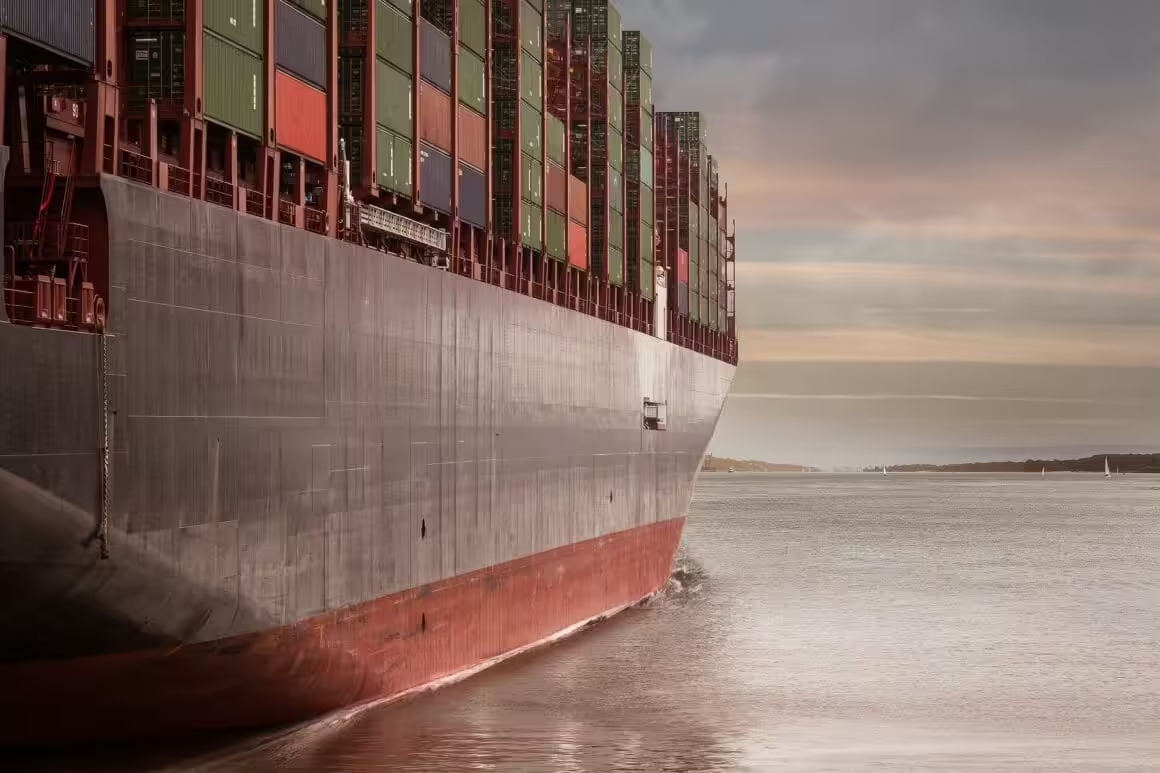
Ocean freight forwarding is the business of arranging, coordinating, and managing the movement of cargo by sea on behalf of an importer or exporter. The ocean freight forwarder doesn’t own the ship. It acts as the expert middleman between you and every other player in the chain: the carrier, the port, customs authorities, and the trucking company on each end.
Think of a freight forwarder as a travel agent for your cargo. You tell them what you’re moving and where it needs to go, and they book the vessel space, prepare the documents, clear customs, and arrange the inland legs. They turn a chain of separate vendors into one accountable relationship, which is why over a billion metric tons of goods move through forwarders every year.
What an ocean freight forwarder does for you
An ocean freight forwarder coordinates everything between your loading dock and the final destination, and the booking is the smallest part of the job. The real value sits in the advisory work and the paperwork that decides whether your cargo clears or gets held.
Here’s what a forwarder actually handles on a typical international shipping move:
- Carrier booking and routing. Reserving vessel space and picking the route that balances cost against transit time.
- Documentation. Preparing the bill of lading, commercial invoice, packing list, and certificate of origin so customs doesn’t bounce the shipment.
- Customs clearance. Working with customs brokers and agents at both ends to clear cargo and pay duties correctly.
- Incoterms advice. Helping you pick the trade term that puts cost and risk where you want them, not where the supplier prefers.
- Inland transport. Arranging the truck or rail legs from the factory to the port and from the destination port to your warehouse.
- Tracking and problem-solving. Giving you real-time updates and stepping in when a vessel is delayed or a container gets rolled.
If you’re moving cargo for a young company, this is also the kind of operational scaffolding worth setting up early. I cover the wider version of that in my guide to how to start a new business, because logistics is one of those costs founders consistently underestimate.
Why hire an ocean freight forwarder?
The biggest reason to hire an ocean freight forwarder is that you offload the entire headache of moving cargo across the sea to a specialist who does it every day. As an expert intermediary, the forwarder completes every requirement for moving the cargo and manages all the communication and paperwork with the many players involved.
A second reason is relationships. Forwarders have standing accounts with carriers, agents, and ports, so they get up-to-date information about your shipment, including any change that could affect it. When a port congests or a sailing gets canceled, they already know who to call.
The third reason is money. Because forwarders move large volumes of cargo, they use that economy of scale to negotiate rates and routes you simply can’t access as a one-off shipper. That bulk-buying power makes a freight forwarder a cost-effective option for most businesses moving cargo by sea, the same way a CRM makes your sales process efficient. If you want the operational view on that, see how a CRM can help your small business stay organized as you scale.
Who needs a freight forwarder: import or export businesses without an in-house logistics team, e-commerce sellers sourcing from overseas suppliers, manufacturers moving raw materials or finished goods by sea, and any company shipping container-sized loads on a regular schedule. If sea freight is part of your supply chain and you don’t employ a dedicated shipping specialist, a forwarder fills that role for a fraction of the cost.
FCL vs LCL: which container option fits
The first decision in container shipping is FCL versus LCL, and it comes down to how much cargo you’re moving. FCL (full container load) means you book and pay for an entire container, whether you fill it 60% or 100%. LCL (less than container load) means your cargo shares a container with other shippers and you pay only for the space you use, charged per cubic meter or per 1,000 kilograms, whichever is higher.
The breakeven point on most major trade lanes sits between 13 and 15 cubic meters. Below that, LCL is usually cheaper. Above it, FCL often wins even if the container isn’t completely full, because LCL stacks on extra handling, CFS, and co-loading charges that add up fast.
| Factor | FCL (Full Container Load) | LCL (Less than Container Load) |
|---|---|---|
| Best for | 13+ CBM, fragile, high-value, or time-sensitive cargo | Under 13 CBM, small or occasional shipments |
| Pricing | Flat rate per container | Per cubic meter or per 1,000 kg |
| Transit time | Faster door to door, minimal handling | Adds 5 to 10 days for consolidation and deconsolidation |
| Handling risk | Lower, container stays sealed | Higher, cargo is loaded and unloaded with others |
| Example (Shanghai to LA) | ~$1,500 to $3,000 for a 20ft container | ~$200 to $600 for a 5 CBM shipment |
Use FCL when cargo is fragile, valuable, temperature-controlled, or you’re importing regular high volumes from one supplier or region. Use LCL when you don’t have enough goods to justify a whole container and a few extra days in transit won’t hurt you.
What ocean freight actually costs
Ocean freight costs are built from more than the headline rate per container, and that’s where businesses get surprised. A quote that looks cheap can balloon once origin charges, destination charges, and surcharges land. The freight rate is the base; everything else is the part you need to read closely.
A real international shipping invoice usually includes the ocean freight rate itself, origin handling at the load port, destination handling, customs duties and clearance fees, inland trucking on both ends, and surcharges like bunker adjustment factors or peak-season fees. On LCL shipments, watch for CFS (container freight station) fees and co-loading charges that can quietly make the total higher than an FCL quote you dismissed.
Insurance is the line most shippers skip and later regret. Cargo insurance typically costs a small percentage of the declared value, and it’s the difference between a damaged-container claim and an absorbed loss. The same financial discipline applies to the rest of the operation. Treat shipping like any other recurring cost, the way you’d treat managing outstanding payments in your accounts.
Incoterms and the documents that move your cargo
Incoterms decide who pays for what and who carries the risk at each stage of the shipment. They’re standardized rules from the International Chamber of Commerce, and the current set is Incoterms 2020, still in force in 2026. Get the term wrong and you can end up paying for freight and insurance you assumed the supplier covered.
Of the 11 Incoterms, four are exclusive to sea and inland waterway transport: FAS, FOB, CIF, and CFR. These define exactly when cargo is loaded and unloaded on the vessel, who handles insurance, and who clears customs. A good freight forwarder will steer you toward the term that fits your transaction instead of letting the supplier default to whatever favors them.
The paperwork matters just as much. Two documents do the heavy lifting on every sea freight move. The bill of lading is proof of ownership, a receipt, and a transport contract in one; you’ll see a Master B/L (carrier to forwarder) and a House B/L (forwarder to shipper). The commercial invoice declares the transaction value, HS codes, quantities, unit prices, and the Incoterm. Get either wrong and customs can hold your cargo, which is exactly the kind of friction a forwarder exists to prevent.
Digital freight forwarding in 2026
Digital freight forwarding has changed how small and mid-sized shippers buy ocean freight. Instead of emailing for a quote and waiting 24 to 72 hours, you enter your shipment details into a platform and get instant or near-instant rates, book with a click, and track the container in real time on a dashboard.
Platforms like Freightos, which over 4,000 forwarders rely on, and others such as iContainers and Searates pull live rates from multiple carriers and return ocean (FCL and LCL), air, and ground options in one search, with all-in pricing that already includes surcharges and customs estimates. For standard shipments on major lanes, digital platforms tend to run 5 to 10% cheaper for small-to-medium shippers thanks to lower overhead and algorithmic rate optimization.
The 2026 trend is AI doing the grunt work: document extraction, email intake that turns a customer message into a shipment record, and contract-rate parsing that flattens messy carrier contracts into clean rate sheets. That said, for complex cargo, specialized routes, or anything that needs hand-holding, a traditional forwarder still matches or beats the digital price. The smart move is using digital tools for routine lanes and a human forwarder for the tricky ones. If you’re setting up payment flows for an India-based operation, my guide on how Indian businesses can accept payments pairs well with getting your import logistics in order.
Limitations of ocean freight forwarding
For smaller shipments that can go by air freight, choosing an ocean freight forwarder can be more time-consuming than it’s worth. Cargo shipped over the ocean takes weeks or even months depending on the destination, so urgency works against sea freight.
A second limitation is control. Once your cargo is in the forwarder’s hands and on a vessel, you have limited say over the shipment. That’s not necessarily bad, but if you need to change the schedule or hit a specific delivery date, you may not have much leverage over those factors.
You may also need to buy insurance coverage when using an ocean freight forwarder. While that gives you financial protection against loss or damage, it adds to the overall cost of shipping, so factor it into your quote comparison rather than treating it as an afterthought.
Choosing the right ocean freight forwarder
Choosing the right ocean freight forwarder comes down to proven expertise, network reach, and transparent pricing. You want a forwarder that can show experience handling shipments like yours, on your trade lanes, with your kind of cargo. Ask for references and recent examples, not just a sales pitch.
Before you commit, run the forwarder through this checklist:
- Proven lane experience on the routes you ship, with references you can actually call.
- A wide agent network for customs clearance and cargo paperwork at both origin and destination.
- A transparent quote breakdown so you see every line, freight, handling, surcharges, and duties, not one lump sum.
- Real tracking and communication, ideally a dashboard plus a named contact who answers when something goes wrong.
- Proper licensing and insurance options, so your cargo is covered and the forwarder is accountable.
The right forwarder turns ocean freight from a recurring source of stress into a predictable line on your budget. Start with two or three quotes, compare the full breakdown rather than the headline rate, and pick the one that’s clearest about what you’re paying for. That clarity is worth more than a slightly cheaper number from a forwarder who can’t explain their own invoice.
Tell Google you want more of this.
Add Gaurav Tiwari as a preferred sourceOne tap, and this site shows up more often in your own Top Stories, AI Overviews and AI Mode. Remove it any time.