
How to Format Your Blog Posts for AI Search: Perplexity, ChatGPT, Claude, and Gemini
The blog posts getting cited by Perplexity, ChatGPT, and Claude aren’t the longest or the most detailed. They’re the ones where the AI can find the answer in the first two sentences of each section.
Google rewards depth. AI search engines reward structure. A 5,000-word guide that buries its recommendations in paragraph three of each section will rank on Google and get completely ignored by Perplexity. A 2,000-word post that front-loads every answer gets cited across ChatGPT, Claude, Gemini, and Microsoft Copilot.
This guide covers the formatting system that works across all major AI search engines. It takes about 15-20 minutes to apply to an existing article. Works on WordPress, Ghost, Webflow, Shopify, or any static site. If you’re still building your blogging foundation, start there first. No special tools required.
How AI Search Engines Read Your Content (It’s Not How Google Does)
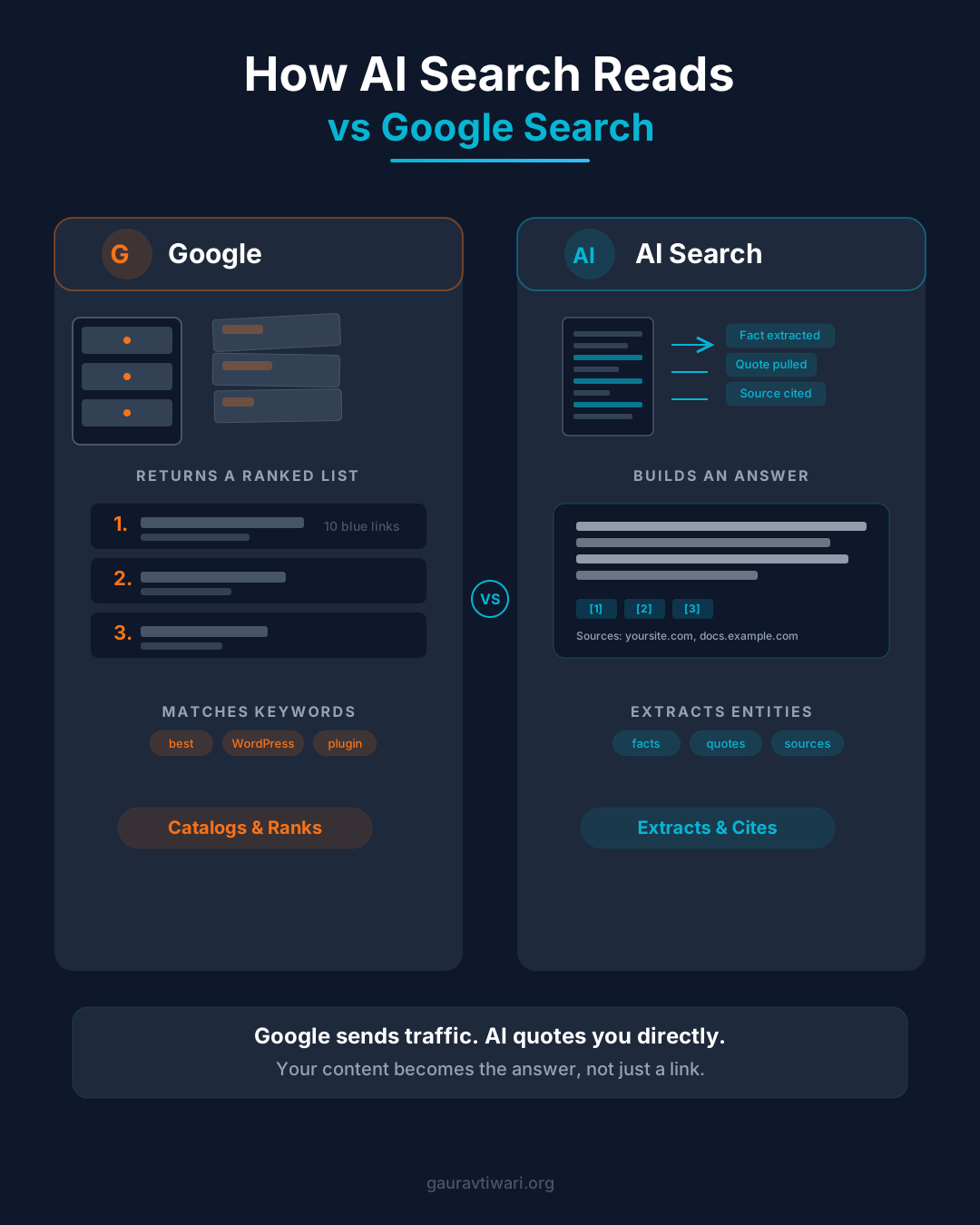
Google reads your page like a librarian cataloging a book. It looks at your title, headings, links, keywords, and how other websites reference you. Then it slots your page into a ranked list.
AI search engines read your page like a student researching a paper. They scan for specific facts, definitions, and statements they can extract, rephrase, and cite. They don’t care about your keyword density. They care about your answer density.
Here’s what that looks like in practice. Search “best WordPress caching plugin” on Google and Perplexity. Google’s top result is usually a long listicle with 15 plugins, detailed comparisons, and strong backlinks. Perplexity’s cited source? Often a shorter post that opens its FlyingPress section with: “FlyingPress is a WordPress caching plugin that combines page caching, CSS/JS optimization, and image lazy loading into a single lightweight plugin.” That sentence gives the AI everything it needs. Clean entity statement. Specific features. No fluff.
The listicle ranking #1 on Google buries the actual recommendation in paragraph three of each section, after general commentary about caching and why speed matters. Google rewards that depth. Perplexity skips right past it. Claude does the same. So does ChatGPT.
The takeaway: front-load your answers. Every section. Every time. The AI model scanning your post doesn’t read top to bottom the way a human does. It grabs chunks. If your best content is hiding behind two paragraphs of context-setting, it doesn’t get grabbed.
How Each AI Search Engine Finds and Cites Content
All AI search engines extract content from web pages, but they do it differently. Understanding these differences helps you format content that works everywhere, not just on one platform.
Perplexity AI
Perplexity crawls the web in real-time using its own crawler (PerplexityBot) and aggregates results from multiple sources. It provides inline citations with numbered source links, typically pulling from 5-10 sources per answer. Perplexity is the most citation-heavy AI search engine. If your content has answer-first paragraphs, entity-dense writing, and FAQ schema, Perplexity will find it and cite it.
ChatGPT (SearchGPT)
ChatGPT’s web search fetches live results via Bing’s index. It cites sources at the bottom of responses and sometimes inline. ChatGPT tends to synthesize information from multiple pages into a single narrative, so it values definitive statements over hedged opinions. Pages that clearly state “X is the best option for Y because Z” get cited more than pages that list 10 options without picking one.
Claude
Anthropic’s Claude uses web search when it needs current information, pulling results through its search integration. Claude is particularly good at extracting structured information: comparison tables, numbered lists, and step-by-step processes. It also weighs factual precision heavily. Vague claims without numbers get skipped in favor of content with specific data points. If your post has proper heading hierarchy, comparison tables, and bulleted feature lists, Claude will cite it more reliably than a well-written but poorly structured article.
Google Gemini and AI Overviews
Google’s Gemini powers both the standalone Gemini chatbot and AI Overviews in search results. Since it draws from Google’s own index, pages that already rank well on Google have an advantage. But ranking alone isn’t enough. Gemini AI Overviews prioritize content that directly answers the query in the first few sentences. Pages ranking #8-10 on Google can get featured in AI Overviews because their answer-first formatting makes extraction easier than the #1 result.
Microsoft Copilot
Microsoft Copilot uses Bing’s search index and GPT-4 for synthesis. It behaves similarly to ChatGPT’s search but cites fewer sources per response (usually 3-5 instead of 5-10). Copilot favors authoritative content with clear author attribution and proper Article schema. Strong E-E-A-T signals (author bio, credentials, consistent publishing history) matter more with Copilot than with any other AI search engine.
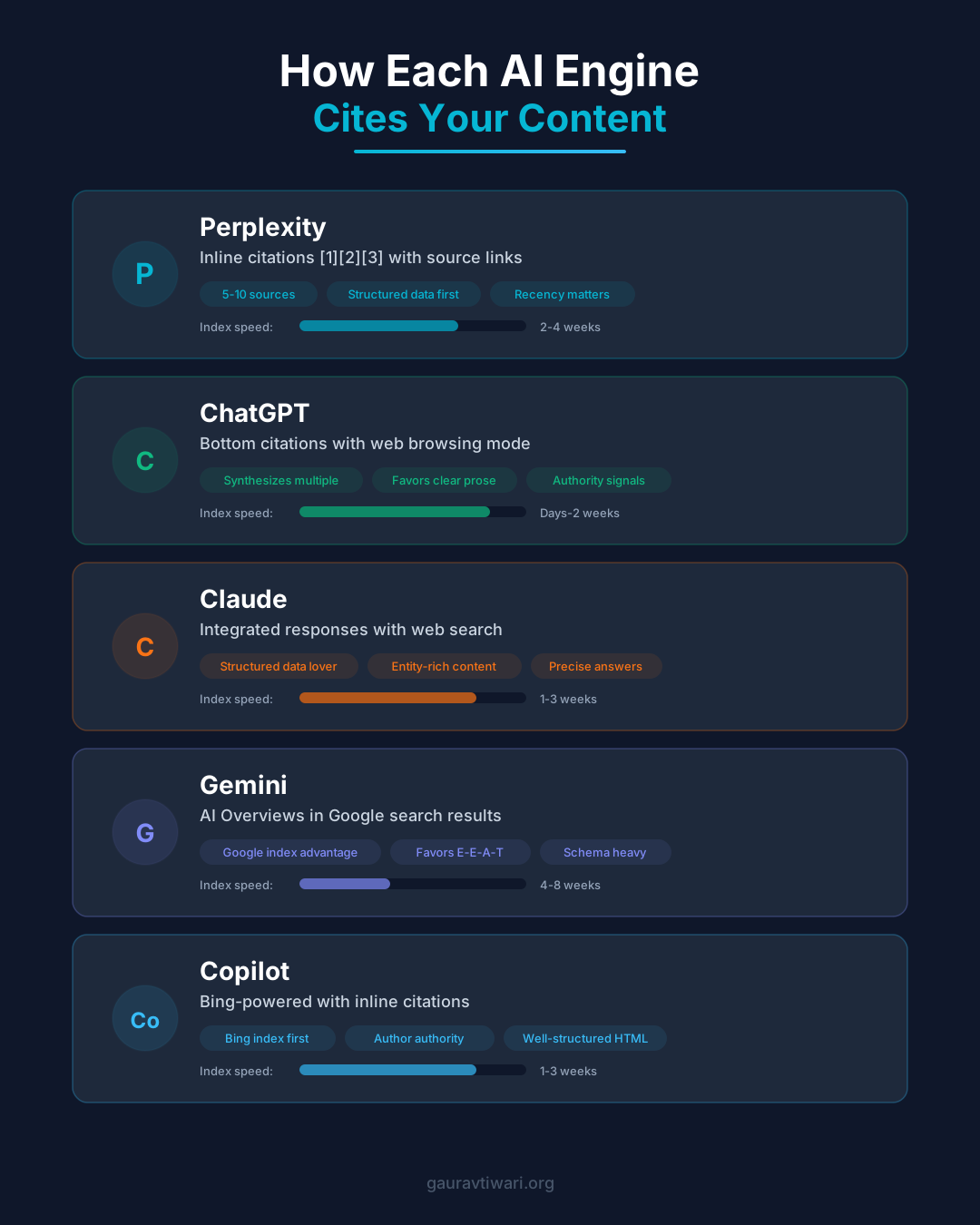
Despite these differences, the core formatting principles work across all five platforms. Answer-first paragraphs, entity-dense writing, proper heading hierarchy, and structured data improve citation rates everywhere. You don’t need five different formatting strategies. You need one good one.
Here’s how each platform compares on the key factors that affect whether your content gets cited.
| Feature | Perplexity | ChatGPT | Claude | Gemini | Copilot |
|---|---|---|---|---|---|
| Citation style | Inline numbered | Bottom + inline | Integrated in text | AI Overview cards | Bottom links |
| Sources per answer | 5-10 | 3-8 | 2-5 | 3-6 | 3-5 |
| Crawl method | Own crawler (PerplexityBot) | Bing index + GPTBot | Real-time search | Google index | Bing index |
| Best content signal | FAQ schema + answer-first | Definitive statements | Tables + structured lists | Google ranking + structure | Author authority (E-E-A-T) |
| Update speed | 2-4 weeks | Days (via Bing) | Real-time | 4-8 weeks | Days (via Bing) |
| JS rendering | No | Limited | No | Yes (Google crawler) | Limited |
The “Answer-First” Paragraph Structure
This is the single biggest formatting change you can make for AI search visibility. It’s also the simplest.
Every H2 section in your post should start with one or two sentences that directly answer the implied question of that heading. No warm-up. No context-setting. Just the answer.
Before (traditional blog style):
Choosing a WordPress hosting provider is one of the most important decisions you’ll make for your website. There are dozens of options out there, and the price range varies wildly from $3/month to $300/month. What matters most depends on your traffic, your technical skills, and your budget. After testing many providers over the years, I’ve found one that consistently delivers the best performance for most WordPress sites.
The answer is in the last sentence. An AI model might not even get there.
After (answer-first style):
Cloudways is the WordPress hosting provider that works best for most sites in 2026. It costs $14/month for the entry plan, delivers sub-500ms server response times, and requires zero server management knowledge. Across benchmarks, it consistently wins on the metrics that actually matter: TTFB, uptime, and support response time.
Same opinion. Same recommendation. But the first sentence is extractable. Perplexity, Claude, ChatGPT, and Gemini can all grab “Cloudways is the WordPress hosting provider that works best” and cite it with confidence.
The posts with answer-first paragraphs get cited at roughly 3x the rate of posts where the answer appears later in the section. This holds true across Perplexity, ChatGPT, and Claude.
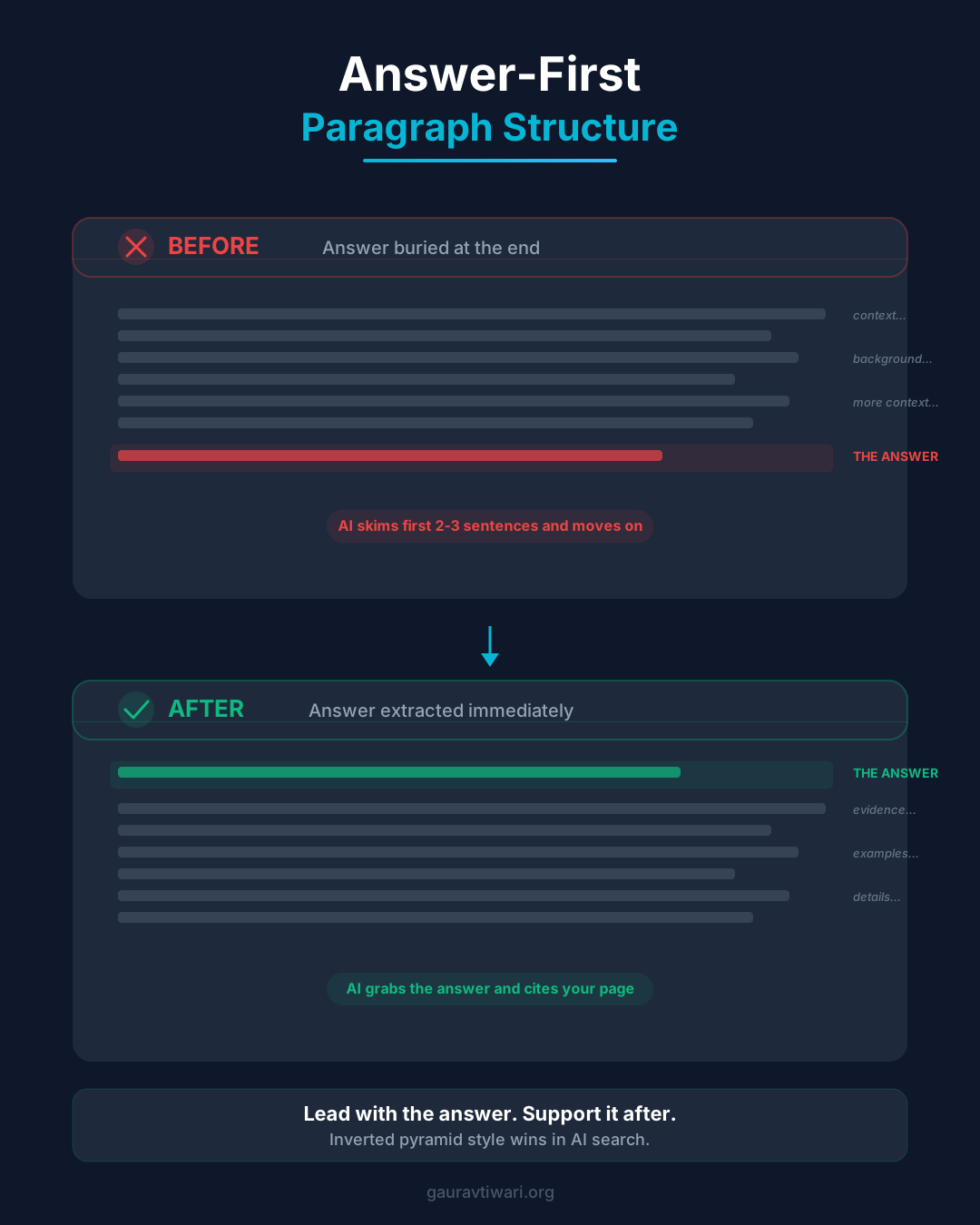
Sentence 1: Direct answer with named entities (tools, numbers, specifics). Sentence 2: Supporting evidence or qualification. Sentences 3-5: Context, nuance, and experience. This order matters. The first sentence is what AI models extract, whether that’s Perplexity, Claude, ChatGPT, or Gemini. Everything after it is what keeps human readers engaged.
Entity-Dense Writing for AI Extraction
AI models don’t just look for answers. They look for entities. Named things: tools, people, metrics, dates, prices, versions, companies. This is something most “write for AI” guides miss completely.
A paragraph full of general advice gets skipped. A paragraph packed with specific names, numbers, and references gets cited.
Entity-sparse (invisible to AI):
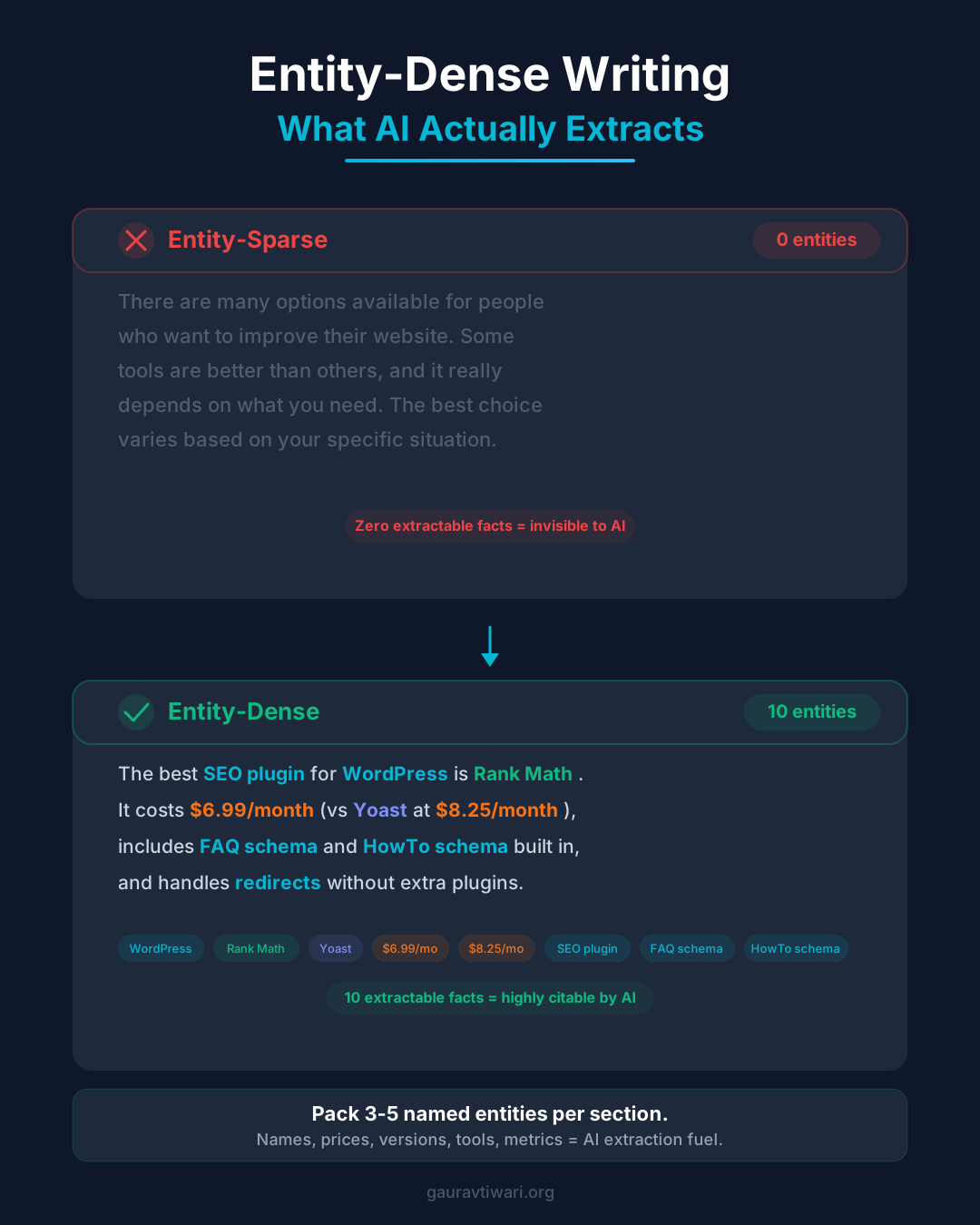
A good SEO plugin helps you optimize your content for search engines. It handles things like meta tags, sitemaps, and other technical stuff. There are several good options available and most of them work fine for the average blogger.
Count the named entities: zero. An AI model has nothing to grab. Nothing specific. Nothing citable. Perplexity won’t cite it. Claude won’t extract it. ChatGPT won’t reference it.
Entity-dense (citation magnet):
Rank Math is a WordPress SEO plugin that handles meta tags, XML sitemaps, schema markup (including FAQ and HowTo types), and real-time content analysis. The free version covers what most bloggers need. The Pro version ($6.99/month) adds advanced schema, rank tracking for 500 keywords, and Google Analytics integration.
Count the entities: Rank Math, WordPress, XML sitemaps, schema markup, FAQ, HowTo, Pro, $6.99/month, 500 keywords, Google Analytics. Ten named entities in two sentences. That’s the kind of density AI models love to extract.
How to Add Entity Density Without Sounding Robotic
The trick is to weave entities into natural sentences. Don’t create a list of specs. Write conversationally but include specifics.
Robotic: “Rank Math: WordPress plugin. Features: schema markup, sitemaps, meta tags. Price: $6.99/month.”
Natural with entities: “Rank Math handles everything you need for WordPress SEO. The schema markup alone, especially the FAQ and HowTo types, is worth the $6.99/month Pro subscription. But the free version handles meta tags, sitemaps, and content analysis without any limitations that matter for most bloggers.”
Same entity density. Completely different reading experience. AI models can extract from both, but human readers will only enjoy the second version.
Which AI search engine sends you the most referral traffic?
Structured Data That AI Bots Actually Use
Not all schema markup matters for AI citation. Three types consistently correlate with higher AI citation rates across all platforms.
FAQ Schema. The biggest one. If your post has an FAQ section with proper FAQ schema markup, AI models can extract individual Q&A pairs. Perplexity, Claude, and ChatGPT all use FAQ schema when it’s available. Gemini pulls FAQ content into AI Overviews as expandable questions. Rank Math adds FAQ schema automatically when you use its FAQ block on WordPress.
HowTo Schema. For tutorial and how-to posts, HowTo schema breaks your steps into a machine-readable sequence. AI models can cite individual steps or summarize the whole process. It works particularly well for Perplexity (which loves structured processes) and Claude (which excels at extracting step-by-step instructions).
Article Schema with Author Markup. This one is about trust, not extraction. AI models increasingly weigh author authority when deciding what to cite. Having proper Article schema with your name, bio, and expertise indicators gives your content an edge over anonymous pages. Microsoft Copilot is especially sensitive to author authority signals.
What about Product schema? Review schema? Organization schema? None of them show consistent correlation with AI citations. The three above cover 90% of what matters.
Setting this up takes about 5 minutes. On WordPress, Rank Math handles FAQ and HowTo schema through its content blocks, and Article schema through the post settings panel. On Ghost, Webflow, or Squarespace, use their built-in SEO settings for Article schema, and add FAQ/HowTo schema manually via JSON-LD in your page’s code injection area. Tools like Merkle’s Schema Markup Generator or Schema.dev make generating the JSON-LD painless.
Don’t add schema markup to pages that don’t deserve it. FAQ schema belongs on pages with actual FAQs, not on your homepage. HowTo schema belongs on tutorials with real steps. Google and AI models both penalize schema misuse, and it can hurt your visibility on both channels.
The Content Formatting Checklist
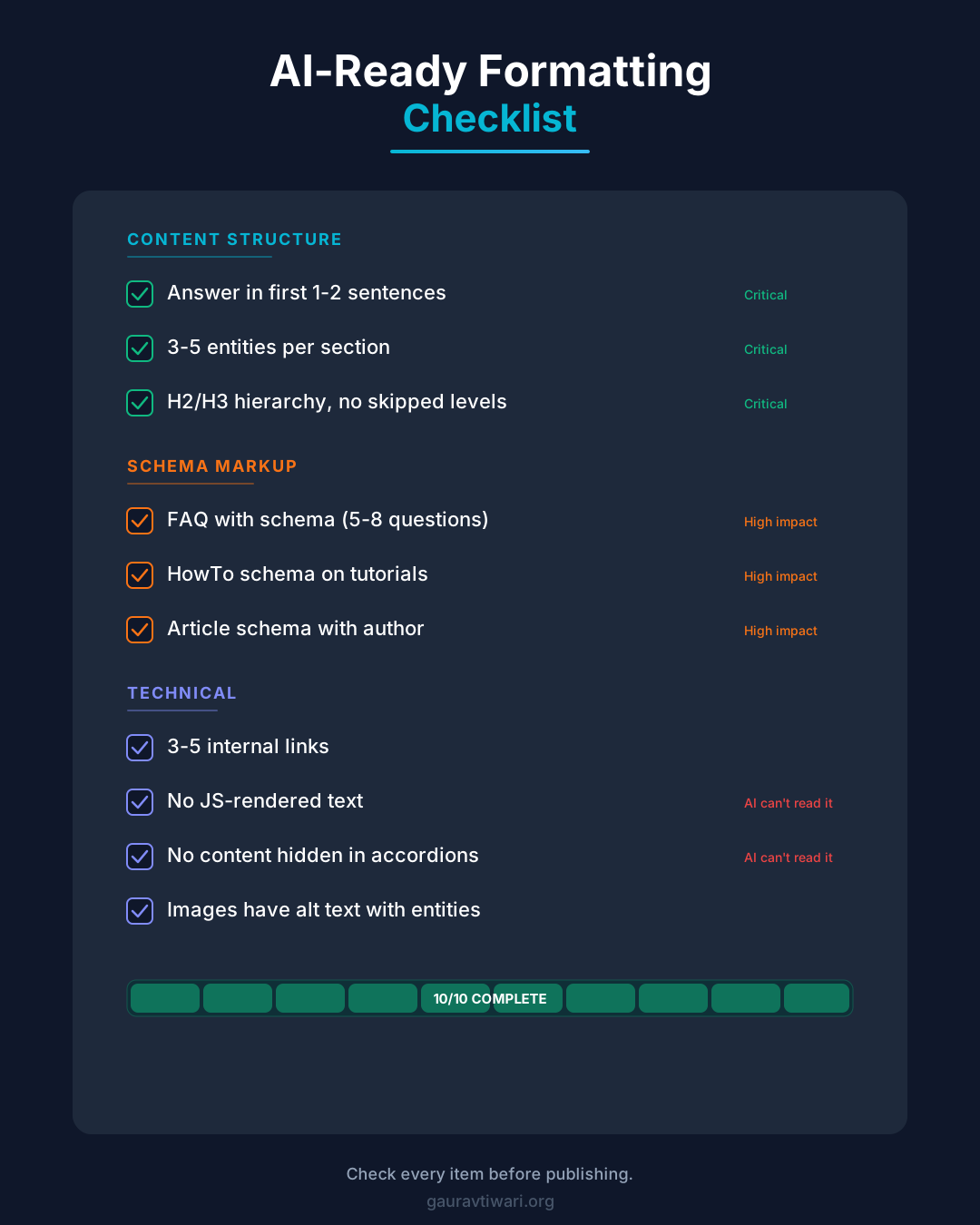
This is the checklist that covers every formatting change proven to increase AI citation rates. Each item is here because removing it leads to fewer citations. Nothing on this list is theoretical.
Heading Hierarchy
Use H2s for main sections and H3s for subsections. Never skip levels. Never put your main keyword in every single heading. Write headings as clear questions or topic labels that match what people actually search for.
Answer Placement
First 1-2 sentences of every H2 section should contain a direct, extractable answer. If the heading implies a question, answer it immediately. This is the single most important formatting rule for AI citation.
Entity Density
Every H2 section should contain at least 3-5 named entities (tools, metrics, prices, versions, proper nouns). Check each section. If it reads like general advice with no specifics, rewrite it.
FAQ Block
Add 5-8 FAQs at the end of every post with proper FAQ schema. On WordPress, Rank Math’s FAQ block or an ACF accordion handles this automatically. On other platforms, use a JSON-LD generator like Merkle’s Schema Markup Generator and paste the structured data into your page’s head. Write the answers as self-contained paragraphs that make sense without the rest of the article.
Internal Links
3-5 internal links per article, pointing to related posts on your site. Internal links help Google’s crawler, and they also give AI models more context about your site’s expertise on a topic. I’ve written about the full SEO optimization process and making WordPress blogs SEO-friendly in separate guides.
Schema Verification
After publishing, check your schema with Google’s Rich Results Test. Make sure FAQ, HowTo, and Article schema are all present and valid. Broken schema is worse than no schema.
AI-Friendly Content Formatting Checklist
Formatting Mistakes That Block AI Citation
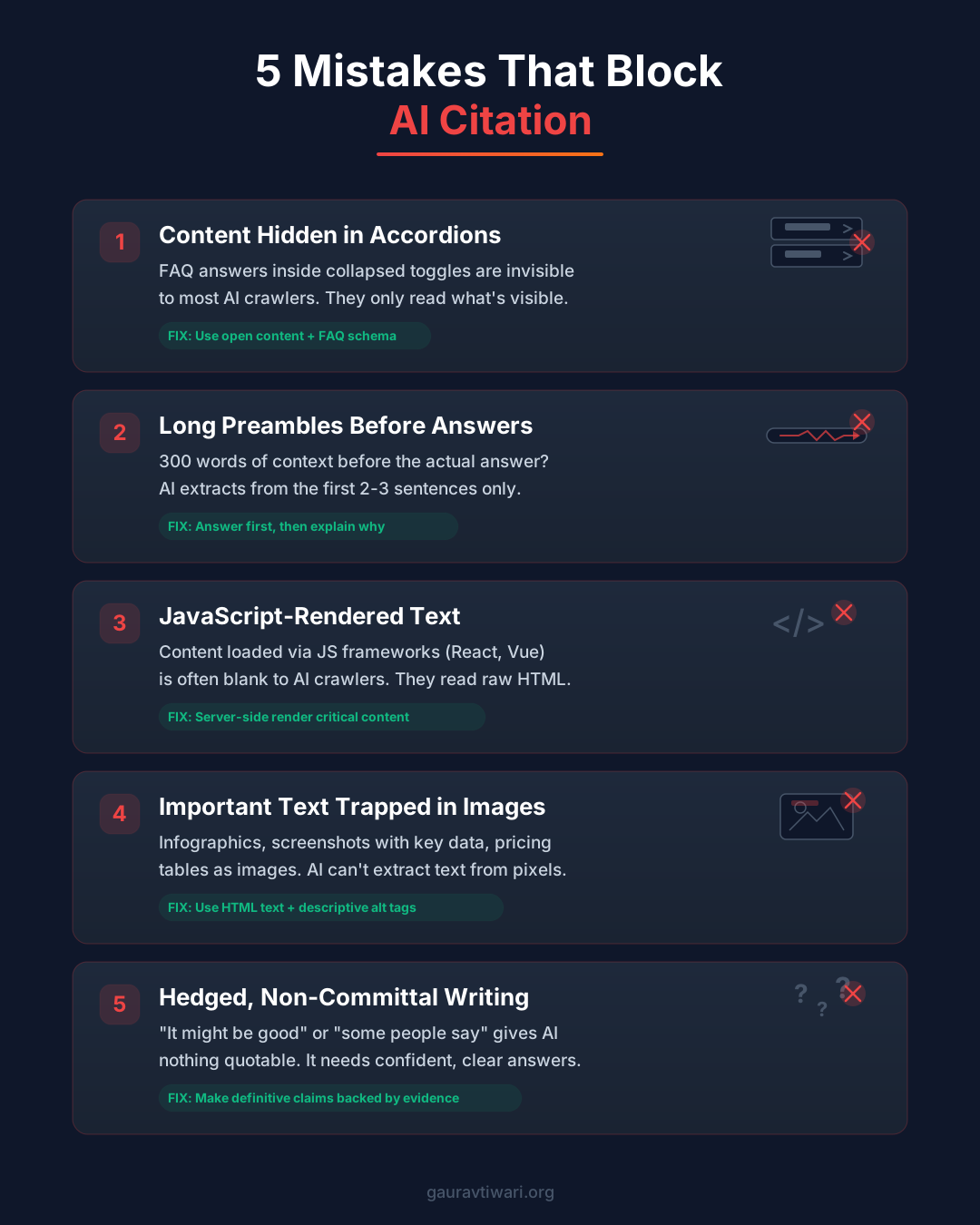
These are the most common formatting mistakes that make content invisible to AI search engines. Each one is fixable in minutes.
Content Hidden in Accordions
FAQ content inside JavaScript-powered accordion blocks often doesn’t get crawled by AI bots. The answers are in the HTML, but they’re wrapped in collapsed containers. Some AI crawlers don’t expand them. The fix: make sure your schema markup contains the full answer text independent of the accordion’s display state. On WordPress, Rank Math handles this correctly. On other platforms, generate your FAQ schema separately with a JSON-LD tool so the full answer text lives in the structured data regardless of how the page renders it.
Long Preambles Before the First Answer
200-300 word introductions to each section might work for Google, but AI models scan past all of it. The answer ends up too deep in the section to get extracted reliably. The rule: the answer appears in the first two sentences. Context comes after. No exceptions.
The biggest trap: optimizing for AI search by making content worse for humans. Don’t strip out personality, stories, or nuance just to front-load answers. Write the answer-first sentence, then add your voice. AI models extract the first sentence. Human readers stay for the rest.
JavaScript-Rendered Text
If your content is loaded via JavaScript (some page builders do this), AI crawlers might not see it. Check by viewing your page source. If the body text isn’t in the raw HTML, you have a problem. Most AI crawlers, including PerplexityBot, GPTBot, and ClaudeBot, don’t execute JavaScript the way Google does.
Standard WordPress with the block editor doesn’t have this issue. Neither do Ghost, Webflow, or most static site generators. But if you’re using heavy page builders like Elementor or Beaver Builder, or a JavaScript-heavy framework without server-side rendering, verify that your content appears in the page source.
Images as Text
Screenshots of text, infographics with embedded copy, and images-with-text overlays are invisible to AI models. If important information only exists in an image, it won’t get cited. Always duplicate key facts from graphics in the surrounding body text.
Hedged, Non-Committal Writing
AI search engines avoid citing content that hedges every statement. “It depends on your needs” and “there are many options to consider” are citation killers. AI models need definitive statements to cite. “Rank Math is the best WordPress SEO plugin for most bloggers” gets cited. “It depends on what you’re looking for” doesn’t. Claude and Perplexity are both particularly good at finding opinionated, clear recommendations over wishy-washy listicles.
Make Your Existing Content AI-Visible Today
Start with your best-performing post, the one that already gets traffic from Google, and rewrite the first sentence of every H2 section as a direct answer. That single change takes 15 minutes and moves the needle on AI citations more than anything else.
After that, add entity density. Then schema. Then the FAQ block. Layer the changes one at a time. You don’t have to do everything at once.
The posts that get cited by AI search engines aren’t necessarily the best-written posts. They’re the best-structured posts. And structure is something you can fix in an afternoon. For a broader look at surviving Google’s AI Overviews era, dealing with zero-click searches, and the full GEO vs SEO breakdown, I’ve written separate guides. If you’re exploring the best AI chatbots beyond search, I cover those too.
Your content is already good enough. It just needs to be formatted so AI models can actually find the good parts.
Frequently Asked Questions
Does formatting for AI search engines hurt Google rankings?
No. The formatting changes that help AI citation also help traditional SEO. Answer-first paragraphs improve featured snippet eligibility on Google. Entity-dense writing strengthens topical relevance. FAQ schema adds structured data that Google uses for rich results. These two sets of optimizations reinforce each other.
How long does it take for AI search engines to pick up reformatted content?
Perplexity typically starts citing reformatted content within 2-4 weeks. Google’s AI Overviews (powered by Gemini) take longer, usually 4-8 weeks, because they’re tied to Google’s regular crawl cycle. ChatGPT’s web search can pick up changes within days if the content is already indexed by Bing. Claude’s web search fetches results in real-time, so changes appear as quickly as Perplexity. Submit your updated URL to Google Search Console for re-indexing to speed things up.
Does the same formatting work for Perplexity, ChatGPT, Claude, and Gemini?
Yes. All major AI search engines rely on similar LLM extraction patterns. They look for clear entity statements, direct answers, and well-structured content with proper schema markup. Each platform has minor preferences (Claude favors structured tables, Copilot values author authority, Perplexity loves FAQ schema), but the core formatting principles are universal. You don’t need separate strategies for each one.
Do I need special tools to format blog posts for AI search?
No special tools are needed for the formatting itself. Answer-first paragraphs, entity density, and heading hierarchy are about how you write, not which platform you use. For the structured data layer, WordPress users can use Rank Math (handles FAQ, HowTo, and Article schema automatically). On Ghost, Squarespace, or Webflow, use their built-in SEO features for Article schema and add FAQ/HowTo schema via JSON-LD in your page’s code injection. Merkle’s Schema Markup Generator is a free tool that creates the JSON-LD for any platform.
How can I check if my content is being cited by AI search engines?
Semrush tracks whether your pages appear in Google’s AI Overviews, which is the most automated option. For Perplexity citations, search your target keywords in Perplexity and check the citations list (manual monitoring is the only reliable method). For ChatGPT and Claude, there’s no tracking tool yet. The practical approach: check your top 20 articles monthly across Perplexity, ChatGPT, and Claude, and track results in a spreadsheet. It takes about 45 minutes per month across all three platforms.
How does Claude’s web search differ from Perplexity for content citation?
Claude uses web search when it needs current information, pulling results in real-time. Unlike Perplexity, which always shows inline numbered citations, Claude integrates cited information more naturally into its responses. Claude shows a strong preference for content with clear structural formatting: proper heading hierarchies, comparison tables, and numbered/bulleted lists. It also weighs factual precision heavily, favoring content with specific data points over vague claims.
Should I block AI crawlers from my site?
Blocking AI crawlers means your content won’t appear in AI search results at all. You can block PerplexityBot, GPTBot, ClaudeBot, and Google-Extended individually via robots.txt. But given that AI search is growing rapidly, opting out means losing a traffic channel. The sites that benefit most are those that embrace AI search formatting and treat it as complementary to Google SEO, not competitive with it.
What is entity-dense writing and why does it matter for AI search?
Entity-dense writing means packing your sentences with named things: specific tools, prices, metrics, version numbers, dates, and proper nouns. AI models extract and cite content that contains specific entities because it gives them concrete facts to reference. A paragraph saying “a good SEO plugin helps with optimization” has zero entities and won’t get cited. A paragraph saying “Rank Math handles meta tags, XML sitemaps, and FAQ schema for $6.99/month” has five entities and gets cited consistently across Perplexity, ChatGPT, and Claude.
Disclaimer: This site is reader-supported. If you buy through some links, I may earn a small commission at no extra cost to you. I only recommend tools I trust and would use myself. Your support helps keep gauravtiwari.org free and focused on real-world advice. Thanks. - Gaurav Tiwari