
 by
by
The best Gutenberg block plugins are the ones whose design systems and uninstall behavior fit your site. GenerateBlocks is my layout-system choice for clean, controlled markup. Spectra is the broader free suite, now split in two: the original continues as “Spectra Legacy” while the rebuilt Spectra Blocks carries all new development. Kadence Blocks used to be the business-site middle ground; after a rough run of recent updates, I have pulled that default recommendation.
16 products are included on this page, and they earned the spot on output structure, editor workflow, asset loading, portability, and maintenance risk, not on block counts or directory popularity. These are the suites I have used or inspected closely enough to defend.
Block count is not a quality metric. Before adopting a suite, build a real template, inspect the front end, deactivate the plugin on staging, and check what content, classes, styles, and editing controls remain.
16 Best Gutenberg Block Plugins by Job
| Plugin | Category | Best for | Portability question | Main drawback |
|---|---|---|---|---|
| GenerateBlocks | Layout system | Controlled markup and reusable design tokens | What happens to global styles and dynamic data? | Smaller block set requires design skill |
| Spectra | Full block suite | Broad free feature set and templates | Which blocks remain useful after deactivation? | Mid-split: Legacy vs the new Spectra Blocks |
| Greenshift | Animation and interaction | Motion, query, and conversion layouts | What CSS and interaction behavior disappears? | More testing for interactive states |
| Nexter Blocks | Suite and theme ecosystem | Teams wanting blocks, templates, and extensions together | Can the site leave the combined ecosystem? | Large surface area |
| Responsive Blocks | General block suite | Responsive layout controls | What proprietary blocks remain in post content? | Overlap with other suites |
| Otter Blocks | Focused general blocks | Beginners adding a smaller set of utilities | Which conditions and styles are plugin-owned? | Premium features split by plan |
| Ultimate Blocks | Content blocks | Bloggers needing TOC, review, filter, and FAQ blocks | Does content remain readable without rendering code? | Narrower layout system |
| Kadence Blocks | Layout and business blocks | Existing Kadence sites; test-first elsewhere | How are row layouts and global controls stored? | Recent update quality has slipped |
| GT ACF Blocks | Structured publishing | Product and editorial content | Does the site retain the required dynamic renderer? | Requires SCF or ACF Pro |
| CoBlocks | Content and layout blocks | Sites already using its distinctive blocks | How do galleries and layouts degrade? | Not my default for new complex builds |
| Ghostkit | Effects and utilities | Visual effects and unusual content blocks | Which effects require plugin scripts? | More custom behavior to maintain |
| PublishPress Blocks | Editorial controls | Role-based block access and editorial teams | Do role rules survive migration? | Best value is workflow-specific |
| Genesis Blocks | Legacy ecosystem | Existing Genesis or StudioPress sites | What is the long-term product path? | Not my first choice for a new build |
| Stackable | Full design suite | Prebuilt sections and detailed design controls | How much styling depends on plugin classes? | Can add editor and front-end complexity |
| VK Blocks | Regional utility blocks | Japanese and multilingual workflows | Are block labels and patterns portable? | Smaller English-language ecosystem |
| Getwid | Free general blocks | Broad free block coverage | What remains after plugin removal? | Less integrated design-system control |
Why I build on the block editor
I have used the block editor since the day it shipped in WordPress 5.0, and not out of loyalty. I disliked slow page builders more than I disliked Gutenberg’s rough first year. It was faster than Elementor and WP Bakery, it wrote native markup, and after a month or two of relearning, it became the way I build everything on this site.
That history is why this list is opinionated. I have used or inspected every product on it, and for this update I checked each one’s current product path, compatibility metadata, output model, and the portability questions that decide whether a production site can leave.
One honesty rule up front: every product here has a free version or trial path, but none gets a blanket “bloat-free” label. Asset loading, DOM output, editor cost, and database footprint depend on the blocks and features you enable, not on the marketing page.
How I test a block suite
My test isn’t a benchmark suite. It’s the same routine anything must pass before it touches this site: I build something real with it, and then I try to leave.
Build first. A landing page, an article, a query loop, with only the plugin under test active. An hour of that tells you what no feature grid will: how deep the wrappers nest, what the saved markup actually looks like, and how much CSS and JavaScript lands on pages that barely use the plugin. If the markup makes me wince in the editor today, it will make me swear during a redesign two years from now.
Then try to leave. Deactivate the plugin on staging and study what’s left behind; the full version of that test has its own section further down. A suite tells you more in the ten minutes after you turn it off than in the month you spent using it.
And a straight word about the scorecards: the review-card numbers on this page are my editorial judgment of workflow, output, portability, and value. They aren’t kilobyte measurements, and that’s exactly why the awards go by job instead of pretending one suite wins everything.
Best Gutenberg Blocks Plugins for WordPress
The 16 products below are grouped by job, not forced into one universal ranking. Use a free version, demo, or staging install to test the exact blocks you need before standardizing a site on one suite.
The 16 plugins:
GenerateBlocks
GenerateBlocks is the best Gutenberg blocks plugin in 2026 and for several reasons. The key parts of this website are built using GenerateBlocks Pro.
GenerateBlocks gives me a small set of composable layout and content primitives. Its advantage is control, not a promise of zero cost or suitability for every design.
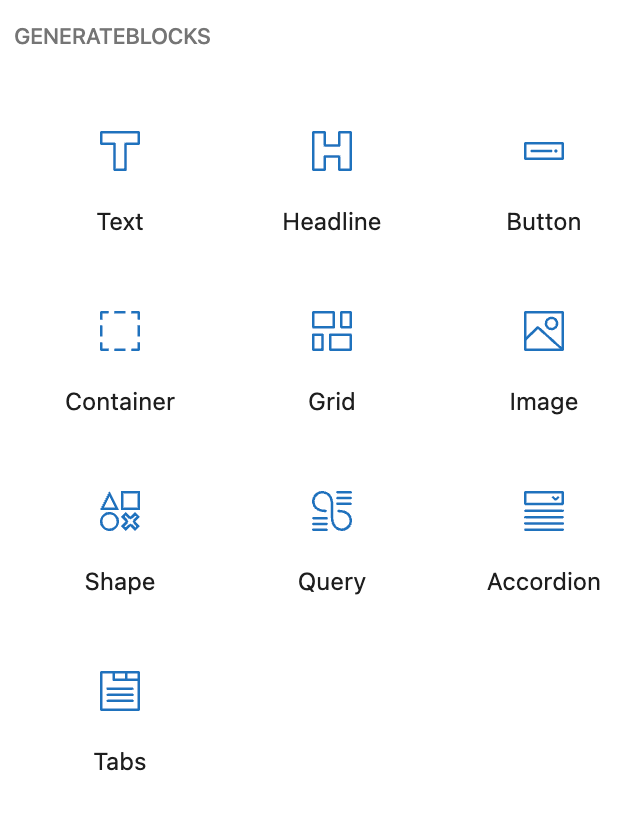
GenerateBlocks keeps the block set deliberately tiny, and version 2 made it tighter still by consolidating the old Headline, Button, Container, and Image blocks into a few primitives:
- Element: the container and layout primitive
- Text: headlines, buttons, and copy in one block
- Media: images and media output
- Grid and Shape: structure and decoration
- Query with its Looper: dynamic post lists
Don’t get carried away by the small number. Combined with core blocks and unlimited customization, these primitives can build any type of site; the key pages here are the proof.
GenerateBlocks was created by Tom Usborne, the same brilliant mind that created GeneratePress. So, it’s evident that GenerateBlocks follows the same lightweight & SEO-first approach. It is fast, cutting-edge and user-friendly.
GenerateBlocks also comes with a premium version called GenerateBlocks Pro, sold as a yearly license with multi-site tiers, which offers plenty of boost-ups.
What GenerateBlocks Pro adds
Here is what GenerateBlocks Pro adds:
- Template Library
- Global Styles
- CSS Effects
- Advanced Backgrounds
- Beautiful Card Like Container Links
- Asset Library
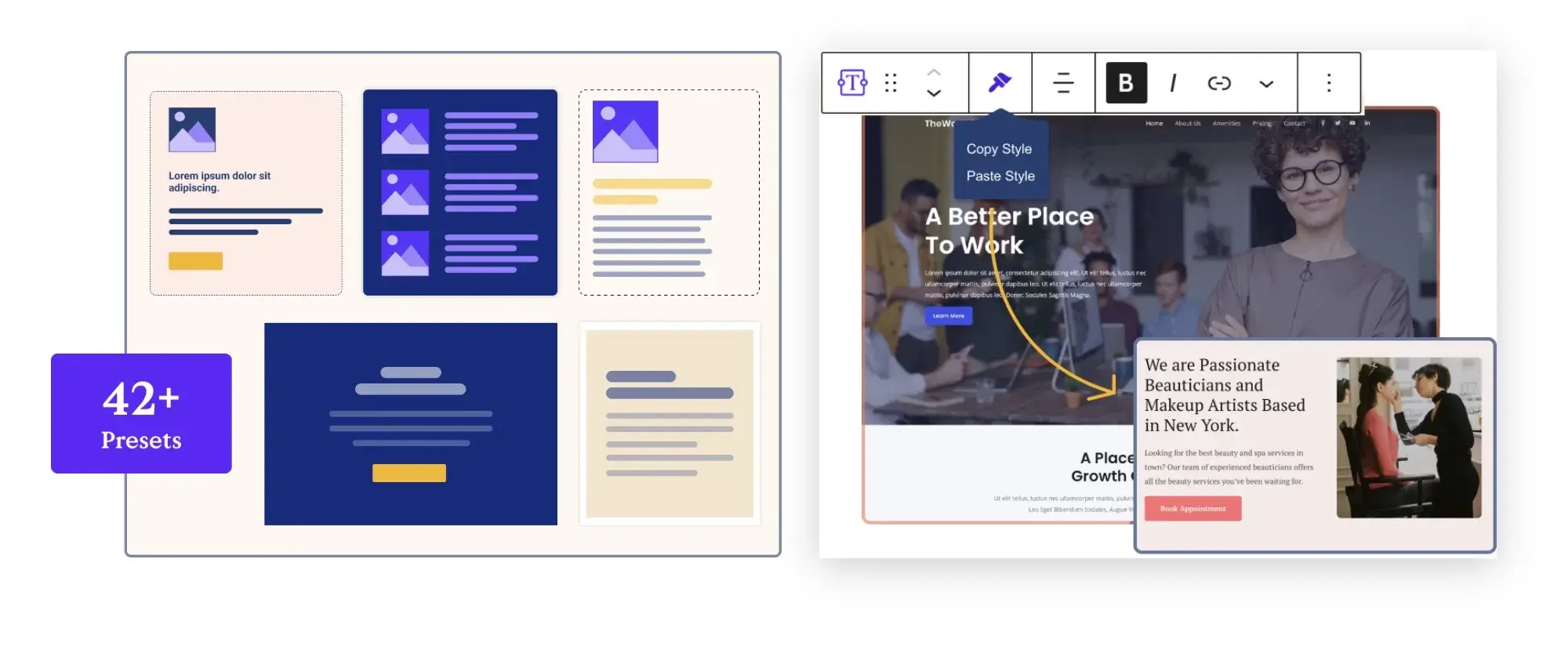
- Copy+Paste Styles
- Device Visibility
- Custom Attributes
- Overlay Panels
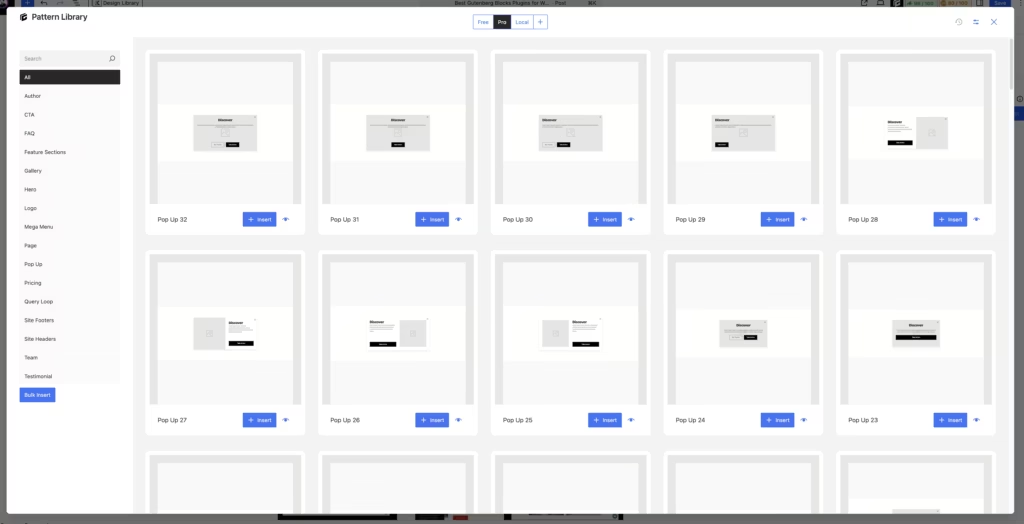
GenerateBlocks Pro comes with thousands of premade patterns to use from. New patterns are being added regularly as I write. You can also create your own local patterns and use those as many times as you want. GenerateBlocks’ template library is possible one of the best that I have ever seen.
Here are the latest patterns:
Explore GenerateBlocks patterns library →
GenerateBlocks
Pros
- Clean, shallow front-end markup
- Global styles and reusable design tokens
- Strong Pro pattern and template library
- Pairs with any well-built theme
Cons
- Small block set expects design skill
- Best features sit in the Pro version
- No form or slider blocks
- Fewer prebuilt niceties than full suites
Summary
My layout-system pick and the foundation of this site’s key pages. A small set of composable blocks with clean, shallow markup, global styles, and a pattern library that covers full page builds.
Spectra
Spectra, formerly known as Ultimate Addons for Gutenberg (UAGB) is developed by Brainstorm Force, the team behind the Astra WordPress theme.
There are many reasons to love this completely free WordPress plugin. It adds 25+ fresh new blocks to the editor: out of which you will find the use of at least a dozen in every other post.
You can disable unused Spectra blocks, and the plugin conditionally loads many assets. Verify the actual CSS and JavaScript on representative pages because conditional loading does not make every configuration cost-free.
The big change to understand before you standardize on Spectra: Brainstorm Force has split it in two. The original million-install plugin now ships as “Spectra Legacy”, which keeps existing sites running with security and compatibility updates but gets no new features. All new development happens in Spectra Blocks, a ground-up rebuild on WordPress’s modern core-block APIs with an AI-assisted building flow.
The practical reading: existing Spectra pages keep working on Legacy, the two plugins can run side by side during a migration, and a fresh adoption today should start on Spectra Blocks rather than the plugin with a decade of tutorials behind it. The rebuild is young, so run the uninstall test on it like anything else, but it is where the product is going.
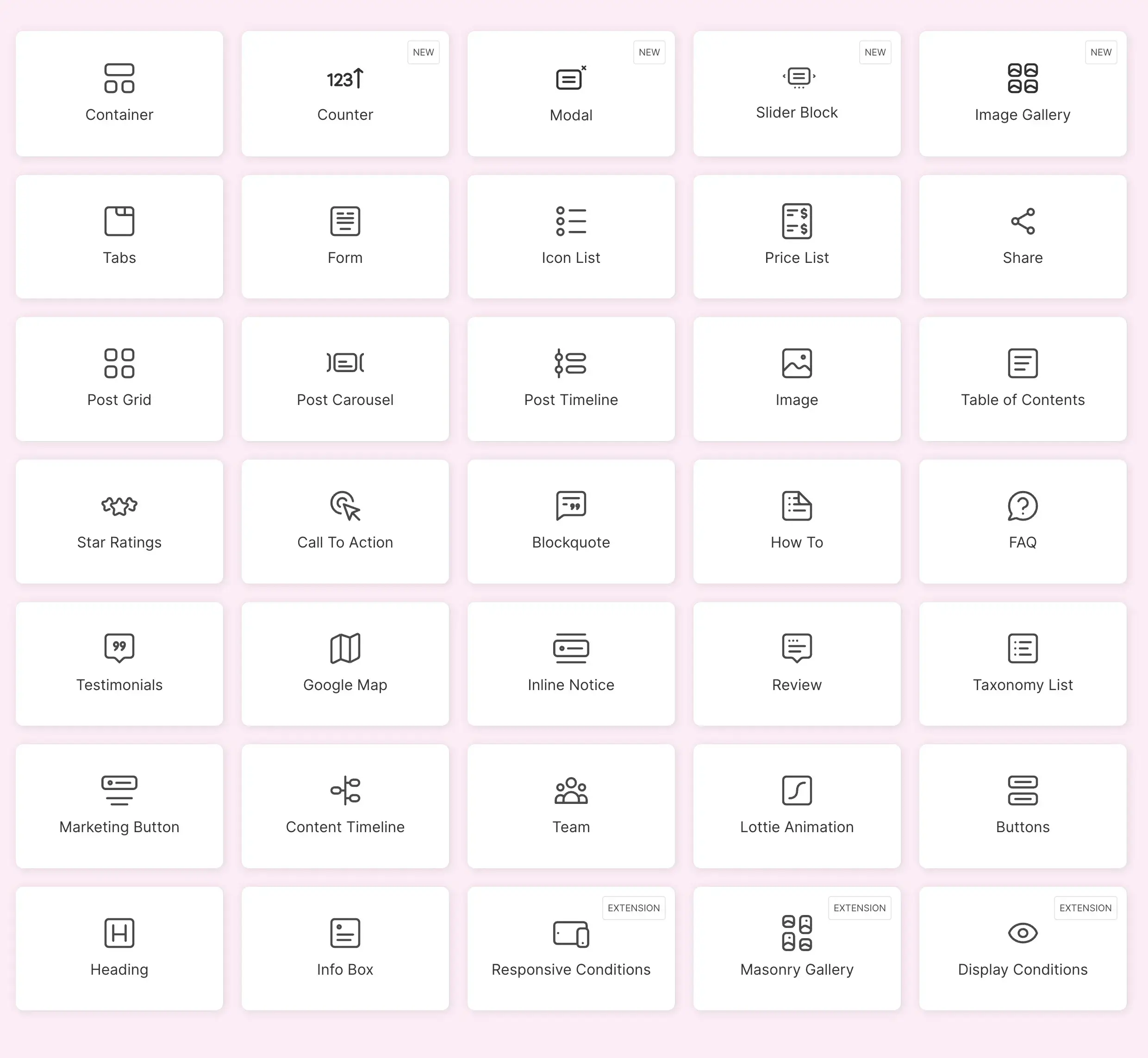
While Advanced Columns Block, Section Block, and other similar blocks don’t find much use in Block Editor due to improvements in core columns block: shape dividers and per block customizations can take your writing and designing experience to a whole new level.
Here are the most useful blocks from Spectra that you will love:
- Forms
- Lottie
- Review Schema
- Taxonomy List
- How-to Schema
- FAQ Schema
- Call To Action
- Icon List
- Info Box
- Marketing Button
- Price List
- Table Of Contents
Spectra
Pros
- 30+ blocks covering most design needs
- Built-in popup builder and wireframe library
- AI content generation for blocks
- Starter templates for quick building
- Free version is genuinely useful
Cons
- Heavier than GenerateBlocks
- Some blocks overlap with core blocks
- Can feel bloated if you only need a few
- Performance impact on block-heavy pages
Summary
A feature-rich free suite now split in two: Spectra Legacy maintains existing sites while the rebuilt Spectra Blocks carries new development on modern core-block APIs. More blocks than GenerateBlocks but heavier. Start new builds on Spectra Blocks.
Greenshift
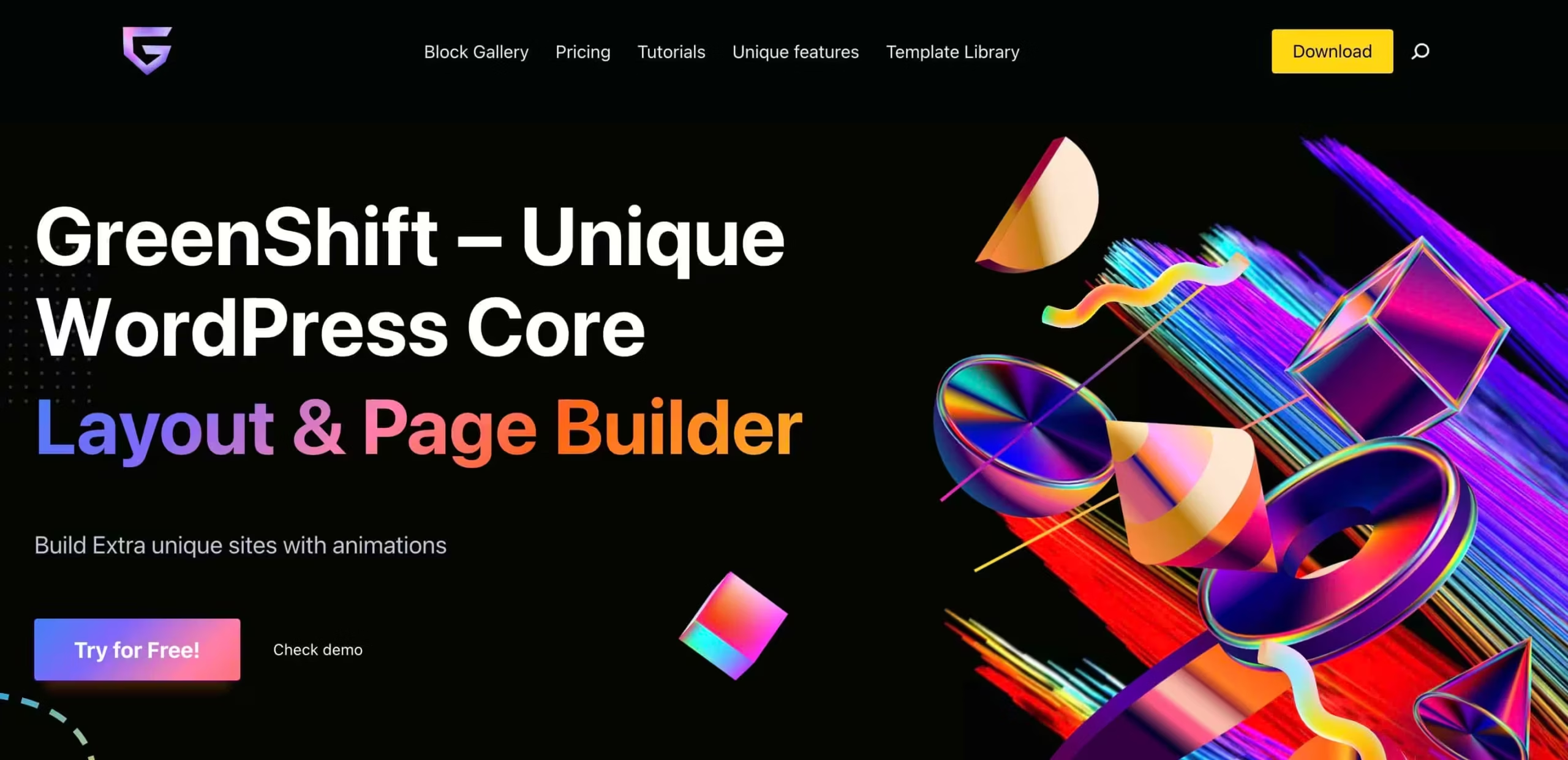
Greenshift is a new block editor plugin by WPSoul focused on building faster websites and conversion first layouts. WPSoul is renowned for its marketing first theme Rehub and the plugin Gutencon, and I was a user of both.
Greenshift works like a complete block-based page building solution that works for both FSE and classic WordPress themes. It is made with performance in mind and loads only 2kB worth of required styles, followed by block-based inline styles, much like GenerateBlocks.
It is totally free, to begin with, and offers the following 22 blocks for free:
- Advanced Heading
- Slider/Carousel
- 3D FlipBox
- Sliding Panel
- 3D Model
- Advanced Lists
- Tabs for anything
- Flexible Container
- Row block
- Accordion
- Shape Divider
- Icon box
- SVG Shape
- Image box
- Info/Notice box
- Color Title box
- Content Toggler
- Counter block
- Countdown
- Button Block
- Video Block
- Social Share
In addition to these, Greenshift also comes with some ready-made templates that you can import into the block editor.
Greenshift uses conditional loading, but animation, interaction, query, and third-party features can still add CSS, JavaScript, DOM, and runtime work. Measure the layouts and states you plan to ship.
If you are looking for more blocks, Greenshift offers 4 paid add-ons called SEO Addon, Marketing Addon, Animation Addon and Chart Addon that go along well with the core plugin.
If you need these, Query Addon and listings + Animation Addon + Animated Section Library bundle is priced at $39.99 per year, Query Addon and listings + SEO and Marketing Addon + Link Hidder and statistic addon bundle are priced at $49.99 per year.
But if you are really looking to upgrade, I suggest their all-in-one plan that offers all premium add-ons at $59.99 per year. Lifetime offers for these add-ons are available as well.
Greenshift
Pros
- Best animation capabilities in any block plugin
- Conditional asset loading
- Advanced query builder
- Unique blocks (parallax, tilt, morph)
- Regular innovative updates
Cons
- Steeper learning curve
- Animation features can bloat pages if overused
- Documentation could be better
- Some features feel experimental
Summary
An animation-focused block plugin bridging block editor and page builders. Excels at interactive elements, scroll animations, and advanced layouts. Conditional asset loading keeps pages fast.
Nexter Blocks (NexterWP)
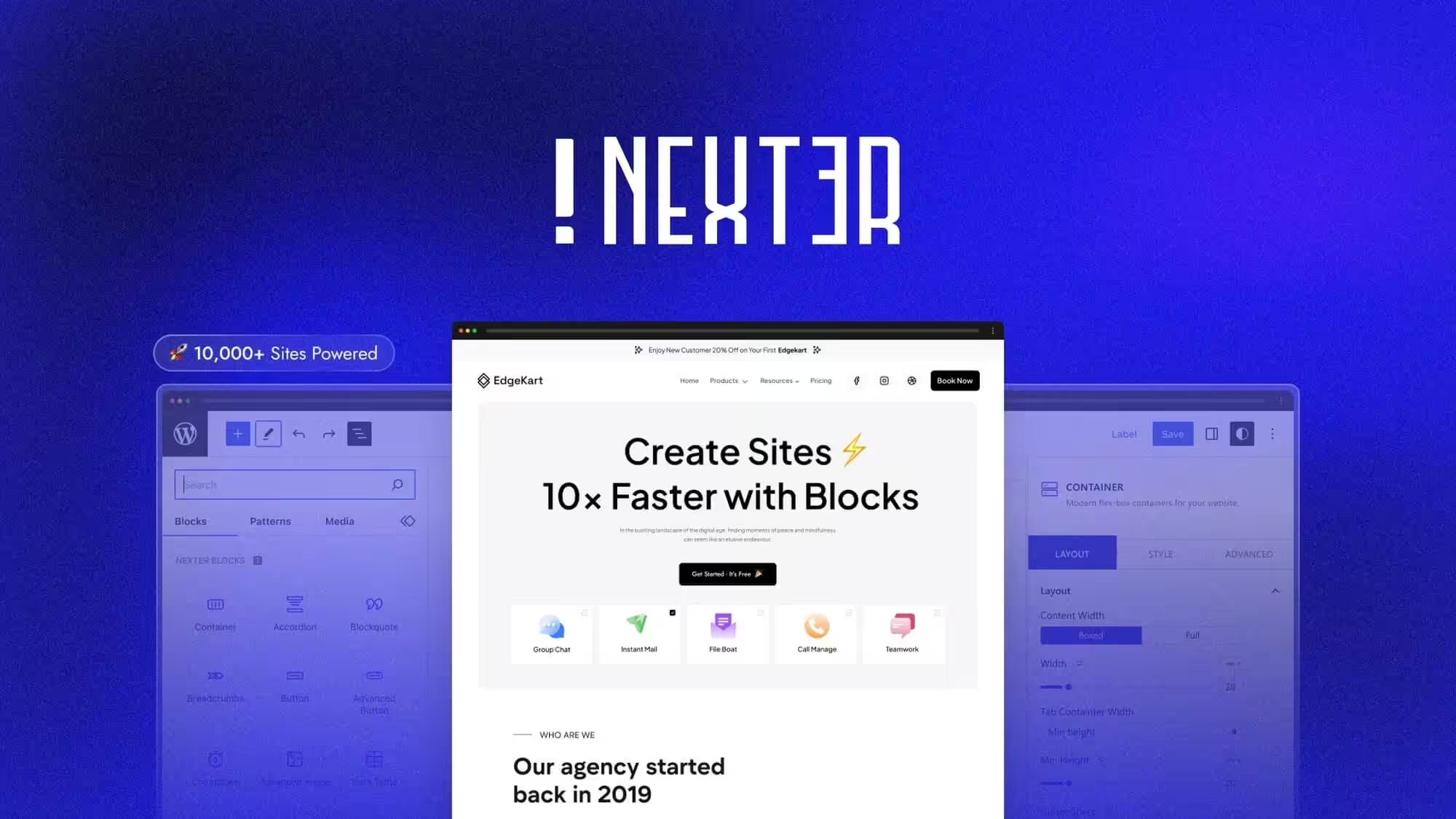
If you like the idea of one suite (theme + blocks + extensions) instead of juggling 5 to 10 plugins, Nexter is one to watch. Formerly called the Plus Addons for Gutenberg, it has evolved way beyond being just a block library: now it functions as a full ecosystem.
Here is what Nexter offers:
- 90+ Gutenberg Blocks out of the box. You get everything from text, images, grids to more niche ones like review display, animated counters, and conditional visibility.
- 1,000+ Templates & Sections ready to import. You pick a prebuilt layout and swap in your content.
- Smart Asset Loading: Regardless of how many blocks you use on a page, Nexter tries to bundle and serve only 1 CSS file + 1 JS file for that page.
- jQuery-Free / Vanilla JS: They claim there’s no jQuery dependency, which helps reduce render-blocking scripts.
- Conditional Display / Visibility Logic: You can show or hide blocks based on device, login status, user role, etc.
- Modular Extensions: Nexter’s “Extension” add-on gives you tools like security hardening, white labeling, snippet manager, and performance tweaks.
- Deep Integration: Works with WooCommerce, RTL support, translations, theme builder (headers, footers), etc.
- Frequent Updates & Growth: In 2025, updates have added features like Repeater blocks, glassmorphism (liquid glass effect), new animation effects, block presets, etc.
Nexter sells the Blocks + Extension + Theme together as a bundle. Pricing starts at $49/year for a single site (bundle) and currently an LTD is also available. They have an unprecedented 60-day refund policy.
Nexter Blocks
Pros
- 30+ creative design blocks
- Strong design customization options
- Animation effects available
- Free version covers basics
Cons
- Performance overhead on block-heavy pages
- Less community support than top options
- Some blocks lack polish
- Documentation is limited
Summary
A block plugin from the team behind The Plus Addons. Offers 30+ blocks with a focus on creative design elements. Good for users who want Elementor-style design blocks in the native editor.
Responsive Blocks
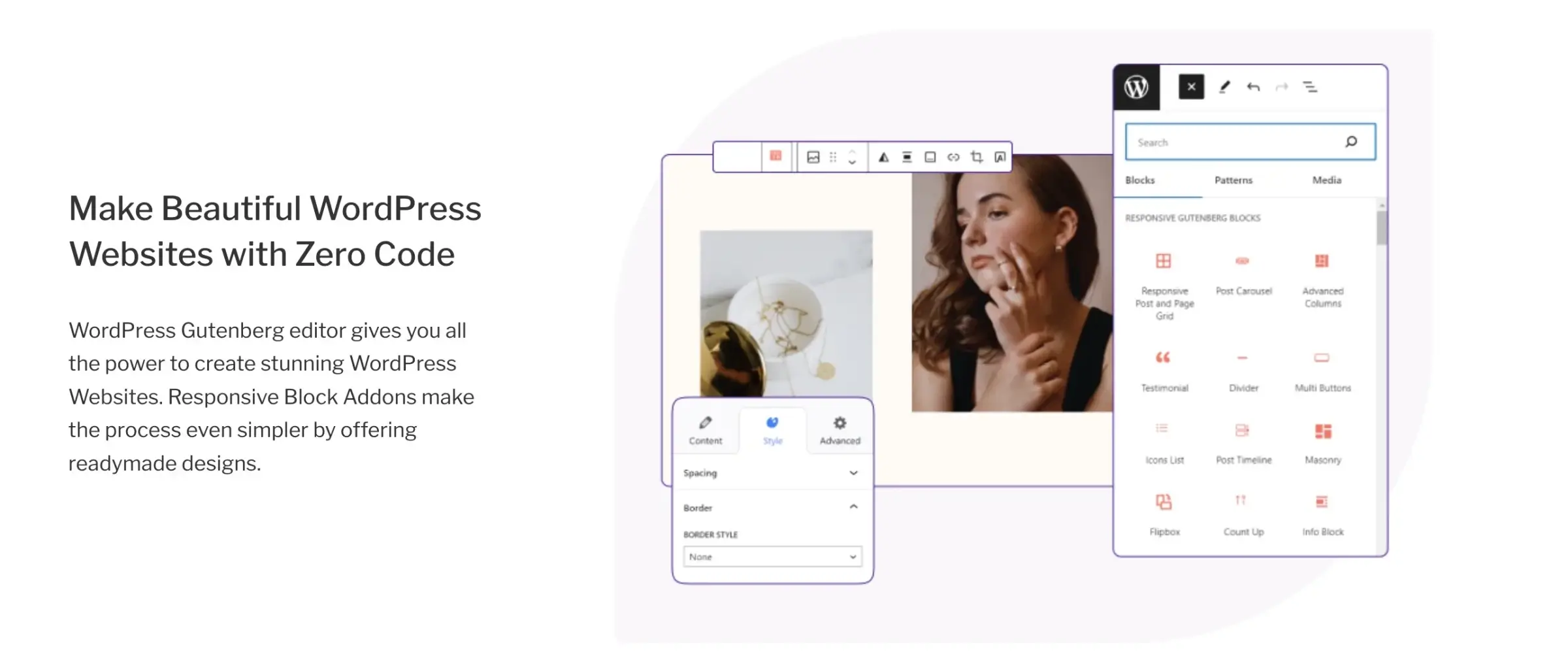
The “Responsive Blocks” plugin for WordPress/Gutenberg Editor was developed by the talented team at CyberChimps, offering a comprehensive suite of over 50 blocks to enhance website building.
HasThemes develops HT Mega Addons and ShopLentor, offering 100+ custom Gutenberg blocks and WooCommerce templates. Their blocks cover pricing tables, team members, countdowns, and sliders that other block plugins skip. The free version covers most use cases.
Designed for technical efficiency and ease of use, Responsive Blocks plugin enables the building of aesthetically appealing websites without requiring coding skills.
Some of its key features include:
- Over 50 Gutenberg blocks, providing a wide range of elements for website building.
- 100+ templates to match specific design needs.
- Compatibility with the latest WordPress versions, ensuring smooth integration.
- User-friendly interface, making it easy for both beginners and experts.
- Emphasis on responsive design, ensuring websites look great on all devices.
- Optimized for performance, contributing to faster website loading times.
Responsive Blocks
Pros
- Good integration with Starter Templates
- Simple to use
- Free
- Responsive design controls
Cons
- Limited block selection
- Better options available
- Development pace is slow
- Fewer customization options
Summary
A block plugin companion to the Starter Templates plugin. Offers basic blocks for building pages within the block editor. Works best with the Starter Templates ecosystem.
Otter Blocks
Otter Blocks is a set of over 15 blocks. All these blocks are very well made, and the plugin itself extends Block Editor the way I expected.
I have loved how this plugin has progressed over the time. Blocks have improved and so has customer support. And with increased adaptation, ThemeIsle, the team behind Otter, has launched Otter Blocks Pro. Pro version adds more professional features but the free version is good enough as well.
Otter Blocks

Pros
- Generous free version with 25+ blocks
- Built-in review and pricing table blocks
- WooCommerce blocks in Pro
- Follows WordPress design patterns
Cons
- Performance is average
- Some blocks duplicate core blocks
- Pro features not as compelling vs Kadence Pro
- Smaller community
Summary
A solid free block plugin from ThemeIsle. Includes pricing, tabs, accordions, reviews, and WooCommerce blocks. Good middle-ground between GenerateBlocks simplicity and Spectra feature density.
Ultimate Blocks
Ultimate Blocks by Imtiyaz Rayhan & team is a free-to-use and high-quality Block plugin with over 18 feature-packed Gutenberg blocks, including some really unique ones. Like UAGB, Ultimate Blocks offers schema-ready FAQ & Review blocks too. In addition to these two, it offers a Content Filter block: a block unique only to this plugin.
Other blocks offered by Ultimate Blocks include Countdown Timer, Testimonial, Table of Contents, Social Share buttons, and Improved Button block. It also has its own block manager plugin which allows you to enable or disable blocks from the plugin. Thus, you can use it to keep things tidy and manageable.
Ultimate Blocks

Pros
- Excellent content-focused blocks
- Star rating and review blocks
- Table of contents included
- Free and well-maintained
Cons
- Limited design customization
- Not suitable for page building
- Some blocks feel basic
- No query loop or dynamic content
Summary
A utility-focused block plugin for bloggers and marketers. Offers content blocks like review, table of contents, tabs, star rating, countdown, and call-to-action. Good for content-first sites that need utility blocks without design complexity.
Kadence Blocks
Kadence Blocks sat in my top 3 for years, and I owe you a straight explanation of why it now sits mid-list. Recent releases have been worse in exactly the ways a production site notices: rockier updates and a general slip in polish that makes me test every release on staging before letting it near a live build. The block set is still genuinely good, which is why it stays on this list at all, but it has moved from “default recommendation” to “test first.”
Developed by the team behind the Kadence Theme at StellarWP, Kadence Blocks offers plenty of content blocks plus a pre-built content library for importing designs quickly.
Apart from this, you will also be able to do more with the help of the Advanced Button and Advanced Heading blocks.
Here is a list of the Gutenberg Blocks that Kadence offers:
- Row Layout
- Advanced Gallery
- Form
- Advanced Text
- Advanced Button
- Tabs
- Accordion
- Testimonials
- Icon
- Spacer / Divider
- Info Box
- Icon List
- Countdown
- Posts
- Table of Contents
- Lottie Animation
Kadence Blocks Pro unlocks premium blocks like Split Content, Video Popup, and Product Carousel. Check current pricing before you buy; StellarWP reshuffles its bundles often.
Kadence Blocks

Pros
- Excellent Row Layout and Advanced Header
- Large pattern and template library
- Good performance with conditional loading
- Table of Contents block included free
- Form block included
Cons
- Recent update quality has slipped
- Pro version needed for dynamic content
- Can conflict with other block plugins
- Releases need staging tests before production
Summary
A capable business-blocks suite whose recent releases have been rough enough that I pulled my default recommendation. The block set remains strong; update quality is the problem. Test current builds on staging before committing a production site.
GT ACF Blocks
GT ACF Blocks is the block collection I maintain for structured publishing. Product reviews, product boxes and editorial layouts use fields that give editors a consistent way to enter the information.
The fields register with the plugin. Secure Custom Fields is the free supported framework; ACF Pro is a separate paid option. This is not a freeform page builder, and the blocks still depend on the plugin to render. No comparative star score is assigned here.
GT ACF Blocks

Pros
- Automatically registered fields
- Product and editorial layouts
- Secure Custom Fields or ACF Pro support
Cons
- Requires a supported field framework
- Dynamic blocks need the plugin to render
Summary
Free field-based Gutenberg blocks for product and editorial content. Use Secure Custom Fields or ACF Pro as the field framework.
CoBlocks
CoBlocks was the first ever Block plugin that I ever installed. Developed initially by Rich Tabor of ThemeBeans: this plugin is now owned and maintained by a team at GoDaddy.
So, the name behind the plugin may have changed, but the essence is still the same.
CoBlocks has several distinctive gallery, service, author, pricing, and layout blocks. I would choose it for those specific blocks, not as a universal winner over the layout systems above. The directory data backs the caution: its release pace has slowed to a crawl and its compatibility label has fallen behind current WordPress.
The unique blocks and features offered by CoBlocks are:
- Typography control panel
- Services Block
- Author Block
- Hero Block
- Pricing Table
- Alert and Notice Blocks
- Logos and Badges
- Food and Drinks
- Post Carousel
You can also split things up using its Shape Divider and Dynamic blocks.
CoBlocks

Pros
- Clean block implementation
- Unique blocks (recipe, map, events)
- Good gallery blocks
- Free and lightweight
Cons
- Development has slowed
- Limited design customization
- Future uncertain after GoDaddy changes
- No advanced layout options
Summary
A block plugin from GoDaddy with useful utility blocks including food recipe, map, pricing table, and gallery blocks. Clean implementation but development has slowed since the GoDaddy acquisition.
Ghostkit
Ghostkit by _nK was once my favorite and still amongst the best Block plugins in the market. Ghost Kit offers a large number of Gutenberg Blocks, Page/Post Templates, and Editor tweaks.
It has a set of unique blocks that rarely any other plugin offers, including:
- Progress Block
- Shape Divider Block
- Icon Box Block
- Number Box Block
- Image Compare Block
- Twitter Block
- Contact Form Block
- GitHub Gist Block
- Changelog Block
- Markdown Block
- Widgetized Area Block
In addition to these, it extends the default editor to provide numbered headings, numbered lists and badges to help you create better content. The plugin is free to use with an optional Ghostkit Pro upgrade available with more features.
Ghostkit also offers ways to disable not only unused blocks from Ghostkit but from other plugins as well. You can use this option to get a faster backend and frontend and remove unwanted distractions from the editor.
Ghostkit

Pros
- Block extensions enhance any block
- Custom CSS per block
- Display conditions and visibility controls
- Animation effects
Cons
- Can add overhead when stacked with other plugins
- Smaller user base
- Documentation is sparse
- Some features overlap with other plugins
Summary
A block plugin with a focus on extensions that enhance existing blocks. Adds custom CSS, animation, display conditions, and responsive visibility to any block. Useful as a utility layer on top of other block plugins.
PublishPress Blocks
Previously known as Advanced Gutenberg, PublishPress Blocks is a completely free-to-use WordPress block plugin that you can use to add various new designs and blocks to your posts and pages. Like Ghostkit, you can use it to enable or disable blocks from being displayed in the editor, including the blocks from other block plugins.
PublishPress blocks offers 23 blocks including these special ones:
- List block
- Table block
- Count Up block
- Info Box block
- Login / Register Form block
- Newsletter block
- Recent Posts block
- Social Links block
- Summary block
- WooCommerce block
PublishPress Blocks also allows you to enable or disable certain blocks for different user roles. Plus you create custom, reusable CSS styles and save them to make those available to end-users. You can use these reusable styles to instantly apply preformatted styling to blocks.
PublishPress Blocks

Pros
- Good editorial workflow blocks
- Login/register blocks included
- Simple to configure
- Free version available
Cons
- Limited design customization
- Fewer blocks than competitors
- Not suited for page building
- Smaller community
Summary
Content blocks from the PublishPress editorial workflow team. Includes accordion, tabs, pricing, login/register, and summary blocks. Good for editorial teams but lacks design flexibility.
Genesis Blocks
WP Engine bought StudioPress, the company behind the fantastic Genesis themes & plugins.
Then they bought ArrayThemes: one of the best premium theme makers on the planet led by Mike McAllister.
ArrayThemes had all the vision for the future and built AtomicBlocks WordPress themes and Plugins. After the acquisition, ArrayThemes became a part of WPEngine, and they started focusing on Genesis products.
A year after the acquisition, they relaunched the AtomicBlocks plugin as Genesis Blocks. AtomicBlocks still exists and has over 100000 downloads.
Genesis Pro, which includes Genesis Blocks Pro, Custom Blocks, Genesis Framework + Genesis Child themes, on the other hand, has an n-number of added features and templates. If I had to choose only one premium Block plugin, I’d choose Genesis Pro. But the free version doesn’t make the cut.
Genesis Blocks

Pros
- Native integration with Genesis themes
- Layout and section blocks
- Pattern library included
- Backed by WP Engine
Cons
- Best only with Genesis themes
- Development pace has slowed
- Future direction unclear
- Fewer blocks than modern alternatives
Summary
Block collection from StudioPress/WP Engine for the Genesis framework ecosystem. Good layout blocks and pattern library. Best for Genesis theme users. Future uncertain as WP Engine shifts focus.
Stackable
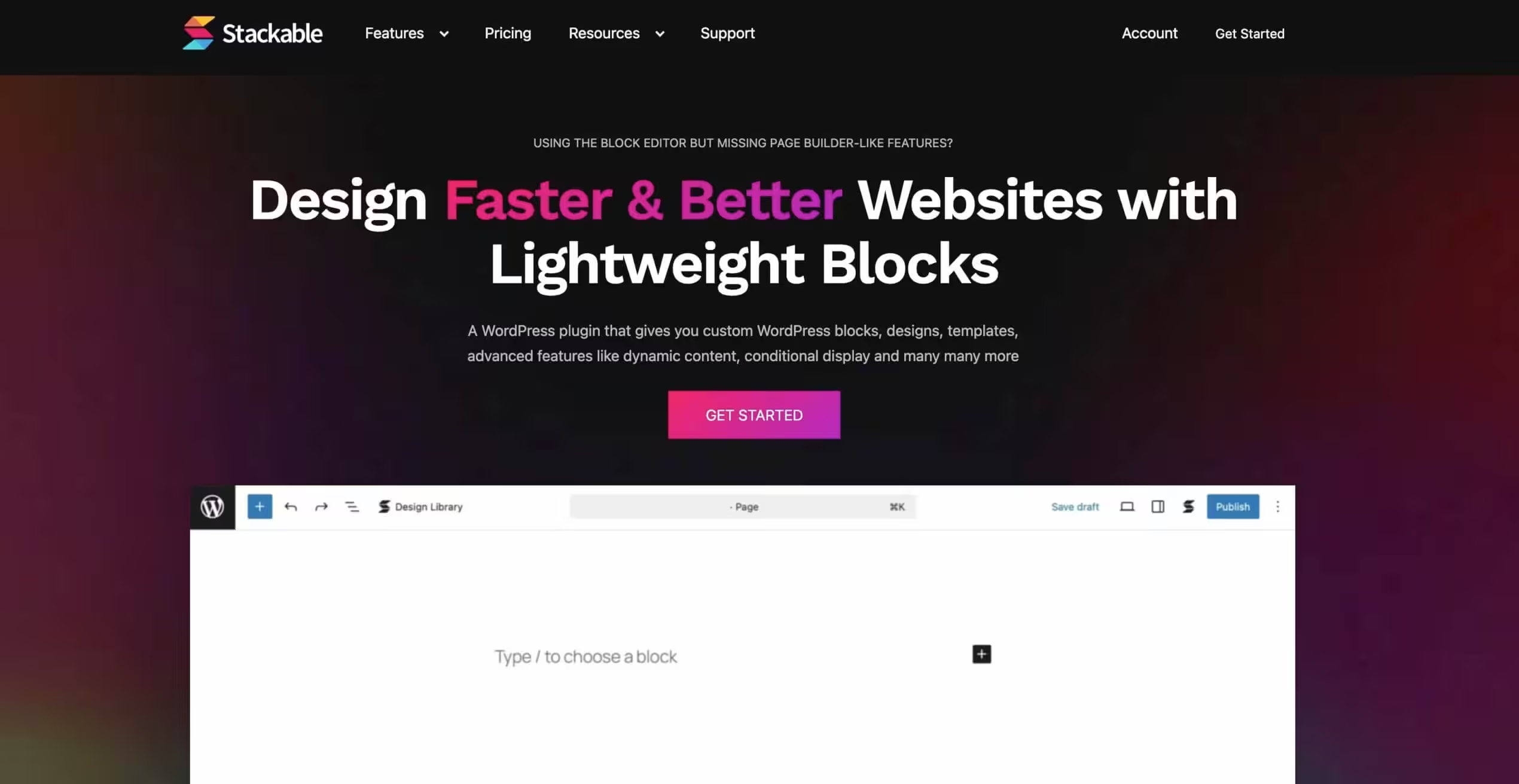
Stackable is one of the most popular Gutenberg block plugins out there, and for good reason. It gives you a full design toolkit inside the block editor with plenty of blocks, layouts, and pre-built sections to speed up your workflow.
At its core, Stackable comes with 27+ new blocks, 58 block layouts, and 72 pre-set design sections. These aren’t just basic blocks: they’re flexible, polished, and come with highly detailed settings that let you fine-tune every element. You get powerful content blocks like:
- Counter
- Feature Grid
- Pricing Table
- Posts
- Team Members
- Testimonial
Each of these stands out because of the extra design options you won’t find in most competitors.
But Stackable doesn’t stop there. With pre-set design sections and ready-made block layouts, you can mix and match styles to completely change the look of a page in seconds. It even comes with unique touches like shape dividers, blob separators, and multi-layer designs to make your layouts stand out.
While Stackable works with every WordPress theme, it also has its own official theme if you want a plug-and-play setup. Premium users get access to 127+ pro layouts, 251+ pre-set section designs, and more advanced design controls.
You can start with the free version available at WordPress.org. If you want more power, Stackable Premium starts at $49/year for a single site or $149/year for unlimited sites.
Stackable
Pros
- Beautiful pre-designed block styles
- Unified design system across all blocks
- 40+ blocks available
- Global typography and color controls
- Dynamic content in premium
Cons
- Performance impact with many blocks
- Premium needed for best features
- Can feel restrictive if you want custom designs
- Some overlap with core blocks
Summary
A polished block plugin with beautiful pre-designed blocks and a focus on design consistency. 40+ blocks with a unified design system. Good for users who want professional-looking blocks without custom design work.
Price: USD 49 /year
Try StackableVK Blocks
VK Blocks by Vektor Inc offers some really neat blocks including FAQ, Balloon, Flow, PR Blocks, PR Content, Border box and Page Content Blocks.
Their set of Gutenberg blocks is quite unique and worth trying out.
VK Blocks

Pros
- Good multilingual support
- Useful utility blocks
- Free
- Active in Japanese WP community
Cons
- Limited English documentation
- Niche audience
- Fewer blocks than competitors
- Design options are basic
Summary
A Japanese-origin block plugin popular in Asia. Offers utility blocks including FAQ, flow, step, and border blocks. Good for Japanese websites and multilingual setups.
Getwid
Getwid is a free and extensive set of more than 40 WordPress blocks from MotoPress, the team that gave us the MotoPress Content Editor page builder plugin. It also features over 35 importable templates which have been built using the aforementioned blocks. These blocks include Content Timeline, Mailchimp Opt-in, Sliders, Banner, Image Hotspot, Contact Form, and various options to display your most recent posts. Getwid can be readily accessed for free at WordPress.org.
Getwid
Pros
- 40+ blocks including unique options
- Instagram and social blocks
- Google Maps block
- Free and regularly updated
Cons
- Performance overhead with many blocks loaded
- Best with MotoPress themes
- Design customization is limited
- Some blocks feel dated
Summary
A block plugin from MotoPress with 40+ blocks including unique options like Instagram feed, Google Maps, and progress bars. Best paired with MotoPress themes. Decent free option for basic needs.
What happens if you remove a block plugin?
Do this test before standardizing a site or client portfolio on a block suite. Deactivate it on staging and inspect both the editor and the rendered page.
- Readable content: Text and media should not vanish behind an unavailable server render or shortcode.
- Editable structure: Proprietary blocks may remain as invalid blocks even when their HTML still appears.
- Styles and interactions: Sliders, tabs, accordions, animation, conditions, and query output may lose behavior.
- Design system: Global classes, tokens, dynamic sources, and pattern libraries may not export with core WordPress data.
Best Gutenberg Extensions for WordPress
Sometimes you need one feature, not another block suite. Each of these does exactly one job:
- JVM Gutenberg Rich Text Icons by Joris van Montfort: Add inline icons to rich text fields like: paragraphs, headings, lists or buttons anywhere in the Gutenberg block editor.
- The Icon Block: Nick Diego’s icon block drops any SVG or icon-library icon into the editor with core-quality controls. The block core should have shipped years ago.
- Block Visibility: show or hide any block by schedule, user role, screen size, or WooCommerce condition. The conditional-display layer the editor still lacks on its own.
- Code Block Pro: syntax highlighting powered by the same engine VS Code uses. If you publish code, this is the difference between snippets people copy and snippets people squint at.
- Block Enhancements Plugin gives features like icon insertion, hover styles, responsive typography, transforms, and transitions to your blocks. Good when you want micro-effects and styling options on core blocks.
- Gutenberg (beta): The Gutenberg plugin (not just the core editor) gives you access to experimental features, extra editor tools, and new block APIs. Use it if you want cutting-edge editor features before they hit WordPress core.
Two former staples are gone from this list on purpose. Automattic’s Layout Grid and the WordPress.com Editing Toolkit have both gone quiet, and core’s own Grid layout now does what Layout Grid was installed for. Recommending an unmaintained editor plugin is how readers end up with white screens.
Gutenberg Starter Templates
Here are some WordPress Plugins that offer the best ready-to-use Gutenberg layouts/patterns that you can import directly to your editor and get started with page building in no time.
- GenerateBlocks
- Nexter
- Spectra
- Ghostkit by nK
- Genesis Blocks
- Redux: Gutenberg Blocks Library & Framework
- Kadence
Above all, if you don’t like this new block-based editor and want to have the traditional approach, you can use the Classic Editor plugin to restore the classic WordPress editing interface. Both classic and block editors can be extended by Advanced Editor Tools (also known as TinyMCE).
Blocks cover most layouts, but some jobs still want a dedicated plugin: a testimonial slider, or a way to display your most commented posts. For inspiration, these WordPress website examples show what’s possible.
The right block plugin for each use case
- Performance and Minimalism → GenerateBlocks
- Business Sites and Agencies → GenerateBlocks Pro, or Stackable for prebuilt sections
- Beginners and Quick Sites → Spectra (formerly Ultimate Addons for Gutenberg)
- Creative Animations and Modern Effects → Greenshift
- All-in-One Ecosystem → Nexter Blocks
- Design Variety → Stackable
- Free and Feature-Rich Options → Getwid
- Power Users / Editor Enhancers → Icon Block, Block Visibility, and the extensions above
One last reframe before the FAQ. The question is not “which block plugin has the most features.” It is “which design system do I want my content married to, and how painful is the divorce.” Pick the suite whose markup you would be comfortable owning in three years, run the uninstall test on staging, and the rest of this page is just details.
Gutenberg Blocks FAQ
What is the best Gutenberg block plugin for WordPress?
GenerateBlocks is my layout-system choice. Spectra is the broad free suite, now split between Spectra Legacy for existing sites and the rebuilt Spectra Blocks for new ones. Kadence Blocks used to be my business-site middle ground, but recent update quality made me pull that default recommendation. Choose by output control, editor workflow, portability, and the blocks you will actually use.
Do Gutenberg block plugins slow down WordPress?
They can. Measure editor load, frontend CSS and JavaScript, wrapper depth, database footprint, and assets on pages using no plugin blocks. Conditional loading helps but does not eliminate all cost.
What happens if I deactivate a Gutenberg blocks plugin?
Core text may remain, but proprietary blocks can become invalid and plugin-owned styles, dynamic queries, tabs, sliders, or conditions may stop working. Test deactivation on staging before committing to a suite.
Can I use more than one block suite?
Yes, but overlapping block libraries increase editor choices, CSS, maintenance, and migration work. Use one primary layout system and add a focused plugin only for a job the primary system cannot do.
Tell Google you want more of this.
Add Gaurav Tiwari as a preferred sourceOne tap, and this site shows up more often in your own Top Stories, AI Overviews and AI Mode. Remove it any time.
Disclaimer: This site is reader-supported. If you buy through some links, I may earn a small commission at no extra cost to you. I only recommend tools I trust and would use myself. Your support helps keep gauravtiwari.org free and focused on real-world advice. Thanks. - Gaurav Tiwari